
 March 24, 2026
Northern Health has launched a ground-breaking research study implementing AISAP, an AI-assisted Point-of-Care Ultrasound (POCUS) platform designed to transform the way cardiac conditions are diagnosed and managed across our health service.
The study commenced following two successful bootcamp training sessions held in February, where General Medicine and Respiratory clinicians undertook intensive, hands-on training in AI-assisted cardiac POCUS. The sessions combined focused teaching with supervised bedside scanning and real-time AI-assisted interpretation, equipping clinicians with the skills and confidence to begin using the platform in practice.
Dr Vinita Rane, Head of Medicine Unit 5, reflected on the significance of the training and the opportunity it represents, “It’s exciting to be part of a trial that brings cardiac ultrasound closer to the bedside. For me, it’s an extension of the stethoscope, providing another tool that complements clinical assessment and specialist input. Building our staff’s skills in point-of-care ultrasound means we can get important information quickly and easily for our patients, and it’s likely to play a growing role in care in the future.”
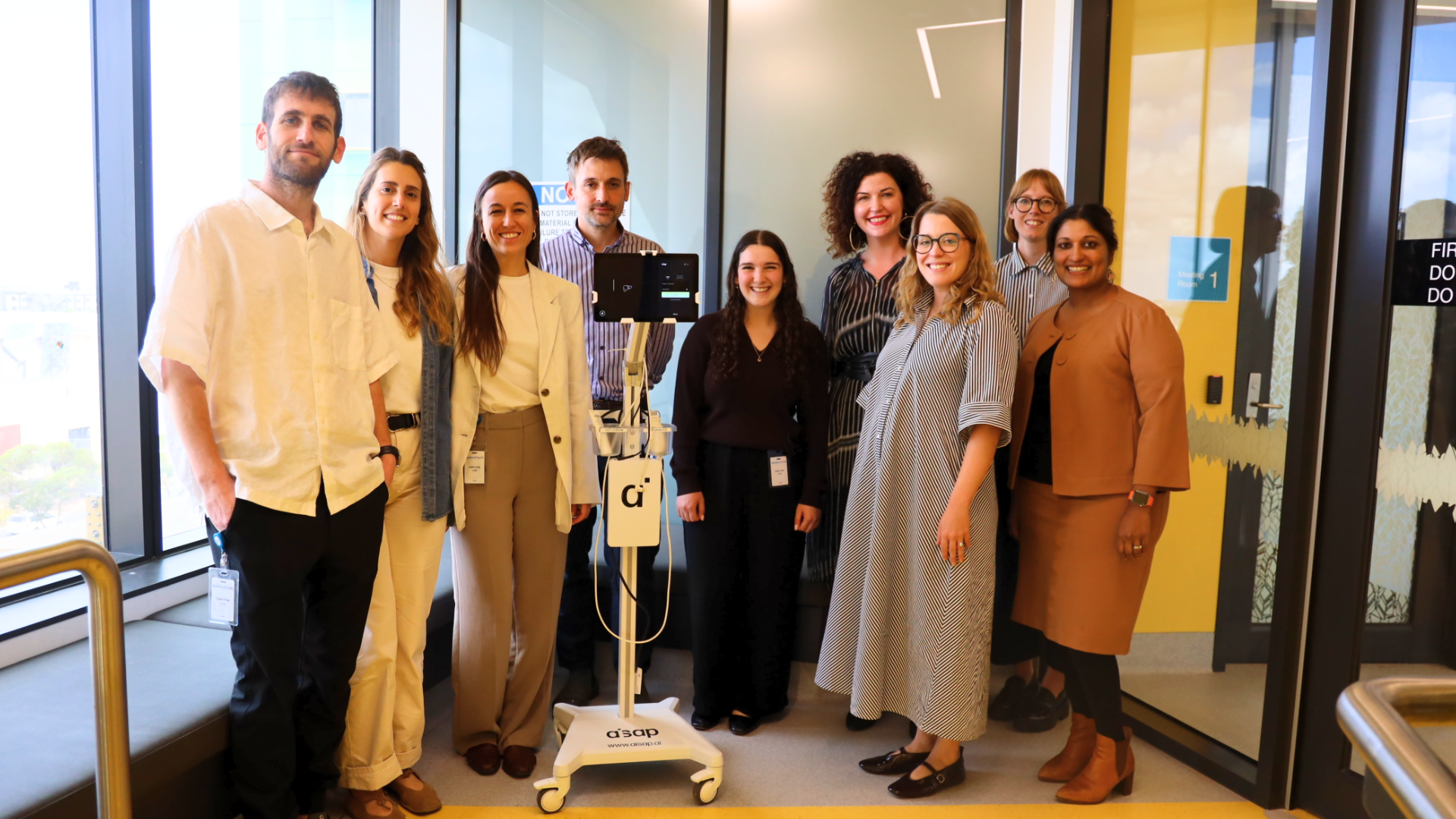
AISAP is a secure, cloud-based platform that uses advanced artificial intelligence to support clinicians in acquiring and interpreting cardiac ultrasound images at the bedside. By providing real-time guidance and automated measurements, it strengthens diagnostic confidence and supports rapid, more informed clinical decision-making.
Dr Peter Cheng, Emergency Department Physician, highlighted the broader impact of the initiative.
“It has been inspiring to be part of this Australian first AI-assisted POCUS study. A massive multidisciplinary effort combining AI, ultraportable ultrasound and rapid upskilling, clinicians now have the ability to improve patient outcomes and length of hospital stay through earlier bedside diagnoses of cardiac conditions.”
Cardiovascular disease remains a significant driver of hospital admissions and length of stay. This implementation study will evaluate the impact of AI-assisted cardiac POCUS on diagnostic accuracy, timeliness of decision-making and patient flow, with the aim of improving both clinical outcomes and system efficiency. For patients, the impact is simple: people receive the right care sooner, reducing avoidable time in hospital.
Dr Katharine See, Chief Health Outcomes Officer and principal investigator, said, “This study is about more than introducing new technology. It is about redesigning how we deliver care. If we can support clinicians to make faster, more accurate bedside decisions, we can improve outcomes for patients and reduce unnecessary time in hospital. That is the kind of innovation that genuinely transforms a health service.”
The pilot has been funded through a grant from the Hospitals Contribution Fund of Australia (HCF) Research Foundation, awarded to Dr Katharine See and her research team. Over the coming year, the team will explore how the innovative platform can transform care for people with potential cardiovascular conditions by enabling clinicians to perform rapid bedside heart ultrasounds more efficiently and effectively. Beyond the clinical impact, the study will also examine what it takes to embed emerging technologies into everyday care and ensure sustainable improvements in patient outcomes. The evaluation will assess whether AISAP accelerates diagnosis, how closely AI-assisted findings correlate with formal echocardiography, and what impact the model has on length of stay. Clinician experience and adoption will also be central, ensuring the technology integrates meaningfully into routine practice.
While AISAP represents a significant technological advancement, the focus of the program is broader than the tool itself. It is about enabling clinicians, strengthening capability at the bedside and translating research into measurable impact for our community.
This is transformation in action at Northern Health.


Pictured in featured image (L-R): AISAP representatives, Dr Katharine See, Camille Meredith, Dr Vinita Rane and Natalie Tirant.

