
 March 11, 2026
Today, 11 March, Northern Health is recognising World Delirium Awareness Day, joining healthcare organisations around the world to raise awareness about delirium and its impact on patients, families and healthcare systems.
Delirium is an acute change in mental state that is often triggered by illness, surgery or certain medications. It can have serious consequences for patients, including an increased risk of falls, functional decline, longer hospital stays, a higher risk of dementia, and increased mortality.
Despite its significance, delirium can sometimes be missed or under-documented. Encouragingly, research shows that delirium is preventable in more than one third of older people with risk factors. Early identification and management are really useful to shorten the duration of delirium but won’t prevent it.
At Northern Health, clinicians follow the Delirium Clinical Care Standard developed by the Australian Commission on Quality and Safety in Health Care to support the prevention, identification and management of delirium.
In 2025, a Delirium Dashboard was introduced, leveraging the capabilities of the electronic medical record (EMR) to monitor compliance with the clinical care standard and support ongoing quality improvement.
Northern Health is also participating in Improving Care for Older people at Risk of Delirium (iCORD) project led by Safer Care Victoria. The initiative aims to reduce the incidence of hospital-acquired delirium and shorten hospital stays for patients who develop the condition.
Initial work through the iCORD project focuses on improving daily delirium screening and ensuring urgent escalation when new changes in alertness or cognition are identified. Future stages will focus on strengthening clinical care approaches to prevent delirium and support earlier intervention.
There is also a strong focus on increasing awareness among patients and families, empowering them to speak up if they notice changes in a patient’s thinking, behaviour or level of alertness.
Dr Louise Monk, Geriatrician and Co-Chair of the Preventing Delirium and Managing Cognitive Impairment Sub-committee at Northern Health, said raising awareness is key to improving outcomes.
“Delirium is common, serious and often preventable. By improving screening, recognising changes early and involving families in care, we can significantly reduce its impact on older patients and support safer hospital stays.”
“Encouragingly, research shows that delirium is preventable in more than one third of older people, when there is careful attention to optimising factors such as nutrition, hydration, sleep, mobility, communication, orientation and the use of sensory aids,” she added.
Through initiatives like the Delirium Dashboard and the iCORD project, Northern Health continues to strengthen its commitment to improving care for older patients and reducing the burden of delirium across the community.
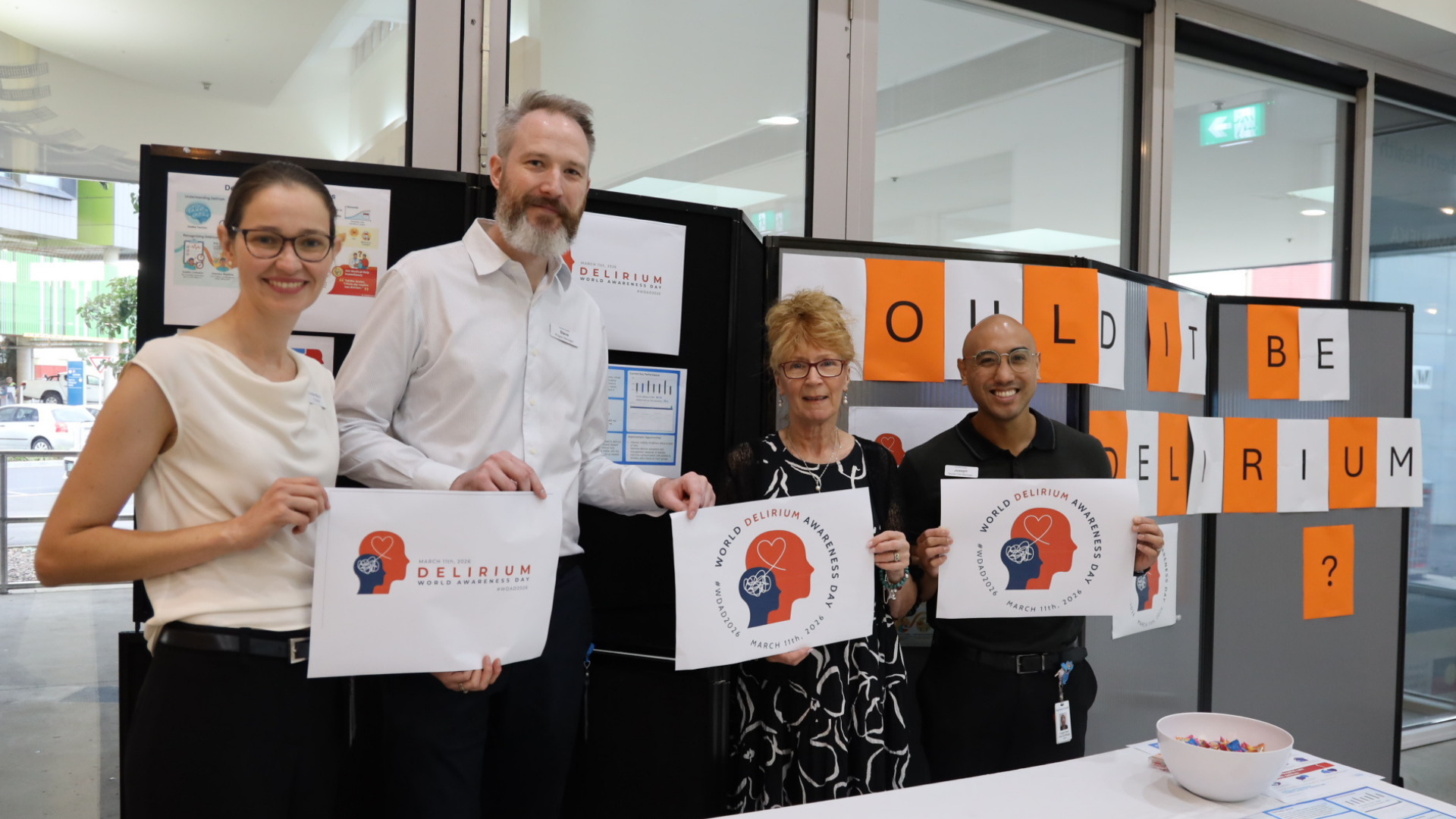
Pictured in featured image (L-R): Dr Louise Monk, Geriatrician, Co-Chair Preventing Delirium and Managing Cognitive Impairment CIC, Co-Lead iCORD delirium project, Mr Steve Ferguson, Project Manager, Co-Chair iCORD project, Ms Heather Christensen-Anderson, Consumer Rep iCORD project and Mr Joseph David, NUM Ward 6, team member iCORD project.

