• Siva Sivarajah: NAIDOC Week

    Siva Sivarajah: NAIDOC Week

    Wominjeka.

    NAIDOC Week recognises the history, culture and achievements of Aboriginal and Torres Strait Islander peoples.

    This year, NAIDOC Week will be celebrated from 4 to 11 July. The theme this year is ‘Heal Country’. It calls for all of us to continue to seek greater protection for our lands, waters, sacred sites and our cultural heritage from exploitation, desecration and destruction.

    The highlight of our NAIDOC Week celebrations at Northern Health is a virtual session by Nova Peris OAM.

    Nova was a trailblazer in her sporting pursuits, competing at Olympic level in two sports while juggling the demanding role of being a young mother. Then, post her sporting career, she smashed through another glass ceiling by becoming the first Aboriginal woman elected to Federal Parliament.

    Since the mid-1990s, she has spoken regularly on the challenges facing Aboriginal people and has visited hundreds of communities throughout Australia to gain as much of an insight as possible into the issues facing people from all walks of life.

    We look forward to hearing from Nova via video link from Darwin on Wednesday, 7 July at 12 pm. To watch Nova’s presentation, please click here.

    Also as part of NAIDOC Week, we had two eminent physicians – Dr Angela Dos Santos and Dr Graham Gee, speak at a virtual Grand Round.

    Continuing on the theme ‘Heal Country’, Narrun Wilip-Giin, Aboriginal Support Unit, has put together a quiz that will test your knowledge and reward you with great prizes.

    More details about this on the Narrun Wilip-Giin, Aboriginal Support Unit pages on the intranet.

    Here at Northern Health, our first ever Reconciliation Action Plan (RAP) set out to create opportunities for Aboriginal and Torres Strait Islander Peoples, their communities and organisations, to partner with us and influence the design and implementation of accessible and patient-centred services.

    Northern Health’s commitment to providing a culturally safe service starts with our leadership including my Board, Executive Team and Directors. All of us have attended cultural awareness face-to-face training.

    Face-to-face cultural awareness training is also provided to staff across all our centres throughout the year. In addition, we have introduced four mandatory online modules for staff.

    Northern Health has already reached its objective of increasing our Aboriginal and Torres Strait Islander workforce from 0.5 per cent to one per cent to be representative of the Victorian population, and has now set a new target for two per cent​.

    Aboriginal cadetships have been introduced in Nursing, and in Allied Health as of last year.

    In an effort to identify specific health conditions where there is a health outcome gap and to develop culturally safe strategies to improve health outcomes, we have developed an Aboriginal Health Scorecard, which has ‘Measure Owners’, responsible for putting in place plans to close the gap in health outcomes.

    I am pleased to report that one research paper specific to the Aboriginal Oncology Department has been delivered. Other research projects include ‘Investigating Trends in Perinatal Mortality for Indigenous Women’. A research grant also led to the recent opening of our Aboriginal Physiotherapy Clinic at Craigieburn Centre.

    The Reconciliation Action Plan Subcommittee responsible for the implementation of these initiatives has grown to include seven Aboriginal and Torres Strait Islander People, five directors and three managers from across our centres.

    They are supported by the Northern Health Aboriginal Advisory Committee which meets four times a year with executive sponsorship, and is attended by senior management and at least 15 Aboriginal and Torres Strait Islander members.

    Let me conclude by congratulating Karen Bryant, our Senior Aboriginal Liaison Officer, and the dedicated support of the NAIDOC Working Group team members for their countless work and research.

    There remains a lot more work to be done. We look forward to the next RAP and building on what we have achieved so far.
  • Volunteers helping to protect our community

    Volunteers helping to protect our community

    Northern Health’s dedicated volunteers have been helping out at our new COVID-19 Vaccination Clinic site in South Morang since it opened on Friday, 7 June.

    Enduring the colder weather, volunteers greet community members as they arrive and assist them with checking in and directing to where they need to go.

    “Some people don’t know how to use their mobile phones or don’t have phones with data, so our volunteers sit down with them and help them to fill in the online survey,” explained Henni Wade, Manager Volunteer Services.

    “The volunteers chat to everyone in the line and help make our visitors feel welcome.”

    Kathryn Bartho, Director Operational Readiness, acknowledged the important contribution of our staff and volunteers.

    “Setting up the vaccination hub has been a great achievement for Northern Health – all of the staff contributing have been a big part of that. Our volunteers are providing an important and supportive role in the overall process, with a particular focus on the consumers by greeting community members, assisting them to check in using the QR code and helping consumers understand the flow and the process,” Kathryn said.

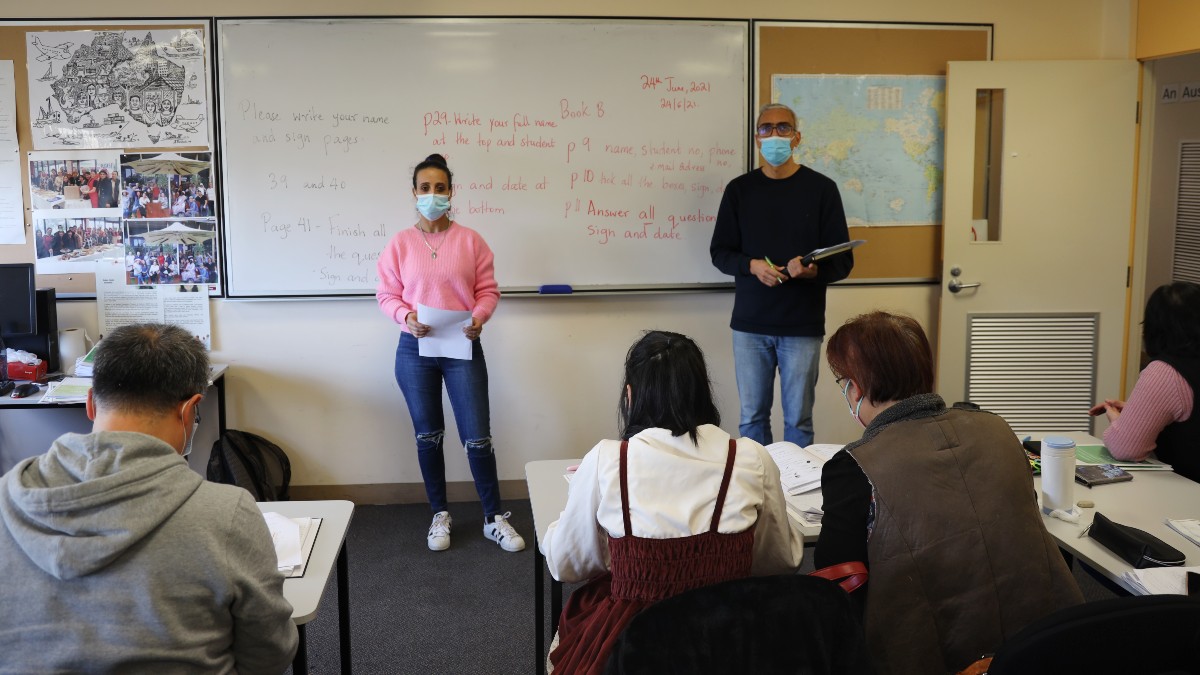
    Last week, we introduced Melbourne Polytechnic student volunteers to the clinic environment. The volunteer experience has been organised to complement the health literacy subject they are completing at school. Melbourne Polytechnic and Northern Health are partnering to provide real life learning experiences for the students enrolled in the Certificate 3 and 4 English as an Additional Language (EAL) courses.

    Most of the Melbourne Polytechnic student volunteers are interested in careers in health, so volunteering at our health service will give them insight into the many services we offer. They will be able to see first-hand what a difference volunteers make to our visitors’ experiences.

    “Volunteers can really help to put peoples mind at ease during stressful situations. Getting the vaccine can be a situation which people get anxious about. Our volunteers meet and greet people as they arrive and help those that need some one-on-one assistance with the check-in process. This personalised help can reduce anxiety levels,” Henni explained.

    “The volunteers love the chats and laughs they have with our visitors. The volunteers have been supervised by our Volunteer Coordinator, Christine McGowan, who is out there most days ensuring our volunteers feel valued and supported – and to ensure they get a nice hot cup of tea!” Henni said.

    Thank you to our dedicated volunteers for your contribution to helping us keep our community safe.

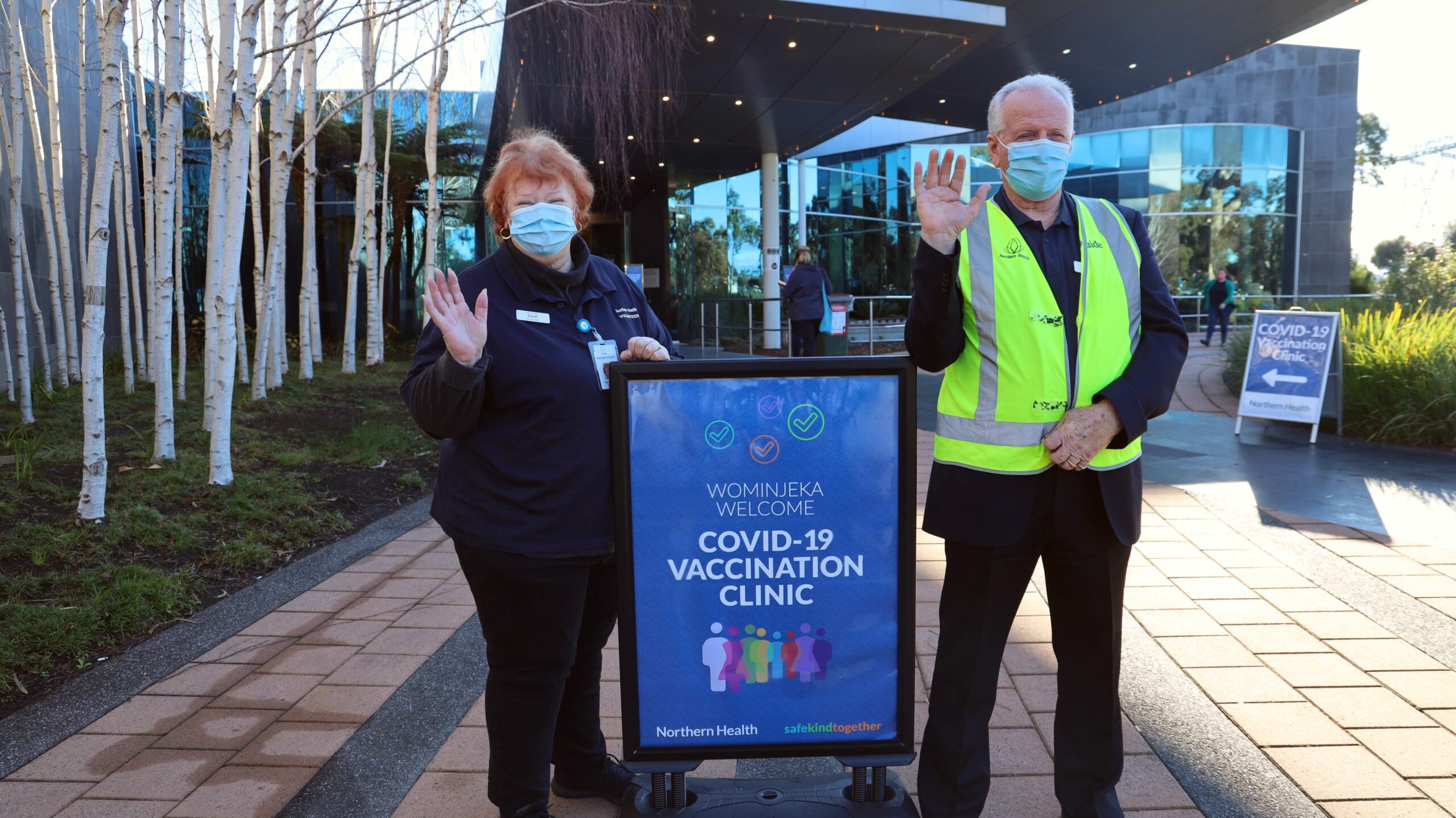
    Featured image (left to right): Volunteers, Carol and Richard at the COVID-19 Vaccination Clinic 

  • Ward 15: When “cleared” is your favourite word

    Ward 15: When “cleared” is your favourite word

    For Margaret Ash, Patient Services Assistant (PSA) on Ward 15, Northern Health’s ward for suspected COVID-19 (SCOVID) patients, one word has become a favourite in the last four weeks – ‘cleared’.

    “We had many high-risk and quarantine patients since Ward 15 re-opened again. Hearing the word ‘cleared’ just brightens up my day,” she said.

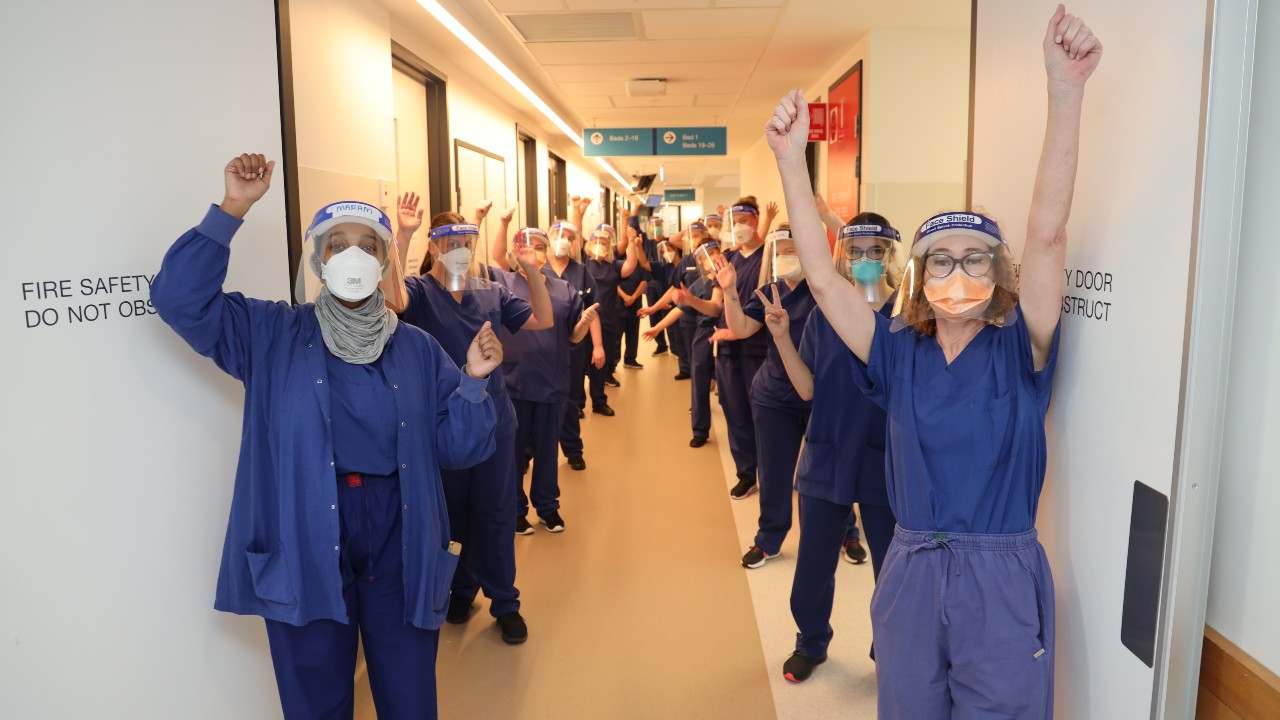
    At the end of May, Ward 15 or the SCOVID ‘Red Zone’ had to quickly be recommissioned due to the latest Melbourne outbreak. For staff, working in the Red Zone meant they needed to quickly adapt to a different working environment, as well as the new team.

    “We have four PSAs covering the ward, and we are here day and night. It’s kept very clean. Our job is to stop the spread,” Margaret says proudly.

    For her, and her colleague, Ben Amatya, wearing the personal protective equipment all day can sometimes be challenging, but the team help each other and the nurses whenever they can, which makes the day easier.

    “People are nice and we work and think as a team,” Ben added.

    Amy Freeman, Associate Nurse Unit Manager, says working in the Red Zone is very quick paced, but is well managed with good staff.

    “I work in Ward 14, our surgical ward, so this is the first time I am in the Red Zone. Some of the staff who worked here last year have helped us a lot. At the beginning, I felt like I was going into the unknown, but then it started to flow nicely and we had good support. It’s not that scary to work in the Red Zone – we are quite well protected and I feel safe here,” she said.

    Clare McCarthy is the Nurse Unit Manager who was temporarily looking after Ward 15 last year – brought in from the Project Management Office/HRO Team – and is back in the role this time again.

    For Clare too, the Red Zone was an adjustment. “I’ve been out of uniform for more than 15 years – to be back by the bedside was a big responsibility and frankly a bit daunting, especially in the heightened state of COVID,” said Clare.

    “The nursing staff is a mix of our Ward 14 and Pool staff. We had to set up the ward quickly and be responsive for our northern community. In Ward 15, it’s a day of constant change and movement; patients get transferred, assessed, retested, and they move on. It is really a team effort, and I’m proud to be part of it,” Clare added.

    To ease the loneliness of patients in the ward, the team are utilising technology to keep in contact with patient families – like iPads or Facetime.

    “Contact is crucial for patients and families. We are getting patients that are quite complex and have a number of chronic conditions, so some stay with us a bit longer. Having that connection with their families and having them know what is happening is essential, as things change swiftly,” said Clare.

    “The teamwork has consistently been amazing on the ward between the PSAs, nurses, doctors, pharmacist and allied health — it’s very much a ‘we are all in this together’ attitude,” added Rae-chal Burgess, Clinical Support Nurse.

  • NAIDOC Week: Heal Country

    NAIDOC Week: Heal Country

    NAIDOC Week recognises the history, culture and achievements of Aboriginal and Torres Strait Islander peoples.

    This year, NAIDOC Week will be celebrated from 4 to 11 July, with the highly topical theme of ‘Heal Country’. It calls for all of us to continue to seek greater protection for our lands, waters, sacred sites and our cultural heritage from exploitation, desecration and destruction.

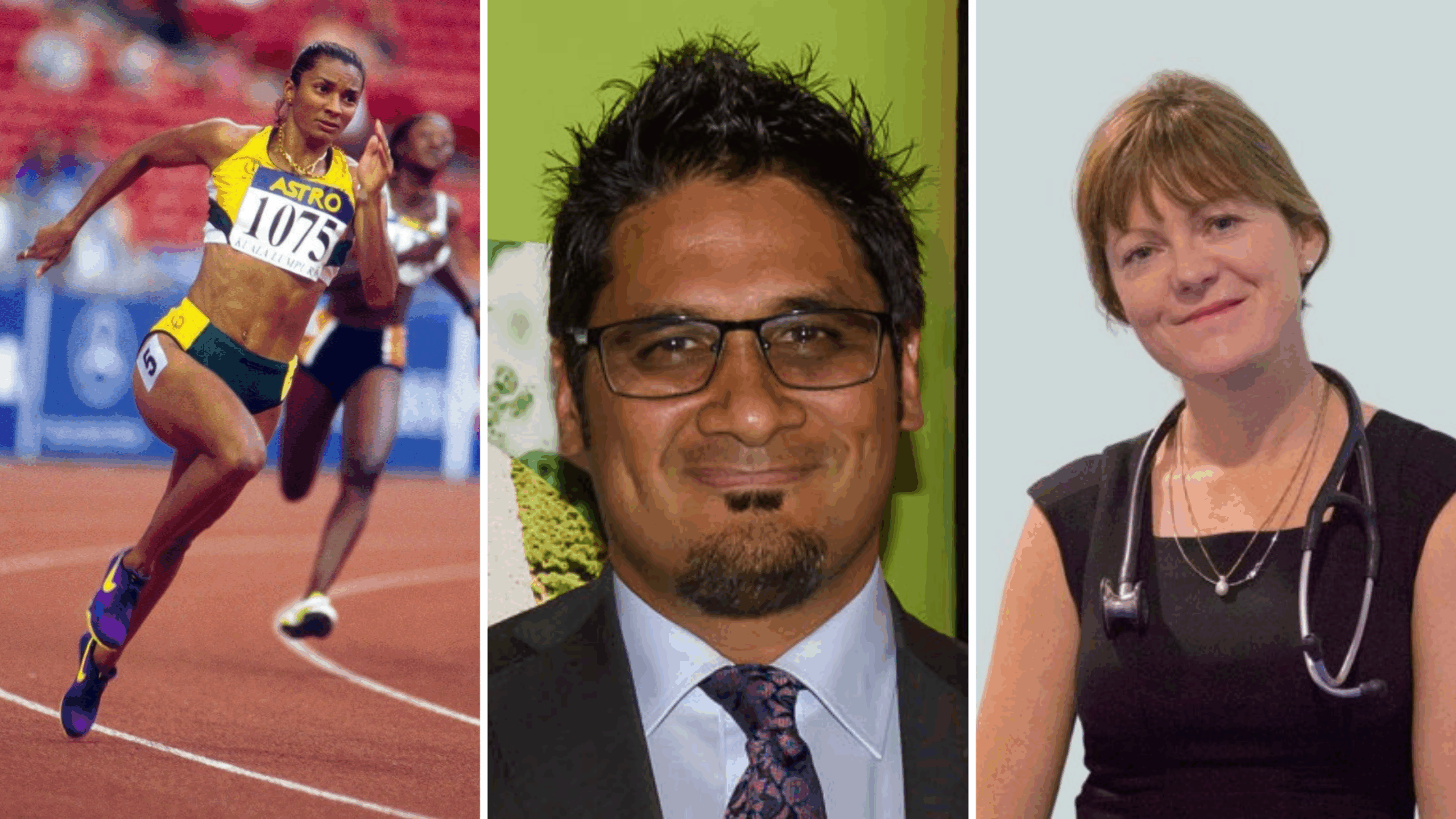
    The highlight of our NAIDOC Week celebrations at Northern Health is a virtual session with Nova Peris OAM. Over the past three decades, barely a year has passed where Nova has not displayed excellence in some area of her life. She has rarely stood still, always determined to educate and re-educate, in order to give herself the best possible opportunity to not only develop her own prospects in life, but, equally as importantly, those of her people throughout Australia and the Torres Strait Islands.

    Nova was a trailblazer in her sporting pursuits, competing at Olympic level in two sports while juggling the demanding role of being a young mother. Then, post her sporting career, she smashed through another glass ceiling by becoming the first Aboriginal woman elected to Federal Parliament.

    Since the mid-1990s, Nova has spoken regularly on the plights facing Aboriginal people and has visited hundreds of communities throughout Australia to gain as much of an insight as possible into the issues facing people from all walks of life.

    Nova will join us from Darwin via MS Teams on Wednesday, 7 July at 12 pm – 1 pm.

    Also as part of NAIDOC Week, Dr Angela Dos Santos and Dr Graham Gee will speak at a virtual Grand Round on Thursday, 1 July at 8 am – 9 am.

    Dr Dos Santos is a Neurologist at Royal Melbourne Hospital and is a proud Gumbaynggirr and Kwiamble woman. After graduating from the Western Sydney University in 2011 and completing neurology training and her stroke fellowship at the Royal Melbourne Hospital, Angela became the first and only Aboriginal neurologist.

    She is also a stroke physician at the Royal Melbourne and Alfred hospitals and for the Victorian Stroke Telehealth Network. She teaches First Nations Health to medical students at the University of Melbourne and works at outreach neurology clinics in both Alice Springs and Darwin. Dr Dos Santos works as a Senior Clinical Research Fellow for the Australian Stroke Alliance and is currently completing her PhD at the University of Melbourne.

    Dr Graham Gee is originally from Darwin. His Aboriginal-Chinese grandfather was born near Belyuen in Northern Territory, his grandmother is from the Barkly Tablelands in Queensland and the Northern Territory and his maternal heritage is Celtic.

    He is a Clinical Psychologist and a Senior Research Fellow at the Murdoch Children’s Research Institute. His research focuses on Aboriginal mental health, social and emotional wellbeing and healing and recovery from trauma. For 10 years up until 2018, Dr Gee was employed as a Psychologist and a Clinical Coordinator at the Victorian Aboriginal Health Service.

    Continuing on the theme ‘Heal Country’, Narrun Wilip-Giin, Aboriginal Support Unit, has put together a quiz that will test your knowledge and reward you with exciting prizes.

    Before that, we invite you to read up on how Aboriginal and Torres Strait Islander people have been caring for country for many thousands of years by clicking here.

    To watch Nova’s broadcast on Wednesday, 7 July at 12 pm, please click here.

    Click here for the Grand Round presentation featuring Dr Graham Gee and Dr Angela Dos Santos on Thursday, 1 July at 8 am. 

    Click here for the NAIDOC Week quiz.

    For more information, visit our NAIDOC Week intranet page.

    Featured image (left to right): Nova Peris OAM, Dr Graham Gee and Dr Angela Dos Santos

    Northern Health acknowledges the traditional custodians of the land on which Northern Health’s campuses are built, the Wurundjeri people, and pay our respects to Elders past and present.

  • Health navigators helping promote COVID-19 vaccination

    Health navigators helping promote COVID-19 vaccination

    Since December 2020, Northern Health has been working with Melbourne Polytechnic to improve understanding of our health system among students enrolled into the English As An Additional Language (EAL) program.

    Morteza Fayyazi and Fatima Ait Bela Ouali are new migrants to Australia and EAL students, curious to learn more about the Australian health system and share the information with their communities. For Morteza, who holds a Bachelor of Nursing degree from Iran, interest in health systems comes natural.

    “I started working as a health navigator two weeks ago. We talk about COVID-19 vaccination and safety, and we share information with the people we know – I sometimes go to Mill Park library or even just talk to people I know at the gym. I know people from various backgrounds, especially from the Iranian community,” he explained.

    Fatima came to Australia four years ago from Morocco and got involved by attending a class on healthcare every Monday.

    “I want to know more about the health system in Australia, especially because it is so different than the system at home. Those differences are the biggest challenges for migrants. Half of the health navigators who work with us are from the refugee backgrounds, while others are new migrants,” she said.

    Students who have participated in the Health Navigator elective, a partnership program between Melbourne Polytechnic and Northern Health, will be employed to deliver information to multicultural communities in the City of Whittlesea.

    Whittlesea Community Connections (WCC) supports the partnership between Melbourne Polytechnic and Northern Health and provides students and volunteers with CALD backgrounds with a local employment opportunity, funded by Department of Premier and Cabinet, as part of the 2020-21 Priority Response to Multicultural Communities during coronavirus (COVID-19) Phase 2.

    “We’re excited to be working with the health navigators to connect with multicultural and faith communities in Whittlesea. Their training has provided a really valuable foundation,” said Emma Antonetti, WCC’s Manager, Equity and Impact.

    The students recently co-presented with Associate Professor Craig Aboltins, Northern Health’s Head of Infectious Diseases, at an online COVID-19 vaccine information session with around 100 EAL students from Middle-Eastern, South American and Asian backgrounds.

    “We were very proud to present with A/Prof Aboltins to our student community and to hear his answers to their many questions,” said Basant, one of the navigators.

    The partnership is in its early stages, but is already showing potential for further growth, according to Carole Pondevie-Lay, Melbourne Polytechnic’s Community Liaison and Engagement Manager.

    “Health is a key settlement issue and our teachers are constantly having to cover content about the very different system in Australia. Having health navigators in our student body is a great foundation for improving health literacy, and access to Northern Health experts has been invaluable,” she said.

    It’s definitely a two-way street says Jason Cirone, Head of Northern Health’s Refugee and Asylum Seeker Working Group.

    “We’ve certainly got the experts on hand but the students bi-cultural skills provide the other part of the equation. For some, this opportunity is coming just after their first year of settlement and it’s great to see them making such an important contribution,” he said.

    Refugee Week 2021 is marked from Sunday 20 June, World Refugee Day, to Saturday 26 June. Northern Health is proud to have the opportunity to help facilitate programs that engage with our local migrant and refugee community.

    Featured image: WCC Health Navigators, Fatima Ait Bela Ouali and Morteza Fayyazi presenting on COVID-19 vaccination in Arabic and Farsi to EAL students, Melbourne Polytechnic, Epping.

  • Get to know Andrew Gay, Chief Financial Officer

    Get to know Andrew Gay, Chief Financial Officer

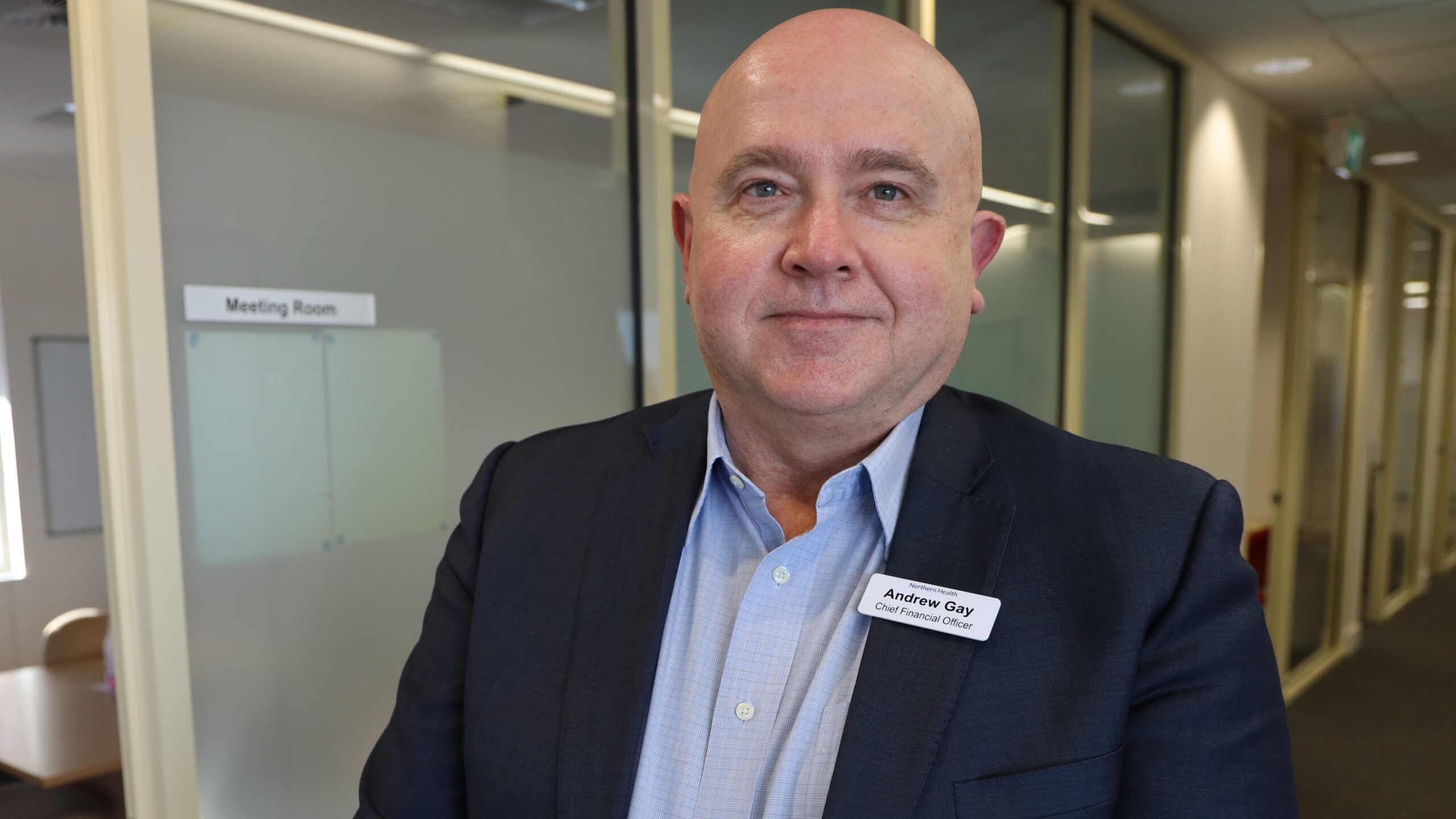
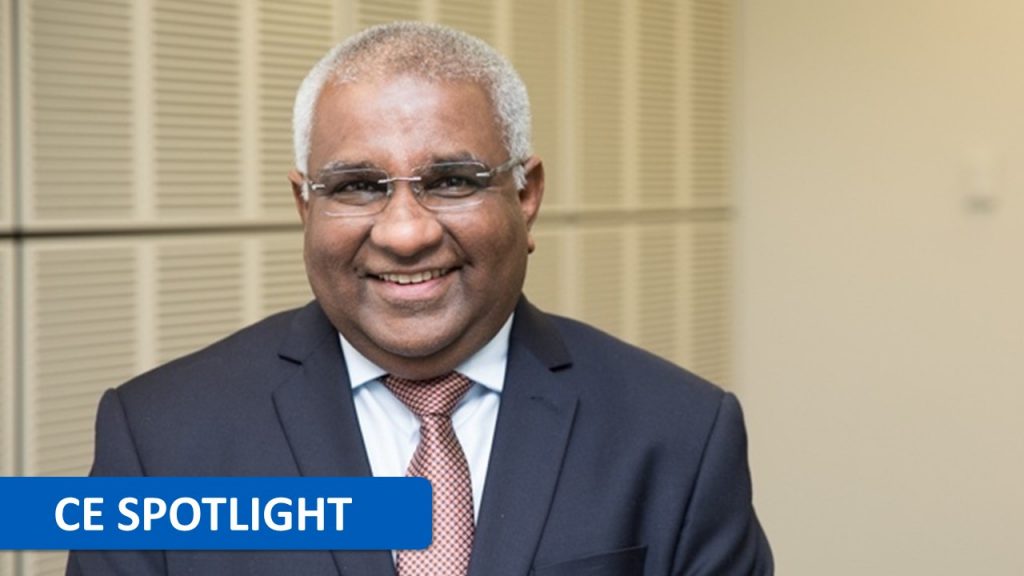
    Andrew Gay, Chief Financial Officer (CFO), is new to the Northern Health Executive Team, and says there is never a typical day for those in a CFO position.

    “You need to digest lots of information about the health service including activity, employees, financials, risks and opportunities. There are lots of meetings and discussions driven by whatever the hot issues are at the time,” Andrew said.

    “You need to keep in touch with fellow team members to respond to questions or provide help. If time permits, you get out of the office and walk to the hospital floor to observe how the service is performing. A simple walk around can give you a better perspective on how we are performing than a long written report.”

    Since starting at Northern Health, Andrew says he is enjoying the ease of access to performance information.

    “Other places I’ve worked at often require multiple sources of information to get a clear picture of what is happening. Thanks to the ongoing efforts of the team at Northern Health, we have great visibility of how the service is performing,” Andrew said.

    After being based in Canberra last year and only getting home to Melbourne three times due to the COVID-19 pandemic, Andrew says it’s great to back in Melbourne with his family. Before his time at Northern Health, Andrew worked at GM Holden and was the Head of Product Execution, responsible for the launch of vehicles developed in Australia.

    “One of those vehicles was turning our Holden Monaro into the Pontiac GTO for the USA market, which involved a cross country evaluation drive in America. I am very proud for taking a fleet of Australian built GTO’s on a test drive from San Francisco to Detroit,” Andrew said.

    Featured image: Andrew Gay, Chief Financial Officer.

  • Telehealth: Q&A with Tracey Webster

    Telehealth: Q&A with Tracey Webster

    We spoke to Tracey Webster, Telehealth Project Officer, about the digital transformation journey Northern Health is on. Read on to find out how Northern Health is using digital transformation to give patients real choice in their modality of care.

    What’s your coffee order?

    I love English breakfast tea. There is not much that a cup of tea cannot sort out!

    What are some of the milestones in your time here?

    Working as part of a team to implement Telehealth at Northern Health has been an important milestone. Ensuring that we made it patient-centred and safe for patients was the priority. Northern Health has gained a really good reputation in Telehealth and our resources have been shared with other health services. We have involved consumers with the design of our Telehealth service and this has made a real difference to the success of the project.

    We have made over 5,000 video calls in 12 months, which is a huge achievement compared to other health services in their first few years of implementing Telehealth.

    Another important milestone was the implementation of Telehealth into areas such as ICU and ED. This has helped families in ICU to have family meetings when they cannot be physically present and still be involved in their loved ones care. The Virtual ED has been an amazing project and one that we are very proud of. Our community is embracing digital transformation and a recent survey demonstrates that they would like to be able to have choice in how they access services and not always attend face-to-face.

    What are your plans for the future?

    I have worked for public and private health services and for the largest provider of Telehealth and Virtual Care in the southern hemisphere, but right now I want to support Northern Health to continue its digital transformation to provide high quality accessible care for patients. I believe that Northern Health is an exciting health service to work for as it transforms digitally. Northern Health has been able to take the learnings about Telehealth from other health services and has been able to implement best practice. We have ensured that patients are at the centre but that we also really look after our clinicians as well with areas such as vocal health. We are leading the way with this and other health services are using our resources. Being part of the team to shape digital health is exciting and many others do not get that opportunity to work in a service that is starting on the journey. I want to be able to contribute to making a real difference to patients, staff and the community.

    What do you enjoy most about working at Northern Health?

    I really enjoy how patient-centred staff at Northern Health are and I enjoy working with amazing staff and patients. There are opportunities to grow and develop at Northern Health which is really good. I enjoy working in Telehealth with the different disciplines as well. It is good to see medical, nursing and allied health all offering their patients real choice with their modality of care.

    It has been wonderful to hear from patients about how they are enjoying video calls and able to prioritise their health and wellbeing, even during lockdowns, by having high quality accessible care. There is a real culture of support for patients and families, and staff really do want to do their best.

    What would people be most surprised to know about you?

    I have started sewing lessons! I am not very good but am persevering. I hope to be able to wear an item of clothing to work one day!

    If you could describe Northern Health in a sentence what would that be?

    Northern Health is on a digital transformation journey to give patients real choice in their modality of care and it is exciting!

    Featured image: Tracey Webster, Telehealth Project Officer

  • Bringing a wealth of experience to our EMR Project

    Bringing a wealth of experience to our EMR Project

    We are continuing our series on introducing the staff members who are bringing together expertise and a wealth of experience to the Northern Health EMR Project.

    The EMR Project will be a fully integrated digital patient record that will provide clinicians help to support high quality care for patients.

    Over the next two years, nearly 40 dedicated staff members, who all bring a wealth of experience to the team, will be involved in the design and implementation of EMR.

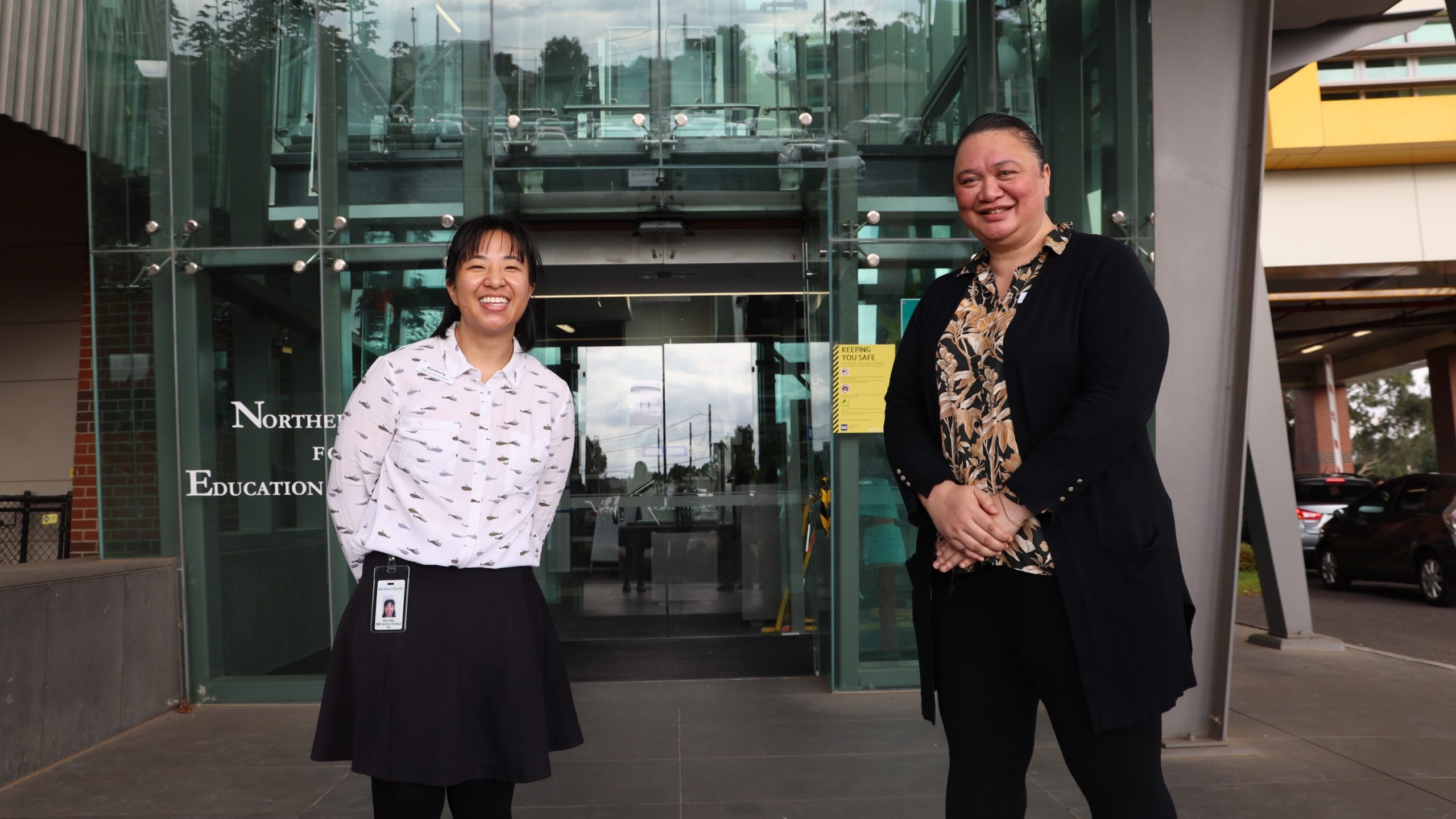
    Kimberly Hoo is the EMR Solution Architect and has been involved in many EMR rollouts.

    “Prior to joining the Northern Health team, I was a Senior Functional Analyst at Health Technology Solutions, supporting multiple Victorian health services, all using Cerner EMR,” she said.

    “I have been involved in several hospital EMR rollouts as well as post go-live improvement projects. Prior to that, I was the EMR Medication Lead at Austin Health, whilst balancing my role as a Clinical Hospital Pharmacist.”

    “My role is to provide the Northern Health EMR team with technical guidance around Cerner’s functionality and design, to ensure our solution is delivered to leverage best clinical practices and prioritising patient safety.”

    Sarai Abel is our EMR Applications Manager and feels very privileged to be leading Northern Health’s Application Team.

    “As a conductor on the EMR train, my aim is to ensure we are continuously delivering to our planned schedule and within the EMR project scope. I am also looking forward to meeting as many of our stakeholders across Northern Health, so say g’day if you see me around,” Sarai said.

    Before Sarai joined our EMR team, she was the EMR Applications Manager at the Royal Children’s Hospital.

    “My responsibilities extended to supporting the successful implementation of the Connecting Care EMR in Parkville. Before that, I worked in technology services at healthAlliance in New Zealand, managing a large portfolio for critical clinical applications to healthcare workers across the Auckland region. Before that, I had roles in FinTech and local government sectors.”

    We look forward to Sarai and Kimberly’s contribution to improving patient care at Northern Health. Stay tuned for more EMR team profiles in the coming weeks!

    Featured image left to right: Kimberly Hoo and Sarai Abel