• Adult Community Mental Health services: new model of care

    Adult Community Mental Health services: new model of care

    In line with the recommendations of the Royal Commission, a new model of care for Adult Community Mental Health is being launched. The aim of the redesign is to provide services at a level/intensity and timeliness that meets the consumer’s care needs, with the focus of keeping people well in the community.

    Joy Barrowman, Director of Operations, North West Area Mental Health Service (NWAMHS) says, “We are shifting from an episodic to ongoing model of care that will provide better access and timely specialist mental health services, with focus on consumers’ recovery and prevention of relapse.”

    The first phase began in February 2024 and involved the commencement of Consultant/Psychiatrist led Outpatient Clinics at the four community sites – Hotham Street, Hume, Merri-bek and Noogal Clinic.

    The new model provides consumers with the option to transition to an outpatient stream of care with less intensive ongoing support for as long as they choose to engage. Early warning signs of relapse can be picked up, with an easy transition to more intensive treatment and care in the community setting.  This will reduce the incidences of acute relapse and protracted recovery journeys.

    Consumers eligible to be seen in the Outpatient Clinics are those who no longer require active case management in the community and consumers who are transitioning from a Northern Health Mental Health Inpatient Unit or Prevention and Recovery Care (PARC) Service and are deemed not to require case management. Internal referrals are identified at clinical review meetings and discussed directly with the Outpatient team.

    Chris Ferguson, Manager – Lived Experience Workforce Manager, NWAMHS, says, “I’m excited about the provision of this new stream which better meets the changing needs of consumers accessing services.  This new option is in line with the principles of the Mental Health and Wellbeing Act which advocates for autonomy, supported decision making and access to diverse services.  Northern Mental Health has shown real commitment and flexibility to meet consumers where they are at with our new model of care.”

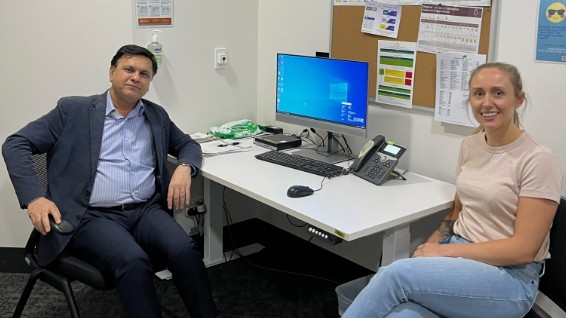
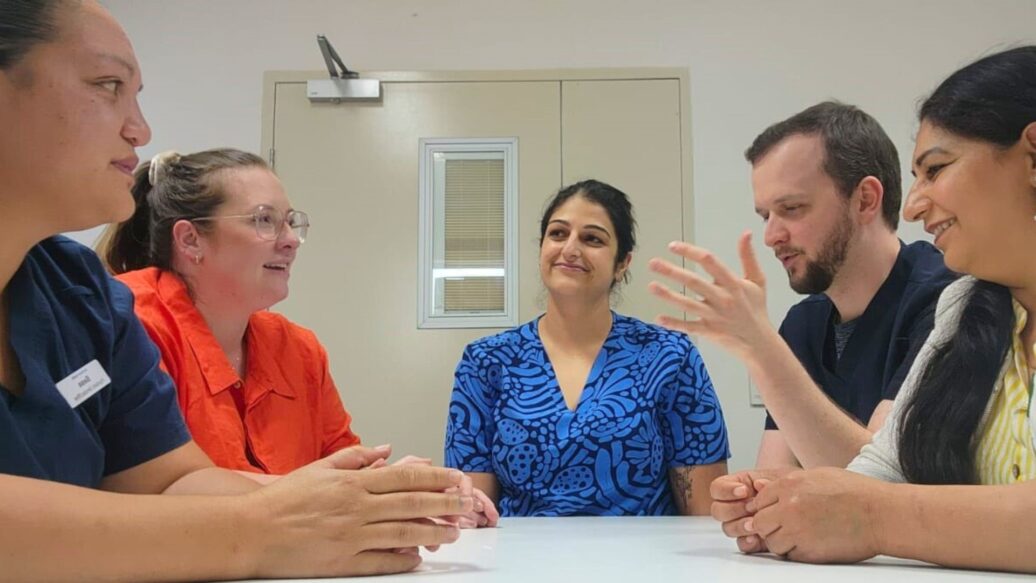
    Pictured Dr Owais Sharif and Aimee Kerr from the Noogal Clinic Outpatients team.

  • National Advance Care Planning Week: Share What Matters Most

    National Advance Care Planning Week: Share What Matters Most

    “I feel good knowing I have done it,” Diane Lonsdale, Northern Health consumer.

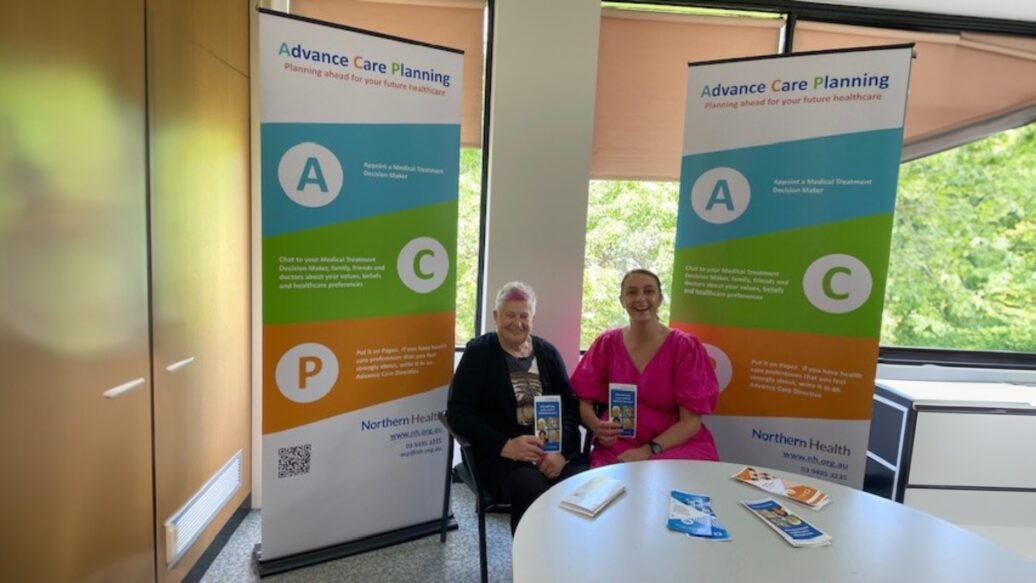
    The National Advance Care Planning (ACP) Week runs from 18 to 24 March, and encourages people to “Share what matters most” with their Medical Treatment Decision Maker/s (MTDMs), loved ones, GP and/or Specialists. Advance Care Planning involves thinking about, talking about, and perhaps documenting future healthcare preferences, for a time when you may be unable to communicate.

    The Advance Care Planning Program aims to increase awareness through engagement and supportive collaboration for people aged 18 years and over, throughout the Northern Health organisation and the community. The team consists of three staff members; A/Prof. Barbara Hayes – Clinical Lead, Ella Critchley – Advance Care Planning Program Manager and Karen Overall – Administration Support.

    Recently, Ms Critchley sat down with Diane Lonsdale, a past consumer of Northern Health, to discuss her reasons for undertaking Advance Care Planning.

    Q: What matters most to you?

    A: For me, it’s planning and my autonomy, but above all, it’s my family. I first heard about Advance Care Planning (ACP) as a patient at Northern Health. I was interested and intrigued to know more and was given a brochure alongside a discussion with the medical team.

    As time went by, I attended a community education session delivered by the Northern Health’s ACP Program Manager at my place of residence, a local retirement village. I knew this was my opportunity to complete ACP documents, after experiencing the uncertainty of illness within my family, and I just wanted to take the pressure off my family.

    Q: In your opinion, what are the benefits of ACP?

    A: When thinking about what happened to a family member, I reflected on previous ACP discussions. I appointed two people to be my MTDMs, people I trusted to make the medical decisions I would make for myself, and the importance of making it easier for my kids, by sharing knowledge of what I wanted.

    With the help of Ella and my GP, I completed the appointment of a MTDM form and an Advance Care Directive, making it clear to my MTDMs and medical team, exactly how I wanted to be cared for, ever if I lose the capacity to provide consent. My GP discussed the forms with me and witnessed my signature.

    Communicating preferences and values can be difficult, but the benefits of not having to make unprepared, in-the-moment decisions, far outweigh these difficult conversations. Reflecting on undertaking ACP, I feel good knowing I have done it and feel a sense of relief that it’s done.

    “We are grateful to Diane for generously sharing her ACP story. We couldn’t agree more with Diane’s statement in which she says ‘Some people think you don’t need it. I say, ‘you do’,” said Ms Critchley.

    “Being prepared and having a good understanding of a person’s preferences and values is paramount to receiving person-centred care.”

    “We’re encouraging everyone during this week, and moving forward, to “Share what matters most” about future health care values and preferences!”, she said.

    Contact the team:

    #acpweek24   #ShareWhatMattersMost   #ifnotyouwho

    Pictured in featured image (L-R): Diane Londsdale, consumer and Ella Critchley, ACP Manager.

  • VVED set to double capacity with funding announcement

    VVED set to double capacity with funding announcement

    Premier Jacinta Allan and Minister for Health Mary-Anne Thomas yesterday visited Northern Hospital Epping to announce that the Victorian Virtual Emergency Department (VVED) will be expanded to care for more than 1,000 people daily.

    “We’re doubling the Virtual ED’s capacity so more Victorians can get the urgent care they need, from their own home – taking pressure off our busy emergency departments,” said Premier Allan.

    Since rolling out statewide in October 2020, the VVED has provided clinical assessments, medical advice, treatment and local referrals to more than 256,000 patients.

    The service has helped 86 per cent of patients avoid an unnecessary trip to hospital, freeing up physical emergency departments across the state for those who need them most.

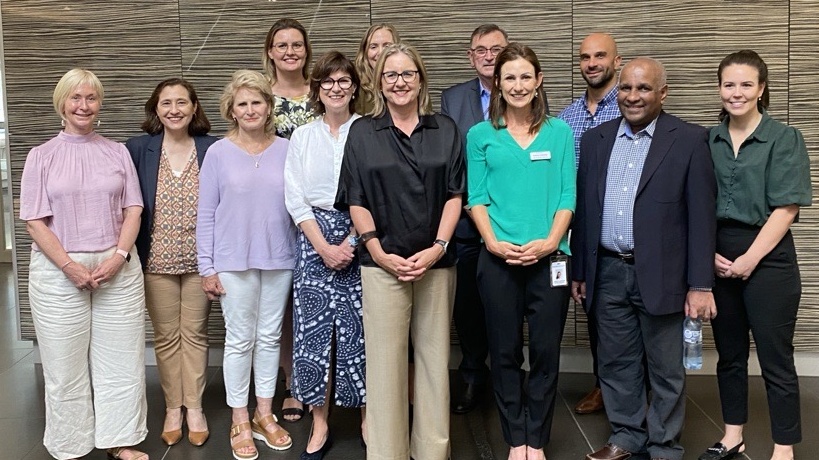
    Jennifer Williams, Board Chair and Siva Sivarajah, Chief Executive met with Premier Allan and Minister Thomas on Sunday morning to tour the VVED and meet with staff. They were also joined by local MPs Bronwyn Halfpenny, Member for Thomastown, Lily D’Ambrosio, Member for Mill Park, and Lauren Kathage, Member for Yan Yean.

    The Labor Government will invest more than $235 million to continue the service and recruit additional clinicians to double its capacity. This will enable VVED to assist more than 1,000 Victorians with consultations directly from home or work, providing them with the care and advice they need, and potentially avoid an unnecessary trip to hospital in the process.

    It will also support more direct referrals from aged care, paramedics in the field, primary health networks, the Nurse on Call service and self-referrals from the community.

    “I welcome the funding announcement from the Victorian Government, which will enable us to continue to provide patients across the state with access to the right level of care, at the right time,” said Siva Sivarajah.

    “This investment speaks to the exceptional talent and dedication of our staff in creating a service that is widely used and highly regarded. I am proud of the VVED and look forward to continuing to grow this exceptional service,” Mr Sivarajah said.

    “Congratulations to our local Northern Hospital team who are delivering this service – they are working hard to improve care across the state and seeing real results,” said Member for Thomastown Bronwyn Halfpenny.

  • Get to know: Tom Cooper

    Get to know: Tom Cooper

    #WeAreNorthern

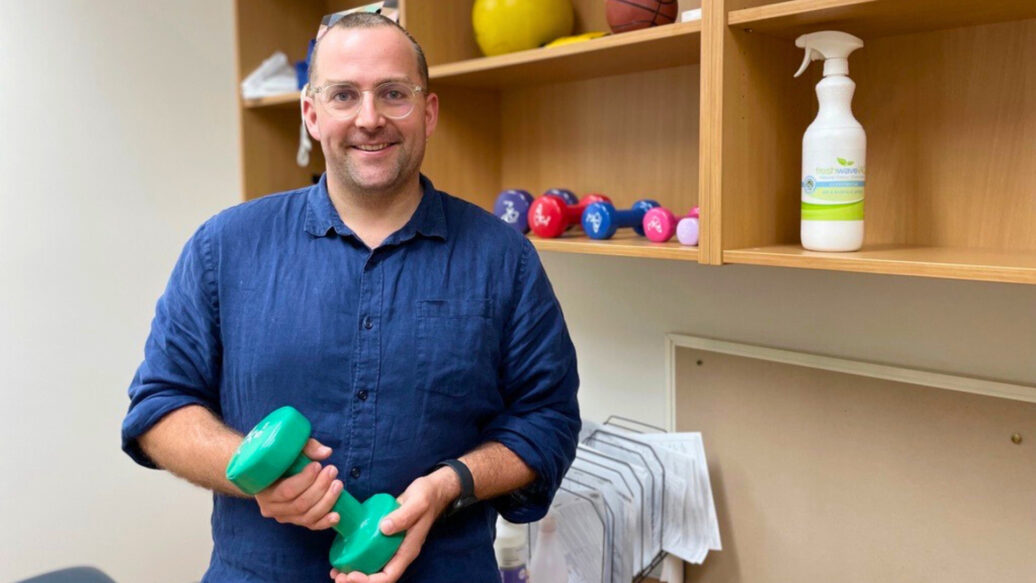
    Meet Tom Cooper, Senior Physiotherapist, Northern Health.

    Q. What is your coffee order?

    Strong cappuccino to start the day, followed by a long black I make myself with the Aeropress. I have a caffeine problem.

    Q. Can you tell us a bit about your career?

    I started at the Austin Hospital as a new grad, rotating around different services to gain experience. I came to Northern Health in 2017 and start working in the Emergency Department and community outpatients at Craigieburn. It was a really challenging job, but I learned heaps and met great people. I have been supported to grow and develop into a senior clinician, including going on to complete my Masters degree and start credentialing as an advanced practice physio in the ED. I now run the Staff Physiotherapy Clinic, where I get to provide care to all our staff at Northern Health.

    I have met lots of lovely people from all over the organisation, and what continually amazes me is that everyone who comes and sees me is really passionate about their job, trying to improve things in their area/department and want to get better with the care they receive from me so they can do their jobs better. I feel really lucky to serve a great bunch of patients.

    Q. What is your greatest achievement or favourite memory since working here?

    The day the Staff Physio Clinic got executive endorsement to become a permanent full time service at the end of 2021 was definitely the biggest achievement. The clinic was initially a pilot program for 12 months, only running three days a week. It was a massive undertaking to get it up and running from nothing. The outcomes we achieved in terms of people getting better, the high level of satisfaction from staff using the clinic and the positive contribution it made to organisation in reducing workplace injury claims were really strong. I was so relieved when we got the sign off. The support I had from the Physiotherapy and OHS departments was massive, and the clinic wouldn’t be where it is today without their guidance.

    Q. How do you relax after a long shift?

    No relaxing after work, I have two little kids to feed, bathe and get to bed in the evenings, so I relax before work with exercise. I’m up at 5 am most days, out for a run or hit the weights in the morning before the kids are awake. It sets me up for the day, I feel relaxed, less stressed and that I accomplished something good for myself before the day has even begun.

    Q. Where is a favourite place you’ve travelled and why?

    4WD trip through the outback of the Northern Territory and Eastern Kimberly in WA with my best mate. Our Ute got bogged in a crocodile infested river near Kakadu National Park and had to get towed out by a passerby while a bus load of tourists watched on from the side of the riverbed. I was certain we were going to end up on the news or YouTube. Australia is the best place to travel, get out and see your own backyard. Just don’t get bogged a water crossing full of crocs!


    For more information or to book an appointment with Tom, please visit the Intranet page or email staffphysio@nh.org.au

  • Communication – A key piece to positive safety

    Communication – A key piece to positive safety

    “Communication works for those who work at it.” — John Powell, a film music composer and an Oscar winner in 2011 for the music in the movie: How to Train your Dragon.

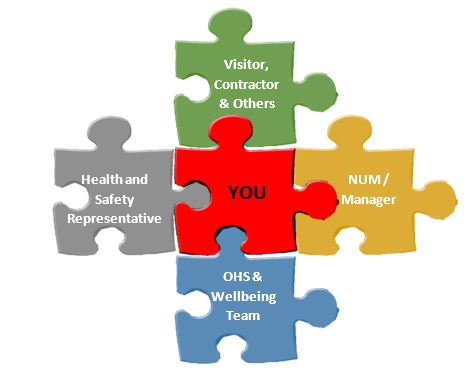
    Communication is the key piece to bring everyone together to achieve positive safety outcomes. It is crucial that managers, staff and Health and Safety Representatives (HSR) communicate and work together to resolve health and safety issues.

    Case study:

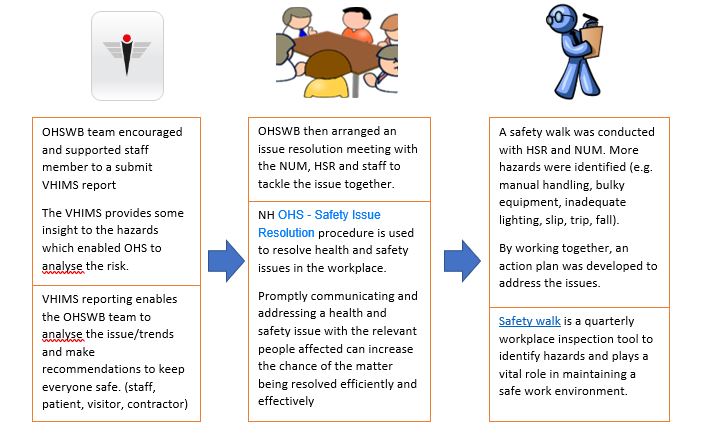
    HSR sought assistance from OHS & Wellbeing (OHSWB) team, raising concerns about the layout of the workplace being inadequate. A Victorian Health Incident Management System (VHIMS) report was not submitted prior to this.

    Steps taken:

    Through effective communication and working closely together as a team, issues can be resolved by reducing exposure to hazards and promoting health and wellbeing.

    If you have any health and safety concerns, the following steps should be taken:

    • Talk to your Nurse Unit Manager (NUM)/ Manager and Health and Safety Representative (HSR) about the concern/issue
    • Submit a VHIMS report (where applicable)
    • If the issue cannot be resolved or further supports are required, contact OHSWB
    • Work together to resolve the issue

    The OHSWB team are here to support you. Here is how you can contact us:

    Pictured in featured image (L-R): Bessie Taitoko (PSO; HSR), Tamara Cannan (NUM), Rianna Cordina (Clinical Nurse Consultant), Owen Glassenbury (MHICAR senior clinician), Roopa Abrol (ECT coordinator; HSR).

  • World Delirium Awareness Day 2024

    World Delirium Awareness Day 2024

    World Delirium Awareness Day is an annual event in March to raise awareness about delirium and its impact on patients, families, and healthcare systems.

    Delirium is described as a serious disturbance in mental abilities that develops rapidly and severely impacts a person’s perception, cognition and awareness. It can result in increased care requirements and longer hospital stays, and contribute to further complications such as falls, pressure injuries, loss of independence, dehydration and malnutrition.

    “Patients with delirium can hear and see things that aren’t real. They can feel things that aren’t real and when you put that all together, it can be very much like you’re in a living nightmare,” said Kerryn Busuttil, Director of Nursing & Site Operations Director, Bundoora Centre.

    “In hospital, they may think they are not in hospital – instead, they may think they’re in their bed at home, and then they start wondering why there are people in their room.”

    Unfortunately, the condition is a challenge to diagnose. In fact, it is frequently misdiagnosed as it can present like a range of other conditions, such as psychosis or depression. Yet it is known that the longer a person is in a delirious state, the bigger the impact it has on their cognitive function. That is why, prevention is key!


    What can you do? 

    SUSPECT, SPOT and STOP delirium!!!

    SUSPECT – Assess patients within two hours of admission.

    SPOT – Complete the delirium screening tools – risk assessment and 4AT in the EMR.

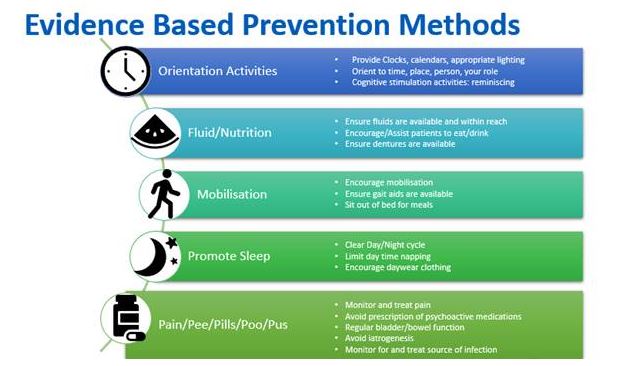
    STOP – Commence delirium prevention strategies, educate and involve patients and carers.


    Did you know?

    Did you know that there is a Delirium Clinical Care Standard?

    The Australian Commission on Safety and Quality in Health Care established the clinical care program to support clinical experts and consumers develop clinical care standards for health conditions that would benefit from a national coordinated approach.

    The Delirium Clinical Care Standard is one of three mandatory standards that Northern Health must comply with.


    Want to know more?


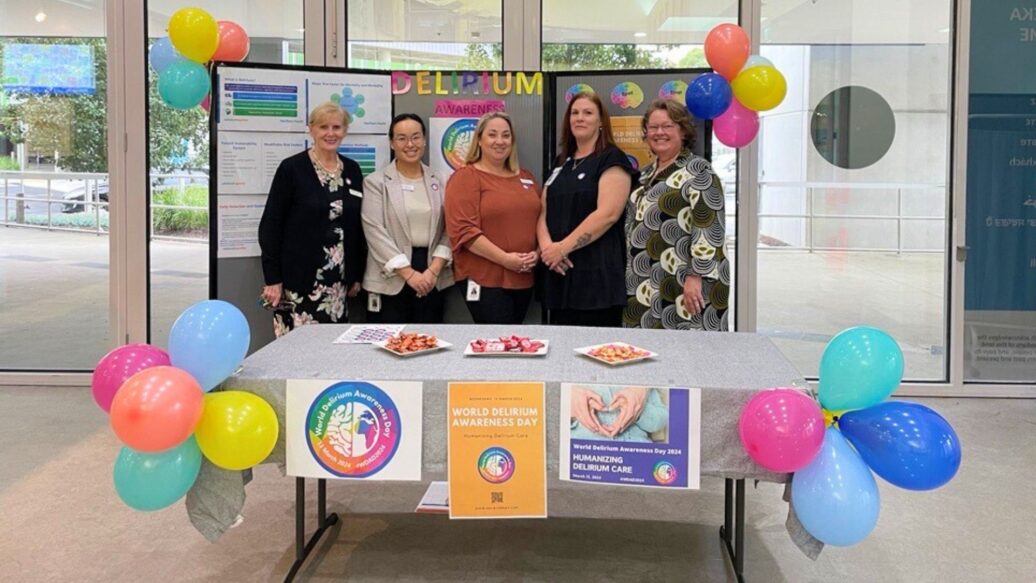
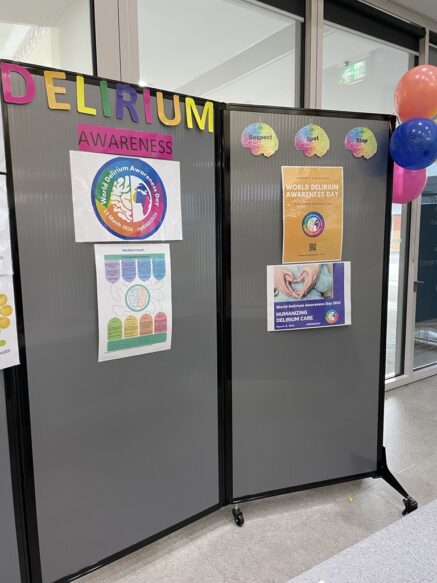
    World Delirium Awareness Day display at Northern Hospital Epping

    Who are we?

    Delirium and Cognitive Impairment Clinical Improvement Committee is a subcommittee under Standard 5 Comprehensive Care.  The purpose of the committee to provide governance over the development or adoption of a system that uses best practice evidence – based improvement strategies in service delivery and minimises harm to patients who have cognitive impairment or are at risk of developing delirium.

    Pictured members of the Delirium and cognitive Impairment Clinical Improvement Committee (L-R): Maree Glynn, Director Clinical Practice Improvement, Thi Nguyen, Divisional Director Medicine, Kerryn Busuttil, DON/Site director, Bundoora Centre, Lisa Wilkinson, Personal Assistant, Kim Jeffs, Geriatrician. 

  • Standard 7 – What you need to know

    Standard 7 – What you need to know

    Each week in the lead up to Accreditation, Northern Health will focus on a different Standard. You will hear from the Chairs of each Standard Committee on what you need to know.

    This week we spoke to A/Prof Wanda Stelmach, Chief Medical Officer, about Standard 7: Blood Management

    What is this Standard about?

    The Blood Management Standard aims to improve outcomes for patients by identifying risks and using strategies that optimise and conserve a patient’s own blood, as well as ensuring that any blood and blood products that patients receive are safe and appropriate. Blood is a precious resource. It is a product that is altruistically gifted by members of the community to support those members in the community who need it most. Blood products must therefore be used appropriately and safely.

    At Northern Health, this Standard looks like….

    • Blood is considered a precious resource and will be used appropriately and safely
    • Right blood to the right patient for the right reason
    • Correct and MATCHING labelling of blood tubes and request slip
    • Consent – information brochure and written consent
    • Blood Product Administration Chart is your guide and documentation tool
    • Blood Safe training for all staff who handle blood, blood products and blood samples
    • Correct and safe blood storage
    • Minimized wastage

    What are the top 5 ways staff can be prepared for Accreditation against this Standard?

    The five key messages from Standard 7 are:

    • Effectively optimizing and conserving a patient’s own blood, reducing the unnecessary risk of exposure to blood products and associated adverse events
    • Making clinical decisions ensuring all treatment options, and their risks and benefits, are considered before deciding to transfuse
    • Safely administering the products to the intended recipient.
    • Storing and disposing of blood and blood products correctly.
    • Reporting and investigating any adverse reactions or incidents.

    What are the top 5 questions staff needs to be able to answer about this Standard?

    1. Do you know the governance structure/Committee that oversees the safety and quality systems for Blood management at Northern Health?
    2. What is the mandatory training requirements for the Staff involved in Blood Management, the frequency of training, and where can you access these training?
    3. How do we involve the patient in their care with regards to blood management?
    4. What is Patient Blood Management?
    5. What do you do when a patient experiences a reaction to a blood product?

    Is there anything else you would like staff to know about this Standard?

    The Zero tolerance program in Blood Management rejects samples that do not meet the labelling requirement for pre-transfusion sample collection and request for blood and blood products. This means if the tube and the request information don’t match the sample is rejected and the patient has ANOTHER UNECESSARY venesection!

    REMEMBER:

    • Patient’s 3-point ID must match with the specimen tube and request form.
    • The collector’s signature or initials and date of collection on the request form must be identical to the sample label.

    To learn more about Standard 7, please see the Intranet.


  • Get to know: A/Prof Wanda Stelmach

    Get to know: A/Prof Wanda Stelmach

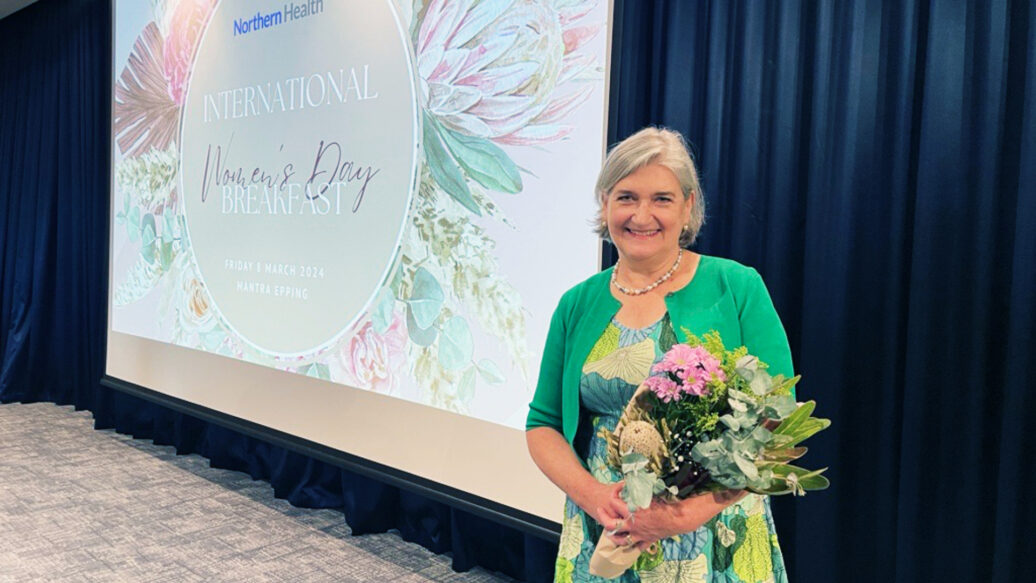
    Every encounter with Associate Professor Wanda Stelmach, Chief Medical Officer at Northern Health, provides an opportunity to learn and be inspired. This morning’s encounter, where Wanda spoke to guests attending Northern Health International Women’s Day Breakfast at Mantra Epping, was no different.

    Very giving of her time and expertise, Wanda has made an enormous contribution to Northern Health, to the medical profession, and to all those who have been privileged to work with and learn from her.

    Her time working across PANCH and Northern Health spans 30 years, and recently Wanda announced that she will be stepping down from her role as Chief Medical Officer as she begins to transition to retirement, leaving some very big shoes to fill.

    Let’s discover more about Associate Professor Wanda Stelmach….


    Q: Wanda, as is customary with our staff profiles, let’s cover the most important question first, your coffee order, please?

    A: Small soy flat white extra hot – I like coffee very hot and water very cold!


    Q: You recently completed 30 years of service at PANCH/Northern Health. What have been some of the major highlights over the years?

    A: The transition of PANCH from Preston to Northern Hospital in Epping in 1998 was amazing. It was done in over a day with theatres starting up the next day – which wasn’t such a great idea as we were situated next to an open tip (where Riverlee is now building) and with no fly-screen doors, we had flies in theatre – lists were cancelled, and a fly was sent in formalin to pathology. A report followed – I wish I still had a copy of that!

    Another major highlight for me has been watching the evolution of Northern Hospital, from a small community provider of care to Northern Health, a tertiary institution which challenges the majors yet keeps that ‘small town feeling’ which is why I think Safe, Kind, Together resonates with staff. Northern Health really came into a league of its own when we managed thunderstorm asthma and later, how we managed the pandemic. I am really proud of how staff came together and worked together to support the community and each other – the can-do attitude took effect, and we haven’t looked back!


    Q: What does a day in the life of Northern Health’s Chief Medical Officer (CMO) look like?

    A: Well, it could be a day of back-to-back meetings and interviews, or it can be quite a clear day administratively, but things do pop up! And Fridays are always breast clinic! It’s varied and interesting work because of my interactions with staff from across the whole health service and the community. People who are enthusiastic, want to see Northern Health succeed and have such brilliant ideas!


    Q: What have you enjoyed most about the CMO role? And what will you miss the most?

    A: My wide portfolio has been challenging and interesting. Junior and Senior Medical Workforce, Pharmacy, Outpatients, Pathology, Radiology, Library, Research and Education – all report to me. There have been massive changes in all of these areas. I have enjoyed the challenges because of the staff, patients, families and communities I interact with. I will miss the breadth of interactions, however, I will continue my work as a breast surgeon and as Medical Director NEMICS, as well as, continue teaching medical students and co-supporting my RMIT research students, so there will be plenty of opportunities to catch up.


    Q: The theme of this year’s International Women’s Day is ‘Count Her In: Invest in Women: Accelerate Progress’. Who invested in you and how did this impact your career?

    A: My parents were the first to invest in me as well as in my sister and brothers. At home and at school, it was an equal playing field academically and with housework. My clinical mentors, especially Hamish Ewing and David Butterfield, who I met at PANCH, taught me that although medicine is extremely fulfilling professionally, there needs to be life outside to make a person a well-rounded empathic clinician. My husband and my children have also been amazing support, although my daughter once accused me ‘of loving my patients more than I did her’, as I rushed back to the hospital late one evening!


    Q: Your parents taught you the importance of an education and that ‘if you had an education, no one could take it from you’. Why is the investment in education so important, particularly for women?

    A: It’s like the saying, “If you give a man a fish, you feed him for a day. If you teach a man to fish, you feed him for a lifetime.” Once you have a skill, you can use it to leverage a better life for yourself, your family, community and society. Such programs as SEWA Bharat in India support women to become self-employed. Education grows aspiration so that women feel empowered to apply for what are considered non-traditional roles. The more there is diversity in employment, the more we recognize the benefits of moving away from gendered roles – diversity is better for the individual and for society.


    Q: Why is mentorship, and finding the right mentor, so important?

    A: A mentor and mentee getting together to discuss their area of interest is so beneficial for both. The mentee gets insight into career pathway and choices made, and by challenging what in effect is a historical pathway, brings the perspective of the current generation to the table and gives the mentor a different view of the world. Sometimes one mentor is enough. Other times you need a mentor to support different aspects of your life. And the needs of both change over time, but the value of that interaction never ceases.


    Q: What do you like to do in your spare time? When you’re not on call that is……

    A: My husband and I are working on a native garden at our weekend getaway in Gippsland – so lots of reading, trailing plants and working with the local land care group. We love going to art galleries together and we love doing our own thing. For me, it’s our apartment balcony garden – very proud of the fact that I grew a great summer crop of tomatoes, lettuce, cucumbers and basil all in large pots! I love framing – anything – for myself, my family and friends – I love the challenge of creating a piece of art while at the same time working with my hands.


    Q: What’s next for Wanda Stelmach? What does retirement look like?

    A: It’s not retirement! It’s a reconfiguration of my life with a big dose of flexibility! I will continue supporting the Northern Health community through my breast and my NEMICS work, especially in the area of cancer services. I plan to continue to teach medical students, support my research candidates and mentor. And I will be able to focus on being a better archivist for the Newhaven Yacht Squadron and bring their archiving into the 21st century, as well as complete their 60-year history as a coffee table book – the 50-year history is an e-book on their website. I plan to enjoy the luxury of writing poems, just for my own pleasure! Reading. Tapestry. Travel. I intend to be busy, but different busy! Apologies to anyone I have made jealous – your time will come!

    Wanda was also a special guest on this week’s episode of Visiting Hours, Northern Health’s podcast, where she shares many more key insights and personal stories. To listen to this podcast, click here.