• Looking ahead: How will the EMR change our ward rounds?

    Looking ahead: How will the EMR change our ward rounds?

    Northern Health staff are constantly adapting the way we conduct ward rounds to meet new and changing circumstances constantly. With the implementation of our Electronic Medical Record (EMR), the primary function and purpose of the ward rounds will not change with the EMR, but the tools our staff use to access and document information will be different.

    Currently, we may refer to various paper forms, such as medication chart, plan of care, and observation chart for decision making. One of the benefits that the EMR will  bring is a more streamlined process of information retrieval. Other than holding information from all treating clinicians, data recorded on some devices will also be fed into the EMR. The patient data will be presented in a summary screen that displays the most important information about the patient. In cases where our clinicians would like more in-depth information on the patient, they will have the ability to drill down into the details about the patient’s condition and treatment by using the system.

    “Being able to access the EMR in real-time as we discuss the long-stay patients in the virtual LOS Round will be very useful, as viewing the most current information will allow us to understand more about what needs to be achieved in order for the patients to be safely discharged,” says Lorinda McPherson, Manager, Acute to Community Coordination Team.

    While this change will bring significant benefits in terms of accuracy and breadth of information, as well as legibility, there will be significant adjustments that will take time and practice for us to feel comfortable using the EMR. Patient data documentation will no longer be on paper forms, especially for our wards. Instead, we will have a workstation on wheels (WOW) or a laptop on a trolly to take to the patient’s bedside to enter information. However, with this change, we will need to practice to work out the best way to enter information, view the electronic record and make eye contact with the patient and our team.

    Catherine O’Connell, EMR Clinical Documentation Analyst, says from her previous experience in using WOW at the bedside at Monash Health, the transition was beneficial for both the patient and the clinicians, but it will take some time and patience to get used to.

    “I found small tips such as letting the patient know what I was doing and placing the WOW to the side and not directly between the patient and I were very helpful in the transition. Once you get used to documenting in real-time, you will never want to go back as overall, the benefits greatly outweigh the inconveniences,” says Catherine.

    To help our staff to become more comfortable with the EMR, the EMR team will provide training in how to use the EMR, with practice opportunities such as walkthroughs to familiarise with the equipment and technology, as well as the practicalities of moving around the space and paying attention to our body language.

    Dr Richard King, Executive Physician, says the LOS Round was successful despite lockdown. “We would not have been able to carry out the LOS Round during lockdown without the help of digital technology. It was extremely successful and I would like to thank the nursing staff and registrars for their support in making this possible.”

    “It was exciting to see how technology had enabled us to conduct virtual ward rounds. We were able to involve key clinicians who may be working from home due to the current COVID-19 situation. I believe with the introduction of the EMR, this could contribute positively to improving our future ward rounds,” says Laura Hughes, Project Manager, Project Management Office and HRO Transformation Unit.

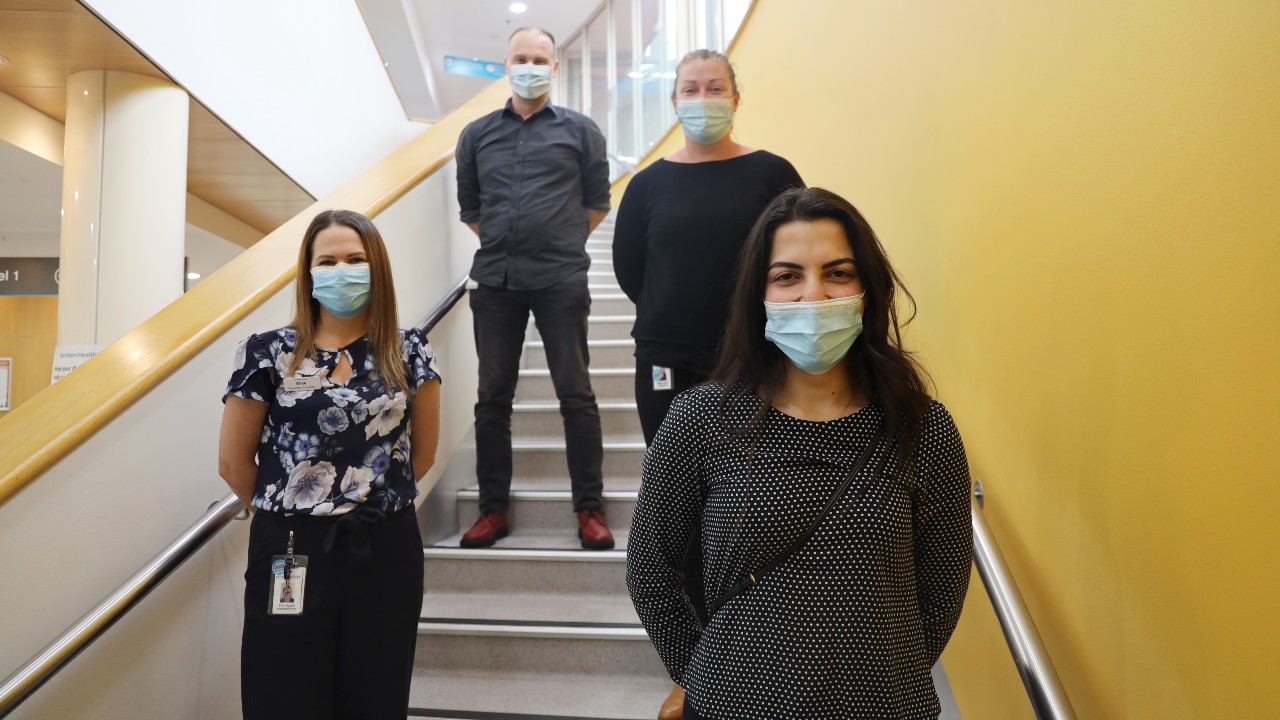
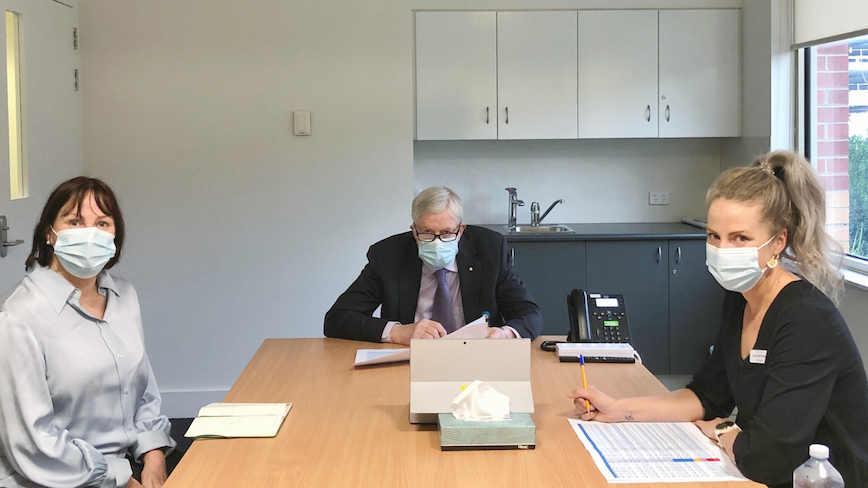
    Featured image (left to right): Dr Sandra Brown, Divisional Director, Sub Acute and Aged Care, EMR Medical Accountable Leader; Dr Richard King, Executive Physician and Lorinda McPherson, Manager, Acute to Community Coordination Team
  • Put lymphoma in the limelight

    Put lymphoma in the limelight

    The community is encouraged to put lymphoma in the limelight during September, as part of Lymphoma Awareness Month.

    Yesterday also marked World Lymphoma Awareness Day, which is celebrated every year on 15 September to raise awareness of cancers of the lymphatic system.

    According to Lymphoma Australia – a charity dedicated to supporting lymphoma patients, carers and health professionals – there is a new lymphoma diagnosis every two hours in Australia. However, lymphoma is currently classed as a low priority cancer in Australia. Lymphoma Australia aims to improve community awareness to assist in early diagnosis and access to the best possible treatment.

    As part of Lymphoma Awareness Month, the community is encouraged to show their support by wearing the colour lime for someone with lymphoma, share a fact to help raise awareness, take on a challenge and share #Lime4Lymphoma.

    Naveeni Natkunarajah, Ward 3 Nurse Unit Manager, says lymphoma is the sixth most common cancer in the country.

    “It is also the most common blood cancer affecting the lymphatic system – white blood cells – and can affect all age groups,” says Naveeni.

    “Over the last 12 months, Northern Health has treated 274 inpatient admissions for various types of lymphoma.”

    “There are 80 different sub types of lymphoma that are classified according to the rate of growth – with a new diagnosis every two hours and lives lost every six hours. Northern Health Cancer Services are going lime this September to put lymphoma in the limelight and support people who are experiencing this life changing illness. The monies raised will help patients and families who have been touched by lymphoma and assist in funding for specialist lymphoma care nurses.”

    Northern Health’s Haematology Service under Cancer Services is expanding, says Naveeni, with a Haematology Specialist Outpatient Clinic Service and Day Oncology Treatment Centre, which now incorporates the NOAH@Home program, offering oncology and haematology treatment at home, together with Ward 3 for inpatient diagnostic investigation, diagnosis and treatment.

    “We provide an inpatient consultation liaison with our Clinical Nurse Consultants, inpatient nursing treatment education, inpatient chemotherapy administration, together with discharge planning advice and resources for support. We have an on-call symptom review contact for patients to call following discharge with any questions, queries and support,” says Naveeni.

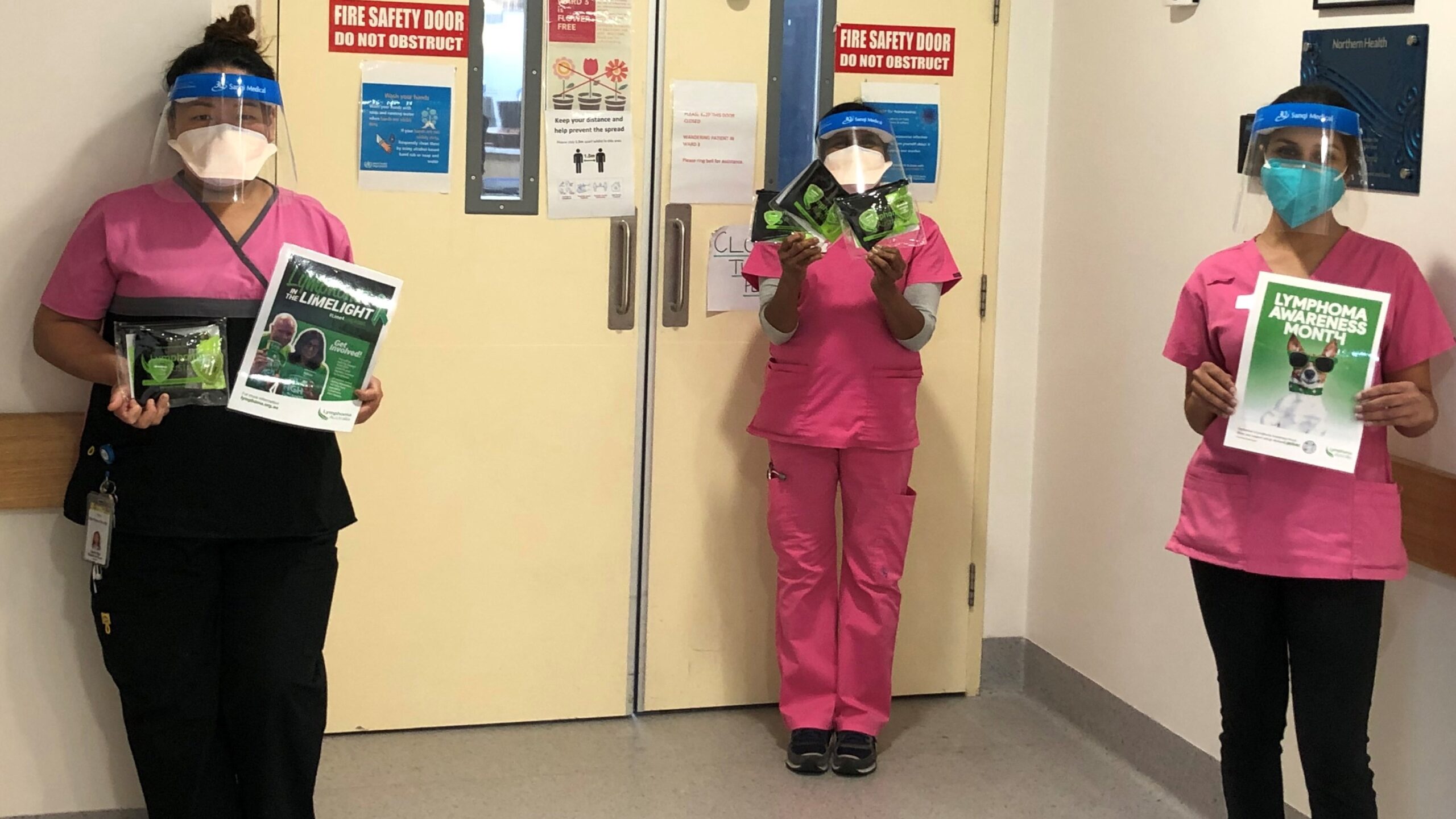
    Featured image (left to right): Ward 3 Chemotherapy Trained Nurses Sarita Rai, Samantha Hewa Inaththappulige and Hashika Dharmatileka

  • Meet your Wellbeing team

    Meet your Wellbeing team

    Northern Health has a new Wellbeing team that consists of three team members – Stephen Whittaker, Wellbeing Team Leader, Renee Camilleri, Wellbeing Advisor, and Casey O’Brien, Wellbeing Project Psychologist. The team will be working to implement initiatives throughout the organisation to Protect, Promote and Support our staff’s mental health and wellbeing, with the ultimate goal of giving our staff the best opportunity to THRIVE.

    Many of you would have seen the story on Stephen Whittaker back in June. Right now, the team are very focused on supporting staff in the midst of the current Covid-19 situation across Melbourne, making ‘Wellbeing Check In’ calls to furloughed staff and ensuring ward staff working on Covid-19 Wards have what they need to feel safe, both physically and psychologically.

    “We are here to support Northern Health staff – to strengthen our culture of care and ensure everyone feels safe, heard, appreciated and valued,” Stephen said.

    Renee is working on the new wellbeing plan for our staff, and ensuring everyone is up to date on what is currently available.

    “As someone who is a Criminology and Psychology graduate, this field of work is a passion of mine, so I am looking forward to having a hands on approach in the coming 12 months – I am very excited to be here,” Renee said.

    She is currently in the process of re-branding the THRIVE program and updating Intranet pages, where staff will be able to find valuable resources, tools and invitations. One of them are our TREAT Rest and Recovery sessions, which do wonders for relaxation and mindfulness”.

    The third member of the team is Casey, a qualified Psychologist who is focused on developing tailored wellbeing supports for our staff, which include shared reflection sessions. These are designed to encourage staff to have respectful conversations about professional experiences in a safe and confidential open forum.

    “We want staff to have as many avenues and platforms to share their experiences as possible,” Casey said.

    “The Northern Health Wellbeing team is a wonderful addition to the People & Culture directorate. Supporting the health and wellbeing of our staff is more important than ever and having a team of qualified, passionate and dedicated wellbeing experts is a welcomed and exciting addition to Northern Health,” said Jade Ralston, Director, People and Culture.

    All current wellbeing events and resources can be found on the THRIVE Intranet page, with much more to come over the coming 12 months.

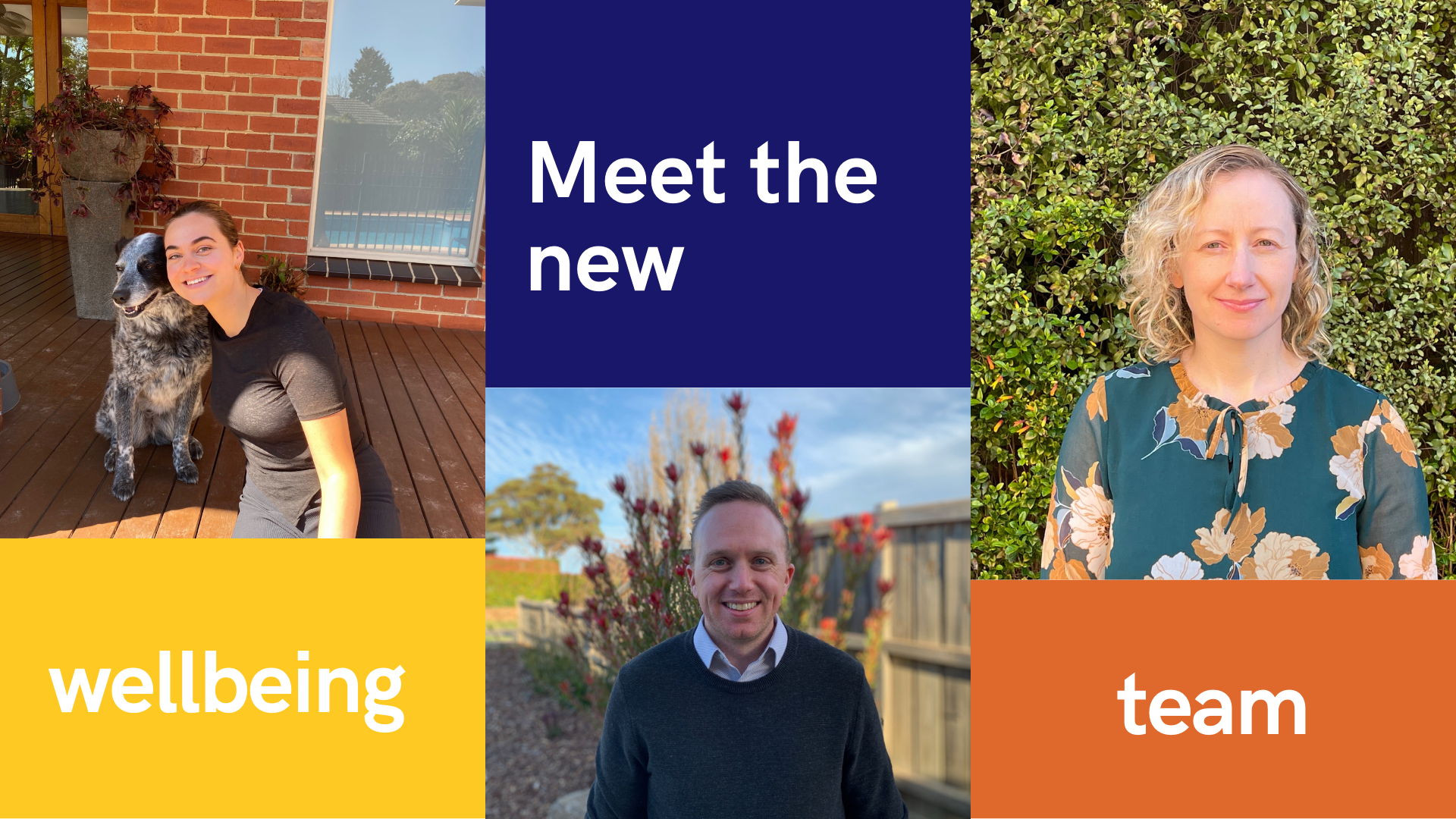
    Featured image: Renee Camilleri (left), Stephen Whittaker (middle) and Casey O’Brien (right).

  • World Sepsis Day: Stop sepsis, save lives

    World Sepsis Day: Stop sepsis, save lives

    Yesterday was World Sepsis Day (WSD), an initiative by the Global Sepsis Alliance to spread community awareness about sepsis, and strategies in infection prevention and early recognition.

    WSD is held on 13 September every year and is an opportunity for people worldwide to unite in the fight against sepsis.

    Sepsis arises when the body’s response to an infection injures its own tissues and organs. It may lead to shock, multi-organ failure and death, especially if not recognised early and treated promptly.

    Sepsis is a global health crisis. It affects between 47 and 50 million people worldwide every year and at least 11 million die – with one death every 2.8 seconds. Twenty per cent of all deaths worldwide are associated with sepsis.

    Depending on the country, mortality varies between 15 and more than 50 per cent. Many surviving patients suffer from the consequences of sepsis for the rest of their lives.

    To improve outcomes, community awareness of signs and symptoms, together with time-critical recognition and appropriate healthcare management, is essential in reducing morbidity and mortality associated with this condition.

    In 2013, Northern Health introduced the Step on Sepsis Program.

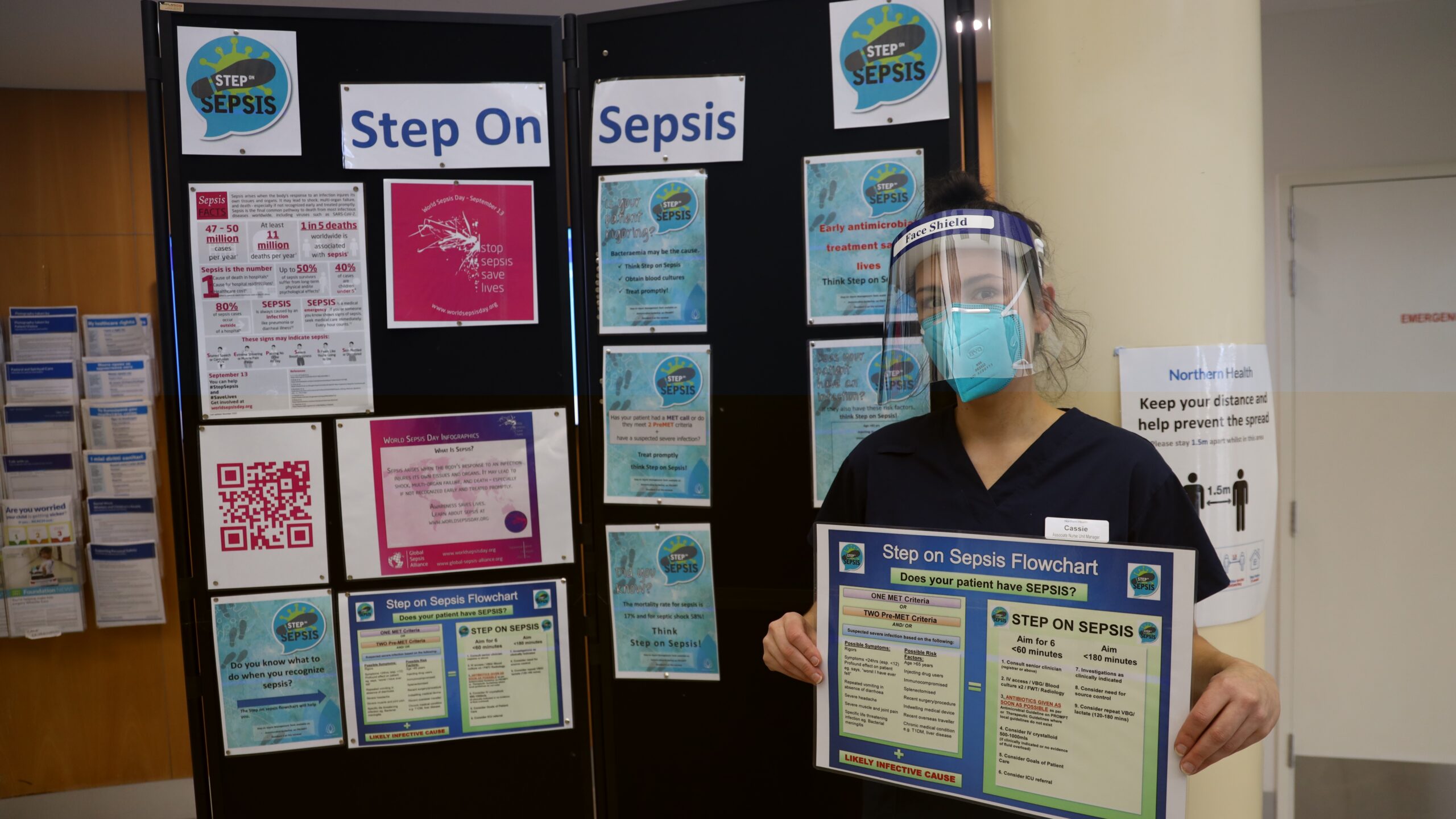
    Cassie Gilbert, Step on Sepsis Project Coordinator, said the program was developed to aid in early recognition and appropriate management of sepsis at Northern Health.

    “The goal is to decrease time to antibiotics and improve patient outcomes,” Cassie said.

    “Sepsis is a life-threatening organ dysfunction caused by a dysregulated host response. Sepsis, a silent killer, is considered a medical emergency. It is the leading treatable cause of mortality globally. The risk of dying from sepsis increases by as much as eight per cent for every hour treatment is delayed.”

    “It is time critical to promptly recognise the warning signs of sepsis and respond appropriately to improve patient outcomes. As clinicians, we are essential in the early recognition of sepsis and advocating for our patients to ensure the early treatment of sepsis.”

    The program has been successful in helping clinicians improve the recognition and treatment of patients with sepsis. This program focuses on examining time to treat with antibiotics, as well as improving nursing and medical staff education in identifying and managing patients with serious infections.

    To find out more about sepsis management at Northern Health, click here.

    If you would like to know more about sepsis and world sepsis day, head to www.worldsepsisday.org and www.vsgr.org.

    Featured image: Cassie Gilbert, Step on Sepsis Project Coordinator

  • Medtasker data showing success

    Medtasker data showing success

    The ‘preMETs on Medtasker’ project was launched 13 April 2021, moving preMET calls from the paging system to Medtasker and allowing direct communication between clinical staff i.e. nurse to doctor, in line with Standard 8.

    Sandy Ayuob, Medtasker Project Officer, explains benefits of this change include lessening the workload for Switchboard, a faster and more reliable two-way communication, and the ability to record and review data, with time-stamped information. To monitor the progress of the project, the team conducted a pre-implementation and post-implementation survey.

    “In the pre-implementation survey, we wanted to find out what staff thoughts were on moving preMets to MedTaskers, and of the 93 responses 66 per cent thought there would be risk moving from preMET to Medtasker. However, in the post-implementation survey there were 147 responses where 65 per cent experienced no issues. Overall, there were 60 per cent of staff who were satisfied with Medtasker, 30 per cent felt neutral to the change, and only 10 per cent were dissatisfied,” she explained.

    On top of the data from the survey, the team looked at the data collected on the MedTasker app.

    “The PreMET Working Group, led by Dr Lachlan Hayes, collected, and analysed ten weeks of data post Go-Live. There were 3,273 preMET tasks sent and 4,504 calls to Switchboard saved. Of the preMET tasks, 97 per cent were accepted within 30 minutes, the median response time was one minute and completion time was 26 minutes,” she explained.

    Sandy and the team are quite happy with these results, and to improve the service, they also looked at the 10 per cent of the dissatisfied responders to find a common theme.

    “Part of the feedback was the team didn’t find the staff member to send the preMET call to, as some clinical staff weren’t logged in. I would like to remind the clinicians that they need to log into their shift if they have a role that they need to display on Medtasker,” she said.

    “The second issue was that in some cases, there weren’t enough computers to send the preMETs on, and the third was the slow response time. Some people weren’t pleased with the response time, but the median time shows the majority were answered on time,” she said.

    Dr Sing TAN, an ICU consultant, ICU EMR Senior Medical Analyst and CHIA certified informatician, shared the digitisation of preMETs creates a level of visibility that is the first of its kind, and the data generated will undoubtedly provide insights that can lead to improvements in our management of deteriorating patients.

    Elise Sutton, Clinical Deterioration Coordinator, shared her views from the Standard 8 perspective.

    “With the assistance from Leanne from Decision Support, moving to Medtasker has given us the ability to pull data on preMET calls and have live updates on the Reporting Portal MET dashboard. The information available will allow Standard 8 to report on preMET data including the reason for activation, failed or delayed response, multiple preMET calls, correlation with MET calls, mortality, and allow for targeted education,” she said.

    Finally, the team noted there was no increase in MET calls and Code Blues. The Medtasker team is now exploring a research project investigating the failed preMET calls which progressed as MET calls and has plans to implement Medtasker at Broadmeadows Hospital as well.

  • Can a conversation be life-saving?

    Can a conversation be life-saving?

    This month, we marked ‘R U OK? Day’, a day dedicated to checking in on your loved ones, your colleagues and on yourself as well. This year’s theme, “Are they really OK? Ask them today”, invites us to dig deeper and go past the usual “I’m OK, how are you?” The current pandemic has brought many challenges to our staff – both at work and at home. One of our colleagues, Dr Vinita Rane, wrote a letter to share how the pandemic has impacted her and her family:

    I am someone who struggles to name a favourite song, or favourite food, book, movie or piece of clothing. It seems so very limiting to be confined to a single item. And yet, recently there is a song that keeps bubbling up from my childhood. It is unlikely to be familiar to you: it’s from a 1965 film, and the film is in Hindi. The lyrics have been reverberating in my head, on and off, “aaj phir jeene ki tamanna hai/aaj phir marne ka irada hai,” which can loosely be translated as: “Today, the desire to live has returned. Today, the intention to die remains.” In the film, as she sings those lyrics, the lead actress wears a bright blue sari while dancing precariously on top of the ruins of a narrow stone archway, and it seems that at any moment she could tumble off to her death.

    It seems an apt metaphor for the uncertainty that we all find ourselves in at the moment. My son is one of only a handful of children who can attend daycare, but he uncharacteristically cries at drop-offs, startled by the new COVID-safe drop-off procedure. I plan teaching sessions for our medical students one week, only to cancel them the next. My HIV clinic is once again telehealth only. Over the course of three days, my daughter’s birthday party in early August went from being restricted to 10 guests, to being able to invite 50 people, and then ultimately completely cancelled as we re-entered lockdown.

    After two consecutive birthdays in lockdown, my daughter told me that she made this birthday wish as she blew out the candles on her cake – she wished that we would be out of lockdown for her 8th birthday. Last year she wished that we could travel somewhere on a plane. It didn’t come true.

    And yet, I acknowledge that we are incredibly fortunate. Both my husband and myself have a stable, secure income. Our parents live in Melbourne and both my parents and my in-laws are vaccinated. As an essential worker, I thank my lucky starts that I am not having to home school my daughter. I also get to leave the house and have conversations with other people.

    R U OK? Day, at its heart, is about having conversations, although it seems to me that asking people “R U OK?” this year is redundant. None of us are OK, and it would be a superhuman feat to be thriving in the current climate. In fact, it strikes me as I type this, that it wouldn’t be superhuman, rather it would be inhuman. It would require a willful blindness to the struggles of those around us. And this is the point of R U OK? Day – it reminds us to take a genuine interest in those around us, and let people know that we notice their struggle, and that we care about them.

    I’ve often joked that my husband and I both have faces that say, “please, tell me all of your problems.” (Or at least we did, before our faces were obscured by masks!) What we have both realised, is a large reason that we have been drawn to the work that we do, is that we have an intense curiosity about people. We unconsciously have always sought out moments of connection. Now, because of the limitations with physical distancing, masks, face shields and other PPE paraphernalia, these automatic efforts need to be crafted intentionally.

    In an uncertain world, creating a sense of belonging and connection is a powerful balm, and perhaps even lifesaving. San Francisco’s Golden Gate Bridge is notorious in its popularity as a location to suicide. Interviewed in 2003, Kevin Briggs, a motorcycle patrol officer, described how he had coaxed over 200 people back from the precipice.

    He starts by asking them the question: “How are you feeling today?”

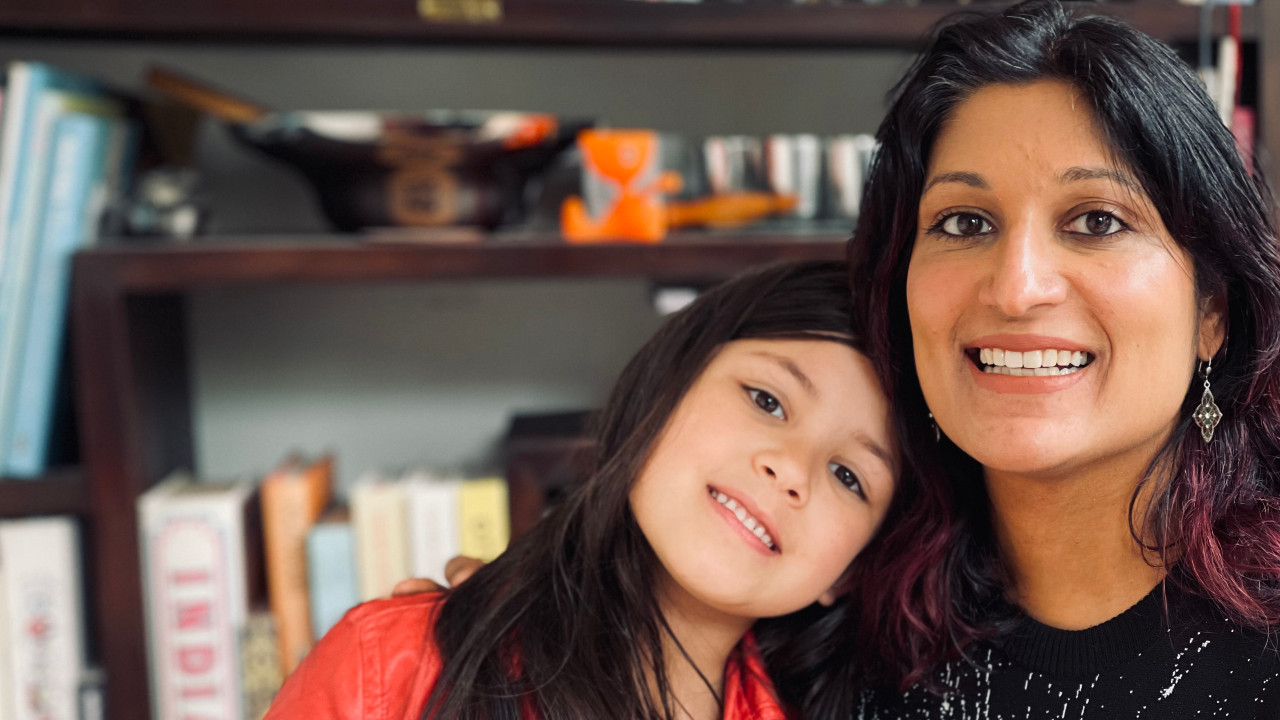
    Dr Vinita Rane is a sexual health/general physician and medical educator. She is the Deputy Director of Medical Education for the Northern Clinical School at the University of Melbourne and is currently one of the physicians caring for COVID-positive patients on Ward 22. Featured image: Dr Rane with her daughter.

    “R U OK? Day” resources from our Wellbeing team can be found on the Intranet.

  • Dr Stefan Herodotou: 40 years at Northern Health

    Dr Stefan Herodotou: 40 years at Northern Health

    Dr Stefan Herodotou is celebrating an incredible 40 years at Northern Health.

    Stefan started working at PANCH on 1 May 1981.

    “Forty years of my life. How fast all those years have gone!” he said.

    “I feel it was only yesterday. I remember so vividly being interviewed for the job by Dr Peter Leslie, the then medical director, and my excitement a few days later when I was told that the job was mine. The job which would give me an infinite number of rewarding moments.”

    “A job which would give me highs and lows. Would give me excitement and happiness and at times sadness and desperation. A job which would provide some of the building blocks in forming my personality and character. A job which would make me to be what I am today,” he said.

    Dr Megan Robb, Director of Emergency, acknowledged Stefan’s dedication and commitment as an emergency physician.

    “He is highly respected and valued by both his colleagues and patients, not only in ED, but across the health service. He is one of the most dedicated and hardworking physicians I have ever had the pleasure of working with,” Megan said.

    “He truly is an inspiration to all around him as well as one of the nicest, most kind and considerate humans you could ever hope to meet,” Megan added.

    Fellow colleague, Dr James Hayes, who has worked with Stefan for 37 years, said, “Dr Herodotou has been one of the pillars of our hospital for decades, going quietly above and beyond his duty, his deeds going mostly unknown to others.”

    “Stefan’s, kindness and dedication to his patients is well known throughout our hospital, working always with good humour and without complaint,” James said.

    Stefan says the ED is a very demanding environment; busy and unpredictable. There is never time to be bored in ED.

    “The intensity of the emotions can be enormous and fluctuate so rapidly. Precisely that energy, emotion, teamwork, and the shared goal that we all have to save lives, are what drive my passion,” he explained.

    “I have seen significant advances in my 40 years of practice. Now the work is much more structured, the training of the medical and nursing staff is much more advanced, as is the technology we use. Also, our knowledge of emergency medicine has grown exponentially. One would think that all these advances would make the work easier. However, this is not entirely accurate.”

    “I find that people’s general expectations of us have increased dramatically, which increases the pressure among the staff. The average age of presentations to the ED has increased considerably. Now that people are living much longer, their medical issues have become a lot more complex. The investigation of all these complex medical issues is now much more sophisticated and much more expensive,” he added.

    Stefan explains medicine has two main components – the science and the arts.

    “Science is constantly changing, evolving, and advancing. The arts part of medicine is what has remained unchanged from the times of Hippocrates. The need to see the patient holistically as a human being and not mechanically as “a liver, or lungs or a stomach” has not changed. That is why computers, regardless of how much computing power they have, cannot become doctors. Cannot replace the doctors.”

    “I love medicine. I love it so much. Very often I reflect on what we do. How privileged we are. There is no other profession which gives you the opportunity to come into such a close contact with others, to build a rapport where people can trust you with their wellbeing and, at times, with their life. But this privilege is not without a huge responsibility. We should never take advantage of this trust,” Stefan said.

    Stefan emphasises this to his students and junior staff.

    “I feel that it is the responsibility of every doctor, firstly to believe and adapt to this philosophy and practice medicine with that in mind, but also it is our responsibly to transplant this philosophy in the hearts of the students and to the younger generation of doctors.”

    “I also believe that it is essential for doctors starting their careers in medicine, to learn early on to anticipate the highs and the lows of the job. The joys along with the disappointments and frustrations. We all make mistakes. But the mistakes should be an opportunity for learning and moving forward with even more strength,” Stefan added.

    Stefan explains he started his career in medicine as an idealistic young man – “and I try to remain an idealist,” he said.

    “I had a dream that in my lifetime the world would change. That medicine would help to eliminate serious diseases and that medicine would be the catalyst for a positive change across the world. That poverty and wars would be only a thing of the past.”

    “Forty years later unfortunately, millions of people still die before even they walk. Millions of people still live in poverty and thousands of people continue to die every day because of war. Millions of people still have to move from country to country as refugees for faults not of their own. Still, I see immeasurable pain inflicted on young people because of the greed and the selfishness of countless number of other people and the huge imbalance in the distribution of wealth.”

    “Reflecting on all this, I am wondering sometimes, how we can go to bed at night and sleep as if it was everything in order in this world?”

    “I don’t want to finish this opportunity without saying how much I’m enjoying all the friendships I have developed with all these people I have worked with all these years. I can sincerely say that, during these 40 years, I have experienced only friendships and respect.”

    “I’ve always thought of the people at PANCH and Northern as my extended family. Philosophically, I don’t believe in luck, but still I regard myself honoured, privileged and ‘lucky’ that I have had the opportunity to be a part of this amazing institution, and to work next to so many wonderful and inspirational people.”

  • Every child needs a fair go

    Every child needs a fair go

    This week marks National Child Protection Week (NCPW), which has been running since 1990, starting on Father’s Day each year in September.

    The week raises awareness of child abuse, to keep children and young people safe from harm, and to prevent them from entering the statutory child protection system.

    At Northern Health, the Social Work Department, in partnership with the Strengthening Hospital’s Response to Family Violence (SHRFV) teams, raise awareness on the harmful effects of child abuse and advocate for the prevention of child maltreatment.

    ​This year, the theme is ‘Every child, in every community, needs a fair go. To treat all of Australia’s children fairly, we need to make sure every family and community has what kids need to thrive and be healthy’ – calling on the community to play a part in improving child wellbeing and to keep children safe in Australia.

    Sneza Filiposki, Project Support Officer, SHRFV and Senior Social Worker, said child abuse and neglect are under reported and undetected in our community as they occur within family homes and people still believe that it’s a private matter. Children also face the additional barrier in making disclosures due to fear they may not be believed. We know it’s prevalent in our society with current data showing that one in 32 children have received child protection services in 2019-2020 (Australian Institute of Health and Welfare). One child almost per fortnight is killed by a parent or step parent (Brown T et al, 2019).

    “Families can experience a number of stressors such as poverty, housing crisis, mental health decline and family violence, all of which can significantly impact a family’s ability to cope,” Sneza said.

    “We know children thrive when their parents have the support they need, so helping parents access services such as counselling, quality childcare and financial support can make the difference. If you become aware of child abuse, be the voice for that child or young person. You can help them and their families access the support they need.”

    As the COVID-19 pandemic continues to have an impact on our community, Sneza said it was more important than ever to protect our children and offer support to families.

    “The psychological and social impacts of COVID-19 on families is significant. With ongoing lockdowns and restrictions, more and more families are experiencing social isolation and financial pressures,” she said.

    “Being cooped up within a stressful family environment turns homes into a pressure cooker and can lead to child abuse and family violence”.

    The Social Work Department have noticed that the complexity of child protection cases have increased since the beginning of the pandemic. They ask that, during this time, staff are extra vigilant in recognising when a child may be at risk of harm, and refer to Social Work.

    To mark the week, the Social Work Department and SHRFV team have organised various activities throughout Northern Health. The SHRFV team will be offering training for staff on Working in a Paediatric Setting on Tuesday, 7 September and Thursday, 9 September on MS Teams. Staff will need to register their interest by emailing sneza.filiposki@nh.org.au.

    The Social Work Department has arranged posters to be display throughout Northern Health sites, to promote awareness. There are public display boards in main foyers, fact sheets are developed for staff and activity packs are compiled for patients on the Children’s Ward and in the Paediatric Outpatient Clinics.

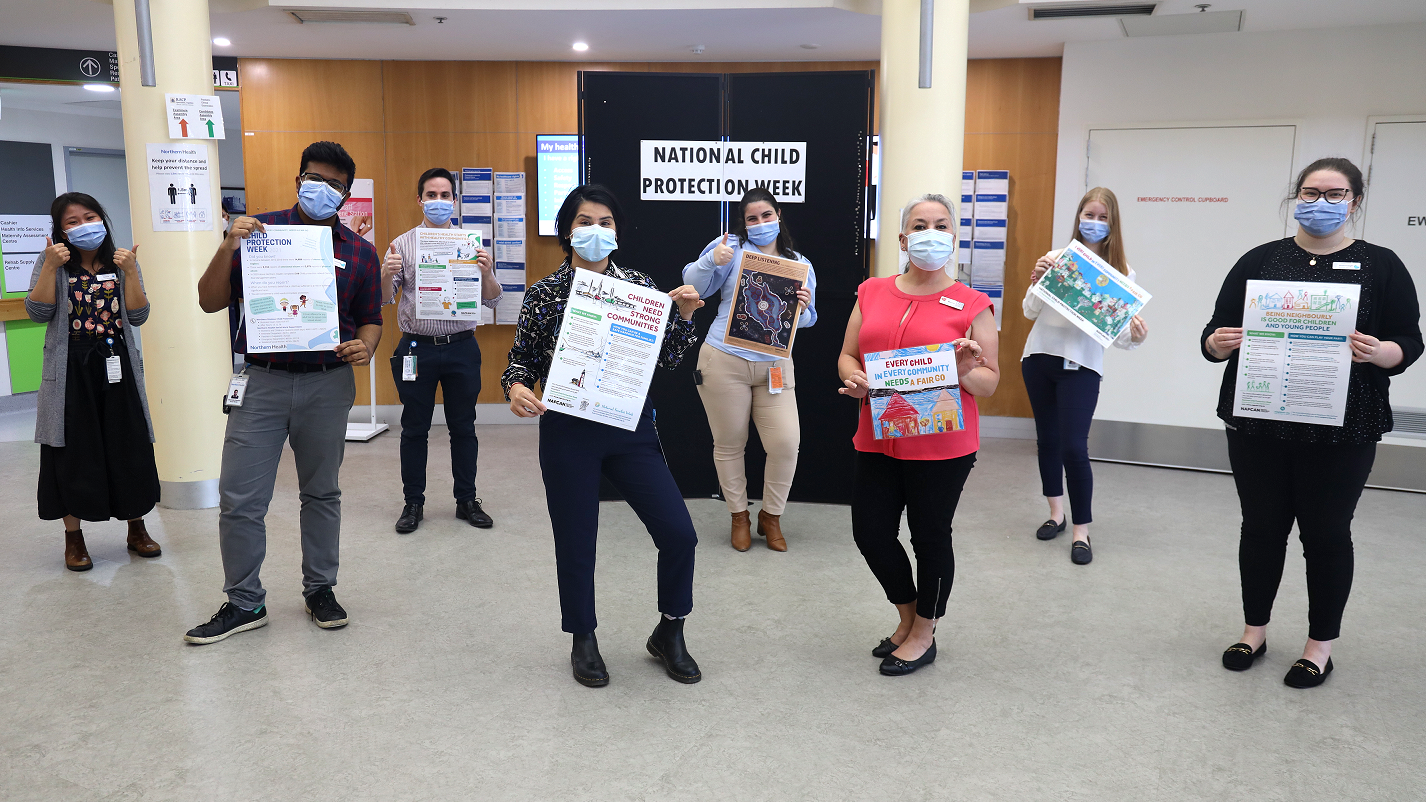
    Featured image: Northern Health Social Workers