From yesterday, Northern Health staff and volunteers are able to receive their annual influenza (flu) vaccinations. Compared to previous years, there won’t be a community vaccination program, due to our focus on COVID-19 vaccinations.
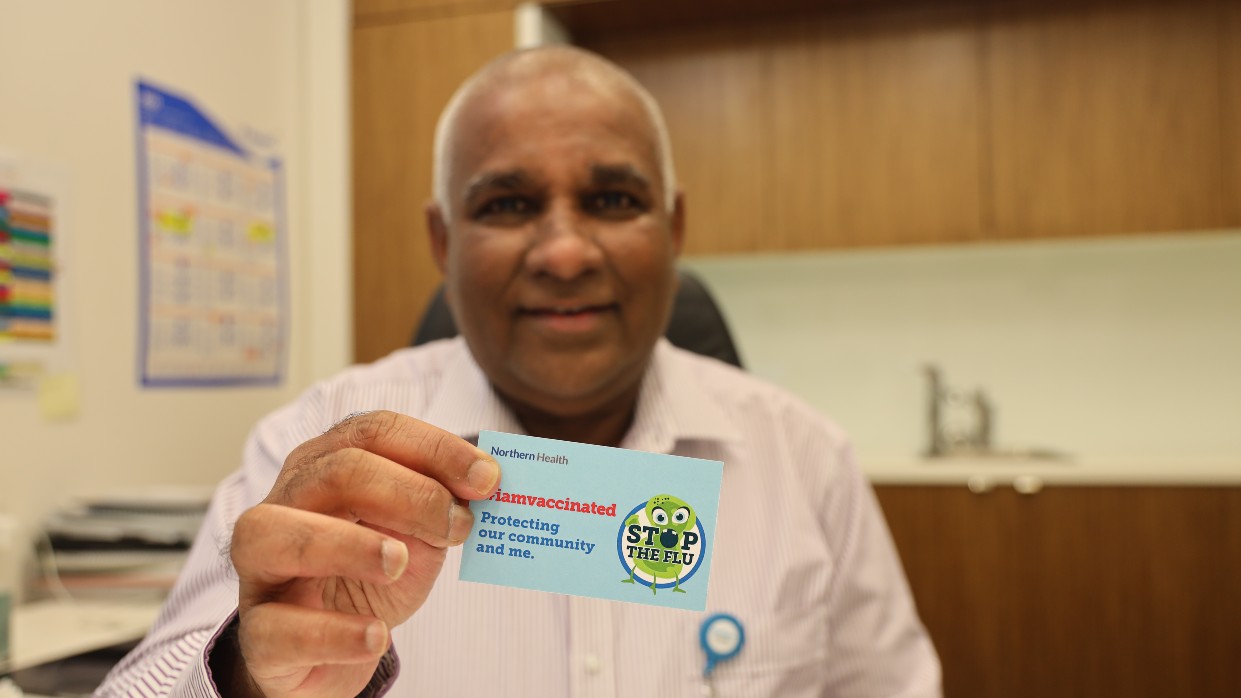
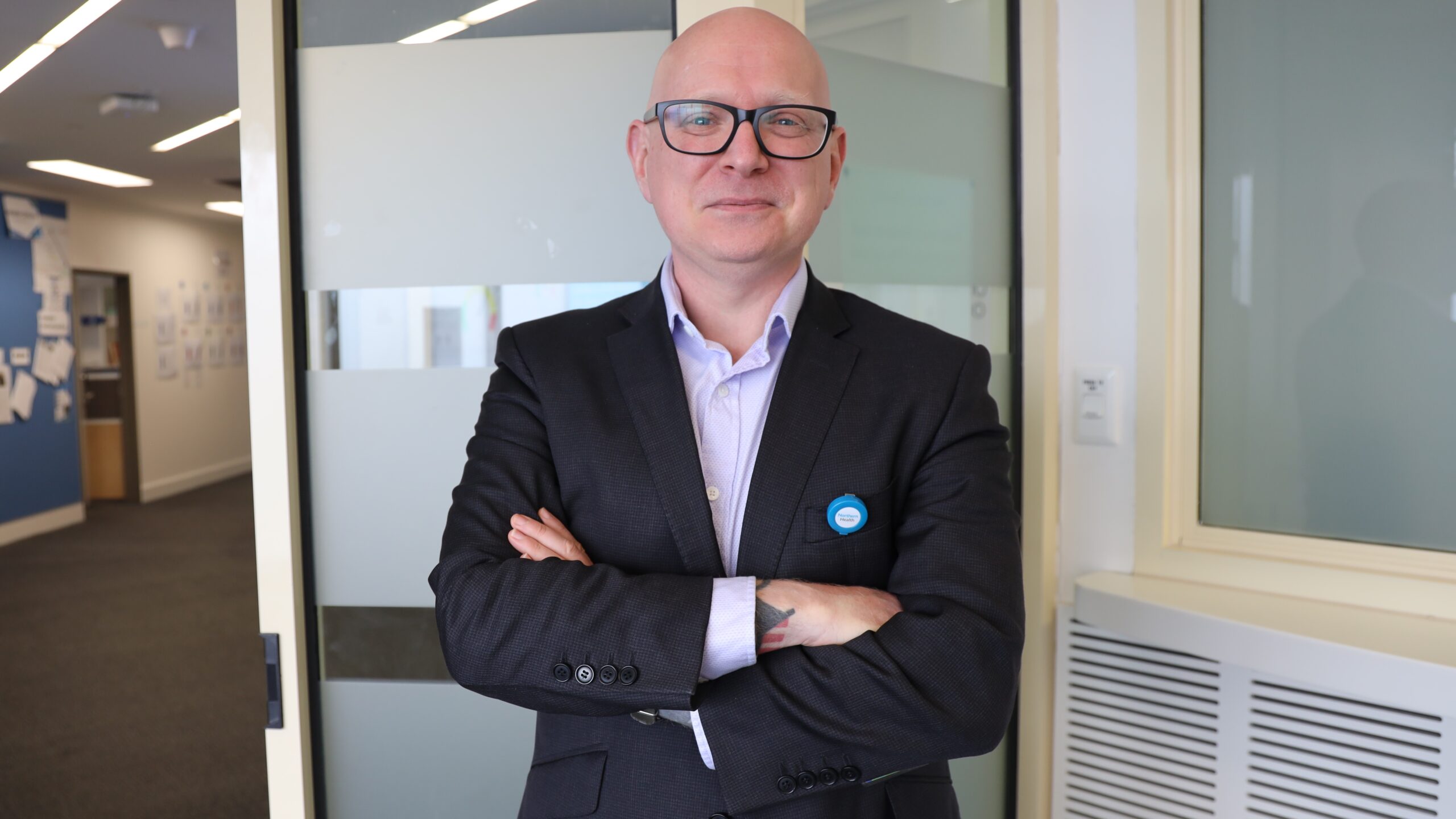
Siva Sivarajah, Chief Executive was the first to receive this year’s flu shot.
“Getting the flu shot this year remains important with the ongoing global pandemic. I would strongly encourage all of our staff to get vaccinated against the flu this year. By getting the flu shot, we are not only protecting our own health and wellbeing, but those around us as well,” he said.
“All clinical staff members are required to have the influenza (flu) vaccination and this will be administered by an immunising nurse in all clinical and non-clinical areas. Northern Health is required to vaccinate over 93% of our staff,” explained Madelaine Flynn, Manager Infection Prevention.
“This year, we will also have set sessions at all the sites to ensure all staff have access to the influenza vaccine”.
With the roll out of the COVID-19 vaccination program, it is important to note that the recommended time frame between COVID-19 vaccination and influenza vaccination is 14 days.
“The more people who are vaccinated, the less likely that the flu will spread in the community,” she added.
“With international flights resuming, the risk to the community is not only COVID-19, but influenza too, therefore it’s important that we are all vaccinated against both communicable diseases”.
With Northern Health immunising staff only against the flu, community members are invited to speak to their local doctor or pharmacy to access flu vaccinations.
Managers of non-clinical areas can email Staff.health@nh.org.au to arrange for an immuniser to visit their work area.
Stage 2 works of the Northern Hospital Expansion Project have come to an end, as our staff prepare for their move into the new ‘Main Ward Block’ in May.
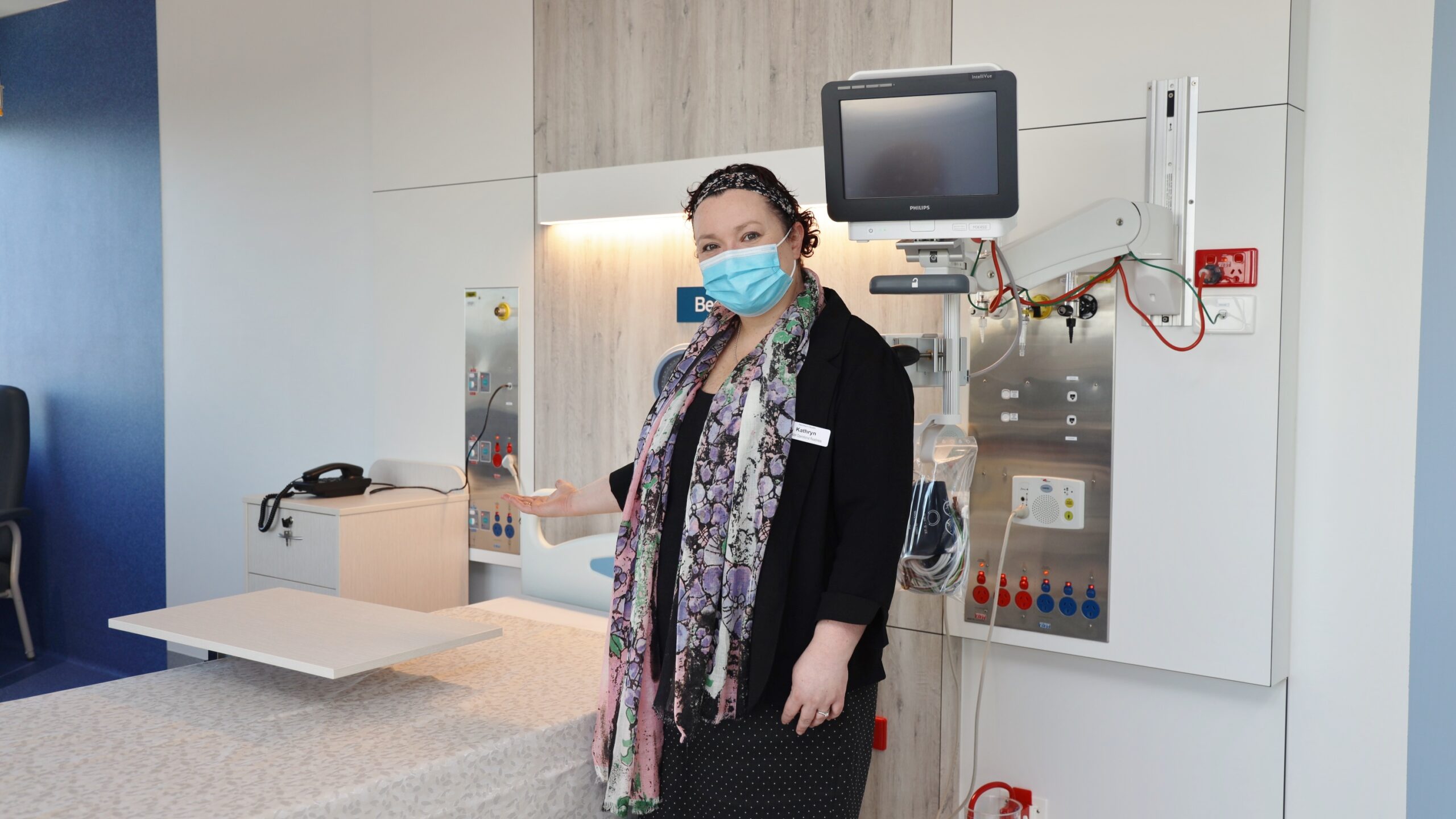
Kathryn Bartho, Director of Operational Readiness for the project, is excited about the coming weeks as she works with staff towards operational readiness.
“We are now in the final stages and adding the finishing touches in preparation for the opening of the Main Ward Block – Wards 19, 20 and 21,” Kathryn said.
“This week, we have completed handover from the capital team to the operational teams including keys, remotes and access.”
“Over the past few weeks, for operational readiness, we have undertaken COVID-19 walk-arounds, to ensure spaces have COVIDSafe protocols in place, completed OHS checks and hand hygiene checks. Staff have also completed a walk-around with Allied Health, as well as biomedical engineering and engineering – getting them to test and tag equipment,” Kathryn said.
The team are also working on getting the equipment in for the new concierge area and Orthotics workshop, located on the ground floor.
Over the next week, staff will be conducting audits of each patient area, in particular all the patient zones.
“We are checking that we have got all the relevant equipment and each space is ready for patients, for example; beds, mattresses, soap, hand towels etc. We have consulted with infection prevention, as well as organised sheets and linens trolleys for the day prior to move in,” Kathryn said.
Pharmacy will be stocking the medication rooms, and assisting with the transition on move day. Nursing staff, PSAs and ward clerks are undertaking training on the new Rauland system, which are the new workflows terminals.
“There is a workflow device in each of the rooms and you can trigger a message/request for a task to be completed across multiple disciplines on the ward. For example, you can notify the PSA to complete a room clean if the patient has been discharged, or, as a nurse, you can set rounding reminders at either one hour or 15 minutes etc. This triggers a message to your allocated phone,” Kathryn explained.
The move preparation is progressing well, and the team is aiming to have the majority of preparation completed by the start of next week. Kathryn explains how the collaborative effort to prepare for the move really reflects one of our Northern Health values of ‘together’.
“There has been a huge amount of collaboration with this. This has been a huge project with operational and capital teams working incredibly hard. From an operational readiness perspective, we have had input and training completed with a super user model lead by the NUMs and senior nursing staff, which has then been rolled out to end users including the nurses, PSAs and ward clerks. They have all done an amazing job at learning how to use the new equipment,” Kathryn explained.
“We have also had the opportunity of completing code simulations, which the team have worked really hard on and continued a collaborative approach giving valuable feedback and key recommendations. Emergency management and security have had key contributions and provided education to the staff on area warden training, evacuation plans, and code responses.”
“There is a lot of behind-the-scenes tasks, for example, supply has been amazing doing all the store rooms, allocating where shelving and stock go, working together with the NUMs to make sure everything is set out in the right spot, barcoded and getting the supply rooms stocked.”
“The support services team have organised all the bins, sharps bins, linen trolleys etc. We continue to engage and present at key team meetings across all disciplines including Heads of Units, team huddles, Allied Health, PSA meetings, ward meetings etc. We have also completed tours with multiple teams. COVID-19 has been an additional complexity in the preparations, having said that, everyone has done an amazing job.”
Wominjeka Welcome sign at the front of Entry 5New staff stationStairwell and elevator entry area
Featured Image: Kathryn Bartho in one of the new high dependency units in Ward 21
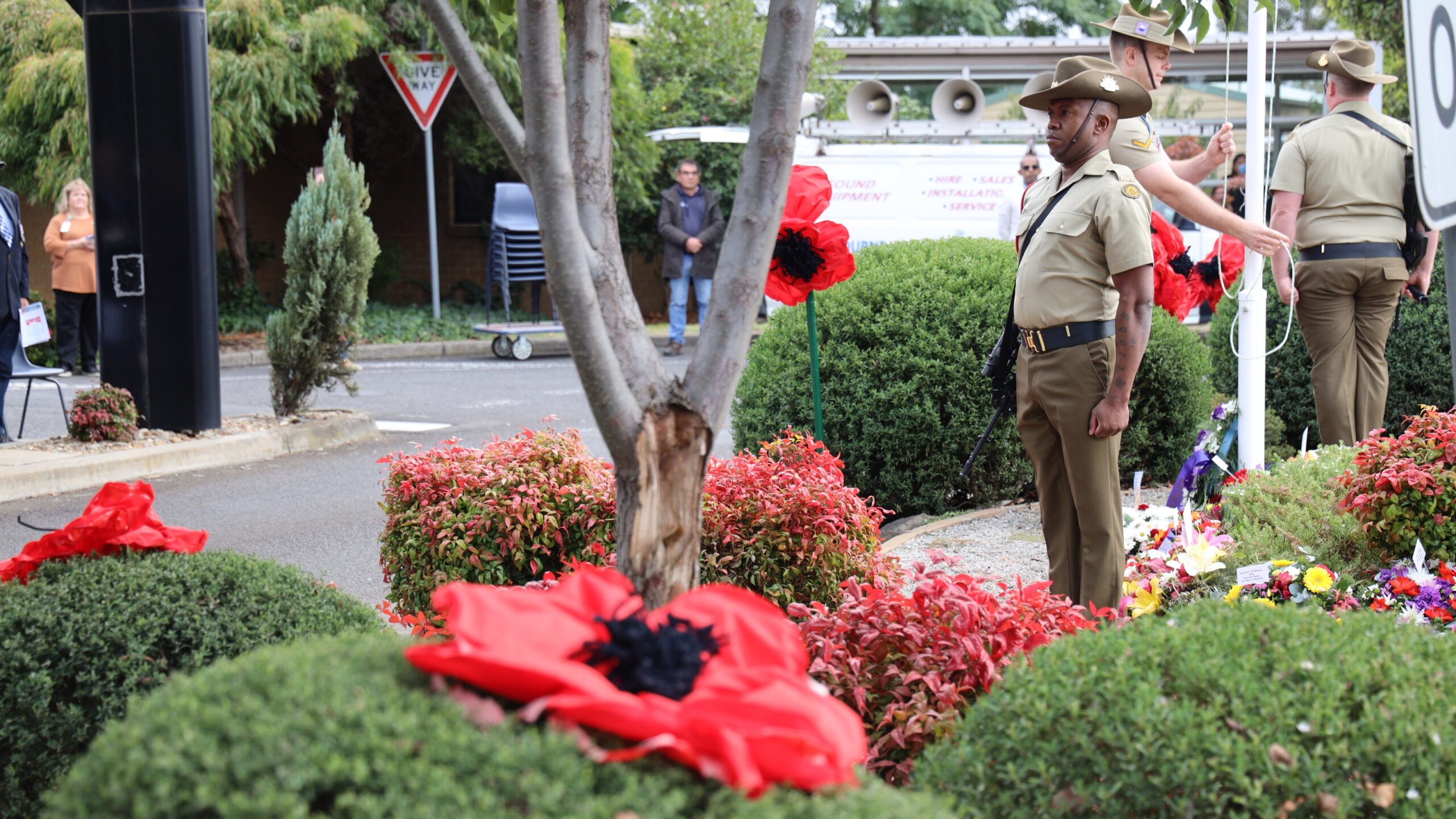
This morning, Northern Health held our annual ANZAC Day service at Bundoora Centre, with participation from Victoria Police, Ambulance Victoria, Fire Rescue Victoria and 138 Signal Squadron along with local RSL branches.
Siva Sivarajah, Chief Executive at Northern Health, delivering the ANZAC Address, said, “It is a special day for Northern Health. Our ANZAC Service is closely associated with our patients, especially those at our Bundoora Centre.”
“Today, we remember those who made the supreme sacrifice of paying with their lives, to make this country a safer place. We express our gratitude to them for the freedom we enjoy and to be able to live in harmony with all those who call Australia home.”
“We thank them for the sacrifice they made, so that we could be safe, kind and together.”
Colin Woodward, Director Engineering and Building Services and Bromwen Battye, Pastoral Care Worker at Bundoora Centre acted as Master of Ceremonies.
Many representatives from Northern Health featured in the service including Kirralee Jensen, Acting Site Director Operations, Director of Nursing, Bundoora Centre, Jennifer Williams AM, Northern Health Board Chair, Peter McWilliam, Northern Health and Northern Health Foundation Board Member, Carolyn Flower, Associate Program Director, Assessment and Transition Service and Lisa Cox, Divisional Director, Nursing, Medicine, Sub-Acute and Emergency Services.
Students of St Damian’s Primary School Choir, Bundoora, sung a hymn and the National Anthem. School captains Zoe and Leila from Northside Christian College helped with the laying of wreaths.
A special thanks to representatives from the Watsonia RSL, Epping RSL, Reservoir RSL, Montmorency-Eltham RSL, Hume City Council and Banyule City Council for joining us to honour those who gave their lives to defend our nation.
“Today we celebrate the many acts of bravery and the selfless examples of compassion and comradeship of those who defended our shores and our nation,” Siva said.
WreathsSt. Damian’s Primary School ChoirKirralee Jensen, Acting Site Director/Director of Nursing at Bundoora CentreBromwen Battye, Pastoral Care Worker at Bundoora Centre138 Signal SquadronSiva Sivarajah, Chief ExecutiveGuests watching the service
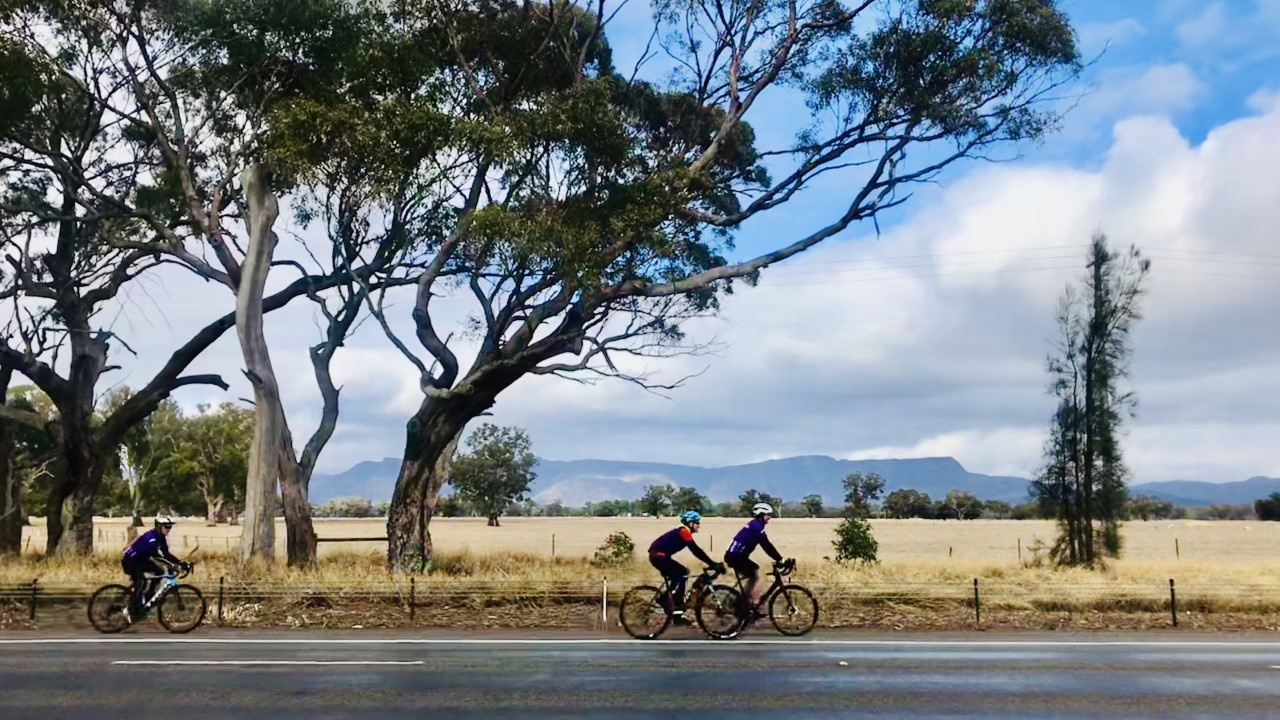
Earlier this month David Abud, Senior Theatre Technician, embarked on a 304 kilometre bike ride from Melbourne to Horsham on behalf of his dad, Dr Rodney Abud, who was diagnosed with Alzheimer’s disease 18 months ago.
Before Rodney was struck with the disease, he worked at the Wimmera Base Hospital in Horsham for nearly 30 years, and treated patients with Alzheimer’s in the later years of his career. He is now in fulltime care at a Heidelberg aged care facility.
David began his three-day journey at Federation Square, and cycled to Ballarat on the first day.
The following day, David rode 90 kilometres to Ararat before making his way to Horsham on the third and final day.
“Dad was my catalyst for doing the bike ride,” David said.
“We spent about seven hours riding on the first day, mainly because of a heavily northerly wind in our face and the last 20 kilometres into Ballarat is all uphill, so we were exhausted at the end of the day.”
“It was about 90 kilometres to Ararat from where I started, it was one degree in the morning and raining for the first hour.”
“The last day from Ararat to Horsham, it was a beautiful day. We had this lovely tailwind. It blew us basically all the way to Horsham so we had a really nice last day.”
David wasn’t alone during his journey. He was accompanied by fellow Northern Health colleagues and his father-in-law, who joined him at different days of the bike ride, cycling side by side. But it was the people who greeted him in Horsham that made the three-day trek extra special.
“When I got to the end, two of my sisters had brought my mum up and she greeted us at the end, so that was a surprise,” he said.
“My mum gave me a hug and said that dad would be very proud. I enjoyed doing the bike ride.”
“The Rotary Club in Horsham met me as well because their 50th anniversary is this year, and my father was a founding member and their second president.”
David also set up a GoFundMe page to raise money for the Australian Alzheimer’s Research Foundation, and has raised more than $12,700.
“I am proud, but humbled at the same time. I would like to thank the people who helped me ride. I wouldn’t be able to do it without them,” David said.
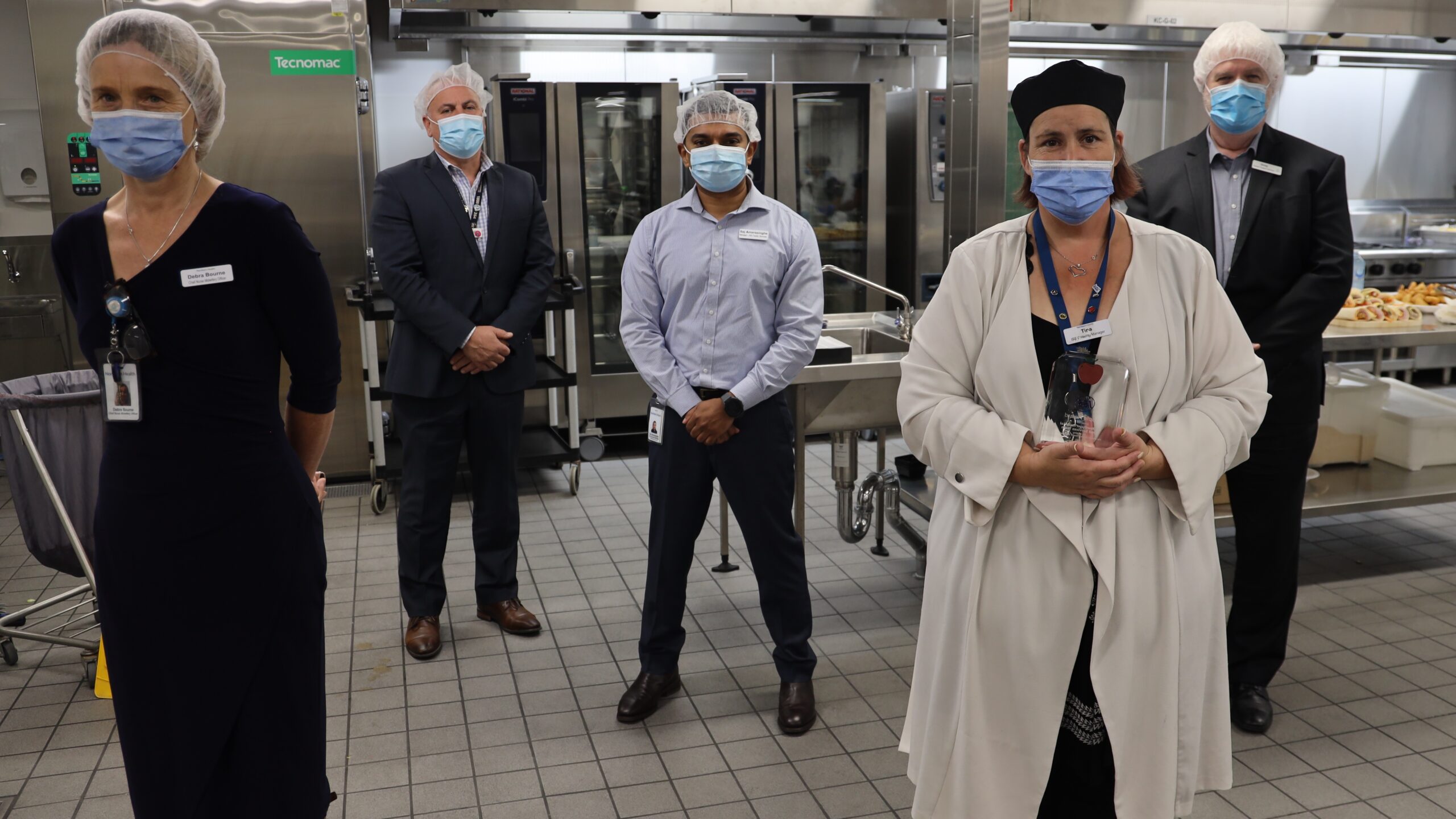
Our Food Services Team has been nominated for an ISS Apple Award for their transition into the new state of the art industrial kitchen at Northern Hospital Epping.
Saj Amerasinghe, ISS Key Account Manager, said the Apple Awards recognises employees for going above and beyond what is expected.
The team moved into the new kitchen in February, which is one of the first areas in Stage 2 of the Northern Hospital Expansion Project to officially go live. The new kitchen is on the ground floor of the new building.
Greg Warman, Director of Support Services, nominated the team for the award.
He said the move into the new kitchen went perfectly.
“The transition to the new kitchen was an outstanding success,” he said.
“It was completely seamless to the hospital with patients and staff unaware of the change.”
“This is in no small part due to the planning in the preceding weeks with Tina Smith, ISS Catering Manager, and the crew liaising closely with Capital Planning and Kane Construction on the relocation of the existing equipment. It is a testament to the dedication of the staff that even hiccups with the dishwasher did not impact on the delivery of meals.”
Saj received a personalised crystal apple trophy on behalf of the team.
Planning for the kitchen began more than three and a half years ago and, once construction started, the team started to envision the move into their new space.
The new kitchen is bigger than the previous site, which was built within the hospital when it opened in 1998.
In the new space, there is a 150-litre kettle, cooktops, fryers and a new blast chiller and freezer.
This week, we caught up with Northern Health’s new Occupational Health and Safety (OHS) Director, Graham Wilson.
What’s your coffee order?
A double espresso. I’m a coffee nerd and I will do pour over at home in the morning. I grind my own beans. I have an absolute ritual of how I make coffee in the morning but if I go out for coffee, it’s a double espresso.
Tell us about your Northern Health journey.
I am the Director of OHS and I have been here nine weeks. At the end of week one, COVID-19 made a resurgence and I got thrown in the deep end with my People and Culture colleagues to deal with that. It was a stressful and unusual time but a great way to see Northern Health in action. It’s been all about getting to meet people and understand what’s happening here, understanding the work, understanding the structure of how things are done, understanding our health and safety systems, meeting some of the health and safety representatives and at the same time meeting managers. I am having a good time.
What does a typical day look like for you?
At this stage, a lot of it is spending time with my team, understanding what they are doing, understanding the things they have got on their plates and trying to deal with some of the more difficult issues that they might be facing. The critical things are doing daily triage where we look at all the OHS incidents that come in throughout the day and work out what needs to be done on each of those issues. That’s the most critical part of my day. There are always things happening in health and safety. You have to be prepared for something to happen.
What is your greatest achievement or favourite memory since you began working here?
Something that I am really pleased about is seeing occupational violence training become mandatory for all staff.
What was your career before Northern Health?
I’ve pretty much always been in health and safety. My first real OHS position was as a Union Health and Safety Officer. I was with Victoria Police for about eight years and specialised in occupational stress and operational OHS. I then did operational OHS at the Department of Education and ran a large team of OHS consultants. While it’s smaller here, it’s nice to be somewhere where you feel like you are having more of an influence and are able to make an impact and see how you can get success. Coming from such big organisations, it’s nice to see a more personal, involved leadership and staff. Everyone seems more positively involved with each other.
What do you enjoy most about being at Northern Health?
For me at the moment, it’s learning a new place, and not being from the health sector, it’s really fascinating to see how health and safety operates here and seeing the alignments between the health and safety work I have done previously in big government organisations and seeing how that applies here. From a personal point of view, I think being able to feel like I am fitting in with everybody. It feels like a good cultural fit for me. I’m really enjoying the culture here and really enjoying getting to know people.
What would people be most surprised to know about you?
I used to officiate American football and have done international games and Australian and Victorian championship games.
What do you like to do in your free time?
I am a very serious home chef. I spend a lot of time cooking. My partner Nicole works in the wine industry, she is a wine educator and I am a big whiskey collector. We are lucky enough to have a good wine and whiskey collection at home, so we spend a lot of time, responsibly going through that collection or visiting wine regions or distilleries. I think over the past seven years, I’ve tried close to 2000 different whiskies.
If you could describe Northern Health in one sentence what would it be?
The three values really apply here. Often I see organisations with this big long list of complex values. It might be a value statement or you might have multiple value statements that you are trying to get your head around. With safe, kind, together, I actually see them in action and that’s really positive for a new staff member to see when they are coming into a new workplace, that they can see the values replicated and lived.
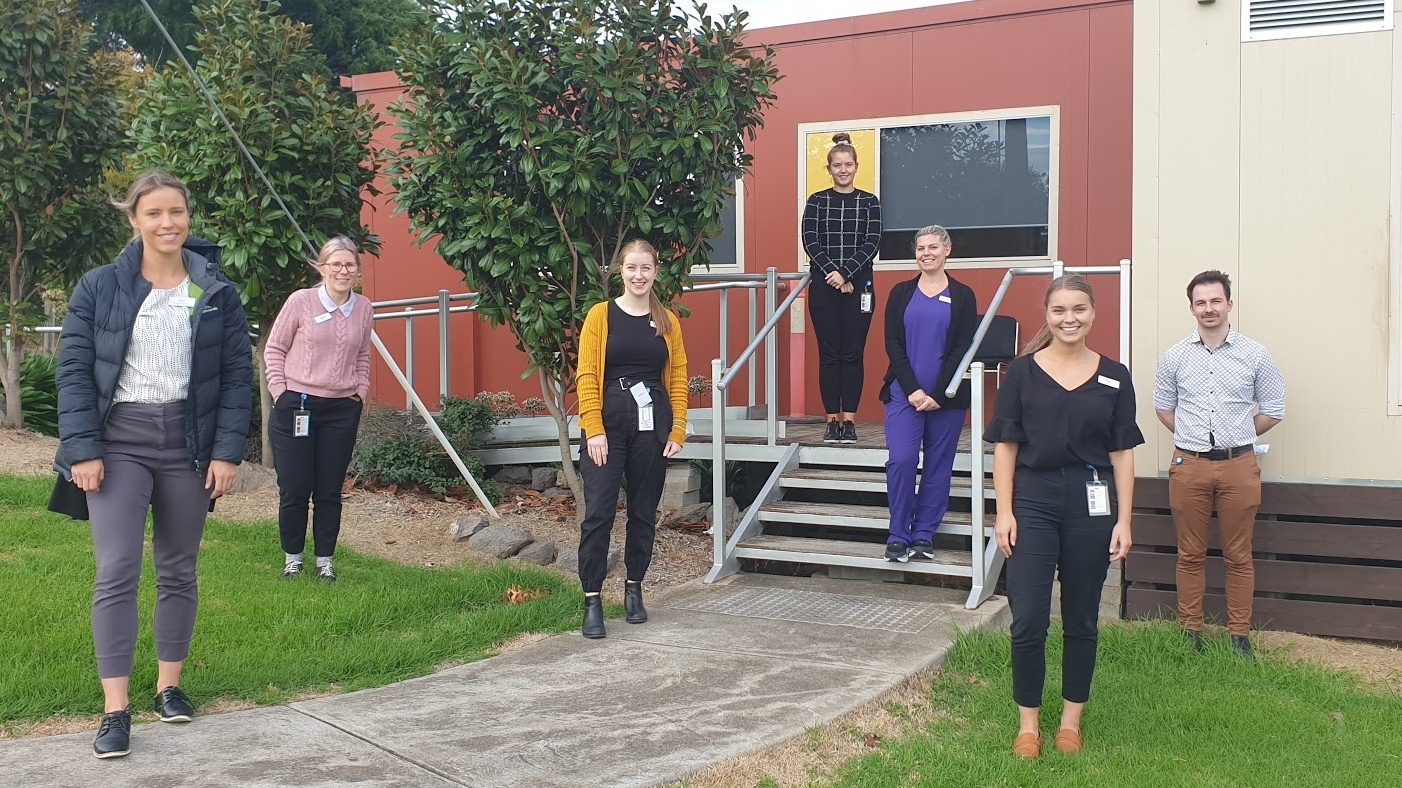
Ten Allied Health graduates are making the journey to becoming a professional Allied Health Practitioner.
The Northern Health Allied Health Graduate Program was introduced in 2004, and this year’s program kicked off in February. The program is designed to assist Allied Health Practitioners make the transition from student to professional.
Program participants are Allied Health professionals in their first health professional job since graduation or in their first role in a large health service.
Program Facilitator Talin Gochian said the Northern Health Allied Health Graduate Program offers a series of six facilitated group sessions over six months that focus on topics relevant to new graduates.
“We run two groups each year, our current group consists of 10 Allied Health new graduates from a range of disciplines including dietetics, occupational therapy, physiotherapy, social work and podiatry,” she said.
“Sessions include a combination of structured learning activities, reflective exercises and opportunities for debriefing and discussion. The graduate program complements routine induction, professional development and supervision activities.”
Occupational Therapist Callum Farrell is taking part in the program this year and says the experience so far has been fantastic.
“I have been so well supported by the team at Northern Hospital Epping and the new graduate program. I have found the new program to be very beneficial, as it is a chance to learn more about how Northern Health operates as well as a chance to connect with other graduates from a variety of disciplines,” he said.
“It has helped me learn more about other areas of Allied Health and has given me valuable advice about advancing my career with Northern Health.”
Eleanor Beck is a Physiotherapist and says “it’s been great to meet other new graduates and I have felt very welcomed and supported while participating in the program. It has given me a chance to learn more about Northern Health and how I can make the most of my new graduate role.”
Talin says the program is “highly engaging and interactive and is a great way for new graduates to meet one another, learn from one another and begin to develop a greater understanding of the wider health context.”
“The program uses an interdisciplinary approach to learning, learning from each other, from each other and about each other,” Talin explained.
“The objectives of the program are to support the transition from being a student to being a competent, confident health professional, provide an opportunity to link with colleagues and learn more with colleagues and learn more about Allied Health and teams, support new graduates to join the Allied Health workforce, develop a greater understanding of interdisciplinary practice, provide professional development to assist graduates become critically reflective and confident practitioners, develop a commitment to research, promote personal development and foster a lifelong learning collaboration.”
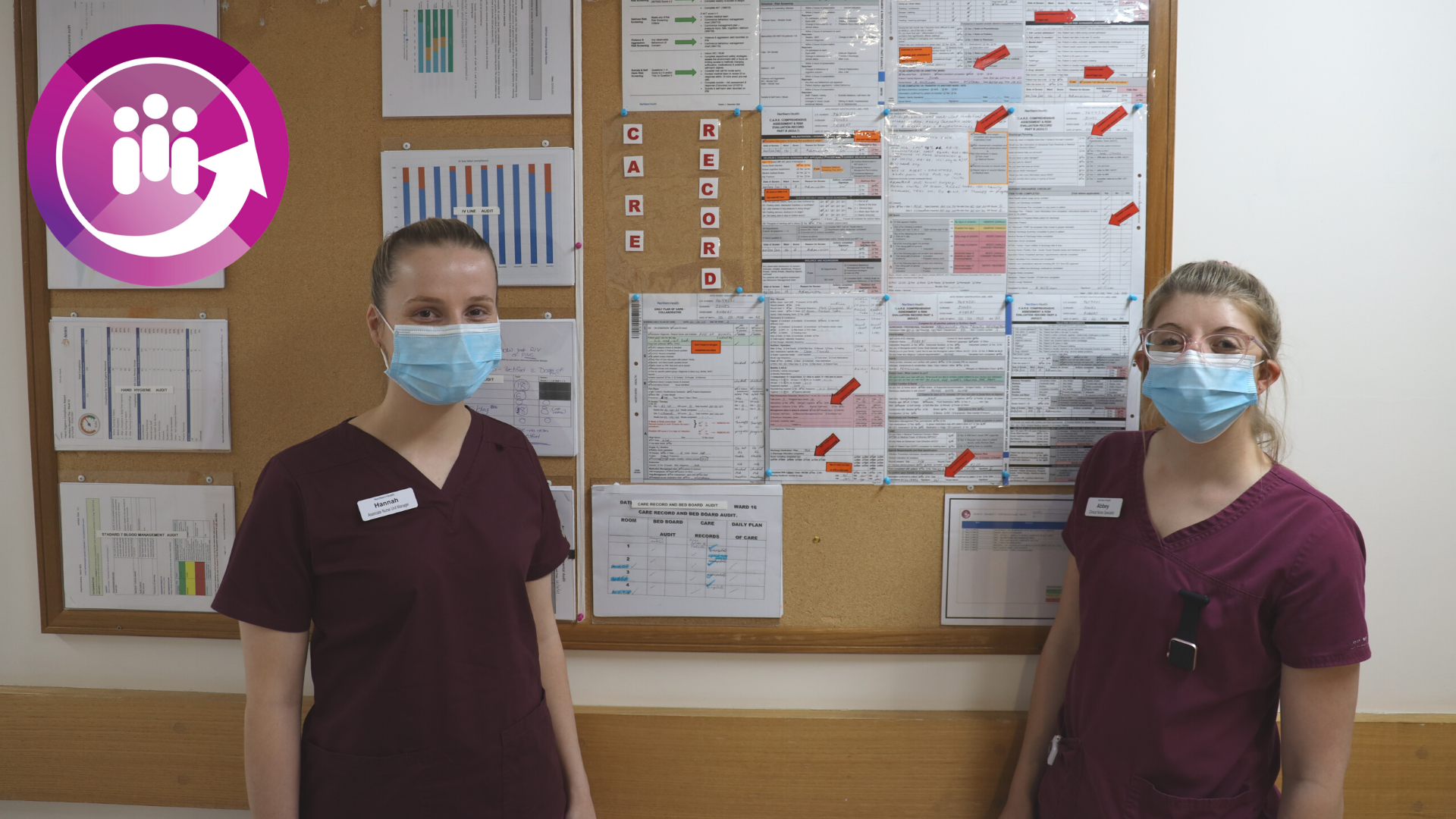
Hannah Conrick, Associate Nurse Unit Manager on Ward 16, looks after 32 patients on the ward, and oversees bed flow. As a surgical ward, Ward 16 also oversees patients coming from the Emergency Department, as well as elective surgery patients.
“That is why it is really important that we do CARE Records, as we do have a very big turnover of patients each day. On Monday, we had around 12 discharges and admissions,” she said.
Hannah says there are days when the team find it challenging to complete the record within the time constraints, but at the same time, they are learning more about our patients.
“With this record, there is no opportunity to miss anything – the questions are quite comprehensive,” she said.
The CARE Record, a document that has evolved over time, is a four page long questionnaire and prompts staff to ask various questions. It also looks at patient goals and what is important to them, in their care.
“The aim is to complete this document within 24 hours of admission, covering a range of topics, like falls risk, pressure injury risk, mental health, delirium screening, malnutrition screening and infection screening. It also looks at a patient’s dietary, cultural and language requirements,” she explained.
Abbey Beech, Clinical Nurse Specialist on the same ward, explained how the document evolved over time.
“When I just started, it was just a simple questionnaire, but now this multi-page document contains questions that include things like patient conditions at home, prompting us to put referrals in while they are here, and includes risk assessments that can get missed if we don’t ask the questions,” she explained.
Both Hannah and Abbey agree the document has contributed to patients feeling they are being listened to. With the diversity of cultures Northern Health sees, it is important to ask questions like family support at home, and similar, as it helps with discharge planning.
“We need to know early if a patient can’t manage their medications at home, or if they have some medical conditions we wouldn’t know about unless we asked those questions,” Abbey said.
One thing the team found very helpful is the mental health screening, as they are finding that it is flagging a significant amount of patients the team wouldn’t have known prior to the plan being in place.
“With the comprehensive care, we can put in place strategies if the patient is at a high suicide risk or shows signs of mental health deterioration,” Hannah explained.
“On top of the CARE Record, there are additional forms, so if a patient is flagged as having a risk, there are extra forms we fill out, to get detailed information and manage that risk,” Abbey added.
Featured image (left to right): Hannah Conrick and Abbey Beech