• Handy Sandy keeping everything dandy

    Handy Sandy keeping everything dandy

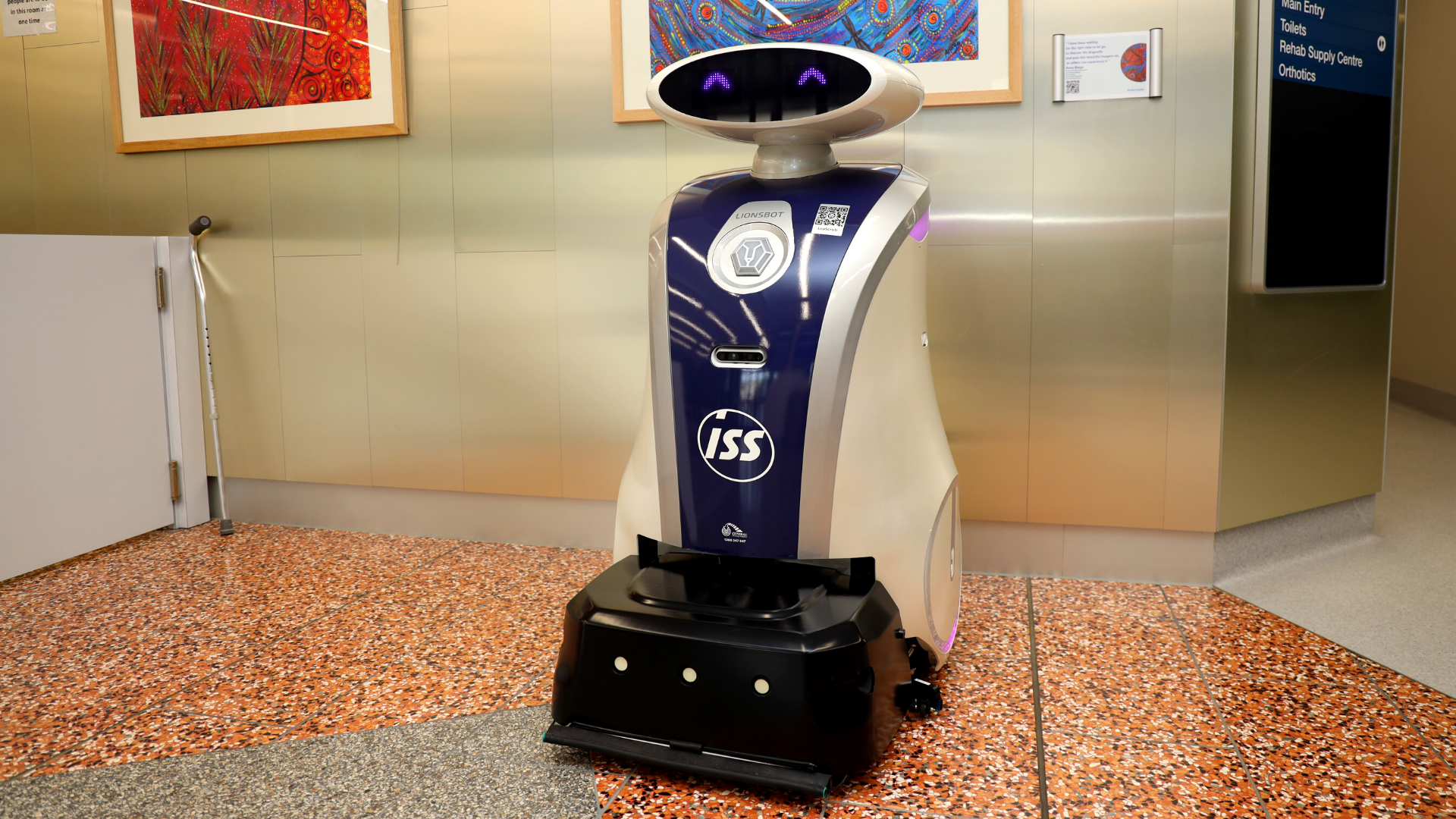
    Meet Sandy, the latest innovation at Northern Health.

    Sandy is a LeoScrub, a robotic floor scrubber, designed to bring cleaning efficiencies to the health service.

    Northern Health is also the first health service across Australia to have Sandy implemented into hospital operations.

    Saj Amerasinghe, ISS Key Account Manager, said Sandy will allow hospital cleaners to redivert their focus on other jobs and find efficiencies while Sandy scrubs the floor.

    “If staff are wanting to clean the main foyer, that takes about 45 minutes. But we can get the LeoScrub to do that job, and have staff for 45 minutes, do something else.”

    “We don’t want to take away from anyone’s job, but to utilise that time productively on another cleaning task.”

    Sandy has become a permanent fixture at Northern Health. She is currently being trialed at Northern Hospital Epping to measure accuracy before implementing more LeoScrubs across other Northern Health sites.

    “We have trialed it at Entry 5 and the main foyer and my plan is to trial it at CSSD and Outpatient corridors during non-operational hours,” Saj said.

    “We also need to make sure it doesn’t interrupt the hospital operations – we can’t have it blocking patients’ way.”

    “So far, we’ve had a positive response. We’ve had cleaning staff here for 18 years and they were so happy to see the machine because they could focus on something else.”

    “The sustainability of the LeoScrub is also going to benefit Northern Health in the long run.”

    Sandy uses 70 per cent less water than other cleaning robots, while achieving the same high cleaning results. Sandy leaves behind much drier floors than current solutions due to stronger water extraction to provide safer surroundings.

    Sandy is also the first robot in the world to clean exclusively with Z water – a professional cleaning chemical that is safe and environmentally friendly.

    Sandy is more than just a scrubber. She is programmed to talk to people and remind us to maintain social distancing, wear a mask and keep up good hand hygiene.

    Sandy can sing songs, Christmas carols and say jokes by scanning the QR code on the LeoScrub, and selecting from a programmed list.

    “It can do lots of things. You can also program it to be a concierge by parking it somewhere and helping out with directions,” Saj said.

    “We can always look into that in the future, but we want to make sure for now that it does the job of scrubbing.”

    Sandy has a five-hour run time, and can run for a total of 15 hours in one day, with two hour charge times.

    “Our plan is to have a few more chargers so you don’t have to move chargers across the hospital,” Saj said.
  • Analgesic stewardship pilot program on the way

    Analgesic stewardship pilot program on the way

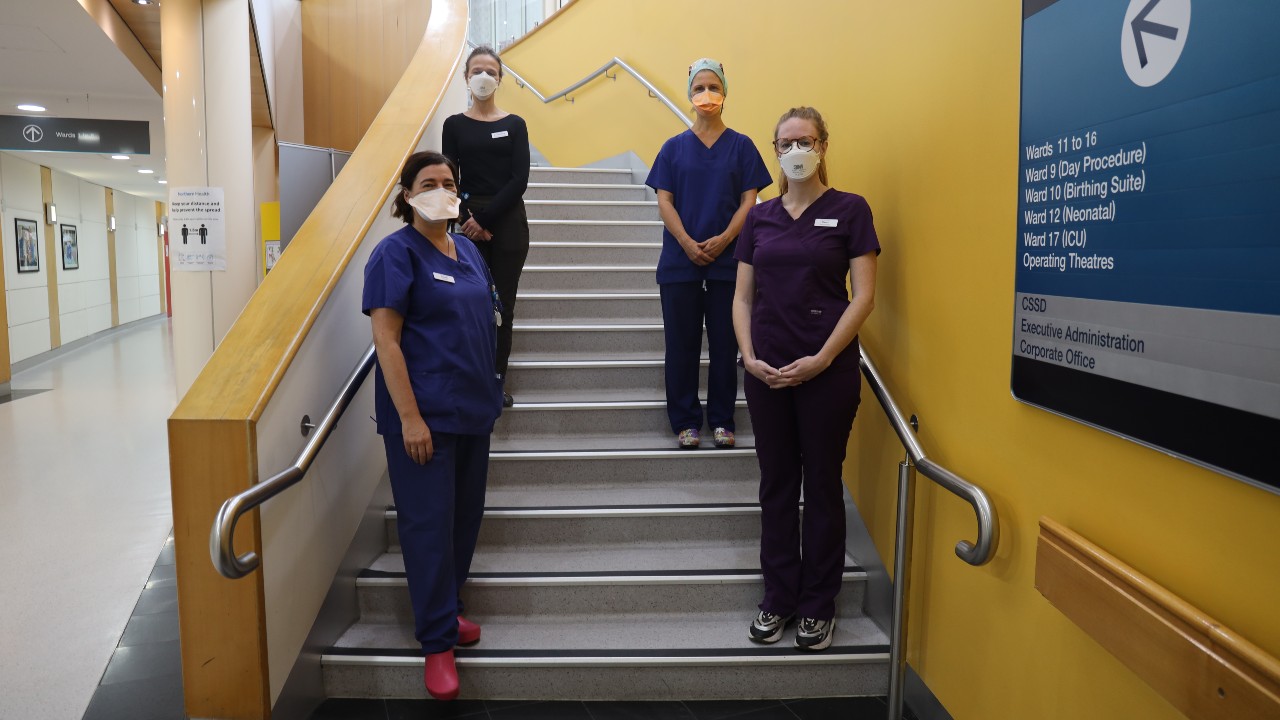
    Northern Health is working with Safer Care Victoria, Acute Pain Service (APS) and surgical teams to create a pilot program focusing on analgesic stewardship across Northern Hospital, aiming to produce significant, positive changes for our patients.

    Danni Miatke, Project Lead and Grade 3 Analgesic Stewardship Pharmacist, explained one of the priority actions for Australia, on the basis of World Health Organization recommendations and the global patient safety challenge, is to develop a national guideline for high-risk medicines, with analgesics and opioids a part of this.

    “We are looking at safer ways to prescribe and administer opioids and other analgesics within the hospital, and, in particular, looking at peri-surgical patients, and how we prescribe strong analgesics before and after surgery. We are also looking at the quantities and strengths we send patients home with,” she explained.

    This state-wide, multi-site project includes six selected health services across Victoria – Northern Health, Eastern Health, Albury-Wodonga Health, Barwon Health, Melbourne Health and Peninsula Health.

    “It’s a very fast turnaround with this project, and we are hoping to prove change within 18 weeks,” Danni added.

    Some of the tasks the team is facing now is setting up an analgesic stewardship committee, creating a new procedure to guide prescribing and providing education around this, as well as collecting data and proving the positive change.

    “Probably the biggest challenge will be rolling out the education, and we will be targeting surgical units and patients,” she added.

    Preliminary data the team has been working on has shown that surgical patients who have experienced an adverse event related to their analgesia had a four times longer stay in hospital compared to other patients that underwent similar surgery. This data highlights, not just the need for a program, but the need for change in analgesic prescribing and additional education around safety.

    “We’d like to draw attention to the analgesic prescribing procedure that will soon be released and we’ll be rolling out education shortly as well. This is a great program for Northern Health, and we are lucky to be working with Safer Care Victoria on this, as not every health service that applied was selected to participate,” she added.

    Anaesthetist and Pain Medicine Specialists, Dr Sarah Donovan and Dr Moira Rush, added their support to the program and highlighted the excellent opportunity for the service to promote safer and more effective analgesic use, as well as greater continuity of care through improvements in both patient education and information provided to primary health providers on discharge.

    ”While our patient population is complex and diverse, the stewardship program will assist with discharge prescription advice for all patients at Northern Health. We want to better engage with GPs to ensure that patient care is consistent across the acute and primary care settings,” Dr Rush added.

    The Acute Pain Service (APS) and Pharmacy are confident that when the results of the pilot demonstrate the expected positive change, there will be support for an ongoing full-time Analgesic Stewardship Pharmacist, so the initiative can be expanded to cover the whole health service, regardless of the patient’s clinical team.

  • Research week 2022: Listening and learning from our patients

    Research week 2022: Listening and learning from our patients

    Dr Vicky Kartsogiannis (PhD), Research Coordinator, Department of Orthopaedic Surgery, here at Northern Health, summed it well when she said, “Just wanted to congratulate everyone involved in organising Research Week amongst all challenges in the background. Brilliant as always!”

    She went on to say, “Despite being a virtual event, I think it has been a blessing as it allows people to join in from home or wherever they may be.”

    Research Week, when we celebrate our many inspired researchers at Northern Health, was marked on 28, 29 and 31 March.

    Congratulations to the team of Dr Faten ‘Faye’ Zaibak, Director, Research Operations, Brittany Szabo, Natali Cvetanovska, Rachel Brade and for Professor Peter Brooks AM, for facilitating the event.

    As Faye says, “What a week! Research week highlighted the hard work of our researchers in 2021. The week started with Professor John Prins challenging us to think about the healthcare workforce of the future. We learnt about how our research is contributing to understanding the consequences COVID-19 has had on the stillbirth rate. (A/Prof Lisa Hui on the topic of ‘Increase in stillbirths and reduction in medically-indicated preterm birth: adverse impacts of Melbourne lockdown‘). The value of audit in establishing the state of play and identifying further research questions that will ultimately optimise the compliance with surgical antimicrobial prophylaxis in open reduction internal fixation procedures. (‘Surgical antimicrobial prophylaxis in open reduction internal fixation presented by Ms Sarah Hassan.) The role our research can play to help improve allergy testing. (‘Location, location, location: Determining the ideal site for allergen controls in forearm skin prick testing’ presented by Rebekah De Losa.)

    The oral presentation award went to A/Prof Lisa Hui with Ms Rebekah De Losa and Ms Sarah Hassan also receiving awards and raising the flag for the next generation of researchers at Northern Health. A big congratulations to our people’s choice winners, Ms Belinda Baines (Best Oral) and Ms Octavia Nakos, medical student at Northern Health (Best Poster). Although voting has ended, the posters and abstract book are available here to view.

    Our highlighted division this year was Diagnostic and Cancer Services with a session hosted by A/Prof Prahlad Ho.

    “To hear that Belinda Lee’s vision for coordinated big data approaches to treat pancreatic cancer is already making a difference and the Haematology teams OHP assay showing promise in providing a global picture of coagulation and potential for COVID-19 management was exciting,” said Faye.

    Prof Anthony Russell rounded off our talks with an outstanding Grand Round, presenting data showing how empowering individuals, and their General Practitioners, can improve outcomes, reduce hospital stay and cost to the health system.

    Our overall awardees for Rising Star in Research was Eleanor Johnson and Researcher of the Year, A/Prof Lisa Hui.

    “Great to see a nurse win the Rising Star in Research Award, and together with Lisa, see research grow within the Women’s and Children’s division. It was lovely to see A/Prof Hamish Ewing come out of retirement to run the trivia session. Congratulations to Stephen Tucker who, in the last few rounds of the trivia competition, edged past the leader Saz (who was unmasked to be no other than Sarah Hassan),” adds Faye.

    Special thanks to Northern Health Foundation and JR Medical Books for their generous sponsorship of Research Week.

    Pina Di Donato, Acting Executive Director, Public Affairs and Foundation, said it was heartening to read stories like that of Chris Lynch and know that funding from Northern Health Foundation, was making a difference.

    “Funding research is an important part of our mission at Northern Health Foundation,” she said.

    As Professor Peter Brooks, AM, Research Lead says, “Research carried out at Northern Health, both before and during the pandemic in the area of ‘virtual health’, will lead to Northern Health being able to deliver many more services outside of hospitals. This has again emphasised the importance of listening and learning from our patients, and from the community, about what they think is important to them.”

    “We know that a health service which commits to, and nurtures, a research culture has happier and more satisfied staff and produces better patient outcomes. We should all be proud of the clinical care we deliver, and strive to underpin this with education and research.”

    Thank you for participating in Research Week 2022. We would appreciate you taking the time to complete a short survey on Research Week. The survey will only take you 1 – 2 minutes to complete. Your feedback will go towards improving future events. Please click here for survey.

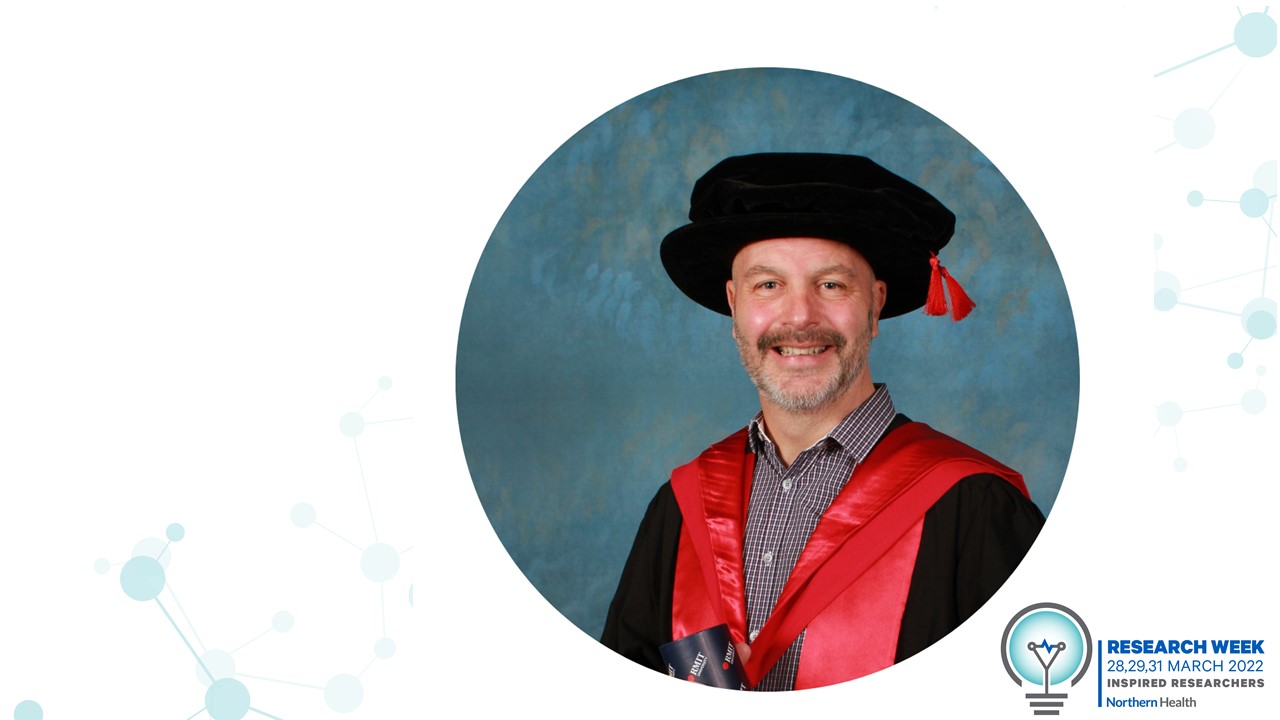
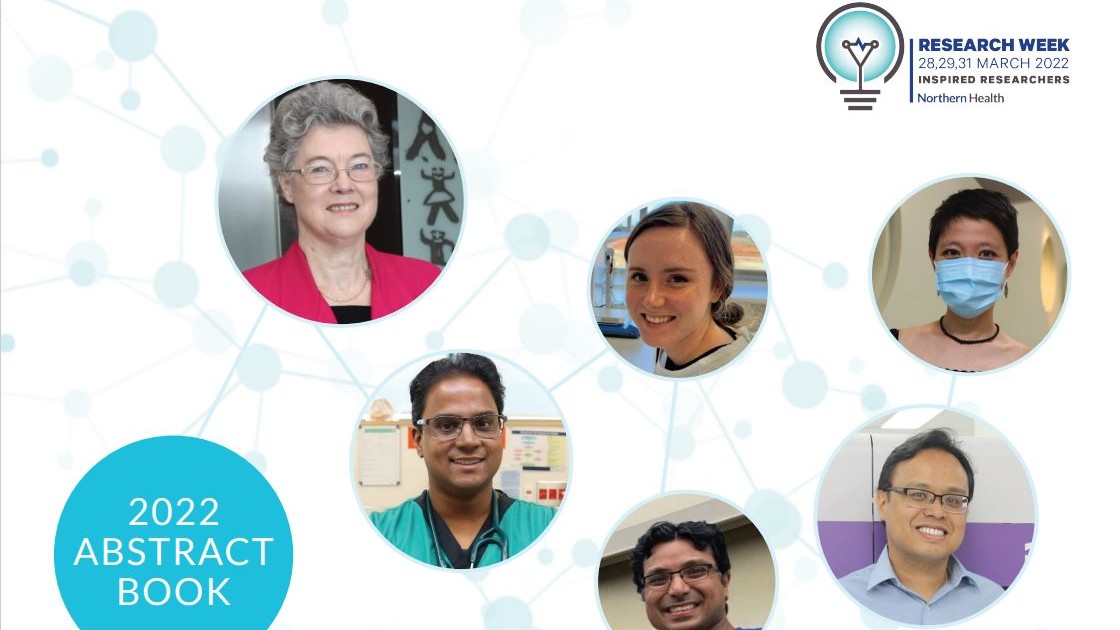
    Featured image shows the cover of our 2022 Abstract Book.

  • Partnering with consumers: Sarah and Maxine

    Partnering with consumers: Sarah and Maxine

    Sarah Charles, Quality and Medication Safety Lead Pharmacist and Maxine Vu, Consumer, are working together on the important topic of medication safety. Both have a flexible approach to making things work, and Maxine’s help has been especially appreciated during the last year and a half, and her fitting in to assist Northern Health whilst raising her two young children through lockdowns.

    We’ve had a chat with Maxine and Sarah to find out what helps them work well together, how they make a difference and what feels rewarding.

    How have the two of you collaborated together?

    Sarah: Maxine commenced as a consumer representative on the Medication Safety Committee just before the COVID-19 pandemic started. Since then, we have been touching base regularly via phone or email. Maxine has been a great help for anything Medication Safety related, with which consumer input is of great benefit.

    Maxine: Sarah was assigned as my buddy from Northern Health’s Medication Safety Committee to walk me through the meetings and focus areas requiring consumer input.

    Please describe some of the projects you worked on.

    Sarah: Maxine has been a valuable resource in reviewing a lot of our patient information related to particular medications or medical conditions. We also recently did a large project to add a ‘reason for use’ (indications) section to the medications list, with which we first focused on the top 100 dispensed medications. She was a great help reviewing the options to ensure what we chose was most relevant and patient friendly.

    Maxine: As a consumer of Northern Health from a CALD background and being employed locally in disability services, I was able to bring a different perspective on the use of medications in the community, and the importance of people understanding the reason they have been prescribed medications. I was mindful of simple language that was able to be easily understood by people of CALD backgrounds and different literacy levels.

    Maxine, could you please give us a bit of a background of your involvement as a consumer at Northern Health?

    Maxine: I initially decided to join the committee as I wanted a way to personally contribute to my local community outside of professional employment and be able to influence positive outcomes for all stakeholders.

    As Sarah touched on, I commenced just before the pandemic started and therefore had to adapt the way that I contributed to the committee. Amongst working from home, homeschooling and being locked down, I found it difficult to participate in the virtual committee meetings monthly and discussed with Sarah being able to contribute my feedback flexibly via email/phone calls instead. I found this has worked well, as it has given me more time to reflect on my responses on the key areas requiring consumer input, whereas in a meeting you may not necessarily have an answer to a question when put on the spot.

    Sarah, how has consumer participation helped your work?

    Sarah: Maxine is such a great help, she always provides really great feedback from a different perspective and is really responsive and willing to help. We recently had a conversation around how she has found being a consumer representative at Northern Health, including both what she has liked and what we can do to help in future with the role. She also highlighted some of the challenges with the COVID-19 pandemic. We presented this interview to the Medication Safety Committee, who found the feedback and suggestions for improvement really helpful. The committee agreed, this type of conversation should be initiated and presented at each standards committee with consumers to help the committee continue to grow and support consumers.

    Anything else you’d like to share?

    Sarah: I’m so grateful to have Maxine as our consumer representative and look forward to continuing to work with her.

    Maxine: I have enjoyed my time on the committee so far and, having a buddy like Sarah who is patient and flexible, has helped the experience to not be too overwhelming. I look forward to continuing the collaboration in person.

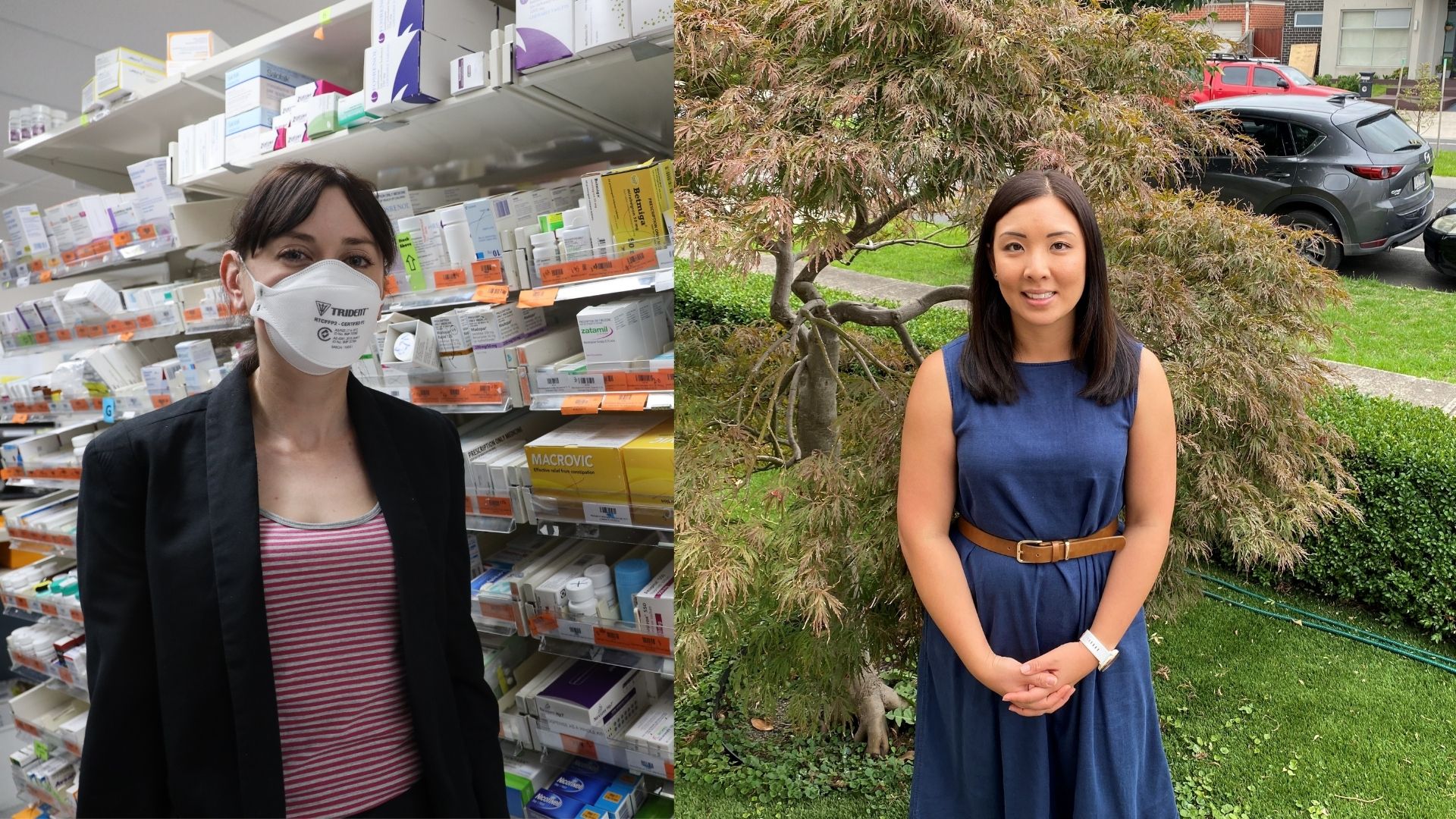
    Featured image: Sarah Charles (left) and Maxine Vu (right)

  • Let the EMR ‘go-live’ countdown begin! 

    Let the EMR ‘go-live’ countdown begin! 

    We are one year away from Northern Health’s Electronic Medical Record (EMR) ‘go-live’ on 3 April 2023. Looking ahead, this will be an exciting year for all staff including our EMR analysts, Subject Matter Experts (SMEs), champions and Accountable Leaders. 

    As the EMR workflows are being built and tested in the coming months, there will be more opportunities for EMR champions, super-users and staff, to see and learn more about the system before training starts in early 2023. Thank you to our EMR champions who have been involved and who joined the March EMR champion briefing, where the EMR patient journey board was introduced.  

    “We have been looking forward to meeting our champions in person and it was great to restart the program again after the necessary pause in recent months. We have a program to keep champions up to date each month and to learn about the workflows. We encourage staff to find out who their local champion is by asking their manager,” says Elspeth Fink-Jensen, EMR Change Manager.

    “If you would like to be a champion, you can always contact the EMR team to sign up. We run briefings with a hybrid approach so our champions can choose to attend the session in person or via MS teams.”

    EMR training preparation will be underway, starting May, as we recruit EMR trainers to join the team to develop training materials. They will also be responsible for facilitating classroom training sessions, as well as supporting our staff during go-live in 2023. 

    “Other than EMR trainers, we will be seeking expressions of interest for the role of super-users in May to further support our staff during go-live. The role will be supernumerary which allows the super-user to provide ‘at the elbow’ support to their peers,” says Cliff Wiltshire, EMR Training Manager.

    For more information on training, click here. 

    Behind the scenes, the EMR technical team is setting up the training rooms (located at all sites, including NCHER), as well as purchasing new workstations on wheels (WOWs), laptop carts, label and ID band printers and barcode scanners. 

    Being one year away from go-live, your thoughts on the Northern Health EMR are important to us, which is why we encourage you to complete the EMR survey so we can make sure our communications reach you in the right way. 

    The EMR survey is anonymous and is open until 11.59 pm on 14 April 2022. As a token of gratitude to our staff for taking their time to complete the survey despite their busy schedule, you can enter a lucky draw and win a hamper! 

    Trish Aldridge, EMR Director, expressed her thanks and strongly encourages Northern Health staff “to spread the word about the survey, as the results are extremely valuable and insightful for the EMR team.” 

    Complete the EMR survey now! 

  • April Falls: Falls are everyone’s responsibility

    April Falls: Falls are everyone’s responsibility

    On April Fools’ Day, we all tend to have a joke and a laugh, but unfortunately, falls are just not funny.

    ‘April Falls’ is a national initiative to raise awareness to the serious issue of falls and harm resulting from falls.

    On this year’s April Fools’ Day, we want to highlight the seriousness of falls in our hospital and under our care. As falls are so important, the Falls Committee is running an inaugural ‘April Falls Week’ campaign, not just today, but over the next week, to remind staff of the important role we can all play to reduce falls with our patients.

    Uyen Phan, Associate Director Allied Health and Chair of Falls Committee, explained the importance of minimising falls.

    “Falls are everyone’s responsibility. Hospital falls and harm from falls is a serious issue facing all health services, with Northern Health being no exception. For the past number of years, the rate of falls has increased, particularly during the COVID-19 pandemic,” Uyen said.

    Falls and harm from falls can result in poorer health outcomes to patients and their carer’s, including pain, dysfunction, fear and anxiety of further falls. Falls can also increase hospital length of stay and greater health resource utilisation.

    “Despite continual focus on falls risk screening, assessment and implementation of prevention strategies, the number of falls and harm from falls remains stubbornly high. We all have a role to play in reducing them,” said Uyen.

    So what can be done to help?

    “At a patient level, all patients at Northern Health have a falls risk assessment completed with implementation of appropriate falls minimisation strategies every shift. Patients are assessed for known falls risk factors such as a history of falls, delirium, lower limb weakness and multiple or high falls risk medication,” Uyen explained.

    High falls risk patients should be highlighted on communication boards at the bedside. Where able, patients and carers should be educated on falls and provided with information. Clinical practices such as nurse rounding, allied health assessment and provision of appropriate aid and equipment can also help to minimise falls.

    Northern Health also runs programs such as the Falls and Balance Service and Balance Boost Outpatient Program.

    “At a clinical level, appropriate falls risk assessment and implementation of strategies are important measures. We also know the majority of falls are unwitnessed. All staff can answer the patient call bell and reassure patients to provide greater supervision,” Uyen explained.

    High falls risks patients should be referred to allied health as required.

    “In the event that a patient does have a fall, complete the falls-post incident review form, review the patient falls risk assessment, and update the daily plan of care and falls management plan with the patient and carer. Lastly, if not familiar, reach out and learn more,” Uyen said.

    “At a ward level, nursing, allied health and medical colleagues would all have experience in managing falls. All wards collect and monitor falls data and falls initiative, so speak to an experienced colleague.”

    The Falls and Harm from Falls Committee page on the intranet contains important and relevant procedures, forms, patient education brochure and resources, and links to Best Practice sites.

    Lastly, the Falls Committee is a dedicated and passionate group with representation across the organisation and would be very happy to provide further information or hear your ideas on how we can improve falls at Northern Health.

    The team have also created a Falls Quiz and we encourage all staff to have a go – a $100 gift voucher is up for grabs! Click here to do the quiz.

  • Inspired Researcher: Chris Lynch

    Inspired Researcher: Chris Lynch

    This is Research Week, when we celebrate our many inspired researchers at Northern Health. 

    Chris Lynch is a self-described late starter. He commenced his undergraduate degree at the age of 30, and didn’t begin his PhD until the age of 45, when he received a Northern Health Foundation PhD Scholarship in 2015. Chris completed his PhD in 2021.

    Chris says, “I will be forever grateful to the Northern Health Foundation and Northern Health for the support they provided during my PhD Candidature. Few, if any, PhD journeys follow a smooth path, and mine certainly wasn’t, but the support, access, and opportunity afforded to me through Northern Health helped with each step.”

    He says the time in between the start of a project and its completion is crucial. “You have to be independent, a self-starter, motivated, and grow in your own confidence of what you are doing and why.”

    Research Week celebrates our inspired researchers. Click here for more details and the complete program for Research Week 2022.

    “There are other ‘important’ parts of your candidature though, for example, presenting (even if it’s just a poster) as I did at the Northern Health Research Week, recruiting participants for your study, submitting your first publication, being rejected for the first time, being accepted for the first time.”

    Speaking of the challenges he faced, Chris says, “I was lucky that the impact of COVID begun just as I was finishing data collection, so I escaped in that sense. Of course, depending on where you are on the PhD journey, pivoting because of COVID can be challenging.”

    However, it also gave Chris, “quiet space and time to undertake writing.”

    Possibly the biggest challenge Chris faced was when he decided to leave the security of his job as a teacher to commit to full-time studies.

    “While the PhD has some support, and offered part-time teaching etc, it was far below where I had come from, and the workload of PhD plus work, was heavy,” he said.

    It is also why he is so grateful to the Northern Health Foundation.

    “The opportunity they provide, through offering to support a PhD candidate’s research project, can be of huge benefit. It is confidence boosting, as someone else has belief that your work is worthy and has merit,” Chris said.

    ‘Throughout the long and arduous PhD process, I often drew motivation that I was also doing the work to repay that support from the Foundation. Of course, for my particular circumstances, the financial support was also very important.”

    “Whenever I am at Northern and I meet patients, students, and staff, and I feel proud to be part of it and grateful to have been supported by it.”

    Pina Di Donato, Acting Executive Director, Public Affairs and Foundation, believes, “funding research is an important part of our mission at Northern Health Foundation.”

    “We are pleased to follow the success of our PhD candidates, as are our donors. We are very proud of Chris’s work and wish him well in his future endeavours.”

    Northern Health Foundation currently support four PhD students and awarded four project grants in 2021.

    The Northern Health Research Week Abstract Book 2022 is now available, with details on Research Week presentations and showcasing the research being done by our Northern Health researchers and collaborators.

    View the virtual Research Week 2022 posters here and cast your vote for the People’s Choice Award for Best Poster.

    For more information, please visit the Research Week pages here.

  • ISS Global CEO visits Northern Health

    ISS Global CEO visits Northern Health

    Yesterday, Northern Health hosted Jacob Aarup-Andersen, ISS A/S Global CEO.

    ISS A/S is a global facilities management company based in Denmark and is the provider of hospitality services at Northern Health.

    Jacob became the CEO of ISS A/S in 2020 and has since launched a new strategy referred to as ‘One ISS’, designed to make the organisation simpler, stronger and closer in the pursuit of its purpose of connecting people and places. He is visiting Australia to personally deliver the message of ‘One ISS’, and to get a firsthand update on the progress of the Australia and New Zealand team in delivering this strategy.

    Jacob’s visit to Northern Health also comes as ISS has been awarded a new five-year contract with the health service.

    There are more than 300 ISS staff working at Northern Health, providing both food and cleaning services, with the ISS team supporting Northern Health since 2016.

    During the visit, Jacob met with Siva Sivarajah, Chief Executive, Debra Bourne, Chief Operating Officer and Greg Warman, Director Support Services.

    Jacob then met the Northern Health ISS team for lunch, where a raft of awards were presented to staff.

    Sarab Dhillon was awarded an Apple Award for his help during an incident in the loading dock. A CEO Hero Award was presented to Alexander Stojanovic, who self-nominated himself to work in the COVID Wards full-time, assisting with the meal service.

    Don Goonesekera was presented with a Hero Award for being a responsible and committed member of the cleaning team, and for bringing his can-do attitude to work.

    Hanna Ah-Hi also won a Hero Award for her hard work in the catering team.

    Saj Amerasinghe, ISS Key Account Manager, was presented with the ISS Key Account Manager of the Year Award.

    Jacob congratulated the award winners and recognised the great efforts of the Northern Health ISS team.

    “There is nothing better than spending time with the people who matter. The stories we just heard about how you have gone completely above and beyond over the last couple of years, dealing with COVID-19, but just every single day, taking it to the next level,” he said.

    “I am so impressed by what you have done and I am very proud to be your colleague. This session is just another testament to what an amazing team you are. Thank you very much – keep it up because you make all of us incredibly proud.”

    Saj said it was an honour to host Jacob.

    “The ISS Global and Pacific Leadership visit to Northern Health was an opportunity to recognise the great efforts of our staff to keep patients safe and satisfied in a very challenging environment. This is a real testament to our purpose of connecting people and places to make the world work better.”

    “This was a great opportunity to discuss the ‘One ISS’ strategy new operating model, the importance of the Northern Health contract and the value of our long term partnerships for ISS Australia and globally. Northern Health is one of the long term key accounts of ISS Australia and I would personally like to thank Northern Health for giving the ISS Leadership Team the opportunity to visit the site and to making it a memorable one for all the staff on site.”

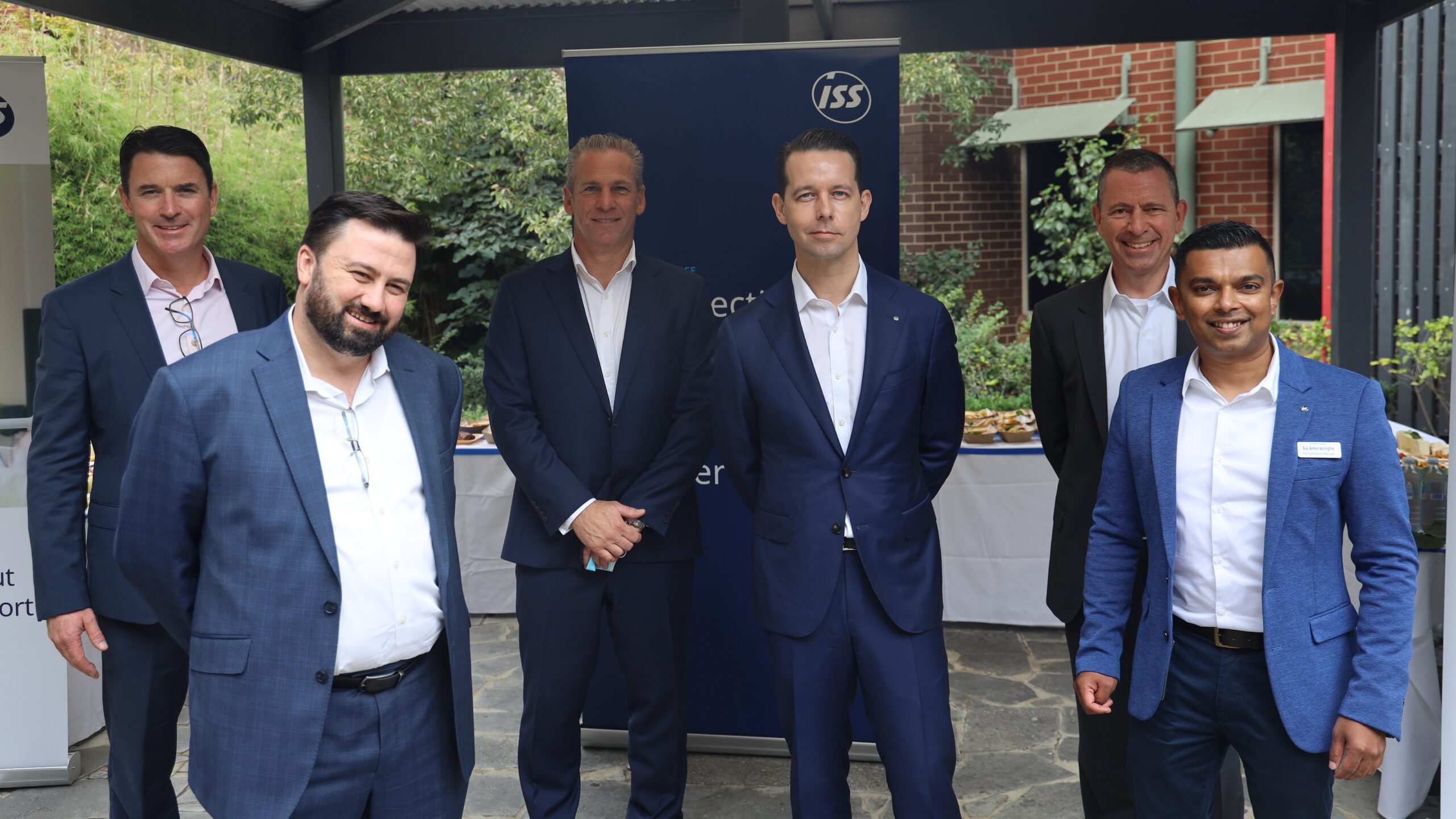
    Featured image (L-R): Scott Davis, CEO Asia Pacific, Aaron Cauchi, Executive General Manager Health, Stuart Rose, Chief Executive Officer Australia & New Zealand, Troels Bjerg, Global Group Chief Operating Officer, Jacob Aarup-Andersen, ISS A/S Global CEO, Saj Amerasinghe, ISS Key Account Manager Northern Health.

    Saj Amerasinghe, ISS Key Account Manager Northern Health, Siva Sivarajah, Chief Executive and Jacob Aarup-Andersen, ISS A/S Global CEO.


    Jacob Aarup-Andersen, ISS A/S Global CEO. and Saj Amerasinghe, ISS Key Account Manager Northern Health.
    Don Goonesekera was presented with a Hero Award
    Hanna Ah-Hi with her award
    Alexander Stojancvic (second on the left) with his award
    Sarab Dhillon with his award