• Malnutrition rates significantly reduced

    Malnutrition rates significantly reduced

    Malnutrition Week Australia New Zealand (ANZ) is marked from 4 – 8 October 2021, with the goal to ‘help fight malnutrition by getting involved and raising awareness’.

    Northern Health has made significant gains in identifying and managing patients at malnutrition risk. This week is an opportunity to celebrate our achievements in reducing malnutrition prevalence amongst our inpatients.

    Steph Yap, Dietitian, explained that for the last three years, the dietetics department has undertaken malnutrition prevalence studies to understand how many of our inpatients are malnourished at one point in time.

    “Malnutrition rates have significantly decreased across both the acute and subacute service streams and are less than the national prevalence,” she explained.

    This year, none of the malnourished inpatients were classified as ‘missed malnourished patients’, meaning all high malnutrition risk patients had been screened by nursing and referred to dietetics for nutrition care.

    In honour of Malnutrition Week ANZ, the Northern Health dietetics department want to say a big “thank you” to our nursing staff for their amazing efforts in completing malnutrition risk screening and weighing of inpatients, and referring to the dietetics department when indicated.

    One ward excelling in malnutrition identification and management is Kath Atkinson Wing Aged (KAW) at Bundoora Centre. This ward specialises in managing patients with BPSD-related dementia, delirium and with other medical conditions requiring high level of nursing care and who also have high malnutrition risk.

    Vinnie Shetty, Nursing Nutrition Champion at Kath Atkinson Wing, explains how she supports nursing staff to ensure patients receive timely malnutrition screening and intervention.

    In our KAW ward, I run regular in-services on malnutrition re-screening, dietitian referrals and weekly weights every Saturday. Reminding staff about this weekly process keeps us on track with our shared responsibility in identifying and preventing malnutrition,” she said.

    This patient cohort often present with fluctuating food refusal, reduced self-feeding ability, and/or swallowing difficulties, which negatively impacts on their ability to meet their nutrition and hydration needs. Malnutrition can then lead to other related complications such as pressure injuries, high risk of falls, increased confusion and poor wound healing.

    As part of Vinnie’s work, she liaises with nursing staff, dietitians and the Malnutrition Working Group to provide feedback around malnutrition screening processes, and advocate for nutrition at Northern Health. Her work in achieving high rates of malnutrition screening at Northern Health has recently been acknowledged by the Nutrition and Hydration Sub Clinical Improvement Committee.

    “KAW has been performing really well in the last quarter. The average KAW compliance rate was 95 per cent or higher for malnutrition screening on admission, weekly re-screening and referrals to the dietitian,” said Steph.

    “It’s been a complete joy to work with Vinnie, and see a friendly face on the ward who is so proactive in advocating for nutrition on behalf of our patients. Often the best way to enact change is to do so with someone working on the inside, and we are so grateful to have Vinnie as our Nutrition Champion in KAW,” she concluded.

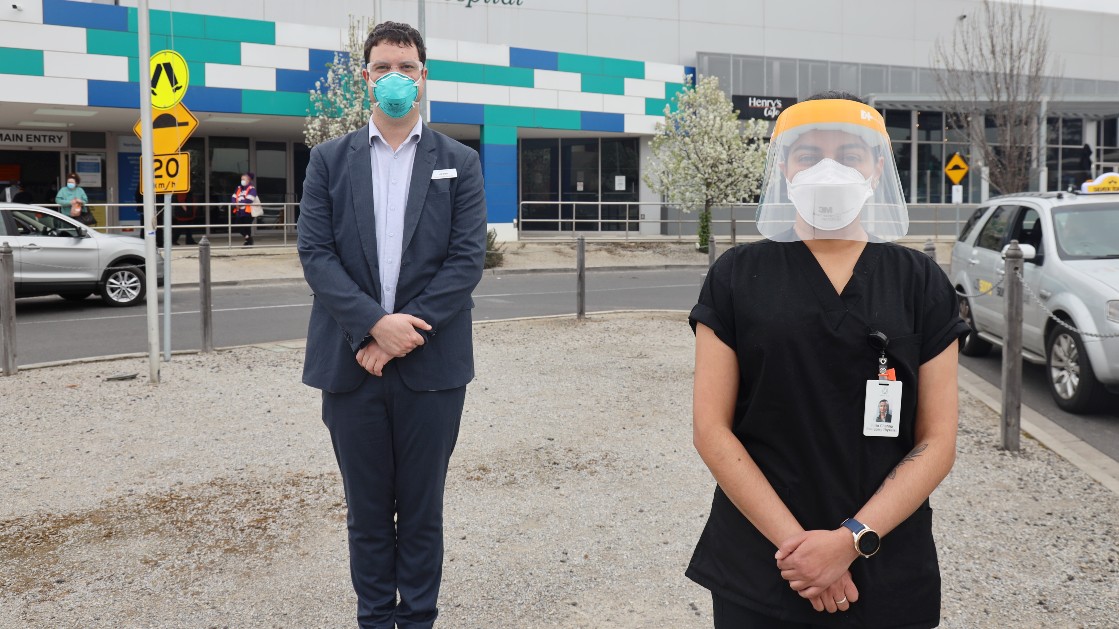
    Featured image (left to right): Stephanie Yap, Clinical Dietitian and Vilasini Shetty, Registered Nurse/Nursing Nutrition Champion.

  • Mindfulness sessions are back

    Mindfulness sessions are back

    This is a unique time for all of us, and that is why it is important to take extra care of our wellbeing and mental health.

    To support you on that journey, the Wellbeing team are excited to announce virtual “Collective pause” mindfulness sessions. These expert-led sessions start from today, 5 October, and will be held on Tuesdays and Thursdays, at alternating morning and afternoon times.

    The first mindfulness session will be the all familiar ‘TREAT Rest and Recovery’, led by Jo Gibbs, who will guide staff through a gentle movement and rest practice, aimed at providing relaxation, fatigue management and improved mental focus.

    Jo is a firm believer that the key to preventing burnout is recovery time after a particularly stressful event or series of events.

    “TREAT is based on a month-long study performed at Sandringham Hospital. The study evaluated whether a regular, short and guided group mindfulness practice for staff in an acute general medicine team improved attention and teamwork,” she explained.

    “The study concluded that a mindfulness-based intervention delivered to a general medical team improves staff attention. Good clinical practice includes self-awareness and self-reflection. In order to navigate the unpredictability and challenges of working in healthcare, taking a regular team pause gives staff an opportunity to reduce intense cognitive loads and allows space to emotionally regulate,” she added.

    The second mindfulness session will be led by Sneza Filiposki, one of our Northern Health employees.

    Sneza is a social worker, with a personal passion for mindful meditation that focuses on breath, body, emotions, thoughts and compassion. Some of the topics that Sneza will be covering during these sessions include mindfulness of breath, body scan meditation, self-compassion, accessing peace and ease, affectionate breathing and spacious awareness practice, just to name a few.

    Stephen Whittaker, Wellbeing Lead, explained this is a great opportunity for all our staff to attend.

    “We know fatigue and heavy emotions are being felt across our community. We acknowledge the unique challenge of being healthcare workers, and time is a luxury, so both Jo and Sneza’s sessions will only require 30 minutes of your day, to pause, and to reset. We encourage all staff to please take advantage of these tools – they, like us, are here to help,” he added.

    The Wellbeing team will also be sharing specific wellbeing advice every Monday – with a new theme every week. The ‘5 Ways to Wellbeing’ framework will include advice on how to connect, how to be active, how to keep learning, stay aware and help others.

    Please see here for the weekly timetable of the ‘Collective Pause’ mindfulness sessions.

  • Working together to beat COVID-19

    Working together to beat COVID-19

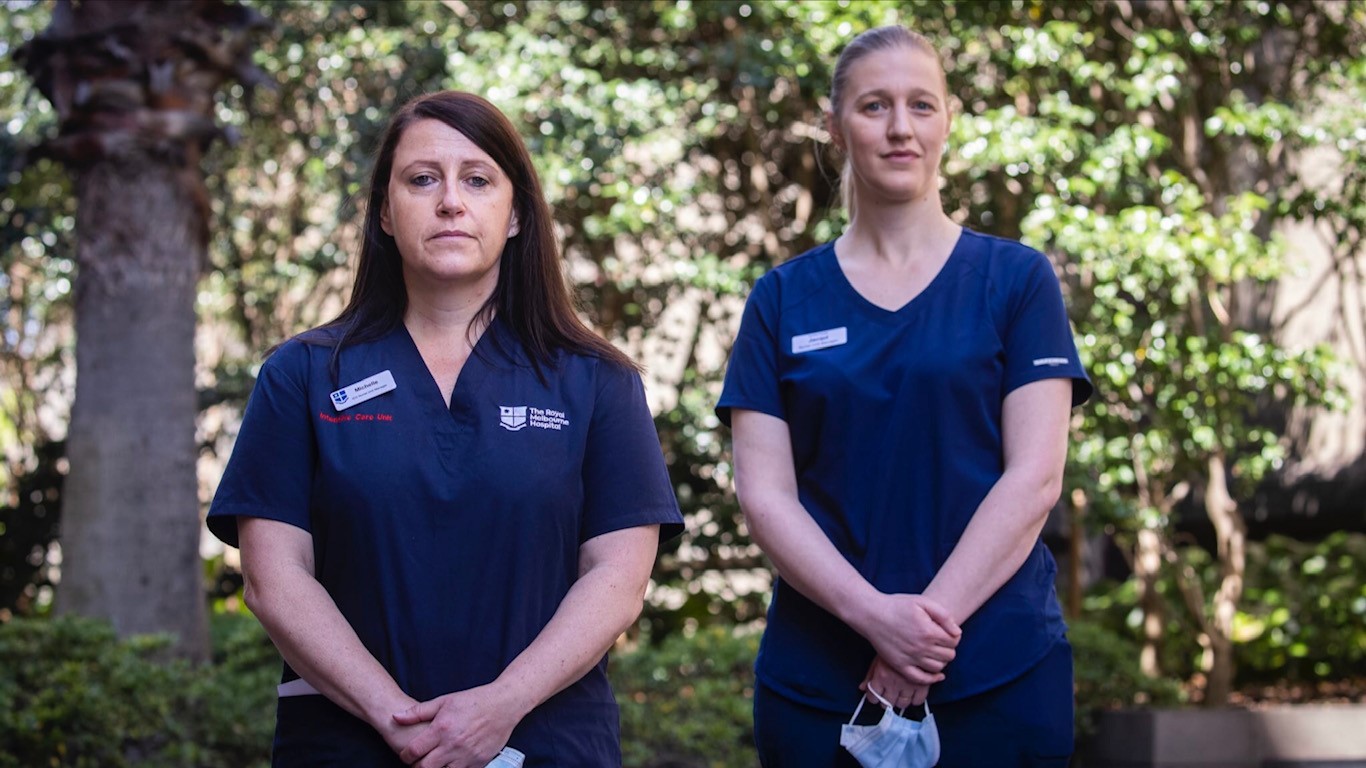
    Jacqui Harper, Nurse Unit Manager (NUM) COVID Ward 20 at Northern Hospital Epping, spoke at the Victorian Premier’s COVID-19 media conference on Sunday, along with Michelle Spence, NUM Intensive Care Unit (ICU) at Royal Melbourne Hospital (RMH).

    Jacqui and Michelle were invited to help spread the word on the importance of being fully vaccinated.

    ‘‘COVID-19 is a terrible illness,’’ Jacqui said.

    ‘‘The patients we see coming into our hospitals are seriously, seriously ill. The clinical deterioration is so sudden.’’

    Jacqui said she’s witnessed patients go from “sitting in a chair one minute” to saying their goodbyes an hour later.

    “They find it difficult to breathe, some needing oxygen, ventilators and ICU support.”

    Jacqui said many patients had expressed regret at not being vaccinated.

    She said the hospital saw many anti-vax patients, and their families change their mind once they realised how dangerous COVID-19 is.

    “By then, it’s too late. COVID is real, it’s affecting younger age groups and it’s scary,’’ she said.

    Michelle Spence, RMH ICU Nurse Unit Manager, said she had seen patients in their 20s and 30s.

    “Last week, I saw a 30-year-old, with no past history, put on a ventilator. He didn’t get vaccinated and now he’s on life support.”

    She said nurses who have never worked in the ICU are putting up their hand and working on the ward after just four days of training.

    Michelle said healthcare workers were braced for a ‘‘tough time” between now and Christmas.

    “I know you’re over it,’’ she said. “We’re over it. It’s going to be a tough few months.”

    Echoing her sentiments, Jacqui said, “To be a nurse right now? Very challenging when the community is not getting vaccinated.”

    “The three vaccines are safe, effective and your best form of protection against this virus. It protects you from hospitalisation – please get vaccinated.”

    “Our nurses, doctors, allied health and support staff are professional and dedicated – all working as a team,” Jacqui said.

    “I’m extremely proud of them for their unwavering commitment to keeping our patients safe.”

    In concluding the media conference, Victorian Premier Daniel Andrews said, “You have to go and book an appointment today – for yourself, for the people you love, for the people that love you, for people who you’ll never meet, for heroes like Jacqui and Michelle and the many thousands like them. If you respect our nurses, if you value them and the work that they do, then let’s not make their job any harder – let’s instead get vaccinated.”

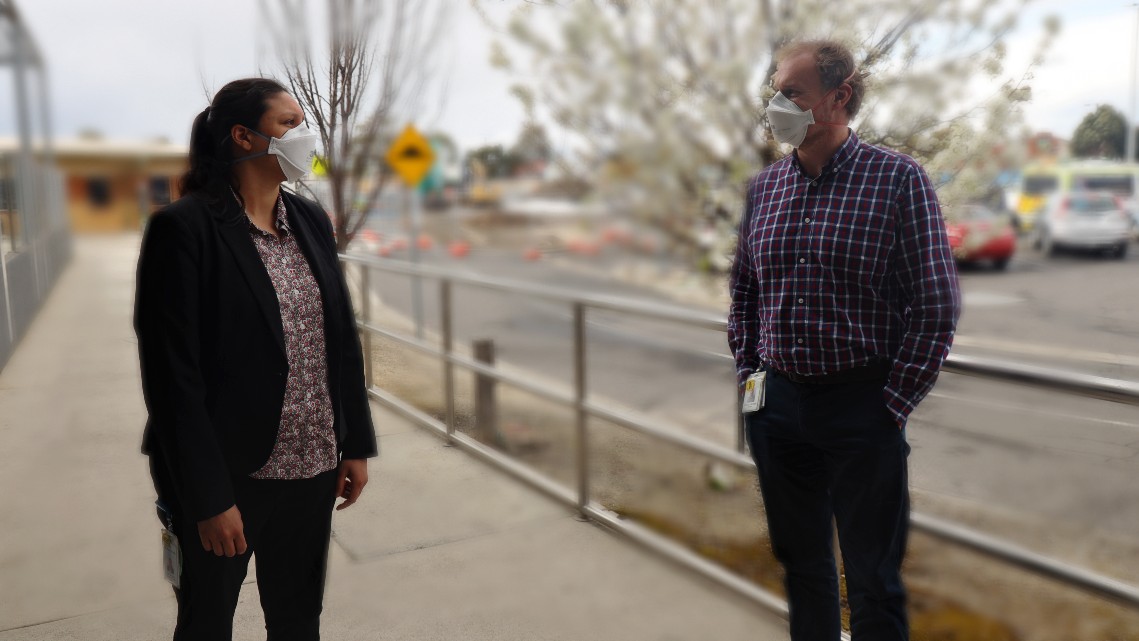
    Featured image: L-R Michelle Spence, NUM Intensive Care Unit (ICU) at Royal Melbourne Hospital (RMH) and Jacqui Harper, Nurse Unit Manager (NUM) COVID Ward 20 at Northern Hospital Epping.

  • It’s thunderstorm asthma season

    It’s thunderstorm asthma season

    Spring is here, and this favourite season often brings thunderstorms and pollen in the air. During grass pollen season, from October through to December, people may notice an increase in asthma and hay fever. These months also bring the chance of thunderstorm asthma.

    Kirin Channa, Emergency Physician, explained thunderstorm asthma is thought to be triggered by a unique combination of high amounts of grass pollen in the air and a certain type of thunderstorm.

    “For people who have asthma or hay fever, this can trigger severe asthma symptoms. This can become very severe, very quickly and many people may require medical help at the same time,” she said.

    People with hay fever are likely to be allergic to grass pollen, and are therefore at increased risk of thunderstorm asthma. Having both asthma and hay fever or poor control of asthma increases the risk further.

    “Thunderstorm asthma can affect people of any age, even if they don’t have a history of asthma. Having reliever medication appropriately available during this season and being aware of how to use it, ideally with a spacer is essential. With thunderstorm asthma season fast approaching, now is the time to ensure you have your reliever medication available, and those with asthma should ensure their Asthma Action Plan is up to date,” she added.

    Where possible, people should avoid being outside during thunderstorms from October through December, especially in the wind gusts that come before the storm. The usual advice is to stay inside and close your doors and windows, and if you have your air conditioner on, turn it to recirculate.

    Jason Amos, Emergency Management added: “ Northern Health has recently updated the Code Brown – External Emergency procedure and the Code Brown Subplan – Thunderstorm Asthma procedure on Prompt to ensure appropriate response to Code Brown/Thunderstorms Asthma events during COVID-19. This is a timely reminder for staff to ensure they are aware of our emergency plans for such events.”

    Patients with mild or moderate symptoms can contact Northern Health’s Virtual Emergency Department via nh.org.au/ed

    Melbourne Pollen Count and Forecast report on pollen counts the risk of thunderstorm asthma. See the link below to the website and smart phone apps: https://www.melbournepollen.com.au

  • Northern Health Foundation: How we care for the community, together

    Northern Health Foundation: How we care for the community, together

    Are you aware that Northern Health has its own Foundation?

    Northern Health Foundation is a formally registered charity with the Australian Charities and Not-For-Profit Commission (ACNC) and has its own board of directors.

    Established in 2005, the Foundation’s purpose was to increase philanthropic, corporate, and community support for Northern Health services. While this is still the mission today, it’s role goes even deeper than this.

    According to John Molnar OAM, longstanding Foundation Board Chair, “We support Northern Health in its vision of creating a healthier community. We do this by funding life-changing medical equipment, research, and training. We are a partnership.”

    “Our partnerships with stakeholders have enabled us to purchase some very important pieces of equipment for Northern Health over the years” says John.

    In 2019, Northern Health Foundation funded the purchase of 60 new, state-of-the-art defibrillators for all campuses across Northern Health. The Foundation has also successfully funded an Endobronchial Ultrasound Machine (EBUS) which will enable clinicians to diagnose lung cancer earlier, and therefore commence treatment sooner, leading to better patient outcomes.

    Just recently, Northern Health staff participated in the ‘Dry July’ campaign where they raised enough money to purchase an additional car for the Day Oncology Unit, enabling more cancer and haematology patients to receive chemotherapy and other treatments in the comfort of their own homes.

    “We have a wonderful network of supporters from corporates and local businesses, trusts and foundations, our amazing workplace givers, and of course, our patrons, who work tirelessly to fundraise for specific needs within the health service. We are very grateful for their support” says Pina Di Donato, Foundation Director.

    “And we have our wonderful staff who witness the needs of our patients each day as they work on the front-line against COVID-19. They are the first to raise their hands and offer to donate items when we are caring for kids, and volunteer to go ‘dry’ in July so that funds can be raised for cancer services. We can’t do it without the support of our staff” adds Pina.

    The Northern Health Foundation works with Northern Health staff to make an impact on the diverse and growing community. This is the most important partnership, built on the values of safe, kind, and together. Working together is the most rewarding way to impact the community.

    Having recently joined social media, the Foundation is building its audience. You can help them reach more people and connect them to your people by following them on their social media platforms.

    The Foundation will be giving away 50 x $10 coffee cards across Northern Health campuses. To be in the draw to win a coffee card, all you need to do is like our page on Facebook and follow us on Instagram between today and the end of October. Winners will be announced on 1 November 2021. And to make it super easy for you, we’ve provided the links below.

    To learn more about the Northern Health Foundation, head to nhfoundation.org.au.

  • Stronger together: North Eastern Public Health Unit (NEPHU)

    Stronger together: North Eastern Public Health Unit (NEPHU)

    At the beginning of the year, Northern Health became part of the North Eastern Public Health Unit (NEPHU), a team of healthcare workers focusing on the North Eastern region to help manage the COVID-19 outbreak response. Austin Health has been appointed as the lead health service, in collaboration with Northern Health and Eastern Health.

    Dr Christian McGrath, Clinical Lead NEPHU @ Northern, explained the idea for a localised health unit came about last year due to an increase in COVID-19 cases and the need for more contact tracers to support the Department of Health.

    “At some stage, it got quite busy and demand was high – then the decision was made to form these local public health units, and decentralise public health into local regions. It’s much easier to manage 15 or 20 post codes as a public health unit, than thousands across the state. At the moment, all we can focus on is COVID-19, but the idea is that one day, those local public health units will start developing into units responsible for other health issues and communicable diseases in the region, like measles, environmental health issues, as well as play a role in health promotion,” Dr McGrath said.

    For Dr McGrath, working locally has numerous benefits for getting things done quickly and efficiently, and improving local health outcomes.

    “Having these health units attached to health services, like we are here, means there are a lot of relationships that can develop and the units can really improve local health outcomes. Our North Eastern Public Health Unit roughly covers a catchment area of 1.8 million people. Our teams operationally work integrated with the Austin and Eastern Health teams, and there is probably 300 staff across NEPHU working on this program at the moment,” he added.

    Samantha Soggee, Operations Lead NEPHU, explains how the unit works to contact trace and reduce transmissions in the north-east catchments.

    “At the moment, we are in the super surge and the volume of cases is high. Northern, Austin and Eastern Health work together by joining into one team and we function out of pods – like ‘confirmed case pod’, ‘primary close contact pod’, ‘exposure site pod’, and each of those pods will have a team leader and an overarching operations lead across all of the pods,” she said.

    “Once there is a confirmed case in the catchment, the team would pick that up on the dashboard and interview the case, generate all the exposure sites, all primary close contacts, and then the designated pods will follow up. For example, the ‘exposure sites pod’ will follow up with the businesses, close them down if needed, advise on cleaning etc,” she added.

    For both Samantha and Christian, this new role meant a lot of learning on the job and adapting processes and procedures to make the response more efficient.

    “Our COVID response unit started in April this year, and that is when things started to ramp up. It was really the baptism of fire, as the City of Whittlesea outbreak started at that time, and it has been go-go-go since,” Dr McGrath said.

    “It’s no secret that a lot of COVID-19 cases are in the northern suburbs. For example, the NEPHU team conducted 300 case interviews one day last week, and that is an amazing effort, considering the total case number for Victoria that day was around 500. If we are concerned about a case, we join the efforts from ED, pathology and our contact tracers to get the results quickly, and that is the main benefit of working locally,” he added.

    The team works seven days a week, and also works closely with metro and our regional public health unit partners and the Department of Health, to manage outbreaks.

    “Over the months, it has been streamlined what information is being collected, in terms of information from cases. Previously, we would contact trace everywhere a case would go, but now we are contact tracing sensitive settings and exposure sites around that, usually workplaces and homes. We are trying to suppress COVID-19, while the vaccination rates are going up,” Samantha added.

    The team is welcoming new members – if you have some free time, enjoy working from home and are interested in contact tracing, please contact Lara Madden on: Lara.Madden@nh.org.au.

  • Care packages for our junior doctors

    Care packages for our junior doctors

    Our dedicated junior doctors received a special delivery of care packages as part of R U OK? Day from the Junior Medical Staff Association (JMSA) Welfare team, to show their thanks for their incredible work during the COVID-19 pandemic.

    The R U OK? Day Care Packages filled with goodies were delivered to all junior doctors; interns, residents and registrars at Northern Hospital Epping, Broadmeadows Hospital and Bundoora Centre.

    Dr Natina Monteleone, JMSA Representative, said the Welfare team recognised that this was a challenging time for all our Doctors, and wanted to show their appreciation to the junior doctor community at Northern Health.

    “We wanted to support each other through it. We are unable to meet in our usual way or partake in our usual get togethers,” Natina said.

    “These packages are a symbol of unity and support and hopefully brought some joy to the doctors across the Northern Health workforce. These packages were provided in recognition of R U OK? Day, which was created as a way to starting a conversation with those around us.”

    “We hope this has created some opportunity for open and supportive discussion about these really challenging times and that the conversations continue after R U OK? Day.”

    In the care packages, staff received R U OK? Day phone wallets and pamphlets, Beyond Blue fridge magnets, wrist bands and wallet cards, coffee cups, chocolates, pens, coffee vouchers, hand sanitiser, note books, hackey sacks and stress balls.

    “Many of the items were donated by local organisations that recognised the hard work and sacrifice of our staff, and wanted to show their support and thanks,” Natina said.

    “Many of these organisations provide ongoing support to our Doctors and we wanted to get that message out that we are not alone in all of this and there are services there that can help.”

    “We also graciously received funding from the CMO, Divisional Directors, Senior Medical Staff Association and Northern Health, with which we purchased additional coffee cups, vanilla scented candles, hacky sacks and linen bags.”

    The JMSA Welfare team hoped the care packages helped to “brighten the day” for our colleagues.

    “We also hope they serve as a reminder that we are all facing these challenges together, we can support each other through it and that there are services out there that can help.”

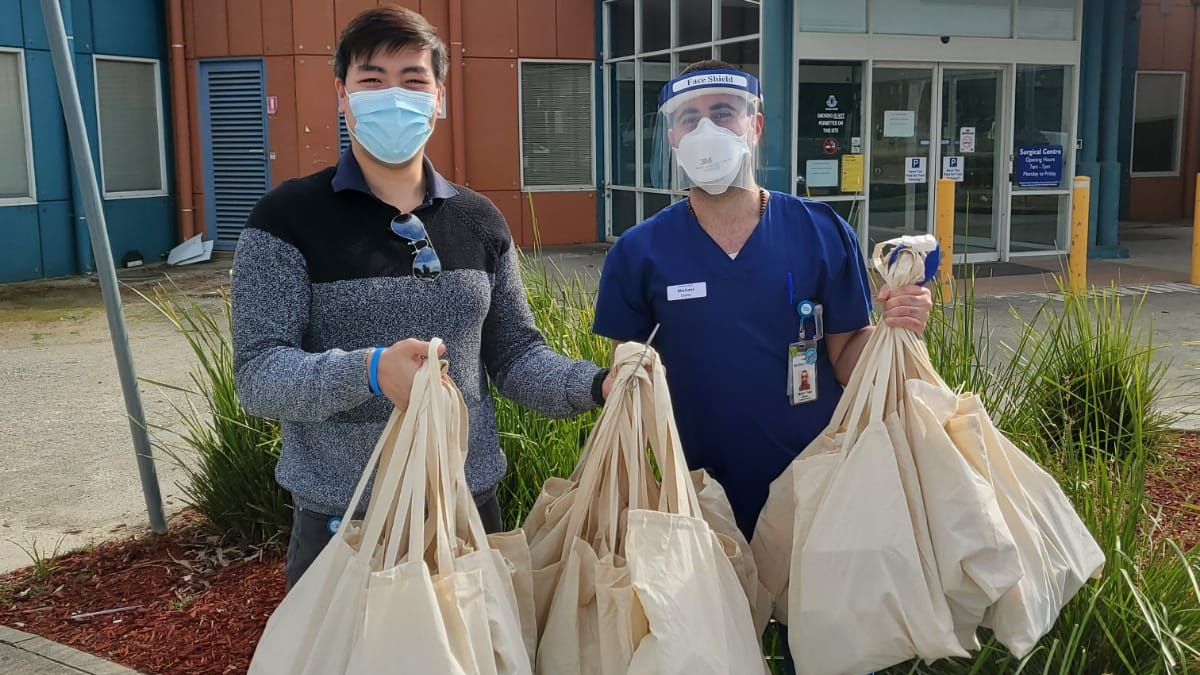
    Featured image: Broadmeadows Hospital doctors with the R U OK? Day Care Packages

    Northern Hospital Epping staff with the R U OK? Day Care Packages


    Goodies in the care packages
  • New COVID-19 outpatient treatment at Northern Hospital

    New COVID-19 outpatient treatment at Northern Hospital

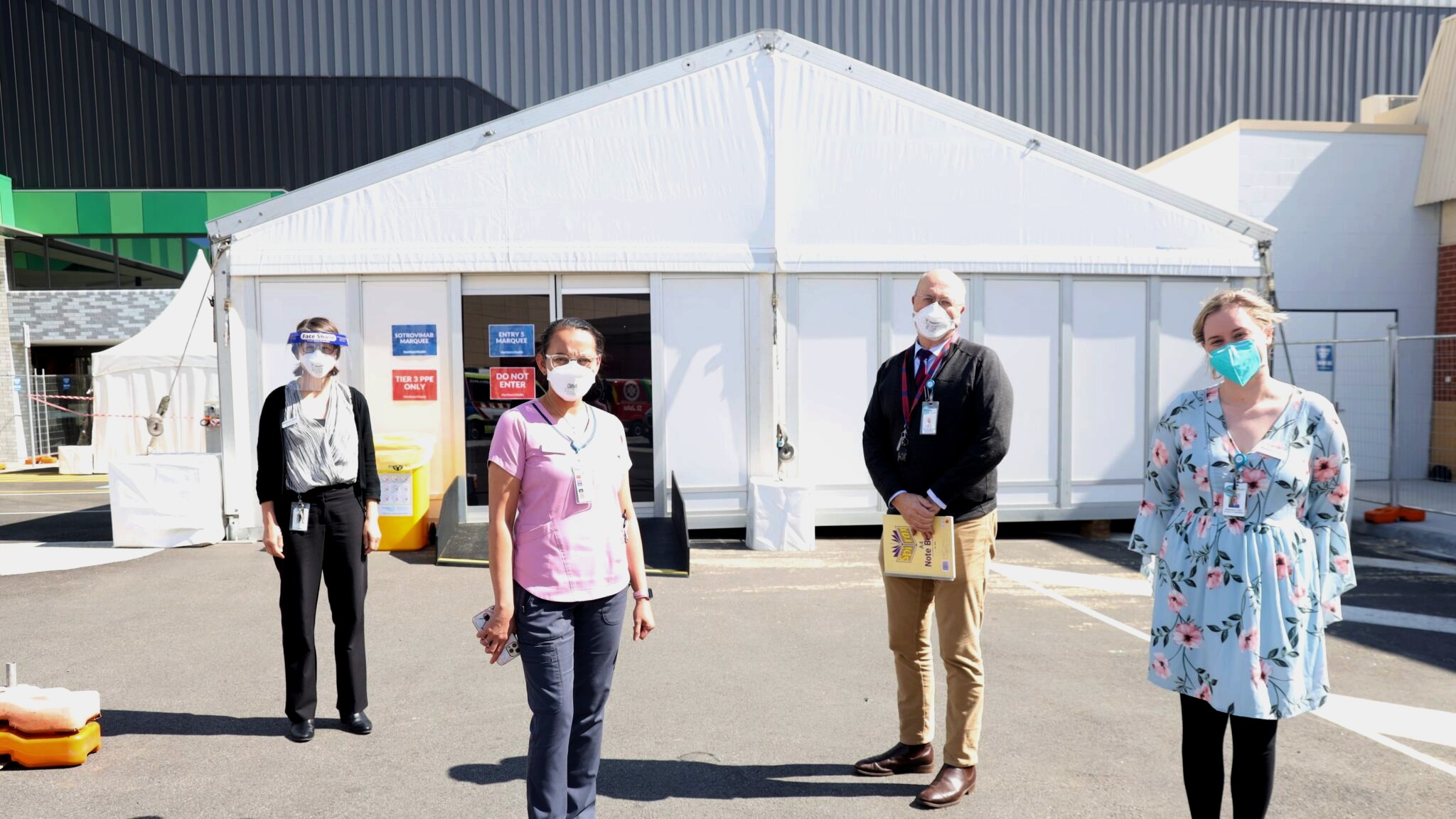
    This week, Northern Health launched a new outpatient service to treat patients with COVID-19 in the community.

    The ‘Sotrovimab Clinic’ is located at Entry 5 of Northern Hospital Epping.

    In the clinic, staff administer Sotrovimab, a novel monoclonal antibody treatment, intravenously to patients in the community who are unwell with COVID-19.

    Northern Health is one of only a couple of sites across Victoria that are administering this therapy in an outpatient setting.

    Professor Don Campbell, Director Staying Well Program, said,  “We are very pleased to have the Sotrovimab infusion centre established here at Northern Health.”

    “Vulnerable communities who haven’t yet been able to access vaccination are particularly at risk from COVID-19,” he explained.

    “The Sotrovimab treatment involves a single intravenous infusion of a monoclonal antibody directed against the Protein S Spike of the SARS CoV2 (COVID-19) virus. If it is administered early to eligible patients, it has the potential to reduce risk of severe illness and admission to hospital by over 80 per cent,” he explained.

    The laboratory-made proteins are designed to mimic the natural antibodies produced by the immune system when defending itself against diseases.

    The monoclonal antibodies bind to the virus to stop it from entering host cells, and also help to fight off already infected cells. A complete treatment cycle requires only one dose.

    “We want to treat members of our community who are at risk – so we can help keep them safe at home,” Don said.

    Madelaine Flynn, Director of Infection Prevention, explained the new clinic is being well received by patients.

    “At present, the clinic can administer this treatment to 15 patients per day Monday to Friday,” she said.

    “So far, the clinic is going great – we have already had many patients come through and receive this treatment.”

    We look forward to the clinic increasing capacity and treating more COVID-19 patients in our community.

    One of our very first patients to visit the new clinic