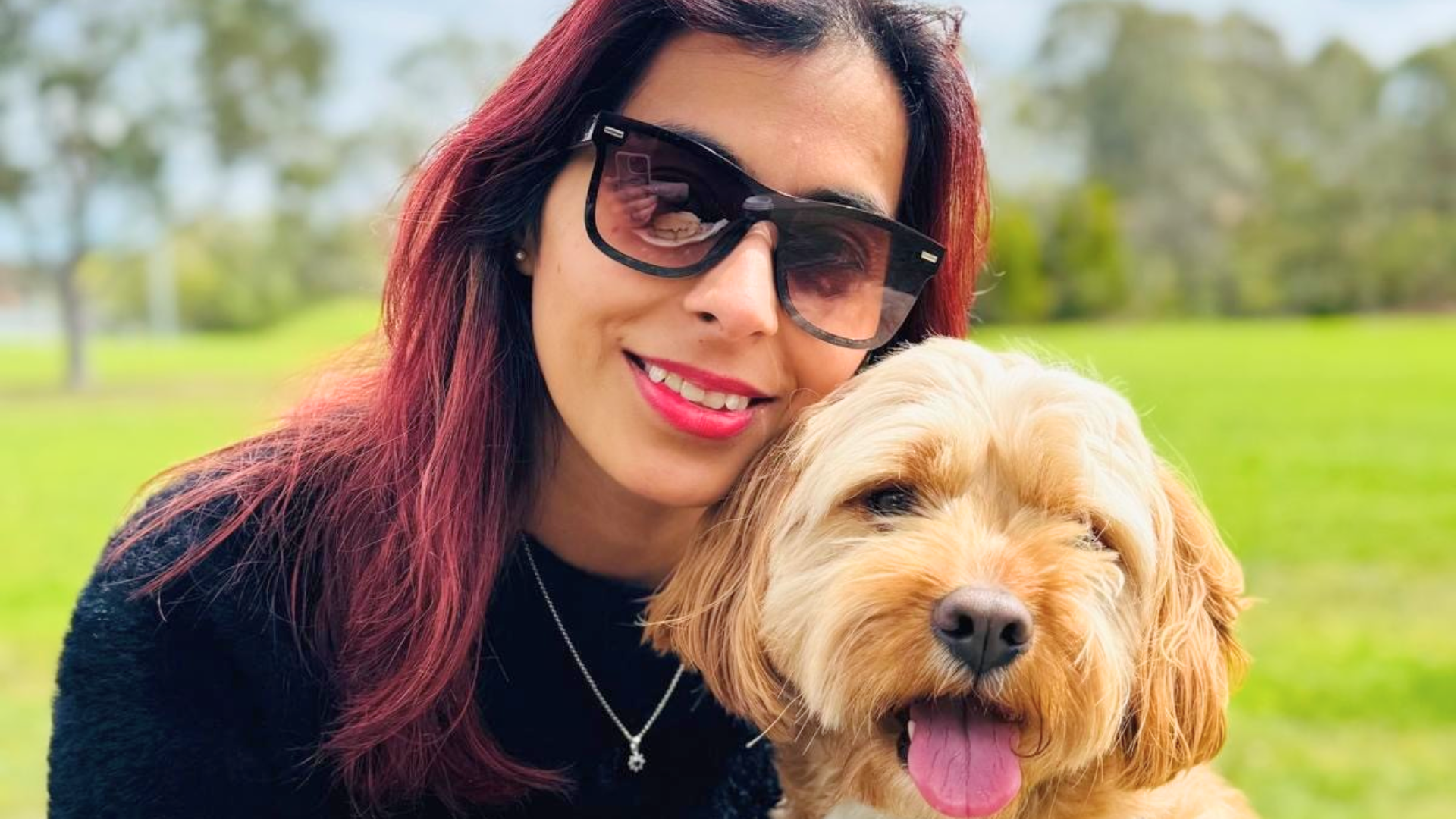
• Get to know: Dr Amina Shaukat

    Get to know: Dr Amina Shaukat

    #WeAreNorthern

    Meet Dr Amina Shaukat, Psychiatry Registrar, Northern Health IMG and Psychiatry Representative.

    Q: What’s your coffee order?

    A: I’m not much of a coffee person. I’ll always choose chai instead.

    Q: Where did your journey begin? Tell us a little about where you’re from and what inspired you to pursue medicine?

    A: My roots are in Pakistan, and I was born and grew up in the UAE. Whilst medicine was initially my parents’ dream for me, it gradually became my own as I discovered a deep passion for helping others and making a meaningful difference in people’s lives especially in mental health.

    Q: What was it like arriving in Australia and navigating a new healthcare system for the first time?

    A: Arriving in Australia was a significant cultural shift. Something as simple as shops closing early during weekdays was surprising at first. Professionally, adapting to the healthcare system was equally challenging. From understanding salary structures like Gross vs Net pay, to even learning different pronunciations for medical conditions and medications, it was a steep but rewarding learning curve.

    Q: Can you share how you became involved in Northern Health’s Observership program through the Medical Education Department?

    A: I first heard about Northern Health through friends and later came across the Observership opportunity online. What stood out to me were the organisation’s values “Safe, Kind, Together” which closely align with my own. I knew it would be a supportive place to continue my journey.

    Q: What were some of the biggest challenges you faced as an International Medical Graduate (IMG), and how did you work through them?

    A: Like many IMGs, I felt pressure to fit in, perform well, and remain positive at all times. Over time, I realised that staying silent about challenges wasn’t sustainable. Learning about my workplace rights and finding the courage to speak up were important turning points. These experiences helped me grow in confidence and resilience.

    Q: Who or what made the biggest difference in your journey – any moments of support from colleagues that stayed with you?

    A: The most meaningful support in my journey has come from my mum (RIP), my husband, and my children. I had only just met my husband when I made the decision to return to medical practice in Australia. Within a few months, I asked if he would support me, not just emotionally, but financially as well, and he did so wholeheartedly. One of the most significant moments in my life was knowing that my mum was able to see me become a registered doctor, working in Australia before she passed. That remains my greatest achievement.

    I also had a colleague who supported me deeply during a particularly stressful time while preparing for Australian medical council exams, working full time as a medical officer at Northern Health, and having a young family.

    When I felt exhausted and overwhelmed, she encouraged me to channel that frustration into determination and confidence – to stand strong and show the examiner what I was capable of. Her words stayed with me, and I carried that mindset into my exam and I passed.

    Q: Looking back, what would you say to other internationally trained doctors who may be feeling uncertain or just starting out on a similar path?

    A: Be patient with yourself and trust the process. It’s okay to feel uncertain, but don’t hesitate to advocate for yourself. Understanding your rights and speaking up are key.

    Most importantly, keep going, your persistence will only lead you forward. As Aristotle once said, “Patience is bitter, but its fruit is sweet,” and having patience is totally worth it.

    Q: What is your favourite book or movie character, and why?

    A: I love The Boy, the Mole, the Fox and the Horse by Charlie Mackesy.

    Its message about kindness, courage, and vulnerability really resonates with me. Something I share in my daily practice with people around me.

    What is the bravest thing you’ve ever said? asked the boy.

    ‘Help,’ said the horse.

    ‘Asking for help isn’t giving up,’ said the horse. “It’s refusing to give up.”

    Q: Sweet or savoury?

    A: Savoury with spices, without a doubt!

    Pictured in featured image: Dr Amina Shaukat with her dog Pluto. 
  • LGBTQ Domestic Violence Awareness Day

    LGBTQ Domestic Violence Awareness Day

    Today, 28 May, is LGBTQ Domestic Violence Awareness Day, a day dedicated to helping end violence within LGBTQ communities by increasing visibility, fostering understanding and giving hope and courage to victim survivors.

    LGBTQ Domestic Violence Awareness Day was originally created in Australia in 2020. It is the first time in history that an awareness day was formed to highlight domestic, family and intimate partner violence occurring in LGBTQ communities. It has since grown into a global event, with hundreds of government departments and organisations across 20 countries recognising and supporting this important initiative.

    The theme for this year is #SeenAndBelieved with the emphasis on the importance of acknowledging and validating the unique experiences of LGBTQ victim survivors of domestic violence. It aims to bring awareness to the issue and ensures that victim survivors are seen, heard and believed.

    Family violence is behaviour by a person towards a family member that is physically or sexually abusive, emotionally or psychologically abusive, economically abusive, threatening or controlling of that family member and causes them to fear for their safety. Family violence impacts people of all genders and sexual identities and can occur in all family types including intimate partners, across generations, extended families and carer relationships.

    The health sector is a critical entry point for people affected by family and domestic violence, which is an opportunity to provide medical care, support and referrals to specialist services. Every person affected by violence, each with their unique identities and relationships, has a right to be seen and believed by their health care providers.

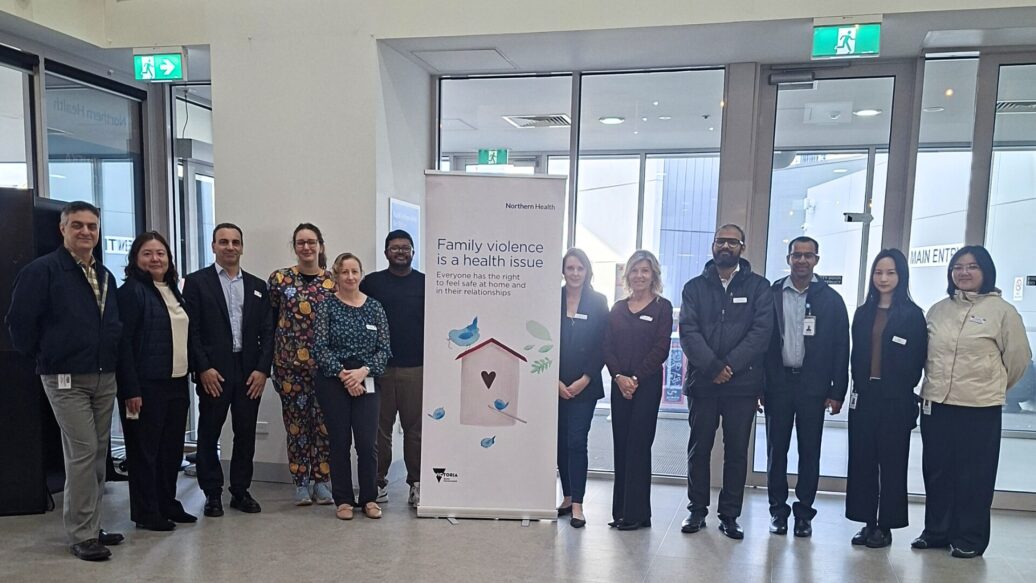
    At Northern Health, the Strengthening Hospital Response to Family Violence (SHRFV) Program, the Rainbow Working Group and the Workforce Planning & Projects Team are working together to raise awareness on this important health issue.

    Tanya Ellis, SHRFV Program Manager, says, “Family violence is a serious and prevalent health issue that has a profound impact on the psychological and physical wellbeing of victim survivors. Victim survivors are among our community and present to our health service each and every day.”

    “It is a human right to live a life free from violence and we all have a part to play in ensuring that we identify and respond to individuals experiencing family violence.”

    “Unfortunately, there is still apprehension within the LGBTQIA+ community to violence or contact mainstream services for support, which means these victim survivors remain largely invisible with low levels of disclosure and reporting.”

    According to the LGBTQ Domestic Violence Awareness Foundation, more than 60 per cent of LGBTQ+ people have experienced domestic, family or intimate partner violence and abuse in their lifetime. Specific forms of family violence perpetrated against LGBTQIA+ individuals include threatening to ‘out’ a person’s gender, sexual identity or intersex status to family, friends, colleagues or their community and this threat is used as way to control the victim survivor.

    Despite this prevalence, LGBTQ+ individuals are less likely to recognise domestic or family violence in their relationships, less likely to report it to the police or seek support from services and are far less likely to find support services that meet their specific needs.

    Maria Soo, OHS and Wellbeing Interim Director says, “Domestic and family violence impacts people across all communities, including LGBTIQ+ individuals who may face unique barriers to accessing safety and support. Today is a reminder that creating safe workplaces is not limited to physical environments. It is also about fostering cultures of inclusion, trust, and psychological safety. We all have a role in recognising signs, responding with empathy and ensuring our people know they are supported, respected, and never alone.”

    Northern Health aims to play an important role in preventing family violence through providing a respectful, equitable and safe service. We are committed to providing an environment that is safe for all individuals to disclose their experiences and receive support and safety.

    Northern Health encourages staff to get involved and show their support to the LGBTQIA+ community by wearing something rainbow throughout the week, having a conversation about healthy relationships, spread the word on social media with #SeenAndBelieved and become aware of support services available to LGBTQIA+ victim survivors.

    Tanya reminds staff to please complete the Family Violence MARAM Screening & Identification Tool when working with a patient who has disclosed family violence or if it is suspected. The Tool is trauma-informed and best practice in identifying and responding to family violence. The Tool is located on EMR (AdHoc Forms Section) and PROMPT.

    The SHRFV Team is also available for specialist family violence consultation and to deliver family violence training. Please contact the SHRFV Team if you need to consult or organise training in your area (8405 8519).

    Click here to get involved or for more information on LGBTQ Domestic Violence Awareness Day.

    Support services:

    • Safe Steps: 24/7 Crisis Response Service Ph: 1800 015 188
    • With Respect: Specialist LGBTQI+ Family Violence Service Ph: 1800 542 847
    • Rainbow Door: LGBTQIA+ Information, Support and Referral Helpline Ph: 1800 729 367
    • 1800 RESPECT: 24/7 National Sexual Assault & Domestic Family Violence Counselling Service Ph: 1800 737 732
    • Qlife: LGBTIQ+ Peer Support, Information and Referral. Ph: 1800 184 527
    • Disclose to your health professional to access support and safety.
  • NHF Gala Ball 2026: A Night Where Art Met Healing

    NHF Gala Ball 2026: A Night Where Art Met Healing

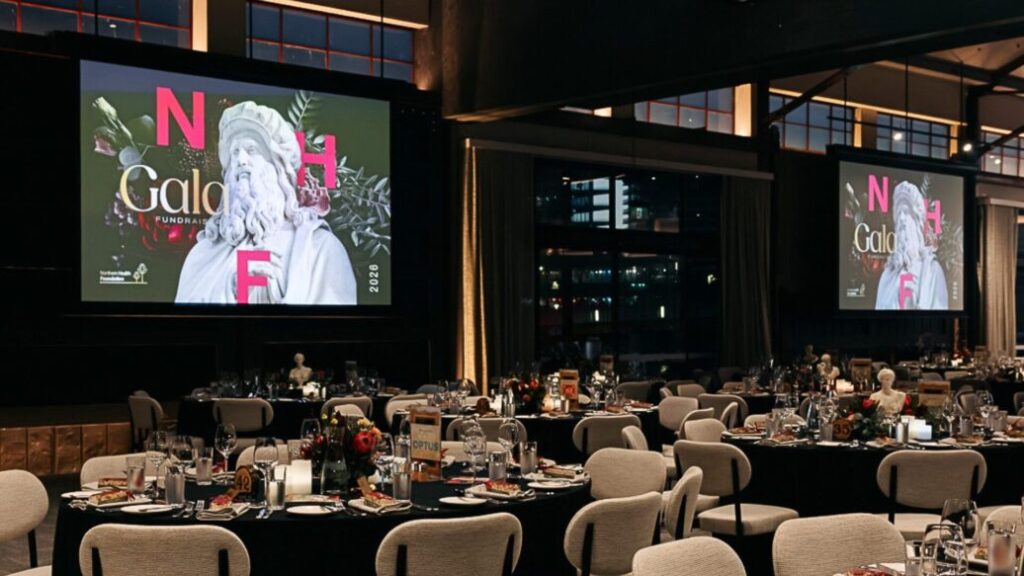
    On 9 May 2026, the Northern Health Foundation welcomed 430 guests to the 1 Hotel Melbourne Ballroom in Docklands for its most ambitious Gala Ball yet, and the results speak for themselves. The evening raised $140,000 for equitable healthcare in Melbourne’s north, making it one of the Foundation’s strongest fundraising results to date.

    This year’s event, Where Art Meets Healing, was built around a Renaissance theme honouring the arrival of Northern Health’s new da Vinci Robotic Surgical System; a milestone that gave the night real meaning beyond the celebration. From the opening moments, guests were immersed in an experience that wove together art, innovation, and the very human stories behind modern medicine.

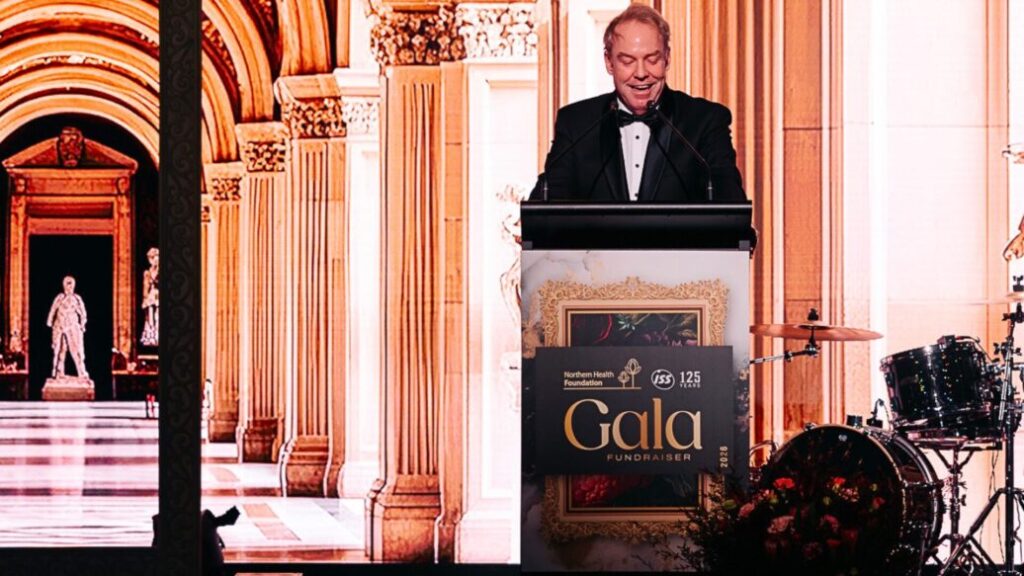
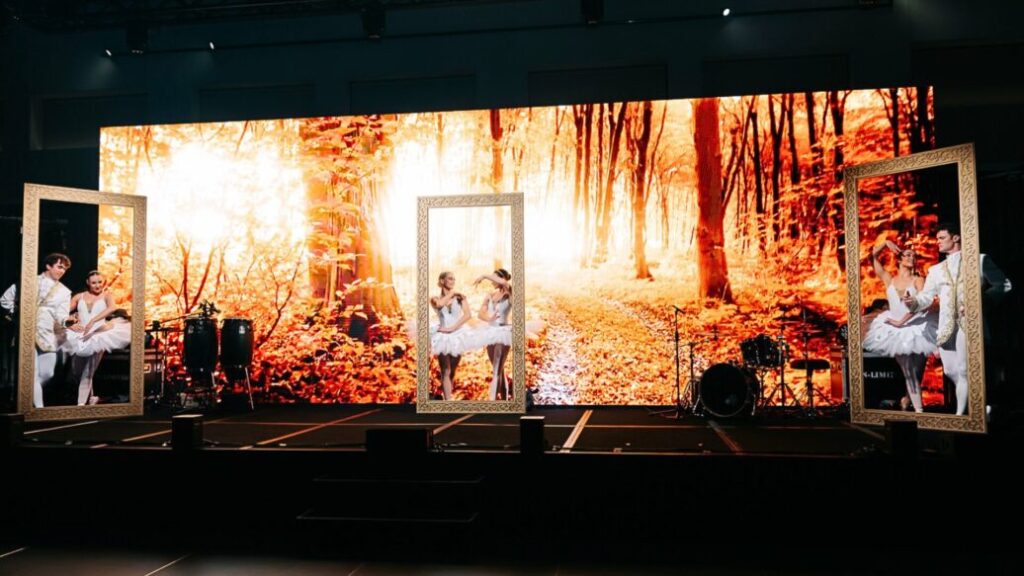
    The entertainment set the tone from the start. Vivid Strings welcomed guests with a live performance as they entered the ballroom, before Bespoke Ballet Dancers delivered a breathtaking opening performance. Brad Blaze, our speed painter, captivated the room with his original artwork later sold at live auction, raising an additional $3,000. The Un-Limited Band brought the dance floor to life and kept energy high through to the final set. Hosting the evening with warmth, wit, and professionalism was our MC, Peter Helliar, whose ability to hold a room, across the serious and the celebratory, was exactly what the night called for.

    Amongst all the pageantry and celebration, one individual stole the show. Sharing his personal experience following life-saving robotic surgery, Rex Stacey, connected the whole room with his heartfelt account and sincere gratitude for the technology and for the care he received at Northern Health.

    Fundraising highlights included a remarkable Mercedes-Benz raffle which alone raised $43,000, generously supported by 3 Point Motors, and the Diamond Bracelet draw, with the bracelet kindly donated by Paton’s Place Jewellers. Silent and live auctions, donations, and the evening’s 28 sponsors helped push the total over the line. Special thanks to our Principal Sponsor ISS and Premier Sponsor Henry’s Café, and other main sponsors, Blue Sky, Kane, Latrobe University, Margie Hill, New Epping, RMIT, and Rauland. Thank you also to our new supporters who joined our community this year.

    None of this happens without the team. To everyone at the Northern Health Foundation who gave their time, energy, and heart to this event: your dedication showed in every detail of the night. This was our fourth Gala Ball, our first at the 1 Hotel, and by every measure, our best.

    And the feedback we’ve received was overwhelmingly positive.

    Adjunct Professor Alan Lilly, Board Chair, Northern Health, reflected, “Special thanks to Pina Di Donato and the amazing organising team at the Northern Health Foundation for creating an inspiring, engaging, thoughtful and entertaining event. It was indeed a spectacular evening. Thank you also to our guests and sponsors who supported the event, so that we can bring world-class care closer to home.”

    “We were delighted to support this year’s Northern Health Foundation Gala as Principal Partner – an inspiring evening that brought community, culture and care together for a powerful cause.
    Together, we helped raise over $140,000 to support the da Vinci Surgical System at Northern Hospital Epping, enabling more accessible, world-class healthcare for Melbourne’s north,” ISS, Facility Services and major sponsors for Northern Health.

    “Attending the Northern Health Foundation Gala was incredibly meaningful. Hearing about the introduction of the da Vinci Surgical System at Northern Hospital Epping was both inspiring and deeply personal for me, having lost family members to cancer. It was a powerful reminder that the work we do and the projects we help deliver can truly change lives,” added Richa Choudhary, Project Manager, INTREC.

     The funds raised will make a genuine difference to the communities we serve. Thank to everyone who attended for making it possible.

  • National Sorry Day at Northern Health

    National Sorry Day at Northern Health

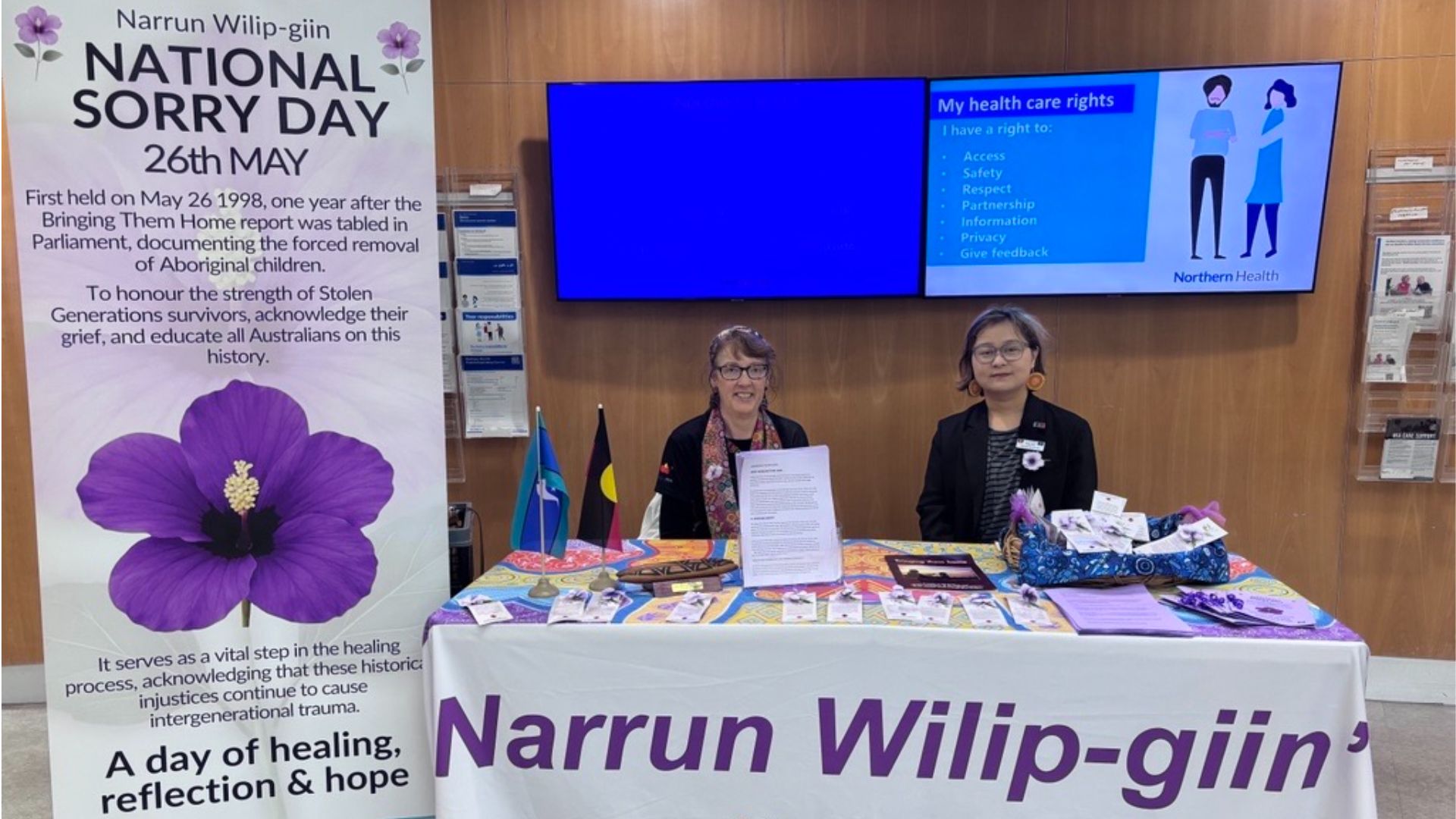
    Today we observe National Sorry Day, a time to acknowledge and remember the Stolen Generations – Aboriginal and Torres Strait Islander children who were forcibly removed from their families under past government policies. It is also an opportunity to recognise the ongoing impact of this history on individuals, families, and communities, and to reflect on the role we each play in reconciliation.

    This day holds deep significance across Australia, encouraging us to listen, learn, and engage with the truths of our shared history. Yue Hu, Director of Narrun Wilip-giin Aboriginal Support Unit (ASU), reflected on the importance of the day, “National Sorry Day asks us not to look away from history, but to confront it honestly, and to reflect on how we create culturally safe, respectful care for Aboriginal and Torres Strait Islander peoples today.”

    This message is especially important in healthcare, where cultural safety, respect, and understanding are essential to building trust and improving health outcomes.

    Today at Northern Health, staff came together to mark National Sorry Day through a range of meaningful activities.

    Staff visited the foyer stall, where they had the opportunity to learn more about the significance of the day and show their support. Educational resources were shared to help build awareness of the Stolen Generations and the lasting impact of these experiences on Aboriginal and Torres Strait Islander peoples and communities.

    A special choir performance also brought staff together in reflection and solidarity. Among the songs performed, three carried particularly powerful messages, honouring the experiences of Aboriginal and Torres Strait Islander peoples and acknowledging the trauma and resilience of the Stolen Generations.

    These activities created an opportunity for staff to connect, learn, and show support. Whether through attending events, engaging with resources, or having meaningful conversations with colleagues, every action contributes to building a more inclusive and culturally safe workplace.

    Karen Bryant, Manager of Narrun Wilip-giin Aboriginal Support Unit, highlighted the importance of reflection and collective responsibility, “Today, we acknowledge the strength and resilience of Stolen Generations Survivors and reflect on how each of us can play a part in healing for our Mob.”

    National Reconciliation Week follows from 27 May to 3 June and builds on the spirit of National Sorry Day. The week commemorates two significant milestones in Australia’s reconciliation journey, the 1967 Referendum and the High Court Mabo decision, and encourages all Australians to learn about our shared histories, cultures, and achievements. It is also a time to consider how we can contribute to reconciliation through our everyday work, actions, and interactions.

    National Sorry Day is not only about acknowledging the past; it is about shaping the future. By continuing to listen, learn, and act, we can each play a role in advancing reconciliation and fostering a workplace grounded in respect, understanding, and cultural safety.

    Pictured in featured image (L-R): Sherrilyn Ballard, Community Engagement Coordinator, Narrun Wilip-giin (ASU) and Yue Hu, Director of Narrun Wilip-giin (ASU).

  • New ED cubicles improving access to care for our community

    New ED cubicles improving access to care for our community

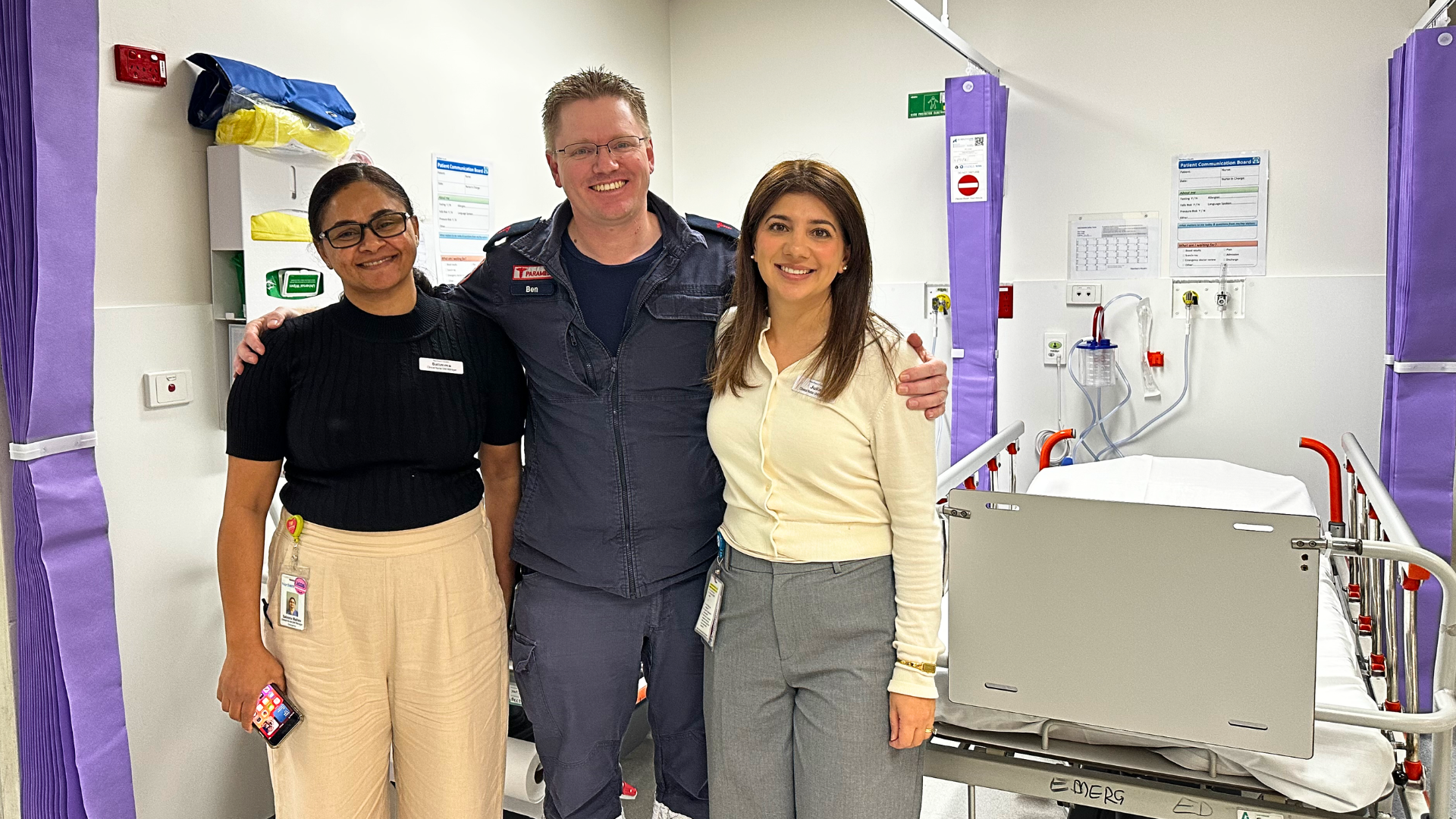
    Northern Health has opened new Ambulance Victoria (AV) transition cubicles in the Emergency Department this month, helping patients receive care sooner and supporting faster ambulance handover.

    This initiative is part of a Department of Health-funded pilot focused on improving the safe and timely offload of patients from ambulances.

    By reducing ambulance ramping and delays, the program helps get paramedic crews back on the road more quickly to serve the Northern community.

    Located near the ambulance entrance, the new cubicles allow patients arriving by ambulance to move straight into a clinical space where assessment and treatment can begin.

    The initiative also includes increased senior medical and nursing staffing, meaning patients are seen earlier and care decisions can be made more quickly.

    The transition cubicles are designed for short stays (usually under an hour) and are used to start early care such as observations, pain relief and initial tests. Patients are then safely moved to the most appropriate next step, whether that’s an ED cubicle, a hospital bed or the waiting room to await further treatment.

    Emergency Department Nurse Unit Manager, Amanda Paleologos, said the new model is already making a difference.

    “These new cubicles mean we can start caring for patients much sooner after they arrive, rather than them waiting on an ambulance trolley,” she said.

    “With more senior staff on the floor, we’re able to assess patients earlier, make decisions faster and improve the overall flow through the department. It’s better for our patients and helps our ambulance colleagues get back out to the community sooner.”

    This pilot reflects Northern Health’s commitment to improving access, reducing wait times and delivering better care for the whole Northern community.

    Pictured in featured image: Ben from Ambulance Victoria flanked by Sal Mathew and Julia Fotiadis (Clinical Nurse Unit Managers, Emergency Department). 

  • National Volunteer Week – Celebrating 170 Years of community strength at Northern Health

    National Volunteer Week – Celebrating 170 Years of community strength at Northern Health

    At Northern Health, every act of kindness, every warm greeting, every reassuring word, every moment of support, becomes part of a much larger story. It’s a story written by our volunteers, consumer representatives, auxiliaries, and spiritual care volunteers who, together, help shape a hospital that truly reflects the community it serves.

    Their contributions don’t just support our services, they strengthen the connection between Northern Health and the people who walk through our doors.

    “Our Consumer Representatives are the voice of our patients and families,” says Navneet Gill, Consumer Participation Coordinator. “Consumers sit on committees, share lived experiences, and help shape how care is delivered. Their insights have guided many projects such as the Emergency Department redevelopment.”

    These representatives bring the community directly into decision‑making.

    • Jane Spracklan, celebrating five years of volunteering, champions accessibility through the Disability Working Group, ensuring people living with disability experience a hospital that understands and responds to their needs.
    • Alex, who joined in 2021, uses more than 30 years of IT expertise to support the Digital Investment Steering Committee. His guidance helps Northern Health make smart, community‑centred digital decisions.
    • Karyn Findlay, a valued award recipient, contributes through the CLEAR Group, reviewing patient information to ensure it is clear, accessible, and culturally appropriate for the diverse communities we serve.

    Together, they remind us that consumer partnership isn’t a process,  it’s a relationship built on trust, empathy, and shared purpose.

    Across all Northern Health sites, volunteers are often the first friendly face people see. They guide visitors, support staff, offer tea and coffee, make and distribute comfort items to patients, help behind the scenes with admin and restocking tasks and offer words of comfort to patients in moments that matter.

    Our Spiritual Care Volunteers bring connection and calmness to patients who welcome a visit. “They listen, share quiet moments, and remind people that even in times of uncertainty, they are never alone,” says Natalia Dewiyani, Spiritual Care Coordinator.

    Their presence reflects the deep compassion of our community.

    Our hospital auxiliaries are another powerful example of community spirit in action.

    “Our hospital auxiliaries give tirelessly,” says Henni Wade, Manager of Volunteer Services. “They collect donations, sort and sell stock, and turn community generosity into real impact. The funds they raise help purchase vital equipment, directly improving care for patients across Northern Health.”

    Their work shows how small contributions, when shared, create meaningful change.

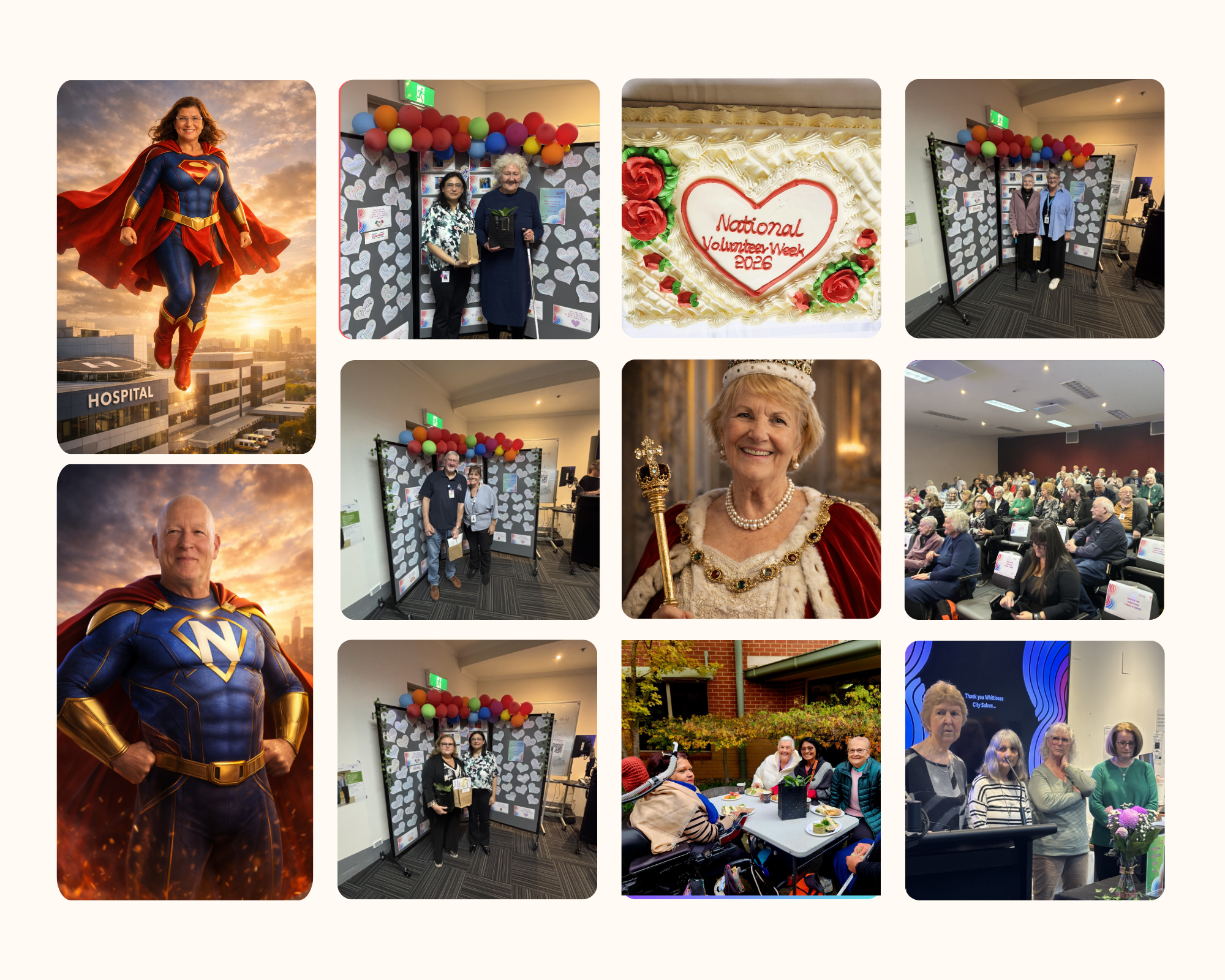
    This week, we proudly celebrated 17 volunteers who received years‑of‑service awards, representing an extraordinary 170 years of combined volunteering at Northern Health.

    Among them:

    • Elizabeth Dossor – 20 years
    • Annie Brooks – 20 years
    • Angela Dolcetta – 30 years

    To every volunteer, auxiliary member, spiritual care volunteer, and consumer representative, thank you. Your kindness, your time, and your commitment continue to shape Northern Health into a place where community is not just welcomed, but woven into every decision and every act of care.

  • Where learning meets care: Allied Health partnering with consumers

    Where learning meets care: Allied Health partnering with consumers

    Allied Health at Northern Health has launched a new Point of Care Learning Framework that partners with health service consumers to change the way clinicians learn.

    The new framework supports work-based learning that responds to patient needs and occurs alongside routine clinical care.  This learning approach allows clinicians to reflect, adapt, and build their skills while actively delivering patient care and strengthens clinical reasoning and decision-making, as well as improving patient experience and outcomes.

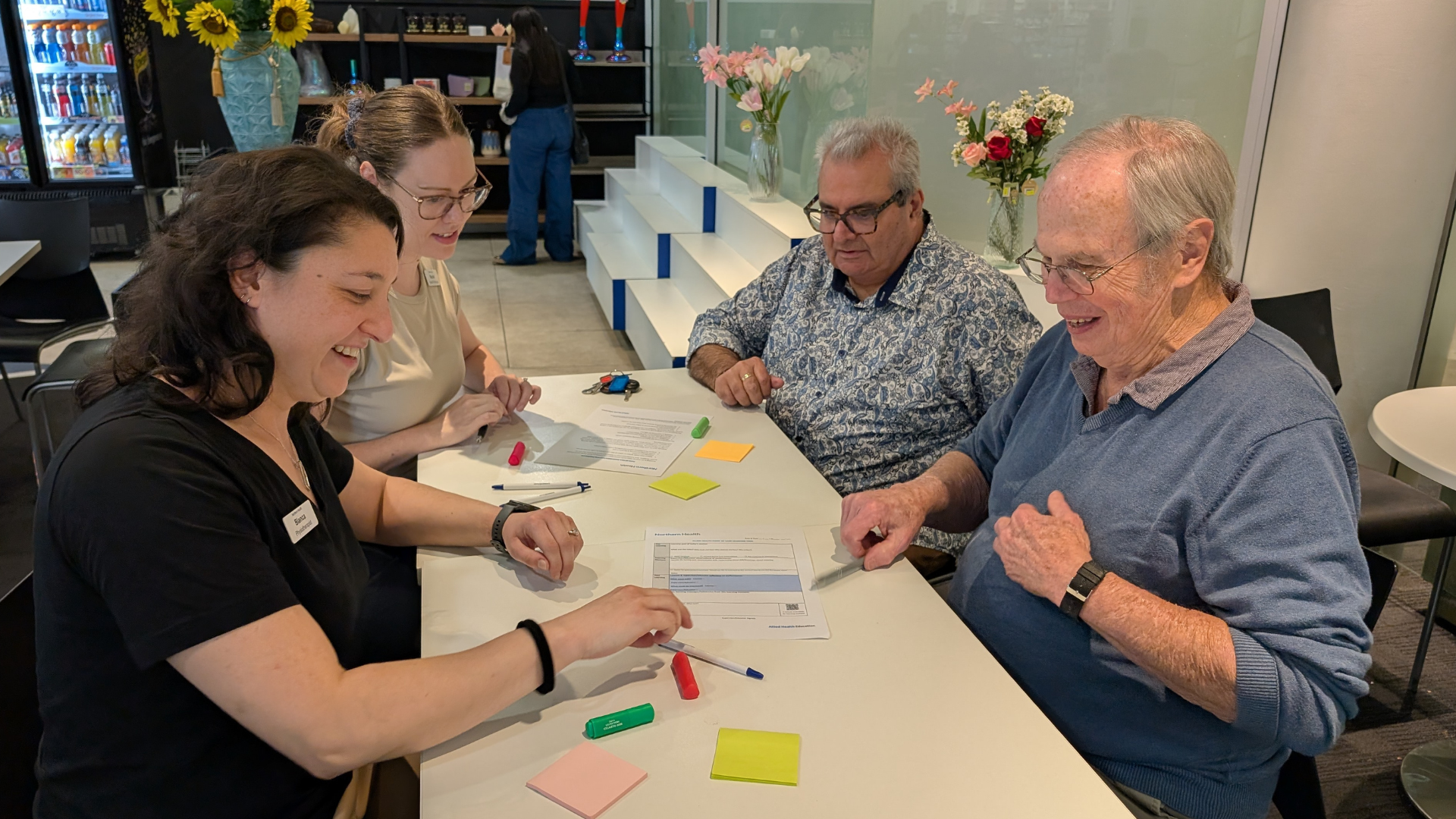
    Teaching at bedside isn’t new, but a key strength of the framework is its co-design with consumers. Consumer advisors played an active role in shaping both the framework and its supporting tools, to ensure that clinicians consider what matters most to patients and their families. They reviewed the draft framework and provided invaluable feedback on how clinicians can sensitively explain the purpose of point of care learning and actively participate in the experience. A consistent message from the consumer advisors was that when learning occurs in the presence of patients, it must be done in a way that ensures they feel safe, respected, listened to, and valued.

    This is what some of our consumer advisors have shared with us:

    Gordon Dennis reflected, “To have the opportunity to have a voice on how the hospital approaches its education programs tells me that the hospital really cares about those who come for help. I feel proud to have been able to contribute.”

    Jo Young highlighted the value of learning in the moment, “Learning alongside patients is such an important part of professional development. It was rewarding to know that lived experience is helping shape how care is delivered.”

    Carol Burnett emphasised the importance of inclusion, noting, “We come from a very diverse community. By involving consumers, Northern Health ensures different perspectives are represented, improving the quality of care and the experience for all patients.”

    Finally, Evan Bichara added, “Engaging consumers meaningfully allows us to be heard and valued as partners. It strengthens patient-centred approaches and ensures services reflect real community needs.”

    The move to PoC model of learning was directly informed by clinician’s feedback indicating that they learn best through hands-on, workplace-based experiences embedded in their daily work.

    Allied Health physiotherapy educator Stephanie Castagnini, said, “We can underestimate how much we learn from our patients. This framework helps guide clinicians to create positive, goal-oriented learning experiences that benefit both the clinician and the patient.”

    While Rachel Nolan, Speech Pathology Clinical Educator, highlighted the importance of trust, “Through co-design, we developed ways to help clinicians clearly explain point of care learning to patients. This builds confidence and strengthens the clinician–patient partnership.”

    The Point of Care Learning Framework marks an important step in embedding learning into everyday practice at Northern Health, ensuring education is not an added extra, but an integral part of delivering safe, high-quality, and person-centred care.

    Pictured in featured image: Allied Health clinicians with Northern Health consumer advisors. 

  • Educate, Empower, Collaborate: RIR team holds Education Skills Day

    Educate, Empower, Collaborate: RIR team holds Education Skills Day

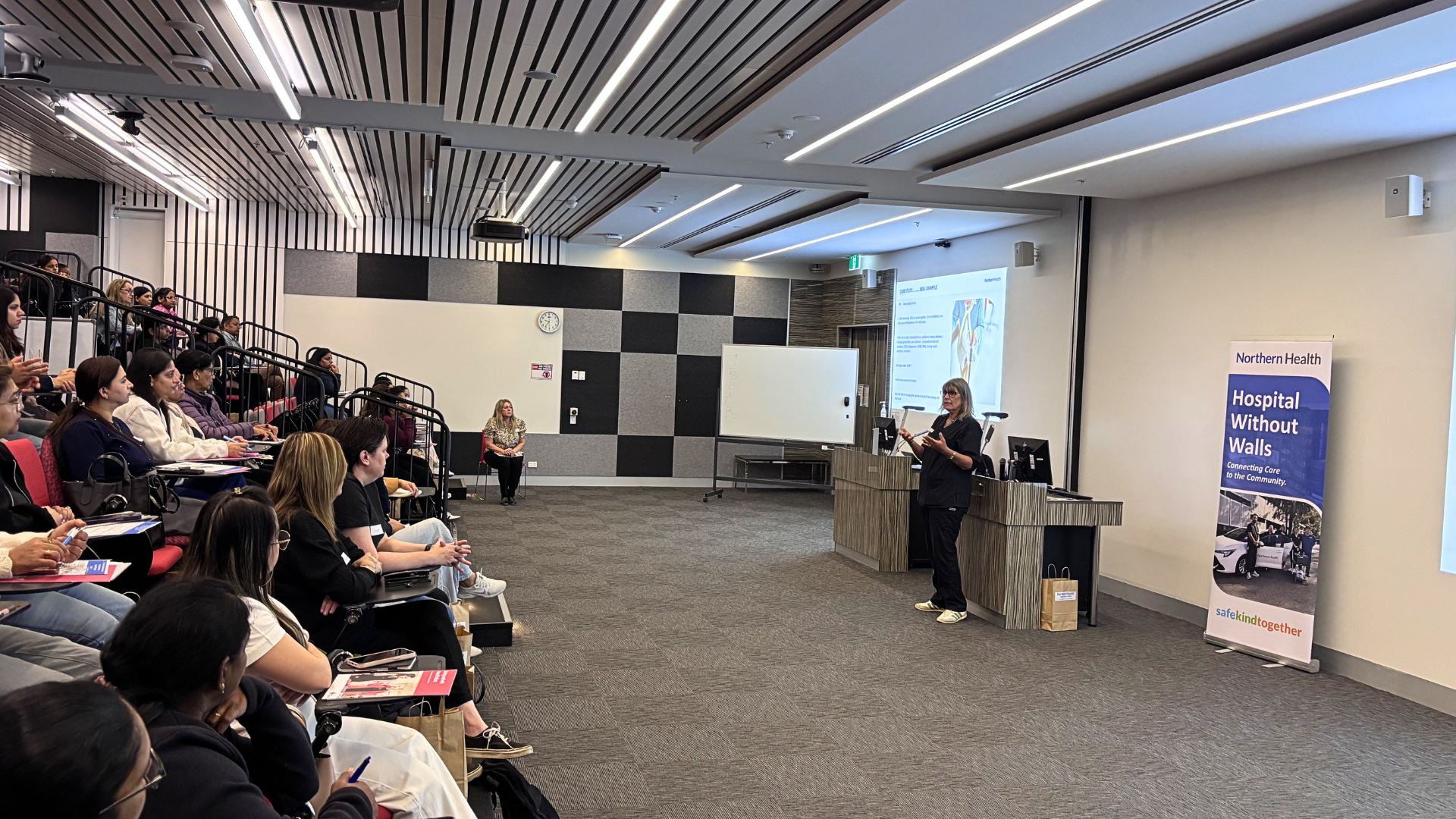
    On Monday, 18 May, the Residential In-Reach (RIR) team at Northern Health held an Education Skills Day, bringing together over 70 Residential Aged Care Facility (RACF) staff from across the Northern catchment for a day of learning, connection and collaboration.

    Guided by the theme Educate, Empower, Collaborate, the session reflected RIR’s commitment to delivering high-quality, patient-centred care beyond the hospital setting.

    RIR provides a seven-day service offering rapid face-to-face and telehealth reviews to support RACF staff in caring for residents. Since 2023, this model has expanded virtually to Hume and other regional areas of Victoria, improving access to specialist care. Referrals are received from a range of sources including facility staff, Ambulance Victoria, the Virtual Emergency Department, general practitioners and family members.

    The multidisciplinary RIR team, comprising Geriatricians, Registrars, a Nurse Practitioner and Clinical Nurse Consultants, works closely with RACF staff and GPs to deliver hospital-level care within residents’ homes. A key focus of the service is preventing avoidable hospital presentations and supporting safe transitions back into aged care following hospital stays.

    Education remains central to this model of care. The recent Skills Day featured a combination of lectures and practical workshops designed to strengthen clinical knowledge, build confidence and support best-practice care delivery within facilities.

    Topics included:

    • Delivering care at the right time, in the right place
    • Managing heart failure
    • Advance care planning
    • Recognising palliative care symptoms
    • Updates in aged care
    • Troubleshooting indwelling catheters

    RIR Nurse Practitioner, Ann Dewey, highlighted the broader impact of the day, noting that it not only strengthens professional relationships but also creates opportunities to share knowledge and build the confidence and clinical capability of RACF staff.

    As Residential In-Reach Clinical Nurse Consultant, Gagan Ahluwalia shared, “Collaboration turns knowledge into confidence, and confidence into better care. When we lift each other, we lift every patient we serve.”

    Feedback from attendees reflected the value of the session:

    • “An inspiring education day that helped build our confidence and skills—it’s great collaborating with the In-Reach service.”
    • “A great learning experience that will support me in delivering the right, evidence-based care.”
    • “I now have a better understanding of managing clinical situations, accessing support and communicating with families.”
    • “The day reinforced my knowledge and increased my confidence in managing potential issues.”

    Through initiatives like this, Residential In-Reach continues to strengthen partnerships, build capability and support high-quality care across the community. By educating, empowering and collaborating, the team reinforces Northern Health’s commitment to being Safe, Kind and Together, while maintaining excellence in the care of older people.

    The RIR team at Northern Health
    Attendees on the day