

Today, 28 May, is LGBTQ Domestic Violence Awareness Day, a day dedicated to helping end violence within LGBTQ communities by increasing visibility, fostering understanding and giving hope and courage to victim survivors.
LGBTQ Domestic Violence Awareness Day was originally created in Australia in 2020. It is the first time in history that an awareness day was formed to highlight domestic, family and intimate partner violence occurring in LGBTQ communities. It has since grown into a global event, with hundreds of government departments and organisations across 20 countries recognising and supporting this important initiative.
The theme for this year is #SeenAndBelieved with the emphasis on the importance of acknowledging and validating the unique experiences of LGBTQ victim survivors of domestic violence. It aims to bring awareness to the issue and ensures that victim survivors are seen, heard and believed.
Family violence is behaviour by a person towards a family member that is physically or sexually abusive, emotionally or psychologically abusive, economically abusive, threatening or controlling of that family member and causes them to fear for their safety. Family violence impacts people of all genders and sexual identities and can occur in all family types including intimate partners, across generations, extended families and carer relationships.
The health sector is a critical entry point for people affected by family and domestic violence, which is an opportunity to provide medical care, support and referrals to specialist services. Every person affected by violence, each with their unique identities and relationships, has a right to be seen and believed by their health care providers.
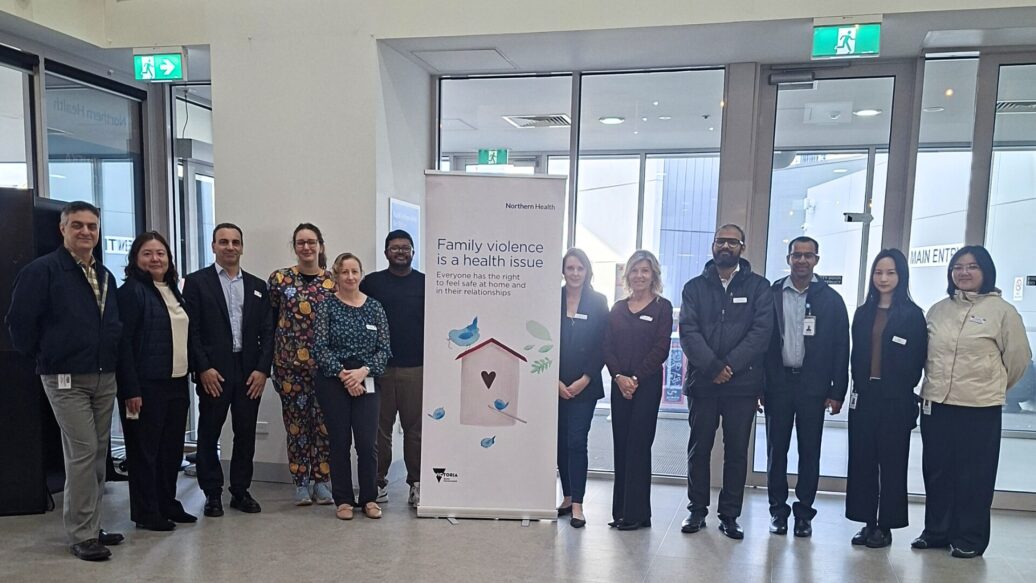
At Northern Health, the Strengthening Hospital Response to Family Violence (SHRFV) Program, the Rainbow Working Group and the Workforce Planning & Projects Team are working together to raise awareness on this important health issue.
Tanya Ellis, SHRFV Program Manager, says, “Family violence is a serious and prevalent health issue that has a profound impact on the psychological and physical wellbeing of victim survivors. Victim survivors are among our community and present to our health service each and every day.”
“It is a human right to live a life free from violence and we all have a part to play in ensuring that we identify and respond to individuals experiencing family violence.”
“Unfortunately, there is still apprehension within the LGBTQIA+ community to violence or contact mainstream services for support, which means these victim survivors remain largely invisible with low levels of disclosure and reporting.”
According to the LGBTQ Domestic Violence Awareness Foundation, more than 60 per cent of LGBTQ+ people have experienced domestic, family or intimate partner violence and abuse in their lifetime. Specific forms of family violence perpetrated against LGBTQIA+ individuals include threatening to ‘out’ a person’s gender, sexual identity or intersex status to family, friends, colleagues or their community and this threat is used as way to control the victim survivor.
Despite this prevalence, LGBTQ+ individuals are less likely to recognise domestic or family violence in their relationships, less likely to report it to the police or seek support from services and are far less likely to find support services that meet their specific needs.
Maria Soo, OHS and Wellbeing Interim Director says, “Domestic and family violence impacts people across all communities, including LGBTIQ+ individuals who may face unique barriers to accessing safety and support. Today is a reminder that creating safe workplaces is not limited to physical environments. It is also about fostering cultures of inclusion, trust, and psychological safety. We all have a role in recognising signs, responding with empathy and ensuring our people know they are supported, respected, and never alone.”
Northern Health aims to play an important role in preventing family violence through providing a respectful, equitable and safe service. We are committed to providing an environment that is safe for all individuals to disclose their experiences and receive support and safety.
Northern Health encourages staff to get involved and show their support to the LGBTQIA+ community by wearing something rainbow throughout the week, having a conversation about healthy relationships, spread the word on social media with #SeenAndBelieved and become aware of support services available to LGBTQIA+ victim survivors.
Tanya reminds staff to please complete the Family Violence MARAM Screening & Identification Tool when working with a patient who has disclosed family violence or if it is suspected. The Tool is trauma-informed and best practice in identifying and responding to family violence. The Tool is located on EMR (AdHoc Forms Section) and PROMPT.
The SHRFV Team is also available for specialist family violence consultation and to deliver family violence training. Please contact the SHRFV Team if you need to consult or organise training in your area (8405 8519).
Click here to get involved or for more information on LGBTQ Domestic Violence Awareness Day.
Support services:
- Safe Steps: 24/7 Crisis Response Service Ph: 1800 015 188
- With Respect: Specialist LGBTQI+ Family Violence Service Ph: 1800 542 847
- Rainbow Door: LGBTQIA+ Information, Support and Referral Helpline Ph: 1800 729 367
- 1800 RESPECT: 24/7 National Sexual Assault & Domestic Family Violence Counselling Service Ph: 1800 737 732
- Qlife: LGBTIQ+ Peer Support, Information and Referral. Ph: 1800 184 527
- Disclose to your health professional to access support and safety.