• OT Week: rebuild, recover, and reengage

    OT Week: rebuild, recover, and reengage

    This week, we are celebrating Occupational Therapy (OT) Week, and given the onset of droughts, bushfires, and the global pandemic, in 2020, the theme of this year’s OT Week is Resilience: Supporting our communities to rebuild, recover, and reengage. In supporting people to participate in activities they find meaningful, occupational therapists are vital in helping our communities through disaster recovery.

    Occupational therapy provides practical support to empower people to facilitate recovery and overcome barriers preventing them from doing the activities (or occupations) that matter to them. An occupational therapist will consider all of the patient’s needs – physical, psychological, social and environmental – with the ultimate goal of supporting individuals to increase their independence and satisfaction in all aspects of life.

    Renee Catton, Senior Occupational Therapist, highlighted the importance of OT professionals during the pandemic by sharing a recent patient story, where the team worked with an elderly patient in the GEM Ward at Bundoora Centre, who wanted to spend some time at her daughter’s home before going back to her facility.

    “Both patient and the family felt that her mood would improve if she spent some time at home with her daughter, and this was her huge wish. The OT department was given 48 hours notice to facilitate the interventions required to support the patient and daughter’s wishes,” she explained.

    For this patient, our OT team provided carer training for management of all functional mobility and management of personal care, including how to safely use a hoist, education on strategies to best prevent pressure injuries and falls, and arranging the hire of extensive equipment to support the patient’s high care needs such as a hospital bed, pressure relieving mattress, hoist and sling, wheelchair, pressure relieving cushion and commode.

    “All of this was completed and the patient was discharged home in under 48 hours of plan and goal being developed,” Renee added.

    The family was grateful for the help and were thankful she was able to spend some time with them. Here are the words from the patient’s daughter:

    “Thank you so much again for all your assistance in helping us to get mum home for a break before she returns to her aged care home. Time has flown by and we have all had a great time together.”

    “The great work that the team did really reflects this year’s motto in supporting our patients to rebuild, reengage and recover,” said Renee.

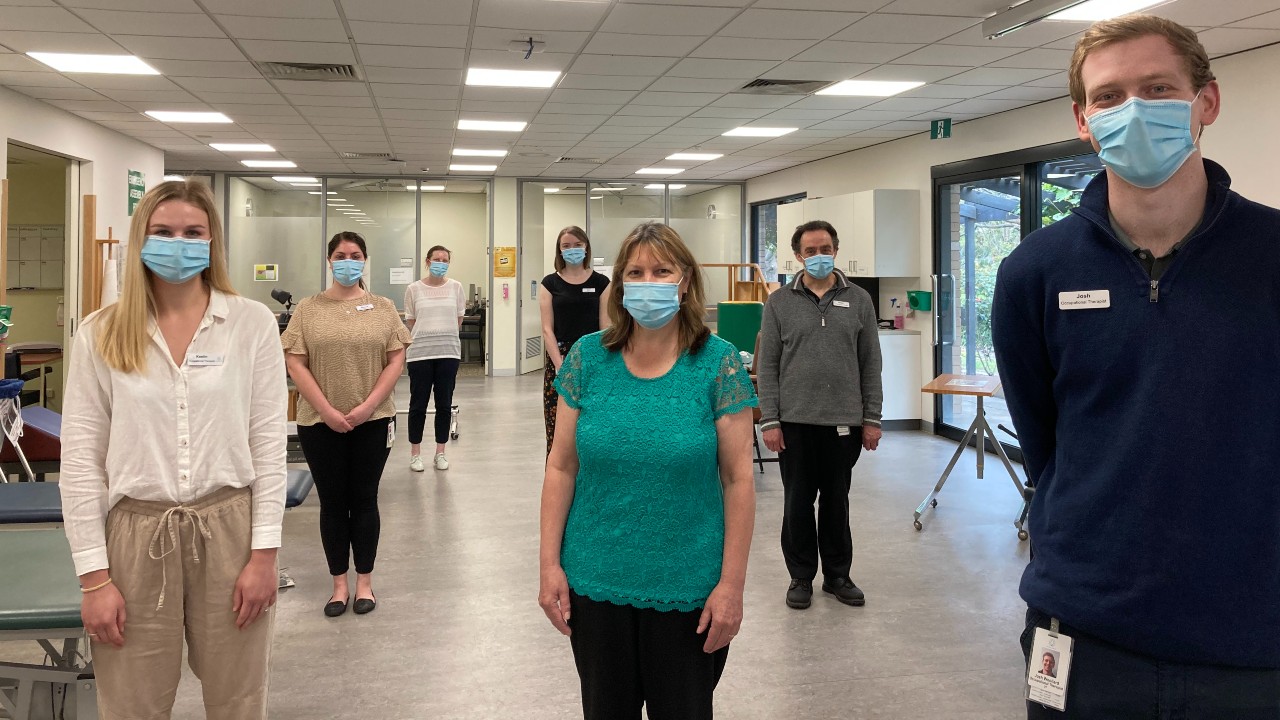
    Featured Image: Bundoora Centre OT team
  • Staff wellbeing: how can we sleep better?

    Staff wellbeing: how can we sleep better?

    One of the things that lockdown and the pandemic has had a huge impact on is the quality of our sleep.

    Our Respiratory Medicine department has dedicated sleep specialists and experts, who were willing to help with advice on sleeping better and coping with prolonged hours at home.

    Dr Liam Hannan, Deputy Director of Respiratory Medicine, explained that when people are under stress or exhausted from work, they often forget even the most simple advice.

    “Our routines and habits have been thrown out by the lockdown. It is very important to keep a schedule, and our brains really like a routine. It’s when we move away from those routines that sleep can become more difficult,” he said.

    Having and maintaining a routine during the day helps us sleep better – that means exercising at a similar time each day, waking up at the same time, and following the signals our bodies are sending.

    “When you feel tired, that is normally a very good time to go to sleep. If you feel sleepy in the evening, try not to spend more time on the couch or in front of the TV. Avoid too much caffeine, alcohol and smoking and electronic devices,” he explained.

    Bedrooms should be dark and quiet, and we shouldn’t be spending more than 20-30 minutes awake in bed. If a person doesn’t fall asleep within that time frame, it usually means they are not tired enough and should get up and leave the bedroom rather than staying in bed and getting frustrated at being unable to sleep.

    “We were really pleased to be asked by the Workplace Wellbeing team to contribute this sleep advice. We are really keen to keep promoting the importance of sleep and sleep disorders here at Northern Health,” said Nicholas Romeo, Head Respiratory Scientist.

    Alison O’Sullivan, Workplace Wellbeing Coordinator, said, “We are very fortunate to have expertise in the hospital regarding sleep and managing fatigue. The information and resources that the respiratory team have compiled are especially important at this time, as we work towards a COVID-normal. Sleep has such a direct impact on your overall wellbeing.”

    The wellbeing program at Northern Health continues to support staff using a holistic and evidenced-based approach and this resource that can be found on the Thrive intranet page.

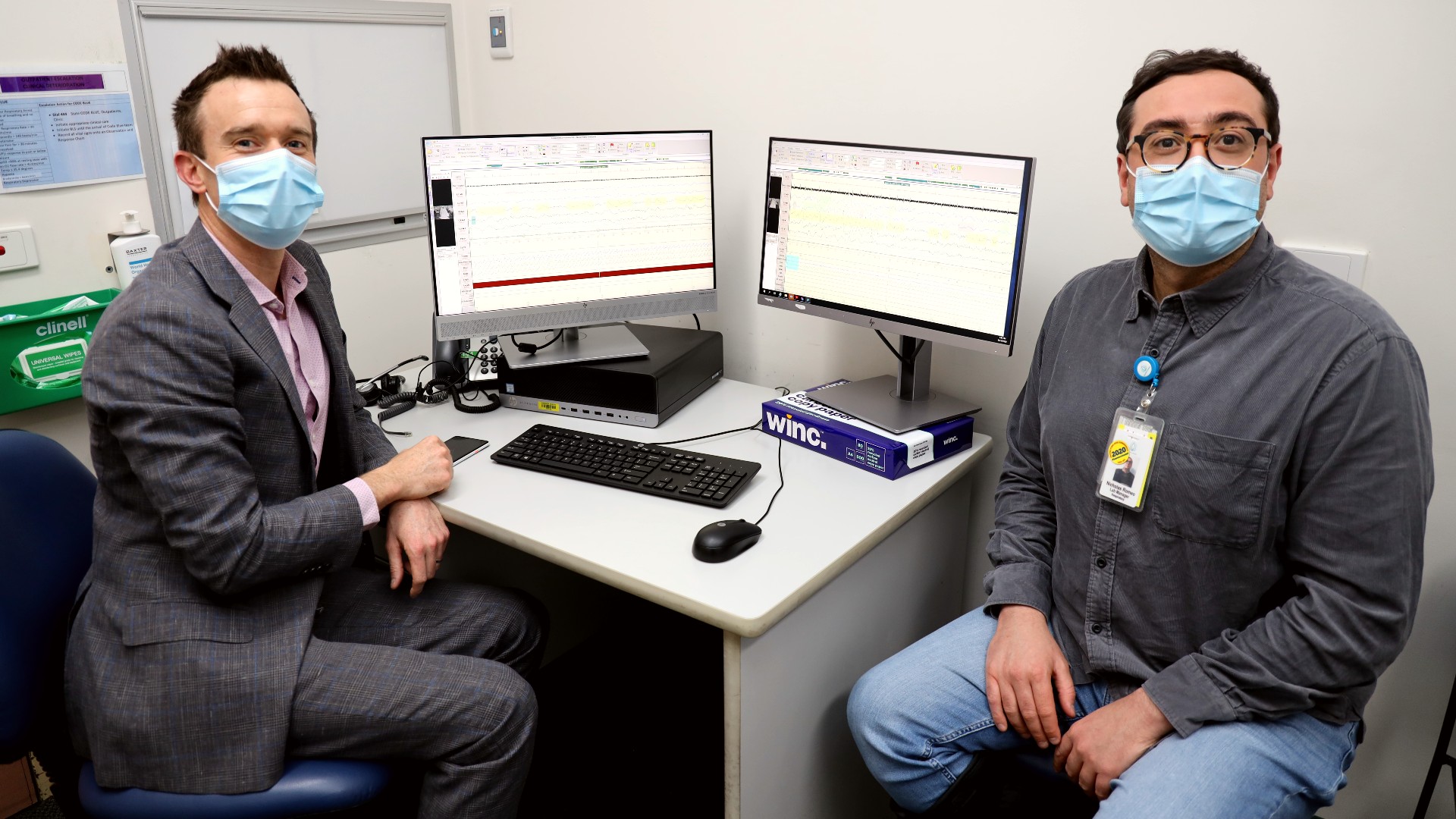
    Featured Image (left to right): Dr Liam Hannan and Nicholas Romeo

  • National Safe Work Month

    National Safe Work Month

    Since 2009, October has been National Safe Work Month, and this year the topic is ‘Work Health and Safety through COVID-19’, acknowledging and reflecting on the wide-reaching impacts of COVID-19 on businesses, employers and workers.

    Workplaces have had to quickly adapt their practices and procedures to reduce the health and safety risk arising from COVID-19, and to manage the psychological effects of the pandemic on workers.

    Richard McFarland, Advisor, OHS & Wellbeing, explained improvements in occupational health and safety at Northern Health could not be achieved without the tireless work of health and safety representatives (HSRs).

    “HSRs form an integral part of  the organisation’s ‘eyes and ears’ when it comes to potential and actual safety issues across all campuses. Whether it’s participating in a safety walk, an audit, reporting broken equipment or even monitoring staff wearing PPE, in this time of COVID-19, our HSRs are essential in maintaining health and safety,” he said.

    The HSRs at Northern Health have their regular duties in a designated “home” location. But in addition, they take on practical health and safety activities and participate in regular meetings in an effort to be consultative, aware and pick up any hazards to staff, patients and members of the public. Essentially, they can act as an early warning for any issues they might notice.

    “During the early phases of the second COVID-19 wave, the HSRs played a role in motoring if all the signage in red or yellow covid zones is appropriate, if all staff is wearing the proper PPE, advising on size of the disposal bins after doffing etc. We don’t have to wait for an email or meeting, because the HSRs express their concerns immediately,” he explained.

    One of these is Frank Cavaleri, Personal Services Assistant (PSA) and a health and safety representative at Northern Health.

    “One day, I was helping an elderly lady and I decided to become an HSR and help the organisation with safety. I’ve been in this role for the last three years and have noticed improvements – there is a lot more communication and issues being dealt with,” he said.

    Besides physical safety, psychological safety and staff wellbeing is also an important focus of our OHS & Wellbeing team.

    “Northern Health’s Occupational Health, Safety and Wellbeing team continue to support the psychological safety of our staff through Thrive – our staff wellbeing program. We offer regular yoga sessions, rest and recovery sessions, and support for all of our staff. The Thrive offerings have increased throughout the pandemic, to ensure we continue to offer an evidence-based program to staff, responsive to demands at the time,” said Will Halpin, Director OHS & Wellbeing.

    Staff wellbeing resources specific to COVID-19 can be found here.

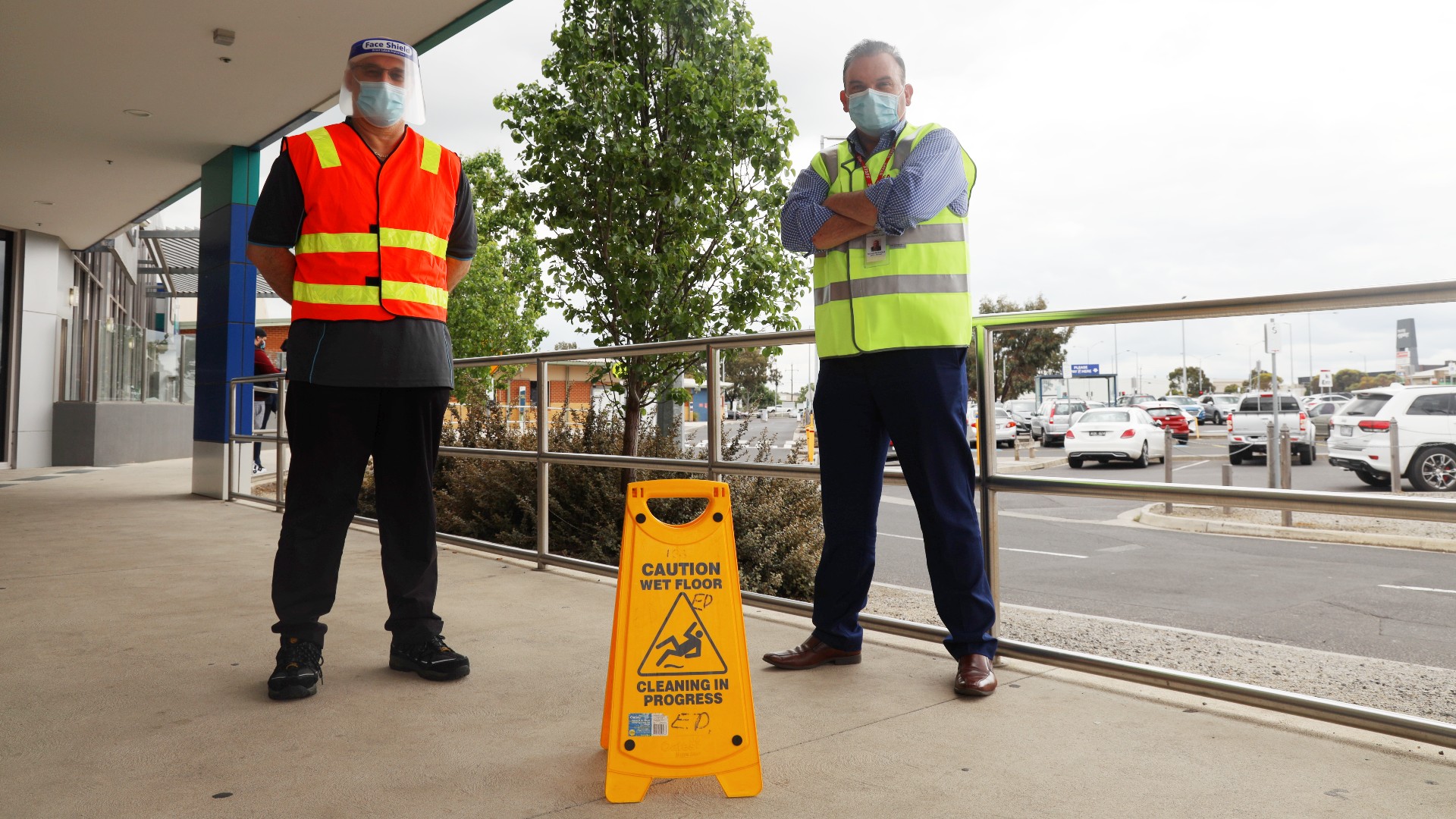
    Featured Image (left to right): Frank Cavaleri and Richard McFarland

  • Thank You Day – it’s all about you!

    Thank You Day – it’s all about you!

    Today is Northern Health’s Thank You Day – a day where we say a huge thank you to all our staff who have worked hard this year.

    It has been a very challenging year for all of us, as we faced a global pandemic, lock downs and uncertainty of what the next day will bring.

    The enormous effort, commitment and the everyday work of our staff hasn’t gone unnoticed. Our Executive and Board have watched and admired how you cared and supported your patients and each other during this challenging time.

    Siva Sivarajah, Chief Executive, said, “On behalf of the Northern Health Board and Executive, I want to thank each and every one of you for your enormous effort and commitment over the last seven months. It was, and continues to be, nothing short of amazing. I am proud of what we, as an organisation, have achieved to keep our community safe and healthy.”

    Dr Wanda Stelmach, Chief Medical Officer, also thanked staff for being supportive of their patients, community and of each other. Michelle Fenwick, Executive Director People and Culture, added, “This day is all about you. From us to you – thank you.”

    Our leadership team is grateful for your enduring professionalism, commitment and compassion, and proud of everything you have achieved.

    Briana Baass, Chief Allied Health Officer, said working in public health is always challenging, but so rewarding at the same time.

    “This year, we faced challenges in our home life as well as professional. We are so thankful for those at Craigieburn Centre, Bundoora Centre, Broadmeadows Hospital, Northern Hospital and everyone working in the community for the commitment to Northern Health and the community we serve.”

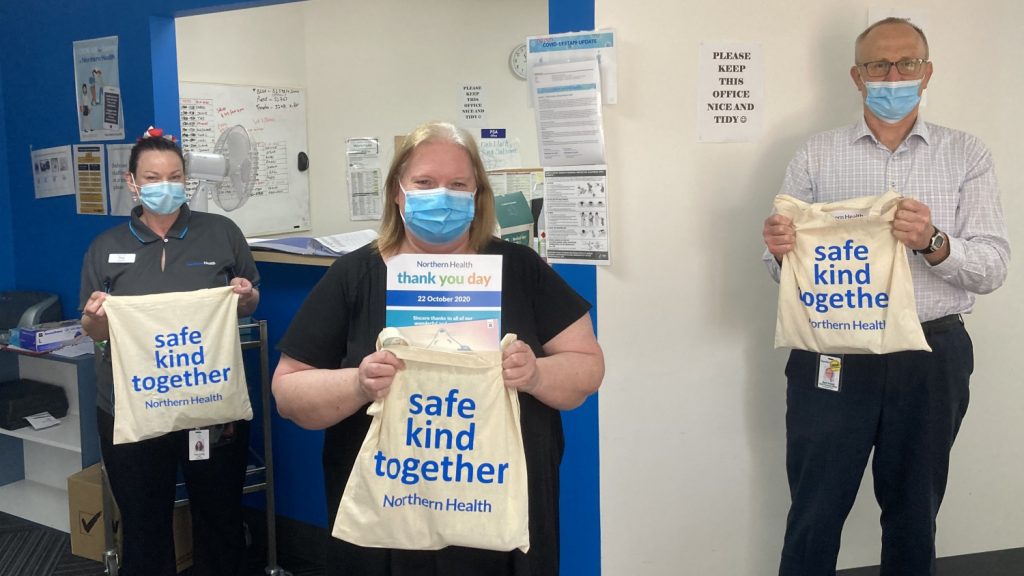
    As a token of our appreciation for your work during this time, all staff will be provided with a Thank You bag today.

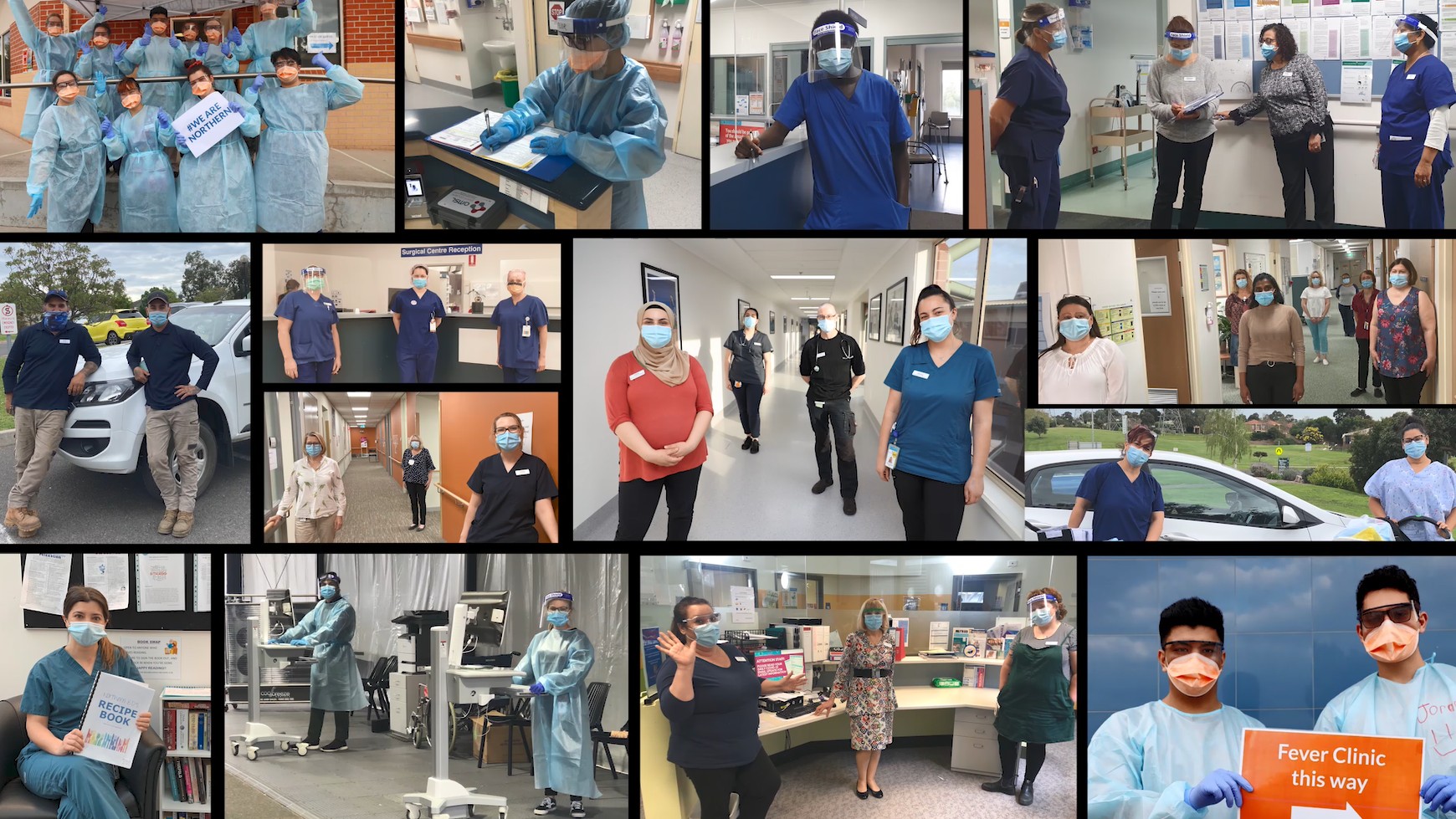
    Please watch our Thank You video below:

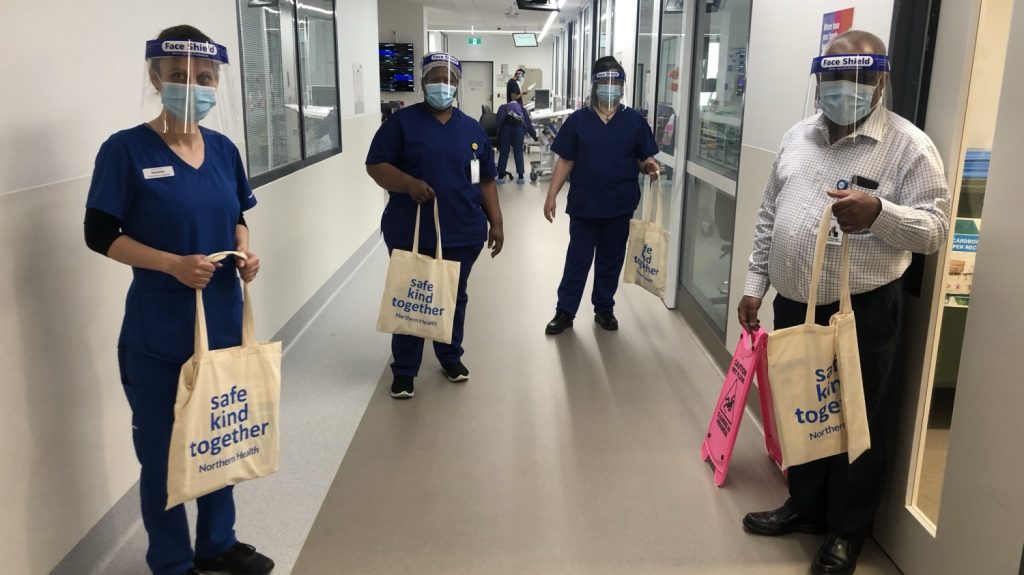
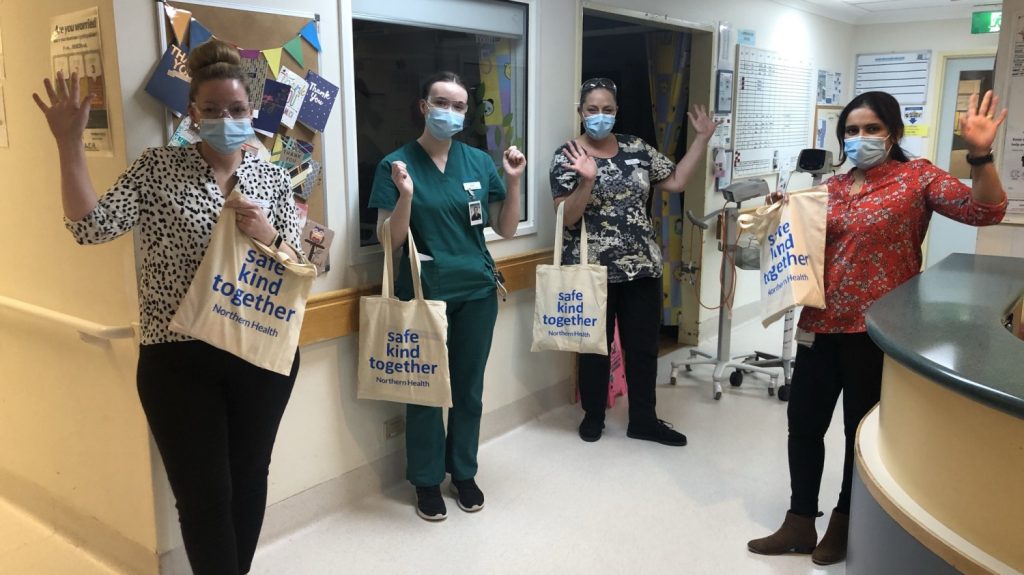
    ICU staff receiving their Thank You bags from Siva Sivarajah, Chief Executive
    Maternity and Neonatal Unit staff receive their Thank You bags
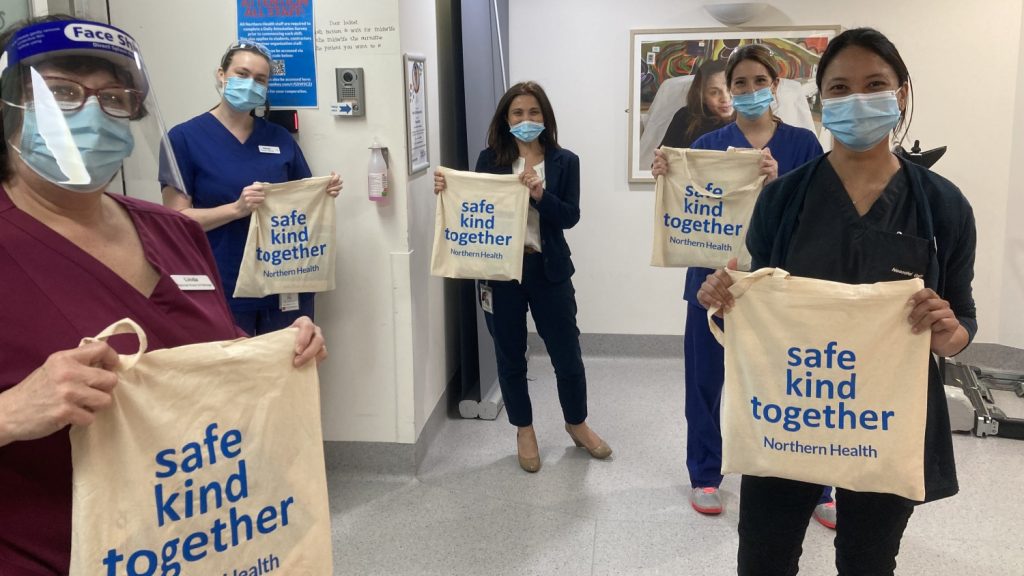
    Children’s Ward staff receive their Thank You bags
    Support Services staff receiving their Thank You bags from Basil Ireland, Chief Finance Officer
  • Thank Your Cleaner Day: Winners of the Shine Award

    Thank Your Cleaner Day: Winners of the Shine Award

    Every quarter, Northern Health acknowledges and recognises our Patient Service Assistants (PSAs) who actively live and role model the Northern Health values of Safe, Kind and Together. 

    Our  PSA’s play many roles, including transferring patients, equipment, urgent bloods, mail, and medical records and importantly ensuring compliance to DHHS Cleaning Standards for Victorian Public Health Facilities.

    We are pleased to announce the winners for this quarter below.

    Today also marks ‘Thank your Cleaner Day’, as we acknowledge both our PSAs and ISS staff for going above and beyond what is expected of them.

    ….and the winners are!

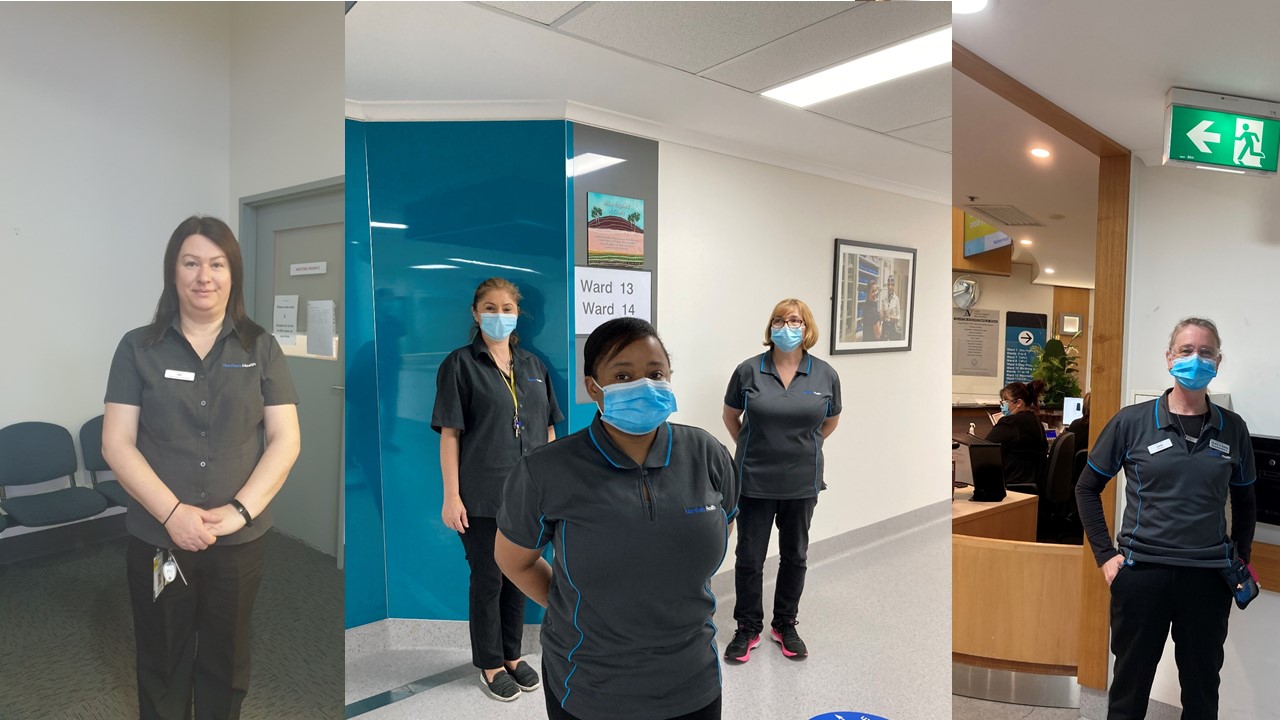
    Olivera Laboska: The Kindness Award – Awarded to a staff member who consistently and proactively supports their peers and the broader department/Northern Health to achieve their work and goals. 

    “Oli is a very friendly person when it comes to patients and staff members, and she is willing to do anything in her power to assist. Nothing is ever too much trouble and she has a great work ethic,” says Snezana Velevski, Support Services Coordinator at Broadmeadows Hospital.

    Qamile, Mara and Alicia (Ward 14):  The Together Award – Awarded to a staff member or team who work together to achieve excellent outcomes. 

    “Qamile, Alicia and Mara make a wonderful team in Ward 14. They all have a can-do attitude, nothing is ever too much trouble and they go above and beyond for their patients. The team have recently been trialling a new cleaning schedule and have embraced the change with a positive outlook. They deserve this recognition and should be proud of their achievement,” says Wendy Nicol, Operations Manager, PSA and Cleaning Contracts.

    Julie Mason: The Safety Award – Awarded to the staff member who has demonstrated consistent safe work practices, has provided suggestions for improving safety and who is a role model for other staff. 

    Says Brendan Byrne, Injury Management Advisor, “Julie deserves to win the safety award because she consistently displays the right behaviours to ensure she contributes to having a safe workplace for herself and her colleagues. This was evident in the time I spent with her a few weeks ago, and how she applies best practice safety to her daily tasks.”

    Says Chief Financial Officer, Basil Ireland, “As we mark Thank Your Cleaner Day, my sincere thanks to our PSAs and cleaning workforce. My congratulations also to the winners of this quarter Shine Awards.”

    We join Basil in wishing our PSAs and cleaning workforce stay Safe, practice being Kind to each other, and know that we are in this Together.

  • Week Without Violence

    Week Without Violence

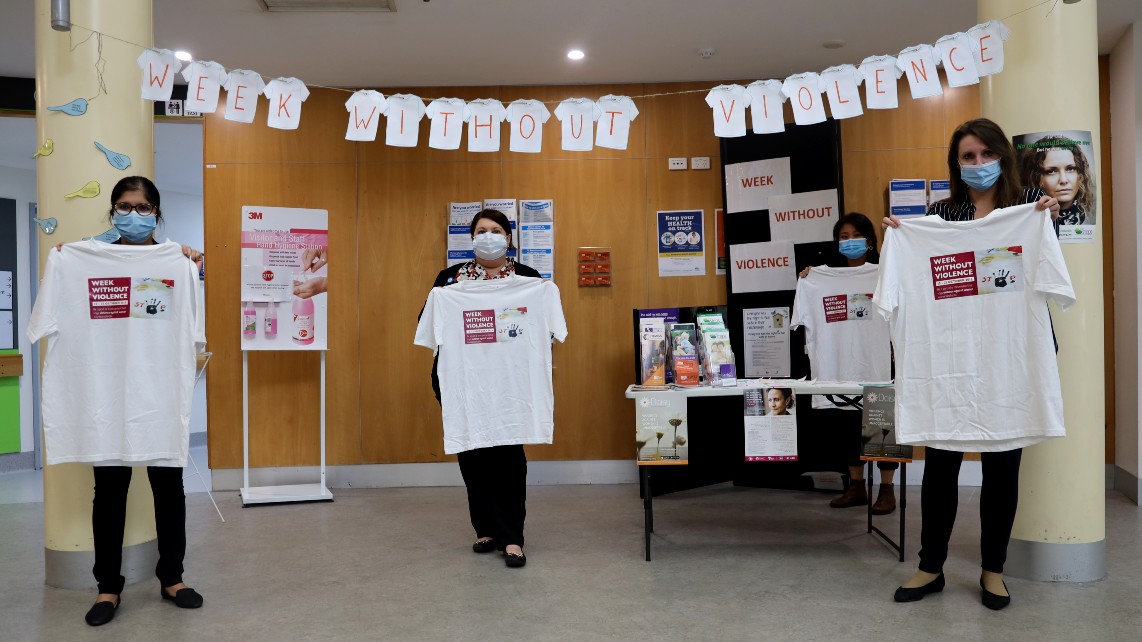
    Week Without Violence is a global campaign to end violence against women. The campaign originally began in the USA in 1995 and, over the past two decades, organisations around the world have hosted community events to end violence.

    Tanya Ellis, Project Support Officer, Strengthening Hospital Response to Family Violence, explained activities focus on raising awareness, promoting attitude change and enabling individuals and organisations to begin positive actions towards ending violence in their communities.

    “The campaign occurs in the third week of October each year. The Northern Metropolitan region has had a proud history of participation in Week Without Violence, primarily through the Clothesline Project, which focuses on raising awareness about family violence,” she said.

    Northern Health is committed to providing a workplace in which violence is not tolerated or excused, and people who may be experiencing family violence are supported.

    “There are several entitlements, including family violence leave, as well as other supports offered to staff who are victims/survivors of family violence. Northern Health has implemented an OH&S – Staff Support for Family Violence Policy to ensure the organisation is doing everything possible to support staff members affected and/or impacted by family violence,” she explained.

    “If staff have concerns about a patient experiencing, or at risk of, experiencing violence then please offer a referral to social work or consult with social work,” she added.

    There are many myths and misconceptions relating to family violence, Tanya explains. She adds that what we do know is that family violence is a prevalent issue within our community.

    “Family violence is about power and control and can occur in the form of physical, sexual, verbal, emotional or financial abuse. Family violence does not discriminate and anyone can be a victim/survivor of violence,” she said.

    The ‘Strengthening Hospital Response to Family Violence’ project team are running various activities to promote the week throughout the organisation.

    There are stands in the main foyer at Northern Hospital Epping, Bundoora Centre and Broadmeadows Hospital, and the team will be delivering Family Violence Training today from 2.15 pm to 3 pm. To join, please click on this link: Join Microsoft Teams Meeting.


    Featured image (left to right): Harindhi Wimaladharmai, Anna Chu, Samantha Williamson, Tanya Ellis, social workers

  • Breast cancer doesn’t stop for COVID-19

    Breast cancer doesn’t stop for COVID-19

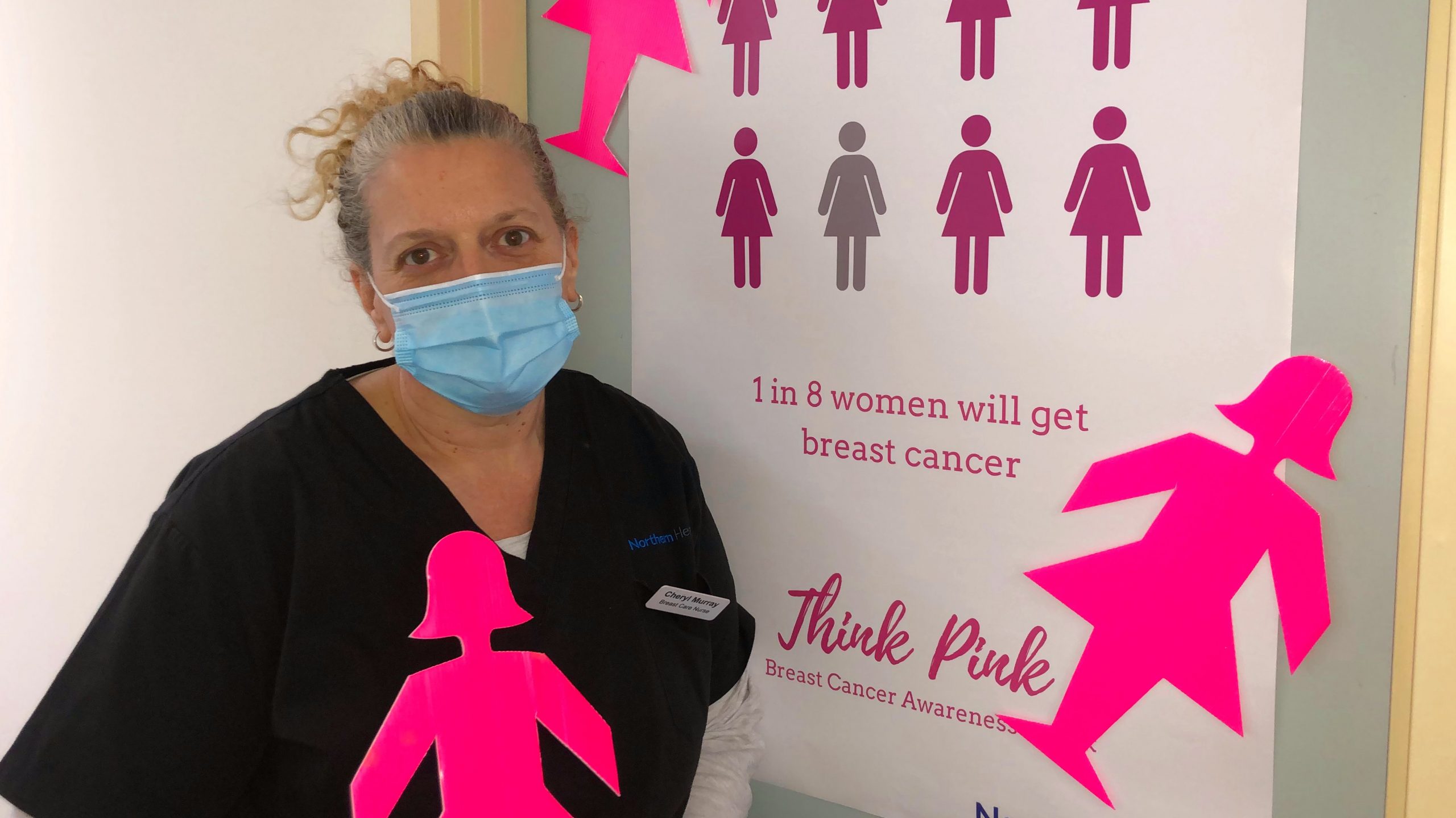
    Breast cancer is the most common cancer affecting Australian women. Cheryl Murray, Breast Care Nurse Consultant, urges the community to continue to get screened, even in a pandemic.

    “The key message is self-detection is still key. Book in to get your breast screen, because they are open and they have precautions in place.”

    “Be ‘breast aware’ and if you have changes in your breasts, please book an appointment with your GP,” Cheryl said.

    Being ‘breast aware’ means becoming familiar with the normal look and feel of your breasts and reporting any unusual breast changes to your doctor as soon as possible, as early detection can boost your chances of survival.

    Statistics show that the five-year relative survival rate for women diagnosed with breast cancer is 90.8 per cent. The number of people being diagnosed with breast cancer in Australia is increasing; however the number of deaths from breast cancer is decreasing.

    One of Cheryl’s patients, Robyn, who was diagnosed with breast cancer in June this year, said that even though it can be overwhelming during a pandemic, it’s important to put your health first.

    “Please go and get checked – don’t let COVID-19 scare you. You need to put your health at the forefront, no matter what the circumstances are.”

    “It felt quite overwhelming coming into hospital, not having a support person with you, seeing everyone masked up and not being able to have that face-to-face interaction but everybody I have dealt with through this time has been absolutely amazing. Nothing has dropped with the care – you still get the support and reassurance as you go through each stage of treatments,” Robyn said.

    Cheryl explains how COVID-19 has impacted patients receiving treatment for breast cancer.

    “COVID-19 has changed the way we deliver our service, and the major change for our outpatient appointments was moving the service into Telehealth.”

    “Some patients are happy to use Telehealth, but others feel more secure when they have their appointment face to face,” Cheryl said.

    “Patients may feel vulnerable already when battling cancer or worried about reoccurrence, add in COVID-19 and it has definitely increased feelings of vulnerability and isolation,” Cheryl explained.

    “Patients undergoing treatment for cancer, patients being diagnosed with cancer during COVID-19, or cancer survivors having routine imaging and follow ups – they have all been impacted by COVID-19. I want to remind the community that Northern Health is open for business and we are here to care for you.”

    For those living with breast cancer during the pandemic, The Breast Cancer Network of Australia say:

    “Our message to those living with breast cancer – please continue your follow up care and reach out for help. You are not alone.”

    For more information, please click here.

    Featured Image: Cheryl Murray, Breast Care Nurse Consultant

  • ED launches Bariatric Kiosk

    ED launches Bariatric Kiosk

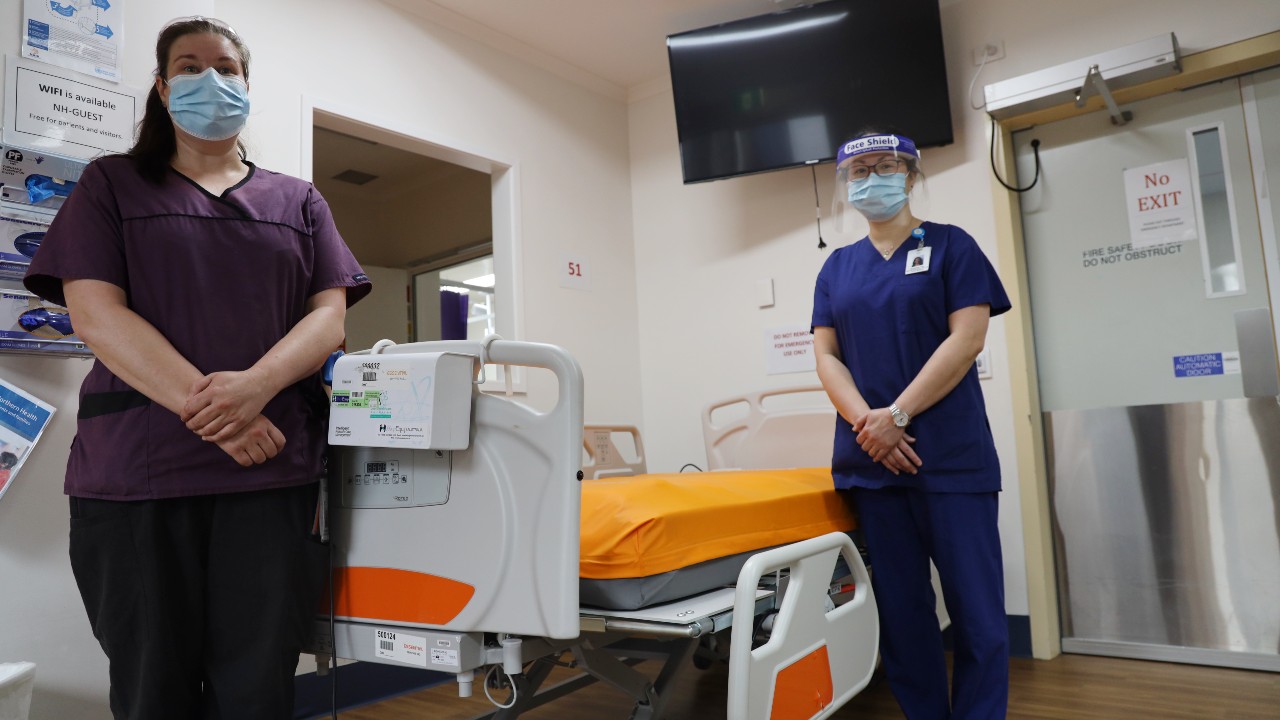
    Last month, the Northern Health Emergency Department (ED) launched its first-ever Bariatric Kiosk as part of their initiative on Better and Safer Patient Care.

    This concept was derived from a framework currently run at both the Auckland District Health Service Board and Waikato District Health Board. In partnership with ESSENTIAL, who helped with the development of this framework in New Zealand, a stand-by bariatric bed (on loan), is released via a pin code for bariatric patient admissions via the ED.

    The bed movement will be closely monitored by Nurse Unit Managers when it leaves the ED to other wards, so that as soon as a patient is discharged, the bed loan ceases.

    Bronwyn Matthews, CNS/ED Equipment Nurse, said, “The frequency of bariatric patient admissions is increasing, and appropriate equipment is crucial for patient care. The Bariatric Kiosk will enhance patient and staff safety, patient care and our access process.”

    Suzanna Tan, Manual Handling Risk Coordinator (OHS Wellbeing), says, “The loan arrangement works out to be more cost-effective than having a suite of ‘super’ bariatric equipment which requires regular and extensive preventative maintenance, and repairs.”

    “The Waikato Study on a 320kg patient noted that provision of suitable equipment, in early stages of admission for care, reduced the Length of Stay (LOS) from 80 days for the first admission to 13 days for the second admission. This was coupled with significant cost savings in the second admission.”

    “One in three Australian adults are obese. We need to be ready to provide care for an increasing population of obese patients. Having a stand-by Bariatric Kiosk is the first step to providing good care to patients,” adds Suzanna.