

This Wound Awareness Week, Northern Health’s Podiatry and Orthotics teams are highlighting the impact chronic wounds can have on a person’s mobility, independence and quality of life.
Through the experiences of four consumers receiving care across Northern Health, the teams are raising awareness of the challenges associated with chronic wounds and the specialised care available to support people on their path towards healing.
This year’s Wound Awareness Week campaign, led by Wounds Australia, is titled SOS: Save Our Skin. The campaign recognises the vital role our skin plays in protecting our overall health and wellbeing, while highlighting the urgent need for greater awareness of chronic wounds.
Hundreds of thousands of Australians live with wounds that are preventable or slow to heal. These wounds can cause significant pain, limit everyday activities and, without appropriate treatment, lead to avoidable hospital admissions and other serious complications.
Here are some of our Northern Health patient’s stories.
Gerald’s story: “Get as much help as you can”
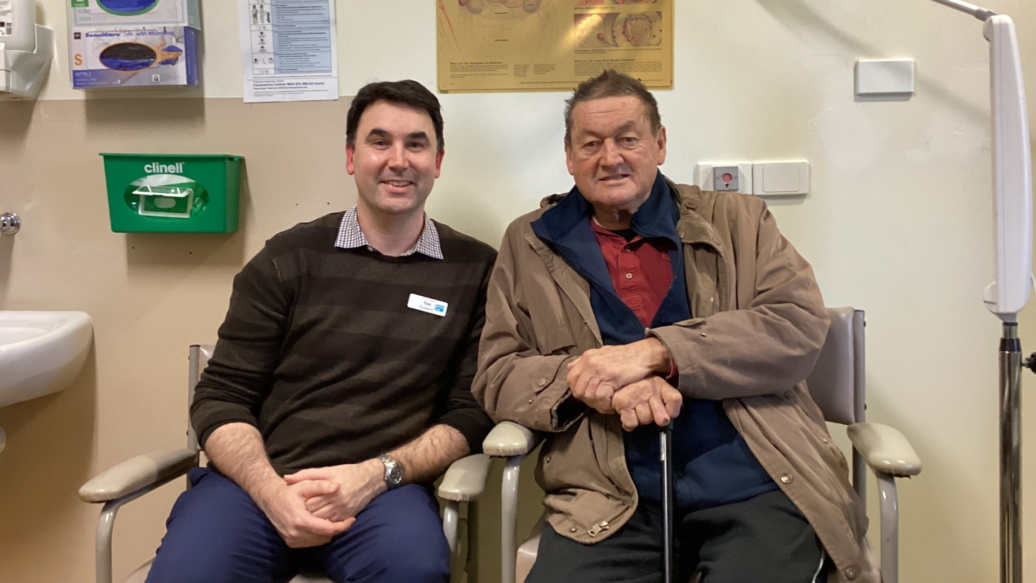
Patient Gerald Harding is receiving treatment for neuropathic foot ulcers at the Foot Procedure Unit at Craigieburn Community Hospital.
For Gerald, living with wounds has affected many aspects of daily life.
“It is very inconvenient. I have to be careful when walking, and I can’t shower without covering my feet,” he said.
His advice to anyone experiencing a similar problem is to seek appropriate support as early as possible.
“Get as much help as you can from the right people. Where I was when I first came here compared with where I am now is a good example of the difference that support can make.”
“My wounds have improved immensely. I still have a long way to go, but it has been worth it.”
Gerald receives regular support from district nurses for dressing changes at home and feels fortunate to have been referred to the Foot Procedure Unit.
“The care I have received has helped immensely, and my wounds are now almost healed,” he said.
Gerald said the support of Northern Health’s Podiatrist Tim Butters and Orthotist Niki Choi, has helped him work towards his most important goal – healing his wounds and avoiding a lower-leg amputation.
Allan’s story: “Make sure you keep on top of it”
Allan Foreman is another patient receiving care at the Foot Procedure Unit at Broadmeadows Hospital for wounds caused by reduced arterial blood flow.
While Allan says people can become accustomed to living with a wound, the experience can still make everyday activities difficult.
“It can be quite hard. Walking in the offloading device can be difficult at times and can slow everything down,” he said.
“You also have to think about whether the pressure on your feet when doing something may affect your wound.”
Allan’s advice is simple: “Make sure you keep on top of it.”
He emphasised the importance of following clinical advice, attending wound-dressing appointments and consistently wearing prescribed offloading devices.
“It is important to listen to the advice of all the health professionals involved in your care and make sure your nursing appointments for wound dressings are attended,” he said.
Throughout his treatment, Allan has attended his scheduled appointments and joined a physical exercise group, which has helped improve his mobility and supported his physical and mental wellbeing.
“Podiatrists help manage the wound, provide education and offer advice to support successful healing,” he said.
Lisa’s story: “Get it checked straight away”
Lisa Saliba is a patient who is receiving treatment for venous ulcers through the Chronic Wound Service at Broadmeadows Hospital.
She described living with venous ulcers as painful, time-consuming and restrictive.
“They can limit your mobility and be painful at night when you are trying to sleep,” she said.
“Showering can also be difficult because you need to keep your entire leg and the dressings dry.”
Managing regular dressing changes and outpatient appointments takes additional time, particularly as Lisa also cares for her parents at home.
Her advice is to pay close attention to changes in the skin and seek help promptly.
“Take care of your feet. If you notice even the smallest scratch or cut, have it checked by your GP straight away because it can develop into a significant wound very quickly,” she said.
Lisa also recommends regularly checking the feet and dressings, using a mirror if necessary, and seeking medical advice if a dressing becomes soaked with blood or fluid.
Attending appointments with her podiatrist, geriatrician and wound-care nurses has been an important part of Lisa’s treatment.
“I have had an excellent experience with the Podiatry and Chronic Wound Service teams,” she said.
“They have supported my wound healing by providing dressings, education and ongoing care. I would absolutely recommend the service to anyone experiencing venous ulcers.”
Stratos’ story: Returning to work with confidence
Patient Stratos Tavambis has been supported by Northern Health’s Orthotics team through the use of a controlled ankle motion—or CAM—walker and felt offloading. He has since transitioned to custom foot orthoses and specialised footwear.
It took Stratos about a week to adjust to wearing the CAM walker. One of the unexpected challenges was frequently being asked by friends, colleagues and members of the public what had happened to his leg.
“It could be a little embarrassing having to explain it,” he said.
“Now, when I see someone wearing a CAM walker or ankle brace, I wonder what they might be experiencing. It is different for everyone, but it is good to know I’m not the only person who has had a wound.”
His advice to others is to seek help as soon as they notice something is wrong.
Stratos also encourages consumers to ask questions throughout their treatment.
“I prefer to ask questions rather than make assumptions. At the end of an appointment, I recommend asking the team, ‘What are the next steps?’ It helps you understand what is happening and what to expect.”
Stratos’ goal was to stop using the CAM walker and return to work. With support from the Orthotics team, he has achieved this milestone.
“The team made custom foot orthoses and specialised footwear for me, and they have been working well,” he said.
“I understand it will take more time to fully return to my usual work activities, but I am making progress.”
Seek help early
Chronic wounds should not be accepted as an unavoidable part of life. Early assessment and appropriate multidisciplinary care can help wounds heal, reduce complications and support people to maintain their mobility and independence.
Northern Health’s Podiatry, Orthotics and Chronic Wound Service teams work closely with consumers and other health professionals to develop individualised treatment plans, provide education and help people work towards their personal recovery goals.
This Wound Awareness Week, remember to protect your skin, regularly check for changes and seek professional advice if a wound is not healing.
Pictured in featured image (L-R): Tim Butters, Podiatrist, Northern Health with Gerald Harding, patient.