

This week is Malnutrition Week ANZ, an annual campaign to highlighting the widespread impact of malnutrition in healthcare institutions across Australia and New Zealand, and raise awareness to early detection and intervention .
“Malnutrition doesn’t always look the same, and identifying it takes more than one profession. All members of the care teams have a role to play in recognising the signs early,” said Nadia Obeid, Senior Dietitian.
Malnutrition occurs when a person’s dietary intake does not meet their body’s needs, potentially leading to loss of muscle and strength, reduced immunity, impaired wound healing and poorer recovery from illness.
Northern Health conducts an annual Malnutrition Point Prevalence Study to monitor malnutrition rates.
“This year, one in four Northern Health inpatients were found to be malnourished, rising to one in three patients in subacute settings,” Nadia said.
This year’s Malnutrition Week ANZ theme “The many faces of malnutrition,” highlights the importance of multidisciplinary care in identifying and managing malnutrition early.
At Northern Health, the Mental Health Dietetics team is helping broaden the way nutrition risk is identified and managed in mental health settings.
“There are many reasons consumers accessing mental health services may be at risk of poor nutrition. Depression can reduce appetite and interest in eating, while people experiencing psychosis may develop fears or concerns about food. Avolition can also affect motivation, making it difficult to shop for food, prepare meals or maintain regular eating patterns,” said Olivia Millett, Senior Mental Health Dietitian.
As part of the EMR go-live across Mental Health bed-based services, Northern Health reviewed its nutrition risk screening processes and adopted NutriMental, a screening tool developed specifically for mental health services.
Unlike traditional tools that primarily focus on undernutrition, NutriMental considers a broader range of nutrition-related concerns, including malnutrition, disordered eating behaviours, food insecurity, and appetite or weight changes associated with medication.
Northern Health’s Mental Health Dietetics team has played a key role in the tool’s development and implementation. Led by Olivia as Principal Investigator, the team participated in validation studies alongside mental health services across Australia, spanning community, bed-based, alcohol and other drug (AOD), and forensic settings.
A Northern Health multidisciplinary working group then refined the tool for the local inpatient environment. The resulting NutriMental Nutrition Risk Screener Modified Short Form (NutriMental MSF) was introduced into the EMR across Mental Health bed-based services on 1st September.
According to Dr Scott Teasdale, lead researcher coordinating the tool’s development, Northern Health is the first health service in the world to integrate NutriMental into an EMR.
“We know from our experience with EMR in physical health that embedding screening into the system significantly improves screening rates and helps ensure high-risk patients are identified earlier,” said Rachael Evans, Associate Dietetics Director.
To support implementation, Olivia has delivered education sessions across the Mental Health Division, providing nursing staff with practical training on using the tool and recognising nutrition risk. She is also championing the development of an inpatient prioritisation guide to accompany NutriMental, with the aim of sharing the resource internationally.
Following implementation, the tool will be evaluated to understand referral patterns and service demand, with further refinements informed by staff feedback.
The introduction of NutriMental represents an important step forward for nutrition care at Northern Health. By supporting earlier identification of nutrition-related concerns and improving access to dietetic care, the initiative reflects Northern Health’s commitment to innovation, evidence-based practice and holistic consumer care.
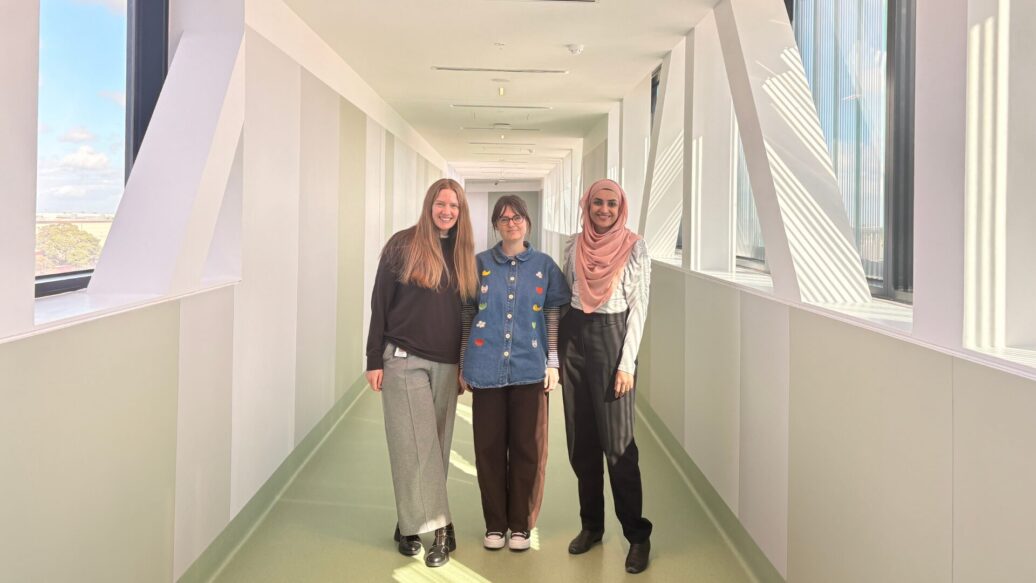
Pictured in feature image ((L-R): Olivia Millett, Grade 3 Senior Mental Health Dietitian, Nicole Cashin, Grade 3 Senior Mental Health Dietitian and Aneela Panhwar, Grade 2. Senior Mental Health Dietitian.