

World Elder Abuse Awareness Day (WEAAD) occurs annually on June 15 and is celebrated globally to provide an opportunity for communities to stand together against the abuse, mistreatment and neglect of older people.
Elder abuse is a recognised form of family violence and comes in many forms. It includes physical, sexual, emotional, psychological, financial and social abuse. Elder abuse can occur once or repeatedly and can vary in severity from subtle through to extreme. It can include one or a combination of the different types of abuse. It can also lead to serious physical injuries, long-term psychological consequences and even death.
Elder abuse is most often perpetrated by someone known to the older person, with two-thirds of perpetrators being an adult child. Elder abuse affects people of all genders and all walks of life, but it disproportionately affects women.
The World Health Organisation describes elder abuse as a violation of human rights and the significant cause of illness, loss of productivity, isolation and despair. Elder abuse is a serious and prevalent health issue that has a profound impact on the psychological and physical wellbeing of victim-survivors. Victim-survivors are among our community and frequently present to our health service.
The health sector is a critical entry point for people affected by elder abuse which presents as an opportunity to provide medical care, assessment, support and pathways to specialist support.
Tanya Ellis, Program Manager for Strengthening Hospital Response to Family Violence (SHRFV) Program, says, “Elder abuse is a health issue that exists in both developing and developed countries, yet it is significantly underreported.”
“The incidence of abuse towards older people is predicted to increase as many countries experience rapidly aging populations. Elder abuse is a global issue which affects the health and human rights of millions of older people around the world. It is an issue which deserves the attention of the international community.”
“The warning signs of elder abuse may include an older person seeming fearful, anxious or isolated, or they may have injuries or an absence of personal care. Unexplained changes to legal documents or finances are also of concern. Elder abuse mainly occurs behind closed doors, so it is important to notice the signs and risk factors and offer support,” she adds.
To help prevent elder abuse, Tanya encourages older people to have their financial, medical, legal and other affairs in order.
“It is crucial that older adults are empowered to recognise the signs of abuse and seek help when needed. WEAAD is an important opportunity for communities around the world to promote a better understanding of abuse and neglect of older people, by raising awareness of the cultural, social, economic and demographic issues affecting older people.”
Greer Peters, Acting Social Work Sub-Acute Clinical Leader, says, “Elder abuse is a core component of Social Work practice. Social workers collaborate closely with the SHRFV Program to identify signs and risk factors and undertake MARAM Risk Assessments and Safety Plans as well as facilitate referrals and information sharing. Working within multidisciplinary teams, Social Work adopts a holistic approach to responding to elder abuse and has established strong partnerships with community services to support the delivery of coordinated and comprehensive care plans.”
“Social Workers are key champions in promoting awareness of elder abuse, as well as providing information and support to those affected. In recognition of the significance of this issue, Northern Health has strengthened its organisational commitment to addressing elder abuse, ensuring a coordinated and consistent approach to supporting vulnerable older patients across all areas of care.”
Tanya reminds staff to please ensure to use the Family Violence MARAM Screening & Identification Tool when working with a patient who is at risk of family violence/elder abuse or if it is suspected. The Tool is best practice in identifying and responding to all forms of family violence and should be completed prior to making a Social Work referral. The Tool is located on EMR (AdHoc Forms Section) and PROMPT.
The SHRFV Program is also available for specialist family violence consultation and to deliver family violence training. Please contact the SHRFV Program if you need to consult or to organise training in your area (8405 8519).
WEAAD was marked today with a morning tea at Bundoora Centre Older Adult Mental Health Unit, Broadmeadows Hospital Older Adults Mental Health Unit and all Mental Health Residential Aged Care Homes. Lisa Carter, Director of Nursing and Operations, Older Adults Mental Health said, “Hosting the morning tea was a great way to launch our Elder Abuse Screening and assessment project that aims to enhance identifying and supporting early identification and referral of vulnerable older adults who may be experiencing elder abuse through improved screening, assessment and upskilling of staff in recognising signs of elder abuse within the Older Adult Mental Health Program. We also appreciated the donation of delicious cheesecakes to each of our area organised by Amanda Dashwood our MH Specialist Family Violence Advisor.”
Click here for more information on WEAAD.
Support Services:
- Safe Steps: (24/7) State-Wide Crisis Response Service Ph: 1800 015 188
- Seniors Rights: Ph: 1300 368 821
- 1800 RESPECT: (24/7) Sexual Assault & Family Violence Counselling Service Ph: 1800 737 732
- Disclose to your health professional today to access support and safety
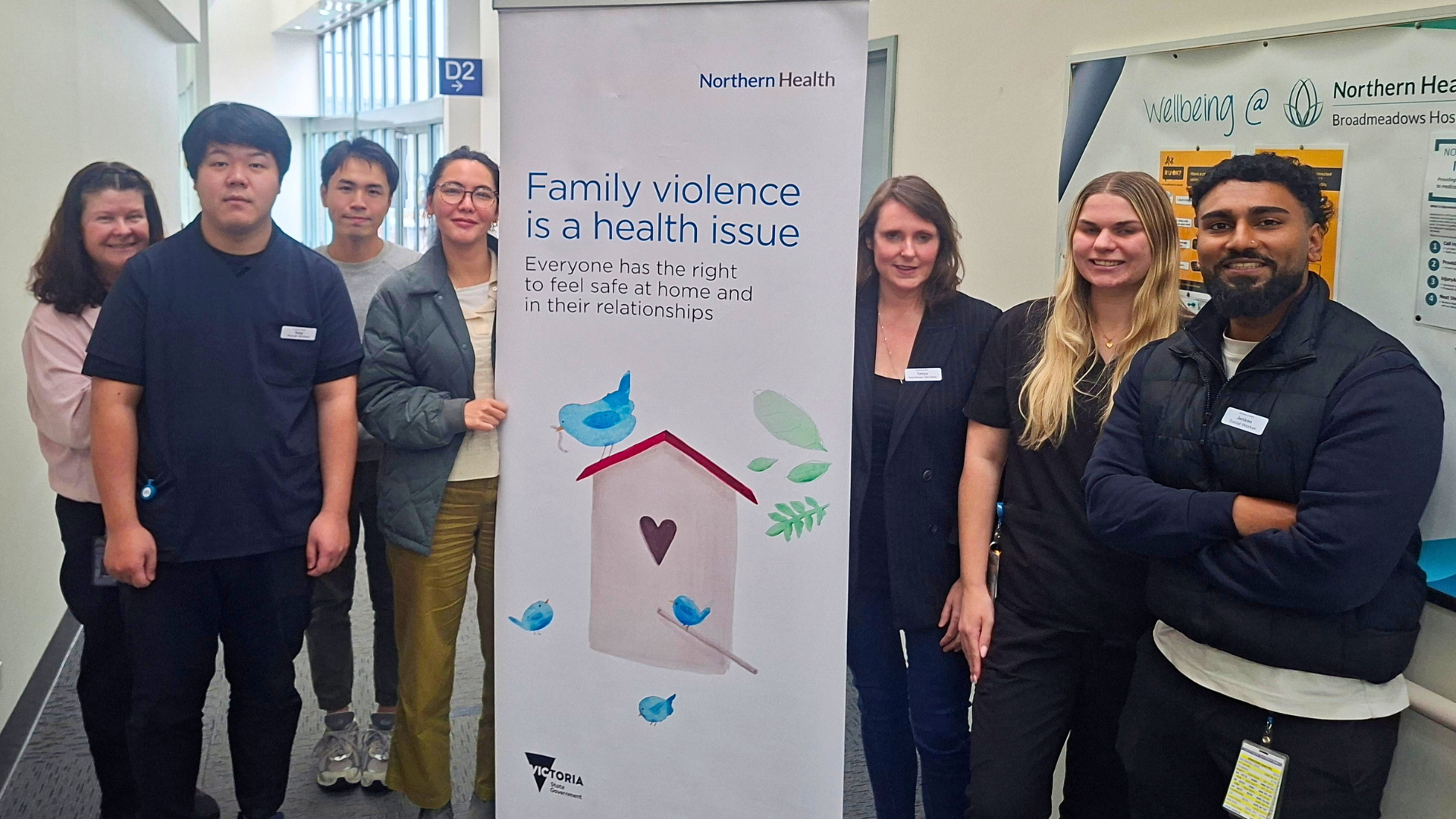
Pictured in featured image: Tanya Ellis, SHRFV Program Manager with the Social Work Sub-Acute Team, Megan, Tony, Grayson, Sofia, Jenson and Sophie.