

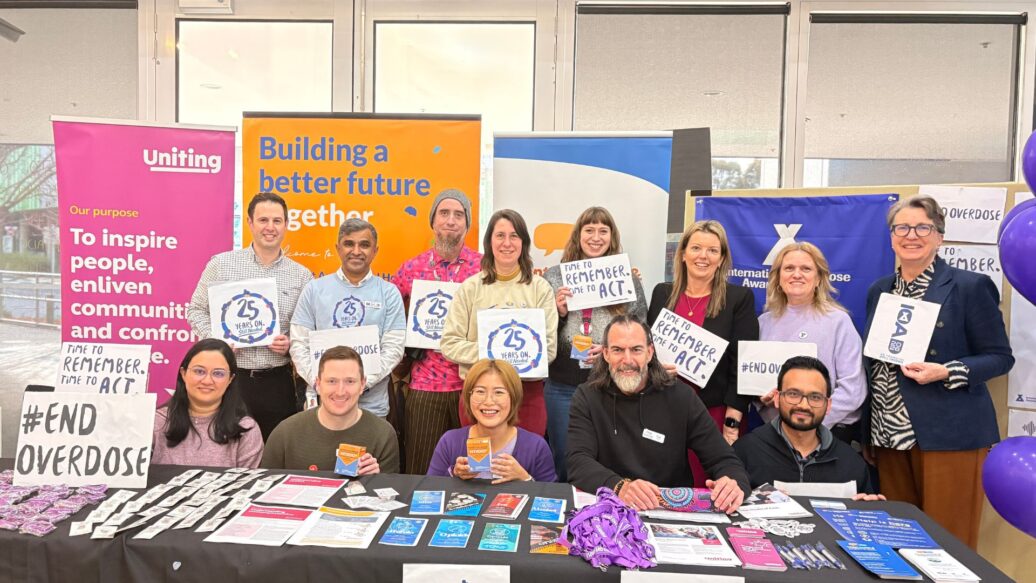
Every year on 31 August, communities around the world mark International Overdose Awareness Day (IOAD), a day dedicated to remembering lives lost to overdose and strengthening efforts to prevent further harm. Now in its 25th year, the 2026 theme, “25 Years On. Still Needed” reflects a sobering reality: despite decades of awareness and advocacy, overdose continues to impact families and communities everywhere.
In recognition of IOAD, Uniting, Whittlesea Mental Health and Wellbeing Local and Northern Health have come together to deliver a community awareness exhibition at Northern Hospital Epping.
Led by Northern Health’s Addiction Psychiatry and Toxicology (APT) Service, the exhibition aims to raise awareness of overdose prevention, reduce stigma associated with substance use disorders, honour those whose lives have been affected by overdose, and promote pathways to support, treatment and recovery.
This year, Northern Health is also highlighting the journey of a 36-year-old man who engaged with the APT Service. His story demonstrates both the risks of overdose and the powerful role that education, treatment and support can play in recovery.
The APT Service provides specialist care to patients across Northern Health, including those admitted through the Emergency Department, medical and surgical wards and psychiatry units, as well as existing mental health consumers.
The service provides specialist assessment, diagnosis and clinical management of co-occurring substance use disorders and toxicity. It also supports treating teams with expert advice on diagnosis, treatment pathways and clinical management options.
By embedding addiction expertise within the hospital setting, the APT Service helps ensure patients receive timely and coordinated care at critical moments.
When the patient first engaged with the service, he described a life shaped by long-term heroin and methamphetamine (ice) use. His substance use had strained his relationships, particularly at home.
“I have been lying to my wife…,” he admitted.
Like many experiencing dependences, he reported ongoing cravings and difficulty maintaining control. But it was not until overdose risk was directly discussed during treatment that a critical shift occurred. Reflecting on the loss of a friend overseas, he said: “That made me think… it can happen to anyone.”
That moment – connecting personal loss with broader risk, became a catalyst for change.
Clinicians worked with him to build practical knowledge about overdose prevention. This included recognising warning signs such as slowed breathing and unconsciousness, and learning how to respond using intranasal naloxone, a life-saving medication that can reverse opioid overdoses.
The impact of this education extended well beyond the clinical setting. He began sharing information widely within his social networks and encouraging peers to recognise overdose risks, discussing prevention strategies even with people involved in drug supply, and ensuring naloxone was readily available in his home.
His partner also became part of the response network, connecting with clinicians to learn how to identify and respond to an overdose. This reflects a growing emphasis in AOD treatment on equipping not only individuals, but families and communities, with the tools to save lives. Alongside overdose education, the man commenced structured pharmacotherapy, including long-acting injectable buprenorphine (LAIB). This form of treatment reduces opioid cravings and withdrawal symptoms, supporting stability and recovery.
“After the injection… I don’t have cravings,” he said.
With reduced cravings, he was able to focus on rebuilding other aspects of his life. Over time, he achieved sustained abstinence, improved his mental health, re-engaged with employment, and strengthened his role within his family. “Going well… my mental health is good,” he said of his recovery.
His motivation remains anchored in what matters most to him: “I choose recovery for my family and my future.”
Stories like this highlight the dual purpose of International Overdose Awareness Day: remembrance and prevention.
For 25 years, the day has served as a global call to action – promoting education, reducing stigma, and encouraging evidence-based responses such as naloxone distribution and pharmacotherapy. Yet the persistence of overdose-related harm underscores why the campaign remains essential.
Health services say that interventions as simple as overdose education and access to naloxone can mean the difference between life and death. Just as importantly, they can serve as a powerful entry point into treatment and long-term recovery.
This patient’s experience illustrates how awareness is not just about information -it can be transformative. A single conversation about overdose risk helped shift his perspective, strengthen his motivation to change, and ultimately save his life. As communities mark IOAD this year, the message is clear: overdose prevention is everyone’s responsibility. From clinicians and health services to families, peers and individuals, increasing awareness and preparedness can reduce harm and save lives.
The theme “25 Years On. Still Needed” is both a reflection and a call to action. It is a reminder that while progress has been made, there is more work to do.
For one man and his family, that work has already made a profound difference – turning awareness into recovery, and risk into hope.


