

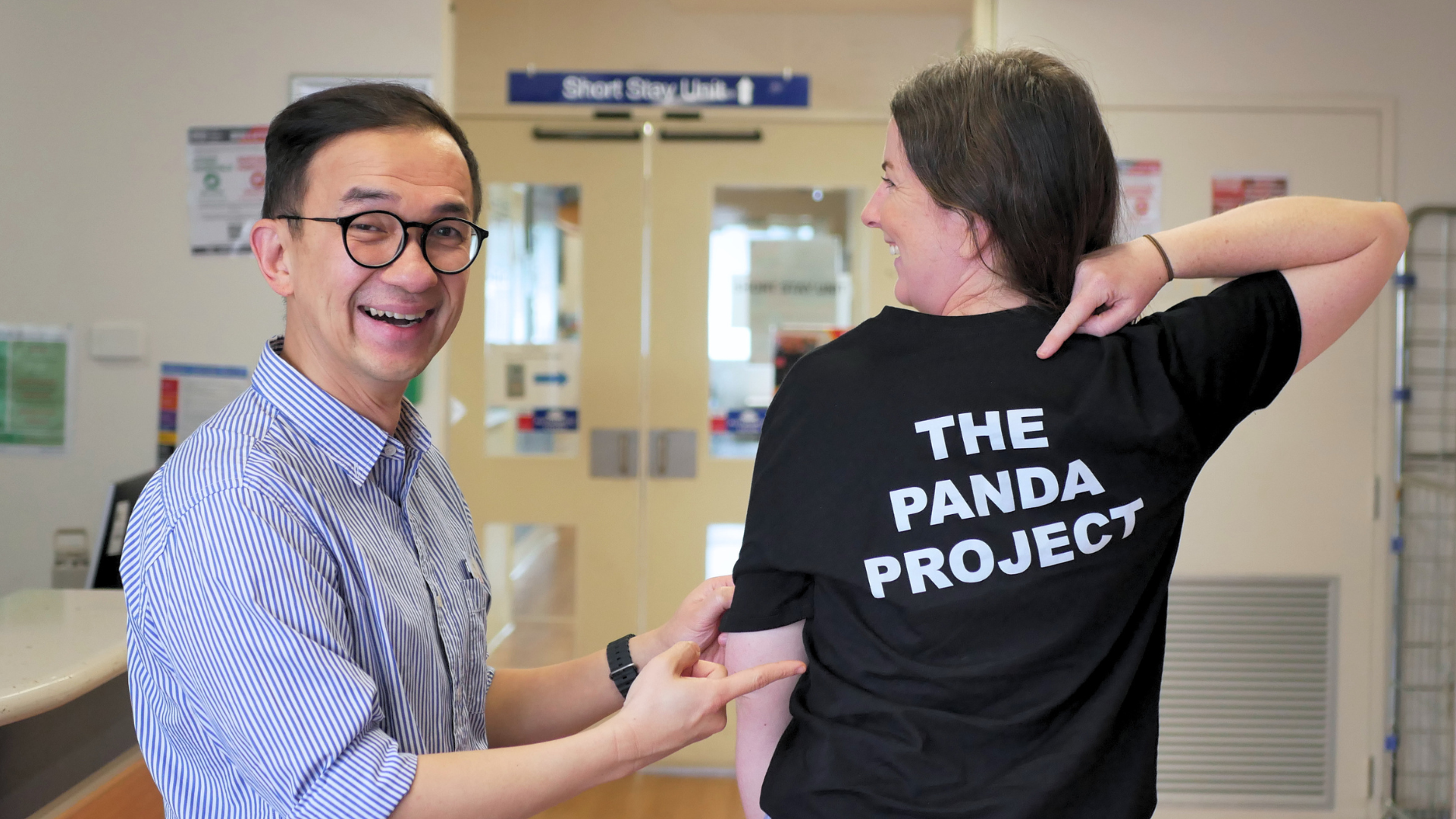
Pandas are known for their calm, relaxed nature, making them the perfect mascot for a research project currently underway in Northern Hospital’s Emergency Department. The PANDA project — Personalised add-on Acupuncture service at Northern emergency Department for Acute pain — is investigating whether acupuncture can play a role in improving care for patients experiencing acute pain.
A collaborative research project between RMIT University and Northern Health, the PANDA project is exploring acupuncture as a non-pharmaceutical pain management option and its impact on patient outcomes, patient and staff satisfaction, and hospital performance measures.
Around one in three people presenting to the Emergency Department experience some form of pain. The project aims to identify how acupuncture, delivered by registered acupuncturists, could be safely and seamlessly integrated into the fast-paced emergency setting.
Stage 1 of the PANDA project, supported through the Northern Health Research Grants Program, found strong interest among patients, with more than 75 per cent of Emergency Department patients surveyed indicating they would consider acupuncture as a treatment option for pain management. These findings suggest growing openness to exploring other treatment modalities alongside traditional care.
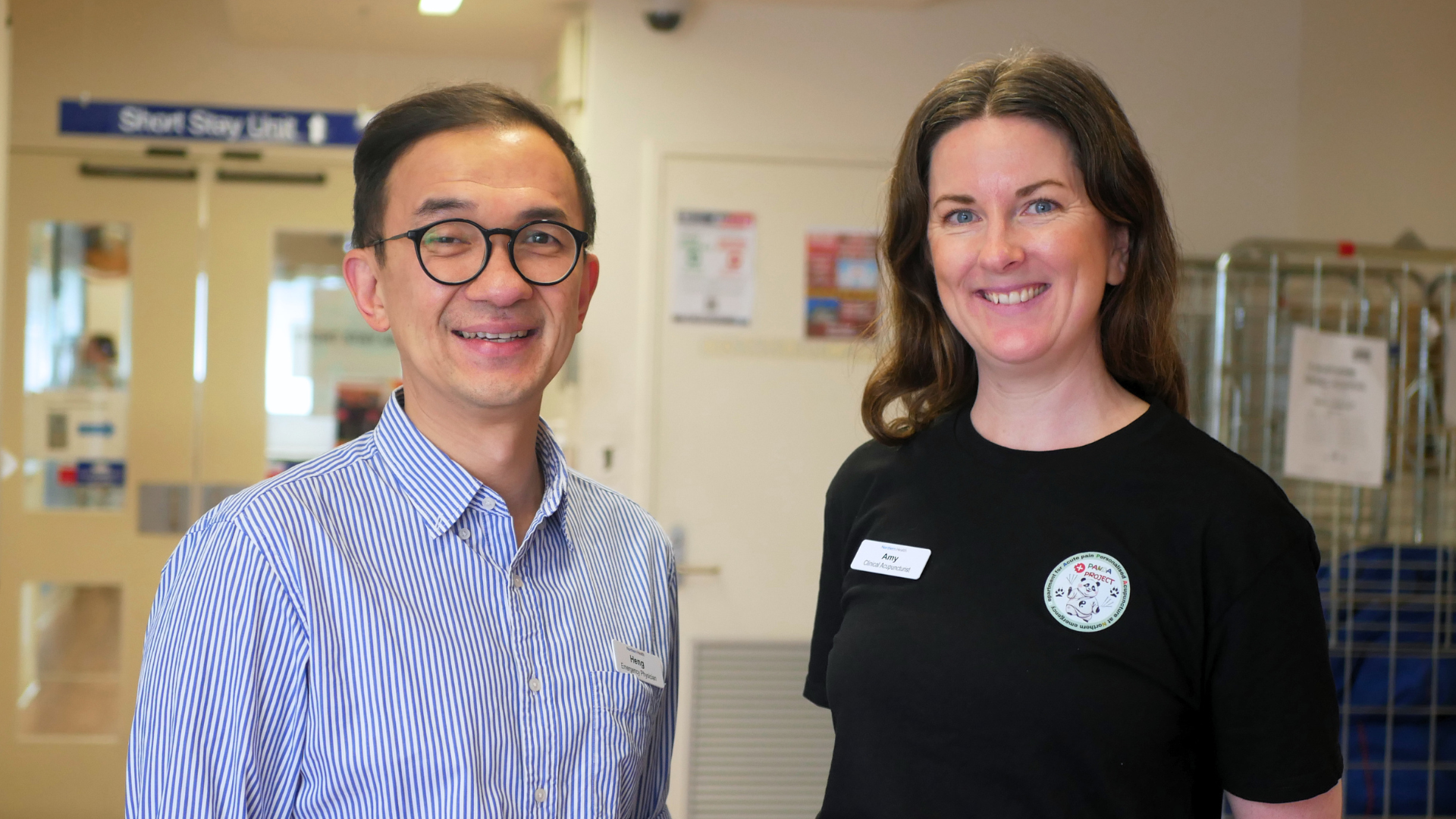
Emergency Physician and Principal Investigator, Dr Heng Cheok, is currently undertaking further study with the Australian Medical Acupuncture College as part of his sabbatical to deepen his understanding of acupuncture and its application in healthcare. International experience suggests acupuncture can be integrated into healthcare settings, particularly in pain and integrative care services, providing examples that may help inform future models of care.
“It is fascinating to see the history behind acupuncture, the research supporting its effectiveness, and how widely it has been integrated into healthcare systems overseas,” Dr Heng Cheok said.
Amy O’Brien, Northern Health ED Acupuncturist, said “Collaboration sits at the heart of the project, with a focus on adapting traditional approaches to support both patient experiences and staff workloads”.