• Get to know: Sara Almoosawi

    Get to know: Sara Almoosawi

    #WeAreNorthern

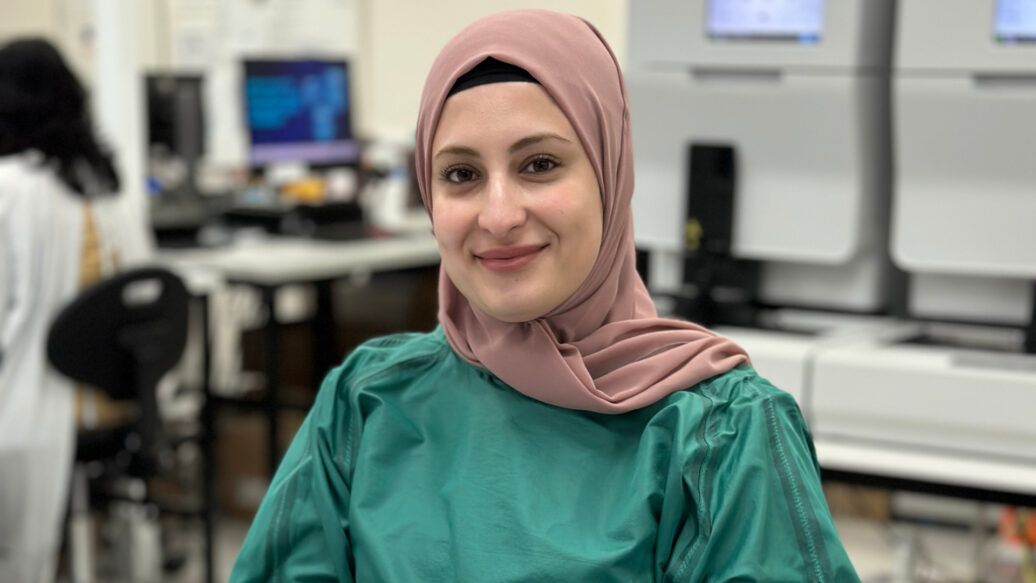
    Meet Sara Almoosawi, Lab Assistant Microbiology/Pathology.

    Q: What is your coffee order?
    A pretty simple one – a medium chai latte.

    Q: What does a typical day look like as the Lab Assistant in Microbiology/Pathology?
    A typical day starts off by starting up all the machines and performing their respective internal quality controls and maintenance, setting up each workstation for other staff that will come in later in the day, processing all the different types of samples that come to microbiology and getting them tested as soon as possible and somehow squeezing in lunch!

    Q: What do you enjoy most about your role?
    I enjoy the variety of what comes through to be tested, starting from the unknown and working through to the most clinically sound answer – or so we hope! And also, the team at Northern Pathology Victoria is by far the best.

    Q: How do you like to relax after work?
    I typically like to go to the gym after work or take a walk around a scenic lake, or meet up with a foodie friend and if its late-night Friday shopping, that’s where I’ll be!

    Q: Do you have a bucket list item? Something you would love to do.
    Does getting married count? All jokes aside going to Japan and seeing Mount Fuji would be incredible.

  • The Australian National Lung Cancer Screening Program

    The Australian National Lung Cancer Screening Program

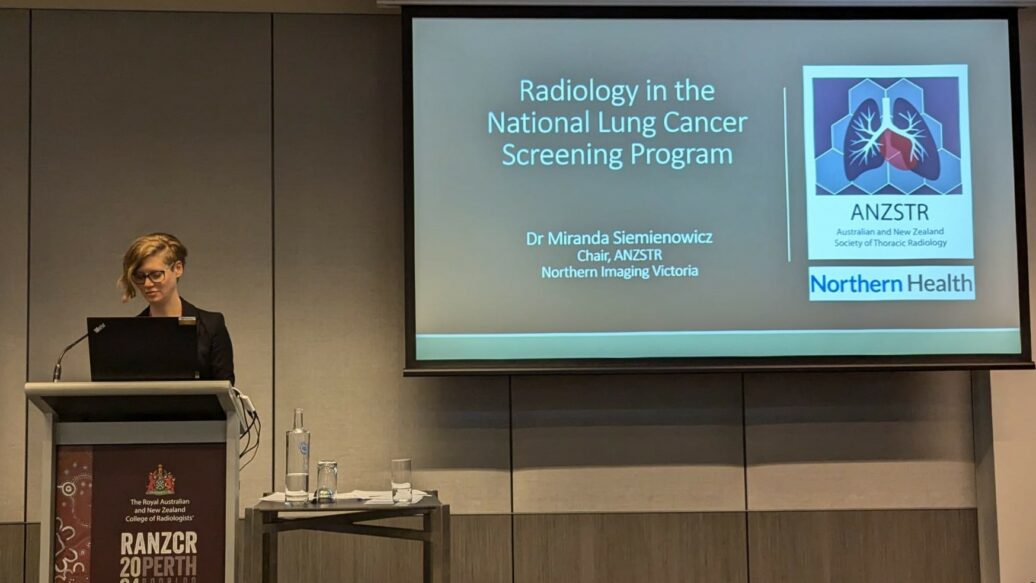
    The Annual Scientific Meeting of the Royal Australian College of Radiologists (RANZCR) took place in Perth on October 17-19. At this meeting Dr Miranda Siemienowicz, Co-Director of Radiology  Training at Northern Health and Chair of the Australian and New Zealand Society of Thoracic Radiology (ANZSTR), introduced the Australian National Lung Cancer Screening Program (NLCSP) to the radiology community. This session was a highlight of the conference, which had over 1,300 attendees.

    The NLCSP is Australia’s first new screening program since 2006 and aims to save 500 lives each year by detecting lung cancer early with low-dose chest CT scans. Dr Siemienowicz has been instrumental in advising the government and leading a working group of 62 radiologists from Australia and New Zealand to develop the necessary materials for the program. This is the largest working group ever supported by the College of Radiologists.

    On 23 October, Dr Siemienowicz was in Canberra for the official endorsement of the lung nodule management protocol, created by her working group to guide lung cancer screening CT reports. This protocol is now backed by the Australian Government. The ANZSTR has also developed guidelines for performing low-dose CT scans, writing structured reports, managing incidental findings, using AI for scan interpretation, and creating educational materials to support workforce training. Much of this work was done for RANZCR under a contract with Cancer Australia.

    Says Dr Siemienowicz, “Lung cancer screening remains an organised, funded service in only a small minority of countries around the globe. The commitment by the Australian Government to fund this program is a landmark for Australians and a major opportunity for radiology to support a profound impact on the public health of this nation.”

    Featured image: Dr Miranda Siemienowicz. 

  • Interdisciplinary workshop boosts communication in healthcare

    Interdisciplinary workshop boosts communication in healthcare

    On Monday, 14 October, Northern Health held an innovative interdisciplinary workshop aimed at enhancing communication skills among healthcare professionals. The event was a collaboration between Northern Health and Deakin University’s Centre for Organisational Change in Person-Centred Healthcare (OCPH).

    On the day, 17 participants from surgery, oncology, medicine, emergency, and mental health divisions engaged in interactive learning with facilitators from Deakin University, University of Southern Denmark, and Northern Health. The workshop was held at the Northern Centre for Health Education & Research (NCHER), and focused on advancing communication skills as a critical component of patient-centered care.

    The program was co-led by communication and healthcare experts; Professor Peter Martin, Director of Deakin University’s OCPH, A/Professor Connie Timmermann, Deputy Director of the Centre for Research in Patient Communication (CFPK) at the University of Southern Denmark and James Watt, Team Leader and Clinical Nurse Consultant in the Palliative Care Consult Team at Northern Health.

    James Watt’s longstanding association with OCPH, and his commitment to enhancing communication skills training at Northern Health, were instrumental in bringing the workshop to life.

    “Communication skills development is a lifelong learning commitment. Few opportunities exist for health clinicians to refine and improve their skills in this area, and communication skill training is often overlooked in favour of practical skills,” said Mr Watt.

    “We have greatly benefited from OCPH subsidising the majority of costs for this workshop, leveraging their experience in training thousands of clinicians across Victoria,” he added.

    The workshop offered participants a unique opportunity to delve into the evidence-based frameworks that underpin effective communication. They practiced skills such as establishing a shared agenda in clinical consultations, recognising and responding to patient cues, and exploring patients’ goals, values, hopes, and fears. Participants also received valuable feedback on their communication approach, with a strong emphasis on enhancing the overall patient experience.

    Professor Peter Martin commended the collaborative environment by saying, “It was a fantastic diverse group of participants who were very engaged and had a wealth of experience to contribute.”

    “This interactive communication-skills workshop recognises the large role that the ‘language of communication’ plays in keeping our patients safe. The workshop, as well as being interactive, was purposely number limited to ensure tailored feedback could be given to participants. Of particular priority during the workshop was to develop enhanced confidence in recognising and responding to patient cues, as well as how to establish shared agendas with patients and families during consultations,” said Tony McGillion, Divisional Director, Education and Training.

    This workshop is part of Northern Health’s ongoing efforts to help healthcare professionals improve their communication skills and enhance patient-centered care. By using these skills in everyday practice, healthcare teams can ensure that patients and their families feel heard, respected, and supported. As communication continues to be a priority in healthcare, Northern Health and OCPH are excited to collaborate further to help clinicians provide the best care possible.

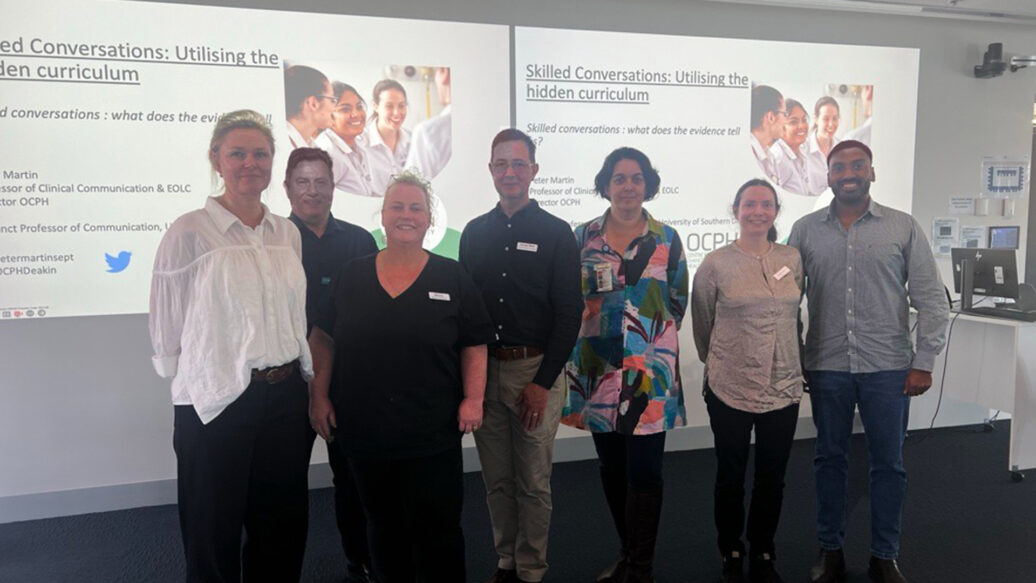
    Pictured in feature image (L-R): A/Professor Connie Timmerman, Professor Peter Martin, Melanie Bullock, Metastatic Breast Care Nurse, James Watt, Team Leader and Clinical Nurse Consultant, Rachel Coutts, Director Medical Education, Anastasia Sizemova, Registrar and Arjun Guduguntla, Urology Registrar. 

  • Northern Health Public Fertility Service welcomes first bub

    Northern Health Public Fertility Service welcomes first bub

    Northern Health is proud to support our community in growing their families through accessible public fertility care. In a service led by The Royal Women’s Hospital, Northern Health is committed to making fertility services more available to individuals and families who currently have limited access to private services.

    One of these families is the Rowe family. Sarah and Matt Rowe had been trying for a baby for some time. All around them, their friends were having babies, and they were concerned with why it didn’t seem to be happening to them. While it appeared to come easy to others, they were really struggling and the disappointment was beginning to take its toll.

    They were aware there were options, such as IVF, but these would be costly. And while they were prepared to pay for IVF, it would mean going without other things, restricting them and affecting their lifestyle.

    The couple became aware of Victoria’s new Public Fertility Care through their GP. They obtained a referral and an appointment was made for them at Northern Health, their closest satellite service. There they met Jacque Dulson, a Registered Nurse with Northern Fertility Service.

    “Patients who never thought having a family would be possible are now overjoyed that they are able to access this free fertility service. It means that the ability to pay is no longer a determining factor in whether or not you have a family,” Ms Dulson said.

    From the outset, Sarah and Matt were at ease and very comfortable in the environment and with the information that had been provided to them. They felt welcomed and safe to ask any questions, and comforted by the knowledge that they would be supported at every step of the process.

    “We really had no idea about the fertility process and we assumed we would go straight to IVF. Instead, we went through ovulation induction which was a different experience to what we thought we would have, but a successful one,” said Mrs Rowe.

    The couple undertook nurse-led ovulation induction – a process where medication is used to stimulate and induce regular ovulation, allowing for more accurate timing of intercourse – which proved to be successful.

    Their beautiful, healthy baby girl, Lola is Northern’ s first baby born due to intervention from the fertility service. The couple were overjoyed with Lola’s arrival, describing the experience as ‘surreal’.

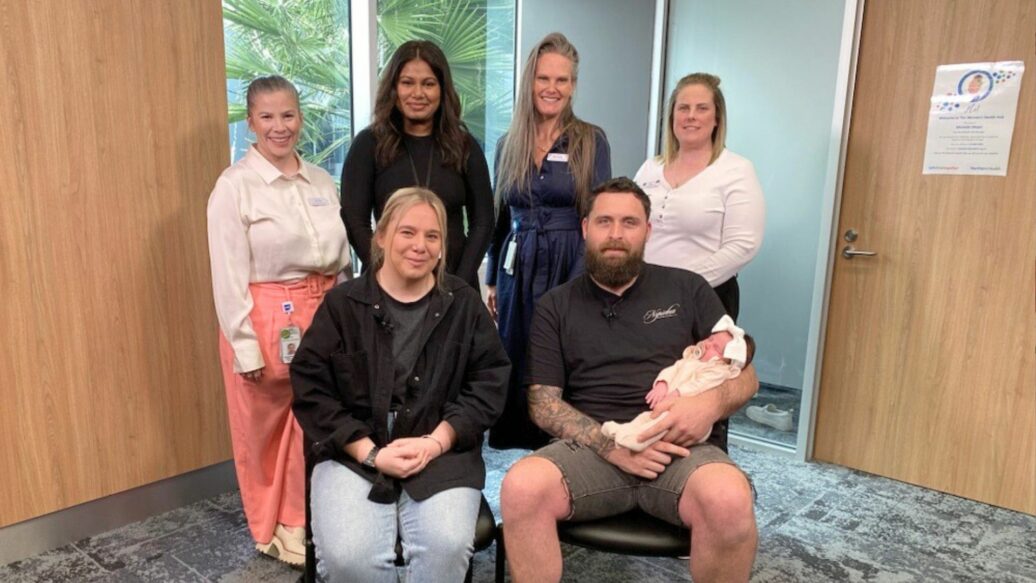
    Sarah, Matt and Lola paid a special visit to Northern Health’s Women’s Health Hub when Lola was just two weeks old to meet with Jacque and the medical team. The team at Northern were thrilled to meet Lola and experience first-hand the impact of their work and how it can change the lives of our local families.

    “Having access to the service and being able to access it so close to home is huge for people and families in our situation,” said Mrs Rowe.


  • New patient REGGIE-stration portal for VVED

    New patient REGGIE-stration portal for VVED

    A new patient registration portal for the Victorian Virtual Emergency Department (VVED) is helping to fast track patient care.

    Affectionately known as ‘Reggie’, the portal launched in August 2024 and was developed and built internally by the Digital Health Team. The portal features a user-friendly interface that enhances the experience for patients and key stakeholders. It also includes a comprehensive dashboard for clerical staff to register patients into the iPM and FirstNet EMR systems.

    ‘Reggie’ has been created to match the workflows of VVED, and in turn, has saved staff time and enables a faster registration process. The software has also been built on the most recent cloud infrastructure, meaning upgrades and changes can happen with no down time an no effect on patient care. A stringent cybersecurity posture has been implemented, which helps to decrease the risk of third-party vendors.

    The Development Team within the Digital Division was the primary team behind the build of the portal, with the ICT, VVED and Project Evaluation teams also assisting.

    Anthony Gust, Executive Director, Digital Health, said having a primary development team within Northern Health positions the health service at the forefront of digital health.

    “It’s an amazing innovation for Northern Health,” he said.

    Nicholas Caruana, HIS Manager, Emergency Services, said the new portal has greatly enhanced data capture and validation, resulting in a more efficient registration process for both the patient and the clerical team.

    “In its first 15 days, the portal assisted in the reduction of duplicate patient records by 10 per cent and increased Medicare number capture compliance from 73 per cent to 88 per cent,” he said.

    In addition to providing increased efficiencies for staff and patients and improved cyber posture, the new portal has also helped to decrease costs.

    “Having the in-house ability to develop other applications, we can also use the patient registration as a template for other services. The plan is to reuse the portal for Residential-In-Reach as well as Outpatients – build once and repurpose,” Anthony Gust said.

    Since go-live, the new portal has demonstrated considerable effectiveness. The Digital Team has been proactive in addressing any issues or implementing changes that have arisen during the initial period. This adaptability has highlighted one of the primary benefits of transitioning the portal to in-house.

    Although it is still early in the implementation phase, there have been notable improvements in the data captured and also the visibility of patients. Observations show a 10 percent reduction in the rate of UR duplication since the launch of ‘Reggie’. These metrics suggest that the new portal is not only improving operational efficiency but also enhancing data accuracy and compliance.

    The new portal has also been well received by Ambulance Victoria Triage Practitioners.

    “They are loving how efficient the referral form is. Likewise, the team in Triage Services are also pleased to see that there is continuous improvement occurring in VVED processes and systems,” they said.

    Mobile Intensive Care Ambulance (MICA) Paramedics are also praising the new system, with crews reporting back to Northern Health that the new system is “much simpler and more efficient.”

    HealthDirect is also applauding ‘Reggie’, saying “In our catch up with providers, we also got very positive feedback from nurses appreciating the simple view and steps of the new form.”

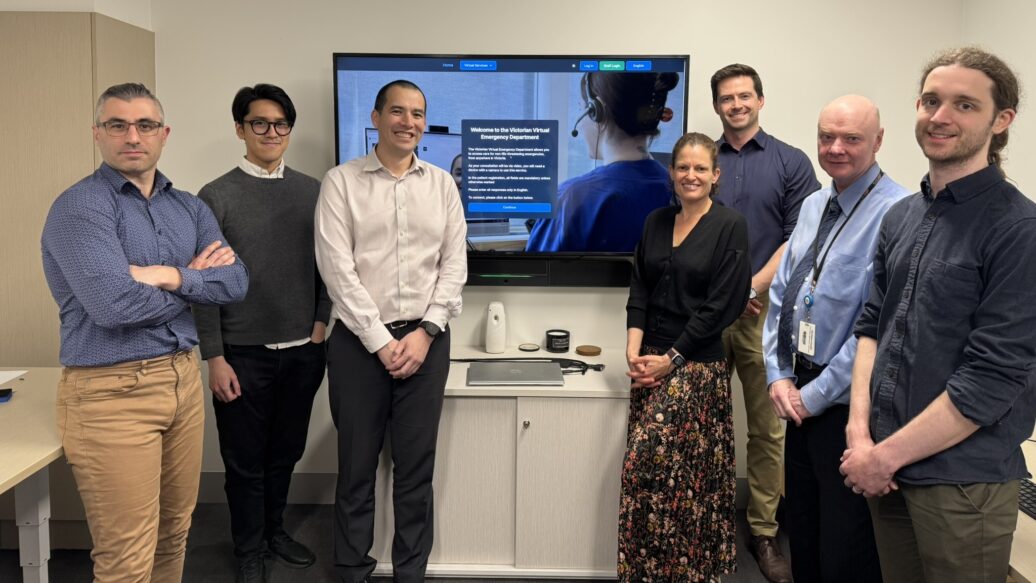
    Featured image: VVED and Digital Health teams.

  • Get to know: Ella Critchley

    Get to know: Ella Critchley

    #WeAreNorthern

    Meet Ella Critchley, Program Manager at the Advance Care Planning (ACP).

    Q: Firstly, what is your coffee order?
    A: Skinny latte, double shot.

    Q: Tell us about your Northern Health journey?
    A: I’ve been with Northern Health for just over a year now and am still getting familiar with the various campuses!
    Recently-ish, I completed a Master of Gerontology which along with my experience as an educator, researcher and nurse, has provided a solid foundation for my role as Program Manager.

    Q: What do you like most about your role?
    A: The opportunity to work alongside incredibly knowledgeable, skilled and compassionate professionals. My position allows me to increase awareness of Advance Care Planning, both within Northern Health and the broader community alongside an incredible team. I appreciate the diversity and flexibility of the role. One day, I will present at an in-service, the next at local community event, and the next I could meet someone in their home to discuss the planning for future healthcare.

    Q: What is your greatest achievement or favourite memory since working here?
    A: Founding the Champion Special Interest Group is definitely up there! We meet monthly and share updates on Advance Care Planning across different areas and discuss ways to continue growing and improving our practices. The passion and drive of the group is admirable.

    Q: How would you describe Northern Health in one sentence and why?
    A: Northern Health provides a supportive environment that fosters both professional growth and meaningful impact.
    Why? It’s the culture and the kindness that people show each and every day that makes it a pleasure to work here!

    Q: Where is a favourite place you’ve travelled and why?
    A: The unparalleled beauty of Italy, hands down! I adored the charming cobbled streets, the remarkable buildings, the rich history, the Renaissance art in Florence, and of course, the beautiful Churches! What’s not to love about enjoying fresh pasta alle Vongole (delish!) followed by a cherry cheesecake flavoured gelati in Venice (yum!)? A local favourite is the beauty of Daylesford. I often take my boys to the lake where we relax on a picnic rug, stare at the sky and make patterns out of the clouds – a perfect way to unwind!

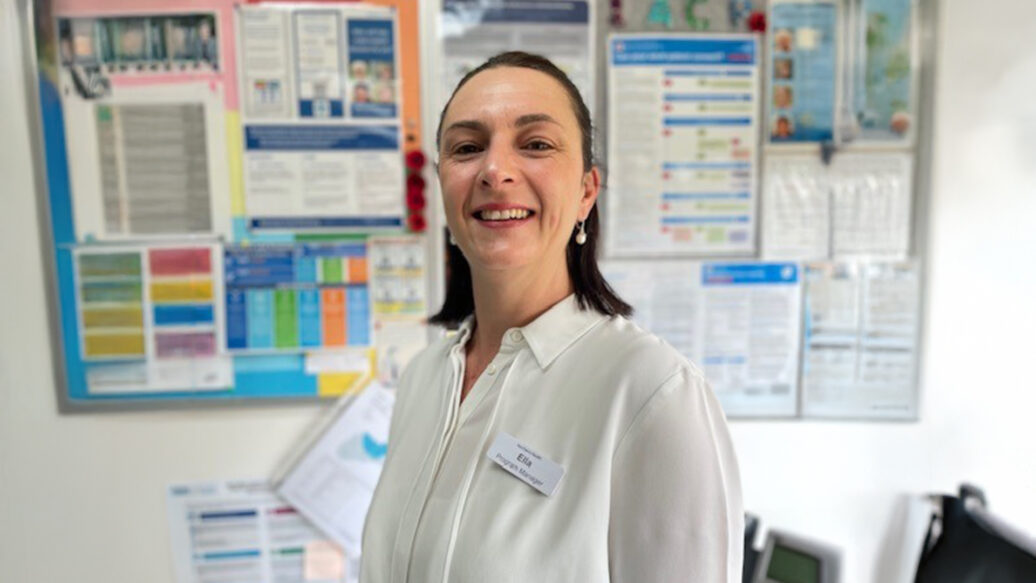
    Featured image: Ella Critchley in her office at the Bundoora Centre.

  • Northern Health’s Digital Care Pathway for Paediatric Tonsillectomy

    Northern Health’s Digital Care Pathway for Paediatric Tonsillectomy

    The Paediatric Tonsillectomy Digital Care Pathway (DCP) at Northern Health is designed to support children undergoing tonsillectomy.

    As one of the most common surgical procedures for children, typically required for recurrent tonsillitis or obstructive sleep apnoea, this pathway aims to make the process as smooth as possible for both the child and their family.

    Starting with our little patients in the Children’s Ward, the program ensures a positive surgical experience and enhances patient care through comprehensive education and information provided both preoperatively and postoperatively.

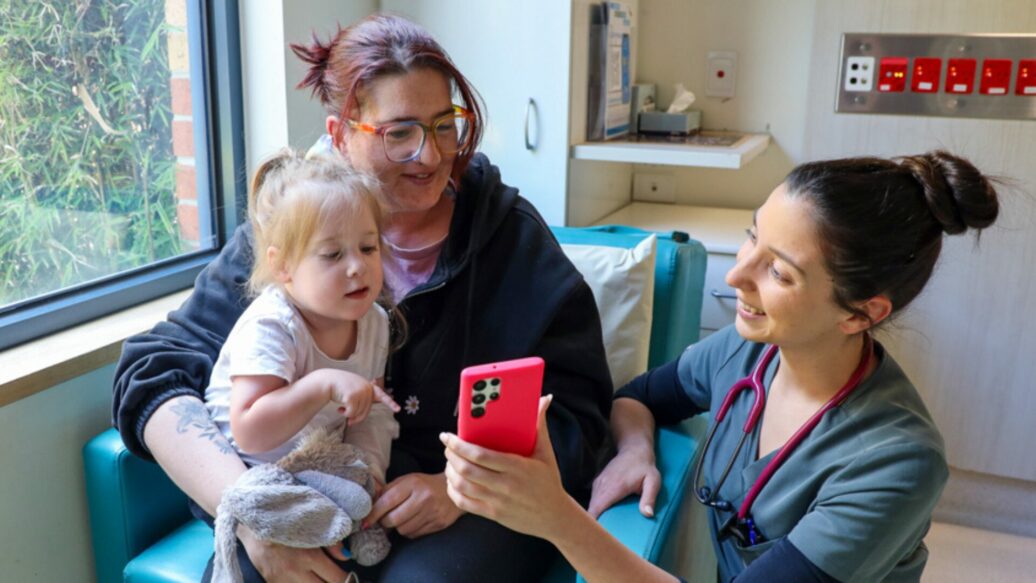
    Through the My Health@Northern app, parents and caregivers receive educational brochures and videos covering all aspects of the tonsillectomy process, so they are well informed about what to expect before, during and after surgery.

    Post-operatively, parents complete a daily recovery checker from Day One to Day 10, allowing the Paediatric Virtual Care Team to monitor recovery progress and quickly identify any potential issues.

    “At Northern Health, safety isn’t just a goal, it is our foundation. Every child deserves the best care, starting with a commitment to safety,” said Anita Joshi, ANUM Ward 2, Northern Health.

    One significant concern after tonsillectomy is the risk of tonsillar haemorrhage, a serious complication that may require hospital readmission.

    Northern Health is committed to reducing re-admissions by monitoring recovery closely and intervening as needed, helping children return home sooner for recovery in a comfortable environment.

    “By partnering with families to monitor post-operative progress, Northern Health will be able to proactively identify children with pain and hydration issues, and intervene early, avoiding unnecessary representations to hospital. This responsive model of care will ensure every child has a safe and positive post-operative experience,” said Dr Joanna Lawrence, Director VVSC and Director Paediatrics VVED, Northern Health.

    This project is driven by dedicated leaders, including Dr Joanna Lawrence, Dr Paul Goodyear, Dr Bill Shearer, Executive Director of Quality & Safety and Transformation, and Anita Joshi.

    With support from Tracey Webster, Director of Clinical Leadership, Effectiveness and Outcomes (CLEO), the digital care pathway on the Datos platform is streamlining care and allowing timely, personalised interventions tailored to each patient’s needs.

    “The team have transformed the post-tonsillectomy care for children at Northern Health, providing much-needed reassurance for parents during the difficult post-operative period. I’m very proud to be part of this transformative team and model of care that can serve as a benchmark for future projects,” said Dr Paul Goodyear, HOU and ENT surgeon, Northern Health.

    In line with Northern Health’s commitment to value-based healthcare, the Paediatric Tonsillectomy DCP aims to reduce emergency department admissions and minimise repeat visits. The program promotes better self-management, and supports patients in achieving the health outcomes that matter most to them.

    As Anita Joshi reflects, “Helping children to go home sooner is a key initiative. By minimising hospital stays, we not only enhance the comfort and wellbeing of our young patients but also improve overall healthcare efficiency and outcomes.”


  • Allied Health Clinical Education Network – Complex Case Webinar Series

    Allied Health Clinical Education Network – Complex Case Webinar Series

    The depth and breadth of allied health clinical expertise at Northern Health was recently showcased through involvement in the Allied Health Clinical Education Network (AHCEN) complex case series webinar on Functional Neurological Disorders.

    These webinars provide free education and training to allied health professionals across Victoria, with the format developed during the COVID-19 pandemic, when face-to-face training opportunities for all health professional ceased. The sessions were primarily designed to support early career allied health professionals and focus on facilitated case discussions. They also provide experienced interprofessional panel of allied health professionals with the opportunity to problem-solve and discuss their reasoning behind clinical decisions.

    Justine Slattery, Allied Health Education Lead at Northern Health, is part of the team that organises and facilitates these webinars. Ms Slattery reflected on the positive contribution that the Northern Allied Health team have made to these webinars.

    “Over the last couple of years, we have delivered six webinars and Northern Health allied health staff have been represented in four of these as either facilitators, panellists or both,” Ms Slattery said.

    The demand for this model of professional development doesn’t appear to have waned post-pandemic. On average, over 500 allied health professionals have registered for each of these events over the last two years.

    September’s webinar on Functional Neurological Disability attracted over 1,000 allied health professionals – exceeding the team’s capacity for online meetings.

    Expert allied health professionals from across different health services, including Northern Health, spoke at the webinar, with Rachel Nolan, Senior Speech Pathologist, representing Northern Health on the panel.

    Ms Nolan’s involvement in the co-design and delivery of this webinar provided the opportunity for her to network with different allied health professionals from other health services, including Royal Melbourne Hospital, Epworth, Austin Health and Barwon Health.

    “It was a great opportunity to network and learn from other experts that are passionate about working in this field. We collaborated in the planning meetings for this webinar to ensure it reflected our joint interests in Functional Neurological Disorders and desire to share our learnings and experiences with early career professionals,” Ms Nolan said.

    Northern allied health clinicians involved in previous complex case webinars include:

    • Stephen Quick (Allied Health Education & Physiotherapy), Navigating the inpatient continuum of care for older people with frailty and cognitive impairment: the importance of the multidisciplinary team webinar (2023)
    • Ingrid Ioannidis, Northern Health NDIS Lead was a panellist on the 2023 CCS NDIS and Disability webinar.
    • Christina Lambros (Senior Paediatric Physiotherapist), Early Allied Health Intervention to Optimise Neurodevelopment in High-Risk Infants (2022)

    “Being a panellist was a wonderful opportunity to not only share our specialist knowledge with a large audience across health services but it provided the opportunity to collaborate with other specialists to plan the event. Being a panellist in the event highlighted one of Northern Health’s values of working together,” said Ms Ioannidis.

    The webinar format is an accessible way for early career allied health professionals to gain insight into the roles and contributions of allied health professionals, fostering a better appreciation of teamwork and enhancing outcomes for patients presenting with increasingly complex presentations.

    Learner feedback from September’s webinar suggest it is hitting the mark – “This was by far one of my favourite PD I’ve attended all year! The host was great! I loved the way it was presented.”