A new mammography room has been established at Northern Hospital Epping.
Officially opening in November last year, the room is equipped with new technology to examine the breast for early detection of cancer and other breast diseases.
Key features of the room include a new contrast injector and biopsy equipment. The injector is used for contrast enhanced mammography, which helps demonstrate suspicious lesions within the breast, cancer extent, as well as response to treatment. The contrast is similar to that used for a CT scan and is given via a cannula in the arm. Two sets of data are collected during the injection using different energy x-rays, then combined to highlight the contrast.
“The new equipment also includes a stereotactic biopsy module. A suspicious lesion is sampled with the assistance of mammogram images to guide the position of a biopsy needle. This is called a core biopsy. When a vacuum assist biopsy is performed, multiple small samples can be collected with a single needle insertion,” said Anne Bright, Project Manager, Northern Imaging Victoria (NIV).
“The original room housing the mammography device was not large enough to perform stereotactic biopsy and performing contrast enhanced mammography was challenging with the tight space. The new room affords more space for the patient and staff, improving the patient experience and providing a safe workspace.”
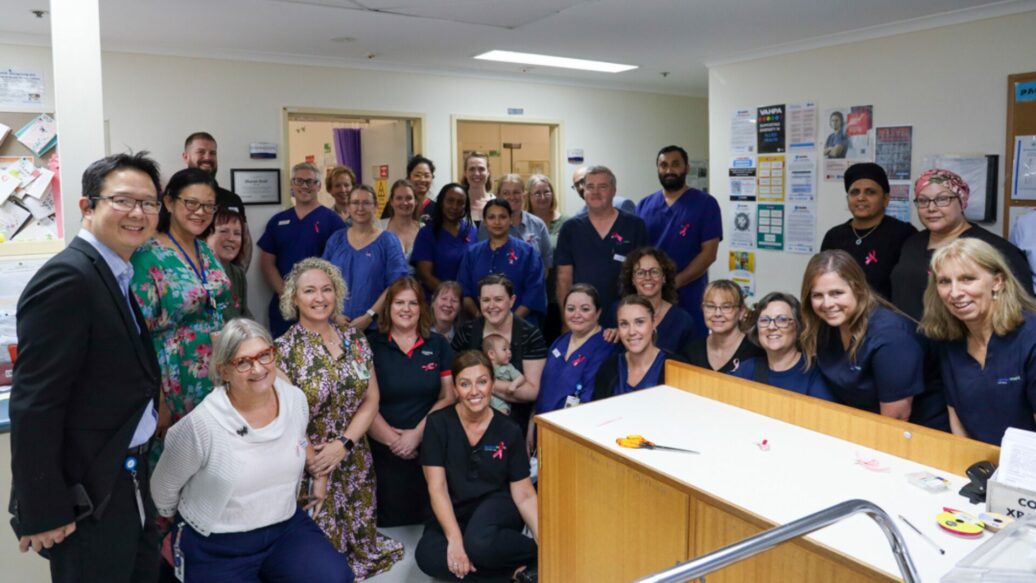
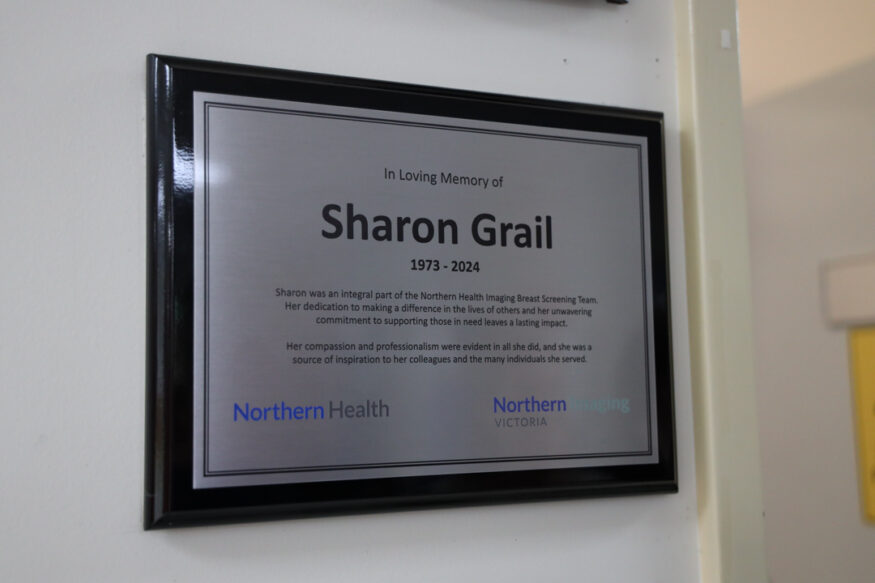
The NIV team recently held a memorial adjacent to the mammography room to remember former Imaging Manager Sharon Grail, who passed away from breast cancer in March 2024. During the memorial event, a plaque was unveiled in honour of Sharon. This plaque hangs in the staff area of the Imaging Department, outside the new mammography room.
Sharon was an integral part of the Northern Health Imaging Breast Screening Team. She was a key driver in breast imaging and was a mentor to many of her colleagues. Her career progression led her to become Chief Radiographer at Northern Health before she transitioned into her final role as National Quality Manager for Healthcare Imaging Services, now known as Lumus.
“For those of us who worked with and learned from Sharon, we were blessed. Sharon was a wonderful colleague, mentor and friend to many of us,” said Sophie Dodson, NIV Operations Manager.
“Sharon was one of the key drivers in breast imaging at Northern Health and I was fortunate to learn mammography from Sharon. Not only did I learn the technical skills to become a mammographer, I also learnt so much about patient care, empathy and safe work practices. They were the cornerstone of Sharon’s career, whether in clinical or administrative roles.”
“Her passion for breast imaging and patient care led to a strong foundation in our breast imaging portfolio and built a great working relationship between the Northern Health breast team, both surgical and oncological, which is still strong today.”
Sharon Grail plaque
Featured image: Staff at the memorial of Sharon Grail.
Northern Health is leading the way in transforming healthcare through the implementation of Value-Based Healthcare (VBHC) across the organisation.
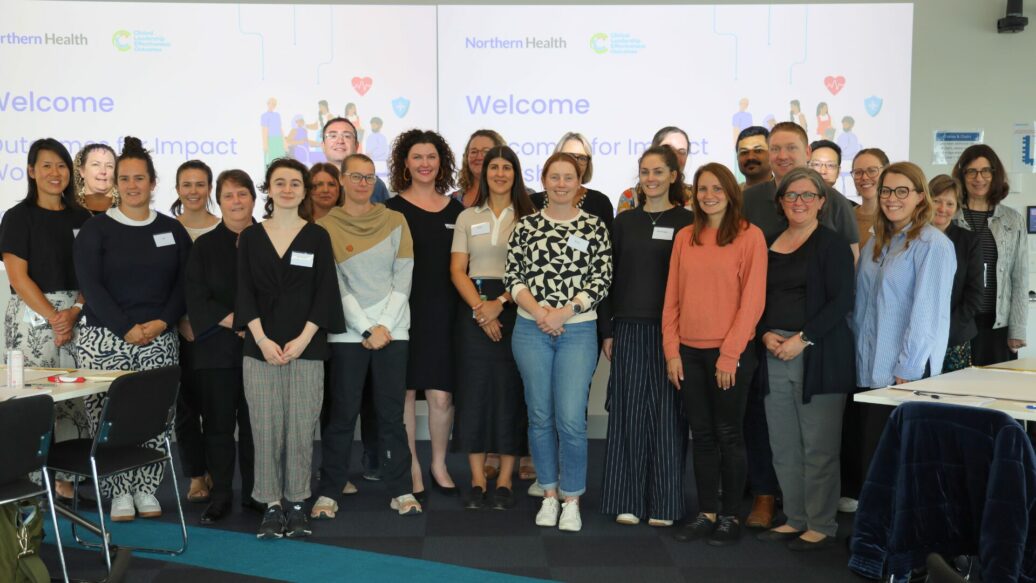
This strategic shift reflects Northern Health’s commitment to delivering high-quality, person-centred care that prioritises the outcomes that matter most to our patients and community. A key focus of this approach is the Outcomes for Impact program, led by the Clinical Leadership, Effectiveness and Outcomes (CLEO) team.
Aligned with Northern Health’s new Strategic Plan, which emphasises innovation, digital transformation, and a focus on community needs, this initiative supports sustainable and impactful healthcare delivery in a rapidly evolving landscape.
This program is being rolled out across Northern Health and provides a clear, practical strategy for transforming care delivery, centred on three key principles:
Measure what matters – Working together with patients and the community to identify and capture the health outcomes that matter most to them.
Use what matters – Developing the skills, capabilities, and technologies that enable our staff, including non-clinical team, to translate data into meaningful action.
Do what matters – Implementing, evaluating, and redesigning models of care using data and evidence to maximise impact on health outcomes.
By embedding these principles into practice, the Outcomes for Impact strategy will help Northern Health achieve its organisational vision: Creating a healthier future by working together, innovating and delivering great care.
To operationalise this approach, Outcomes for Impact workshops have been rolled out across Northern Health, with the first 2025 session successfully completed in February. Facilitated by the CLEO Team, these workshops empower clinicians and staff with the knowledge, skills, and tools to integrate VBHC principles and digital transformation into everyday practice and project design.
Workshop sessions are tailored for clinical, non-clinical, and advanced-level staff, ensuring relevance and accessibility for diverse teams. The workshops cover key topics such as:
Defining and measuring person-centred outcomes
Leveraging digital health tools to deliver improved health equity and accessibility
Effectively managing change through data-driven decision-making
With a strong focus on partnering with consumers through co-design, lived experience groups, and shared decision-making, the program ensures Northern Health teams are empowered to create sustainable, impactful healthcare solutions.
Nicky Tully, Clinical Coordinator, Community Therapy Service, shared her experience, “The workshops are extremely well facilitated and the information presented was thought provoking. The workshop challenges traditional models of care and looking at value-based healthcare. I found myself questioning how and why we do the things we do. I have recommended the workshop to many of our community teams who are always looking at ways of doing things in more efficient ways and how technology can assist with delivery care. At this point in time, we still require the traditional ways to deliver care, but we now have opportunities to look at new and innovative ways to deliver it.”
By equipping teams with the ability to collect, analyse, and apply data effectively, Northern Health ensures that models of care are continuously refined and optimised to enhance patient outcomes and service delivery.
Debra Bourne, Chief Executive of Northern Health says, “I am really excited to see the progression of the work the CLEO team are doing around integrating Value-Based Healthcare into what we do every day at Northern Health. Not only does this align with our new Strategic Plan and direction to collaborate to deliver safe and effective care, but it also focuses on what truly matters to our patients and consumers.”
By embedding the Measure, Use, Do What Matters framework into everyday practice, Outcomes for Impact is shaping the future of healthcare at Northern Health, where care is driven by what truly matters to our patients and community.
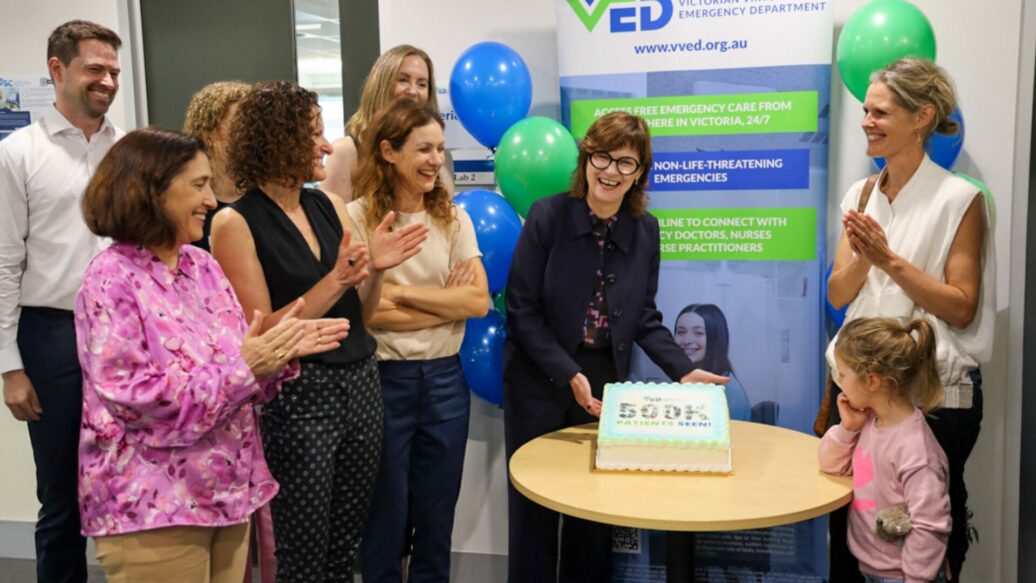
The Victorian Virtual Emergency Department (VVED) has celebrated a significant milestone, marking 500,000 presentations since its launch in October 2020.
This milestone represents a major achievement in virtual care, demonstrating the power and potential of modern technology in the way we care for our community.
Minister for Health Mary-Anne Thomas, visited Northern Hospital Epping last Friday to meet the VVED team and celebrate the incredible milestone. She was joined by Jennifer Williams AM, Board Chair, Northern Health, Linda Romano, Chief Operating Officer, Northern Health, Dr Bill Shearer, Executive Director, Quality, Safety and Transformation, and Dr Loren Sher, Program Director, VVED and one of VVED’ s littlest patients, Sunny Harris along with her mum, Emily.
“Our emergency departments are busier than ever, and services like the Victorian Virtual Emergency Department are making a real difference in lightening the load of our dedicated healthcare workers,” Minister Thomas said. “Half a million Victorians – enough to fill five MCGs – have turned to the VVED for urgent care, getting the help they need without leaving the comfort of their homes. This service is transforming emergency care and easing pressure on our busy emergency departments.”
Minister Thomas also met with Emily Harris, and her son Sunny. Emily, who is a mum of three, praised the VVED for its convenience after access the service a number of times.
Dr Suzie Miller, Deputy Director for Strategy, Quality and Technology, said the VVED had proven virtual emergency care was an integral component in ensuring every Victorian received the right care in the right place at the right time.
“It’s safe and cost-effective, and patients love it,” Dr Miller said.
“We would never be celebrating this milestone of caring for 500,000 patients, making VVED one of the largest virtual services in the world, without the support of the Victorian Department of Health, Northern Health, and our partners at Ambulance Victoria, urgent care centres, residential aged care facilities and Nurse-On-Call.”
“As the VVED continues to grow, we are focused on ensuring the most vulnerable populations receive exceptional care with a focus on improving care for First Nations, Culturally and Linguistically Diverse (CALD), and rural and regional communities.”
Dr Loren Sher, Program Director, VVED said at least one in 10 Victorians had accessed the service.
“With our diversion rates that equates to 400,000 patients kept healthy and happy at home rather than attending Emergency Departments across Victoria,” said Dr Sher.
“As we continue to grow, we look forward to expanding our partnerships and providing innovative virtual care to more communities across the state in the years to come.”
This week, Northern Health proudly celebrates Cultural Diversity Week, also known as Harmony Week.
Harmony Week, observed annually across Australia, is a time to recognise and embrace the rich cultural diversity that strengthens our communities. At Northern Health, we are committed to fostering an inclusive environment where staff, volunteers, and consumers from diverse backgrounds come together to provide and receive care with respect and understanding.
“As the major health service in the north, we are privileged to serve a multicultural community and to have a workforce that reflects this rich diversity,” said A/Professor Jason Cirone, Chief Allied Health Officer.
The week commenced with the launch of the 2025-2027 Cultural Responsiveness Plan, underscoring Northern Health’s ongoing commitment to equity, diversity, and inclusion.
Celebrating diversity across Northern Health
Throughout the week, staff enthusiastically embraced the spirit of Harmony Week through various activities celebrating cultural diversity. Teams decorated their workspaces, hosted gatherings, and shared food and cultural traditions. It was inspiring to see so many teams incorporating orange—the official colour of Harmony Day—into their celebrations.
Teams are encouraged to send photos of their Harmony Week celebration to TALSEnquiries@nh.org.au to go into the draw to win one of three prizes! The winners will be announced next week.
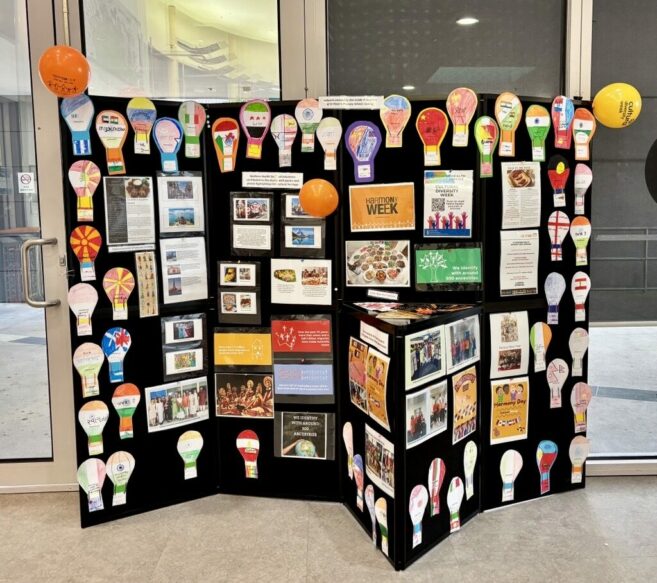
Displays were set up across all Northern Health sites under the theme “Everyone Belongs,” featuring recipes shared by staff, as well as pictures and quotes from staff and volunteers. A highlight at Northern Hospital was the vibrant artwork from Grade 4 students of St Peter’s Primary School in Epping. The children created colourful hot air balloons adorned with messages in their native languages and decorated with their national flags, symbolising unity and cultural pride.
The celebration extended to staff cafes, which featured a special Harmony Week menu showcasing international dishes and the colour orange. The library team also contributed by curating a collection of online resources on cultural diversity for staff to explore.
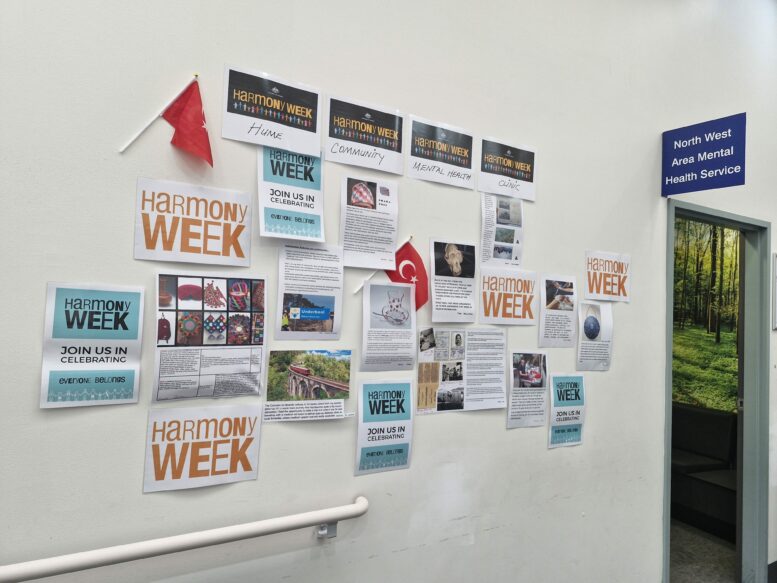
Display board at Northern Hospital Epping – Main FoyerDisplay outside Community Mental Health at Broadmeadows Hospital
Community engagement through music and stories
A key highlight of the week was the Northern Health Community Choir’s uplifting performances in the front foyer of Northern Hospital and at Westfield Plenty Valley, bringing music and joy to the celebrations.
Additionally, Yue Hu, Director of Transcultural and Language Services (TALS) and Narrun Wilip-giin, shared her personal migration journey in a special episode of the “Visiting Hours” podcast, released during the week.
Reflections on the importance of cultural diversity
Staff, volunteers, and consumers shared their thoughts on the significance of Harmony Week and the role of cultural diversity in healthcare.
David Le, Manager at TALS, said, “Earlier this week, our team was presented with the Patient Experience Award nominated by Associate Professor Jaclyn Yoong, recognising the efforts of our staff and the valuable services we provide. At TALS, we are proud to be able to connect staff and patients and consumers together every day through our language services and promote a culturally diverse and inclusive environment. Bringing together people from all different backgrounds is a wonderful achievement.”
Dalal Sleiman, Consumer in the Cultural Responsiveness Subcommittee, shared, “Cultural Diversity Week provides an opportunity for people from different backgrounds to come together and share their unique food, language, music, dance, art, and traditional attire. This year’s theme, ‘Embrace The Journey, Shape Our Future,’ reminds us that by sharing our stories, we contribute to shaping a future that is inclusive, vibrant, and rich in culture.”
Careena Newcastle, Consumer Advisor on the Northern Health Community Advisory Committee, Hospital Without Walls, and Patient Watch Committees, said, “I come from a mixed Anglo-Indian background and enjoy cooking cuisines from British, Irish, and Portuguese cultures. On Sundays, I make coconut rice and beef meatballs, similar to korma or meatball curry. My message for Harmony Day is: Live for the day, eat, drink, and enjoy life to the fullest. The more people you have, the merrier the occasion!”
Emel Huseyin, Northern Health Consumer of Cypriot-Turkish background, reflected, “I love this country—clean, spacious, and filled with friendly people. In Australia, everyone has an opportunity to study, regardless of age. After 37 years, I returned to education, which has been a wonderful experience.”
Evan Bichara, Northern Health Consumer and active member of the Cultural Responsiveness Subcommittee, shared his experience, “When my wife and I attended physiotherapy classes at Northern Hospital and previously at Bundoora Centre, we felt immediate comfort seeing our Greek-Egyptian culture reflected in both fellow patients and staff. This representation strengthened patient-worker relationships, reduced misunderstandings, and allowed for more tailored care. The staff truly excelled in creating an inclusive and supportive environment.”
Celebrating Nooroz
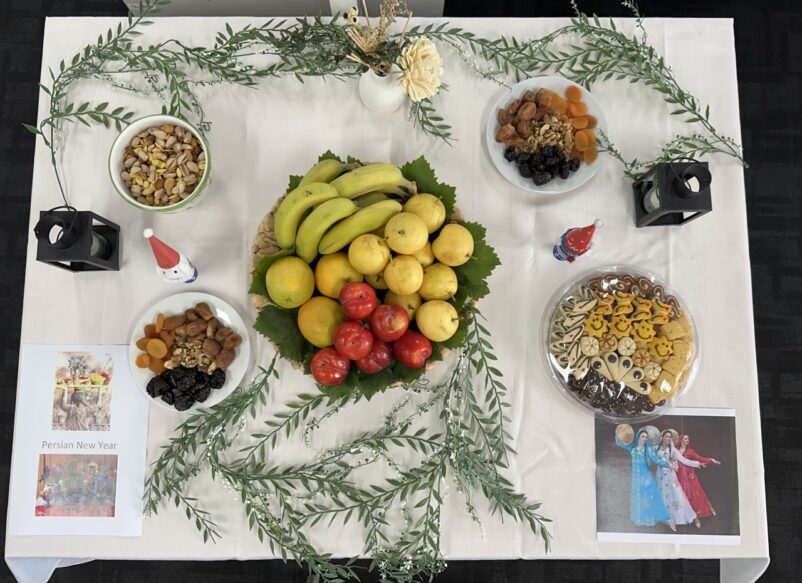
Among the many cultural celebrations, Northern Health also marked Nooroz, a secular festival observed by diverse communities, including Iranians, Kurds, Azerbaijanis, and Central Asians. Based on the Iranian Solar Calendar, Nooroz signifies the arrival of spring in the Northern Hemisphere. This year, festivities start today, 21 March, and the TALS team celebrated with traditional Persian cuisine.
Food spread in celebration of Persian New Year at TALS
Thank you to everyone who participated in making Harmony Week a success. Let’s continue to celebrate and embrace diversity every day!
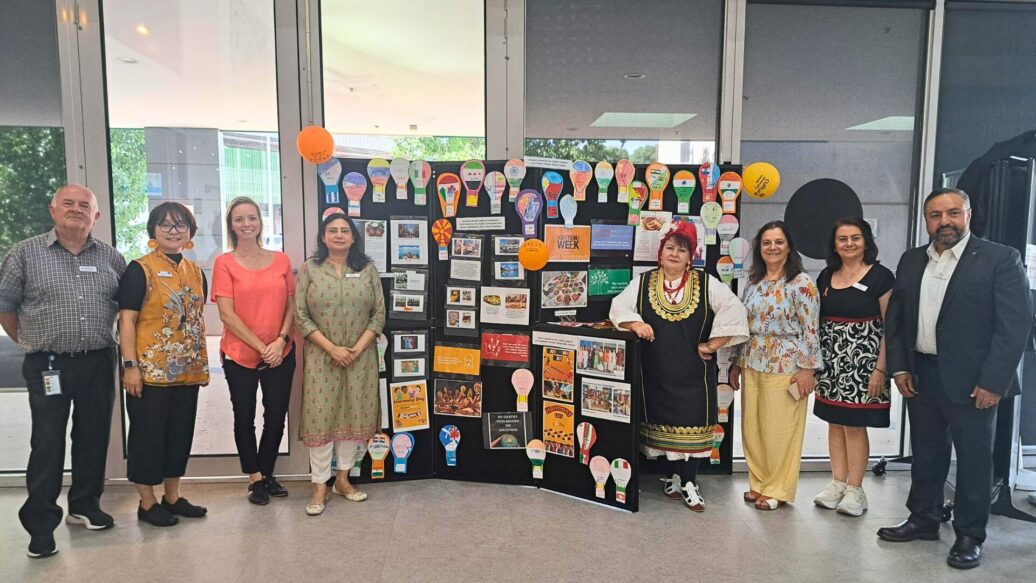
Pictured in featured image, TALS staff (L-R): Kire Stankovski, Yue Hu, Stefania Zen, Navneet Gill, Mira Jovanovic Dobos, Atira Marcus, Ines Rizkalla and Imad Hirmiz.
Over the next 18 months, Northern Health along with 19 other health services, will be participating in Safer Care Victoria’s Safer Medicines at Transitions of Care (SMTC) collaborative.
The aim of the collaborative is to reduce 30-day unplanned hospital readmissions by 30 per cent in Victoria by improving medicines management during transitions from hospital to home.
A transition of care occurs when a patient moves from one care provider to another. Medication management at transitions of care is a period of high risk for preventable medication errors and miscommunication, which can lead to significant patient harm. Over 50 per cent of medicine errors occur at a transition of care, and patients discharged with incomplete medicines information are 2.3 times more likely to be readmitted. Medicine-related hospital readmissions account for two to four per cent of all admissions in Australia – approximately 250,000 annually.
Jessica Domzalski, Senior Pharmacist – Transitions of Care and Project Lead for the collaborative, said, “By collaborating with inpatient teams and community care departments, we’re aiming to empower patients within Northern Health’s uniquely diverse and ever-growing patient catchment to safely manage their medications during these crucial times of transition.“
The collaborative coincides with the launch of the Pharmacy Transitions of Care Service which commenced in March 2025. This new service provides pharmacist-led post-discharge follow up consultations that include comprehensive medicines reviews focusing on priority issues outlined in discharge summaries, resolving medicine related issues and provision of medication adherence support.
“Through implementation of a multidisciplinary approach and partnering with patients, we will ensure patients discharged from Northern Health are supported through one of the riskiest stages of the patient journey,” said David Nguyen, Deputy Director of Pharmacy – Quality & Informatics.
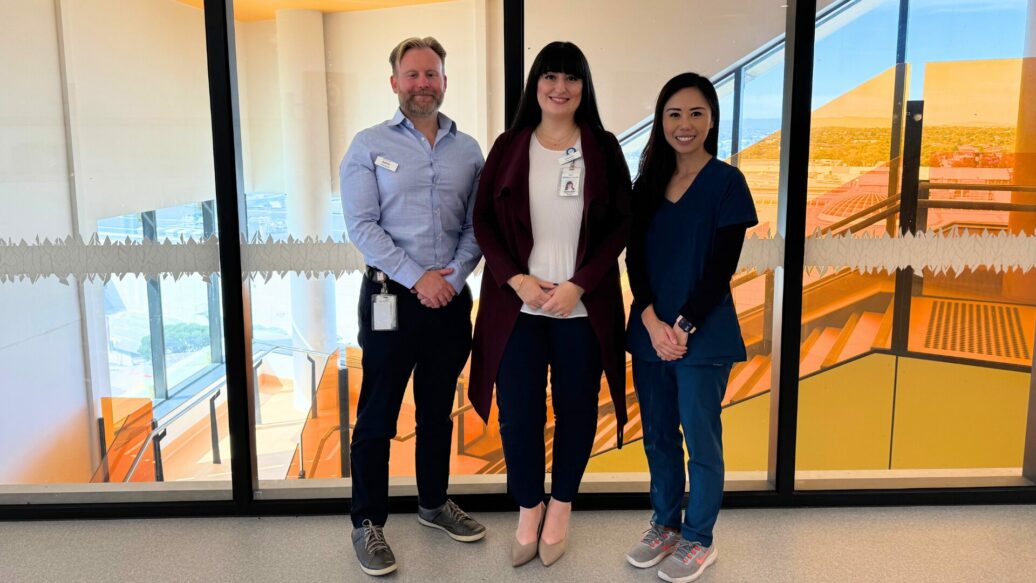
Featured image L-R: Ashley Webb, Senior Pharmacist Hospital in the Home, Jessica Domzalski, Senior Transitions of Care Pharmacist, and Tracy Hong, Senior Pharmacist, General Medicine.
On Monday, 17 March, the Northern Health Cultural Responsiveness Subcommittee proudly launched the 2025-27 Cultural Responsiveness Plan, marking a significant milestone in our commitment to equitable and culturally safe care for all patients, families, and staff.
The development of this plan was a collaborative effort, shaped by feedback from the Northern Health Diversity Survey, staff consultations, and input from consumers. Over the past year, the subcommittee has worked closely with teams across the organisation to identify key priorities, challenges, and opportunities for improving cultural responsiveness. Guided by best practice, the plan follows the Centre for Culture, Ethnicity and Health’s framework for cultural competence and aligns with the National Accreditation Standards.
The 2025-27 Cultural Responsiveness Plan provides a clear direction and vision for the next three years, ensuring that cultural responsiveness remains central to how we deliver care. By embedding cultural competence across our services, we aim to:
Enhance the quality and accessibility of healthcare for all patients
Reduce health disparities among different cultural groups
Strengthen relationships with diverse communities
Empower staff to deliver culturally safe and effective care
To achieve this, the plan outlines key actions, including improving interpreter access, strengthening cultural competence training, building partnerships with multicultural communities, and embedding culturally responsive care across all areas of service delivery.
The launch event featured insights from staff who contributed to the plan’s development:
Cherlyn Ngan, Management Intern from the Australasian College of Health Services Management, played a crucial role in supporting the subcommittee with research, benchmarking, and staff and consumer consultations.
Reflecting on her experience, she shared, “Developing the Cultural Responsiveness Plan 2025–27 alongside the Subcommittee has been a truly enriching experience. Through consultations, stakeholder engagement, and collaboration with clinicians and consumer representatives, I have gained a deeper appreciation of cultural diversity and its impact on patient care. This process has highlighted Northern Health’s dedication to providing patient-centred and culturally appropriate care. It has been an honour to contribute to this meaningful initiative.”
Tilini Gunatillake, Research Development Manager and a new member of the Cultural Responsiveness Subcommittee, said, “It’s inspiring to see Northern Health strengthening its approach to culturally responsive care at every level of the organisation, ensuring all patients and staff receive the best possible care and support.”
Tania Barry, Director of the Library and a subcommittee member, highlighted the role of information accessibility in cultural responsiveness, “Northern Health Library plays a vital role in ensuring equitable access to information, amplifying diverse voices, and supporting staff in delivering inclusive, person-centred care. Being part of the Cultural Responsiveness Subcommittee allows us to advocate for resources, research, and initiatives that foster a truly inclusive healthcare environment.”
Stefania Zen, Chair of the Cultural Responsiveness Subcommittee, emphasised the importance of staff contributions and the growing diversity of the subcommittee itself.
“I am proud to lead the Cultural Responsiveness Subcommittee, which has grown significantly over the past year to include representation from many different areas across Northern Health. Our subcommittee reflects the diversity of our workforce, with members from 13 different cultural backgrounds bringing valuable perspectives to this important work. I want to sincerely thank all staff who participated in the consultations and workshops, sharing their insights and experiences to help shape this plan. Your contributions have been invaluable in creating a framework that truly reflects the needs of our diverse community. I look forward to following the plan’s implementation closely through our committee meetings and seeing the positive impact it will have across our health service,” she said.
Natalia Dewiyani, Spiritual Care Coordinator, said that she’s grateful for the launch of the Cultural Responsiveness Plan, “It acknowledges the rich tapestry of faiths, beliefs, and traditions of Northern Health’s staff, patients, and families. By honouring these values, we ensure that everyone—regardless of their spiritual or cultural background—feels safe, seen, heard, and valued. This commitment will not only enhance the patient experience but also foster greater staff satisfaction.”
Wendy Nicol, Operations Manager, Support Services added, “We are so proud to launch the Cultural Responsiveness Plan for 2025-2027 and make a difference in the way we support and focus on patients and staff from culturally diverse backgrounds. Through this plan, all departments at Northern Health have the chance to not only contribute but also ensure that the experience provided to our patients is tailored to their needs.”
The full 2025-27 Cultural Responsiveness Plan is now available here. We encourage all staff to read it and consider how they can contribute to its success.
Together, we can continue to build a healthcare environment where every patient and staff member feels understood, respected, and supported.
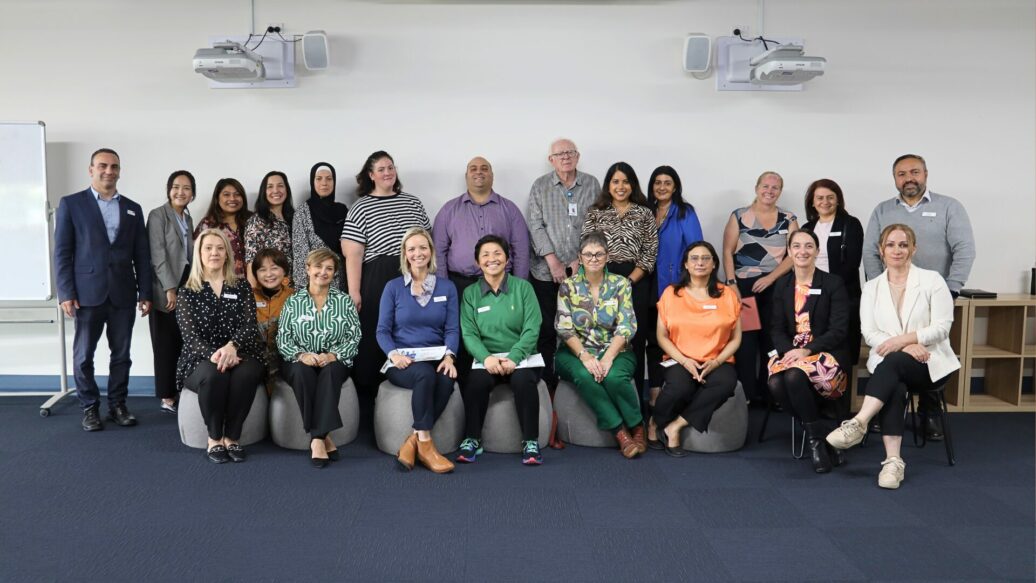
Northern Health Cultural Responsiveness Sub-Committee members (L-R): David Le, Navneet Gill, Danche Trajkovski, Stefania Zen, Tania Barry, Tilini Gunatillake, Yue Hu.
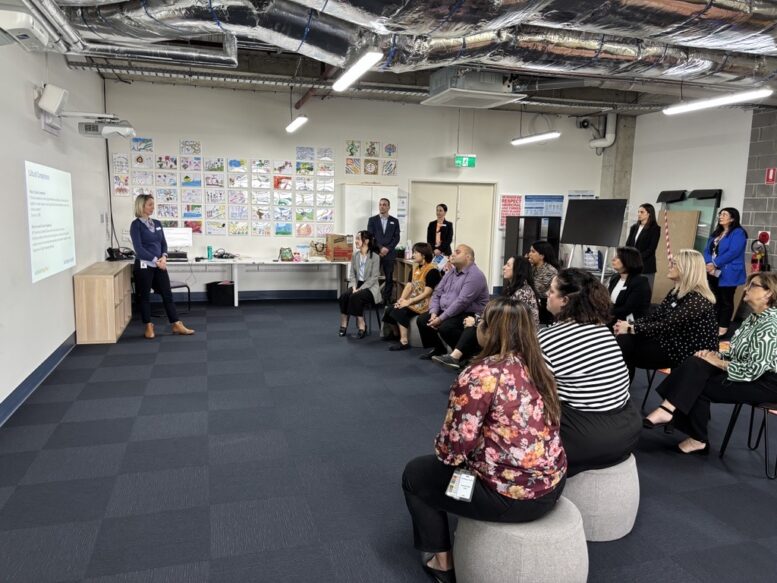
Launch of the Cultural Responsiveness Plan 2025-27 at Ideas Lab, NCHER
This morning, Northern Health hosted the Bi-Annual Awards, virtually coming together to honour the exceptional contributions of our staff.
The ceremony was hosted by Debra Bourne, Chief Executive, Northern Health, and Michelle Fenwick, Executive Director, People and Culture, who presented our award winners.
“Northern Health has thousands of staff who work across a range of areas, departments and sites, dedicated to providing outstanding care to our community each and every day,” said Debra Bourne, Chief Executive.
“Among our award winners today are staff who demonstrate a strong and positive workplace culture, live Northern Health’s values of safe, kind and together, and show a genuine commitment to their patients.”
The ceremony celebrated winners from July 2024 – December 2024 in seven categories, with each award matched against Northern Health’s values and strategic priorities.
“I am delighted to be here today to celebrate and award the staff who demonstrate excellence in their care and work at Northern Health,” said Michelle Fenwick, Executive Director, People and Culture.
“I feel proud to work in an organisation where staff are collaborative and kind and turn up to work every day to provide such incredible care to our patients and community – we thank you all for your hard work.”
The Innovation Award was presented to the Hospital Admission Risk Program (HARP). The team was nominated by Anne-Marie Fabri.
“The HARP team has implemented a rapid response to referrals and assessment process which means that patients were assessed and seen at home sooner. This has resulted in a 60 per cent reduction in patients being readmitted to hospital in the HARP episode of care,” said Anne-Marie in her nomination.
Northern Health’s Transcultural and Language Services (TALS) Department won the Patient Experience Award. The team was nominated by Associate Professor Jaclyn Yoong.
“As an oncologist and a palliative care physician, I am grateful for this wonderful resource. People who not only objectively translate a language but also provide an intangible connection to our culturally diverse community of patient and families,” A/Prof Yoong said.
“In this increasingly digitalised world, these interpreters bring a human touch to the interaction which is irreplaceable. I’d like to thank them for their work and immeasurable contribution to what is truly aligned with patient-centred care.”
The Excellence in Leadership Award was presented to Nicholas Romeo, Head Scientist, Respiratory Function Laboratory. Nicholas was nominated by Liam Hannan.
“Those that have worked with Nic know he is a great contributor, is incredibly driven to improve care for Northern Health consumers, has incredible attention to detail and is a great role model. His contribution to developing the Respiratory Function Laboratory from scratch has been huge,” Liam said.
“He has demonstrated his unwavering dedication to staff development with many current scientific staff beginning their careers as Northern Health students. He has developed these junior scientists to the point where many have been able to successfully work in more senior roles, and he is constantly innovating and developing laboratory process to improve outcomes for patient.”
Dr Subhash Das, Consultant Psychiatrist took home the Education Award. Dr Das was nominated by Yang Yun.
“Dr Das has made remarkable contributions that truly elevate the educational landscape within our division and within our hospital. His active role in the Northern Hospital Grand Rounds, collaborating with his team to share clinical insights, creates an engaging atmosphere that sparks curiosity and learning,” said Yang.
“Beyond formal settings, Dr Das is a daily beacon of support and guidance for junior doctors and staff and his team. His hands-on education and supervision create an environment where learning thrives, instilling confidence and competence in future medical professionals.”
The Rising Star Award was presented to Taylor Tigani, Mental Health Physiologist. Taylor was nominated by Kale Frost.
“Since beginning in the role just over a year ago, Taylor has demonstrated remarkable expertise in integrating exercise physiology with mental health care, providing a unique and impactful approach to patient care. Taylor’s ability to build rapport and establish a strong therapeutic alliance with consumers is one of her greatest strengths,” Kale said in the nomination.
BankVic representatives presented the last two categories – Clinical Excellence and Excellence in Safety.
Sonia Gagovski, Registered Nurse, won the Clinical Excellence Award. Sonia was nominated by Jean Cameron.
“Sonia consistently goes above and beyond to ensure every patient receives optimal care every time they attend for treatment. She makes time to ensure all needs are being met to maximise patient comfort and treatment outcomes,” Jean said.
“Her personal knowledge, from caring for elderly parents with complex needs, gives her insights into the supports available and ways to access additional help in the community. She is cool and calm in emergency situations, quick to recognise deteriorating patients proficiently and is an excellent mentor to the junior nursing staff and nursing students on rotation.”
The Excellence in Safety Award went to Joanne Quinn, Aboriginal Health Worker. Joanne was nominated by Karen Bryant.
“Jo has been working in the Koori Maternity Service for approximately nine years and in this time, she has paved the wat for pregnant Aboriginal women and spouses of Aboriginal men to feel safe by providing culturally safe care,” Karen said.
Jo provides aspects of cultural safety including good communication, respectful treatment, empowerment in decision making and the inclusion of family members. Jo values first nations family and child rearing practices and bridges the gap from western views to cultural acceptable practices, along with always upholding human rights, including Aboriginal rights.”
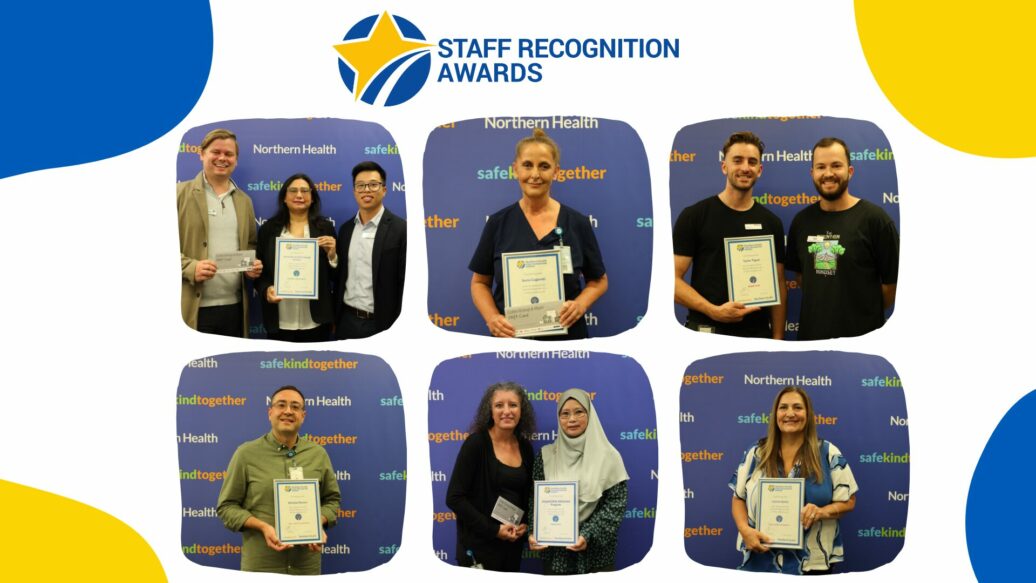
Featured image: Top row L-R: Andrew Grey, Navneet Gill and David Le from TALS, Sonia Gagovski, and Uri Brisker and Kale Frost on behalf of Taylor Tigani. Bottom row: Nicholas Romeo, Julinah Mohd Shariff and Lisa from HARP team, and Joanne Quinn.
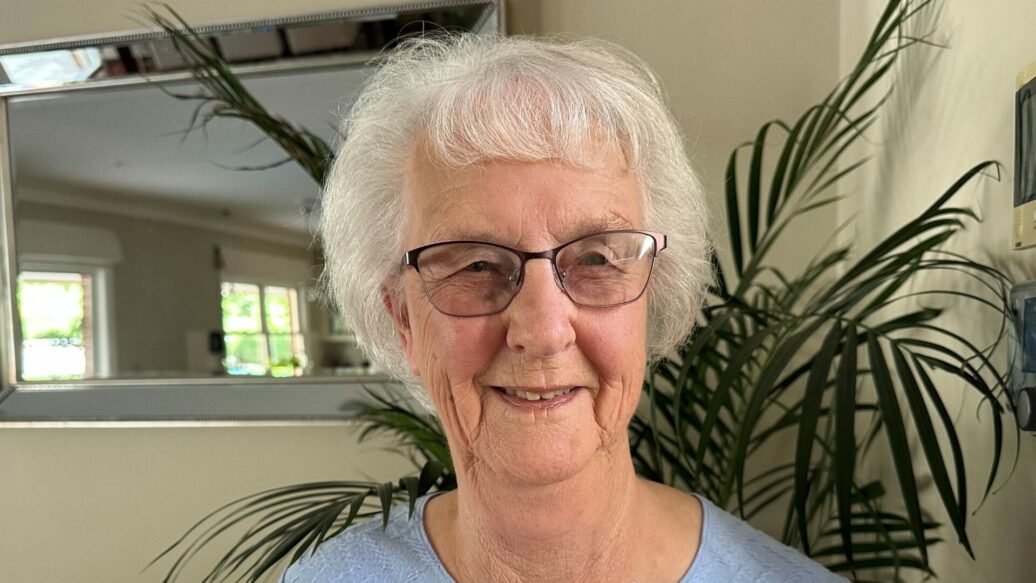
As part of National Advance Care Planning Week, 17-23 March 2025, Ella Critchley, Northern Health Advance Care Planning Program Manager, spoke with Ann, a member of the local community, who recently completed her Advance Care Directive (ACD). Ann shares her personal experience, why she decided to take this step, and the peace of mind it has brought her and her family.
What motivated you to complete an Advance Care Directive?
Ann’s journey began at a meeting at the HUB in Hurstbridge, hosted by Nillimbik Open Minds. There, she heard about the value of advance care planning.
“I thought it was a good idea, but I didn’t do it straight away. It was about six months later when I finally decided to go ahead.”
How did you go about the process?
Ann’s next step was to gather together her adult children; this took some coordination. After a family lunch, they went through the ACD questions one-by-one, and Ann shared her preferences, values and medical instructions.
“It was a bit of a task getting everyone together—one child works permanent part-time, another works on rosters, and my son works fulltime. But once we were all together, we went through it, and I made sure my wishes were clear.”
What specific preferences or instructions did you include in your directive?
Ann’s Advance Care Directive includes several key values and preferences:
Her Christian faith.
Her concern about ageing and becoming dependent on others.
That outcomes like loss of independence, high-level care, and dementia are unacceptable, if they can be avoided.
If she is nearing death, she doesn’t want to experience pain.
If she is mentally sound, Ann wants to stay at home, but if not, she is open to moving into care.
She included an Instructional Directive refusing specific treatments in some situations
Why do you think advance care planning is important?
Ann believes advance care planning is vital for both the individual and their family.
“It provides peace of mind. If you have an ACD, your family knows exactly what you want. It’s important, especially if you have a dysfunctional family—it ensures there’s no room for confusion when it comes to making tough decisions.”
How has completing an ACD given you peace of mind?
For Ann, the process of documenting her preferences has been reassuring.
“Yes, it’s given me peace of mind. I don’t want my family stressing over what to do if something were to happen to me. Now they’ll know what I want.”
How do you think having an ACD benefits your family and healthcare providers?
Ann pointed out that having an ACD can help ensure her family and healthcare providers will be aware of her preferences. If she were to experience a health event that left her unable to communicate, her directive would guide medical decisions, like whether or not to resuscitate her.
“If something happens and I can’t come back from it, I don’t want them to resuscitate me. It’s important for both the family and healthcare providers to know what I want.”
Do you believe more people should consider advance care planning?
Ann is a strong advocate for advance care planning, regardless of age.
“You don’t have to be old to do it. Life can change in an instant—an accident, a stroke, or delirium can happen to anyone. It makes things so much easier for your family if they already know what you want.”
What advice would you give to someone who is hesitant about completing an ACD?
Ann’s advice is simple but powerful:
“Just do it! It can always be updated or changed later, but having something in writing is crucial. It can be as simple as stating your preferred place of care or your views on treatment.”
Ann shared her ACD form with her General Practitioner, who witnessed her signature to the document. Her GP, the hospital and family have copies, so they are available if needed.
Ann’s story is a reminder of the importance of advance care planning for everyone, regardless of age. By making her preferences clear in the ACD, Ann not only has a voice in her healthcare decisions but has also provided her family and healthcare providers with clarity.
The Northern Health Advance Care Planning team are here to provide support and advice. If you have any questions or need assistance, feel free to contact via email acp@nh.org.au or phone 9495 3235.