• Apheresis service: Life saving treatment

    Apheresis service: Life saving treatment

    During World War II, Dr. Edwin Cohn ingeniously adapted a cream separator machine to revolutionise medicine. His process separated whole blood into its vital components, saving lives on the battlefront; including those wounded during the attack on Pearl Harbor.

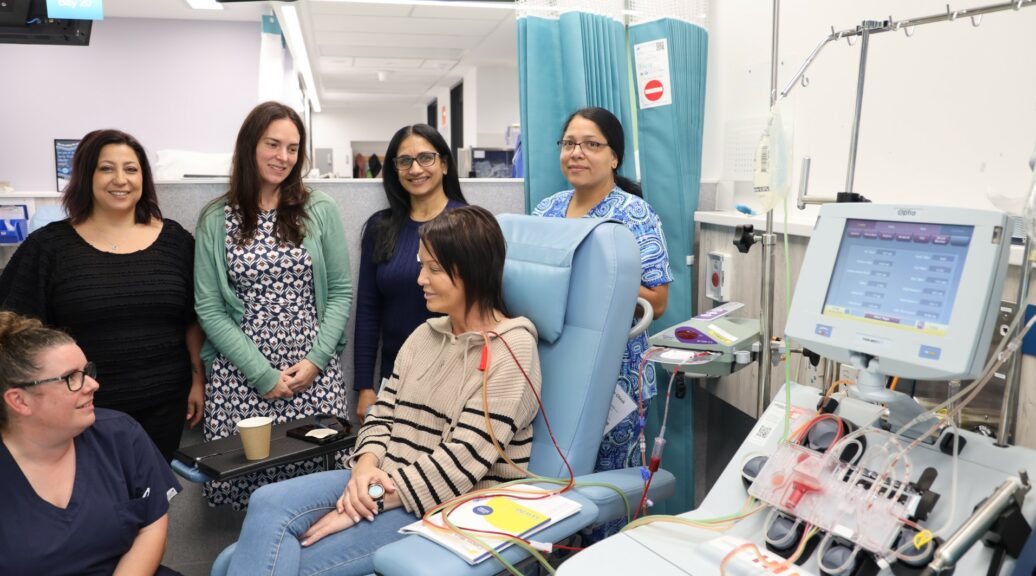
    Today, we call this process Apheresis, derived from the Greek word meaning “to remove or separate a part from the whole.” Since April this year, Northern Health Cancer Services offers Apheresis as a critical service. Led by Head of Clinical Hematology, Dr. Rachel Cooke, nursing staff at the Oncology and Medical Day Unit, located at Northern Hospital Epping, have been trained to use the cutting-edge Spectra Optia Apheresis machine, pictured above.

    Key Applications of Apheresis:

    Plasma Exchange: Harmful autoantibodies are extracted and replaced with normal plasma. Patients’ plasma is swapped with either a donor’s or a plasma substitute.

    Red Cell Exchange: This technique treats sickle cell disease by replacing abnormal sickle cells with healthy red blood cells.

    Leukopheresis: Excess white blood cells are meticulously removed from circulation, especially in acute leukemia cases.

    Director of Cancer Services, Associate Professor Prahlad Ho, says this ‘life saving treatment’, benefits hematology, neurology and renal patients, and negates the need for them to go to ICU or transfer to other hospitals.

    Dr. Cooke adds, “We currently offer elective plasma exchange and plan to expand to red cell exchange and emergency apheresis in the future.”

    Melissa Gwynne, Nurse Unit Manager, Day Oncology, shares her excitement about this expansion.

    “Patients in our community no longer face the burden of traveling to other hospitals for apheresis treatments,” she says.

    Pictured: Tess Roeg (kneeling), Melissa Gwynne, Rachel Cooke, Dalia Joseph, Nisha Poly and Anna O’Brien (patient).

  • National Taiwan University Hospital Senior Executives visit NH

    National Taiwan University Hospital Senior Executives visit NH

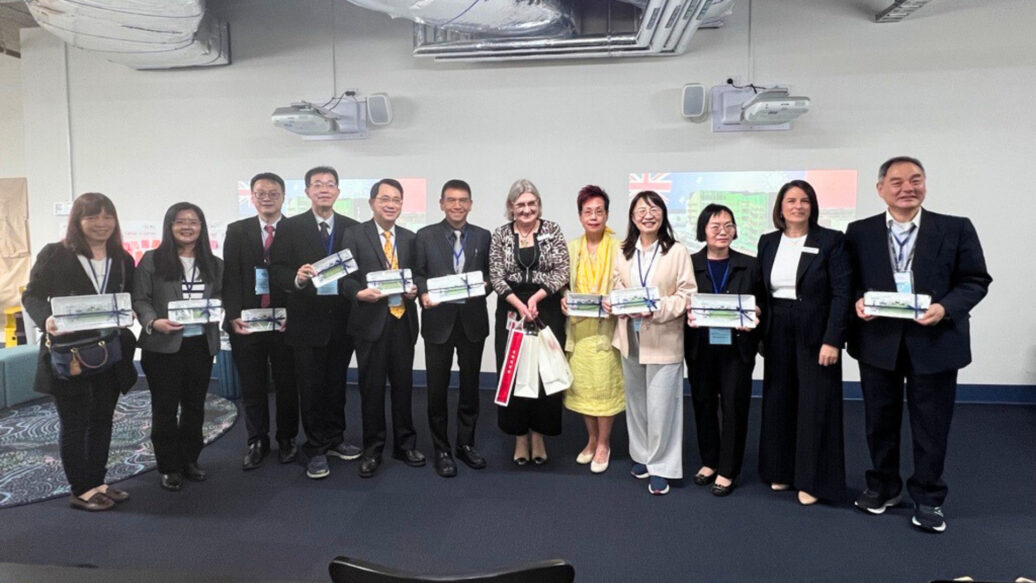
    Last week, Northern Health was delighted to warmly welcome a delegation from the renowned National Taiwan University Hospital (NTUH). The visit marked an important step in international collaboration aimed at enhancing healthcare delivery and integrating community medical resources.

    The delegation, comprising 10 distinguished senior executives from NTUH, visited Northern Health as part of their initiative to develop a new facility designed to integrate hospital and community medical resources. This project aims to significantly improve the quality of medical care and address the issue of outpatient crowding.

    During their visit, Northern Health had the pleasure of sharing our experiences and strengths, particularly in the realm of digital and virtual healthcare. Our team showcased various innovative practices, including our successful Victorian Virtual Emergency Department (VVED), which has been instrumental in providing remote healthcare services.

    The exchange of knowledge was incredibly enriching. We shared our expertise in virtual healthcare, while the NTUH delegates brought a wealth of ideas and insights from their own experiences. The discussions were lively and inspiring, highlighting the strengths of both our institutions in advancing medical care.

    “A hospital full of humanity, care, vitality, and innovation. We appreciate your passionate reception and selfless sharing. We hope for more opportunities of exchange in the near future, and warmly welcome your visit to Taiwan and National Taiwan University Hospital,” said Tyng-Guey Wang, Vice Superintendent, Superintendent Office, National Taiwan University Hospital.

    This visit reflects Northern Health’s dedication to international collaboration and our commitment to continuously improving healthcare delivery. By sharing knowledge and expertise, both Northern Health and NTUH are better equipped to meet the challenges of modern healthcare and enhance patient outcomes.

    “It has been such an honour to be visited by the NTUH delegation. The exchange of ideas was stimulating. Our conversations will no doubt continue into the future so I foresee that both our communities will benefit,” says Wanda Stelmach, Chief Medical Officer, Northern Health.

    We look forward to future collaborations with NTUH and other international partners as we continue to innovate and improve the healthcare landscape together.

  • Get to know: Fatema Tajbhai

    Get to know: Fatema Tajbhai

    #WeAreNorthern

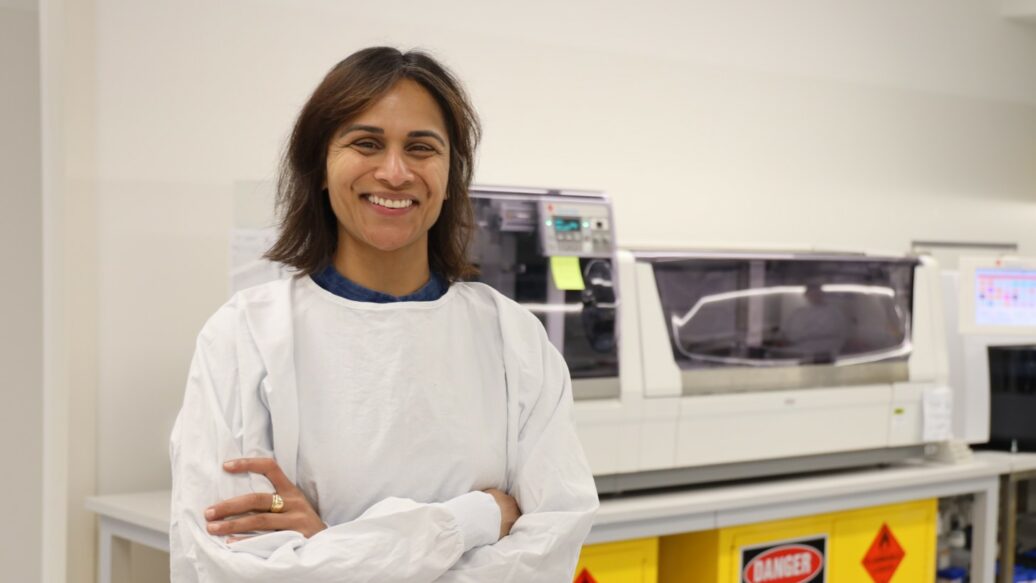
    Meet Fatema Tajbhai, Senior Scientist in our newest service – Anatomical Pathology.

    Q: Firstly, your coffee order, Fatema?

    It varies and is very mood dependent – long black or batch brew (depending on the cafe)/ soy latte/soy magic.

    Q: How would you describe your role?

    It is a very challenging but rewarding role. Anatomical Pathology is a new service to the Northern Hospital, only operational since 5 February 2024. Currently, I am managing the operational aspects of running the laboratory and doing all the background work to try and offer the best service we can.

    Q: How did you get into this role?

    I studied and worked as a medical scientist back in the UK and when I moved to Melbourne, I continued in the same line of work. When the Anatomical Pathology Service was being set up at Northern Health, I was excited to get involved and be a part of this new venture. I applied for a position and was fortunate enough to get it!

    Q: Any highlights?

    The last few months have felt like I’ve been on a rollercoaster! All the highs and lows that go with getting a laboratory service off the ground have not been easy, but realising that any challenges that you face, as long you have the right support and people in your corner you can achieve anything. The highlight has definitely been seeing the laboratory progress from day one to where we are now – offering an efficient service, good teamwork and a department that is finding its feet.

    Q: What are some of the challenges?

    The challenges have been varied from rostering to navigating the laboratory information system.

    Q: What is the most rewarding part of this role?

    When I see the new team getting to know each other and working well together.  Also receiving positive feedback from the clinicians!

    Q: Your impressions on joining the Northern Health family?

    I’m about a year in, in joining Northern Health and it has been a great experience so far.  Looking forward to seeing what the future holds for our health service and Anatomical Pathology Service.

    Q: Lastly, tell us something that most people would not know about you Fatema?

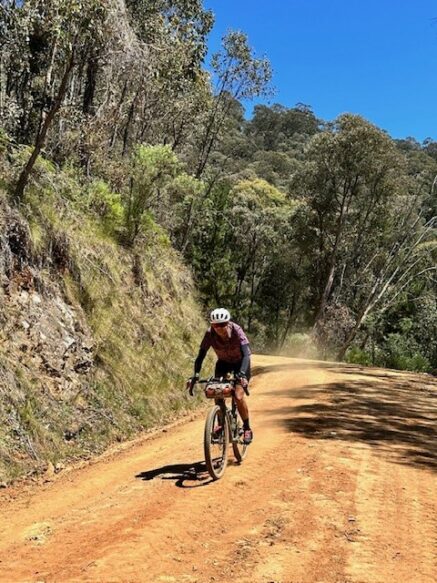
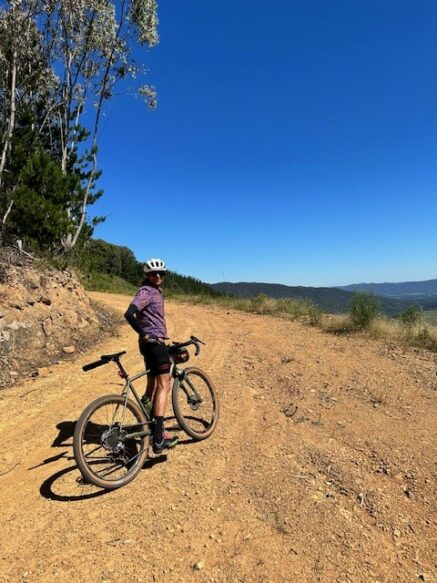
    I have been an Australian National Cycling Champion in my race category.


  • Reconciliation Week: Celebrating culturally safe care

    Reconciliation Week: Celebrating culturally safe care

    National Reconciliation Week (NRW) is a significant time for all Australians to learn about our shared histories, cultures, and achievements, and to explore how each of us can contribute to achieving reconciliation in Australia. It takes place annually from 27 May to 3 June.

    The theme for NRW 2024 is ‘Now More Than Ever’. Now more than ever, the work continues — in treaty making, truth-telling, understanding our history, education, and tackling racism. We need connection, respect, action, and change. Now more than ever, we need reconciliation.

    Northern Health provides essential services within the traditional lands of the Woi Wurrung Wurundjeri people, covering the City of Whittlesea and the City of Hume. Additionally, it extends its care to the Taungurong Country in the Shire of Mitchell. These regions collectively form part of the Kulin nation.

    The Narrun Wilip-giin (meaning “Spirit Keepers” in Woi Wurrung language) Aboriginal Support Unit plays a crucial role in supporting Aboriginal and Torres Strait Islander patients and their carers throughout their hospital journey. However, this essential work wouldn’t be possible without the unwavering support of every staff member involved in patient care.

    Recognising the exceptional efforts of these dedicated staff members, the Narrun Wilip-giin Aboriginal Support Unit has established the Spirit Keeper Champion Appreciation Award. This award aims to honour colleagues who exemplify the following core values:

    1. Going Above and Beyond: These individuals consistently demonstrate a willingness to go the extra mile, ensuring that the unique needs of Aboriginal patients are met. They exceed expectations and willingly take on additional responsibilities.
    1. Supportive and Empathetic: Their interactions with patients and their families are characterised by deep empathy and compassion. During challenging times, they provide comfort and reassurance, fostering a sense of trust.
    1. Genuine and Respectful: These staff members engage with Aboriginal patients authentically and respectfully. They build trusting relationships through sincere communication, acknowledging the cultural context and individual experiences.
    1. Creating Culturally Safe Environments: They actively contribute to culturally safe spaces within the hospital. Aboriginal patients feel valued, respected, and free from discrimination or judgment.
    1. Caring and Compassionate: Above all, their care is driven by a genuine desire to make a positive impact on the lives of those they serve. Their compassion, kindness, and concern for Aboriginal patients’ well-being shines through.

    “Aboriginal health is everyone’s business,” says Karen Bryant, Senior Aboriginal Liaison Officer. “This award came about because Narrun Wilip-giin wanted to acknowledge those staff members who went over and above to provide culturally safe care, often on multiple occasions.”

    To date, eight staff members have been nominated across various departments, including EMR, Legal, Nursing, and Cancer Services. They are : Cheryl Murray, Andrew Lang, Awash Prasad, Virginia Grant, Birat Sharma, Jane Delos, Simone Cariss, Angeline Llewellyn and Mia Chatz.

    Awash Prasad, Director of Legal Services, was one of the recipients of this award and says “I am deeply humbled to receive the Spirit Keeper Champion Award from the Aboriginal Support Unit. I see this award as more than a reflection of my work; it is an incredible honour to be part of our collective efforts toward compassionate and culturally sensitive care.”

    “Working with the Aboriginal Liaison Office (ALO) team and our Aboriginal consumers has been a profoundly enriching experience. I have learned invaluable lessons from their resilience, wisdom, and deep connection to cultural heritage. Most importantly, I have learned to listen with an open heart and mind, to respect cultural practices, and to ensure that Northern Health is positioned as a leader in our efforts toward reconciliation. To me, reconciliation is our shared journey. It is a journey of being authentic, genuine, and fostering mutual respect and collaboration.”

    Cheryl Murray, Breast Care Nurse Consultant, was another of the recipients. She says, “To be awarded the Spirit Keeper award was such a lovely surprise. Working alongside Northern Health’s ALO team is always a rewarding experience. They are a hard-working team, passionate and professional to achieve positive outcomes for our Indigenous patients. I find it incredibly thought provoking, to learn about our Indigenous rich history, our shared history and culture. Reconciliation Week is a reminder of the inequities between Aboriginal, Torres Strait Islander’s and the wider community. It showcases how important it is to keep moving forward to work towards to fixing historical exclusion, end discrimination and strengthen our relationship with the First Nation people.”

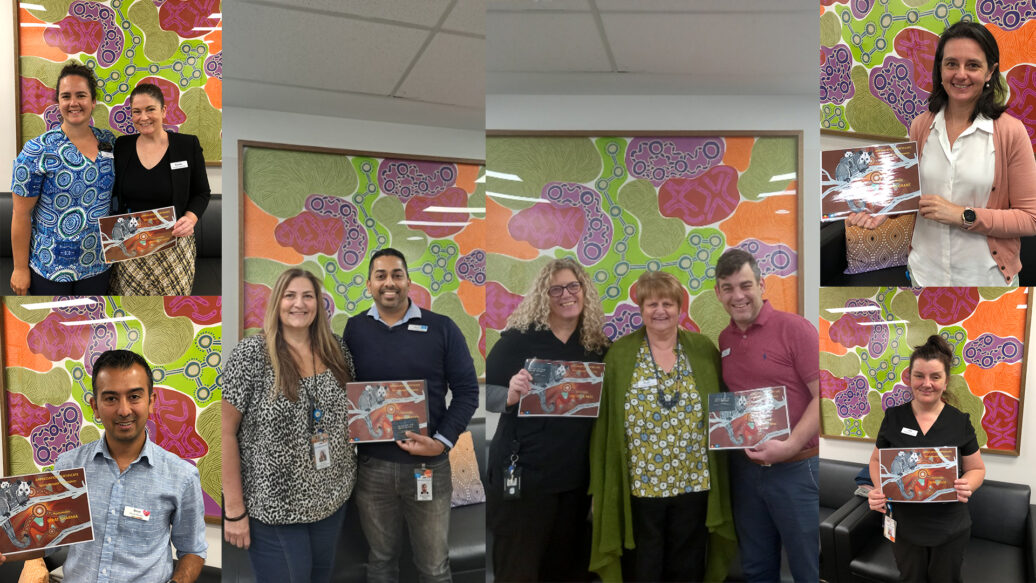
    Pictured in featured image (from bottom left): Birat Sharma, Simone Cariss with Tya Fry, Joanne Quinn, Aboriginal Health Practitioner with Awash Prasad, Cheryl Murray with Karen Bryant, Senior Aboriginal Liaison Officer and Andrew Lang, Virginia Grant, Jane Delos

  • One bread tag at a time

    One bread tag at a time

    At Northern Health, we are fortunate to have staff members whose dedication goes beyond their professional duties.

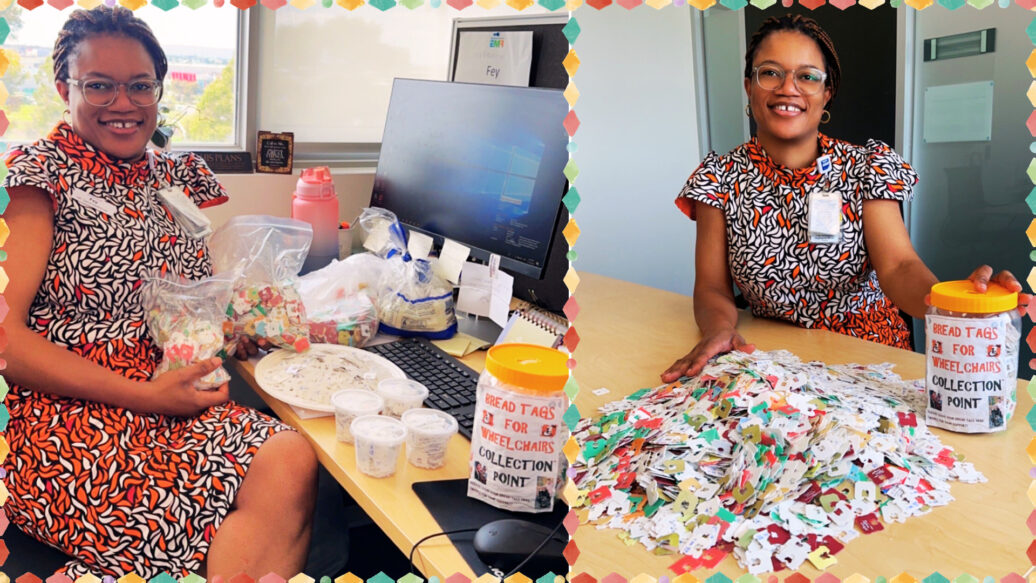
    One such inspiring individual is Fey Bakar, an EMR Surgery and Anaesthesia Analyst and Registered Nurse. Her passion for helping others led her to spearhead an extraordinary initiative of collecting plastic bread tags at Northern Health to fund wheelchairs for disadvantaged individuals.

    Fey’s journey began three years ago, driven by her desire to make a difference in people’s lives.

    “I have always found joy and a sense of fulfillment whenever I can lend a helping hand,” Fey shares.

    Her role as a nurse has taught her the impact of compassion and empathy, reinforcing her commitment to this cause. As an immigrant, Fey resonates deeply with the less privileged and vulnerable, understanding the importance of community support and unity.

    “My journey has highlighted the power of coming together to help those in need,” she explains.

    Despite occasional challenges in collecting and storing the tags, Fey remained motivated by the joy and relief her efforts brought to those in need.

    “Knowing that there would be smiles on the faces of those who received the wheelchairs was motivating and rewarding. It reinforced my belief that even minor acts of kindness can significantly impact those in need,” she adds.

    Fey’s initiative has inspired many colleagues at Northern Health to participate. Together, they have diligently collected thousands of bread tags, culminating in a significant delivery to the collection centre at Bundoora.

    Pictured: Fey Bakar (middle) with staff from the collection centre

    The collected bread tags are recycled locally to raise funds for the purchase of wheelchairs for disadvantaged individuals, primarily in South Africa. This initiative, known as “Bread Tags for Wheelchairs,” turns everyday waste into life-changing mobility aids.

    Impact by the numbers:

    • Wheelchairs Funded: 98
    • Total Recycled: 12,832 kgs of bread tags (more than 12 tonnes!)
    • Current Recycling Rate: 250 kgs of bread tags per month (approximately 2,700 tags per kg)

    This program provides practical assistance to individuals in need while fostering a sense of unity and compassion within the community. It is heartwarming to see how a simple act of collecting bread tags can bring about such positive change.

    We encourage everyone to participate and contribute to this noble cause. Together, we can make a significant difference, one bread tag at a time.

    For more information on how you can get involved, please visit Bread Tags for Wheelchairs.

  • LGBTQ Domestic Violence Awareness Day

    LGBTQ Domestic Violence Awareness Day

    Today is LGBTQ Domestic Violence Awareness Day – a day dedicated to helping to end violence and abuse within LGBTQ communities by increasing visibility and understanding, and giving hope and courage to victims and survivors.

    Held annually on 28 May, the day was first established in 2020 and was the first time in history that an awareness day was formed to highlight domestic, family and intimate partner violence and abuse occurring in LGBTQ communities.

    The theme for this year is #SeenAndBelieved, which aims to shine a light on the prevalence of domestic or family violence in the LGBTQ communities, but to also let them know there are people and services out there who will support them.

    The health sector is a critical entry point for people affected by family violence which presents as an opportunity to provide medical care, support and pathways to specialist support. Every person affected by family violence, with their unique identities and relationships, has a right to be seen and believed by their health care providers.

    At Northern Health, the Rainbow Working Group and the Strengthening Hospital Response to Family Violence (SHRFV) Program are working together to raise awareness on this important health issue.

    Tanya Ellis, Program Manager for Strengthening Hospital Response to Family Violence (SHRFV), says, “Family violence is a prevalent and serious health issue that has a profound impact on the psychological and physical wellbeing of victim survivors. Victim survivors are among our community and frequently present to our health service.”

    “It is a human right to live a life free from violence and we all have a part to play in ensuring all victim survivors of violence are identified and supported.”

    “Unfortunately, there is still apprehension within the LGBTQIA+ community to disclose family violence or contact mainstream services, which means victim survivors remain largely invisible with low levels of reporting and disclosure.”

    “Northern Health aims to play an important role in preventing family violence through providing a respectful, equitable and safe service. We are committed to providing an environment that is safe for all victim survivors of family violence to disclose their experience and receive support and safety.”

    Family violence is behaviour by a person towards a family member that is physically or sexually abusive, emotionally or psychologically abusive, economically abusive, threatening, coercive or controlling of that family member and causes them to fear for their safety or wellbeing.

    Family violence can impact people of all genders and sexual identities and can occur in all family types including intimate partners, across generations, extended families and carer relationships.

    Forms of family violence perpetrated against LGBTQIA+ victims include threatening to ‘out’ a person’s gender, sexual identity or intersex status to family, friends, colleagues or their community, and using this as way to control the victim survivor.

    According to the LGBTQ Domestic Violence Awareness Foundation, more than 60 per cent of LGBTQ people have experienced domestic, family or intimate partner violence and abuse in their lifetime.

    Despite this prevalence, LGBTQ people are less likely to identify domestic or family violence in their relationships, less likely to report it to the police or seek support from services and are far less likely to find support services that meet their specific needs.

    Northern Health encourages staff to get involved and show their support to the LGBTQIA+ community by wearing something rainbow throughout the week, have a conversation about what makes a healthy relationship, spread the word on social media with #SeenAndBelieved and becoming aware of recourses available to LGBTQIA+ victim survivors.

    At a community level, Rainbow Health Victoria has produced a valuable resource known as ‘Pride in Prevention Messaging Guide’ based on local research into family violence in the LGBTQ community. This is an initiative funded by the Office for Prevention of Family Violence and Coordination in the Department of Families, Fairness and Housing, Victoria.

    Staff at Northern Health are required to complete mandatory Family Violence Training.

    “Please ensure to complete the training and use the Family Violence Screening & Identification Tool when working with a patient who has disclosed family violence (available on PROMPT and EMR). The SHRFV Team is also available to facilitate family violence training in a face-to-face capacity. Please contact the SHRFV Team if you need to consult or organise training in your area (8405 8519),” Tanya said.

    Click here for more information on LGBTQ Domestic Violence Awareness Day.

    Support services:
    • With Respect: Specialist LGBTQI+ Family Violence Service – Ph: 1800 542 847 (Monday – Friday 9 am – 5 pm)
    • Rainbow Door: LGBTQIA+ information, support and referral helpline 0 Ph: 1800 729 367, (10 am – 5 pm, seven days)
    • 1800 Respect: 24/7 National Sexual Assault, Domestic Family Violence Counselling Service – Ph: 1800 737 732 (24/7).
    • Qlife: LGBTIQ+ peer support, information and referral. Ph: 1800 184 527
    • Lifeline: 24/7 crisis support and suicide prevention services. Ph: 131 114
    • Disclose to your health professional today to access support and safety.

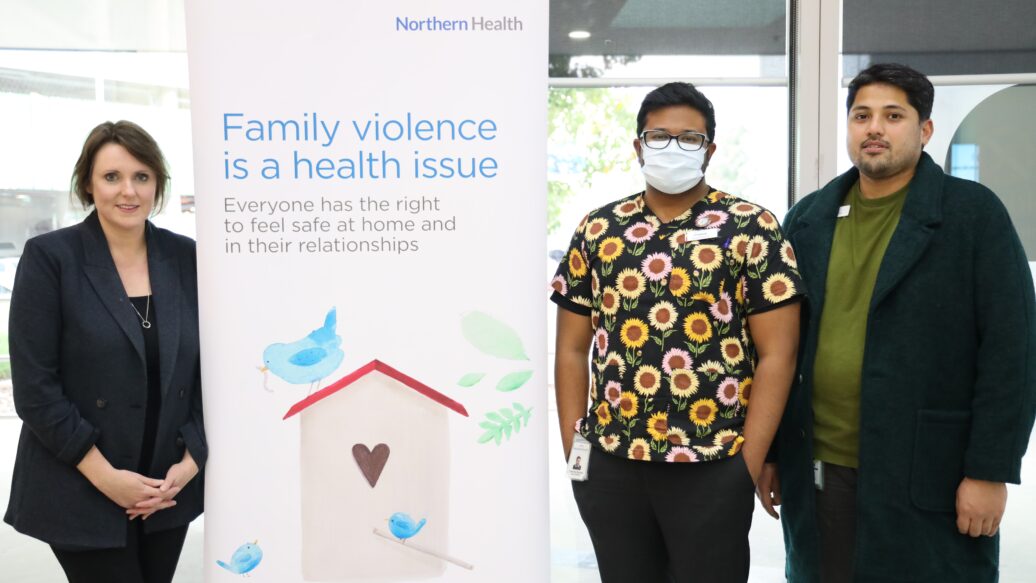
    Featured image: Tanya Ellis, Program Manager for Strengthening Hospital Response to Family Violence , Chamie, Social Worker and Nik Rawat, Social Worker.


  • Launching a Clinical Translational Research Partnership with RMIT

    Launching a Clinical Translational Research Partnership with RMIT

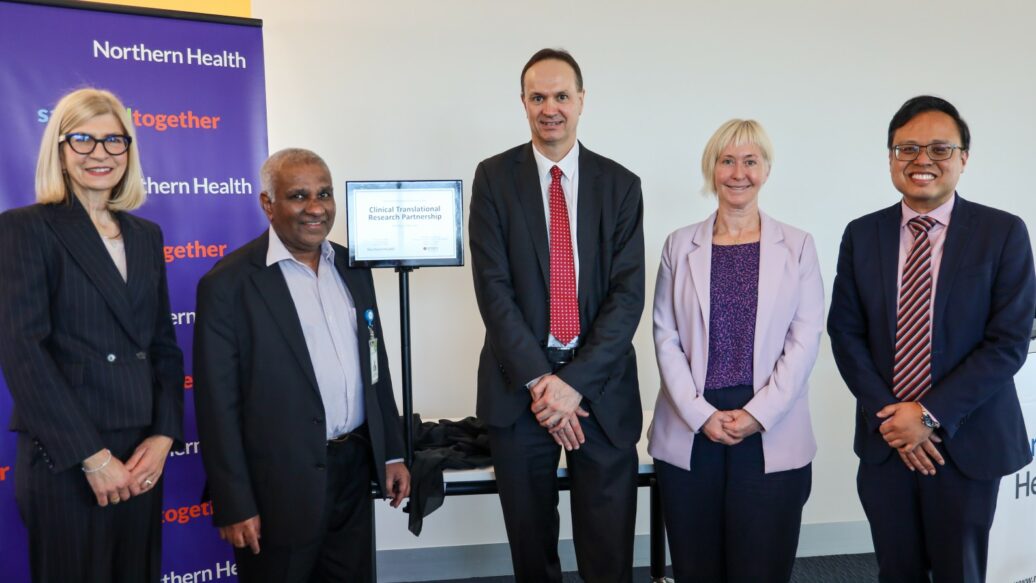
    Northern Health and RMIT University have partnered to establish a Clinical Translational Research Partnership.

    Researchers and clinical staff will work together to speed up the translation of innovative diagnostic and therapeutic approaches from the laboratory bench to real-world applications, ultimately benefiting Northern Health patients and consumers, and beyond.

    The Clinical Translational Research Partnership will initially focus on research to help patients with cancer, blood disorders and chronic diseases, leveraging RMIT and Northern Health’s strengths in imaging, spectroscopy, immunology and pharmacology.

    It will be home to clinical trials, particularly in cancer and nanoparticle diagnostic research, that aim to contribute to breakthrough discoveries, improved patient outcomes, and collaborations with the pharmaceutical industry to bring new treatments, therapies and diagnostics to patients.

    The partnership also provides an avenue for workforce development, nurturing a highly skilled talent pool of students capable of driving healthcare innovation. This will help meet the unique workforce needs in the northern suburbs and target the growing demands in the research and healthcare sectors. Master’s and PhD positions will be offered to support the partnered research and build the next generation of skilled health researchers.

    This significant partnership was officially launched on Monday, 27 May 2024, at the Northern Centre for Health Education and Research.

    During the event, Professor Catherine Itsiopoulos, Associate Deputy Vice Chancellor Bundoora Health Precinct, highlighted the importance of training the healthcare practitioners of the future and equipping them to deliver targeted innovative healthcare.

    “Our Clinical Translational Research Partnership will connect clinicians, researchers and academic leaders to ideate and solve healthcare priorities for diverse communities in Melbourne’s north.”

    “This partnership provides real opportunities to leverage collaboration. We are excited to be enabling immediate translation of evidence-based research in diagnostics, therapeutics and clinical practice focused on cancer, immunology and chronic disease for better patient outcomes.”

    Associate Professor Prahlad Ho, Chair, Research Executive Committee at Northern Health, spoke to improving access to quality healthcare for people living north of Melbourne.

    “Our Clinical Translational Research Partnership is critical to improve research capabilities across northern Melbourne, including delivery of innovative clinical trial capabilities as well as novel biomarkers in our multicultural population.”

    “Northern Health’s partnership with RMIT will allow a pipeline for the rapid and effective translation of key technological advances into clinical use.”

    Pictured from left to right: Professor Catherine Itsiopoulos, Associate Deputy Vice-Chancellor and Head of RMIT Bundoora Health Precinct, Siva SivarajahChief Executive, Northern Health, Professor Ian Burnett, Deputy Vice-Chancellor STEM College and Vice-President, RMIT University, Bronwyn Halfpenny MP, Member for Thomastown and A/Prof Prahlad Ho Chair, Research Executive Committee. 

  • Get to know Lyn Elmer: Celebrating two decades at Northern Health

    Get to know Lyn Elmer: Celebrating two decades at Northern Health

    #WeAreNorthern

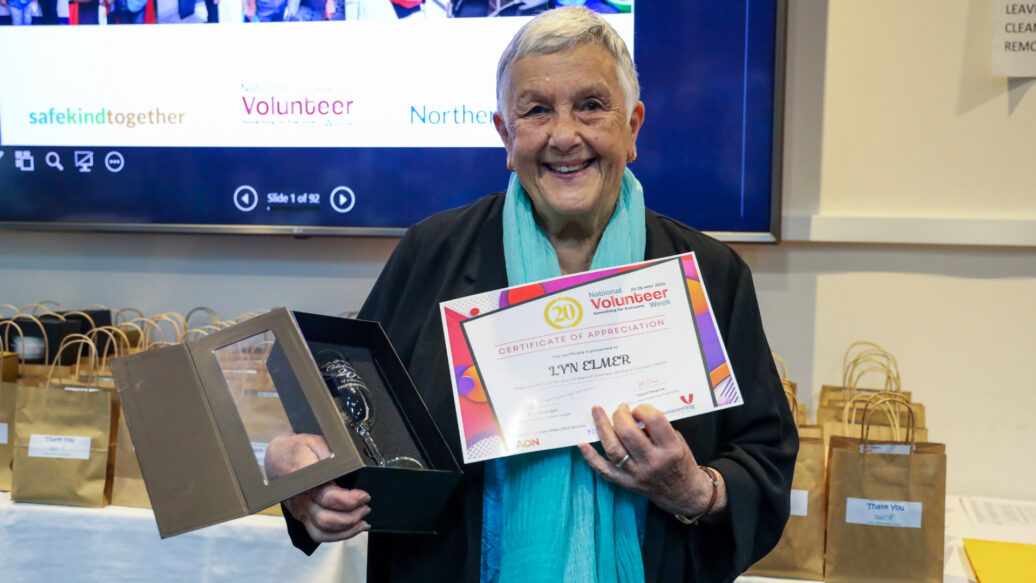
    Meet Lyn Elmer, who is celebrating 20 years of volunteering at Broadmeadows Hospital, Northern Health.

    Q. Firstly, your coffee order please?
    I have a skinny weak cappuccino, extra hot, no sugar. I’ve been perfecting that order for many, many years.

    Q. What motivated you to start volunteering at Northern Health 20 years ago, and what has kept you committed for such a long time?
    After retiring, I felt it was time to give back to the community and help people. I’ve been volunteering at Northern Health for 20 years now and have enjoyed every minute of it. Not once did I wake up dreading my volunteer duties, I’m always happy to go.

    Q. Can you share a memorable experience during your time here?
    One of the most memorable moments was with a young mum who had suffered a stroke. She couldn’t walk or speak properly, but thanks to the amazing physiotherapy department at Broadmeadows, she made a remarkable recovery. She learned to speak, use her hands, and walk again. Sometime later, my husband and I were walking through a shopping centre when this lady waved to me. She proudly shared that she could now sing in a choir. It was a very special moment for me.

    Q. What are some challenges you’ve faced while volunteering, and how did you overcome them?
    When I first started, I was unsure how to approach patients. However, I quickly learned to read their expressions and respond accordingly. As I gained more experience and worked in several different areas at Broadmeadows, I became more confident in my ability to approach patients and attend to their needs effectively.

    Q. How do you balance your volunteer work with your personal life?
    Balancing my volunteer work with my personal life has been quite easy. My family and friends always knew which days I volunteered and never asked me to do anything on those days. They would say, ‘Oh, that’s Mum’s volunteer day, we can’t do it.’

    Q. Looking back at your 20 years of service, is there anything you wish you had known when you first started volunteering?
    Looking back, I wish I had known how many wonderful friends I would make through volunteering and how much I would enjoy making a positive contribution to the patients’ lives. If I could speak to myself 20 years ago, I would say to embrace every moment of it and cherish the positive impact on both the patients and the friendships formed.

    Q. If you could have dinner with any historical or celebrity figure, who would it be and why?
    I have a bit of a quirky choice—Boy George. I’d love to ask him how he does his makeup because I’ve admired it for years, it’s just so perfect. Another person I admire is Mirka Mora, a Victorian artist. Although she’s passed away, I would have loved to hear stories about her life and her paintings, which always conveyed messages of love and hope. Her work is quite magical.

    Q. Do you have any hidden talents or hobbies?
    I have a secret hobby that not many people know about—I love to paint and draw. It’s not something I do every day or even every week, but maybe once or twice every five years. I have a painting on my kitchen wall that is cherished by one of my girlfriends who joked, ‘If you go before me, can I have that picture?’ We had a good laugh about it.