• Record number of twins in Northern Hospital Neonatal Unit

    Record number of twins in Northern Hospital Neonatal Unit

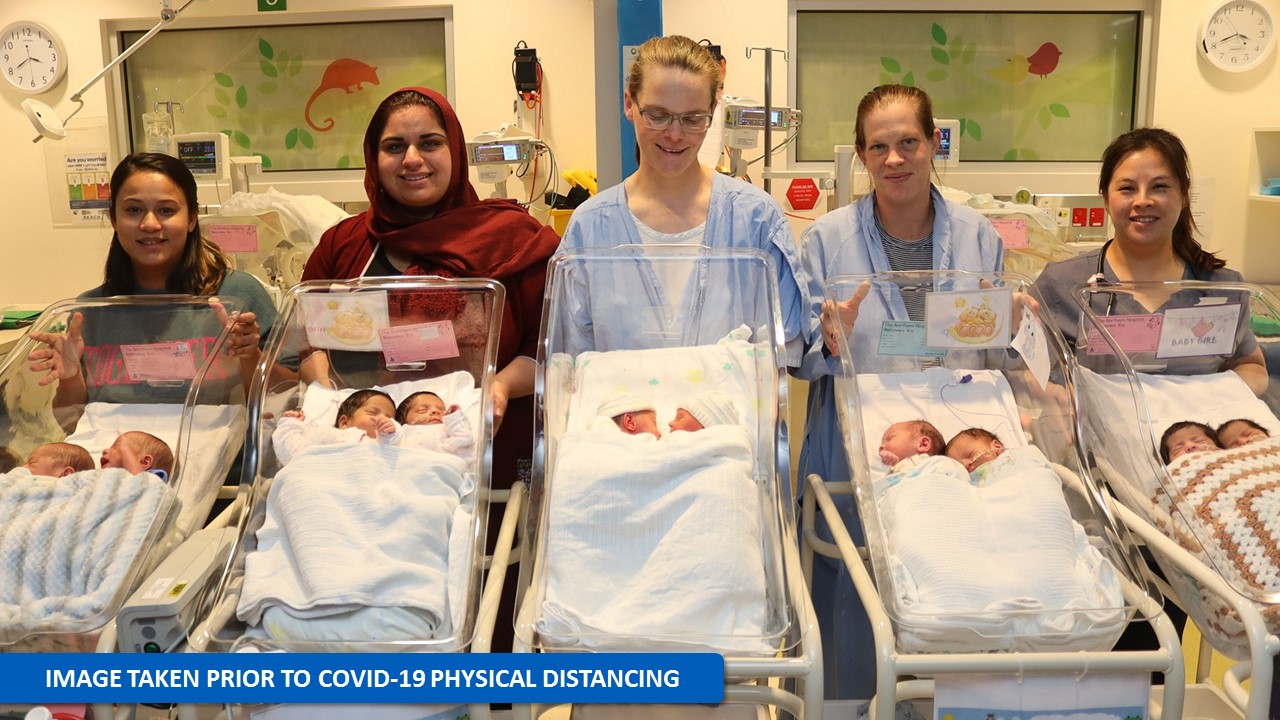
    In March, the Neonatal Unit at Northern Hospital Epping cared for five sets of twins – a record number of twins in the Unit at the same time.

    The twins were all born within days of each other, comprising of seven girls and three boys.

    Barbara Rischitelli, Neonatal Nurse Unit Manager, said, “We were delighted to provide care for these families and proud to be welcoming them into the northern community.”

    “The twins have all now been discharged, with the last set of twins able to go home to their families just a few days ago. They were all happy, healthy and growing – the parents even said they would keep in touch with each other.”

    In the last financial year, over 3,600 babies were born at Northern Hospital Epping.

    Our Neonatal Unit is a 17-bed level 5 nursery that cares for premature and unwell infants from as young as 31 weeks.

    We have expert Neonatologists and Paediatricians who are dedicated to looking after these vulnerable newborns, with designated 24 hour specialist care, and wonderful nurses who provide support for these families.

  • Channel 7 News: Northern Health prepared for COVID-19 pandemic

    Channel 7 News: Northern Health prepared for COVID-19 pandemic

    Our staff on the front line are working hard to protect our community.

    Yesterday, we welcomed Channel 7 News to Northern Hospital Epping to interview Associate Professor Craig Aboltins, Director of Infectious Diseases, and Madelaine Flynn, Infection Prevention Manager, about our response and preparedness for the COVID-19 outbreak.

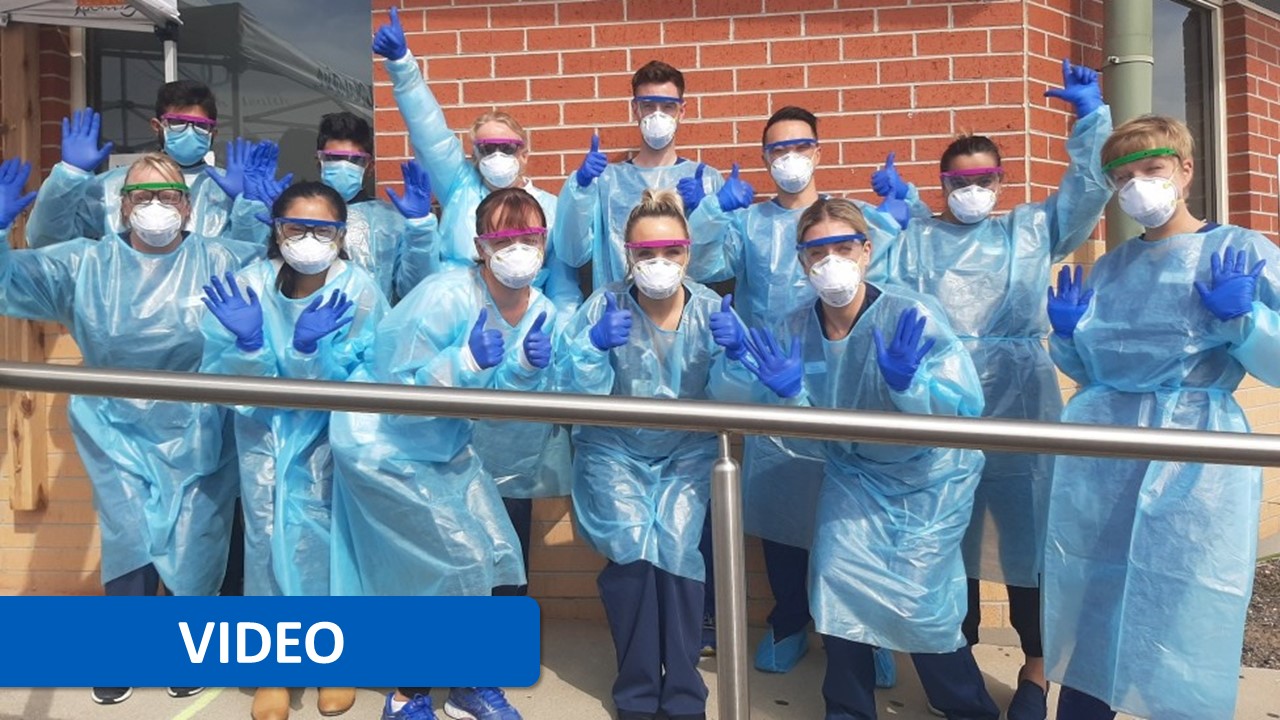
    Our Fever Clinic at Northern Hospital was established early March to safely screen for potential COVID-19 cases. The clinic is open seven days a week from 9 am to 8 pm and has seen over 2,400 people since commencing. 45 people have tested positive to COVID-19 through our Fever Clinic, with the majority of them recovering at home in isolation.

    The Fever Clinic also has dedicated times for staff who require testing, from 7.15 am to 9 am.

    Doctors, nurses, PSA’s and ward clerks all work in the clinic together to help maintain a safe screening environment for community members who meet the criteria for testing.

    Natasha Knapic, Emergency Department Associate Nurse Unit Manager and Project Manager of the Fever Clinic, said, “Our clinic staff look out for one another as well as the community. We have really good communication in the clinic and a great sense of team work. Thank you to all of our Fever Clinic staff for their hard work.”

    The clinic is a joint collaboration with many different departments who all contribute to the smooth running of the clinic every day, including pathology, security and individual wards.

    Across Northern Health, we are creating capacity to ensure we are equipped to care for a large volume of patients in the coming months, which includes having a dedicated COVID-19 ward which can be activated at any time should we need to.

    Infection Prevention Manager, Madelaine Flynn, said, “We’re very proud of our dedicated staff and how they are responding to the rapidly changing situation. We are all banding together and supporting each other so we can look after our community.”

    Watch the Channel 7 TV stories below, including important messages for the community from some of our staff members.

  • Q&A with Dr Christian McGrath on COVID-19

    Q&A with Dr Christian McGrath on COVID-19

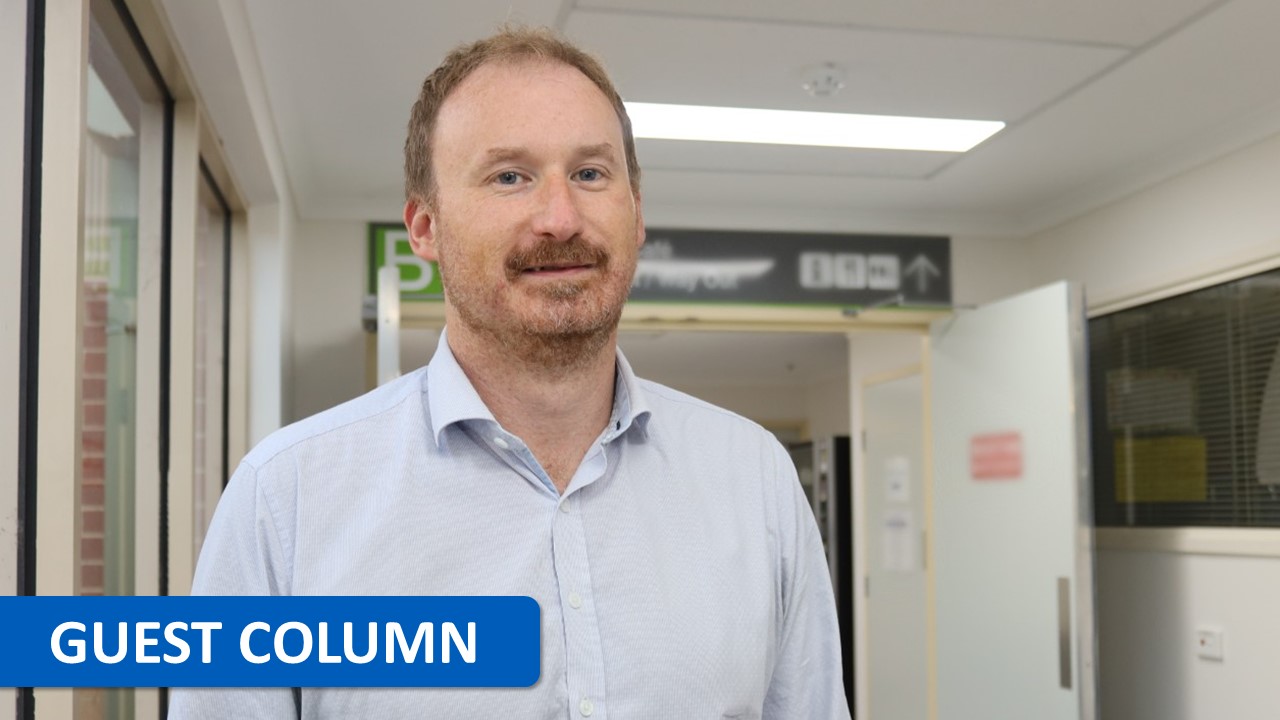
    When COVID-19 pandemic started, Dr McGrath, General and Infectious Diseases Physician took the role of clinical leadership for the COVID-19 response at Northern Health. He has been answering staff questions through regular Chief Executive Forums which were live streamed across campuses.

    Today, he further explains how we are preparing our pandemic response and offers some advice and guidance to our staff. 

    What is your role in managing COVID-19?

    I got the role of the clinical leadership by being at the wrong place at the right time, if I can say that. I have experience in dealing with emerging infectious diseases, as I was working at the Department of Health during the Ebola outbreak response. Infectious diseases physicians are familiar with these scenarios and have acted in numerous roles to stop infections from spreading in health service environments.

    What is Northern Health doing to prepare?

    There are a few aspects.

    Today, there is a number of things we need to have in place: we have to keep our staff safe, but also care for the community. That includes applying new case definitions to identify cases, making sure all precautionary measures are in place to keep our staff safe from an infection control point of view; and there is also planning, which allows us to continually evolve and adapt.

    Some of the examples of our preparation include not forgetting there are other patients too, so planning to be able to continue our other operations is still happening. In terms of COVID-19 patients, our core areas are ED, the wards and ICU. The Fever Clinic now acts as an area where people at the risk of COVID-19 can be treated safely. As the number of cases increases, we can cohort patients together on a dedicated ward.

    ICU also have significant plans to expand their capacity to look after a large number of patients, as required. As the situation progresses, we are making sure to identify patient populations at risk of infection and making sure we are not getting COVID-19 cases in other hospital  populations.

    What are we seeing at this stage? Where are we at now?

    The good news is that the total number of cases we are seeing in the populations we are testing is coming down, as a rate. Even though the overall numbers are still going up, the rate of increase is dropping, and that’s what flattening the curve means.

    Part of that can be attributed to the fact that there are fewer international travellers returning to the country, which do make up the bulk of the cases. The part that we now need to keep an eye on is the number of cases in the community in people who haven’t travelled overseas or had a close contact. The whole point of social distancing is reducing that community spread.

    What can be the turning point?

    If the 25 million variables, which are the people of Australia, practise social distancing very well and people don’t congregate, there is no way for the virus to spread. That is how we can get control of these viruses. All these measures together, and testing widely to identify those cases, will act to reduce the risk of a significant spread. One measure can’t work on its own, it’s a number of things working together. This way of life will become a new normal for at least a few months.

    Everything that has been done in Australia so far is done to prevent us from becoming like New York, Spain or Italy. There are really good and promising signs we are not going to be like Italy or the US, as we have all these measures brought in so early. In all these places, and Wuhan as well, a lot of these measures were brought in place when community spreading had already started.

    What are some of the lessons you would like to share?

    Infectious diseases is a really tricky space, especially when they are emerging and when we can’t rely on the normal pathways of peer-reviewed journals or articles. We are now relying even on Twitter feeds to keep us up to speed on what’s happening. That is a whole new world and a whole new way of looking at medicine.

    That said, we have learnt a lot from previous infections like this, like MERS or SARS and I think while we need to be dynamic and innovative, we need to be careful that we have a measured, pragmatic response that fits our circumstances. We are in a completely different set of circumstances to the US or Italy so just because they are doing something, that doesn’t mean that is right for Australia too. But we can learn from it.

    What are some of the things you would like our staff to know?

    Firstly, the whole reason for having a COVID-19 response plan is to make sure we can look after our patients safely whilst also protecting our staff. That’s what it’s all about. We need to work within the physical environment that we have and the resources that we have. It’s about knowing that there is a lot of things that go into infection control to keep us all safe. That includes things like physical changes to the building, changes to the way the air is handled throughout the building and early case detection, using PPE, and increased cleaning. We can’t make this a zero-risk environment, but we are doing the best we can to ensure we are safe as we can be to do what we need to do. For that reason, we will be well set up to care for our patients much better compared to some other places around the world.

    What are some of things medical professionals can learn from a pandemic like this?

    I think it will reinforce something a lot of us already know, and that is that working in a health care service is at the best of times a challenge due to resource limitations and the like. The minute we face a challenge like this, it exposes just how thin some parts of the health system are and I think a lot of clinicians will be feeling that, and the stress and anxiety that comes from that. We are here, we are with you and we will do the best we can to look after our community.

    You mentioned stress and anxiety. What are some of the things you do to de-stress and what would you advise staff?

    It is a challenging time and all this is unprecedented in our lifetime. It’s normal to be anxious.

    To get my mind off COVID-19, I now have a habit of turning off my emails on my phone when I get home. I am purposefully restricting how much media I read and I try to stick with the facts.

    I do have a lot of friends who are non-medical who are helping me with this. We go for bike rides or fitness in the park, respecting social distancing. I recognise that stress and anxiety is a big part of all this, and part of this is because we don’t know what is coming. Getting actual facts from reliable sources really helps with that.

    Knowledge is power.

     

  • Staff flu vaccination starts today

    Staff flu vaccination starts today

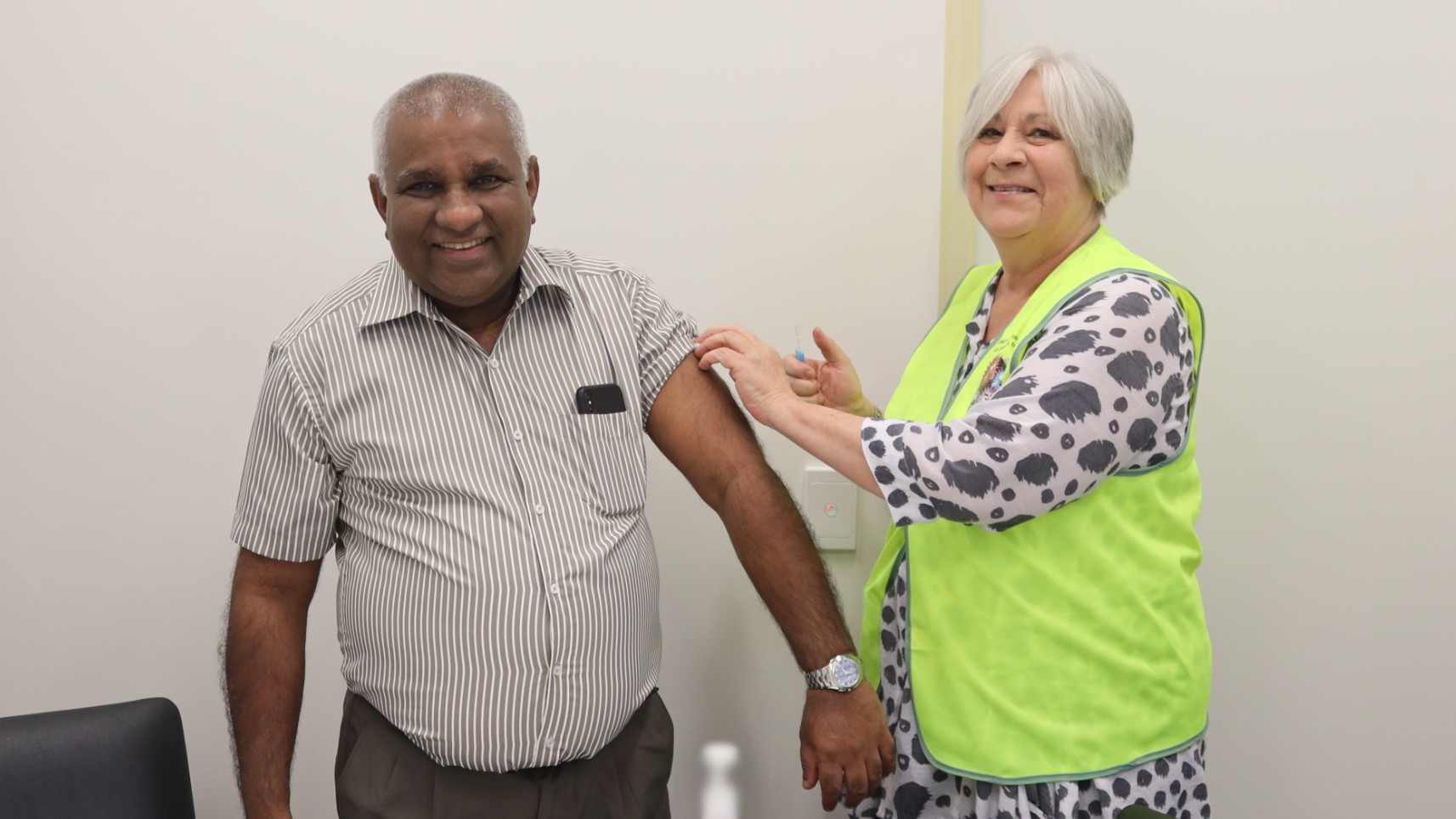
    Today, Northern Health is commencing flu vaccinations for staff members, with community vaccinations expected to start after Easter.

    Staff influenza vaccinations have started early this year, as recommended by the Victorian Department of Health and Human Services (DHHS).

    Siva Sivarajah, Chief Executive, said that anyone can be affected by the flu, and with the COVID-19 pandemic, it is so important that everyone in the community protects themselves.

    “By getting the flu shot, we are not only protecting our own health and well being, but those around us as well,” he said.

    Roslyn Payne, Director of Nursing and Midwifery, said there is currently no vaccination for COVID-19 but getting the influenza vaccination will reduce the risk of getting the flu and COVID-19 at the same time.

    “All clinical staff are required to have their influenza (flu) vaccination and this will be administered by a vaccinator in the clinical areas. This year, we are required by DHHS to vaccinate a minimum of 90 per cent of our staff – but it is not just about meeting this target. We want to make sure you and your family are protected as we head into the influenza season,” she said.

    Vaccination times will be advertised by the vaccinators in the relevant clinical areas.  In addition to this, immunisers will also be visiting staff work areas to ensure we comply with social distancing policy. Staff working from home are advised to liaise with their manager about a suitable time to attend for vaccination so we can co-ordinate the service appropriately.

    “Last year we vaccinated 86 per cent of our staff, and in addition to this we vaccinated over 20,000 people in our community, our family and friends.  Northern is currently working on a strategy to deliver the 2020 Community Program after Easter that will comply with the current Stage Three restrictions. Please see our Intranet and Internet websites and Northern Health’s social media for further details,” Ros said.

    Featured image: Siva Sivarajah, CE Northern Health and Licia Perillo, Staff Health Nurse.

  • The Inappropriate Question and the importance of Advance Care Planning

    The Inappropriate Question and the importance of Advance Care Planning

    A film titled The Inappropriate Question, a collaboration between Dr Barbara Hayes, Clinical Lead, Northern Health Advance Care Planning Program and Prof Joe Ibrahim from the Prof Joe website was launched via live stream to coincide with Advance Care Planning Week. This film was funded by the Victorian Department of Health and Human Services.

    View the film here:

    This short animated film will help the community to better understand the important reasons why discussions about cardiopulmonary resuscitation need to be held with some of our hospital patients.

    Speaking at the launch, Chief Executive, Siva Sivarajah said, “I strongly endorse the view that we partner with our patients when making medical treatment decisions and plans. When Barbara first discussed this project with me I was more than happy to support this initiative.”

    “The film also reminds people about the importance of Advance Care planning – prior to become acutely unwell,” he added.

    The COVID-19 pandemic has made these conversations even more essential.

    A component of Advance Care planning can be writing an Advance Care Directive. This is your written instructions, preferences and values that guide medical treatment should you no longer be able to speak for yourself.

    Speaking about  the film’s relevance to the current times, Dr Hayes said “Patients and their families can be surprised and upset when discussions about medical treatment limitations are raised, particularly the discussion about whether to provide or withhold CPR. However, we also know that patients, or their Medical Treatment Decision Makers expect to be consulted about medical treatment decisions, as required by law.

    “How can we reconcile the need to speak with patients knowing that they might become upset by discussing difficult subjects?” asks Barbara.

    “The aim of this film is to help people understand, before they become ill, and before admission to hospital, that these discussions might be expected. It encourages people to think about what would be important for them should they become seriously unwell, and to consider Advance Care planning. This avoids having to think about these issues for the very first time when feeling ill, scared and vulnerable. It also helps their Medical Treatment Decision Maker should they be required to make decisions for the patient. We hope you enjoy the film,” says Barbara.

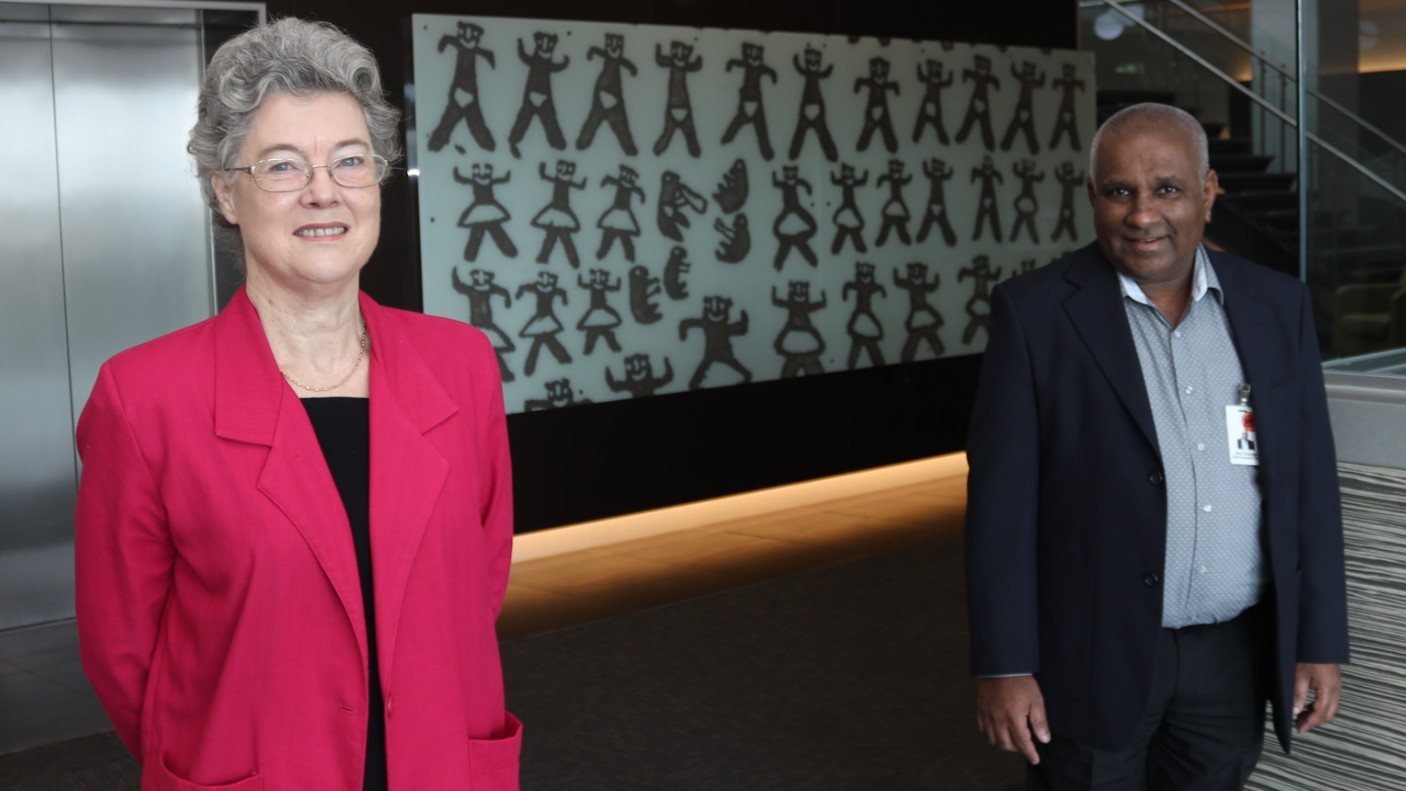
    Featured image shows Dr Barabara Hayes and Mr Sivarajah, at the launch of the film, observing social distancing.

  • ASD Assessment Clinic at Craigieburn: A family’s experience

    ASD Assessment Clinic at Craigieburn: A family’s experience

    Today is World Autism Awareness Day, recognising and raising awareness of people with autism and those who love and support them.

    Craigieburn resident and mother of two, Kim Semmens recently shared her experience of Northern Health’s multidisciplinary Northern Autism Spectrum Disorder Assessment Clinic (NASDAC) at Craigieburn Centre – the only one of its kind in Melbourne’s north.

    After her eldest son, six year old Archie, was diagnosed with ASD, Kim tells us she monitored her second son, four year old Lenny, for signs of the disorder.

    “We knew it might be the case. Once Dr Jolene Fraser decided it was time to progress with an assessment, we were put on a wait list for the new clinic at Craigieburn Centre and, at the time, the wait was approximately six weeks which is extraordinary,” she says.

    Kim says for a multidisciplinary diagnosis, children can be assessed by different specialists.

    “The ASD Assessment Clinic consisted of a developmental paediatrician, a speech pathologist and occupational therapist. With my first son, I had to do all of those things separately and privately, and each one had different waiting times which can be confusing when dealing with all the different things.”

    “With Lenny, we went in and they had all three specialists there. After coming in on a Friday, we had the letter of diagnosis by Monday. It was definitely less stressful for Lenny as he had been to the clinic before and was comfortable. With my older son, he was very overwhelmed with change.”

    Dr Jolene Fraser has worked in other multidisciplinary settings and also sees many children with ASD, both publicly and privately.

    She said, “as autism is a spectrum, every child is different and can present differently. Some children have obvious significant problems with communication and can be assessed by an experienced paediatrician or child psychiatrist, though even then it is preferred to have input from allied health. In children with more subtle difficulties, the joint assessment is more comprehensive and efficient.”

    “A multidisciplinary assessment allows professionals to discuss what is happening for the child and to explore more thoroughly their weakness but more importantly their strengths. Each professional has a slightly different way of looking at the child depending on their background, and this joint assessment is therefore a more accurate representation of all the child’s skills.”

    Kim tells us the sooner a diagnosis has been made, the sooner families are able to link in with services.

    “Being able to get the diagnosis quickly unlocked a whole heap of services for me to immediately get some really great help and also help for our whole family. The clinic itself also provided us a lot of information about local services and therapists,” Kim says.

    “Having a child on the spectrum is a lot to juggle and manage so it simplified the process ridiculously,” she says.

    “Every community needs a clinic like this, so I feel very lucky to have access to that. I know firsthand how difficult it is to do all of those things individually. For me and my second son, it was such a better experience and I feel we were able to get a really accurate assessment of him because he was really calm and feeling comfortable.”

    Kim says early intervention is so important for a child’s development – “parents are dying to give their kids that intervention but they sometimes have to go through a lengthy and costly process. That 6-12 month earlier diagnosis has a significant impact on our son’s ability to be in the community in a mainstream setting and cope with life long term.”

    “Cutting out that long waiting time is also the difference between him having the chance to go to mainstream school next year,” Kim says.

    “I hope they start putting these clinics everywhere as it has a really significant impact for my family.”

    The NASDAC launched in 2019, and runs one day a week at Craigieburn Centre with the involvement of a Paediatrician, Speech Pathologist, Occupational Therapist and Psychologist. The clinic’s aim is for children to receive assessment early to help them access supports earlier.

    Amanda Lees, Speech Pathologist and NASDAC Clinic Coordinator said, “Assessment for ASD is important because it can assist parents and teacher’s understanding of a child’s abilities and difficulties; it can help inform decisions about therapy and can allow the family to access some options for extra assistance and support.”

    “Our clinic is for children when it is unclear if they present with ASD or another diagnosis and need a team-based approach to answer this question.”

  • Northern Health hosts world-class vascular surgeon for complex workshop

    Northern Health hosts world-class vascular surgeon for complex workshop

    At the beginning of March, the Northern Health vascular surgery team welcomed a world-class vascular surgeon for a complex vascular workshop at Northern Hospital.

    Mr Shrikkanth Rangarajan, Northern Health Vascular Surgeon, said, “We had a workshop focusing on complex aortic pathology and repair of aneurysms in the aorta, and had Professor Eichler from San Francisco visit us, who was proctoring the two cases in the workshop.”

    Following the first case at the workshop, Mr Rangarajan, said, “the first case was challenging, as we expected, and we’re hopeful that the patient will have a good outcome.”

    Professor Eichler said the two cases were both very complicated aortic cases and he was impressed with the team and the facilities at Northern Health.

    “I think it is impressive – they have a really good team here and they work well together. This is a great operating suite they have here and so they certainly have the ability to take on these challenges and get a good outcome,” he said.

    Mr Rangarajan said, “these are certainly not run of the mill cases, they do present infrequently. The anatomy and the patients are challenging because they’re not fit for some techniques or major open surgery, so we’re utilising more complex endovascular techniques.”

    “So there is certainly that capability that we’re developing to do the best for the patients and be able to offer every form of treatment to enable these patients to have the best treatment for them.”

    “I want to thank them for inviting me – we had the opportunity to host them in San Francisco about six months ago, so it’s great to come over here and see how things are working,” Professor Eichler said.

    “From a Northern Health perspective, the vascular unit here is in a growth phase and we’re very proud to be enabling patients to have input from world-class vascular surgeons,” Mr Rangarajan said.

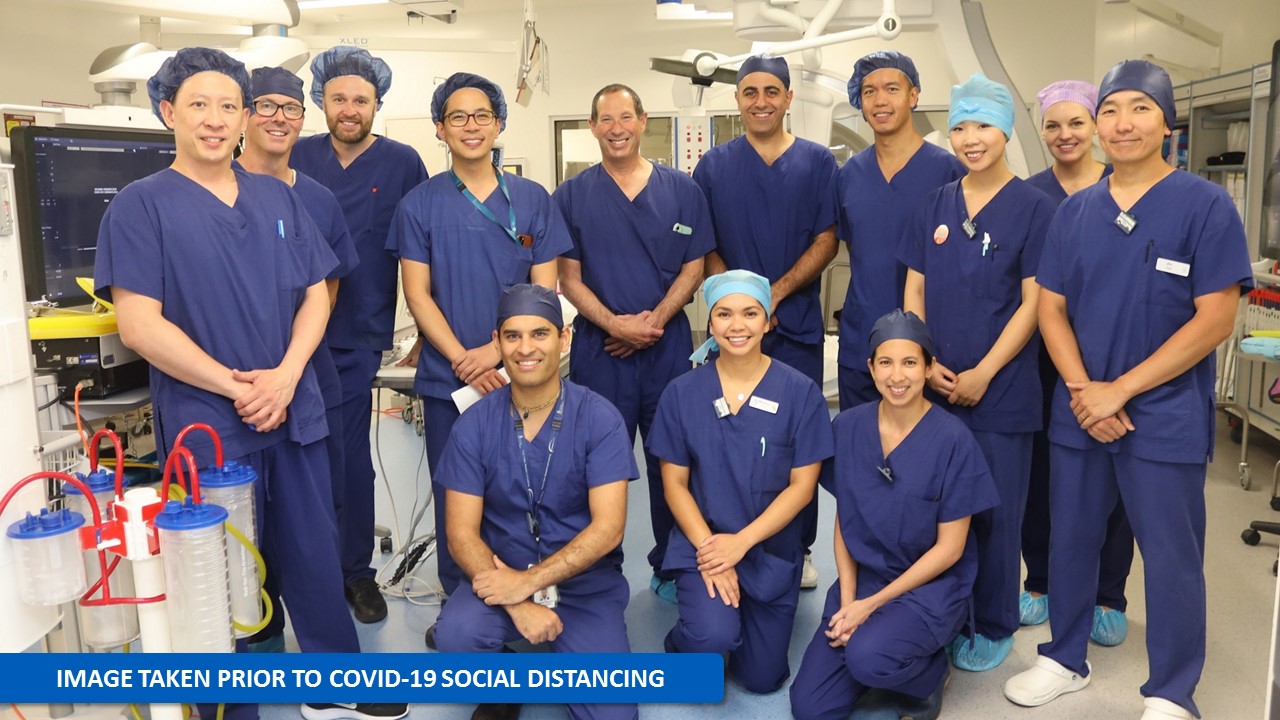
    Featured Image: Mr Shrikkanth Rangarajan (front row, left) with Professor Eichler (back row, centre) with the Northern Health vascular surgery team

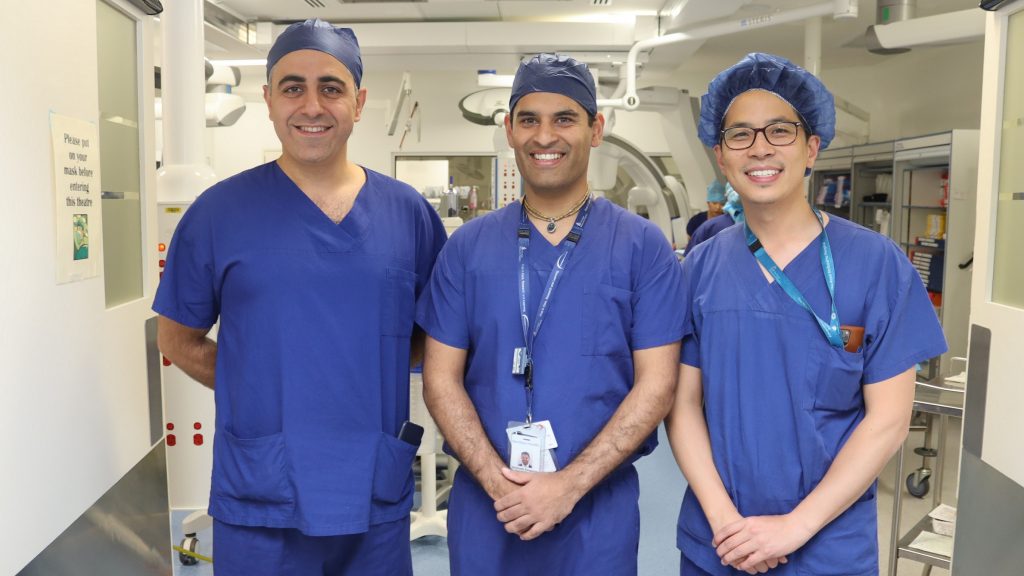
    Left to right: Northern Health Vascular Surgeons Mr Iman Bayat (Head of Unit), Mr Shrikkanth Rangarajan and Mr David Goh
  • Community kids share the love

    Community kids share the love

    Young members of our community are sending messages of hope and support, even in times of social distancing, and especially to our health care workers on the front line of the COVID-19 pandemic.

    Last week, in order to help protect our volunteers, we made the difficult decision to suspend our volunteer program across all sites – and they are being missed greatly across Northern Health. We are very grateful for the dedication and hard work of our volunteers and look forward to welcoming them back when it is safe to do so.

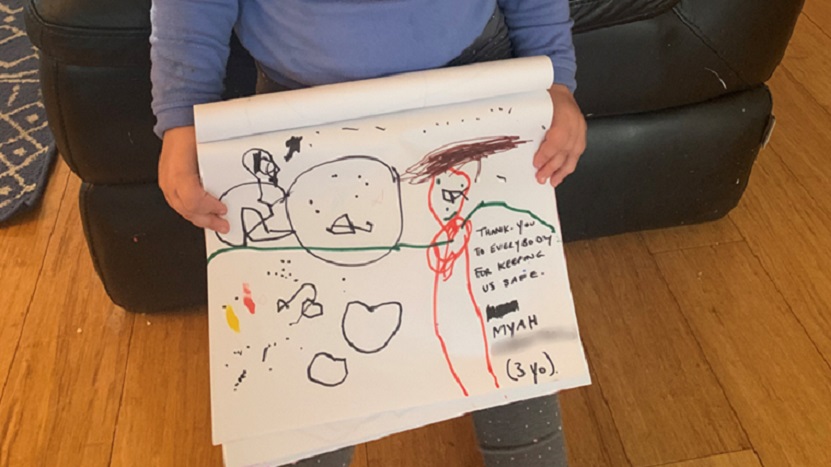
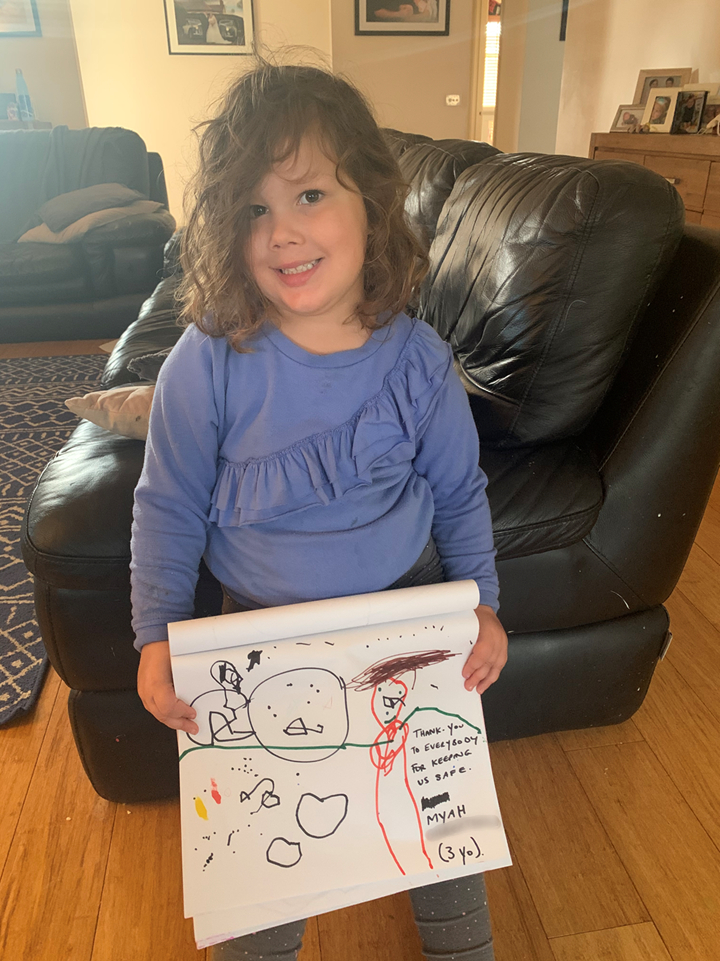
    In recognition of our wonderful staff, some of our volunteers’ grandchildren and nieces and nephews have written letters and drawn pictures to thank staff for all they are doing during this challenging time.

    All clinical and non-clinical staff across Northern Health are banding together to support each other and help keep our community safe. The volunteers and their loved ones had a collective message for all of us:

    “Thank you to all of our staff that are continuing to work during this health crisis.
    From Northern Health volunteers and their family/friends”.

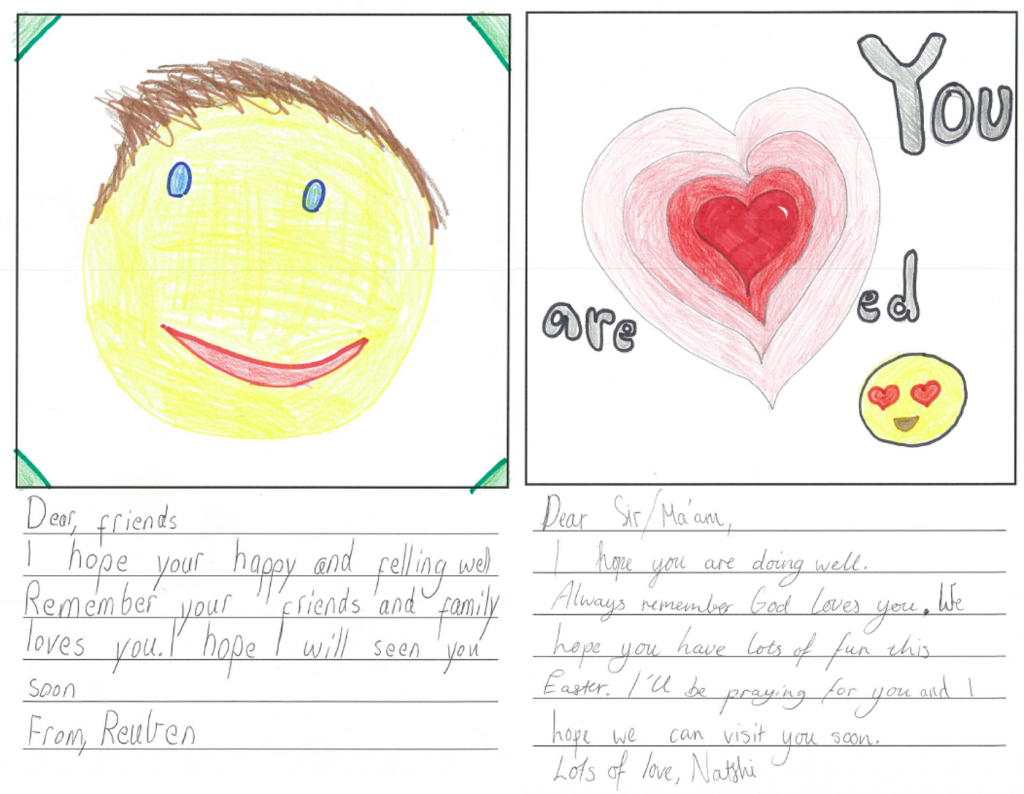
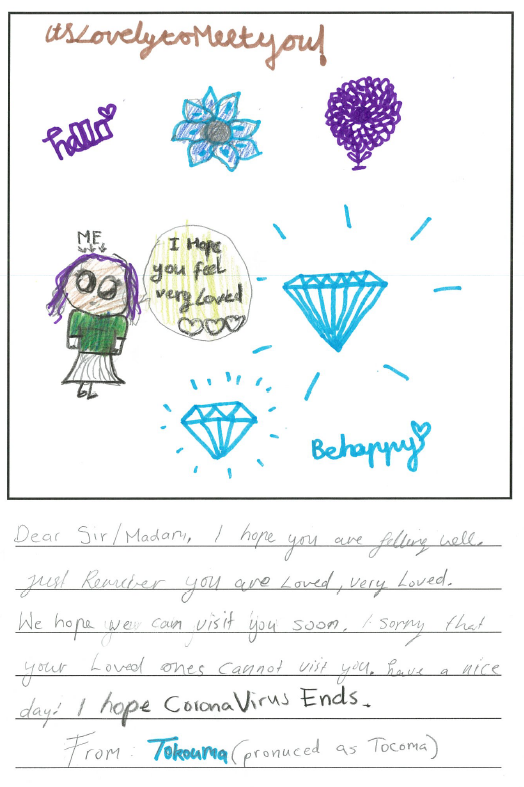
    In addition to the letters from some of our younger community members, students at Northside Christian College recently dropped off letters to the residents of Ian Brand Nursing Home at Bundoora Centre.

    Northside students had been regularly visiting residents before changes to visiting requirements were introduced due to the current pandemic.

    53 letters were recently delivered to delighted residents, providing words of hope and support, and showing them that the students are missing them.

    Three year old Myah and her drawing for staff
    Letters from Mia and Gracie
    Letters from Northside Christian College Students
    Letters from Northside Christian College Students