• Get to know: Karen Ayres

    Get to know: Karen Ayres

    #WeAreNorthern

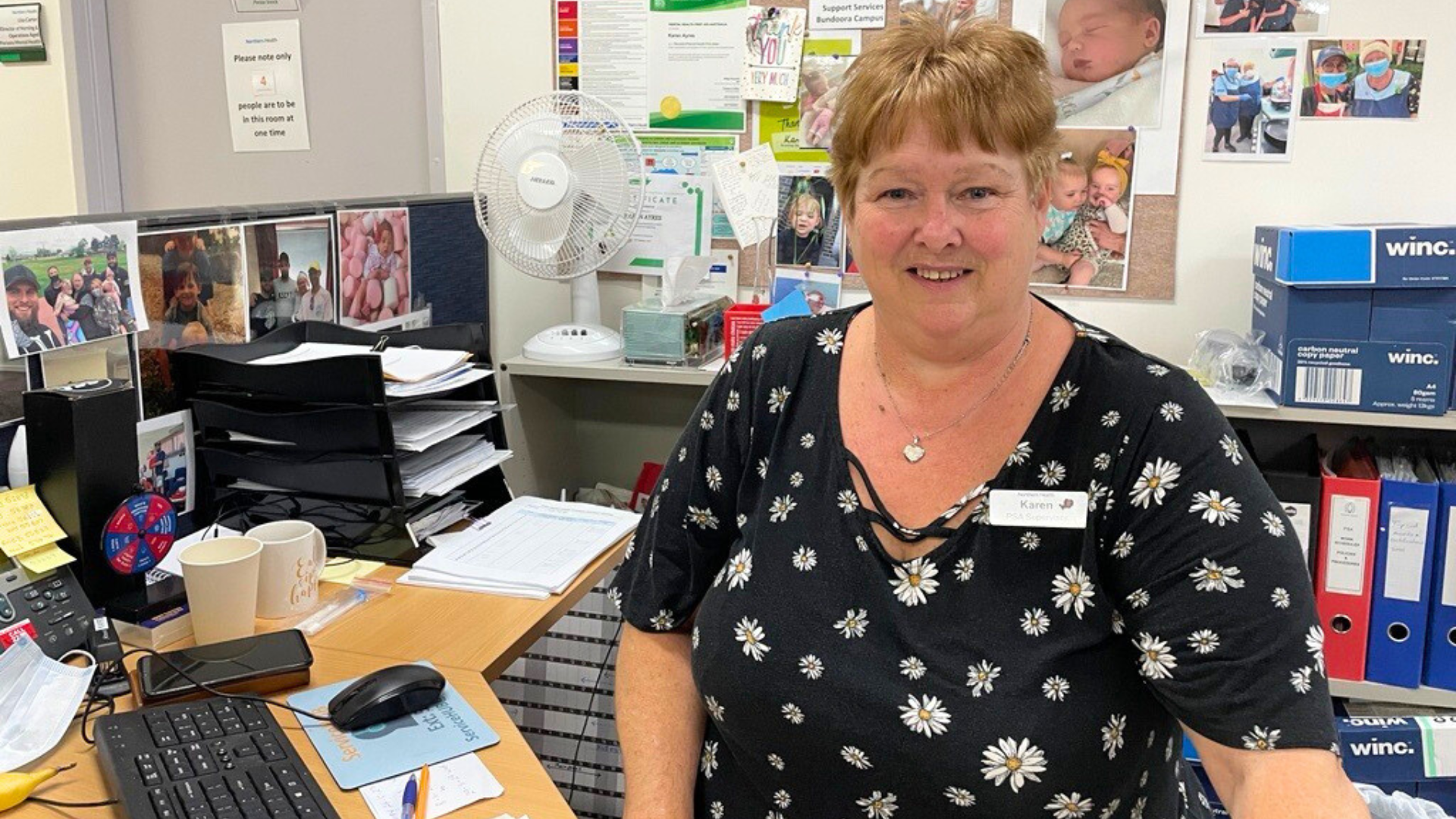
    Meet Karen Ayres, Support Services Supervisor at Bundoora Centre. Karen began her journey at Northern Health in 2016 as a Patient Services Assistant (PSA), a year later accepting the role of ‘In Charge’. Now, as a supervisor, she looks after the 15 to 20 PSA’s working at Bundoora.

    The Support Services student placement program, which offers a number of institutions the opportunity for their students to gain real world experience at the end of their course, recently extended beyond the walls of Northern Hospital Epping.  Karen has been instrumental in providing a welcoming environment for the first student to attend Bundoora Centre. A brilliant opportunity to live out our ‘Safe Kind Together’ values.

    Q: What was your first car?

    A: My first car was a sky blue EH Holden which I picked up for a bargain price of $495.

    Q: Who do you most admire in your life?

    A: My mum. I admire her for her unconditional love and kindness, and her great sense of humour.

    Q: What are some things you have enjoyed about your job recently?

    A: I have enjoyed working alongside my colleagues, getting to know them a bit more and having a laugh. I also enjoy having a student for the first time and teaching them the role of a PSA.

    Q: What is something you are looking forward to in the future?

    A: Seeing how well the student goes in the role. I am also really looking forward to having an overseas holiday to Bali.

    Q: Early bird or Night owl?

    A: Definitely an early bird, especially when on holiday. l love to see a good sunrise!

  • Urgent medical care in Melbourne’s north

    Urgent medical care in Melbourne’s north

    This afternoon, Northern Health hosted a free webinar on urgent medical care in Melbourne’s north.

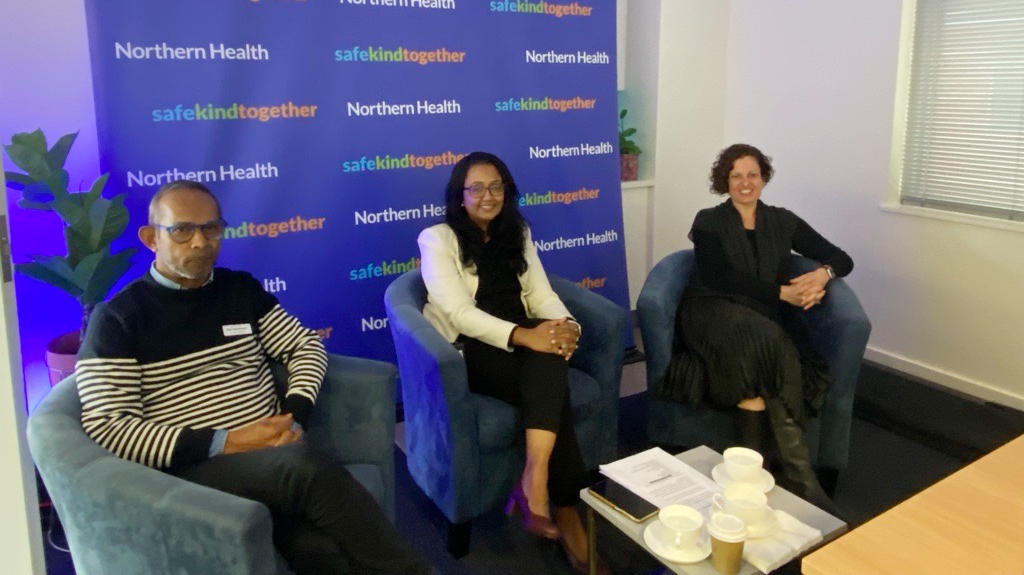
    Dr Loren Sher, Director, Victorian Virtual Emergency Department (VVED), and Neela Konara, Director, Partnerships, discussed two alternative options to attending an emergency department for non-life-threatening emergencies – the VVED and Priority Primary Care Centres (PPCCs).

    The VVED provides emergency care from anywhere in Victoria, 24 hours a day, seven days a week. The service is a first of its kind in Australia where patients are triaged and treated for non-life-threatening conditions virtually over camera.

    “We are helping thousands of patients, to access the right level of care, at the right time,” Loren said.

    “A lot of patients can be managed through a video. We aim to keep our patients at home and organise management in the community – we can organise eScripts to your local pharmacy, referrals to pathology and radiology, so there’s lots that can be done through video.”

    PPCCs provide urgent medical care for people with conditions that require medical attention, but not an emergency response. There are two PPPCs located within the northern catchment.

    “That means for non-life-threatening illnesses or injuries,” Neela said.

    “PPCCs are a place to get the urgent care you need, closer to home, without attending the emergency department. This includes conditions like mild infections, burns and suspected fractures. It is available to anyone and is especially a good option for anyone without internet access.”

    Kirra McGaw, Primary Care Liaison Officer, works at Northern Health, and also lives in Mickleham with two young children. She has benefitted from using both the VVED and PPCC during times when she couldn’t get into a GP and didn’t want to visit the emergency department with her sick children.

    “I received a really thorough consultation over VVED and I believed the advice I was given which meant I could prevent my son from being admitted to hospital. I was able to endure all of this in the comfort of my own bed next to my son which was great,” Kirra said.

    “In another instance, I knew the Craigieburn PPCC took a lot less time to drive to than it was to get to the emergency department. We were seen by the nurse within minutes of arriving before the GP gave a really thorough examination of my son.”

    “We got the required medication onsite at their pharmacy and were back home really quick. My mum-anxiety relieved.”

    A special thank you to our key partners Banksia Gardens, City of Whittlesea, DPV Health, ECCV, Hume Council, Nexus Primary Health, NORTHLink, Whittlesea Community Connections, Whittlesea U3A and Yarra Plenty Regional Library, for supporting the event.

    For more information and to access the VVED, please visit vved.org.au.

    To find out more about PPCC and to find your nearest location, please click here.

    To watch the webinar, please click here.

    Featured image L-R: Mike Masilamani, Senior Communications Coordinator, Public Affairs, Neela Konara, Director, Partnerships and Dr Loren Sher, Director, VVED.


  • Healing through stories of lived experience

    Healing through stories of lived experience

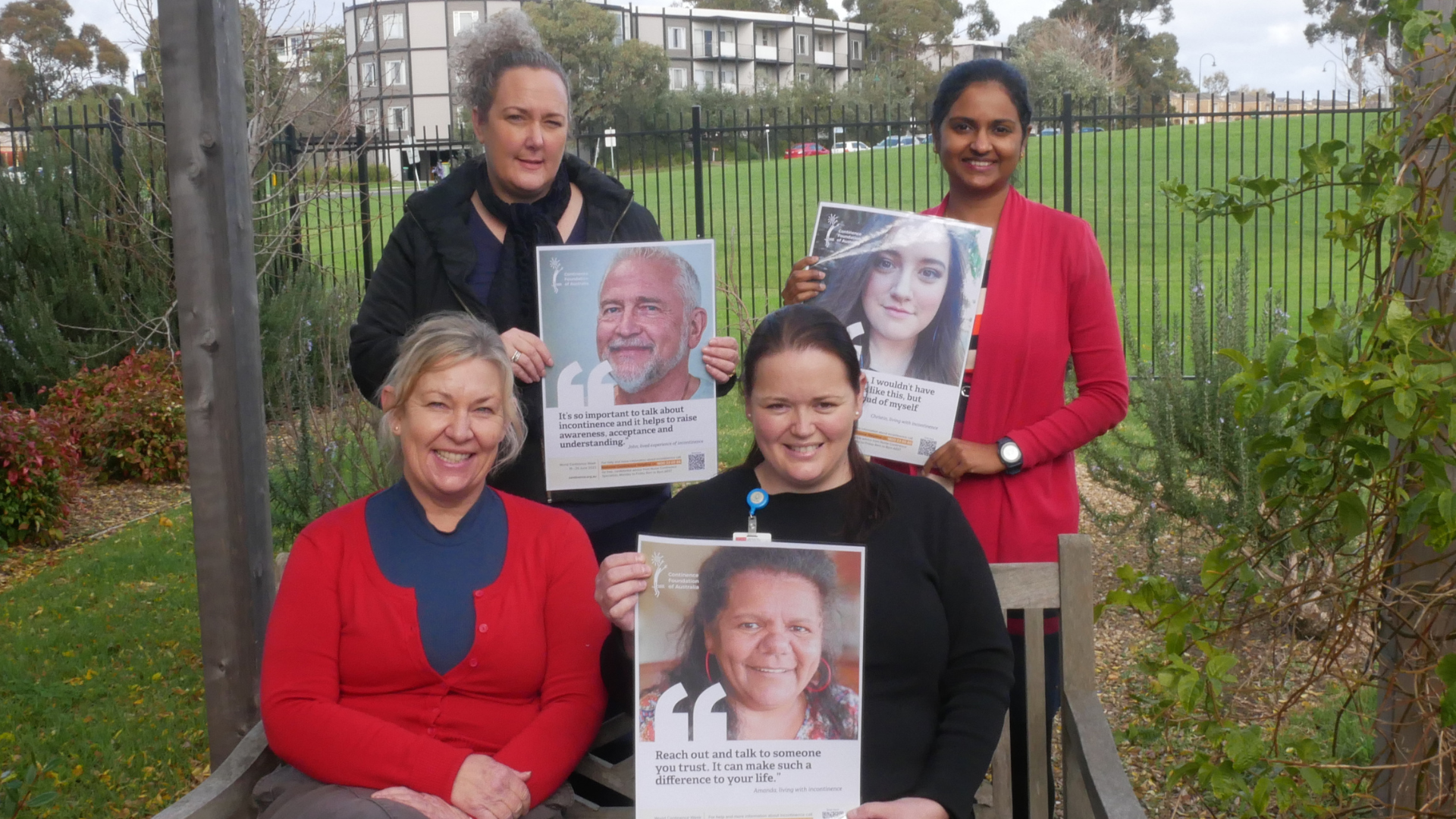
    This week, Northern Health recognises World Continence Week. The focus is on raising awareness about incontinence, which affects over five million Australians. By using stories of lived experience, it is hoped to not only empower the sharer, but encourage others to be bold enough to seek treatment.

    Christine Sumper, Continence Nurse Consultant and Team Leader of Northern Health’s Continence Service explains, “The importance of sharing stories of the lived experience of having incontinence helps us to break down stereotypes and stigma surrounding the condition.  For many, the realisation that they’re not alone is the first step toward seeking help.”

    Incontinence of either the bladder or bowel, effects one in four Australians over the age of 15, with statistics showing it’s by no means an older person’s condition. Around 46 per cent of people who experience incontinence are under the age of 50 and over 1.34 million Australian boys and men experience incontinence.

    Incontinence can affect people at any age, but in many cases, it can be prevented, better managed or even cured. “Breaking down the secrecy of concealment and shameful feelings that act as barriers to seeking help is our aim,” Ms Sumper added.

    The Continence Foundation of Australia has a number of initiatives running throughout the week, including a new podcast series, videos and a lived experience panel webinar on Wednesday, 21 June at 5.30 pm. For further details please click here.

    For help and more information about incontinence, call the National Continence Helpline on 1800 33 00 66 for free, confidential advice from Nurse Continence Specialists, Monday to Friday 8 am to 8 pm AEST.

    Pictured above: team members from the Northern Health Continence Service; Katrina Ziebarth, Femy Jacob, Christine Sumper and Tara Webb.


  • We Are Northern: This is the NASDAC team

    We Are Northern: This is the NASDAC team

    The Northern Autism Spectrum Disorder Assessment Clinic (NASDAC) is a multidisciplinary clinic located at Craigieburn Centre. It provides assessment for children to determine whether they meet the diagnostic criteria of having an Autism Spectrum Disorder (ASD).

    The clinic was established in 2019, and was initiated by a review of new referrals to speech pathology over the first three months of 2018. This review indicated that 50 per cent of the children presented with ASD concerns, warranting further diagnostic investigation. In 2018, Northern Health applied for a grant and was successful in the application.

    The project aimed to improve the pathways to assessment for pre-school children in the outer-northern suburbs of Melbourne, with the objectives to:

    • Re-design the triage and referral pathways for children referred with suspected ASD to make sure the most suitable service pathway was identified and to reduce the waiting times.
    • Train allied health staff in evidence-based ASD assessment tools, allowing them to work to their full scope of practice.
    • Implement a MDT ASD assessment clinic with allied health and a paediatrician.
    • Collaborate with key Transcultural and Language Services (TALS) staff to ensure timely and cohesive assessment for clients from culturally and linguistically diverse (CALD) backgrounds.

    Today, the team consists of six staff members, a developmental paediatrician, speech pathologist, occupational therapist, psychologist and two paediatric fellows, who rotate through Craigieburn every six months and receive training in clinic. In February 2020, NASDAC received a Northern Health Staff Recognition Award for “Innovation”, for implementing a better way to deliver care and service through a new idea or initiative.

    “Since the opening of the clinic, our team has worked with a large number of families and the demand continues to grow. The team has worked together to streamline the assessment and triage processes, and we continually look for ways to improve this fledging specialist service. NASDAC illustrates how working together greatly improves what we do,” said Justine Slattery, Allied Health Education Lead.

    Leanne Reynolds, NASDAC Occupational Therapist, says she is thrilled to be a part of such amazing team.

    “I love working with such a skilled, client-centred and supportive multidisciplinary team. I learn something every day from working with them,” she said.

    The team treat children who live in the northern catchment area and are referred to the service by the age of six years. These patients usually have more complex needs and require a more extensive and coordinated team assessment.

    During the pandemic, the team found it challenging to assess the communication skills of the children with autism via Telehealth, with many of the assessments having to be postponed until face-to-face appointments were reintroduced.

    “Our team complete the ADOS – Autism Diagnostic Observational Schedule, a play-based assessment to observe social communication and imagination in a play environment. However, this couldn’t be completed over Telehealth during the pandemic. During this time, we managed to still conduct family interviews and set up structured observations of different activities over Telehealth, but not without challenges,” said Amanda Lees, NASDAC Speech Pathologist.

    In 2023, the team are excited to continue to work together as one team and further develop the service and ensure they are providing the best diagnostic services for their young patents.

    Thank you to our staff at NASDAC for all your wonderful work.

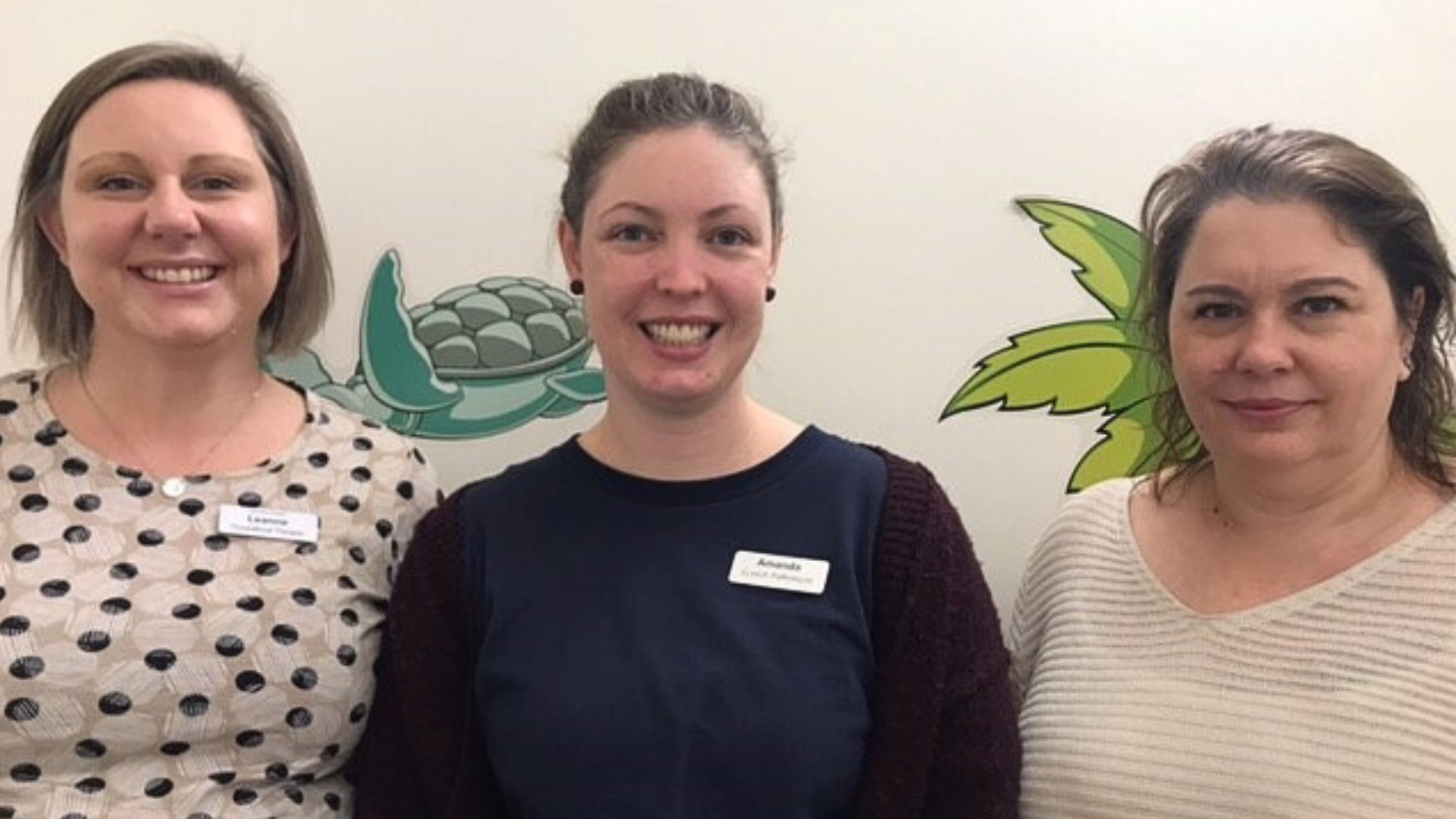
    Pictured (L-R): Leanne Reynolds, Occupational Therapist, Amanda Lees, Speech Pathologist and Clinic Coordinator and Dr Jolene Fraser, Paediatrician.

  • Refugee Week: Finding Freedom

    Refugee Week: Finding Freedom

    From 18 – 24 June 2023, Northern Health will acknowledge Refugee Week, an opportunity for staff to learn more about the challenges faced by refugee and asylum seekers.

    This year’s theme is ‘Finding Freedom’ and aims to shine a light on aspects of the refugee experience and help the broader community to understand what it is like to be a refugee. Highlights at Northern Health will include lived experience presentations, case studies, and a background information session.

    Stefania Zen, Education and Engagement Manager, Transcultural & Language Services/Narrun Wilip-Giin Aboriginal Support Unit, is one of the presenters at the Refugee Study Day on Tuesday, 20 June. She says, “every refugee is different, and each journey is unique.”

    The Study Day will run from 9.30 am to 12 pm, both online and in-person. The program will cover topics including refugee and asylum seeker data, definitions, and the internal and external services available to support this patient population. The program will also include lived experience presentations and case studies from our Paediatric Refugee Health Clinic – a joint initiative between Northern Health and The Royal Children’s Hospital.

    On Wednesday, 21 June, Women’s Health in the North will host a webinar on Refugee Women’s Health and the social and cultural aspects of Female Genital Cutting. It will cover definitions, the settlement process, health issues, implications for health care, and cross-cultural communication.

    Some of the challenges that refugees and asylum seekers face include the dramatic transition from one culture to another, the loss of home, families and community, together with the loss of language, social and professional status.

    Transcultural and Language Services (TALS) will address these challenges in a webinar titled, ‘Migration and Settlement in the Health Context – Working with Refugees and Asylum Seekers,’ on Thursday, 22 June from 1 pm to 2 pm. This webinar will provide a global picture of refugees and strategies on how to provide culturally sensitive and appropriate care to patients from refugee backgrounds.

    In addition, the library team has set up a page dedicated to Refugee Week with resources and articles related to refugee and asylum seeker health, which you can access here.

    Jason Cirone, Chief Allied Health Officer, encourages staff to participate in the week’s events, saying, “It’s important to understand the lived experience of refugees and asylum seekers. It helps us plan and deliver appropriate services to this diverse and unique patient group. You can register here.”

    Featured image from Refugee Council, Australia.

  • Get to know: Yen Nguyen

    Get to know: Yen Nguyen

    #WeAreNorthern

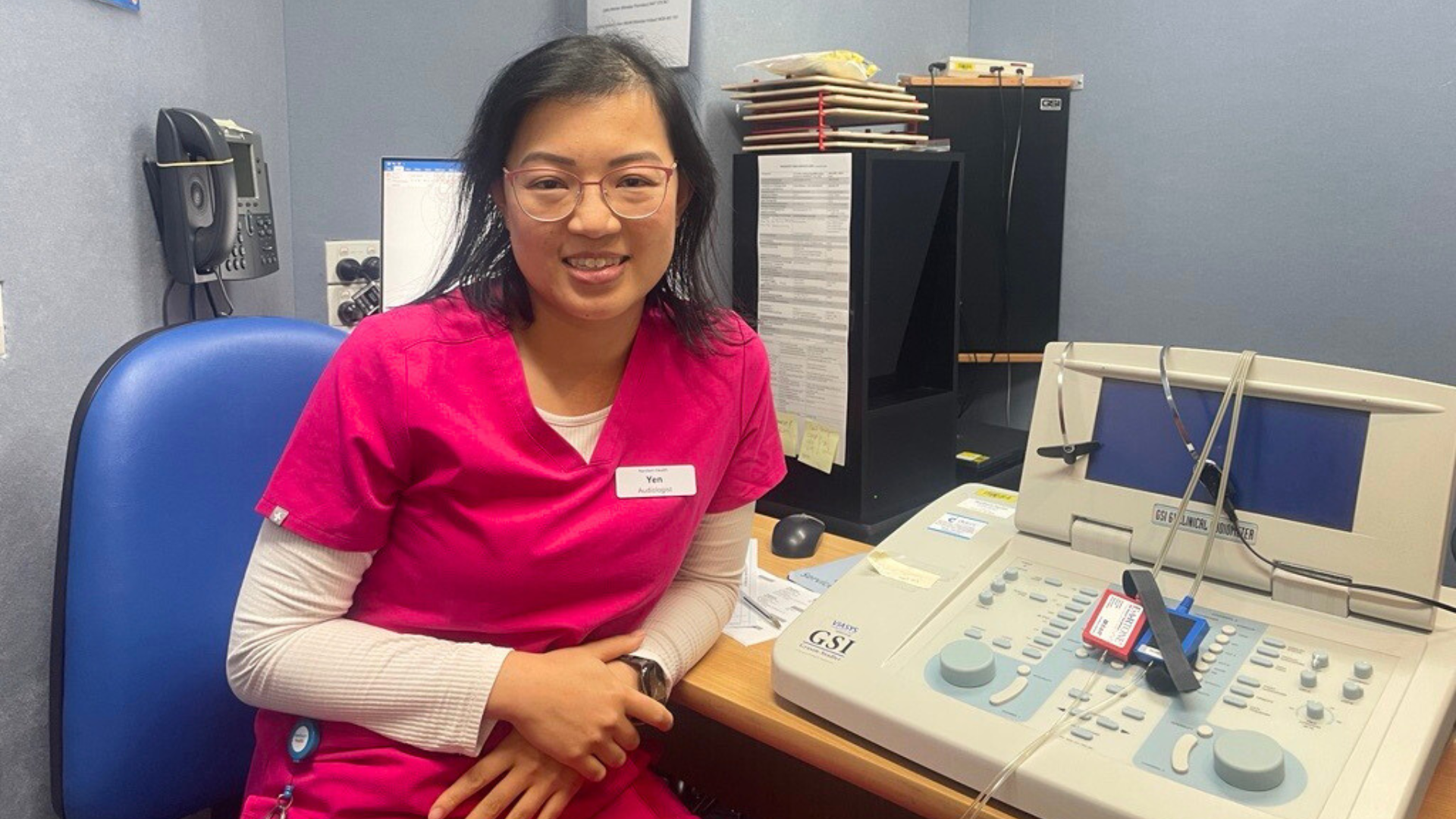
    Meet Yen Nguyen, Audiologist, Speech Pathology, Orthoptics and Audiology.

    Q: What is your coffee order?

    A: Actually, I don’t drink coffee. But if was sitting down with friends at a cafe, I’d go for a peppermint tea or hot chocolate.

    Q: Tell us about your role at Northern Health and what do you enjoy the most?

    A: I am an audiologist. I am one of two audiologists here at the Northern Hospital Epping and together we are now a five days-a-week clinic. Our role here is to perform diagnostic hearing assessments for children aged nine months to adults. I enjoy interacting and playing with children.

    Q: What is your biggest challenge during work each day?

    A: Finding creative ways to entertain and extract the required information from children to have a complete set of audiology results.

    Q: What fictional character do you most relate to?

    A: Chilli Heeler from Bluey – everything she says and does makes me feel seen as a mother. I love the lessons this cartoon teaches and enjoy watching the show with my two girls, who are about the same ages as Bluey and Bingo.

    Q: What is at the top of your bucket list?

    A: I have a green thumb and only started gardening three years ago. On my bucket list I wish to be (mostly) self-sufficient in fruits and vegetables in my suburban backyard. Along the way, my goal is to motivate as many people as I can, to grow their own food through social media.

  • Speak up for safety today, and every day

    Speak up for safety today, and every day

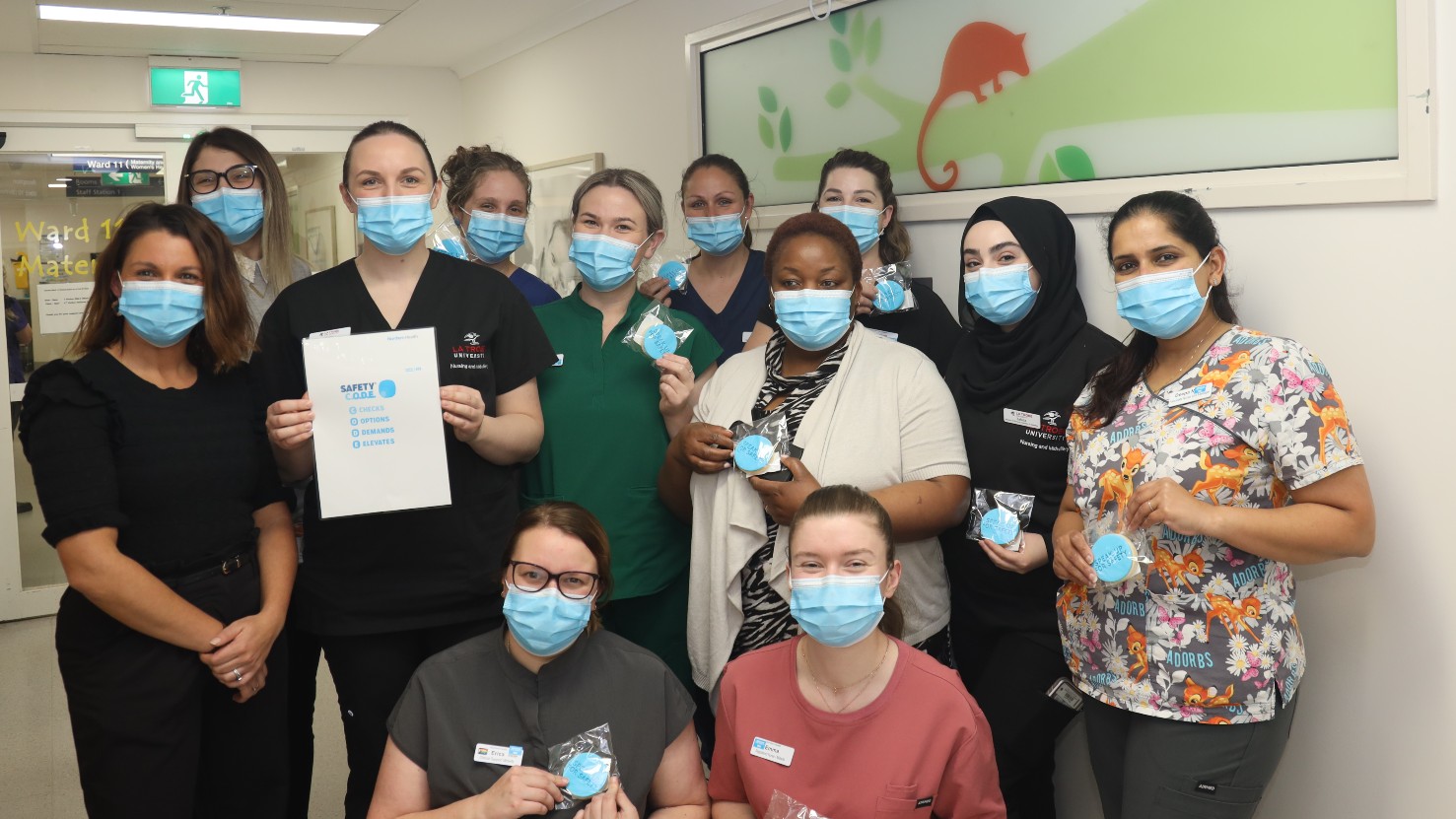
    Today, Northern Health celebrated Speaking Up For Safety (SUFS) Day.

    In partnership with the Cognitive Institute, Northern Health launched the SUFS program last year to enhance the physical and psychological safety of patients and staff. The program consists of one-hour workshops to equip staff with the skills and confidence to escalate concerns around patient safety and/or staff safety with assertiveness and respect.

    Over the past few months, each division has had the opportunity to attend a SUFS session. During these sessions, staff are educated on the Safety CODE (Checks, Options, Demands, Elevates) – a proactive tool that enables staff to speak up before mistakes happen to prevent unintended harm to patients and/or staff.

    Staff are encouraged to use the Safety CODE at every team meeting, clinical handover, huddle, shift commencement and conclusion, ward walk-around and at every critical moment.

    Michelle Fenwick, Executive Director, People and Culture, said the ability to speak up for safety is one of the most valuable resources we have to prevent errors of commission or omission, and to build a culture where speaking up, checking and being checked for safety is normalised and welcomed.

    “I am proud that our organisation is actively working to improve the safety of patient care and a positive, safe workplace culture. I thank you for your support as we enter a new era of safety at Northern Health,” she said.

    Bianca Fazzari, People Experience Business Partner, People and Culture, said, “creating a culture of safety where staff feel empowered and comfortable to raise concerns is essential at Northern Health.”

    “The Safety CODE is a proactive tool that enables staff to speak up before mistakes happen to prevent unintended harm to patients and/or staff.

    To celebrate SUFS Day, staff have been provided SUFS stickers. Staff are encouraged to wear the stickers on their name badges to symbolise openness and willingness to listen and respond effectively when others speak up for safety. SUFS cookies have also been distributed to staff today as a way to celebrate success in managing safety concerns and also discuss new ways to promote safety within teams.

    For more information on SUFS, including how to attend a SUFS session, visit the Intranet.

    Featured image: Maternity staff with SUFS cookies

  • How is Northern Health measuring EMR benefits

    How is Northern Health measuring EMR benefits

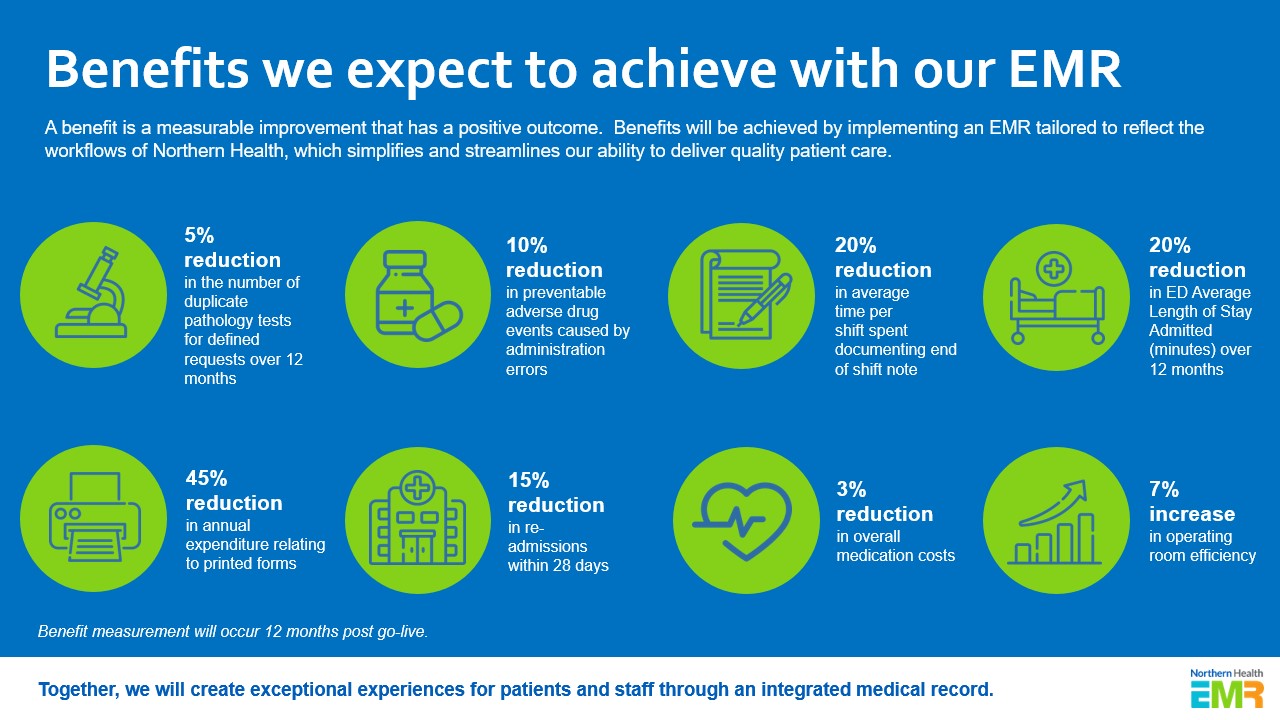
    Northern Health’s decision to implement an Electronic Medical Record (EMR) promises numerous benefits for clinicians and patients. While these benefits may not be immediately apparent during the initial stages of implementation, Northern Health is confident that as they transition to this change, we will start seeing the benefits.

    It is anticipated that fewer tests will be performed, medication errors will be reduced, and patients will move quicker through the emergency department, with fewer re-presentations. Being able to see patient documentation and orders from any computer, anywhere, in near real-time, will make providing patient care quicker, safer and more efficient.

    Northern Health’s Benefits Realisation plan, initiated in 2020, marks the beginning of a meticulous journey to measure and evaluate the impact and benefit of implementing an EMR.

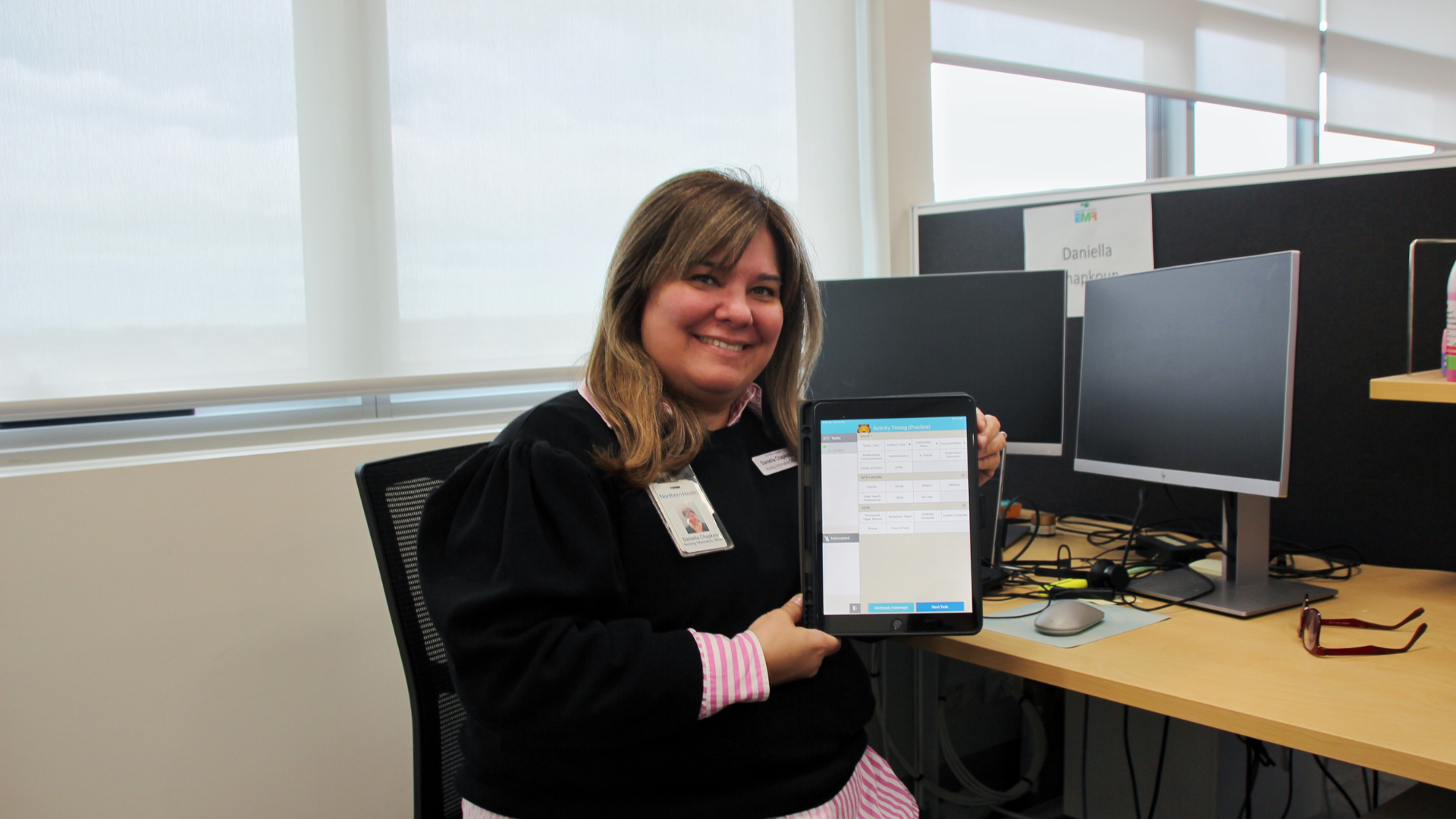
    Daniella Chapkoun, Nursing Informatics Officer and Benefits Analyst, is leading the EMR benefits program at Northern Health.

    In developing the Northern Health benefits, Ms Chapkoun has reviewed the EMR literature and benchmarked with other Victorian and Australian hospitals. Northern Health’s tailored benefit realisation plan encompasses 15 expected benefits, primarily focused on enhancing consumer experience and outcomes and clinician efficiency.

    One exciting part of the benefits program is a study on time efficiency for nurses, medical, and pharmacy staff using a pre-study and post-study design methodology. During the study, the team observed 180 hours of clinical practice using the WOMAT observational tool to assess the average time required to complete regular tasks before the implantation of the EMR, as well as 12 months after the implementation of the EMR. This comprehensive observation included documenting clinicians’ average time spent on clinical tasks, documentation, medication rounds and reviews. By collecting this data, Northern Health aims to gain valuable insights into the impact of EMR systems on workflow efficiency and clinical practice.

    Ms Chapkoun expressed her anticipation for publishing their findings, aiming to demonstrate how implementing an EMR system can increase time spent with patients rather than being occupied with paperwork. She emphasised the scarcity of Australian literature on the implementation of an EMR system of this magnitude.

    “As one of the last major metropolitan hospitals to undergo such a significant transition, Northern Health has a unique opportunity to measure the before, and after, effects of the implementation.  We are eager to contribute our valuable insights to the Digital Health industry, furthering our collective understanding and advancement of healthcare practices,” said Ms Chapkoun.

    She also extended her gratitude to Trish Aldridge, EMR Director, and Anthony Gust, Executive Director of Digital Health, for supporting the benefits program and facilitating the procurement of the WOMBAT observational tool. “Their assistance has been instrumental in ensuring the success of the study.”

    For more information on EMR benefits, click here.

    Featured image: Daniella Chapkoun, Nursing Informatics Officer and Benefits Analyst