• Ethics Committee established

    Ethics Committee established

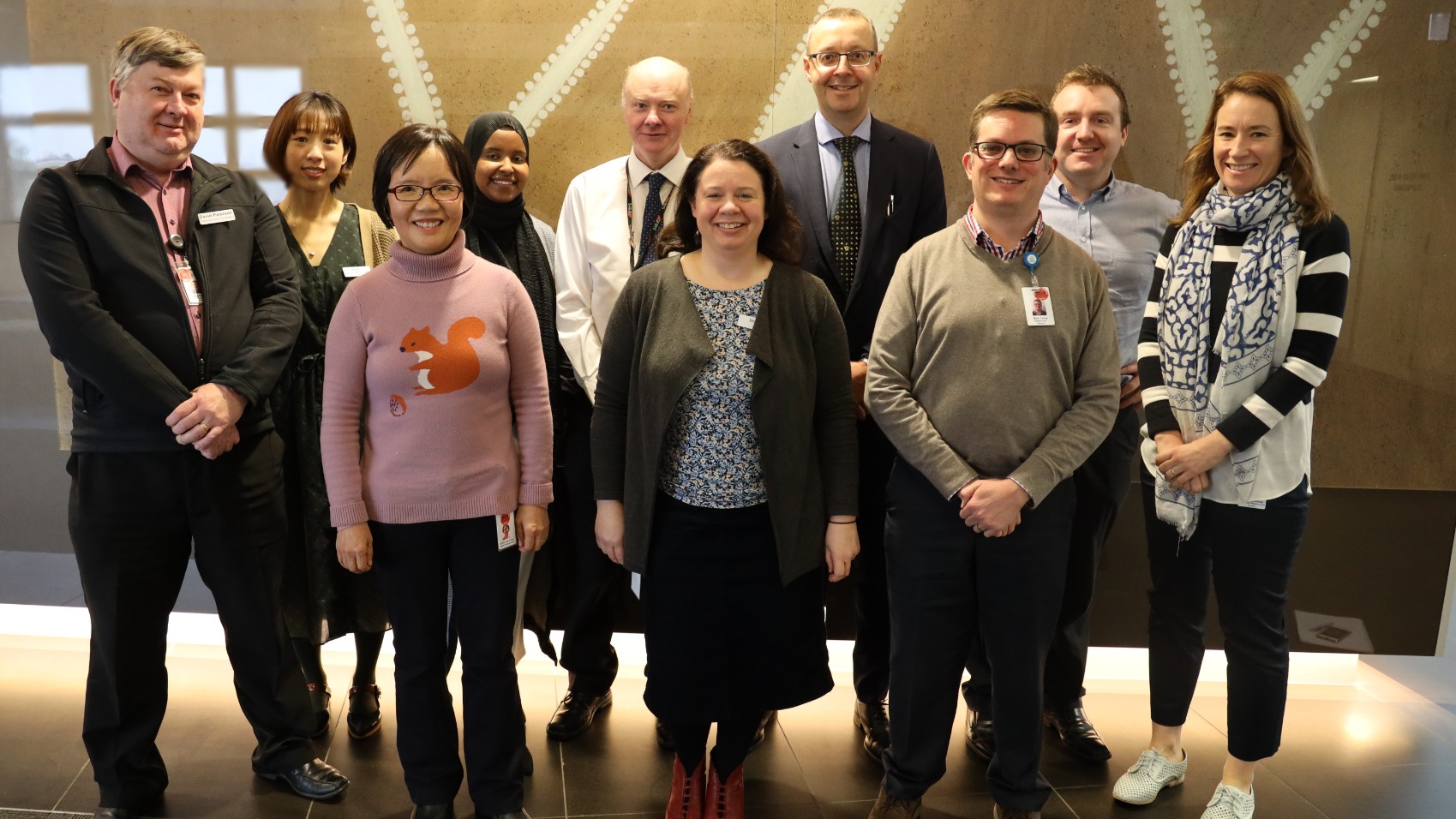
    The first meeting of the newly established Ethics Committee that focuses on low risk was held yesterday at NCHER. The committee was established in May, as a response to the growing interest for research within Northern Health.

    Amina Khayre, Low Risk Ethics Officer, said the need for the committee was identified as low risk studies are different to quality improvement and clinical audit activities.

    “They involve more risk due to the more interactive nature of studies. These studies must be reviewed to ensure the best possible safety and outcomes for both researcher and participant,” she said.

    The committee comprises of multidisciplinary members from across all the units in the hospital. There is also a consumer on the committee.

    “The committee ensures that studies adhere to the ethical standards and guidelines. These guidelines include the National Statement on Ethical Conduct in Human Research 2007, ” Amina explains.

    Professor Bill van Gaal, Chair of the Committee, said it is very good to bring the Ethics Committee back in-house, making it easier for people to do research at Northern Health.

    “The Low Risk Ethics Committee brings back a local, ‘in-house’ ethical review for researchers who wish to undertake low risk research projects at Northern Health. This will streamline the application and approval processes for our local researchers and enable them to start projects sooner. Loosely speaking, low risk research includes research that does not place any participants at risk of harm. As Chair, I am delighted to bring this process back to Northern, help facilitate research at Northern and guide researchers with the help of the committee to undertake their projects successfully,” he said.

    The Committee will support the researchers, provide guidance on statistics and methods and how to do research, and help them through the entire process.

    “We are here to support the process of research that will translate into better health outcomes for the north,” Amina added.

    If you have any questions about the committee, please email ethics@nh.org.au.

  • Grab your ticket to the Nurses & Midwives Ball today!

    Grab your ticket to the Nurses & Midwives Ball today!

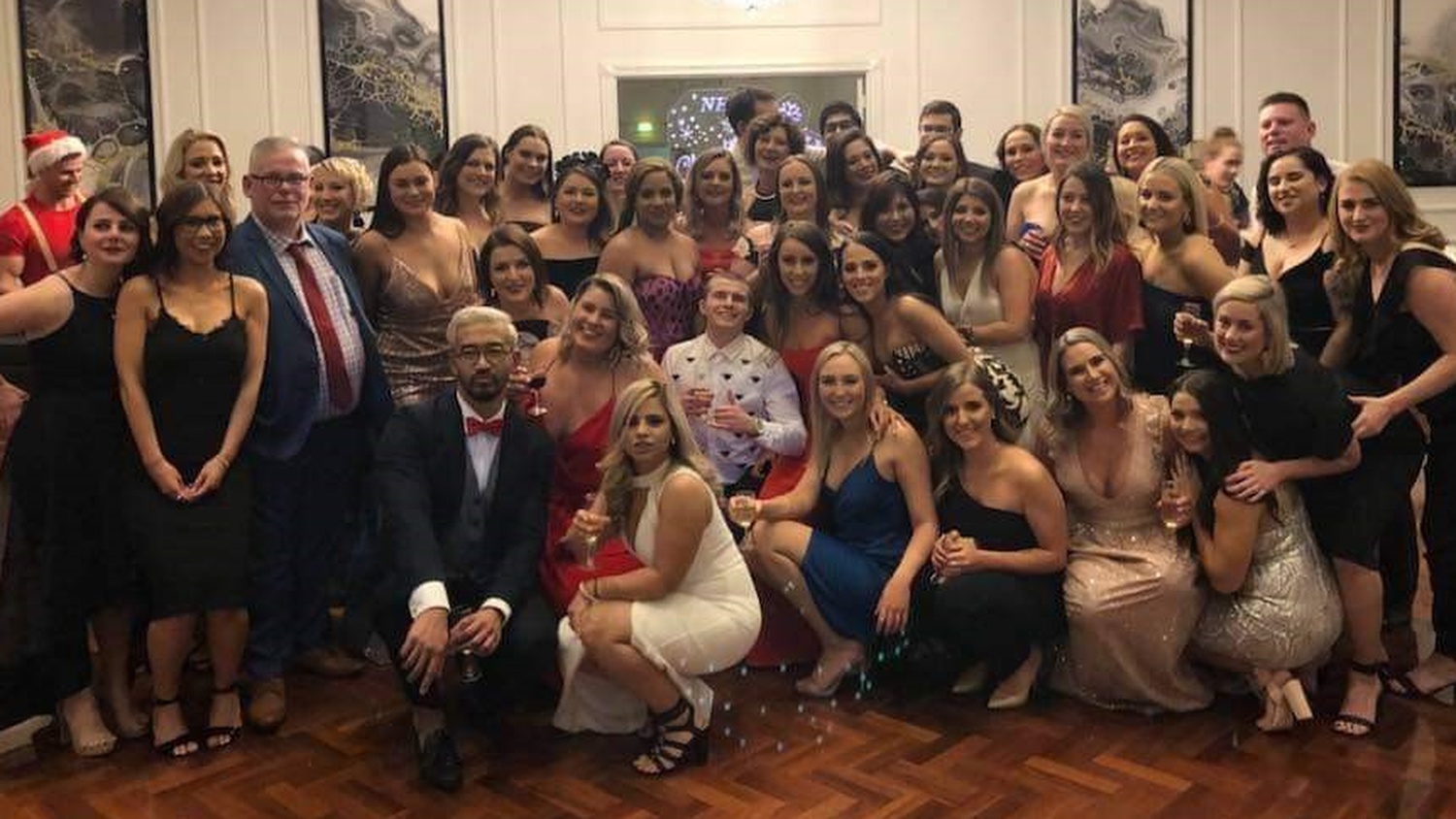
    It’s that time of year again where our hardworking Northern Health nurses and midwives get to let their hair down at their annual ball – and tickets are selling fast!

    Held this year at the recently opened Mantra Hotel in Epping, on Friday 26 July 2019, guests will enjoy a three course dinner, beverages and entertainment.

    Multi-award winning nurse-themed comedian, Zule – the nurSING diva (AKA Zuleika Khan) will serve as entertainment, as well as JayEss’s five piece band back by popular demand.

    Tickets for the event are $99 – all nurses and midwives are welcome, so get your dancing shoes on!

    Chief Nursing and Midwifery Officer, Debra Bourne, encouraged all nurses and midwives to get involved.

    “The 2019 Nurses and Midwives Ball is a great occasion for staff to come together to experience joy, laughter and friendship outside of the four walls of the hospital,” she said.

    “All Northern Health nurses and midwives have been working exceptionally hard over the last couple of months and I would encourage you all to take the opportunity to come together to celebrate the work you all do,” she added.

    Emergency Department Nurse, Hannah Downie said, “It’s nice to see everybody relaxed and dressed up. It was really fun last year to see not only emergency department staff, but a cohort of staff!”

    A number of raffle prizes and door prizes will be available on the night, as well as a photo booth. Don’t forget to present your ticket at the door to be eligible for prizes!

    The Mantra will even be offering guests a discounted rate for those who wish to stay at the hotel. Call 8457 4000 for further information – remember to mention you are from Northern Health when making enquiries.

    Tickets can be purchased from the Northern Hospital, Broadmeadows Hospital and Bundoora Centre Cashier Offices.
    Don’t miss out – call 8405 8570 to purchase tickets today!

    Money raised from the night will go towards entertainment packs for mental health and dementia patients in the emergency department.

  • NAIDOC 2019: Voice, Treaty, Truth

    NAIDOC 2019: Voice, Treaty, Truth

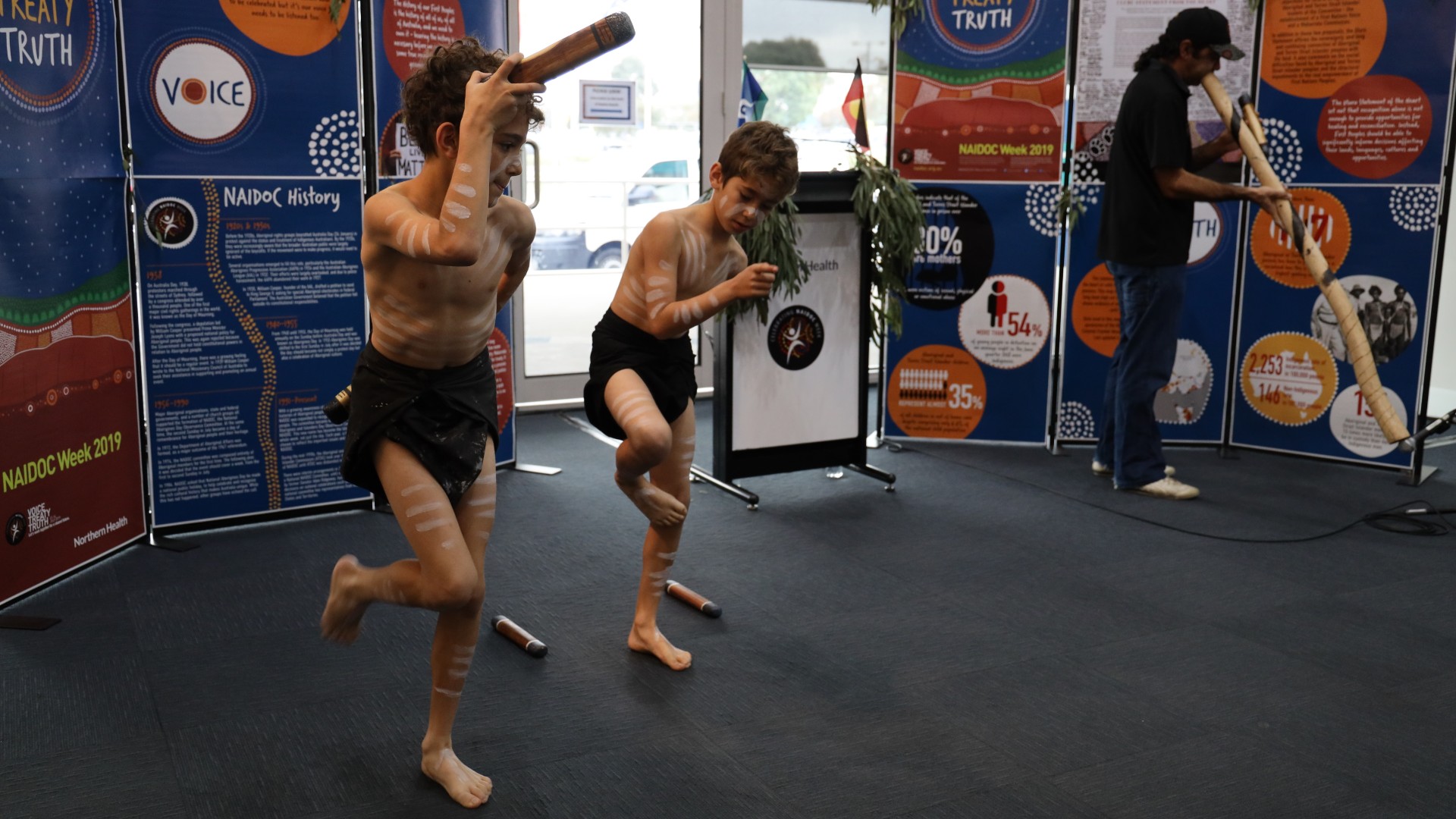
    Northern Health celebrated NAIDOC Week with an official launch in the Northern Hospital front foyer.

    NAIDOC originally stands for ‘National Aborigines and Islanders Day Observance Committee’. Its origins can be traced to the emergence of Aboriginal groups in the 1920′s, which sought to increase awareness in the wider community of the status and treatment of Aboriginal and Torres Strait Islander Australians.

    This year’s theme – Voice, Treaty, Truth, highlights the three key elements to the reforms that were set out in the Uluru Statement from the Heart.

    The Statement outlines the path forward for recognising Indigenous Australians in the nation’s constitution. It is an invitation to work together for a shared future.

    Senior Aboriginal Hospital Liaison Officer and MC for today’s NAIDOC Celebrations Karen Bryant says, it is a timely invitation.

    “Lasting and effective agreement cannot be achieved unless we have a shared, truthful understanding of our history, of how we got to where we stand.”

    Karen makes the point, “This is not just the history of our First Peoples, it is the history of all of us, of all of Australia, and we need to own it!”

    Guest speakers included proud Yorta Yorta/Gunditjmara Woman, Kanisha Bamblett, and Associate Professor Luke Burchill from the University of Melbourne and lead for their Aboriginal Cardiovascular Health Disparities Program.

    “NAIDOC week is about coming together as a community for all Australians, both Aboriginal and non-Aboriginal, to recognise the richness of Aboriginal culture around the country,” Assoc. Professor Burchill said.

    “We as Aboriginal people have a shared responsibility to keep our culture alive, by carrying the torch passed to us by our ancestors. Intrinsic to honouring our ancestors is honouring our land – this ancient land that we as First Nations people have nurtured for longer than anyone,” added Assoc. Professor Burchill.

    Explaining his work as the lead for the Aboriginal cardiovascular health disparities program at the University of Melbourne, Assoc. Professor Burchill said “The good news is lots of Aboriginal babies are being born – but follow these children to their mid 20’s and 30’s and we see a rise in early deaths. The leading cause of these deaths being heart disease.”

    He went on to add, “My mission as a cardiologist and as a member of Victoria’s Aboriginal community is to close the gap on Aboriginal health disparities.”

    The celebrations concluded with a performance by One Fire Aboriginal Dance Company.

    The Northern Hospital front foyer has been transformed into a display of Aboriginal history, taking us on a journey about Voice, Treaty, Truth.

    Chief Executive, Siva Sivarajah said, “Creating a warm and culturally welcoming space for our Aboriginal community has been a priority for Northern Health this past year.”

    “These initiatives aim to provide a welcoming environment for our Aboriginal community at Northern Health, as well as strengthen our connections to our diverse community.”

    All staff are encouraged to view and participate in the NAIDOC Week display in the front foyer.

  • STAR program launches

    STAR program launches

    As part of our Winter Strategy, the team have been looking at different ways to support patients in their transition from hospital to home.

    That is how the targeted, population-specific Supported Transition to Assist Recovery (STAR) program was born and launched yesterday.

    Dr Katharine See, Director of Respiratory Medicine, said the team identified the age group over 70 with a few common conditions were representing to hospital within 72 hours.

    “Those conditions include Chronic Obstructive Pulmonary Disease (COPD), pneumonia and heart failure. When we explored the reasons for this, we found that these people were often coming back to hospital not because they got sicker, but because they didn’t understand their follow-up plan and felt anxious and nervous being at home,” she said.

    The STAR program is an initiative aimed at providing clarity to these patients and reassuring them regarding the recovery process, which aligns with the strong focus Northern Health has on management of people in the community.

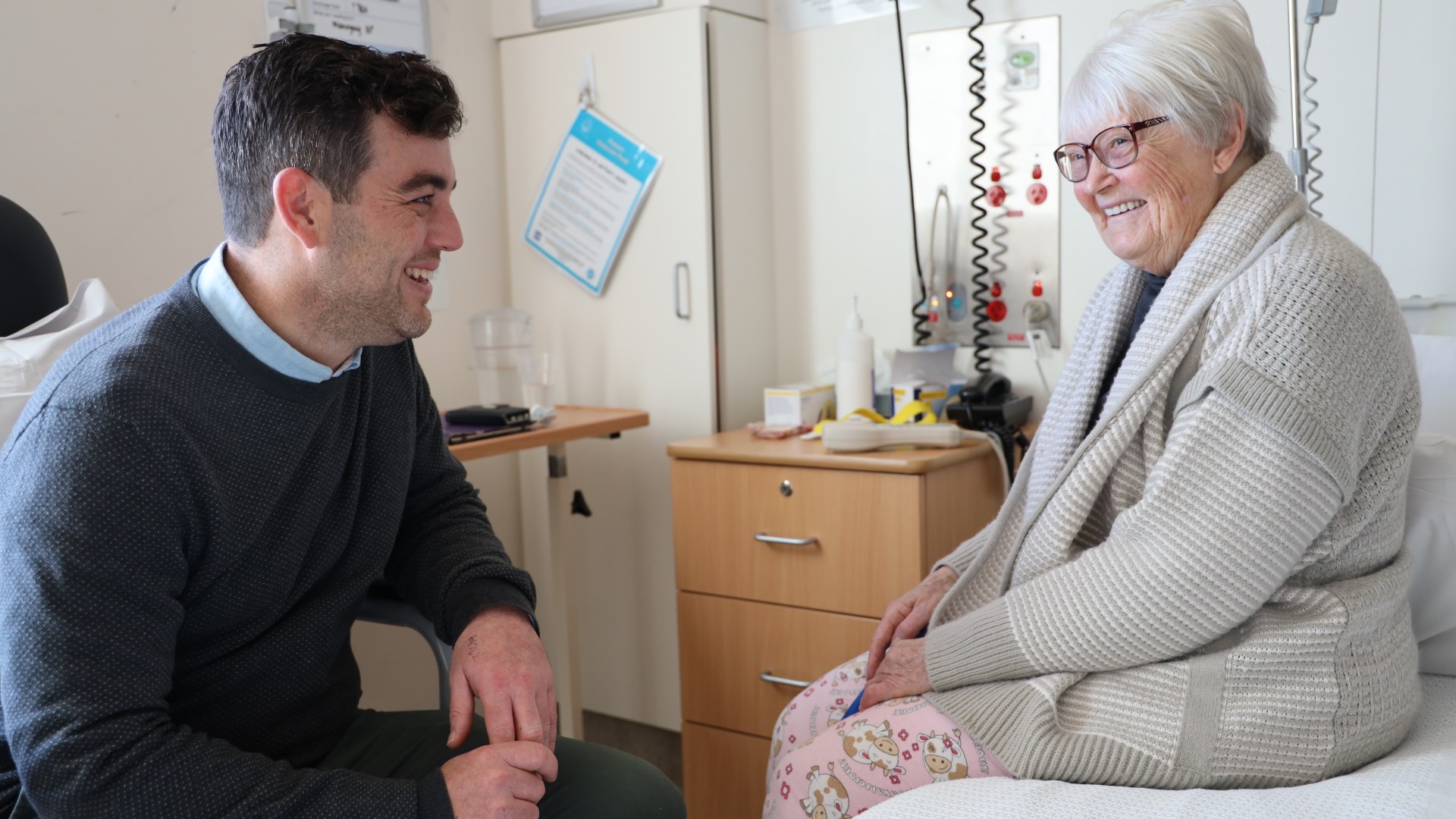
    “To be able to do that, patients will get a phone call from Andrew Lang – our STAR nurse, within 24-48 hours from discharge to check in and answer any questions they might have and to help link them to their GP and the community. In case they require a hospital contact, we can link them to our HOT clinics or Hospital in the Home Service,” she said.

    Andrew has been a ward-based nurse for more than 20 years and sees this program as a great opportunity to get involved in the follow-up care.

    “As happy as we are to see the patients, we agree they could be better managed at home, where they are more comfortable and familiar and we know patients want to be at home. I am looking forward to being involved from admission all the way to discharge and beyond and keeping people at home,” he said.

    As these illnesses are unfortunately chronic, Andrew is ready to answer numerous questions and give the patients the reassurance they need.

    “The STAR program and the calls will help patients feel safe, knowing that home is where they should be.”

    Andrew will be working alongside the Acute to Community team, under the leadership of Lorinda McPherson.

    Referrals for the STAR program can be made through MedTasker and the program will run until the end of October, when the evaluation will be conducted.

  • Rising Star: Lauren Scott

    Rising Star: Lauren Scott

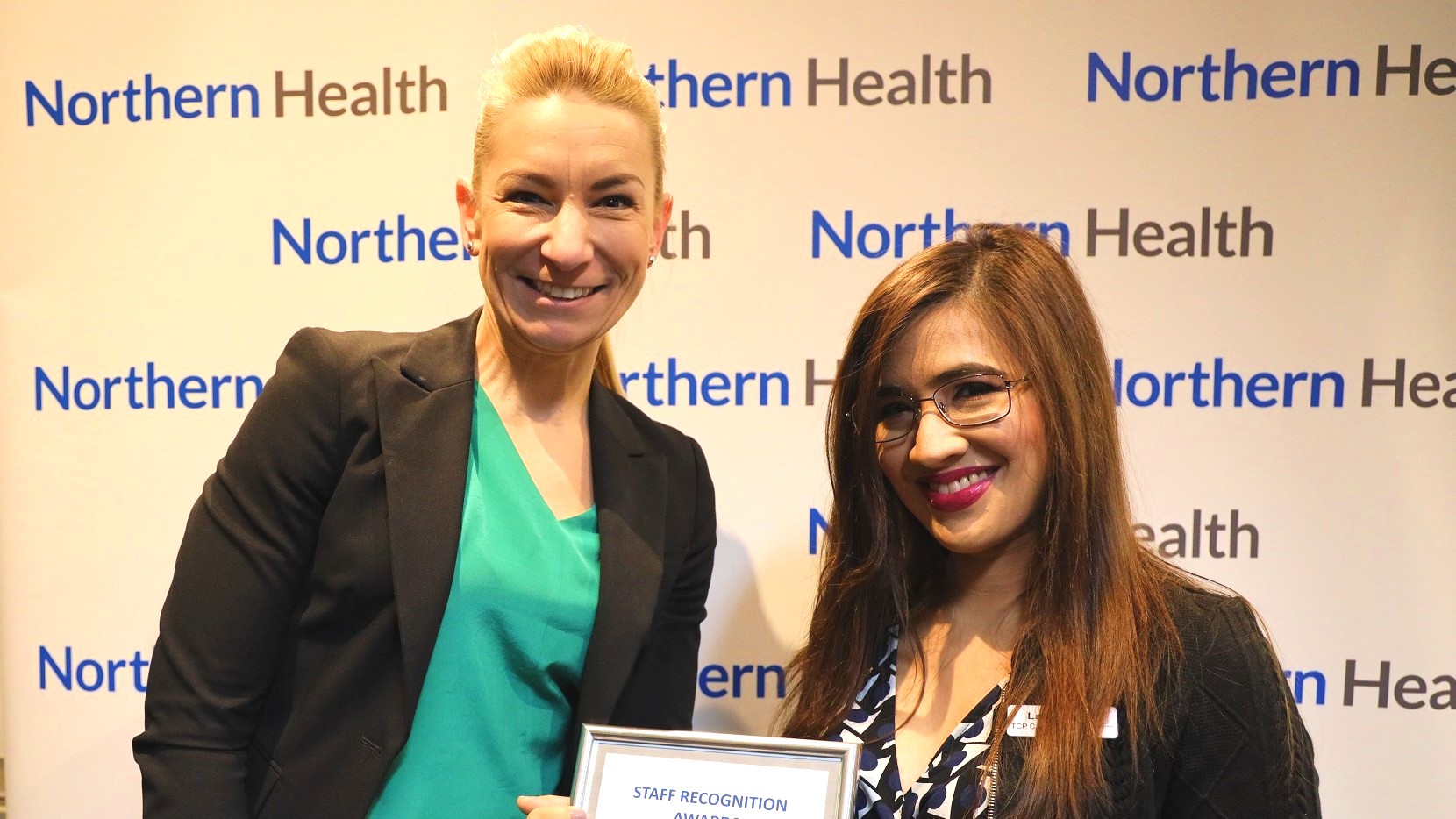
    Lauren Scott, Care Coordinator in the Transition Care Program (TCP), received the ‘Rising Star’ award at our recent Quarterly Staff Recognition Awards.

    She was nominated by Vanessa Goss from Bundoora Transition Care, who said Lauren was successfully able to reinvent herself as a Care Coordinator and utilise her previous experience as a social worker to adapt to the new role.

    “She took on this challenge with resilience and fortitude, and conducted herself with professionalism, while developing excellent outcomes for her clients. She brought her social work skill set and provided TCP colleagues with a new insight and skills into managing conflict and family dynamics,” she said.

    Lauren has been at Northern Health since September 2014, and initially started as a social worker at Bundoora. After working there for four years, she moved to transition care.

    “In social work, I really love working with patients in crisis situations and finding ways to support them and their families. I am also doing my Masters in Counselling and it all ties together for me,” she said.

    “I enjoy providing emotional support to patients and families, and supporting carers.”

    In transition care, Lauren is able to do more long-term work and relationship building, whilst supporting patients when they’ve just returned home.

    “I can help with supporting them to stay well in their own homes. I enjoy the continuity – seeing patients from when they come to hospital to providing support in their own homes,” she explains.

    Lauren feels honoured to have been nominated for the award and was surprised to hear she won.

    “The award was a lovely surprise and shows how supportive my colleagues are. I am really lucky to work in a great team, we learn from each other all the time and we always support each other,” she said.

    Before joining Northern Health, Lauren was a social worker at Royal Melbourne for five years and at Western Health for a year.

    In the future, she would love to continue working in transition care, supporting our patients in the community.

    “Every team that I’ve worked with at Northern Hospital has been incredible and supportive, and in the next few years I would still like to be working at Northern, and be able to utilise my counselling skills once I complete my Masters,” she said.

    She would also like to potentially set up support groups for carers, to help carers maintain that role and keep our patients at home safely as long as possible.

    “I see Northern Heath continually expanding and increasing in services. Both young and old people come to hospital all the time, so I would love to see the hospital expand, as our catchment area is growing and people’s care needs are getting more and more complex,” she added.

    Lauren sees an opportunity to increase all of our knowledge in cultural sensitivity and cultural awareness in the future.

    “Being culturally sensitive means we will continue to tailor our services to meet the needs of our patients and families, so we can support them better,” she added.

    Lauren describes Northern Health as a place where her family and friends are.

    “I’ve been lucky that my colleagues here have become my friends and family – I live in the area, my dad used to work here and I’ve seen my friend’s babies born here.”

    Featured Image left to right: Briana Baass, Executive Director – Chief Allied Health Officer and Partnerships, with award winner Lauren Scott

  • Stow Family Garden revitalised at Northern Hospital

    Stow Family Garden revitalised at Northern Hospital

    The Stow Family Garden was originally established at Northern Hospital by the Stow Family in 1998, and has recently been rejuvenated by Stows Waste Management, together with the Northern Health Foundation.

    Managing Director of Stows Waste Management, Paul Stow, said, “The Stow Family Garden was donated by my parents, Neil and Wynette Stow. Following in their footsteps, I wanted to rejuvenate the garden to bring joy to the patients, families, visitors and staff at the Northern Hospital.”

    “Stows Waste Management are a family owned and operated business, and take great pride in giving back to the community and environment in which we operate within,” Paul added.

    Yvonne Amos, Director of Northern Health Foundation, said, “The Stow Family Garden required revitalisation to ensure it could be enjoyed by future generations. The Aboriginal artwork has also been revitalised to better reflect the Indigenous communities in the north and across Victoria.”

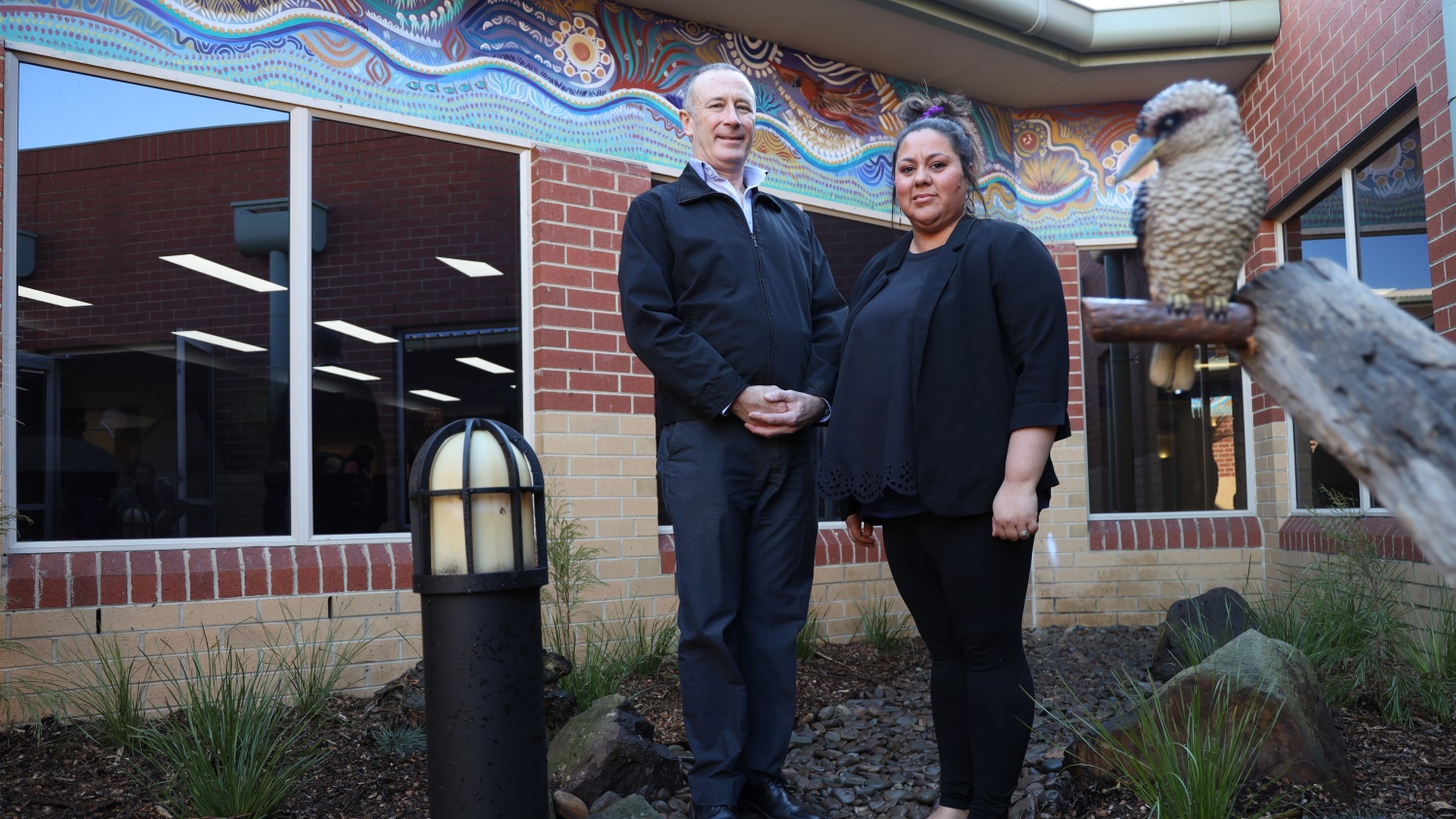
    Local Yorta Yorta Aboriginal artist, Kahli Luttrell, painted the artwork featured in the garden, which represents the land, plants, animals, growth and the sky with Bunjil, the creator, flying through overlooking the land and keeping it safe.

    The Wurundjeri totem, the Waa (meaning Crow), is also watching over. The line work represents the pathways of our people who use Northern Hospital to access services that link and provide support to the Aboriginal community.

    The dots represent the many people who have travelled through, both past and present, and also different meeting groups that discuss growth for their future, how best to respect the land and keep it safe for future growth and generations.

    Karen Bryant, Northern Health Senior Aboriginal Hospital Liaison Officer, said, “By having an Aboriginal influence on this garden, Northern Health is creating an environment that promotes cultural safety, which is welcoming to the Aboriginal community that visit Northern Hospital.”

    “Creating culturally safe spaces and visuals means the garden can be enjoyed by all visitors to our hospital,” Karen added.

    Stows Waste Management, on behalf of the Stow Family, wish for this garden to be enjoyed by Northern Hospital patients and visitors for many years to come. The garden is located in the courtyard near Pharmacy.

    Christine Stow and her father, Neil Stow
    Left to Right: Paul Stow, Steve Micallef (Northern Health Grounds Coordinator), Kahli Luttrell, Karen Bryant
    Back Row (Left to Right): Paul Stow, Kahli Luttrell, Christine Stow, Karen Bryant, Siva Sivarajah, Front Row: Neil Stow, Wynette Stow
  • KAW Nurses: Providing patients with moments of happiness

    KAW Nurses: Providing patients with moments of happiness

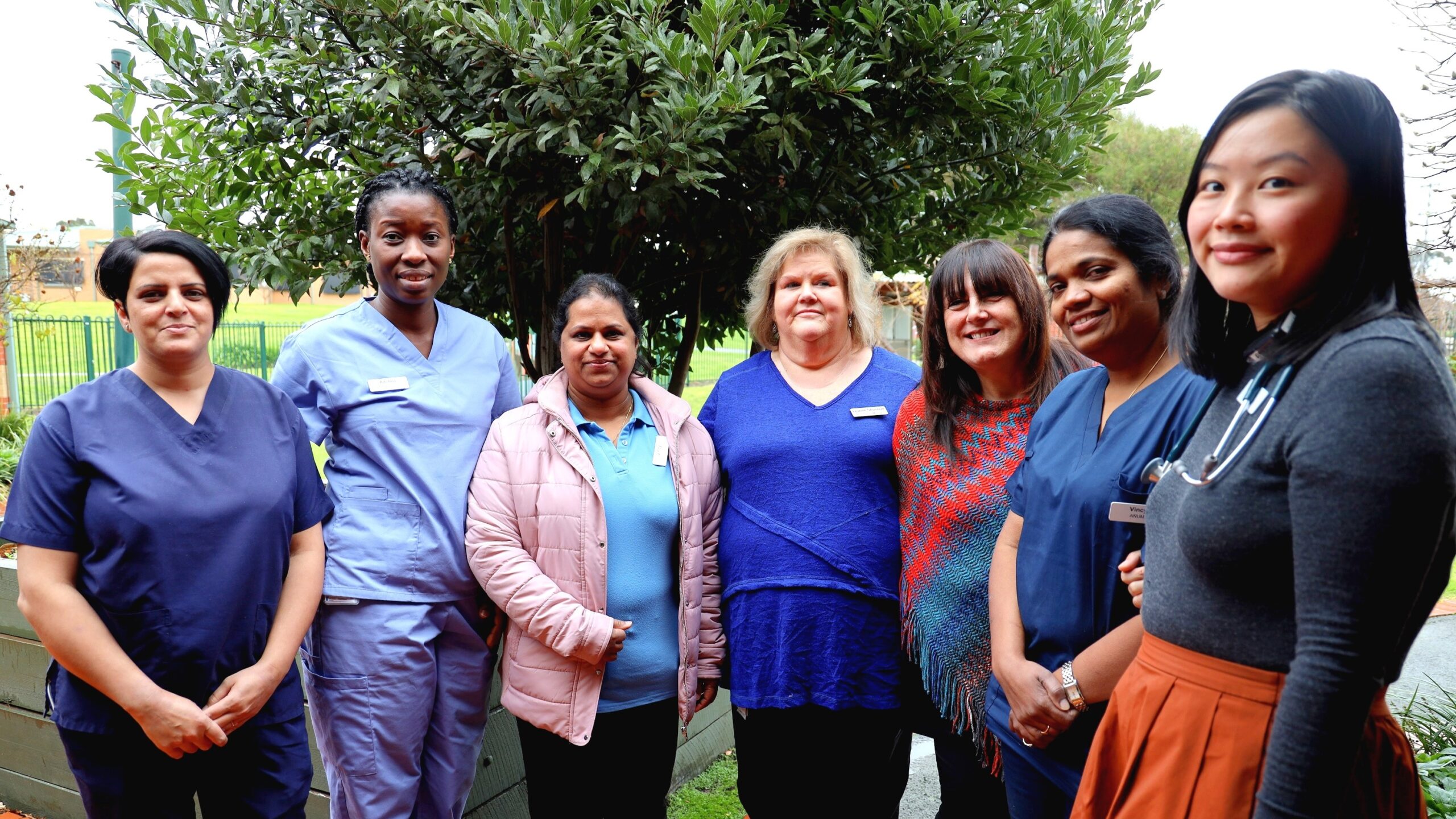
    The Kath Atkinson Wing (KAW) at Bundoora Centre provides care, evaluation and management of individuals who are experiencing cognitive decline and medical illness.

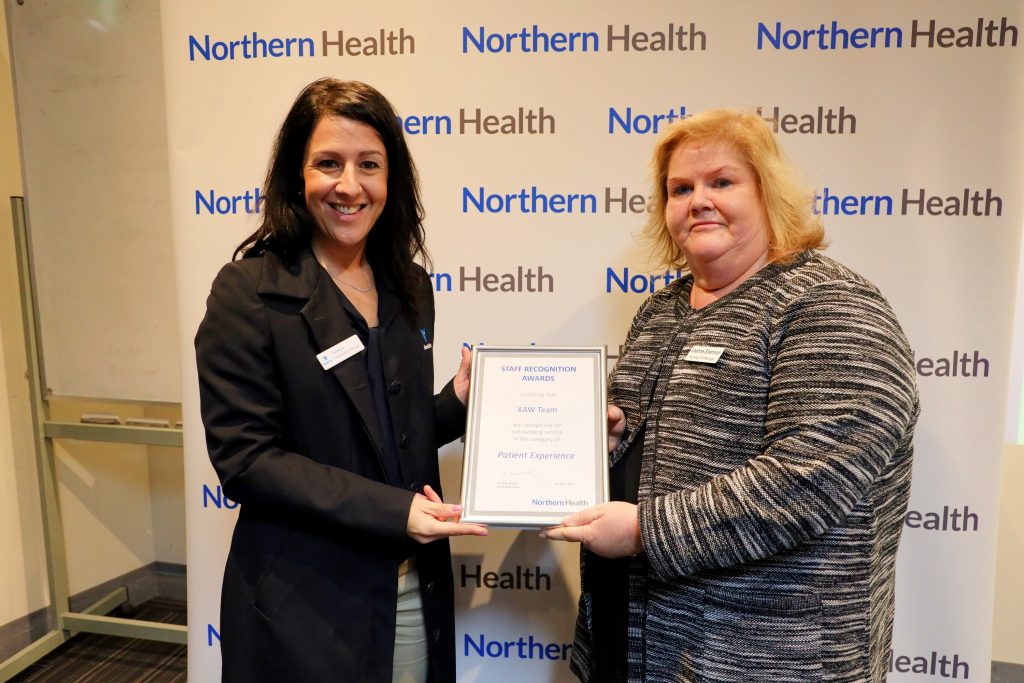
    Recently, the KAW nurses received the award for ‘Patient Experience’ at the Quarterly Staff Recognition Awards.

    The team were nominated by Lilian Oparanozie, who said, “KAW unit is a challenging unit with patients who have behaviour and psychological symptoms of dementia. Despite the difficulties they face, the KAW nurses deal with patients with great empathy and understanding.”

    Leanne Shannon, Nurse Unit Manager, says, “It can be very challenging and isolating down here, so to get that recognition really meant a lot!”

    The unit specialises in dementia and cognitive behaviours, which can vary from an elderly woman in her 90s who is slightly confused, to men in their 50s who are physically aggressive.

    “It’s the unexpected that’s difficult. The staff are having to adapt their nursing management style for different scenarios,” Leanne says.

    “We’re getting younger men who don’t have dementia but have an acquired brain injury related to alcohol or drugs and because of that, have a cognition issue, so they come to us to sort it out.”

    Through these unexpected and trying times, it is the team’s close family relationship and support for one another when it comes to complex patients that gets them through.

    “I guess the most rewarding part is when you get a very complex behavioural person who comes in and you’re able to work as a team and implement strategies to manage their behaviour, and then you can discharge them and they don’t come back.”

    But most importantly, it is the moments of happiness the team get to create for patients and their families that makes it all worth it.

    “Recently, we had a particular patient who went in and out of her confusion. One of the things she said was – it’s not fair! I should be retired, travelling, going dancing with my husband,” Leanne says, “and she couldn’t do that,” she adds.

    “We had a session here where we put on music and she was up dancing with her husband – it makes me cry every time I think about it.”

    The team have also celebrated 90th birthdays, where families have come in and the ward throws a party.

    “Even though the patient might not remember this at a later date, the families definitely will,” Leanne says.

    “You can’t solve world problems, but you can give a moment of happiness and this is what keeps us going.”

    Featured Image: The KAW Team

    Leanne Shannon, Nurse Unit Manager, accepting the ‘Patient Experience’ award
  • Graduate Nurse: Lauren Parkinson

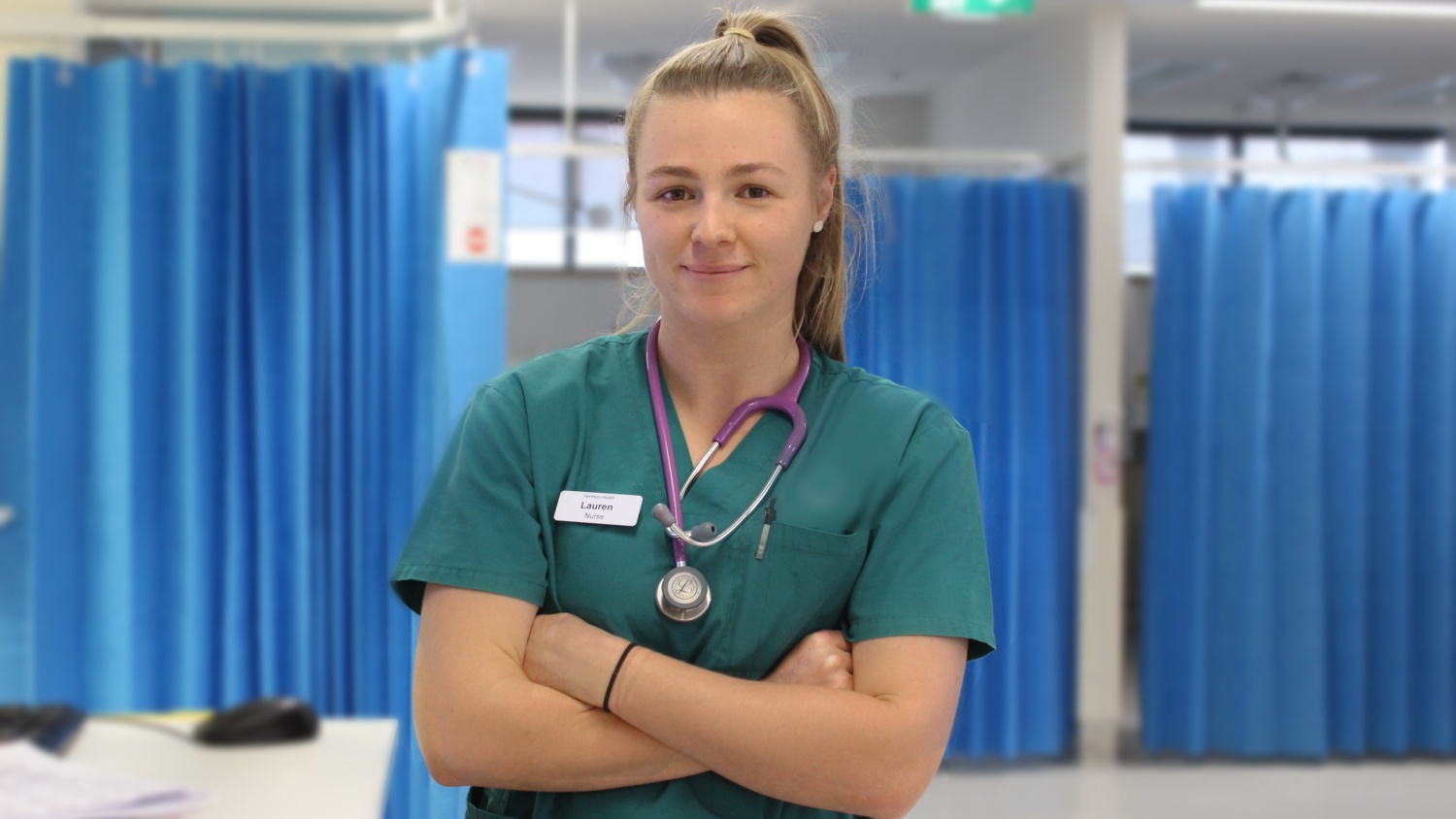
    Graduate Nurse: Lauren Parkinson

    Can you tell us why you chose a career in nursing?

    Nursing has always been something I wanted to do from a young age, and I set myself a plan on how to achieve this as soon as I got to high school. Unfortunately, I lost my mum to cancer when I was eight. During her battle, I watched multiple nurses go out of their way to give the best care possible to her and keep her dignity right until the end.

    My family and I remember these nurses to this day, for the amazing person-centred care they gave my mum and our family. This unfortunate event in my life gave me the passion to be like those nurses. I wanted to bring dignity and respect to people at their most vulnerable time and advocate for patients and their families. I wanted to be able to assist people in small ways to make their day, or even to just be a smiling face when someone really needs it.

    Nursing is such a selfless job – it has so many ways of making you feel good. I love the feeling of going home from a shift with the knowledge that I have helped someone, even in just a minor way, to feel better.

    When looking for a graduate nurse program, how did you go about narrowing down your decision?

    When looking through all the places that offered graduate programs, I felt so overwhelmed with choices. The two most important things for me when I was looking at different programs was the culture of the hospital and what learning opportunities they could offer.

    I narrowed my choices down by my experience on placement at these different hospitals, as well as going to their information nights and asking questions about how they could support me, not only in my graduate year, but ongoing years.

    How did you feel about the application process?

    To begin with, the application process was very daunting and overwhelming. Once I sat down and looked at it all step by step, it became a lot less daunting and more exciting than anything. Attending the information sessions the hospitals held were really beneficial, as well as speaking to graduates from previous years.

    Going through the interview process was another step that was nowhere near as daunting as it seemed. All hospitals were very welcoming and understanding of everyone’s nerves, and having so many other peers going through this process feeling the same way I did made it easier.

    How did you feel when you found out your Computer Match results?

    Getting my results was without a doubt one of the best and most terrifying feelings. Knowing all the hard work I had put into University, placements and my graduate application had paid off, made my only response tears. With a mixture of excitement and relief I was over the moon, as well as terrified that it was all becoming reality.

    What advice would you have to students going through this process at the moment?

    Start early! Be as prepared and organised as you can be and research the hospitals that you are applying for really well. Be confident in yourself and your own skills and don’t be afraid to show it – also, don’t put the pressure on yourself like I did! Even if you don’t get that graduate year you hoped for, there are so many other options out there and no matter where you start or which ward you start on, you’re going to learn so much – it might even change your mind on the path you want to take.

    The last thing I would say would be to jump in the deep end – apply or aspire to something outside of your comfort zone. If there is going to be a time to try something new, but you don’t have the confidence in yourself or you are too scared to do so, your graduate year is the perfect opportunity to give it a go.

    Finally, can you tell us how you are enjoying your graduate program at Northern Health? 

    I absolutely love my graduate program at Northern Health this year. I am so grateful for the opportunity. I was given six months to complete a rotation in the Emergency Department and on Unit B. The ongoing support from the clinical educators has been amazing.

    I would’ve been lost without their assistance on the floor, their ongoing educational sessions and just being there as another ear to debrief to on good and bad days. The step from being an undergraduate student to being a registered nurse has probably been the biggest challenge.

    From not having a ‘buddy nurse’ anymore, to you being the ‘buddy nurse’, takes some time to adjust to, but my nursing colleagues have been so supportive. The team at Northern Health has made this transition so easy.

    Having the support from the graduate coordinators, Kate and Katia, the clinical support nurses, my colleagues and the other graduates this year, has made the whole process so enjoyable! I have learnt so much in my first six months and I’m already aspiring to complete postgraduate studies.

    Most days I can’t believe what I’ve achieved and how lucky I am to be exactly where I want to be.

    It makes me very thankful for this opportunity and I can’t wait to see where my nursing career at Northern health takes me.