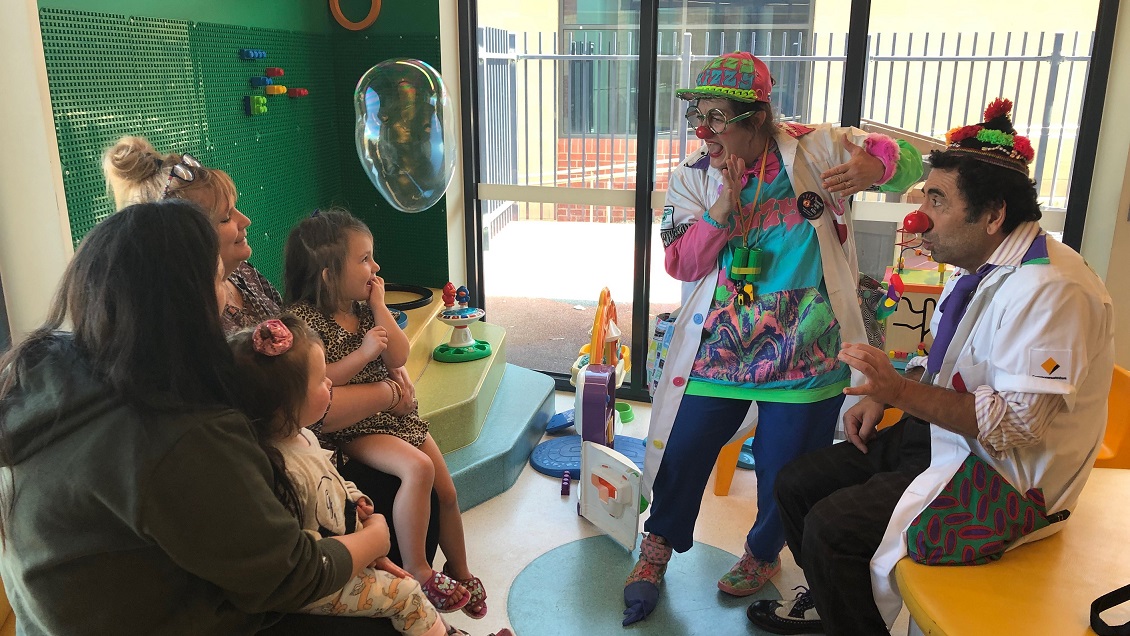
They say laughter is the best medicine, and our youngest patients at Northern Hospital Epping got to test that theory out today thanks to another visit from the ‘clown doctors’.
Clown doctors provide a welcome escape from the reality of hospitalisation, visiting patients and their families to bring humour to healing.
Laughter not only relaxes our patients, but also helps their families who may be anxious and overwhelmed.
The clown doctors visited a number of different areas of the hospital including the Emergency Department and Children’s Ward, and prescribed a healthy dose of cheer throughout.
“We just love having them here – they are a great distraction to break up the hospital day,” said Children’s Ward Nurse Unit Manager, Katrina Burke.
We thank them for their unique contribution to health care, as they add to our patient-centred approach here at Northern Health.
You can check them out in action in the Children’s Ward in the video below!
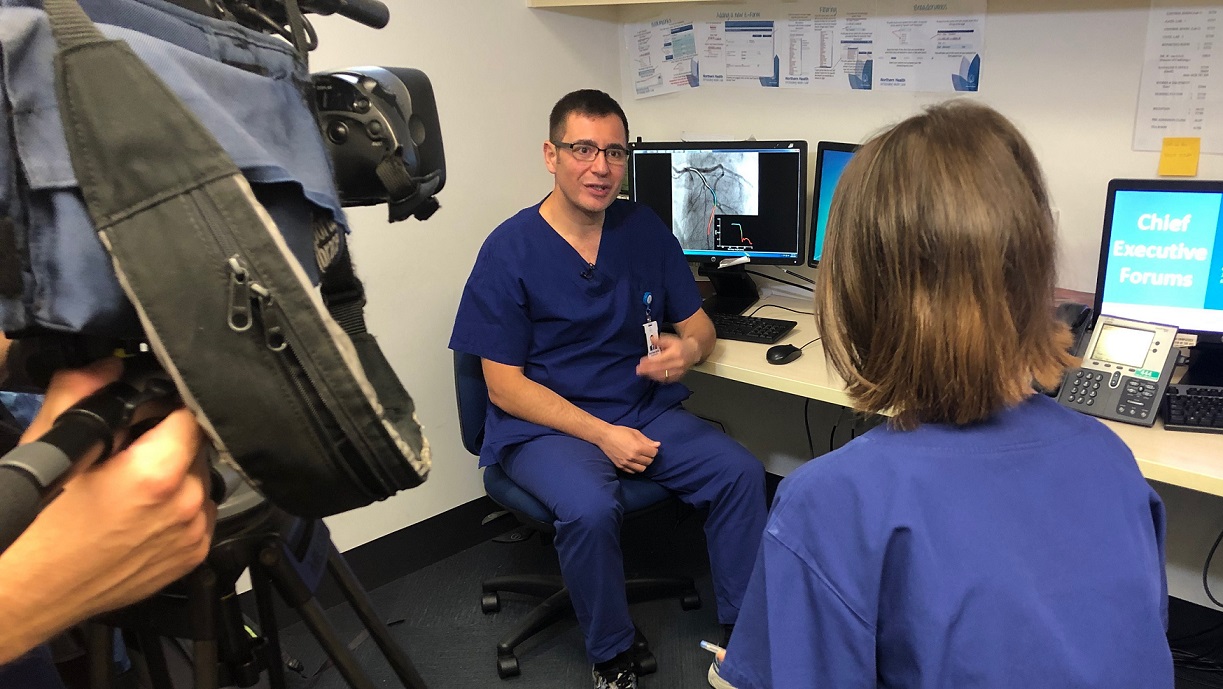
Yesterday, we welcomed Channel Nine to Northern Hospital Epping to interview Cardiologist and University of Melbourne Professor, Peter Barlis, about a cutting-edge technology used to create virtual scans of inside coronary arteries.
In collaboration with Melbourne University, the world-first virtual reality technology has been designed to give cardiologists greater information and help to improve clinical decision-making for better patient care.
Pioneered by Professor Barlis, the technology uses the latest in high-resolution scans and the use of super-computers and mathematical models to compute a “virtual fly through” inside the artery, to look at how cholesterol deposits form and to guide cardiologists on whether treatment with a stent is required.
Not only will the technology be beneficial for clinicians, it will also provide numerous benefits for patients including minimising the number of invasive procedures and allowing for faster, more accurate assessment.
“Future developments of the technology will see scan results available almost instantaneously at the point-of-care, thereby giving doctors the best and quickest way to safely manage each patient with cardiovascular disease,” said Professor Barlis.
Northern Health patient, 68 year old Frank Davies, has suffered heart complications for over 20 years. Yesterday, he spoke with Channel Nine reporters about his journey and his hopes for the new technology.
“If it saves one person, it’s worth it,” Frank said.
“Hopefully me,” he adds.
The technology has been patented by Professor Barlis and his team, who are working to bring this to as many patients across Australia and the world, and has been published in the prestigious European Heart Journal.
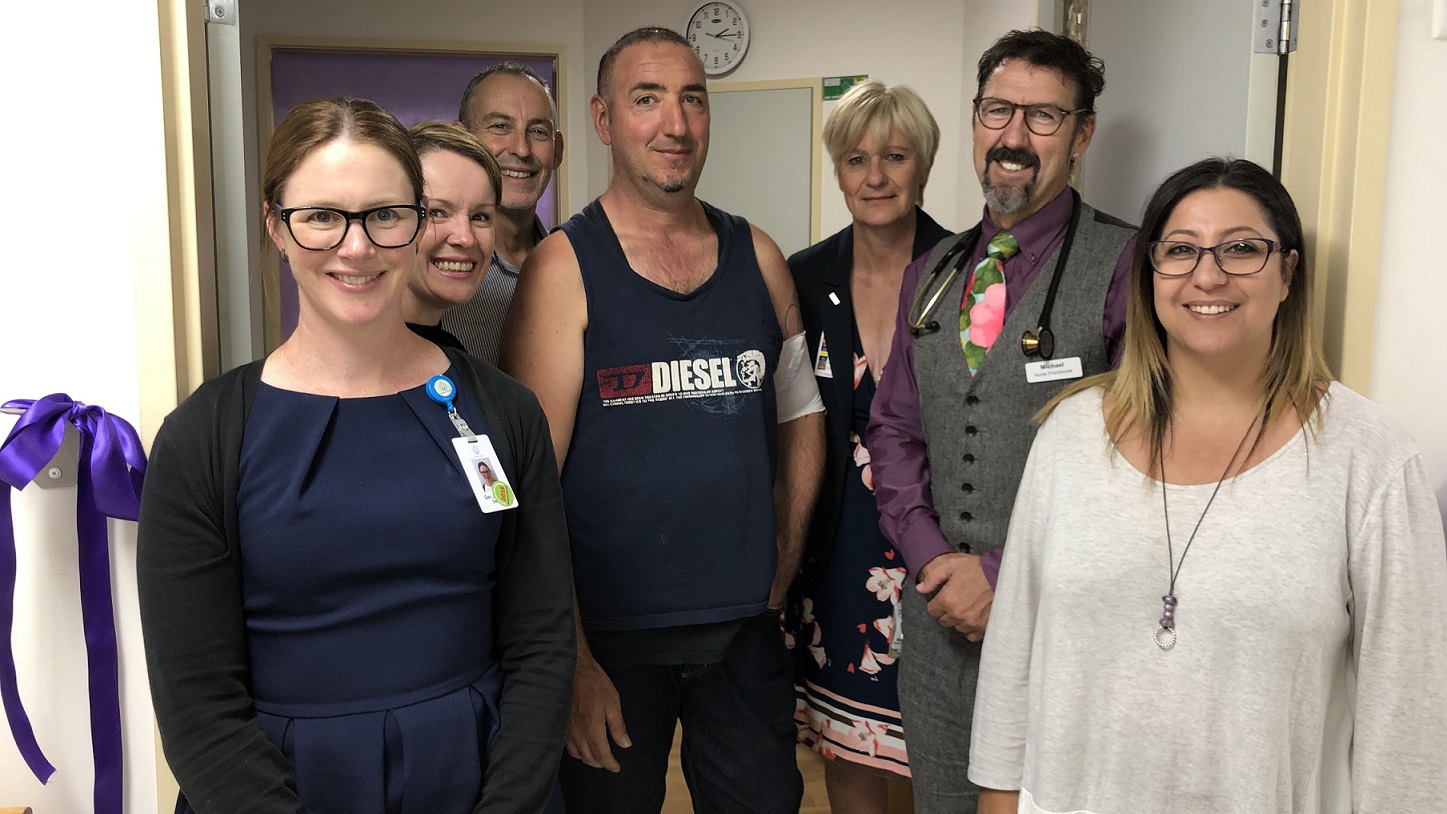
This week, Northern Health launched its new Oncology and Haematology Symptom and Urgent Review Clinic (SURC).
SURC is a free service for any patient with cancer, who is experiencing distressing side effects from undergoing systemic (chemotherapy or immunotherapy) treatment at Northern Health.
SURCs provide an alternative to patients attending the emergency department (for those with non-critical issues) and is staffed by an experienced cancer nurse, who may provide advice over the phone or request that a patient comes into the clinic.
These clinics have been established at major cancer units across Victoria and have proven to be a very useful service for patients undergoing cancer treatments.
Our clinic will be located within the Day Oncology Unit at the Northern Hospital, and will give patients direct access to Specialist Oncology/Haematology Nurse Practitioner, Michael Cooney.
“SURC will benefit the Northern community, as it provides a context-specific place for patients to call and go to, to manage treatment or cancer related side effects,” Michael said.
“It adds to continuity of care, in that they can get in touch with someone who knows their story and who understands what’s happening to them,” he said.
“It’s great that Northern has supported the idea of establishing one of these clinics, and puts us in the running with major hospitals that have also established these clinics,” he added.
Frances Barnett, Medical Oncology Head of Unit, said, “overall, the clinic aims to proactively manage patient symptoms, keeping our patients as well as possible and reducing their need to access emergency services.”
“Thank you to our SURC project team, the steering committee and consumers who provided feedback, the cancer services leadership team and executive,” she said.
Northern Health patient, Dom (pictured above), did the honours of cutting the ribbon to officially open the clinic. Check out the video below!
If you have any patients experiencing side effects from their systemic treatment at Northern Health, the SURC nurse can be contacted on 0498 131 363 from 8.30 am – 4 pm Monday to Friday (excluding public holidays).
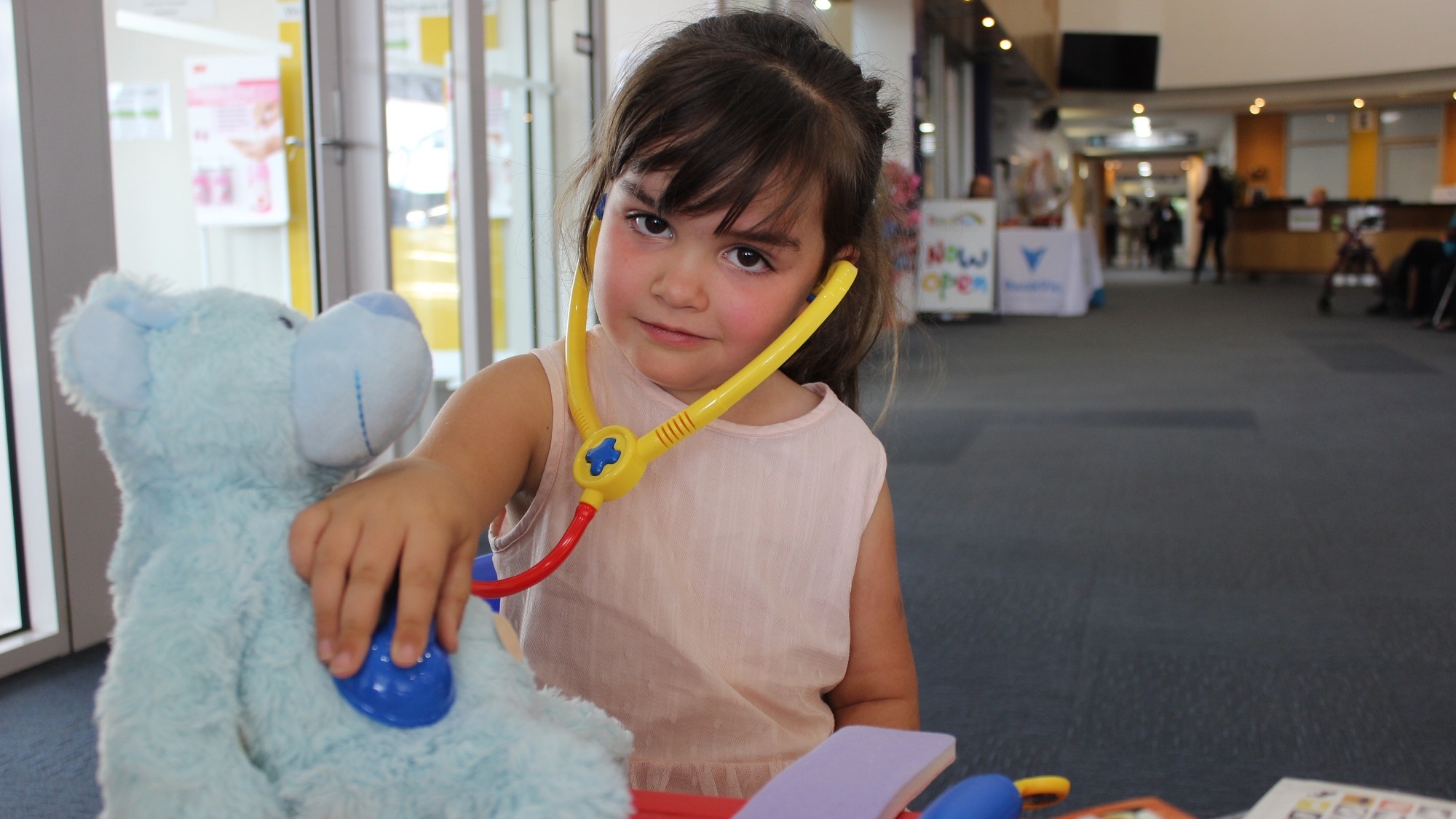
The Northern Hospital foyer was buzzing with kids, parents, Melbourne University students and teddy bears, for another ‘Teddy Bear Hospital’ day.
This initiative, held four times a year at Northern Hospital, aims to help kids get familiar with hospital environments and some of the basic equipment, helping our youngest patients feel more comfortable when they come to see a doctor.
The programme benefits the medical students as well. Ashlee Frye, third year medical student at Melbourne University, says this programme helps them get used to talking to kids in a fun way.
“For some medical students, talking to small children can be scary. We are used to seeing healthy children, so opportunities like this can help potentially seeing and picking up on changes in behaviours, recognising symptoms and similar. We have to know what is normal first, to be able to pick up on abnormal,” she said.
Wei Qi Fan, Head of Neonatal Unit Northern Hospital and Associate Professor in Paediatrics at Melbourne University, said that both parents and children come to hospital stressed and anxious, and the teddy bear activities are here to help them familiarise, not only with the environment, but also with the stethoscope, bandage, blood pressure equipment and similar.
“The children who familiarise with the hospital this way find it less scary. While the kids get over the fear of the doctors, the medical students learn to engage with kids of different ages and to communicate both with kids and the parents. The mutual benefits are huge,” she said.
The medical students involved with the Teddy Bear Hospital are currently on their paediatric clinical rotation, in their third clinical year, and this is their first time to get in direct contact with the children.
Get to know: Q&A with… is a new series of Northern Health staff profiles, where we talk about working at Northern, hobbies, personal interests and fun things!
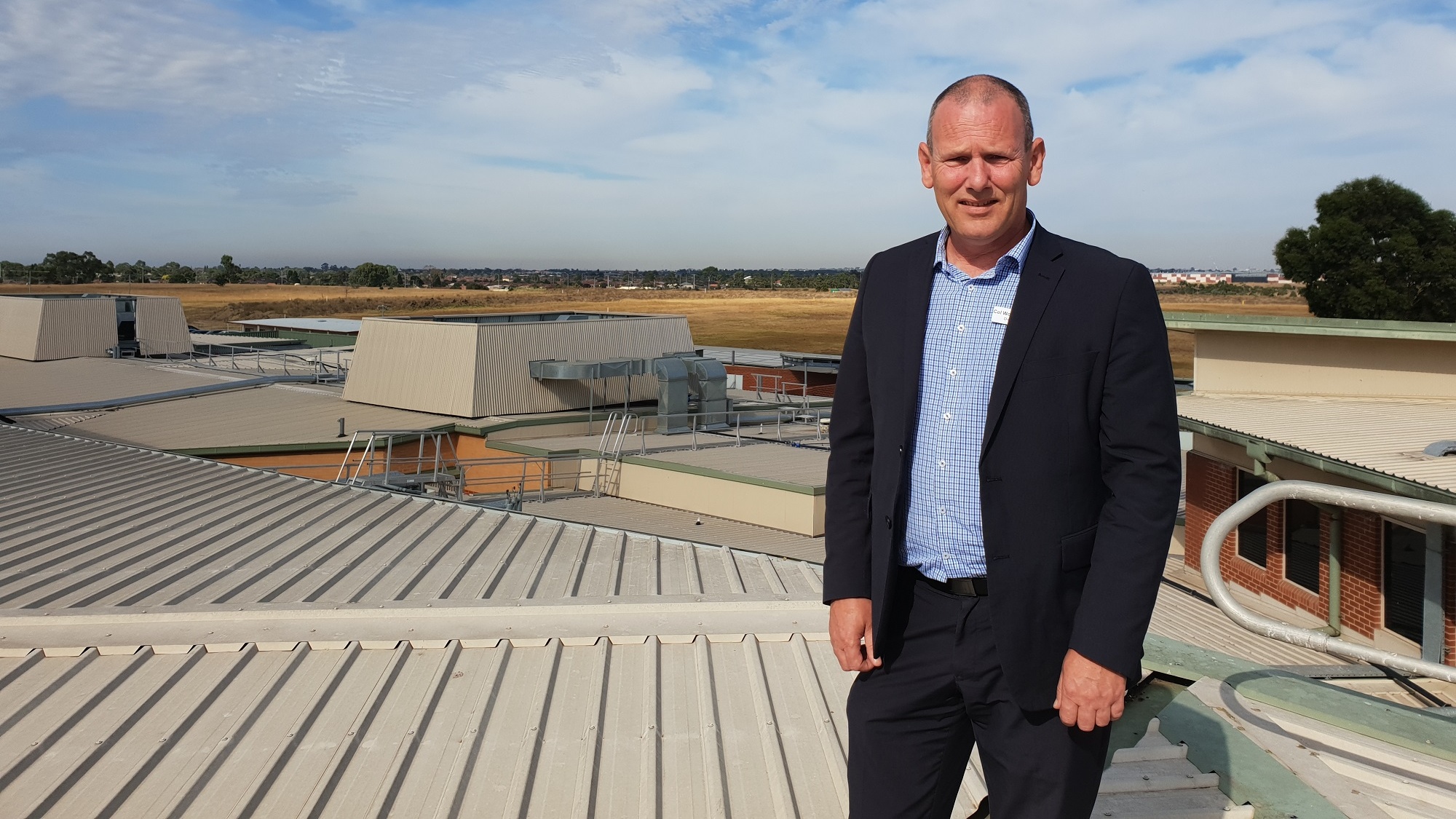
The first staff member we’ve interviewed is Colin Woodward. Get to know him:
What is your coffee order?
I prefer instant coffee.
Tell us about your Northern Health journey?
I started at Northern Health almost 11 years ago. Prior to this, I was working in the private health sector as a Facilities Manager for Villa Maria Disability Services.
Being a Wallan resident, I wanted something closer to home and applied for a role at Northern Health that was being advertised. I didn’t get it!
But, I did get a request to speak with the Executive Director of Corporate Services at the time, where he told me that they actually had another job for me, as the Senior Maintenance Engineer.
Northern Health Engineering & Building Services department was just established. It was a tumultuous time and I eventually moved into the role of Director of Engineering around May 2010. When I first arrived, the engineering team was small. There was only 5 people. Today, we have 23 full time employees. We brought a lot of services in-house and in doing so, created significant savings financially.
It’s been a challenging time and now we are looking at another period of growth and development. This is pretty exciting!
Can you tell us a bit about your career before starting at Northern?
I started as an apprentice plumber and gasfitter at the Greenvale Centre. This facility has since closed down and transferred its services to the Broadmeadows Hospital. My working journey has seen service at Western General Sunshine, Mount Royal, The Royal Melbourne, Royal Children’s Hospital and Thomas Embling Hospital.
While I was working full time, I was also serving in the Australian Army. I was only 16 when I enlisted and have had a colourful 26 year long career.
The high pressure environments that I was exposed to and the skills learnt in the army have equipped me to deal with the work I do today, especially in a growing, complex environment like Northern Health.
What do you like most about your role and what do you find most challenging?
I enjoy the challenges of maintaining and developing the Northern Health environment, in particular, delivering on time and within budget. The biggest challenge is finding enough time in a day to deliver.
What is your greatest achievement since working here?
I am proud of the number of tasks we in Engineering have completed in very short time frames and budgets. We have delivered great outcomes for the organisation and the community.
If I look back at the past 11 years, my biggest achievement is survival!
What are the things people usually don’t know about you?
A lot of people don’t know about my military background.
The passion for military came from my father, who was drafted back in the 1960s and went to Vietnam in 1966. All of his three sons – my two brothers and I joined the army. My sister married a soldier as well. The whole family gravitated towards the military because of my dad.
The funniest part was that he never wanted any of his kids to join, but we still did.
There is also a story behind my father’s military service. There were three mates that deployed to Vietnam – my father and two friends. The two mates who served with my father were called Tony and Brian.
My dad’s three sons are called Colin, Tony and Brian. My father’s name was Colin, so was my grandfather’s. Nobody actually realised that until my father passed away in 1999.
My experience within the healthcare industry might be another thing not many people know. I have held a Board position with Plenty Valley Community Health – DPV Health, and I only stepped off the Board last year.
From Colin’s days in military
What do you like to do after work?
I spend far too much time at work, but when possible, I can be found landscaping around our family home in Wallan with my wife. I have three children, a 25 year old daughter, a 22 year old son and a 17 year old son. My family and I like to go kayaking.
How would you describe Northern Health in one sentence?
Northern Health is an agile organisation striving to meet the acute and sub-acute demands of the community utilising all its assets and resources.
Who would you nominate next for a staff profile?
I would recommend Shiraz Lubke from Northern Pathology Victoria. She was part of the pivotal lead that saw the pathology service become in-house. She is very approachable and focussed on the needs of the organisation – I am sure she has a great story to tell!
‘Learning Improvement Science at Northern Health (LISN)’ workshop was established in June 2015, with the aim to give Northern Health staff a way to understand improvement methodology and feel empowered to go back to their work environment and make improvements.
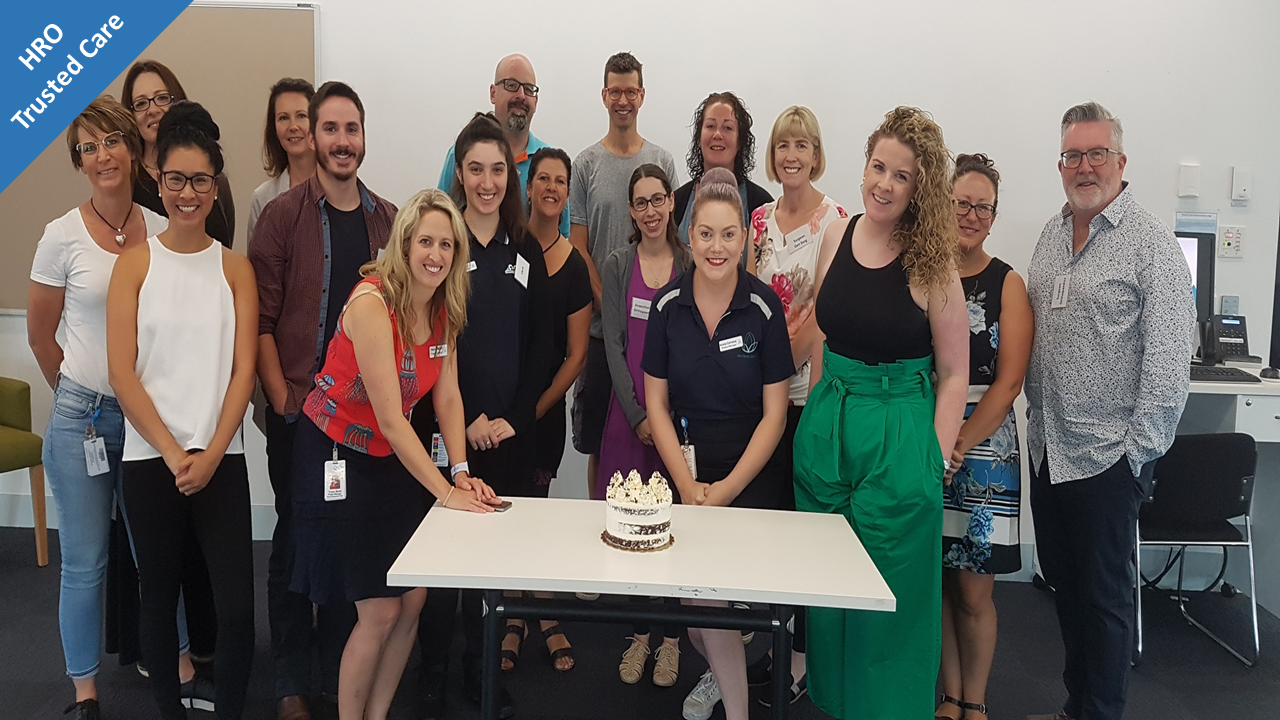
LISN is an action learning improvement workshop built around a simulation of Day Procedure Unit (DPU). Multiple cycles are conducted to improve patient’s clinical outcomes and access, reduce documentation errors, while at the same time, improve efficiency. This workshop is crucial to the High Reliability (HRO) – Trusted Care transformation, as one of the critical success factors in achieving HRO is creating enabled healthcare workers who have an understanding of improvement science (LISN) and Reliable Innovation and Safety Science (RISSN).
On Wednesday this week, the workshop was delivered for the 50th time.
Ariana Carrodus, Project Manager, has been part of LISN since it began.
“I look forward to delivering LISN every month – it’s always such a rewarding experience to see participants grow, learn and even have some fun throughout the day. I feel very privileged that I have been able to be part of LISN for the last three and a half years,” she said.
Since 2015, over 500 participants from Northern Health and health services from across the state have attended. Currently, Northern Health is working in partnership with the Royal Children’s Hospital (RCH) to deliver LISN regularly to RCH staff and consumers.
Simon Lane, Improvement Capability Advisor at RCH, was involved with Northern Health’s team in 2015, when the workshop was first developed, and has witnessed it evolving considerably.
Upon identifying that RCH hadn’t had improvement workshops with simulations, the decision was made to collaborate with Northern Health. Simon is a firm believer that in order to know something deeply, you need to try to teach it to others.
“Ariana and I are now co-presenting to our staff. It’s been really effective and we’ve found that having mixed groups from various health organisations is valued by the participants. They get to hear that some of the concepts are similar and exchange ideas. Healthcare is a complex system and all departments need to work together to achieve a particular service delivery for a patient,” he said.
Simon explained that in order to make changes, organisations need input from all departments, and that is why all areas need to have the skills and knowledge of improvement science.
If you are interested in attending LISN please email the team at lisn.hro@nh.org.au
Do you have an interesting story for iNews? Please send it to our team at iNews@nh.org.au.
On 7 February 2009, the worst bush fires in our nation’s history, the Black Saturday fires claimed 173 human lives, injured 5,000 people, destroyed 2,029 homes, killed countless animals, and burnt through over 4,500-square kilometres of land.
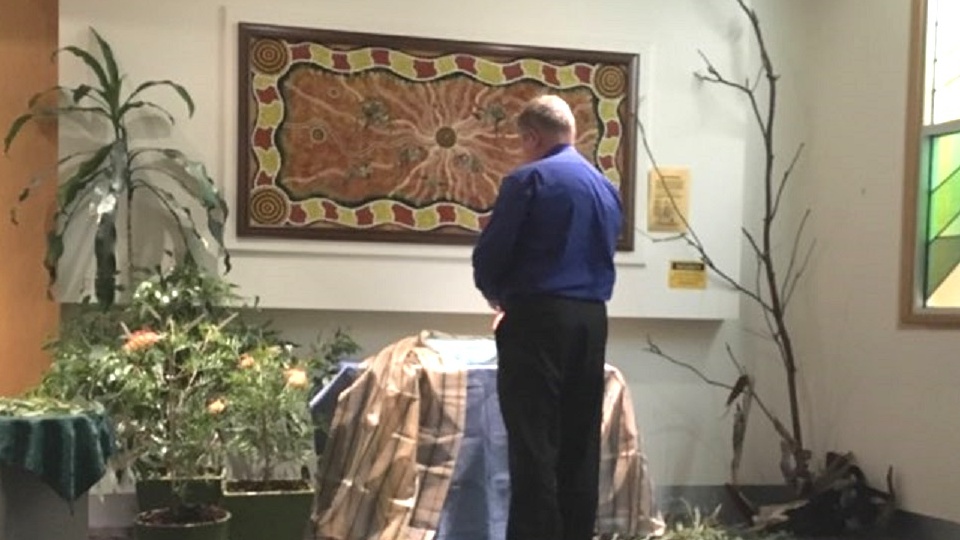
Today marks the 10 year anniversary of that day, an event that occurred very close to Northern Hospital, marked by a commemoration ceremony at The Chapel of Northern Health .
In the two weeks preceding Black Saturday, Victoria experienced a severe heatwave. Melbourne had temperatures in excess of 43°C for three consecutive days.
Combined with the effects of the long term drought, extreme fire risk conditions were created when Melbourne reached 46°C on 7 February. The wind gusts of more than 100 km per hour changed direction late in the day, causing unpredictable fire paths.
The conditions were more extreme than the conditions experienced on both the ‘Black Friday’ event in 1939 and the notorious ‘Ash Wednesday’ event in 1983. In the wake of the fires and the casualty toll, policies and procedures for managing bush fires needed revision.
The simple but moving ceremony held today saw staff sharing stories, jointly remembering and the recitation by Roman Catholic Chaplain, Rosemary Bolzan, of a poem written for the 5th anniversary of Black Saturday:
The smiling faces of our volunteers are the first people you see as you enter the hospital. Our volunteers form an integral part of how the hospital operates and help us to provide trusted care to our community.
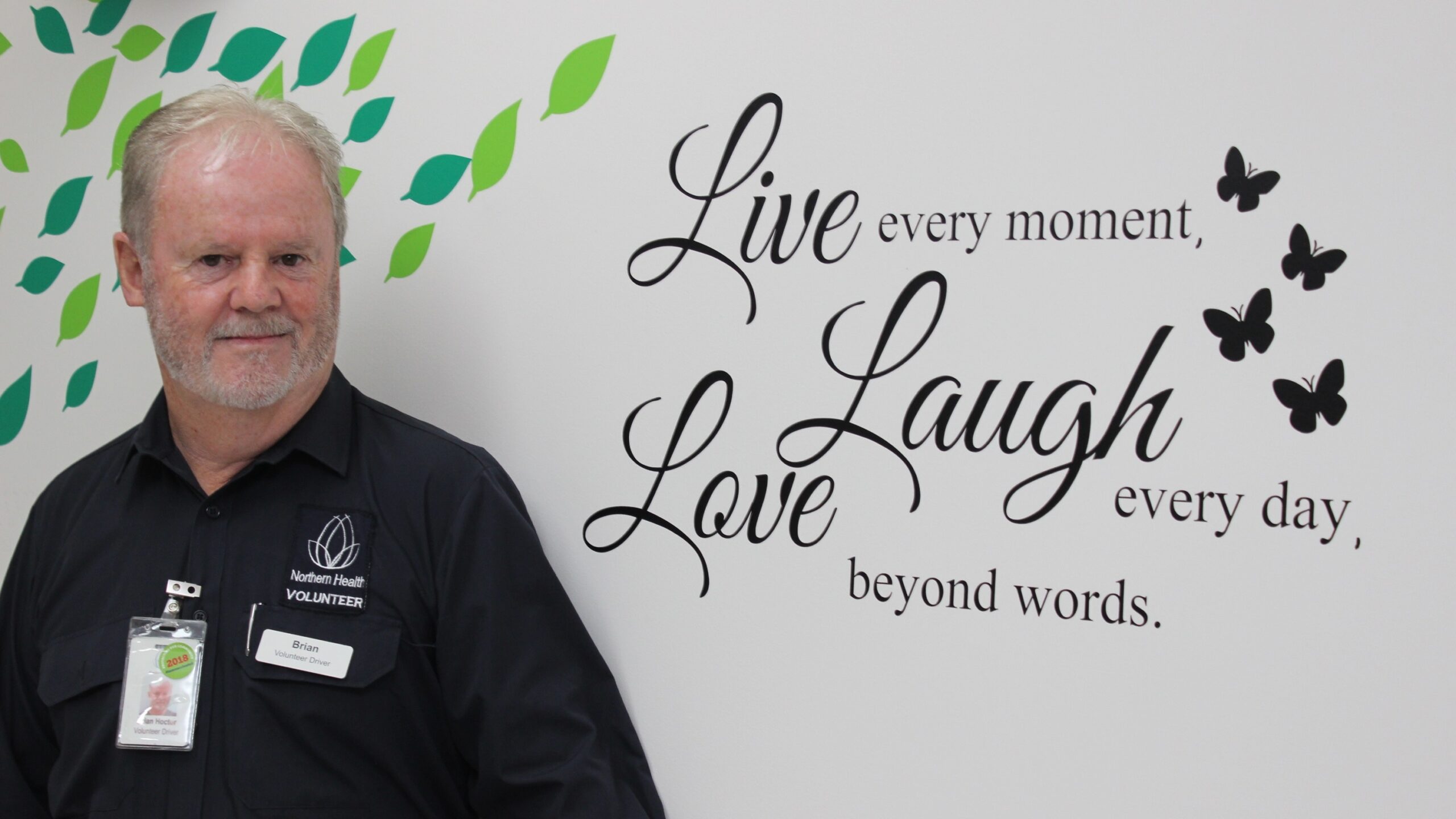
Brian Hoctor is a volunteer driver who has been with Northern Health for five years, and is a wonderful example of true community spirit.
A humble man, Brian says, “I’m not here for pats on the back, I’m here to help.”
His role is to drive patients receiving chemotherapy or dialysis to and from their appointments at the hospital, and to make sure they are settled, comfortable and feel safe.
Brian feels he is very much on a journey with the patients he brings in, providing comfort and an ear to listen. He refers to the front passenger seat of his car as a ‘confessional’, as the people he drives around tend to open up to him.
“These people are scared, they don’t know what they’re in for, they’re going to chemo or they’re going to dialysis, so the front seat of my car is very much like a confessional. It’s very honest and it’s like the chair that tells the truth,” Brian says.
Lynda Williams is one of those passengers, and is very grateful to Northern Hospital for the opportunity of meeting Brian.
“Brian is genuine and caring. He’s always listened to me, but never given advice, just listened. He’s stopped many tears and he’s made me laugh,” Lynda says.
“Because I don’t drive, I’d have to catch buses, so being picked up and dropped off removes a lot of stress. When Brian started picking me up, I was really freaked out about my hair, but his smiling face has helped me through it.”
A cancer sufferer himself, Brian forms close bonds with his passengers, as he can relate to the hardships they are facing. He says that sometimes he does struggle with emotional attachment.
“When you’re picking up the same person for two or three years, you get pretty close to them and you feel you are part of their lives. It’s a struggle to let go, but you have to let go and let them rest in peace,” Brian says.
Brian brings a lot to the lives of the people he drives around, but says volunteering at Northern Health has also brought a lot to his life.
“I’ve learnt to be more humble, I’ve learnt to smile on the outside and I’ve learnt to be compassionate,” he says.
“I’ll be here until I can’t do it anymore.”
Lynda Williams and Brian Hoctor
Do you have an interesting story for iNews? Please send it to our team at iNews@nh.org.au.