• Rapid Antigen Testing Team

    Rapid Antigen Testing Team

    Northern Health’s Rapid Antigen Testing Clinic has been up and running for a month, seeing around 90 patients per day. With the working hours now extended  to 24/7, the team is expecting to see even a larger number of patients.

    Dr Victoria Madigan, Infectious Diseases Physician, together with Clare McCarthy, Director Quality, Safety and Patient Experience, were asked to set up the team and get the clinic running.

    The clinic has already made a big difference for the Emergency Department, in terms of identifying COVID-19 positive patients faster and getting them access to treatment.

    “This is also helping the whole hospital, because we are able to identify the patients with COVID-19 earlier and move them to a more appropriate location,” Dr Madigan added.

    The test is simple and easy to use, with results available within 15 minutes. The team have done a little over 2,000 tests so far and they are very pleased with the results.

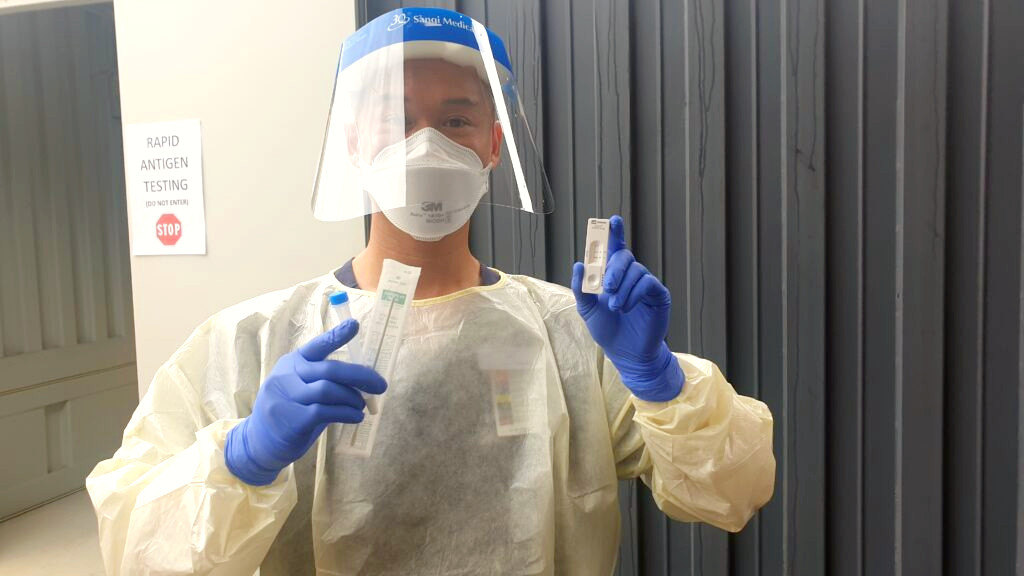
    “It’s not quite as sensitive or precise as the PCR test, but it’s pretty good, especially for patients who are in an earlier stage of their illness and are more likely to be infectious. The test is a swab that needs to be put into each nostril and then the swab goes into the fluid-filled tube. The test comes up showing if you are positive or negative, similar to a pregnancy test,” Dr Madigan explained.

    To help the clinic run quickly and efficiently, the team employs nursing students, like local Epping resident, Vi Nguyen.

    “I work closely with our patients, making sure their details are correct and I conduct the tests as well, while supporting the admin and clinical teams. Epping is my local community and it feels great to give back and be involved with so many sides to the COVID-19 response. I really appreciate the opportunities given by Northern Health and getting to work in so many areas. It gives me experience to become a better nurse in the future,” he said.

    “Vi is part of an amazing little team to work with,” said Clare. “We’ve pulled together a workforce of different stripes who rallied really quickly and value their contribution to our COVID response. They are such an asset to Northern Health from varying disciplines, all motivated to support our local community.”

    Clare added, “accolades go to our Emergency Department colleagues who have guided and supported us with this initiative – that’s basically in their front yard.”

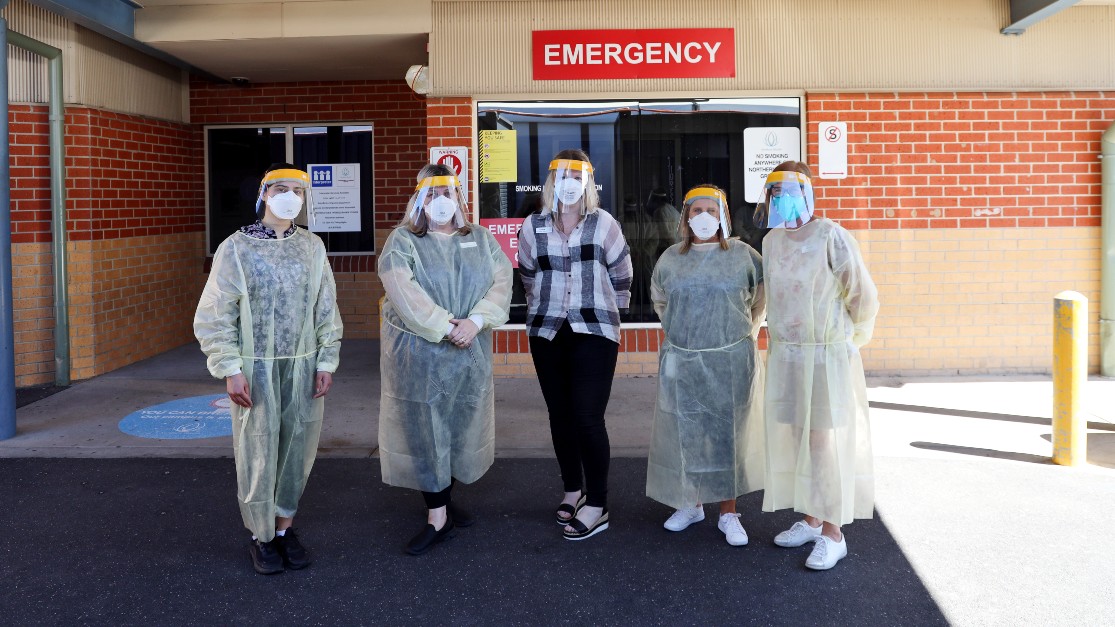
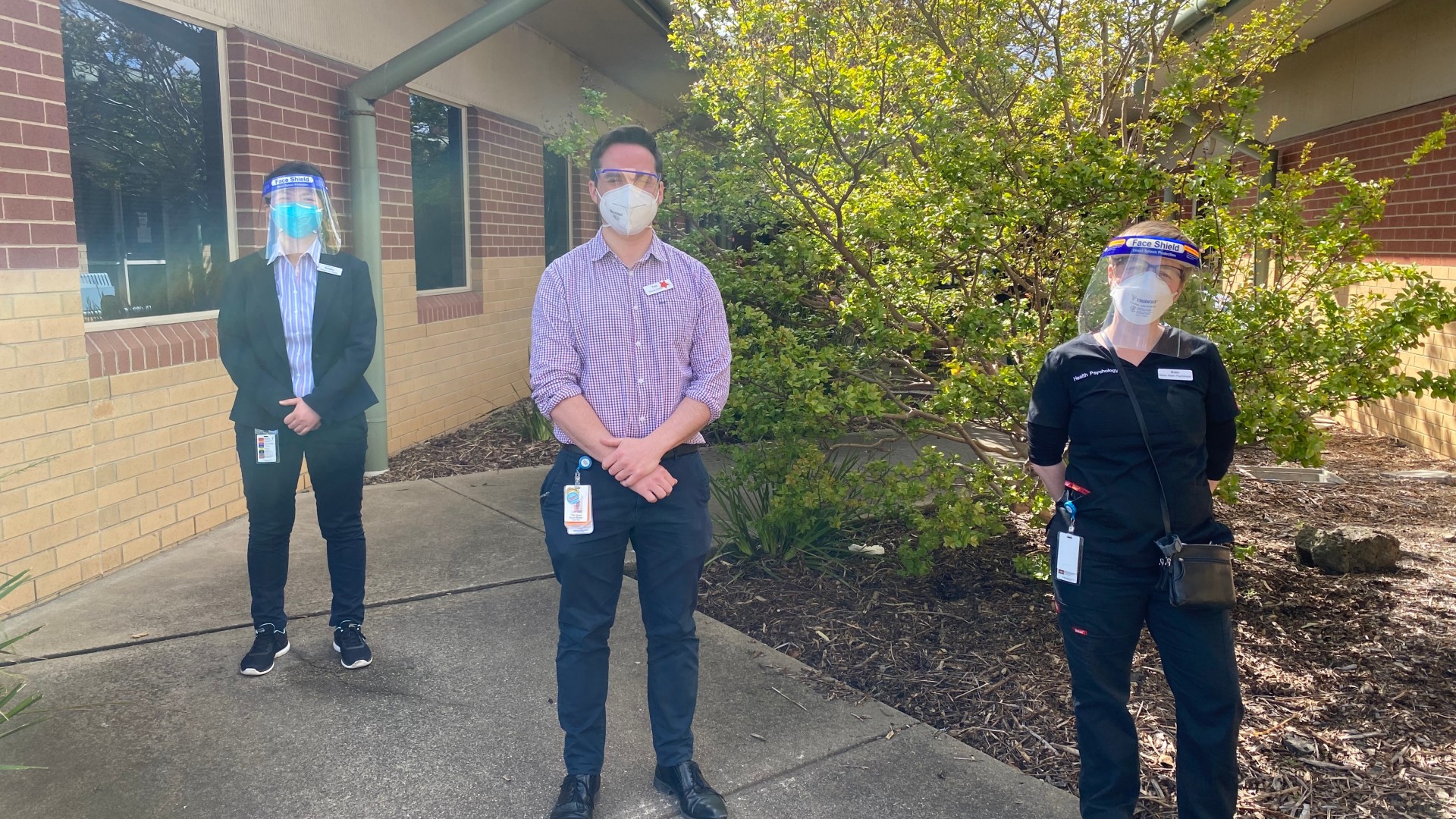
    The testing team: Vi Nguyen, Victoria Madigan, Clare McCarthy and Julie Hamilton.

    Featured image: Vi Nguyen with the testing kit
  • Q&A with Dominic LaCaze: Working in Supply and Procurement

    Q&A with Dominic LaCaze: Working in Supply and Procurement

    In this week’s Q&A, we spoke to Dominic LaCaze, Supply Manager, about the work of Supply and Procurement at Northern Health.

    What is your coffee order?

    Medium triple shot flat white, no sugar.

    Tell us about your Northern Health journey?

    Back in 2015, I was employed on a 12 month contract for a project to convert manual ordering to a semi-automated order system, Imprest, which uses barcodes and scanners to create orders. Seven months into the role, I was employed full time and took over the Supply team and then also managed the car fleet. As the hospital grew and became busier, the team and the scope of work increased.

    What is the role of Supply and Procurement?

    The role of Supply and Procurement is to support the clinical teams and their requirements on a day to day basis.

    What does a typical day look like for yourself and the team?

    A typical day is delivering all the inbound medical consumables, delivering the PPE orders, staff scanning consumables to replenish stock in the wards, investigating order and stock issues, booking couriers, managing fleet and receiving COVID-19 related stock and equipment.

    How has COVID-19 changed the way of Supply and Procurement?

    It has certainly made life busier. The complexities of COVID-19 protocols and the rapid changes have meant more flexibility is required by everyone. Ward changes and openings and closures have been a challenge, but all the supply staff have adapted without complaints and just got on with it.

    What do you enjoy the most about your role?

    The variety of tasks certainly makes life interesting and helping busy clinical staff to make it easier for them and improving the way we do things.

    What do you like to do in your spare time?

    I like to cycle and swim but have been very slack and no pools are open. I would also normally say eat and drink but I did Dry July and haven’t had a drink since. Maybe a beer now that we are at 80 per cent vaccination.

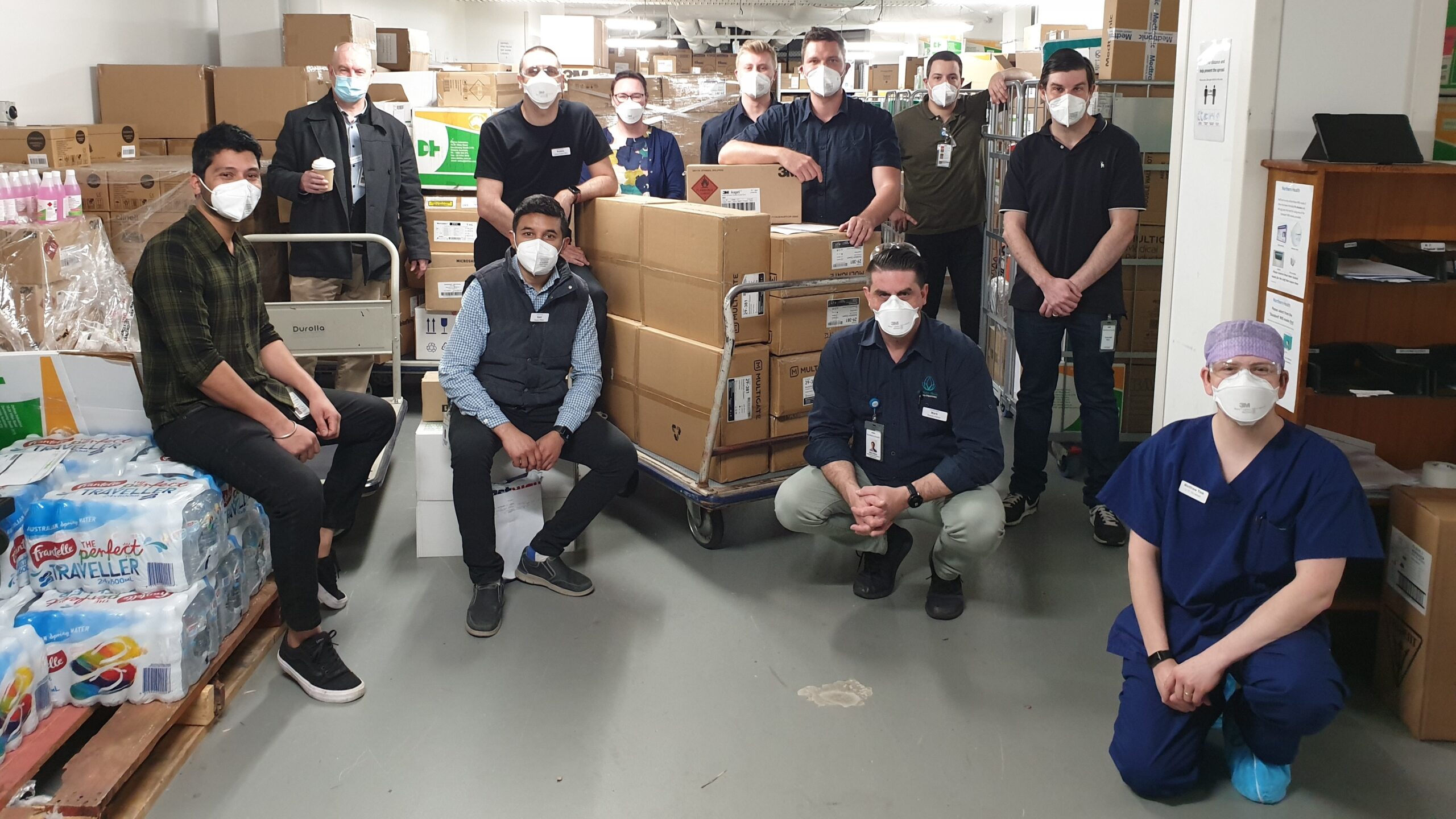
    Featured image: Supply and Procurement team.

  • Trudi Hay’s Virtual High Tea

    Trudi Hay’s Virtual High Tea

    Fundraising looks a little different to how it used to, with new and innovative ways being sought to connect with networks and donors.

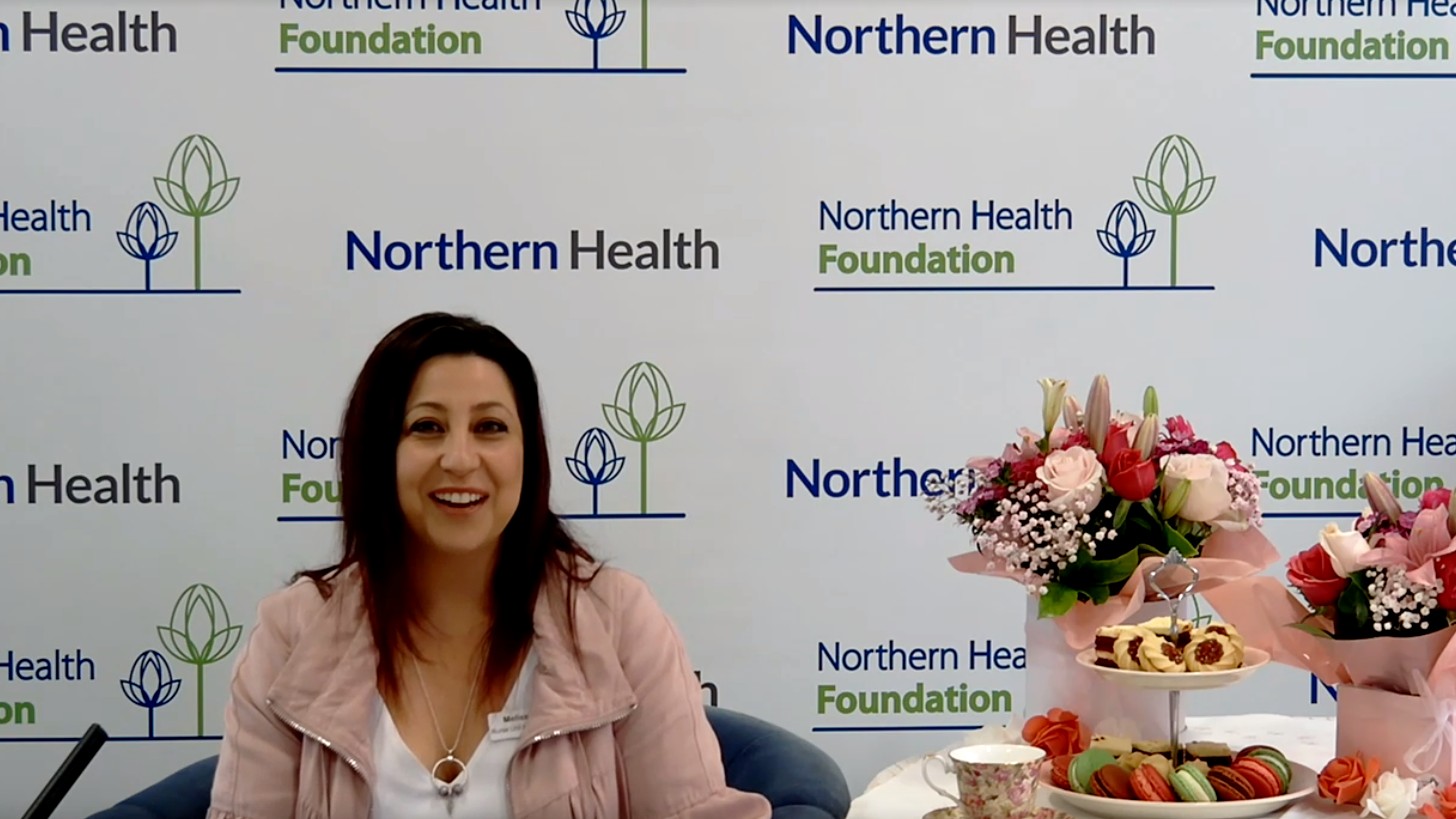
    For the second year in a row, Northern Health Foundation Board Member and Patron, Trudi Hay, hosted her annual Cancer High Tea via a virtual platform. The event, which was held live between Trudi’s living room and Northern Health Offices, successfully raised over $15,000 for our Cancer Services.

    Guest speakers included Melissa Gwynne, Nurse Unit Manager of Day Oncology at Northern Health, and Madelaine Flynn, Head of Infection Control at Northern Health. Guests were also offered an insight into the operation of major sponsor, Core Projects, which was voted among Australia’s best places to work.

    Trudi Hay, Speaking at High Tea
    Madelaine Flynn, speaking at the Virtual High Tea

    Trudi is passionate about supporting patients who are undergoing cancer treatment and has been raising funds for our Cancer Services for many years. It is a cause very dear to her heart. With the total raised over the past 11 years close to $95,000, her events have resulted in the funding of many important items for cancer patients, including an ECG Machine and a contribution towards a Scalp Cooling Machine.

    In the past, Trudi has welcomed guests into her home or to other locations within her local community. The move to a virtual platform involved setting up all technical aspects prior to the event; a fantastic effort from the Foundation and Communications teams.

    “I was overwhelmed and touched with the incredible reaction and generosity to my virtual events over the last two years, especially during difficult times. If anything, we wanted to circulate the message that cancer treatments have continued throughout lockdown and to thank the amazing work that our frontline staff are doing to protect our community,” says Trudi.

    Melissa Gwynne was also moved by the incredible generosity of this year’s event. “We are very grateful for the support of patrons like Trudi Hay. This support has enabled us to make the cancer journey a little more comfortable for our patients. With such a wonderful result this year, we will be purchasing a new bladder scanner for the department,” says Melissa.

    “On behalf of Northern Health Foundation, we thank Trudi and her guests for their dedication to Northern Health Cancer Services. We are very grateful for our patrons and the ongoing support they provide to our community,” says Pina Di Donato, Director Foundation.

     Featured image shows Melissa Gwynne, speaking at the Virtual High Tea.

  • ED clerks: the glue that holds it all together

    ED clerks: the glue that holds it all together

    It has been a time of change and growth for our Emergency Department (ED) clerks, who have been working tirelessly to help fight the pandemic, led by Trisha Abbey, Emergency Department Clerical Supervisor.

    “We have 55 clerks in the team, with 20 rostered across 24 hours. People often think that we just take clerical details, but our role is so much more than that – it has a large focus on customer service, supporting patients and families with empathy, assisting the doctors, nurses and handling all the phone calls, as well as admissions, discharges, transfers out of hours,” she explains.

    The last two years have brought numerous changes in how the team works, especially with the patient self-registration process and the introduction of the Virtual ED in October last year.

    “ED now offers the virtual service, which has been so successful thanks to the hard work of everyone involved, including our clerks and Dr Loren Sher, who is the project lead. The number of virtual patients soared so much, that we had to put in a second support clerk for the virtual role, and the morning shift now sees 50-60 patients from both community and COVID positive pathway, which is an enormous number,” she explained.

    For Trisha and the team, the role of an ED clerk is all about customer service.

    “You need to have a kind heart and be able to provide empathy to people. One of the challenges in this role is always the time – we would all like more time to dedicate to reassuring the patients and families. We work incredibly well together, and that is demonstrated through the amount of work the team gets done,” she added.

    Trisha has been working at Northern Health for twenty years, and for the most part has worked in Emergency. She has been in the current role for three and a half years.

    “I enjoy leading the people, supporting them and seeing their growth. I’m really proud of the team – this hasn’t been an easy time for our staff and we had some really difficult days,” she added.

    Even though the COVID times have been challenging and still are, there is a lot to learn from the change.

    “Biggest takeaway from the COVID-19 is the adaptability. If there is one good thing that came out of the pandemic, it has demonstrated how adaptable the team is. Change isn’t easy for everyone, and if you look at what ED has achieved during this time with the new registration system and the Virtual ED, it is clear that these changes are here to stay,” Trisha added.

    Keeping the team informed is an important part of her role. At the end of every week, on a Friday, she sends a weekly update.

    “This update has data about the patients seen and admitted, ambulance presentations, and all the department changes. It is really important to communicate that, as we work 24/7 and it’s impossible to get all staff together. The update includes a section on wellbeing and resources available to staff”.

    “Trisha is like the conductor of the orchestra”, says Clare McCarthy, Director Quality Safety and Patient Experience.

    “Over the last month, the Rapid Antigen Testing Team has had the privilege to see Trisha make sure we’re all in sync, working harmoniously. Her and the clerks have made us members of the wider ED family – ‘together’ well and truly,” she added.

    “In this day in age, you need to support your people – you are only as good as your team,” Trisha concludes.

    Featured image (left to right): Zainab Ayub, Bree Lock, Trisha Abbey, Mel Scrimizzi, Lynette McDonald, ED Clerks

  • Occupational Therapy Day: Participation, Inclusion and Independence

    Occupational Therapy Day: Participation, Inclusion and Independence

    Today is World Occupational Therapy Day. It is an opportunity to celebrate our Occupational Therapists (OT), and to educate the broader community on the value OTs provide.

    During 2021, Northern Health’s Occupational Therapy service expanded, with new roles in acute inpatients with the hospital expansion and also in the community and NDIS spaces.

    Northern Health employs over 80 Occupational Therapists who work across the service in various clinical and non-clinical settings including acute wards, rehab and GEM, Paediatrics, Community and Ambulatory Care and Hand Therapy. In addition, OTs work in other non-clinical areas including Education and OH&S.

    Our Occupational Therapists work with patients to build independence within daily activities as well as promoting participation within their enjoyed and meaningful tasks. This ranges from assisting our acute or rehab patients in getting home safely and independently from their hospital admission, to recommending and prescribing specialised equipment such as wheelchairs to allow our clients to access the community and participate in meaningful tasks which are specific to them.

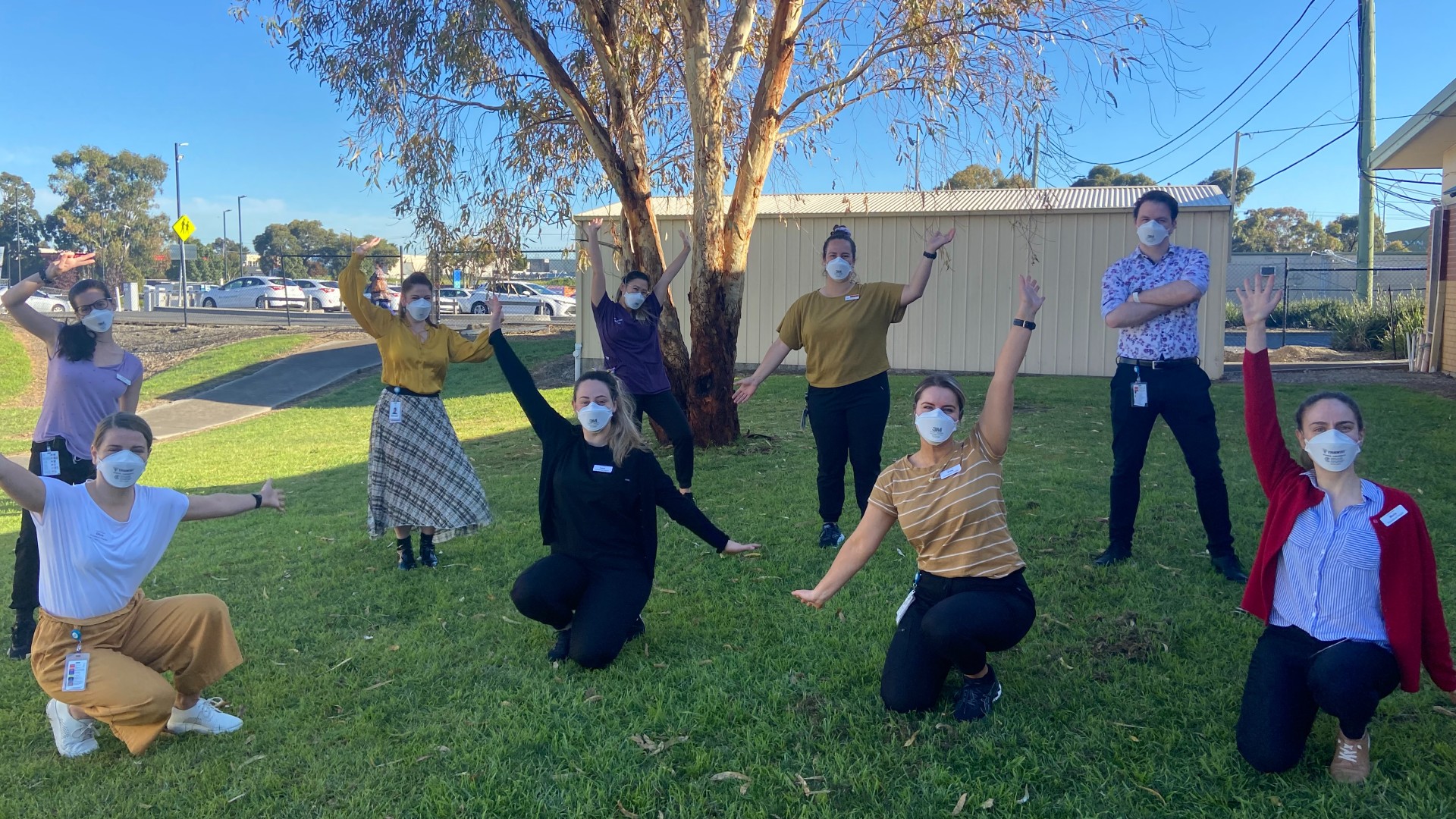
    Northern Hospital Epping, Acute OT Team

    Their good work has not gone unnoticed. Here is some of the feedback our OTs have received in recent times:

    “Wanted to reach out and say thank you for everything you did for mum & dad. You truly helped him so much for us to keep him home as long as we did. Thank you once again.” 

    “I just wanted to let you know that my grandfather passed away almost three weeks ago now. I know that you haven’t dealt with Nonno for a little while now but I still just wanted to extend another thank you for everything you did for him.” 

    “I believe in giving credit where credit is due and you should be very proud of the work that you do. He was very fond of you and the way you would chat with him. Thank you again for everything.”

    This year’s theme of Participation, Inclusion and Independence celebrates the role OTs play in supporting people of all abilities to engage in activities they find meaningful.

    We asked some of our OT’s to tell us about why they enjoy working at Northern Health, promoting Participation, Inclusion and Independence with our patients:

    “Working at Northern Health as an Occupational Therapist is both exciting and rewarding, because I am able to work with a variety of patients from many cultures and all walks of life. Being able to practice alongside so many other dedicated, talented and passionate clinicians who work with Northern Health is something I value. We inspire each other to be the best practitioners we can be! I feel supported and valued as a therapist within Northern Health and am proud to work with Northern Health Occupational Therapy to contribute to a healthier and happier growing community in Melbourne’s North.”  Maria Govett, Grade 1 Occupational Therapist (Acute Wards)

    “I love working as an OT at Northern Health because I have the opportunity to work with a variety of clients from different cultural backgrounds that share a common goal of improving their independence in everyday life. I also love working at Northern Health as I feel well supported by everyone in the OT team.” Jessica De Vincentis, Grade 2 Occupational Therapist (CHSP/NDIS)

    “I love being an OT at Northern Health because I feel like I’m working with a family more than a team to help people in ways that only an OT can.”  Reanna Liberatore, Grade 2 Occupational Therapist (GEM) 

    “I am so lucky to work with such a kind and capable team who genuinely care for their patients and for one another. It’s been 14 years and I can honestly say it has been an absolute pleasure to work within Northern Health OT because of our team.” Patsy Giannikos, Associate Director Occupational Therapy.

    The OT leadership team comprises Patsy Giannikos (Associate Director, Allied Health, Occupational Therapy and Hand Therapy), Ange McLoughlan (Occupational Therapy Clinical Leader, Continuing Care, Northern Health Bundoora), Jess Trist (Occupational Therapy Clinical Leader, OT Workforce, Student Education, Broadmeadows Hospital) and Simone Cariss (Occupational Therapy Clinical Leader, Acute and Community).

  • Telehealth Awareness Month: How we care virtually

    Telehealth Awareness Month: How we care virtually

    This month is Telehealth Awareness Month, aimed at promoting telehealth and virtual care for consumers and addressing digital inequity and digital literacy.

    Anton Harms, Senior Clinician, Physiotherapy, is one of many Northern Health staff using telehealth. He said he was keen to explore the use of telephone and video appointment with clients, prior to its introduction across the health service.

    “I had been considering using telehealth for the assessment and review for some patients prior to the COVID-19 related initiative, particularly videos as it was not available previously,” he said.

    As part of our COVID-19 response, Northern Health introduced telehealth as a strategy to support patients attending our Specialists Clinics (Outpatients). Now, telehealth is used right across our health service.

    For Anton, his telehealth experience has been positive, although he does admit to some limitations when it comes to physical examinations.

    “A physical examination is necessary to make these decisions. But there is still a lot we can do for our patients via telehealth, especially when we have video to view the patients’ movement and body language.”

    One of the many conveniences that telehealth offers, is that patients don’t need to travel into the hospital to attend appointments.

    “For many people with severe hip osteoarthritis, their mobility is quite limited and a physical examination is not required in the initial assessment, so having them save a trip to the hospital is much more convenient, particularly if they are from Kilmore, Alexandra or Flowerdale,” Anton said.

    “I have had several long conversations with people, who have been very appreciative of the phone call and the information provided.”

    Anton is exploring ways he can provide readily accessible and understandable information to people regarding hip and knee osteoarthritis and the range of management and treatment options available using technology.

    “The use of apps, SMS reminders and other notifications to assist people on the treatment and rehabilitation journey for hip and knee osteoarthritis is also being explored,” Anton said.

    “We are exploring digital ways of providing easy access to a range of ‘patient reported outcome measures’ (PROMS) so we can more easily understand if we’ve made an improvement to their lives and their goals.”

    Tracey Webster, Telehealth Coordinator, said the use of televideo has evolved since it’s launch in April 2020.

    “We started the pilot in Specialist Clinics and now we use televideo across Northern Health. The wards use it for family meetings, virtual visiting, multidisciplinary meetings and accessing interpreters,” she said.

    “Our community programs use it for our aged care, allied health and transition care, to support dialysis and oncology patients at home and so many more ways. We now have Virtual ED, a Telehealth Hub, group education and a COVID-19 Telephone Monitoring Program.”

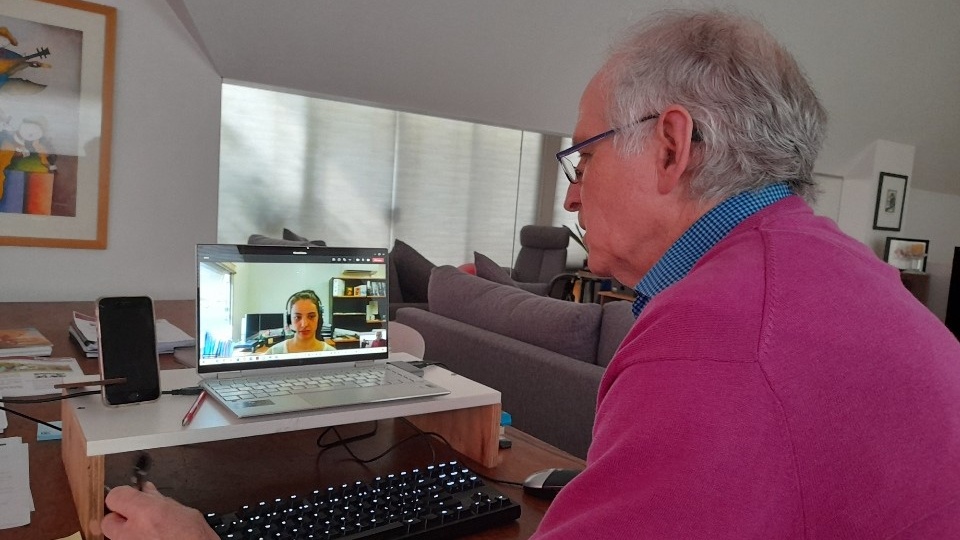
    Featured image: Anton Harms, Senior Clinician, Physiotherapy, conducting a telehealth appointment.

  • From South Africa to Melbourne

    From South Africa to Melbourne

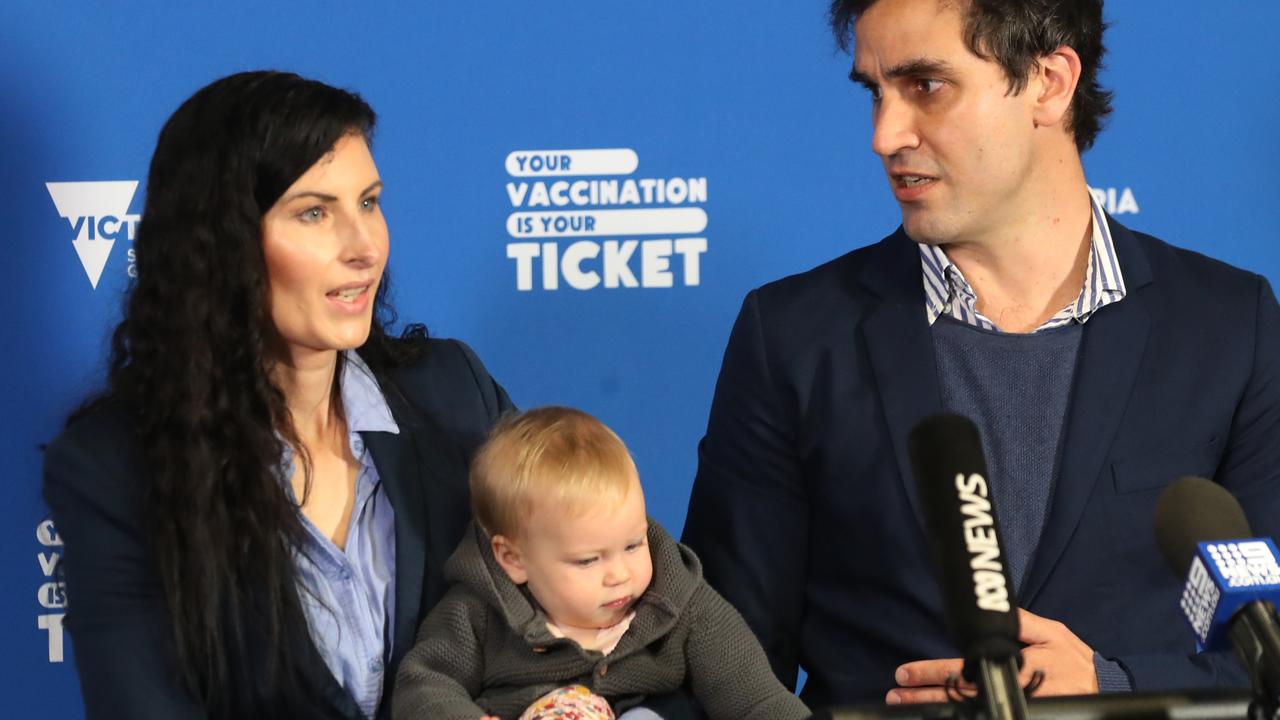
    Last month, Northern Health welcomed Dr Marcelle Jagga and his wife Dr Charlotte Jagga from Cape Town, South Africa.

    They were recently invited to speak at the Victorian COVID-19 Press Conference about their move to Melbourne during the pandemic and how they can use their experience of Cape Town’s three COVID-19 waves to contribute to our current outbreak response.

    Marcelle is an anaesthetist and Charlotte is an emergency physician.

    “I think Australia is really lucky (in the sense) that they had a little bit of buffer and time to see what was going on in the rest of the world, and to learn from those experiences, and to see what mistakes were made and how to improve on that,” Charlotte said.

    Working as doctors in one of the continent’s hardest-hit countries, Charlotte said it was difficult experiencing the waves of COVID-19 in South Africa.

    “We’ve both lost our grandparents, we’ve lost uncles, we’ve lost colleagues, we have lots of friends who became ill,” Dr Jagga said.

    “We didn’t anticipate how diminished our actual workforce would become – either being in quarantine or being ill – so that, for us, was really hard emotionally do deal with.”

    The Jagga’s started planning to move to Australia in 2019 for various work opportunities. Marcelle was looking to complete a Cardiothoracic Anaesthesia Fellowship which he will undertake next year at the Royal Melbourne Hospital – a Fellowship that isn’t available in South Africa.

    Charlotte wanted to come and work at a busy hospital and experience emergency medicine in Melbourne – so she is pleased to be working in Victoria’s busiest Emergency Department.

    Marcelle and Charlotte both expressed how impressed they were with how Northern Health’s management and response to COVID-19.

    Marcelle explained that caring for patients during a pandemic is challenging but it’s important to continue ensuring individual health care is at the core of what we do.

    He also mentioned it’s been great to see how well staff are protected.

    “There’s a great drive to ensure staff are mentally well and physically protected,” he said.

    “We are also enjoying the diverse community here. It’s easy to get interpreters and wonderful how you can always find someone that speaks a different language. Everyone is happy to help here and show you the ropes,” Marcelle added.

    Charlotte and Marcelle are loving Melbourne. They say it’s very family friendly and the community has been very welcoming since their arrival.

    Marcelle and Charlotte with their three daughters

    Featured Image: Charlotte and Marcelle, with their youngest daughter, speaking at the Victorian COVID-19 Press Conference (Image: news.com.au) 

  • COVID Psychosocial Response Team

    COVID Psychosocial Response Team

    COVID-19 not only threatens the physical health of our COVID Ward inpatients, but also psychological health, with new research revealing varying degrees of post traumatic stress following infection. Family members of COVID inpatients are similarly at higher risk of psychological distress in association with isolation measures such as lockdowns and strict limitations on attending hospitals and funerals.

    Northern Health’s Allied Health social workers, psychologists and pastoral care workers have come together to establish the COVID Psychosocial Response Team to provide a range of psychosocial and bereavement supports for our COVID inpatients and family members.

    The team has assisted a significant number of inpatients, partners, children and grandchildren to manage high levels of stress, anxiety, bereavement and grief. Some family members have also required assistance with practical concerns such as a lack of food, accommodation or finances, causing them increased worry.

    The team offers one central point of internal referral through HealthPOWER (used for inpatient referrals and clinical data collection) for all COVID inpatients and family members, and self-referrals are also welcomed via phone or email.

    Dr Brooke Froud-Cummins, Clinical Leader of Psychology, commented that, “Our COVID Ward staff are already enormously stretched, besides the COVID Psychosocial Response Team supporting improved patient and family outcomes, it is also so important to take the added weight of responding to emotional distress off staff as much as possible and to make referral simple and stress-free.”

    Those involved with the COVID Psychosocial Response Team can receive up to three months of psychological therapy, social work supports and/or pastoral care. Linkages with relevant community supports on discharge will also be a key aspect of the care provided. DPV Health Head to Help services, which provide mental health and wellbeing support in the Northern Health catchment, will be a key partner in supporting those requiring longer-term assistance.

    Dr Froud-Cummins also said, “Private psychology and social work services are also strained owing to the pandemic, with wait times of up to 18 months to see a psychologist with a GP Mental Health Plan being reported to us. The COVID Psychosocial Response Team undertakes to bridge this gap for our COVID inpatients and their support networks with ongoing psychosocial concerns.”

    Ward staff can direct HealthPOWER referrals to PsychosocialResponse and will receive a triage worker response seven days per week. For further information, click here.

    Featured image: Dr Sian Cole (Psychology), Tim Gauci (Social Work) and Natalia Dewiyani (Pastoral Care) from the Allied Health COVID Psychosocial Response Team.