• Celebrating International Day of the Midwife

    Celebrating International Day of the Midwife

    The International Day of the Midwife was first celebrated on 5 May 1991, and has been observed worldwide since. We spoke to Debra Bourne, Chief Nursing and Midwifery Officer at Northern Health on the significance of this day and her views on midwifery. Debra commenced her nursing career in metro health services within intensive care departments. Later on, she moved to rural health and held a variety of nursing roles, from renal dialysis unit, operating suite, emergency nursing and then midwifery where she worked for 20 years. Debra was endorsed as one of the first rural and remote Nurse Practitioners (NP) in Victoria. Her career then progressed further and led to health service management roles in operations, quality and service development. Debra joined Northern Health in 2016.

    What is the significance of today?

    In essence, most people have had some touch point with a midwife. Whatever country you are born in, there is a high probability that there was midwifery care. Midwives play such an important role – and not only just for the actual birth but also for the important role they play in the pregnancy and post natal period. Research clearly demonstrates that midwifery care is pivotal to mother and baby’s wellbeing. If a woman and her family receive midwifery care throughout the whole episode, it results in better outcomes for mother and baby. The word ‘midwife’ is about standing with and being there for women. Midwives see the family as a whole unit and are truly focused on holistic care.

    As I said before, we do know that women and babies that have good midwifery care, have better outcomes.

    Why did you choose midwifery?

    I commenced work in a small rural hospital 30 years ago and they were delivering babies. There was just one ward and maternity was a part of it. You could spend one shift working in the Emergency Department, scrub in for an emergency theatre case and assist in birthing. I recognised quickly that I needed to become a midwife to meet that community’s needs.

    I started midwifery when I was in my twenties and just loved it. I loved it right from the start. In the country, I was providing care for women and their families that I knew – it had a real community feel. You looked after them right from the start and when they had their babies, you saw them afterwards, and then you saw those babies grow up. Being present when a woman gives birth is a privilege and witnessing her strength and power in birth is incredibly special.

    What was your most memorable delivery?

    It’s hard to mention just one and often the ones that were most memorable are often the ones that were more challenging. I can also remember the birth of one of the staff members here at Northern. Her name is Steph Gray, who is working in the Neonatal Unit and Short Stay Unit and is a delightful young woman (nothing to do with me). Besides making me feel incredibly old, it was extremely special to see her on her orientation day as a grad nurse.

    But being a midwife is not only about being part of a birth. One of the most significant memories is assisting a woman to breastfeed. Breastfeeding for some can be very challenging and it takes patience, skill and perseverance. Midwives play such an important role here and there is nothing that gives me more job satisfaction than helping a women to overcome breastfeeding challenges.

    To be with a woman who is birthing, is giving a little bit of yourself to that moment. If you are with the mother for eight to 10 hours or even sometimes 12 hours, you are with and connected to that woman – not only physically (on your feet and moving around) but also emotionally. You cannot lose focus and lose that connection to not only create trust, but to ensure the safety of the woman and her baby. Emotionally, this can be hard work. So you can finish an entire shift on your feet being connected to and being there for one woman and it can take a little bit out of you.

    What are some of the rewards of being a midwife?

    One of the rewards of being a midwife are the midwives you work with. Midwives are always about the team work, not only with their fellow midwives, but also with the obstetrics team. This is why I like this job – I’m fortunate to be the Chief Nursing and Midwifery Officer at Northern Health and play a small part in leading this wonderful and highly skilled group of midwives here. They are a very caring and close knit group.

    At Northern Health it is not just the midwifery team – here it is the obstetrics team, our doctors, our neonatal team – it’s a close knit team and that is one of the joys of being here as a midwife.

    Any final messages to staff and the community?

    It is important that we acknowledge the importance of the role of the midwife and the role they play in improving maternal and newborn health. They truly make a difference – they connect and be with women at such an important time of their life. I would like to sincerely thank them on this special day.

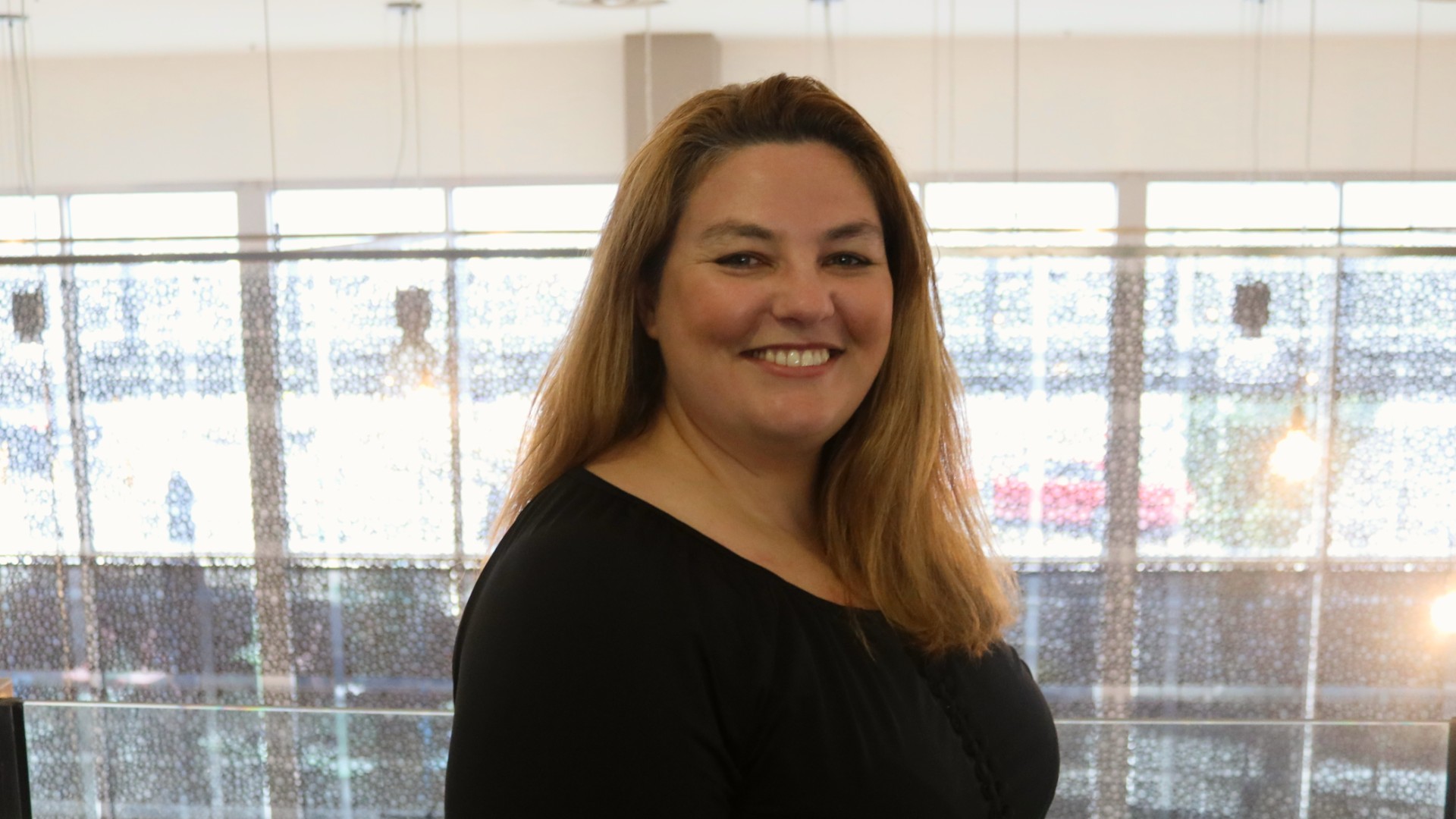
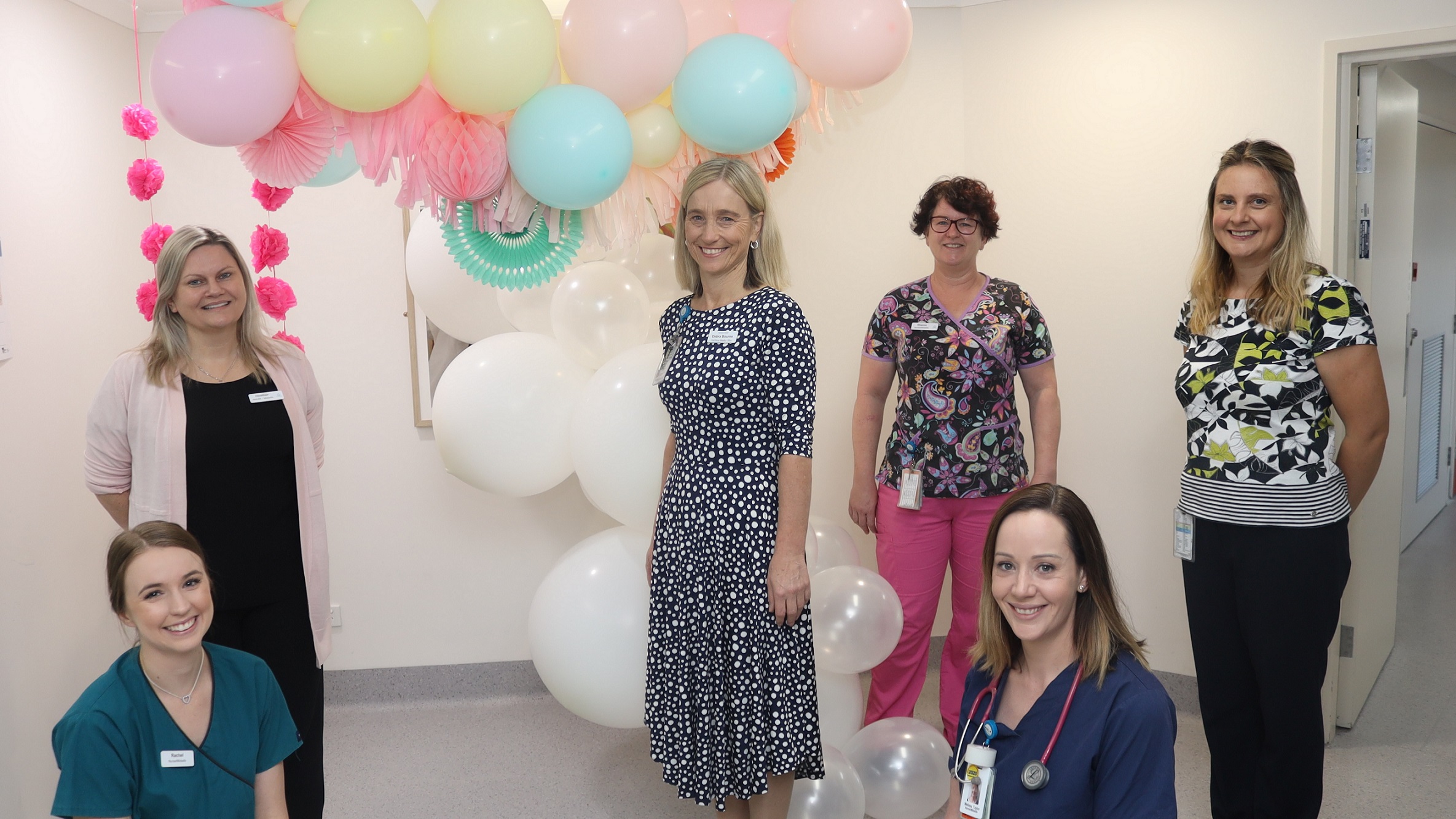
    Featured Image: Debra Bourne (centre) with midwifery staff 
  • Communication without contamination: How Northern Health is protecting our health care workers

    Communication without contamination: How Northern Health is protecting our health care workers

    Communication is very important in any emergency, however as Dr Loren Sher, Head of Paediatric Emergency points out, with COVID -19, there’s the added challenge of contamination from our communication devices. ‘How to maintain effective and critical communication between staff without the risk of contamination?’ was the problem that Dr Sher put to some friends in business and IT.

    “They linked me in to the technology team at HESTA. When HESTA heard we were trying to solve a problem related to COVID-19, they not only helped us with the solution, but also donated the equipment we would need to run the solution,” says Dr Sher.

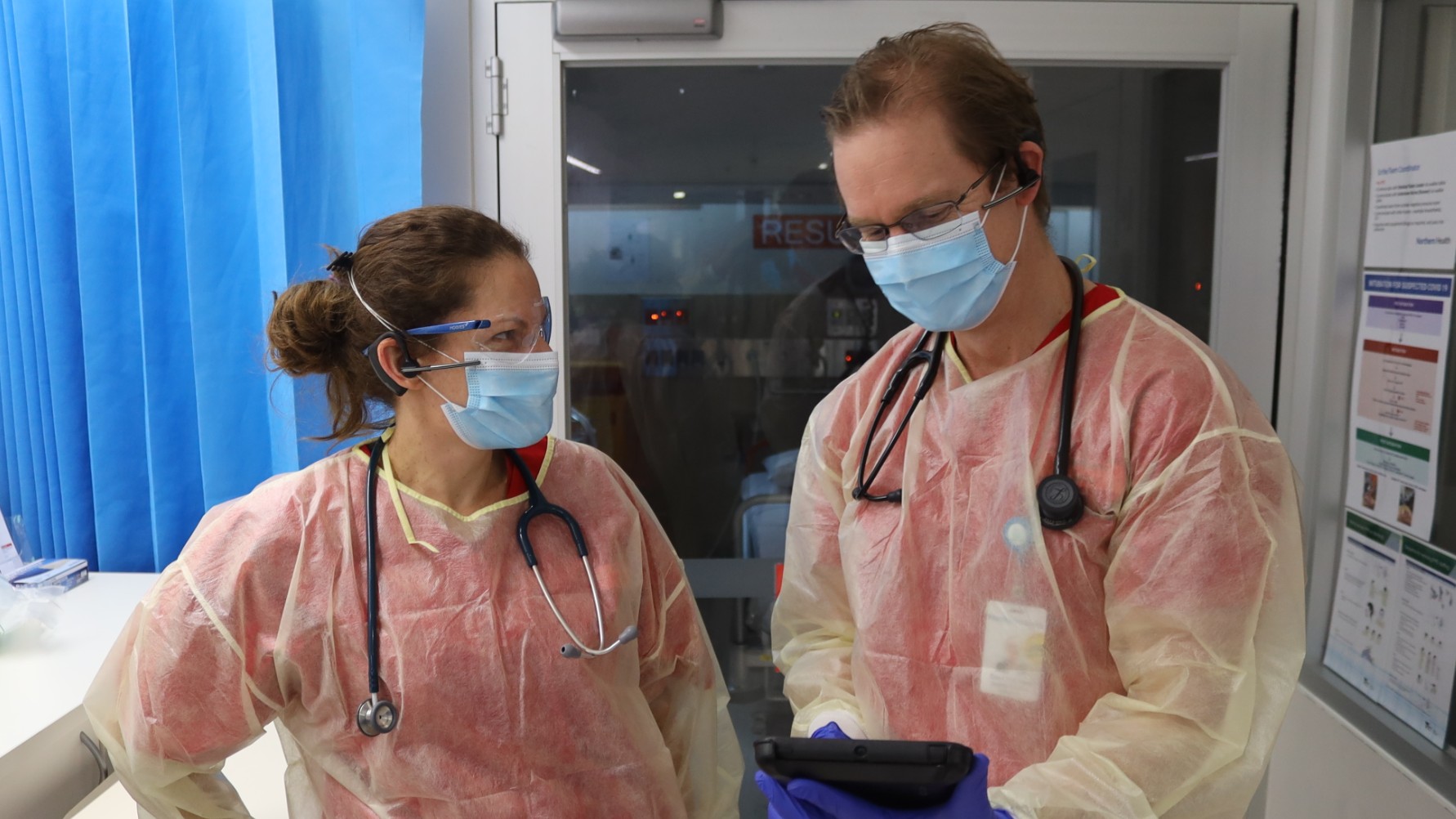
    HESTA donated ten Plantronics Bluetooth headsets and one laptop to facilitate hands-free and team communication in the emergency department, while managing patients with suspect or proven COVID-19.

    Says Dr Dean Pritchard, Emergency Physician and Deputy Director of Emergency, “Hands free communication will make a positive impact on the safety of doctors and nurses during COVID-19. Using these devices, we will no longer be required to touch our faces using the portable phones, feeling confident to take phone calls between managing our COVID-19 patients. Communication is central to our pandemic response, and this generous donation will certainly improve the safety of our frontline clinicians.”

    Dr Sher says, “On behalf of Northern Health, I would like to thank Stephen Reilly, Chief Operating Officer, Neil Saxton, Chief Partnership Officer, Sheena Peeters, General Manager- Technology, Uday Jagasia, Technology Business Partner, from HESTA and Prue Munro,  ZOOM Customer Manager, for their generous donation and ready support.”

  • Postcard to my younger self: Gavin Fahey

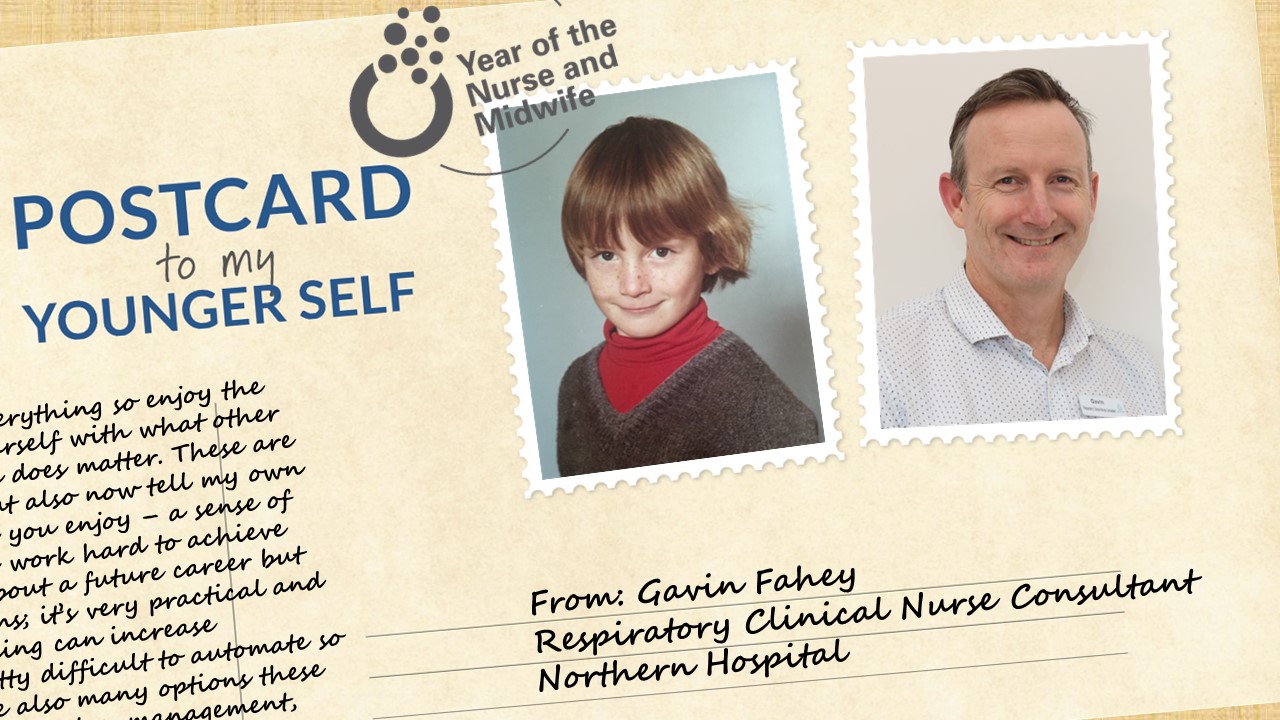
    Postcard to my younger self: Gavin Fahey

    To celebrate the International Year of the Nurse and Midwife, we asked a selection of staff who exemplify the key qualities of a nurse/midwife to write a ‘postcard to their younger self’ and offer insight and advice.

    Gavin Fahey, Respiratory Clinical Nurse Consultant and Team Leader, had this to say to his younger self:

    Stay positive, you’re not meant to know everything, so enjoy the learning along the way. Don’t concern yourself with what other people think about you and your opinion does matter.

    These are the things I would tell my younger self, but also now tell my own children. Continue to focus on the things you enjoy – a sense of adventure, travel, remain optimistic and work hard to achieve your goals. 

    You may be a little unsure about a future career but nursing is a great option for many reasons; it’s very practical and can be applied in all walks of life.  

    Nursing can increase confidence and social skills and it’s pretty difficult to automate so nurses will always be needed! 

    There are also many options these days; specialising within departments and roles, management, project management – just to name a few.

    And it’s fine to move between roles until you find your niche. Remember that a rewarding role is one in which there is a balance between your knowledge/input having a positive impact and ongoing learning.

  • Naomi Kent: Nurse turned OHS team leader

    Naomi Kent: Nurse turned OHS team leader

    Sydney born and bred Naomi Kent, Team Leader Occupational Health and Safety (OHS) now calls Melbourne home, after changing not only the state she resided in, but her occupation as well.

    She joined Northern Health in October 2018, and in her role provides OHS advice, looks at all OHS incidents and liaises with affected staff members and managers. In her role, she also provides advice and support with OHS risk management .

    “I started my career as a registered nurse, and worked in nursing for 8 years while living in New South Wales. At some point, I went back to university and started doing a Medical Science degree but never finished. It was then, I started thinking ‘what would  I like to do for the rest of my life?’, as healthcare has always been my passion,” Naomi said.

    It was a series of circumstances that led Naomi towards a new career path.

    “I remember that day when I had just 24 hours to make a decision. I went to two interviews, one for a full time nursing role and one for a claims management position in an insurance company. I then took the path less traveled, took the insurance job and did that for about four years,” she said.

    It was in this role that she did her Return to Work coordinator course and moved on to work as a Return to Work coordinator for a NSW health service. She also started her Masters degree in OHS.

    Moving to Melbourne was a life-long wish, having travelled to Melbourne a few times.

    “Working in health and safety, I wanted to challenge myself and and I knew the legislation is different in every state. I wanted to see what I could transfer and what I could learn,” she said.

    Naomi saw a job ad for Northern Health, took a flight to meet the team and went back to Sydney to wait for the outcome.

    “I had a holiday booked and was waiting in line to board my Hawaii plane when I got a call from Northern. It was a sliding doors moment. I remember thinking – ‘I answer this call now and my life is completely changing. If I don’t answer, I will just continue on the path I am currently’. I took a deep breath, answered the phone and moved to Melbourne,” she said.

    Naomi added she has always been willing to take a chance to see what she is really capable of doing and how far outside of her comfort zone she can push herself.

    “I really enjoy the people I work with at Northern Health, both within my team and in the organisation. This is a very friendly and open organisation,” she added.

    “I have grown so much since coming here,” says Naomi.

    She feels her new occupation is now actually an extension of her nursing career.

    “At orientation, I usually say to our new staff – ‘You are here to look after patients, I am here to look after you’. I used to be the one caring for patients, now I am caring for healthcare workers,” she added.

  • HRO team: A sense of team wherever you are

    HRO team: A sense of team wherever you are

    Since the COVID-19 preparation started, the multi-skilled Project Management/HRO team has been focused on two main things: setting up to use the split team model and supporting the organisation in COVID-19 response activities.

    Sophie Argiriou, Director Project Management Office/HRO, explained the team first made a skill set list for all team members.

    “We looked at the various qualifications the team has and where we could best use our previous experiences, or develop some of our skills further. We all had one question on our minds Where can I help in the organisation?” she explained.

    “For example, the skills ranged from ICU specialist nursing to IT expertise – knowledge and past experience we could apply in a time of crisis,” she explained.

    Sophie adds that creating a sense of team outside your home really helps in the whole way we deal with isolation.

    “It’s not just about checking in with your people, it’s about creating an environment where you can have honest conversations with your team. There is a level of trust there that everyone is doing their job, but as a Manager I also care about how they are going as a person and as a team. We all have to be adaptable. The team has certainly proven we can be flexible and work in new ways,” she explained.

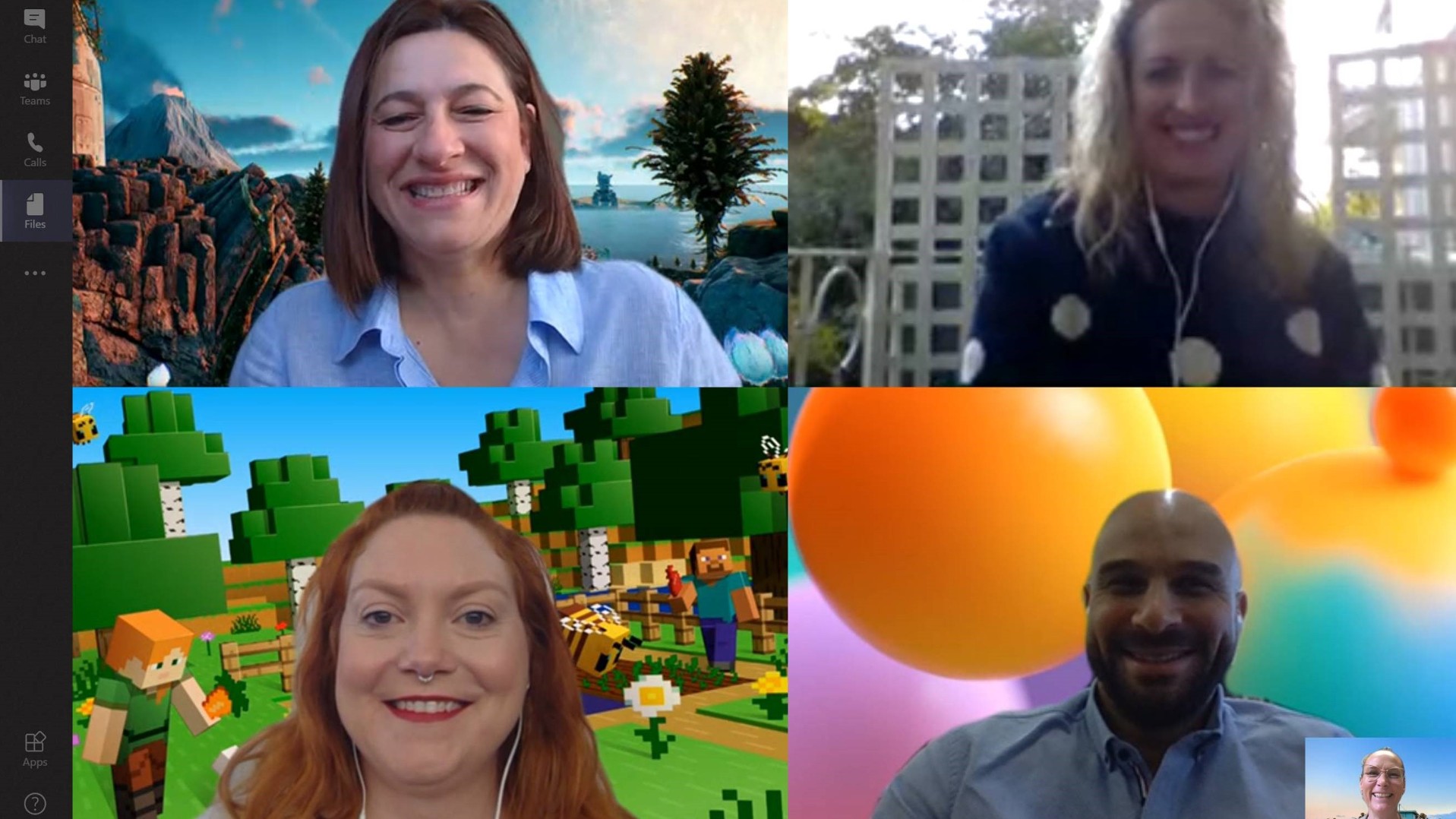
    To keep her split team connected and in good spirits, Sophie introduced the 9 am ‘Virtual banter with coffee’ on MS Teams.

    “This is not mandatory, it’s for all of our team members available and it can go from 15 to 45 min. The video chat is really good because we are able to see one another – body language and facial expressions are very effective in providing insight on how someone is coping. We talk about different things like home schooling kids, difficulties team members are experiencing and what we can do as a team to help out,” she explained.

    To bring the fun into the chat and share a few laughs, the team is also regularly changing their background to “where would you rather be theme” – is it at the beach, a galaxy far far away or perhaps some Minecraft. A new addition has been the introduction of rapid 90 second trivia the team have adapted to a virtual platform. Many unique talents have been discovered!

    The team will continue to be involved with Recovery Planning and ensure our High Reliability Organisation (HRO) work continues.

    “What we have found is that there are strong connections between COVID-19 planning and HRO. There is lots of work ahead of us, with a focus on how as an organisation we can ensure there is a level of pandemic preparedness whilst ensuring transformation and innovation continue into what is our ‘new normal,’” Sophie explained.

    Featured image: Sophie Argiriou (top left), Tracey Martin (top right), Ariana Carrodus (bottom left), Richard Nasra (bottom right) and Brooke Williams (bottom right)

  • Twilight Surgery at Broadmeadows Hospital

    Twilight Surgery at Broadmeadows Hospital

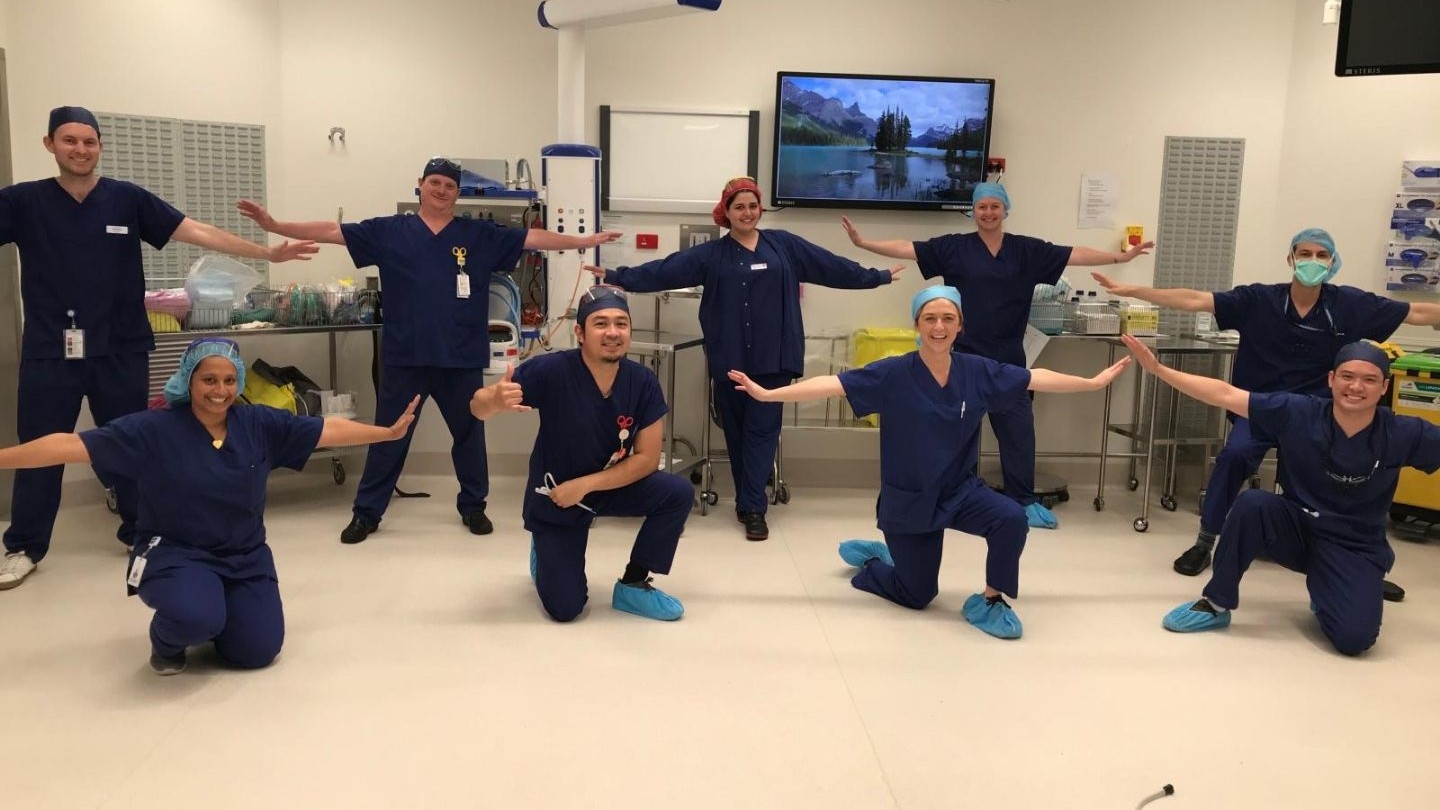
    Early this month, the Broadmeadows Surgical Centre were excited to conduct its first Plastics Surgery twilight session.

    The team were enthusiastic and thrilled to be a part of Broadmeadows Surgical Centre expanding its service provision and enabling timely emergency access to surgery for the northern community.

    Broadmeadows Surgical Centre has seen many changes of the past five years, increasing from a four-day per week day surgery unit, into a six-day per week Surgical Centre.

    Brylie Wilson, Nurse Unit Manager, Broadmeadows Surgical Centre, says, “It has been a challenging and rewarding experience to be involved in this transformation. Being able to conduct our first twilight session was a pleasure and a privilege to see eventuate.”

    The Surgical Centre will be conducting twilight theatre sessions on a Monday and Wednesday evening, in addition to Saturday all day session.

    “We look forward to continuing this collaborative work with the Plastics Surgical Unit and the General Operating Theatres at Northern Hospital Epping,” adds Brylie.

    Linda Romano, Divisional Director Nursing, Surgical Services, had this to say, “It’s been a great team effort between Brylie and her team, and Rodrigo Teixeira and his Plastics Surgery team! Well done!”

  • Northern Health welcomes first toxicologist, Dr Joe Rotella

    Northern Health welcomes first toxicologist, Dr Joe Rotella

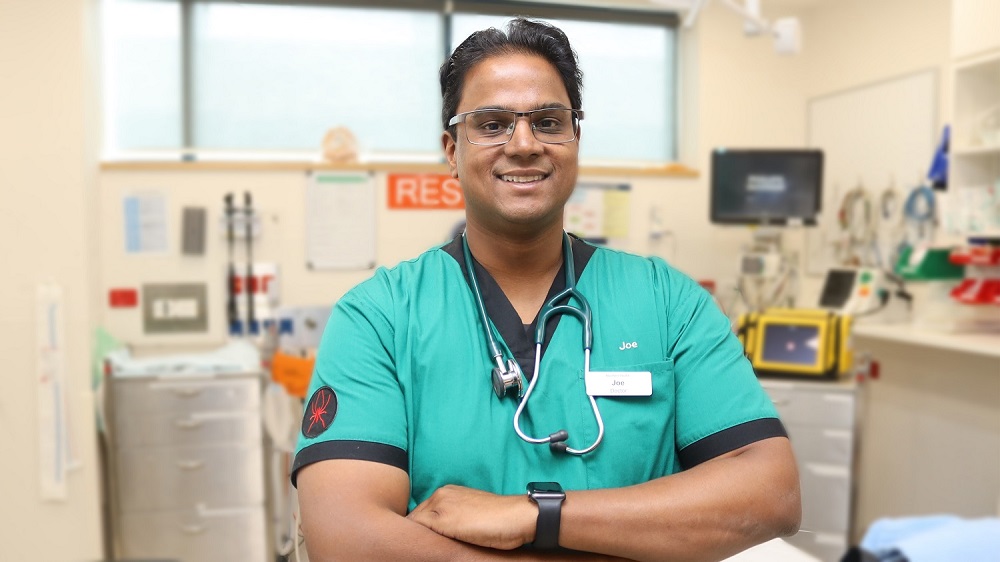
    Northern Health recently welcomed its first toxicologist, Dr Joe Rotella, who worked at Northern Health as a medical student back in 2007 and went on to become an intern and a resident here.

    Having previously held roles as Director of Clinical Informatics and Assistant Director of Education at other health services, Dr Rotella brings a wealth of knowledge to Northern Health – being one of only 10 toxicologists in Victoria. His mix of research, education and medical skills and roles keep him very busy, but he enjoys variety and sees it as “the spice of life”.

    Dr Rotella’s predominant role is as an emergency department (ED) physician but his passion is clinical toxicology.

    “Toxicologists are medical specialists who look after patients for whom poisoning is an issue. Most typically we see patients who have overdosed,” he said.

    “Other patients we might see are paediatrics – kids are very good at exploring surroundings and getting into places their parents think they might not be able to get into, so we do also look after a lot of accidental overdoses,” he added.

    As part of his role as a toxicologist, Dr Rotella also covers toxinology – management of snake bites, spider bites and marine envenomation.

    “We also see and treat patients who have been poisoned with heavy metals. They are rare but there are cases we have managed in previous years of lead and arsenic particularly. So we cover a pretty broad spectrum.”

    Dr Rotella says studies have shown when someone from the toxicology team assists in the management of patients in the ED, length of stay is reduced and quality of care is improved.

    “Part of my coming across to Northern is to explore opportunities in that space. Northern Health sees a very diverse group of patients culturally, as well as from a medical point of view.”

    “In toxicology we see a lot of patients for whom mental health is a pretty significant aspect. As we work towards more advances in terms of how we give patients more targeted, specific care from a mental health point of view, there’s a big role for toxicology at Northern.”

    Dr Rotella has always had a strong connection to the northern community – “I’m a northern suburbs boy. I grew up in Northcote and Panch was our community hospital. I even got married next door to the hospital at The Manor.”

    From his earlier years at Northern Health, Dr Rotella remembers the staff members who trained him and shaped him as a doctor.

    “A lot of the ED physicians taught me procedures as a medical student and intern. Phyllis, one of the ED physicians, taught me how to do an arterial blood gas. Another ED physician, Cynthia, talked me through my first lumbar puncture. Stefan, one of the other ED physicians helped me do my first shoulder relocation – so a lot of those procedures you learn as a doctor, I’ve learnt here.”

    “One of the ANUMs in ED even lives next door to my parents, so I’ve known her since I was 10 years old!”

    Dr Rotella says his favourite part about working at Northern Health so far is the culture and can-do attitude.

    “We’ve got lots of patients to look after, and thinking about the best way to give them care is at the forefront. That sense of innovation and ownership in a whole-of-hospital approach has been really good and really affirms why I’ve come to Northern Health.”

    Dr Rotella is passionate about toxicology education and training, and in the future hopes to build a toxicology service here at Northern Health.

    “I’m really keen to train some nurses in toxicology, as well as doctors, and build a service when the time is right. I’m always happy to be contacted about opportunities to develop things together and I’m really keen to synergise with what’s already out there and learn how I can help.”

  • Postcard to my younger self: Judy Sonneveld

    Postcard to my younger self: Judy Sonneveld

    To celebrate the International Year of the Nurse and Midwife, we asked a selection of staff who exemplify the key qualities of a nurse/midwife to write a ‘postcard to their younger self’ and offer insight and advice.

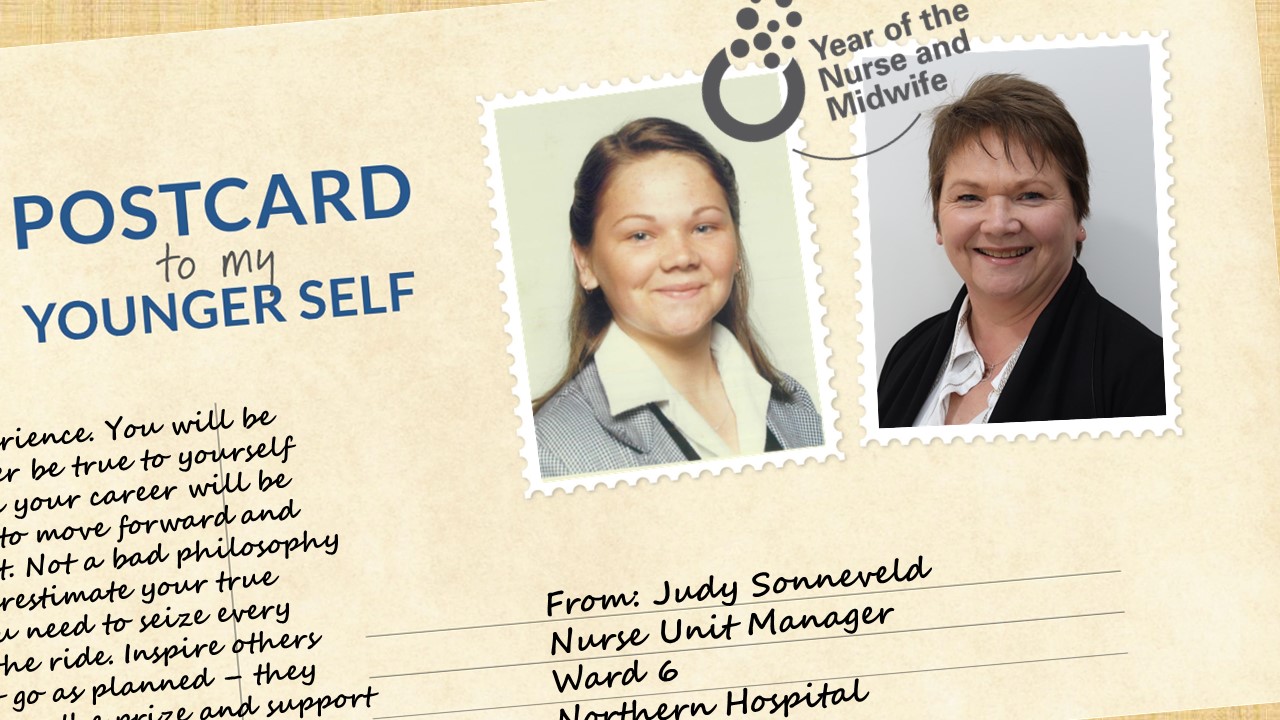
    Judy Sonneveld, Nurse Unit Manager of Ward 6 at Northern Hospital had this to say to her younger self:

    Hey Jude…

    What a journey you are about to experience. You will be faced with many challenges, but always remember be true to yourself and steadfast.  

    You will find the only constant in your career will be change – this is not a bad thing. You will need to move forward and take with you what was good and learn to adapt. Not a bad philosophy personally and professionally. 

    People will underestimate your true potential and you will believe them. DON’T! You need to seize every opportunity with both hands and hang on for the ride.

    Inspire others on your journey and don’t worry if things don’t go as planned – they often never do.

    Just remember to keep your eyes on the prize and support those around you as they will be your greatest accomplishments.