• Treating everyone with kindness, respect and empathy

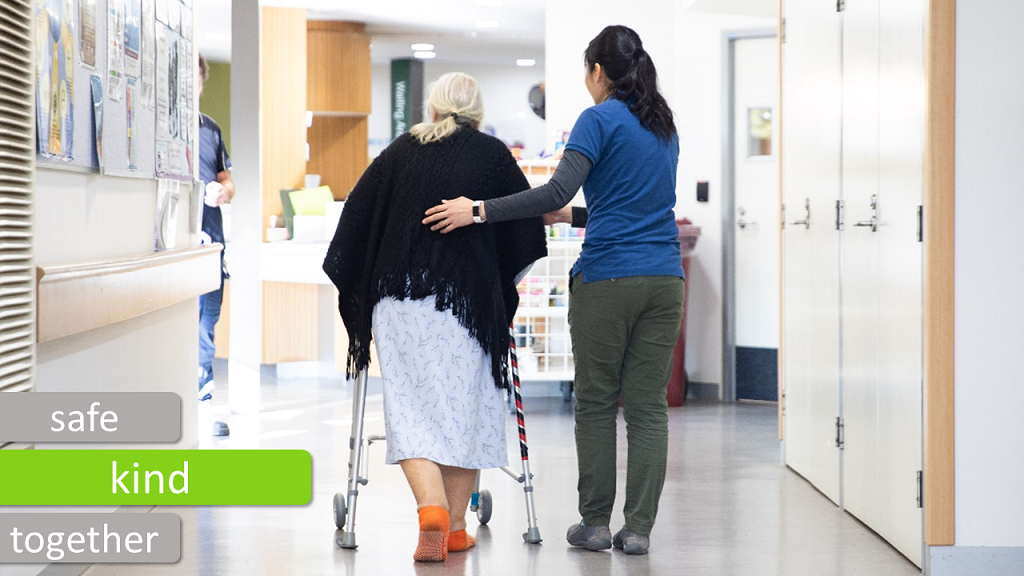
    Treating everyone with kindness, respect and empathy

    The author Henry James once said, “Three things in human life are important. The first is to be kind. The second is to be kind. And the third is to be kind.”

    ‘Kind’ is a key value, along with ‘Safe’ and ‘Together’, in achieving our vision of a healthier community, ‘making a difference for every person, every day’, as outlined in our Northern Health Strategic Plan 2020-24.

    As Kathleen Weirbiuk, Associate Nurse Unit Manager, so eloquently put it, ‘Kind’ means, “looking past the disease, past the process and coming back to empathy.”

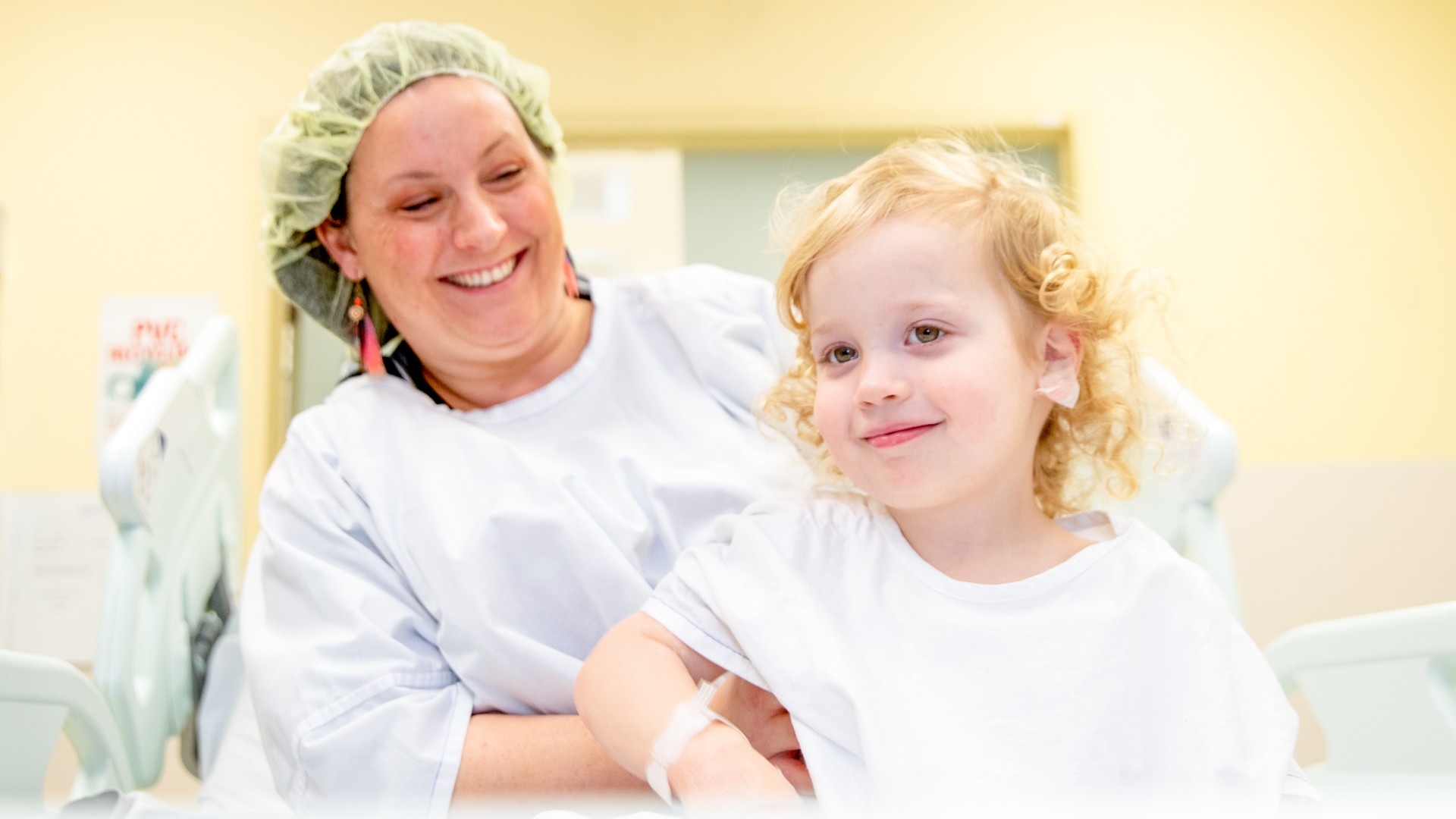
    Treating everyone with kindness, respect and empathy and providing patient-centred and compassionate care are a couple of ways we practice the value of ‘Kind’.

    We asked Deb Bourne, Acting Chief Operating Officer, to explain how the first i.e. treating everyone with kindness, impacts the latter i.e. patient- centred care.

    “When we treat everyone with kindness, we actually are saying to each and every one of our colleagues they are important and adding value, and they make a difference when they come to work,” explains Deb.

    She adds, “When we come to work and feel that way, it has a direct impact on patient care. If we believe that we are making a difference, we will reflect that when we are dealing with patients on a day to day basis.”

    “A good example of this happened a couple of weeks ago, when a child in our Children’s Unit was lacking clothing and toys. There was a team of nurses who went out and bought clothes and toys the child could take home.”

    Deb says kindness is important because “it reflects what we do with each other and our patients.  We are valued and we value everyone who walks in the door, and we treat them how we want to be treated – and really, in the end, we all want to be treated with kindness!”

  • Strategic priority 2: A healthier community

    Strategic priority 2: A healthier community

    Northern Health’s Strategic Plan 2020-24 has five priorities, including our commitment to A healthier community.

    A healthier community sets our goals towards working with patients, staff and partners to embed the concept of ‘Staying Well’, both in hospital based and community care. This includes a holistic and integrated approach to health care that will help addresses the needs of patients with complex conditions.

    Briana Baass, Chief Allied Health Officer said the goal of a healthier community is about improving the quality of people’s lives.

    “It’s about working with our patients and really understanding what matters to them,” she said.

    A/Prof Don Campbell, Director Staying Well program said ” Northern Health will work with patients, staff and our partners to embed the concept of staying well.”

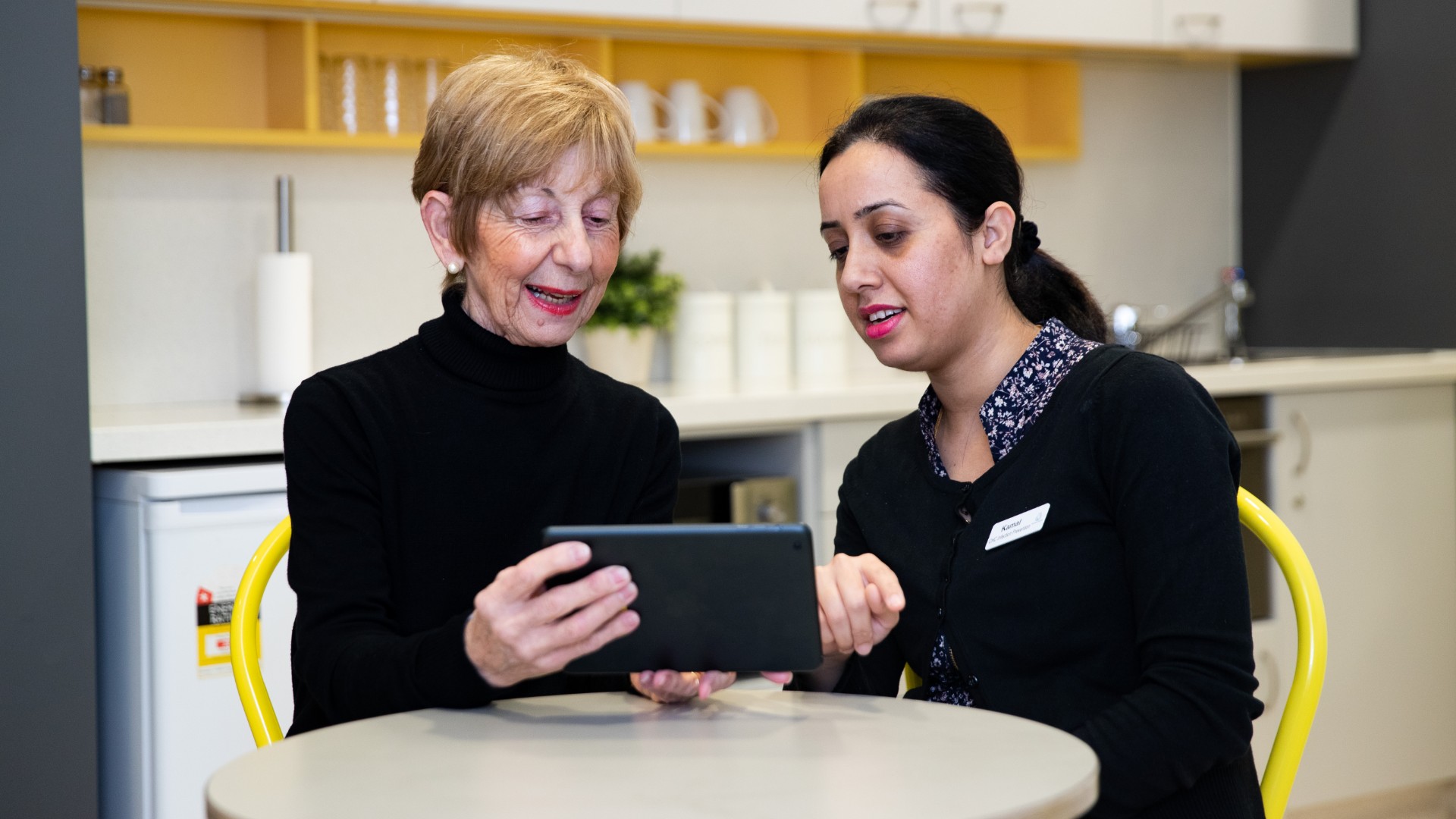
    Technology is one of many tools available to help our patients stay well at their own home.

    Nicole Alousis, Senior Physiotherapist added “We are implementing technology which will allow us to create new communication pathways with our patients”.

    Please see the video below to hear more about what this strategic priority means to some of our staff:

  • Our contact tracing team

    Our contact tracing team

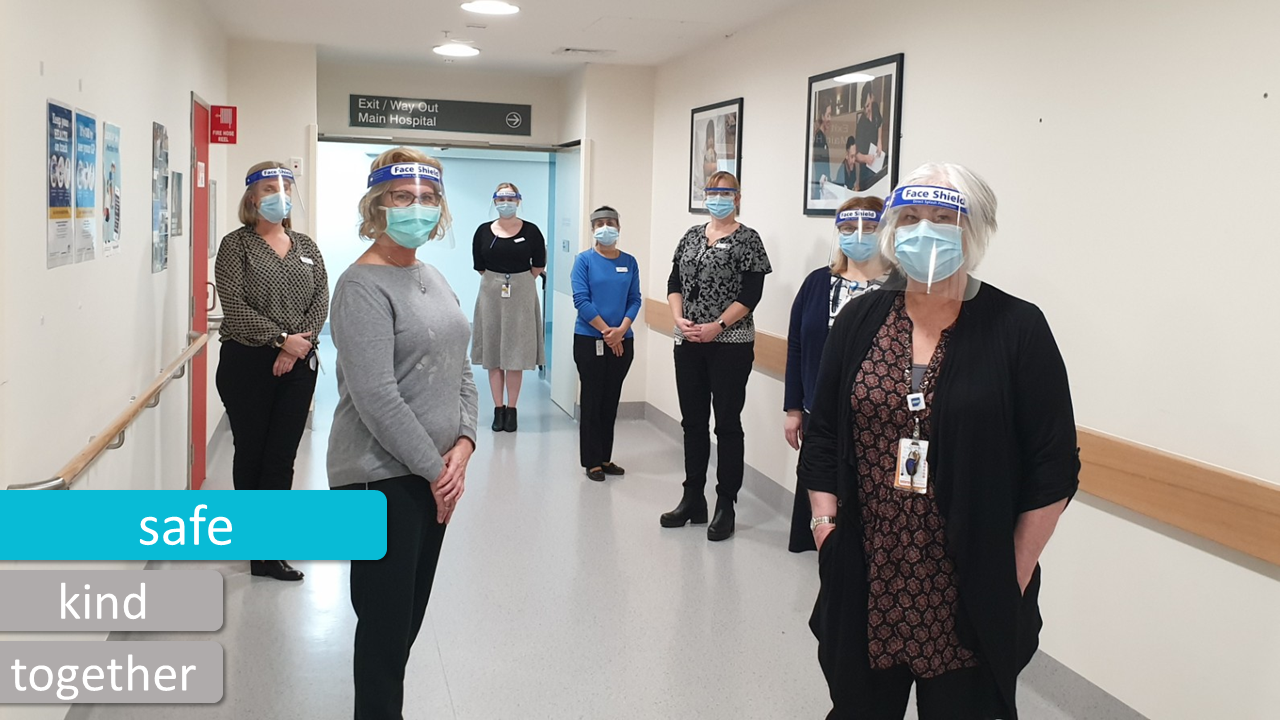
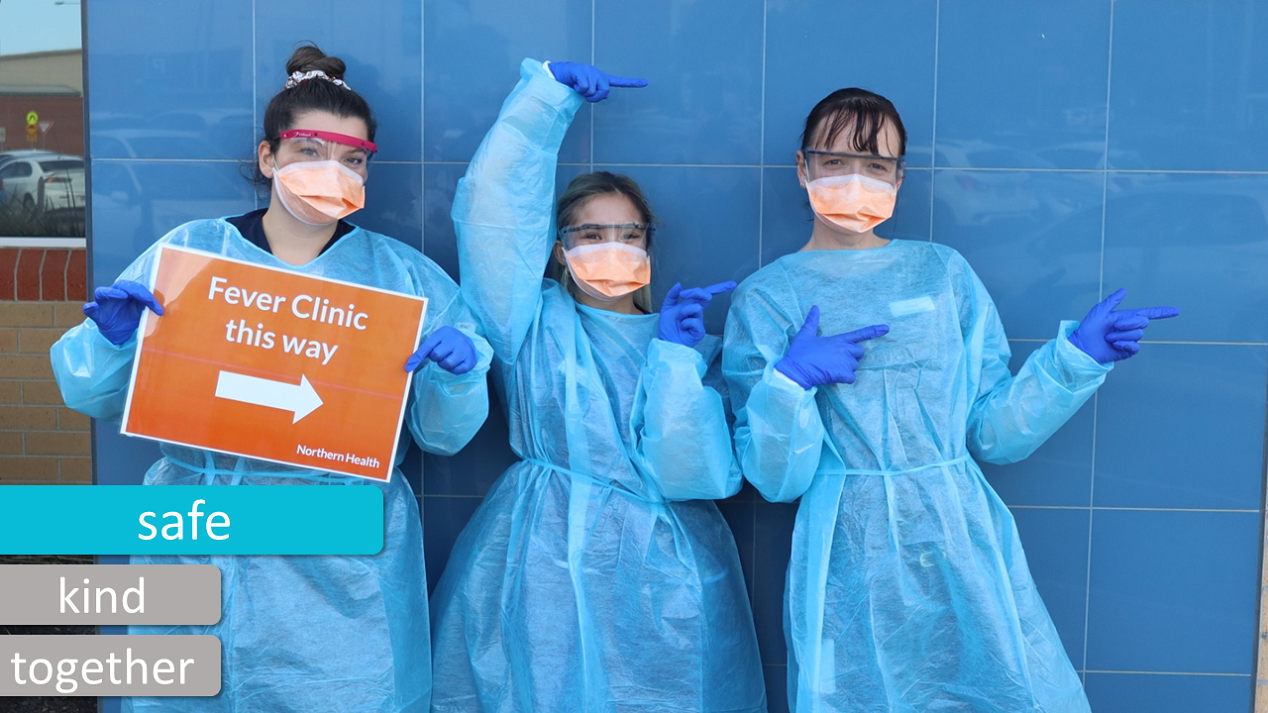
    Since the start of the pandemic, our infection prevention team are the contact tracing team for COVID-19.

    “We educate staff on infection prevention strategies and support them in their clinical and non-clinical duties. Furthermore, we implement strategies to reduce the risk of transmission within the health care facility and now we also work on contact tracing,” explained Madelaine Flynn, Infection Prevention Manager.

    Contact tracing is the process of identifying any staff, patients or visitors who have come into contact with a confirmed COVID-19 case, without the appropriate precautions.

    “The infection prevention team become detectives and identify close contacts of a case and notify them of their isolation requirements. This process involves reviewing rosters, performing interviews and reviewing patient notes,” she explained.

    Historically, the infection prevention team conducts contact tracing for infections such as measles, chickenpox and influenza. Although this happens sporadically, around one or two per month, since COVID-19 started, our contact tracing team can now trace six to seven cases per day.

    “During contact tracing, the team doubles as counsellors when staff or patients get a phone call to notify of an exposure that they were not expecting. In these situations, kindness is always the key,” Madelaine explained.

    Nicole Campbell, Infection Prevention Clinical Nurse Consultant, is one of the team members working on contact tracing.

    “COVID-19 contact tracing is different than other diseases because of the volume of patients. There is also a lot more anxiety associated with it for staff and patients because of all the unknowns. Part of what we do is reassuring and supporting people in their emotional wellbeing too,” she said.

    Nicole adds the team is learning something every day, both from local experience and from overseas, while trying to adapt and support each other.

    “When we talk to identified close contacts, we get various reactions. Sometimes it’s hysterical laughter, sometimes it’s tears, and other times anger. We have seen all stages of emotions. That is where we explain things, reassure people and try to support the best we can,” she added.

    Madelaine is proud of the work her team is doing, adding, “The infection prevention team has shown incredible resilience in arguably the most difficult time in an infection prevention professionals career”.

    There are seven highly skilled infection prevention consultants within the infection prevention team, including a staff health nurse. The team also have an administrative support that helps the team with surveillance.

  • ICU looking after patients and each other

    ICU looking after patients and each other

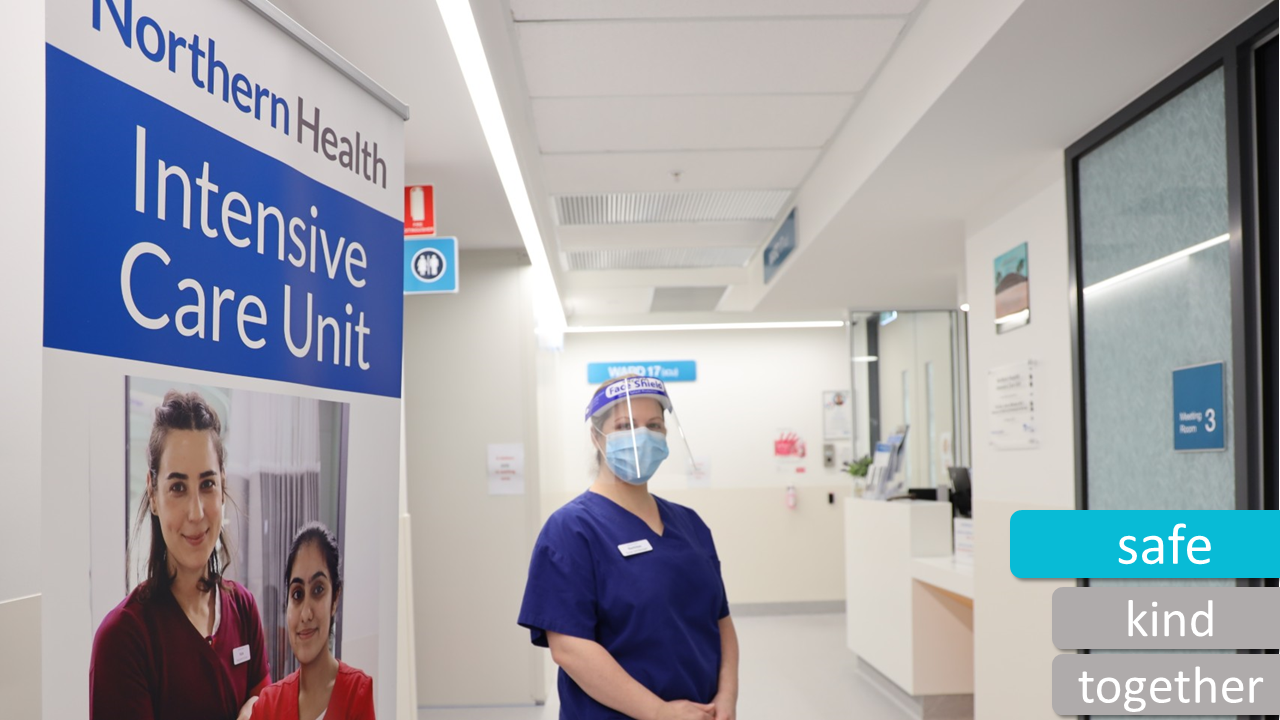
    With the first mention of the new virus, our Intensive Care Unit was preparing and planning for all the ‘what if’ situations and increased patient numbers and activity.

    Narkitaa Van Ekeren, ICU Nurse Unit Manager, said the ICU team was also working closely with other departments on upskilling and training staff for the intensive care environments, while living our value Safe.

    “We knew that should demand require the expansion of ICU beyond our walls, we can’t do that alone and that it needs to be an organisational approach,” she said.

    All this planning has helped the ICU set up for the current situation, where there are active COVID-19 cases requiring ICU specialist services.

    “These patients do take time to get better, which has impacted on the overall operations of ICU. We still have other critically unwell patients coming into ICU, which are not COVID-19 related. We have recently increased bed capacity, to be able to meet the demand,” she explained.

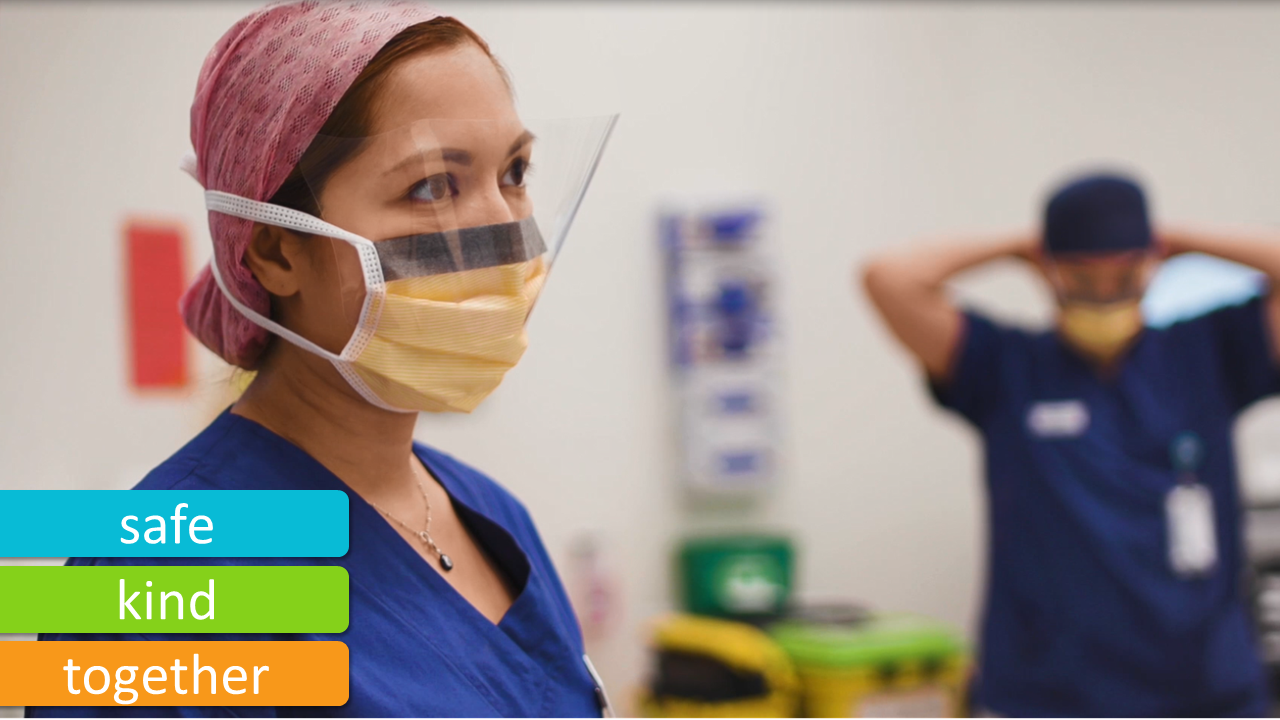
    To be able to safely care for patients, and look after each other, the staff have received refresher PPE training, knowing they would be the ones caring for the most critically unwell COVID-19 patients. Over time, initial apprehension was replaced by the team supporting and encouraging each other.

    The changes in their everyday work have also changed how the team decompresses after a busy day and how they distress.

    “Usually, we would go out, debrief, share a dinner, or get together in the tea room. The current situation has provided some challenges as we haven’t been able to do that. Now, we have a ‘thank you board’ in the tea room where people can put post-it notes and write what we are grateful for. It’s easy to get caught in work and forget to take some self-care time,” Narkitaa explained.

    Besides fighting coronavirus, the patients in ICU are also fighting to cope with isolation and distance from their families, and our dedicated staff are doing all they can to help on both fronts.

    “For the patients, the hardest part is not being able to have families present in the unit and staff have been actively engaged in communicating to families and patients that are awake. We are using Facetime and it provides some comfort to patients. Two weeks ago we even had a priest come in, as the family wanted a prayer to be said. As he wasn’t allowed in the room, we had to get creative on how he would deliver the prayer and we eventually came up with a solution with putting phones on speakers,” she explained.

    Even on a regular, non-pandemic day, the ICU is a very busy environment. The team is used to seeing patients at their most unwell, but the new situation for the team in this pandemic is the sheer volume of patients requiring isolation and contact precautions. That is when safety comes first and the team has implemented different care models to keep both the staff and patients safe.

    To Narkitaa, living the value Safe means having peripheral vision and always looking after your buddies next to you.

    “It’s about having open conversations, calling out potential risks and highlighting safety measures,” she said.

    Narkitaa proudly speaks of her team and how they are quickly adapting to numerous, daily changes.

    “The staff are picking up extra shifts and are all ringing in to see if we need them and if there is something they can do. People have come off their annual leave and long service leave to support the increasing demand,” she said.

    “Being an ICU NUM in a pandemic, and a NUM for the first time, has been a little daunting, but I have a great team to support me along the way,” she said.


  • Strategic priority 1: Safe, positive patient experience

    Strategic priority 1: Safe, positive patient experience

    Northern Health’s Strategic Plan 2020-24 has five priorities, and the first one is A safe, positive patient experience. Over the next three weeks, we will present each strategic priority.

    A safe, positive patient experience sets our goals towards our commitment to safety and reliability, and working together with patients, their families and carers to provide a positive patient experience. As an organisation, we aim to strengthen our quality and safety systems and develop strong relationships with patients.

    Dr Bill Shearer, Executive Director Quality, Safety and Transformation affirms Northern Health’s commitment to patient safety.  “We will improve our quality and safety system by giving all of our staff the tools, information, and systems for them to place patient safety the centre of their work”.

    Sophie Rodier, Patient Experience Manager said the patient experience teams works together with our patients, their families and carers to deliver a positive patient experience.

    Debra Bourne, Chief Nursing Officer explained how everyone’s healthcare journey is different and “we aim to recognise everyone’s health care needs”.

    Please see the video below to hear more about what this strategic priority means to some of our staff:

    Please note featured image was taken before COVID-19 physical distancing measures.

  • Safe: Our commitment to our patients and each other

    Safe: Our commitment to our patients and each other

    Over the next three weeks, our stories will explain our new values safe, kind, together and how they relate to everything we do.

    These values reflect not only how we do our daily work, but also how we treat each other.

    Dr John Ferguson, Chief Medical officer explained the value safe shows our commitment to safe, reliable patient care.

    “Our commitment to safe in a clinical setting means we have an overriding commitment to providing best practice care that avoids risk and embraces mutual trust and cultural comfort”, Dr Ferguson said.

    Dr Ferguson added that safe means our staff are empowered to speak out if a situation is not safe.

    “It doesn’t matter what role you have in the organisation,” he added.

    “Northern Health continuously works to reduce the risk to our patients and decrease errors with a “first, do no harm” approach. Although as clinicians we often have to do things quickly – we need to take time to have that final check.”

    The value safe also includes cultural and workplace safety.

    Michelle Fenwick, Executive Director People and Culture explained that in every family, organisation, community and alike, one of the things people are attracted to is the feeling they are safe and part of something.

    “Feeling safe is about feeling safe in your community or workplace to voice your issues, to celebrate, to put your hand up if you question something or don’t know something,” she said.

    Safety in a workplace also means the voice of our staff has value and our staff has a contribution to make.

    “That is something that has been reflected in our People Matter Survey. Staff who feel safe feel free to question more, learn more and feel supported,” she added.

    Around 70 per cent of our staff lives in the northern community and Northern Health is not just a workplace, but their local health service too.

    “The staff not only feel safe working here, but also feel safe to come here and bring family and friends for treatment,” she said.

    Cultural safety is another aspect of the value safe. It is about feeling welcomed and accepted at a workplace and feeling safe to ask about different work arrangement if needed.

    “Our staff feels safe to ask about flexible work options for family or health reasons or caring for family or elderly. Diversity is something to be applauded and to learn from and the diversity and cultural richness of our staff is a reflection of our community,” Michelle explained.

  • Living our values, every day

    Living our values, every day

    In achieving of our vision, ‘a healthier community, making a difference for every person, every day,’ the actions of our staff, volunteers and leaders are guided by our new values – safe, kind and together.

    Our values, along with Northern Health’s Strategic Plan 2020-24, were officially launched earlier this week, and will drive our approach to patient care, and each other.

    safeWe provide safe, trusted care for our patients. We are inclusive and culturally safe, celebrating the diversity of our staff and community.

    For Careena Newcastle, one of our consumers, safety is “about the safety of surroundings, cleanliness”, while Cameron Miller, ICU Nurse believes “everyone has the right to be safe”.

    Toni Gabelish, Aboriginal Liaison Officer said, “safety means our patients understand they will all be treated equally.”

    kindWe treat everyone with kindness, respect and empathy. We provide patient-centred and compassionate care.

    For Kathleen Werbiurk, Associate Nurse Unit Manager, kind means “looking past the disease, past the processes and coming back to empathy.”

    Linda Romano, Divisional Director said: “It’s not just about being kind to our patients, but also about being kind to one another”.

    For John Knipe, Patient Experience Coordinator, kind means “the way we work and behave towards patients, colleges and each other, it’s about treating everyone as I would like to be treated”.

    togetherWe work together with our staff, patients, consumers and health system partners.

    Briana Baass, Chief Allied Health Officer, said together for her means “being one team across Northern Health and working with our partners across the community”.

    Sarah Rexhepi, Quality and Training Coordinator said together means “we support each other and ask if everyone is doing ok. It means to help others and listen to them. We are all a family working under the one roof and if we all work together we can do the impossible.”

    Organisational values describe the core ethics or principles which the organisation will abide by, no matter what. Our vision and values will help motivate and inspire us to perform our best at work, and in our everyday lives. Over the next three weeks, we will showcase our three new values, and our five new strategic priorities across iNews and other communications.

    Please watch the below video and hear from some of your colleagues about what Northern Health’s values mean to them.

    (Please note video filmed before COVID-19 physical distancing)

  • Volunteers fundraise to help Unit 3 patients

    Volunteers fundraise to help Unit 3 patients

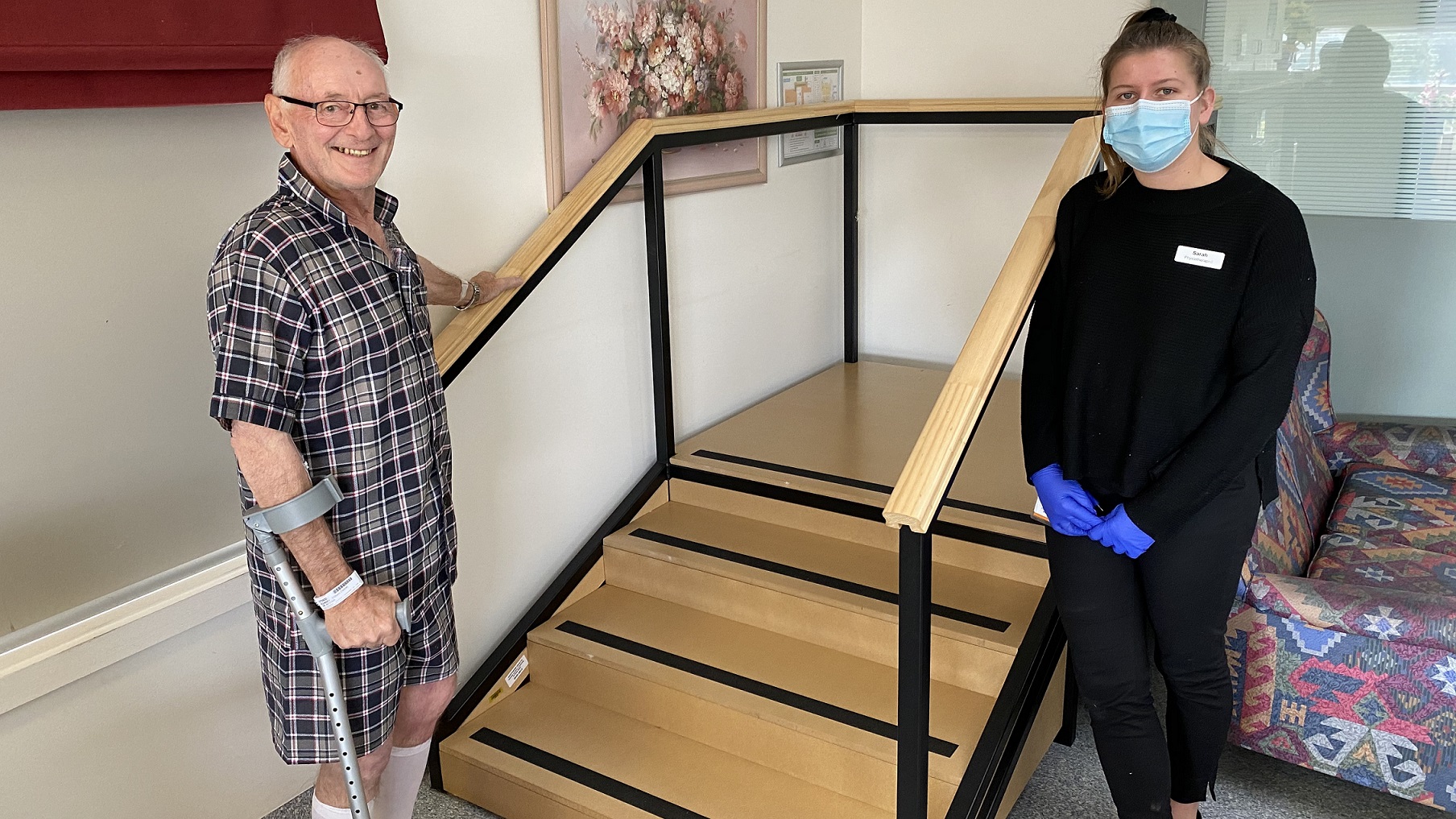
    Patients at Unit 3 Broadmeadows Hospital now have a custom built staircase, thanks to our volunteer fundraising.

    The staircase was purchased for older patients to facilitate a safe and timely patient-centred discharge home.

    “To ensure patients are able to go up and down the stairs outside of a hospital environment, it was necessary for them to practise on stairs like these,” explained Kenneth Koh, Physiotherapist.

    Unit 3 patients are usually required to be transported from the unit down to the physiotherapy gym.

    “The Unit 3 patients are elderly and often have cognitive impairment so they would greatly benefit from receiving their treatment in a quiet and familiar environment on the ward. The patients would also often be in their hospital gowns and may feel uncomfortable off the ward, despite staff efforts to cover them for dignity and keep them warm,” Kenneth said.

    The Physiotherapy Department had already purchased a large platform step for patient rehabilitation, but the patients on Unit 3 required something purpose-built to meet the needs of an elderly person in the family home, and allow full assessment for discharge purposes.

    “The Physiotherapy Department staff report that the patients are responding very well to the usage of these stairs. The patients are having their dignity preserved, and the minimisation in confusion and over stimulation caused by transporting them down to the gym has resulted in improved efficiency in therapy and maximisation in therapy time available,” he added.

    Monica Polimeni, Volunteer Coordinator, said Northern Health volunteers are very committed to ensuring that patients and their families are assisted in anyway possible, during their hospital stay and discharge.

    “Although our volunteers are currently not able to attend their volunteering roles due to COVID-19, they are continually looking at ways that they can be of assistance whilst offsite. We look forward to the day that they can return to assist with raising funds for Northern Health,” she said.

    Northern Health Foundation matched the funding provided by the volunteers.

    Featured Image: Patient, William Mounsey with Physiotherapist, Sarah Watts (Photo Credit: James Walker)