• Bicultural workers in the Community Monitoring Program

    Bicultural workers in the Community Monitoring Program

    During the COVID-19 pandemic in Melbourne, we have seen very high rates of COVID-19 amongst first-generation migrants in Melbourne’s north, with over 10 per cent of the 15,000 COVID-19 positive people registered in Northern Health’s support programs identifying as speaking Arabic, Assyrian or Chaldean as their primary language.

    In response, Northern Health’s COVID Positive Pathway program recently recruited a team of bicultural workers to help us better engage with Arabic, Assyrian and Chaldean speakers isolating at home.

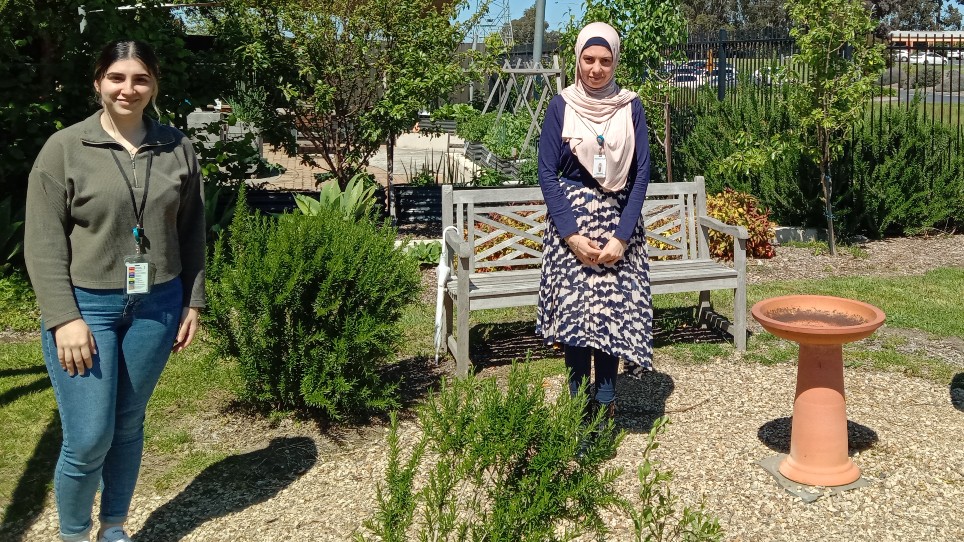
    Flona Yousif and Hala Mehdi were seconded from the Research office at the start of September to work in the service, and Lena Toumayan joined from the Hospital Without Walls program. When asked why they have joined the workforce, Flona says that they both wanted “to ensure all communities are provided with the equal healthcare opportunities and to ensure they find a sense of belonging within Northern Health.”

    Hala, who left Iraq with her family in 2003 after the war, and spent four and a half years in Jordan before resettling in Australia, knows more than most what it is like to build a new life in Australia. She says that “working alongside Northern Health’s COVID-19 Monitoring Program has given me a great sense of meaning and value, knowing that I am able to contribute positively towards helping my community.”

    Flona’s parents immigrated to Australia from Iraq before she was born, leaving all they held close to their hearts behind in hopes for a better future for the family they envisioned of building together.

    Flona says that being born here, but raised among a family and community so rich in its own culture, has meant that she has noticed the gaps between the two and has often acted as bridge between them. She says that has helped her better understand the struggles the community faces – “being part of the Chaldean/Assyrian community myself, I am aware of the limited support that is provided to these individuals in their respective languages. When I was given the opportunity to work as a bicultural worker for Northern Health’s COVID-19 Monitoring Program, I found great joy to able to voice the needs and struggles of these individuals, to not only help them receive the best quality of care but also ensure their wellbeing is prioritised here at Northern Health.”

    When asked how they think the community might feel about these new roles, Hala and Flona report that the “community has voiced its appreciation for the support, informative information and generous aid that has been provided by the team.”

    The rest of the 12-person team were recruited from the northern community, including overseas-trained doctors, pharmacists and a lawyer, university students and people working in allied health roles.

    Isra’a Al-Jumaily, a GP who qualified in Iraq and worked with ‘Doctors Without Borders’ and ‘Iraqi Red Crescent’ in Jordan, explained her approach to the role.

    “If you listen to the patient, you can understand how they are thinking about their symptoms. I know the way people communicate in our culture and what health care they had. I help them to stay calm so they can give me accurate information,” she said.

    Fatemeh Sayahi, an asylum seeker who is working in the oximetry team, explains one monitoring call that stands out for her.

    “I was calling a family who had not filled out the online symptoms survey. When I asked if they need help, they said yes because it was too hard to understand and too many questions. We started the call in English but the dad and mum were both struggling so I asked what language they wanted to speak. He said Arabic, she said Persian and both were happy when I could talk fluently with them.”

    “The community have felt a greater sense of belonging and comfort knowing that Northern Health is committed to providing them with the best care possible in their own languages,” Hala added.

    If you would like to learn more about bicultural workers and how they might be able to assist in your unit, work area or program, please contact Rebecca Jessup on rebecca.jessup@nh.org.au or Janet Pelly on janet.pelly@nh.org.au.

    Featured image (left to right): Flona Yousif, Hala Mehdi and Lena Toumayan
  • Q&A with Dr Faye Zaibak, Director, Research Operations

    Q&A with Dr Faye Zaibak, Director, Research Operations

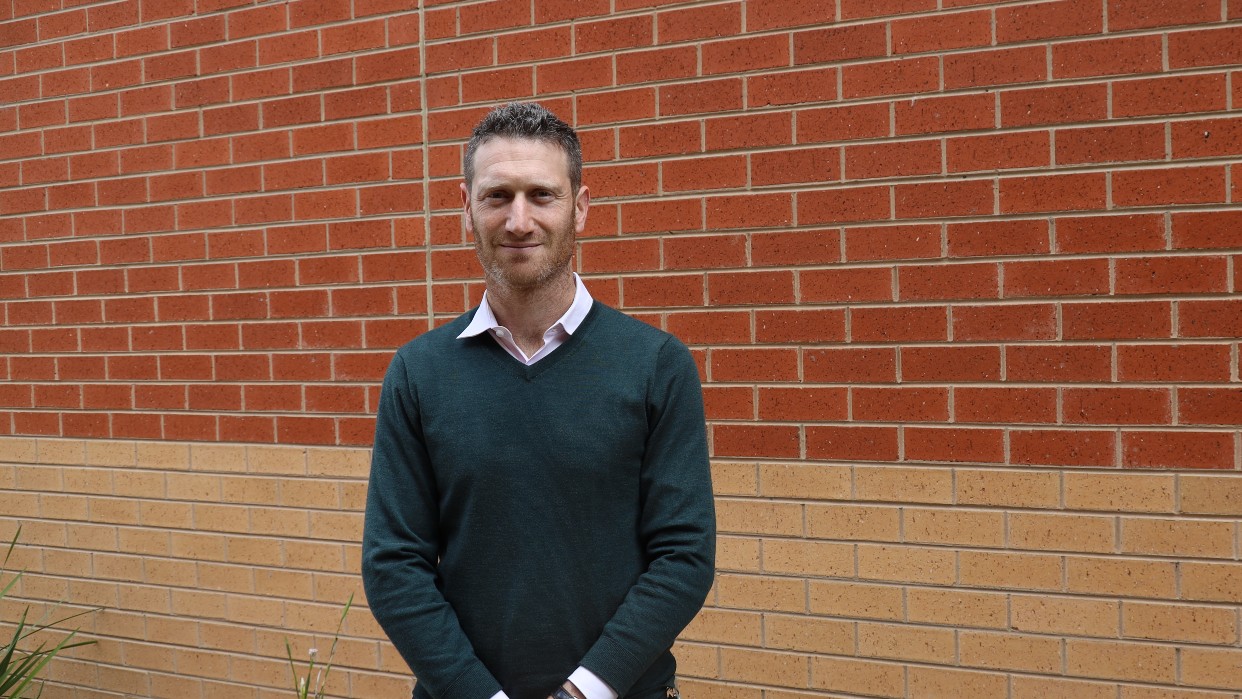
    In this week’s ‘Q & A’, we chat with Dr Faye Zaibak, Director, Research Operations, who has been in this post for just over two months.

    What’s your coffee order?

    Tea, no milk or sugar. I am really loving my ginger tea at the moment.

    Tell us about your time so far at Northern Health?

    I am blessed to have such a hardworking and dedicated team. I have not met most of the team or researchers in person, as they are seconded to COVID-19 response, which presents a challenge to the continuation of our essential service. Everyone is willing to help the office, and I am grateful to each and every one of them. I see such great research potential at the Northern. I hope to continue all the great work achieved to date, and work with the team to ensure Northern receives the recognition it deserves.

    What does a typical day look like for you?

    There is a great deal of legislation and regulations that we must follow to ensure we work with integrity and are safe, compliant and ethical. The Research Office is the engine that keeps research moving. One of the big projects we are working on is accreditation with the National Clinical Trials Governance Framework. The tasks in my day vary significantly, all tasks have the following goal; to make research accessible to our patients and easier for our researchers. I believe passionately that it is only via high quality research that we can truly make an impact on the lives of our patients. We have a very big challenge ahead of us as a team, to move the office into a role that develops and supports research projects, so researchers and the organisation can realise their potential, and efficient and timely ethics and governance approval is seen as just one of the many rewards for our efforts.

    How has COVID-19 impacted your work?

    Seventy per cent of my team are seconded to COVID-19 response and those left behind in the office are going above and beyond to facilitate research. I am very proud of all the team, working for the greater good for the benefit of the hospital and our patients. Research across the sector has been significantly impacted by COVID-19. Project recruitment has decreased, some projects have had to be put on hold or adapt to virtual protocols, project approval time has been delayed and training opportunities put on hold. If COVID-19 has shown us anything, it is the value of quality research and the impact that great research can have on saving lives. Most importantly, we have learnt that the Northern has an important role to play in advocating and supporting our community’s access to the latest research and that the Northern has the talent and commitment to achieve this goal.

    What was your career before Northern Health?

    I started my career as a researcher working at the University of Melbourne, the Murdoch Children’s Research Institute and the Cord Blood Bank. My supervisor, the late Panos Ioannou, was part of the team that cloned and sequenced the human genome. It was such an exciting time to be a researcher. Inspired, I established my own research program directly after completing my PhD, under the mentorship of Professor Williamson. We were the first in Australia to successfully culture cord blood stem cell lines, that are still used today. I had caught the research bug well and truly. I believe research is an important pillar of a successful academic and medical facility, an opportunity for talented staff to make a difference in the lives of our community.

    Moving to research management was a natural progression for me as I could better serve to facilitate research. I have worked in Universities, Hospitals and in Medical Research Institutes in roles including as manager of biosafety, ethics, grants, research performance and infrastructure; as Acting Director of Research; and General Manager of Research. In such a highly regulated environment, the research office plays an important role in facilitating and supporting research. I feel honoured to be back at my local hospital. There is so much more we can do to support research to the benefit of our community. I am excited about working with the team at Northern to ensure we are engaged learners and inspired researchers.

    What would people be most surprised to know about you?

    On Saturday, I hosted a Harry Potter themed dinner. The front yard was all decked out for Halloween too, we did not give out treats this year, but put on a spectacular show for the local children. I love entertaining and theming up social events with family and friends. Christmas is particularly special in my household, and of course the house is all decked out to spread the festive cheer.

    What do you like to do in your free time?

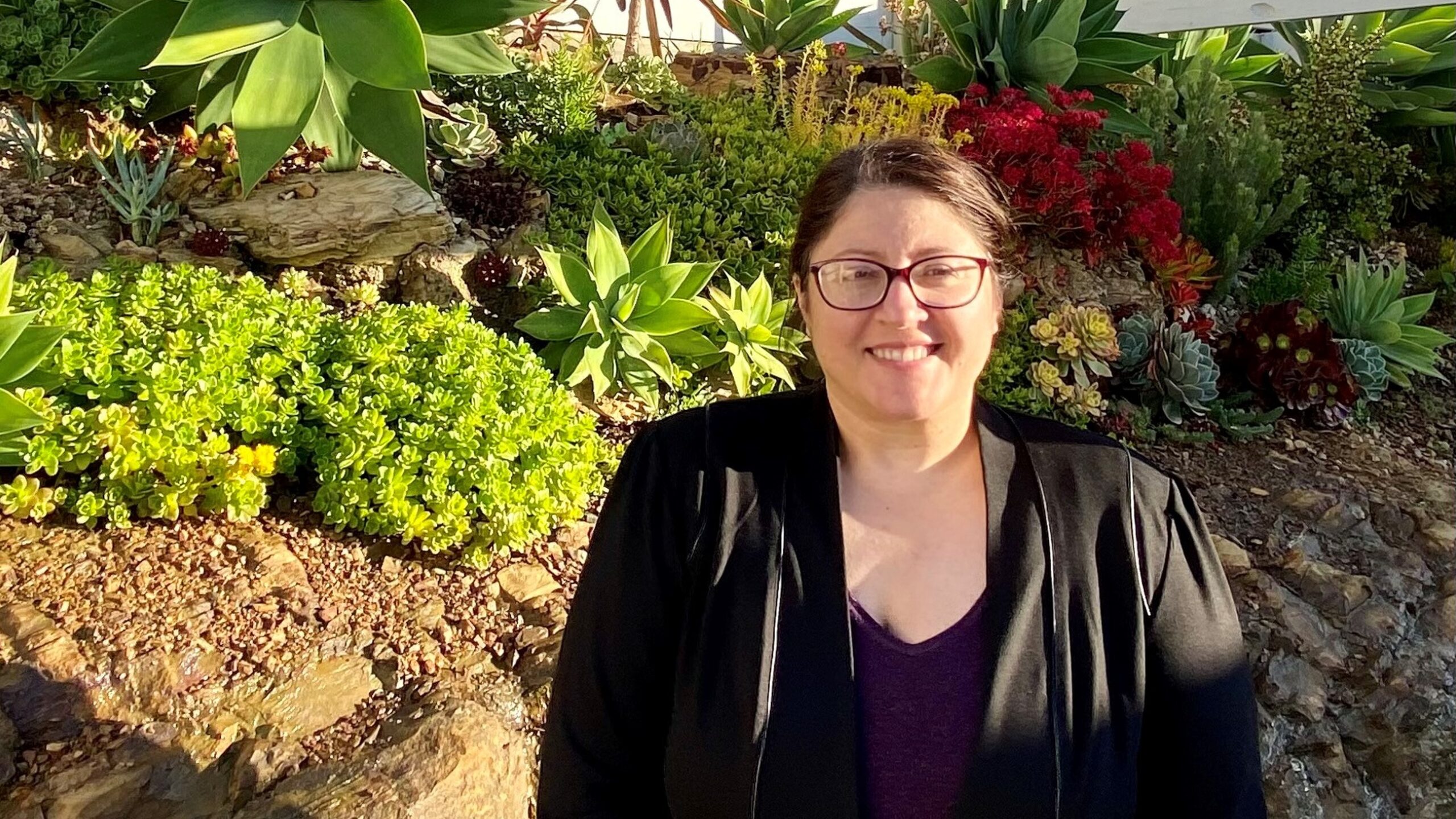
    I love nature. I have built a 13 metre succulent wall in my backyard with over 100 species. Not a day goes by that I am not amazed by the wonder of nature. Every day there is some new bloom to admire.

    If you could describe Northern Health in one sentence, what would it be?

    Committed to serving and supporting the community.

  • Pharmacy wins ‘Best Abstract’ and ‘Best Poster’ Awards at UK Conference

    Pharmacy wins ‘Best Abstract’ and ‘Best Poster’ Awards at UK Conference

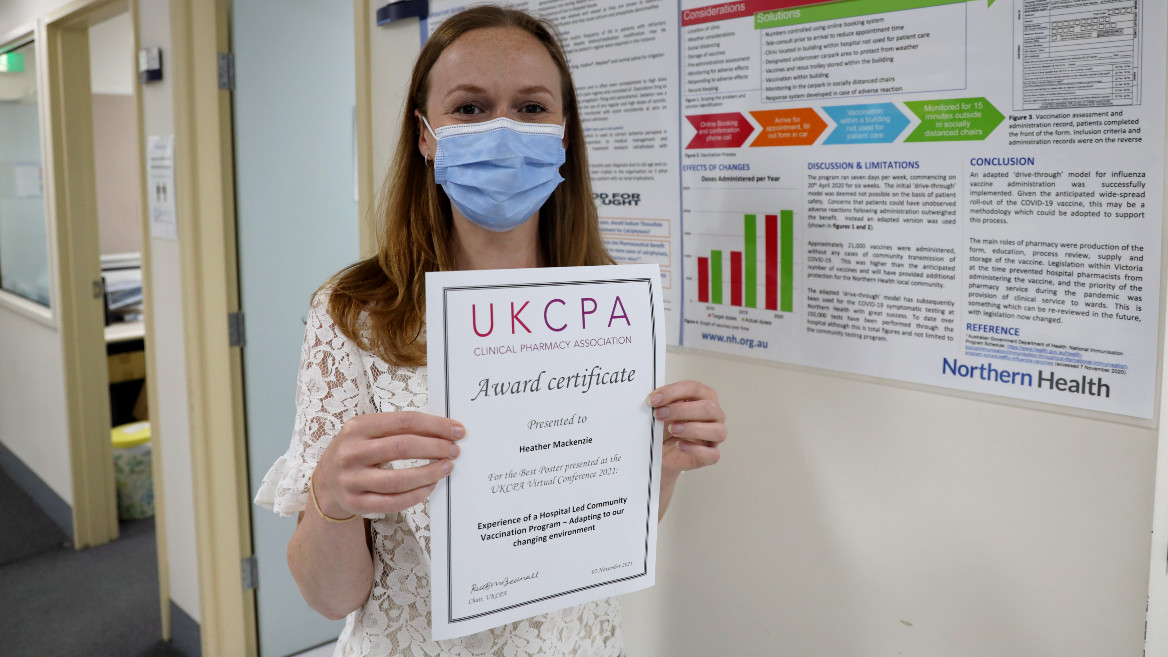
    Heather Mackenzie, Antimicrobial Stewardship Lead Pharmacist, won the ‘Best Abstract’ and ‘Best Poster Presentation’ Award at the United Kingdom Clinical Pharmacy Association (UKCPA) Virtual Conference last week.

    UKCPA is the UK’s largest clinical pharmacy community, bringing together pharmacists and pharmacy technicians from all sectors. It currently has over 2,600 members, 14 educational groups and 26 forums.

    “Each year, members are invited to submit abstracts for the annual conference. In 2021, approximately 70 abstracts were submitted, with six selected for presentation. Our pharmacy submission was awarded both ‘Best Abstract’ and ‘Best Poster Presentation,” Heather explained.

    The poster titled, ‘Experience of a Hospital Led Community Vaccination Program – Adapting to our changing environment’ described the adaptations required for the 2020 community influenza vaccination program to reduce the risks of COVID-19 transmission, changing the model to the adapted ‘drive-in’ system.

    “As it was a pharmacy conference, the focus on the poster was the pharmacy role in that project, but it did acknowledge the work across departments, as multiple services were involved in making this happen,” she added.

    “This was the first poster I have ever submitted for a conference. It was submitted with the simple aim of allowing others to learn from our experience, given the format could be used for the COVID-19 vaccine roll-out. The idea was to showcase how our service adapted to the COVID-19 environment, as I felt Northern Health is a pioneer in the work we have done,” she explained.

    Due to the time difference with the UK, Heather was answering the questions on her presentation at 2 am.

    “I was so surprised to hear I had won, it was a big shock. I never expected to win one, let alone both awards,” she said.

    In her acceptance speech, Heather said: “I would like to accept this award on behalf of the project team. Achieving what we did would not have been possible without everyone working together. In terms of the poster itself, I would particularly like to thank my colleagues within the Pharmacy Department for the support and advice they gave me.”

    Vinod Chelleram, Director Pharmacy, added: “It is a proud moment for myself, to be able to showcase the proactive work of the health service and Pharmacy Department in influenza vaccination. The poster highlights Northern Health’s efforts in not just meeting, but exceeding the community health needs.”

    Heather’s poster has also been accepted for the Society of Hospital Pharmacists of Australia (SHPA) Conference in February next year, along with seven other posters from the Pharmacy Department. One of these has been accepted for oral presentation, two for lightning talk and a further five for display.

    Heather concluded: “I’m really proud of my colleagues – it says a lot about our department’s commitment to research and service improvement that we can achieve this level of success in the middle of a pandemic!”

  • Remembrance Day: Lest we forget

    Remembrance Day: Lest we forget

    “Those that fail to learn from history are doomed to repeat it.” Winston Churchill

    Tomorrow marks Remembrance Day.

    On this day, we remember the bravery and sacrifice of the men and women who lost their lives serving our nation and its allies in wars, conflicts and peacekeeping operations.

    On the 11th hour, on the 11th day of the 11th month, a minutes’ silence is observed and dedicated to the lives of people who died fighting to protect our nation.

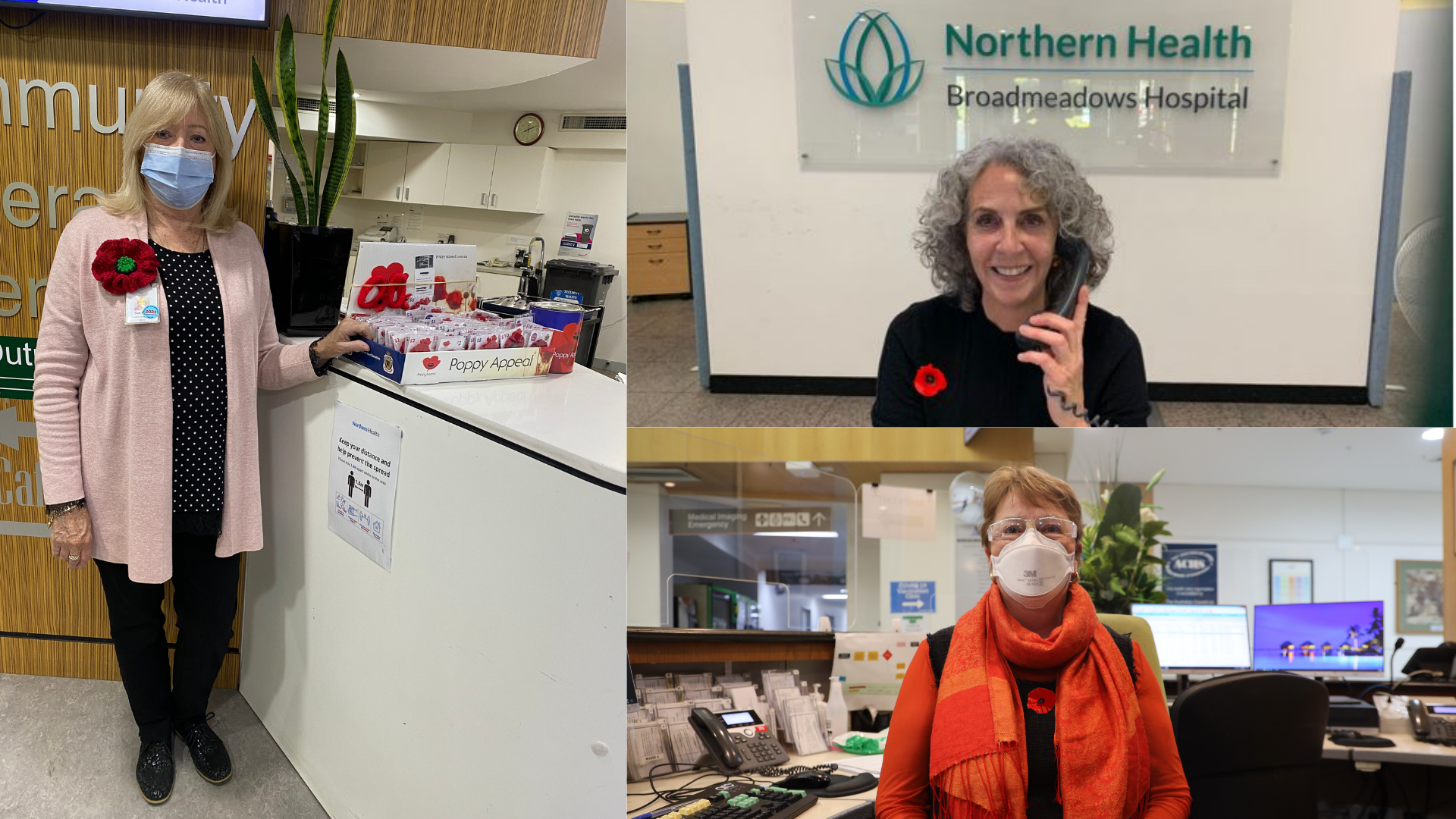
    To commemorate this important date, Hospital Reception Manager, Nick Caruana and HIS Operations Manager, David Mangano, are ensuring a coordinated observation of Remembrance Day at Northern Hospital Epping, Broadmeadows Hospital and Bundoora Centre at 11 am. The flag at Northern Hospital Epping will be lowered to half-mast.

    “This is an important date in the Australian calendar and we want to ensure all staff, patients and visitors have the opportunity to pause and remember all of the men and women of the Australian Defence Force who have made the ultimate sacrifice,” David said.

    Remembrance Day marks the day World War One ended. At 11 am on 11 November, 1918, the guns in the Western Front fell silent after more than four years of continuous warfare. The 11th hour of the 11th day of the 11th month attained a special significance in the post war years, after the Germans called for an armistice in order to secure a peace settlement. On the first anniversary of the armistice in 1919, two minutes’ silence was instituted as part of the commemorative ceremony at the new cenotaph in London.

    The red poppy is the symbol of Remembrance Day. Poppies are used to remember those who have given their lives in battle because the flowers grew on the battlefield after the end of World War One.

    Many decades on, it’s still important to remember the countless men and women who fought and served in war.

    Featured image L-R: Suzanne Hains, Reception and Switchboard Operator, Bundoora Centre, Reception and Switchboard Operator, Broadmeadows Hospital, Lisa Babic, and Lyndall Fleming at Northern Hospital Epping Reception.

  • Feel Good Fridays are here

    Feel Good Fridays are here

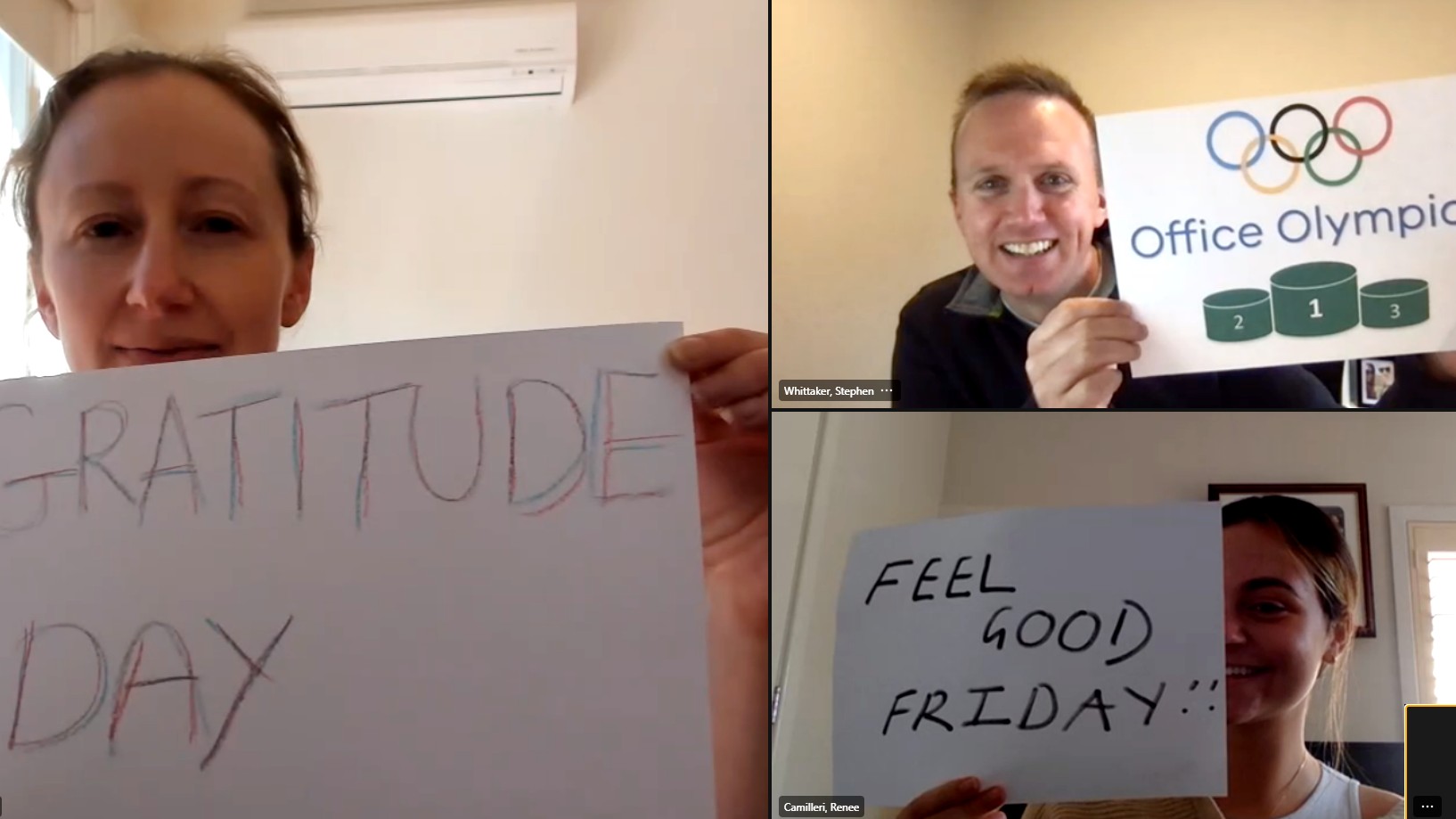
    Feel good Fridays are coming to Northern Health, starting from Friday, 12 November, and will last until the end of the year.

    “The Wellbeing Team are introducing virtual ‘Feel Good Fridays’- an opportunity to gather as a collective and share stories, join in with games and fun activities, and shake off the stress. Each week will be a different theme, and we encourage all staff across Northern Health, both clinical and non-clinical, to head to IdeaScale, where they will find information on how to participate,” explained Stephen Whittaker, Wellbeing Team Lead, People and Culture.

    “The science behind a smile, the sound of laughter and promoting that social bonding is incredibly powerful, and that is a concept that Northern Health would like to support for our hard-working staff. With restrictions easing, and a sense of optimism filling the air, it’s time to reflect, and a chance to celebrate the good in life. With everything we’ve been through in the last 18 months, it’s important now more than ever to take the opportunity to bring fun and light into our daily routine. We’ve earned it,” said Renee Camilleri, Wellbeing Advisor.

    Some of the Feel Good Friday activities will include ‘Guess the lyrics/famous movie quote’ and will also have a prize incentive, to reward staff for participating and getting involved. All instructions for each weekly activity will be explained on IdeaScale.

    Casey O’Brien, Wellbeing Project Psychologist added: “We know that social connecting is good for the soul, but we don’t often think about the benefits to our work practice. Taking the time to laugh, smile and get to know the people we work with encourages us to connect even more as we go about our work tasks and helping one another. We hope that this initiative provides inspiration for other topics to connect with beyond work and COVID-19, you may find colleagues who share the same music taste, favourite TV shows, or even a rival sports fan!”

    “Our staff have seen the darkest moments of this pandemic – now is a time where we can gather virtually, begin to heal and bond as a community,” Stephen said.

    “We look forward to sharing with you, connecting with you and having a laugh together,” he added.

    IdeaScale can be accessed from both home and office computers. If you are at the office, once you click on the link, you’ll be automatically signed in with your Northern Health account. If you are working from home, you will need to enter your NH log-in details (same ones you use when you log in to your office computer).

  • Kindness from Kyneton

    Kindness from Kyneton

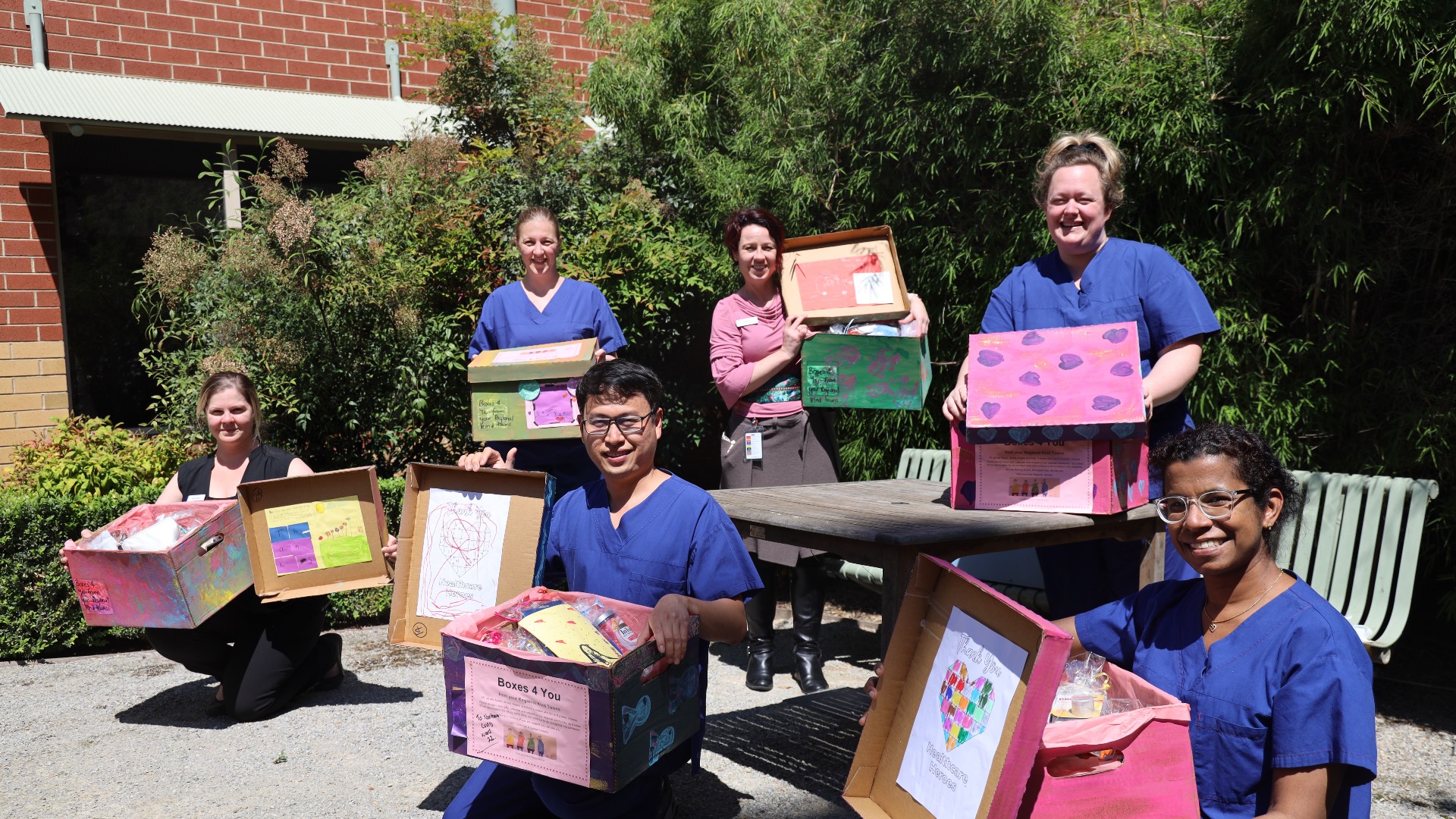
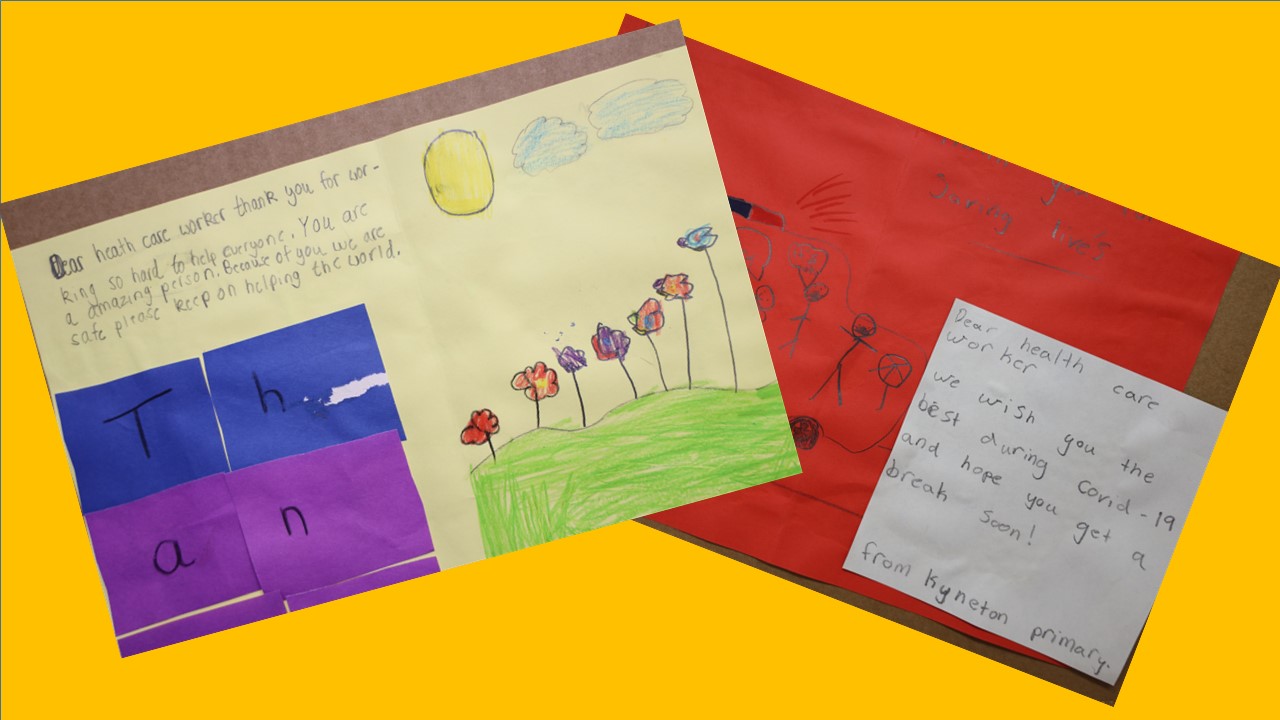
    Nurses on the frontline at Northern Health recently received gift boxes with this message:

    “Hi, we are Alison, Janice, Angela and Katy, four sisters who live in Kyneton, Victoria. Please accept these gifts, collected and created by our regional community, as a token of appreciation for all you have done and continue to do throughout this pandemic. We are thinking of you, we support you, we see you.”

    Katy is a nurse and midwife and says, “This started as a small family project  and has grown tremendously.”

    She explains, “During my career I have worked in Melbourne and abroad in a variety of nursing areas. This pandemic has been hard for all of us, especially working in COVID areas.”

    “I knew myself I was exhausted, scared, worried and sad about what was going on around me. Traditionally health care workers are very stoic, resilient and don’t complain, but finally I started asking my colleagues – how are you really doing?”

    “And the stories came flooding in. I was in tears reading messages from exhausted friends on the front line. And shocked at some of the realities they are living through.”

    “I knew I needed to do something. I started sending care packages to my friends. While I was doing this my sisters said “Katy, give us the name of a nurse and we will send them something. We want to help somehow.”

    “And so the idea of sending boxes of gifts to the wards in need was born!”

    Alisha Turner, Associate Nurse Unit Manager, Ward 19, is also from Kyneton. She says, “I wanted to be involved and was able to be the link of getting these boxes to those who deserve it!”

    The project has now gone beyond Katy and her sisters. “Many individuals have donated as well as community groups such as Kyneton Community Centre, Kyneton Rotary and hospital groups.”

    The boxes all have personalised messages. “The idea of personal messages from both adults and kids was very important to me. It’s the personal connection we wanted to add. We have had kids art donated by local childcares, playgroups and kids creating at home with their parents. We now have five local schools eagerly involved, creating art but more importantly learning about health care,” says Katy.

    “We  hope the boxes bring a little smile to a tired face, a moment of joy in the midst of hardship and most of all the knowledge that there are communities of people supporting, encouraging and holding up the sacrifices and incredible work of all our health care workers!” she concludes.

  • Q&A with Richard Laufer, Chief Legal Officer

    Q&A with Richard Laufer, Chief Legal Officer

    In this week’s ‘Q & A with…’ we chat with Richard Laufer, Northern Health’s Chief Legal Officer.

    What’s your coffee order?

    If I trust the place, a long macchiato, if not, drown the coffee with milk.

    Tell us about your career at Northern Health?

    I started in 2015 as a lawyer with a mainly medical portfolio. Now as Chief Legal Officer, I am responsible for the entire legal and FOI function of the health service.

    What does a typical day look like for you?

    Some form of exercise at 5:30 am and am usually at my desk around 8 am. I try to spend the early hours of the morning focusing on urgent, or overnight matters that have come up and then work through other matters. The legal team need to be dynamic as we have many matters that can last for weeks, but also have Court deadlines and urgent last minute clinical issues. Once I get home and the 3 and 5 year old kids are in bed, (and if I get my way) it is general lights out and bed time for me by 9 pm.

    How has COVID-19 impacted your day-to-day work?

    It has required the team to shuffle our working arrangements and be dynamic. There have been some fascinating legal and ethical issues that have come about as a result of COVID-19 which my team has been involved with. Over recent weeks, I have been locked up in home isolation with my family due to my daughter having COVID-19, which has been a challenge and eventful! It has highlighted to me that the liver is the unsung hero of COVID-19 for me.

    What was your career before Northern Health?

    Before becoming a lawyer, I was an Osteopath. Prior to Northern Health, I practised at a law-firm in medical and regulatory law. I often worked for various AHPRA Boards in regulatory misconduct matters and advised aged care facilities.

    How can our staff best live the values of safe, kind and together?

    COVID-19 has highlighted more than ever the need to look after each other and communicate in a positive manner. Without face masks, a simple smile can go a long way. With face masks, a simple ‘hello, how are you’ can lead to a more positive outcome. It goes back to the age old saying – ‘treat others the way you want to be treated’.

    What would people be most surprised to know about you?

    I played state grade rugby union and chess. Oh and I once had an “afro”.

    What do you like to do in your free time?

    Spend as much time with my family (including the fur baby), watch NFL (go Chiefs), or go for a run to clear my mind.

    If you could describe Northern Health in one sentence, what would it be?

    A diverse and growing health service where no two days are the same, and its strength is its passionate staff.

  • Rapid Antigen Testing Team

    Rapid Antigen Testing Team

    Northern Health’s Rapid Antigen Testing Clinic has been up and running for a month, seeing around 90 patients per day. With the working hours now extended  to 24/7, the team is expecting to see even a larger number of patients.

    Dr Victoria Madigan, Infectious Diseases Physician, together with Clare McCarthy, Director Quality, Safety and Patient Experience, were asked to set up the team and get the clinic running.

    The clinic has already made a big difference for the Emergency Department, in terms of identifying COVID-19 positive patients faster and getting them access to treatment.

    “This is also helping the whole hospital, because we are able to identify the patients with COVID-19 earlier and move them to a more appropriate location,” Dr Madigan added.

    The test is simple and easy to use, with results available within 15 minutes. The team have done a little over 2,000 tests so far and they are very pleased with the results.

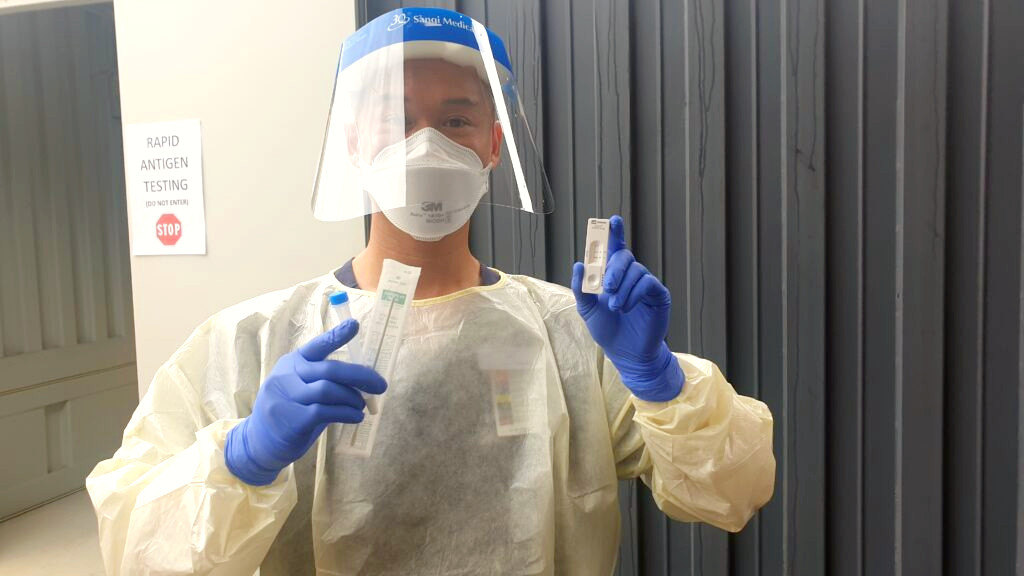
    “It’s not quite as sensitive or precise as the PCR test, but it’s pretty good, especially for patients who are in an earlier stage of their illness and are more likely to be infectious. The test is a swab that needs to be put into each nostril and then the swab goes into the fluid-filled tube. The test comes up showing if you are positive or negative, similar to a pregnancy test,” Dr Madigan explained.

    To help the clinic run quickly and efficiently, the team employs nursing students, like local Epping resident, Vi Nguyen.

    “I work closely with our patients, making sure their details are correct and I conduct the tests as well, while supporting the admin and clinical teams. Epping is my local community and it feels great to give back and be involved with so many sides to the COVID-19 response. I really appreciate the opportunities given by Northern Health and getting to work in so many areas. It gives me experience to become a better nurse in the future,” he said.

    “Vi is part of an amazing little team to work with,” said Clare. “We’ve pulled together a workforce of different stripes who rallied really quickly and value their contribution to our COVID response. They are such an asset to Northern Health from varying disciplines, all motivated to support our local community.”

    Clare added, “accolades go to our Emergency Department colleagues who have guided and supported us with this initiative – that’s basically in their front yard.”

    The testing team: Vi Nguyen, Victoria Madigan, Clare McCarthy and Julie Hamilton.

    Featured image: Vi Nguyen with the testing kit