• Last chance for early-bird Foundation Dinner tickets

    Last chance for early-bird Foundation Dinner tickets

    It is that time of year again for our annual Northern Health Foundation Dinner, held on Saturday 16 November at Casa D’Abruzzo Club Epping.

    We are excited to announce this year’s theme is The 80’s and to fit the theme, the event will be hosted by the iconic Australian pop group, The Chantoozies!

    Stand and Deliver 80’s Tribute band will also be joining us on the night to perform and entertain guests with their favourite 80’s hits, with stunning costumes and incredible singers!

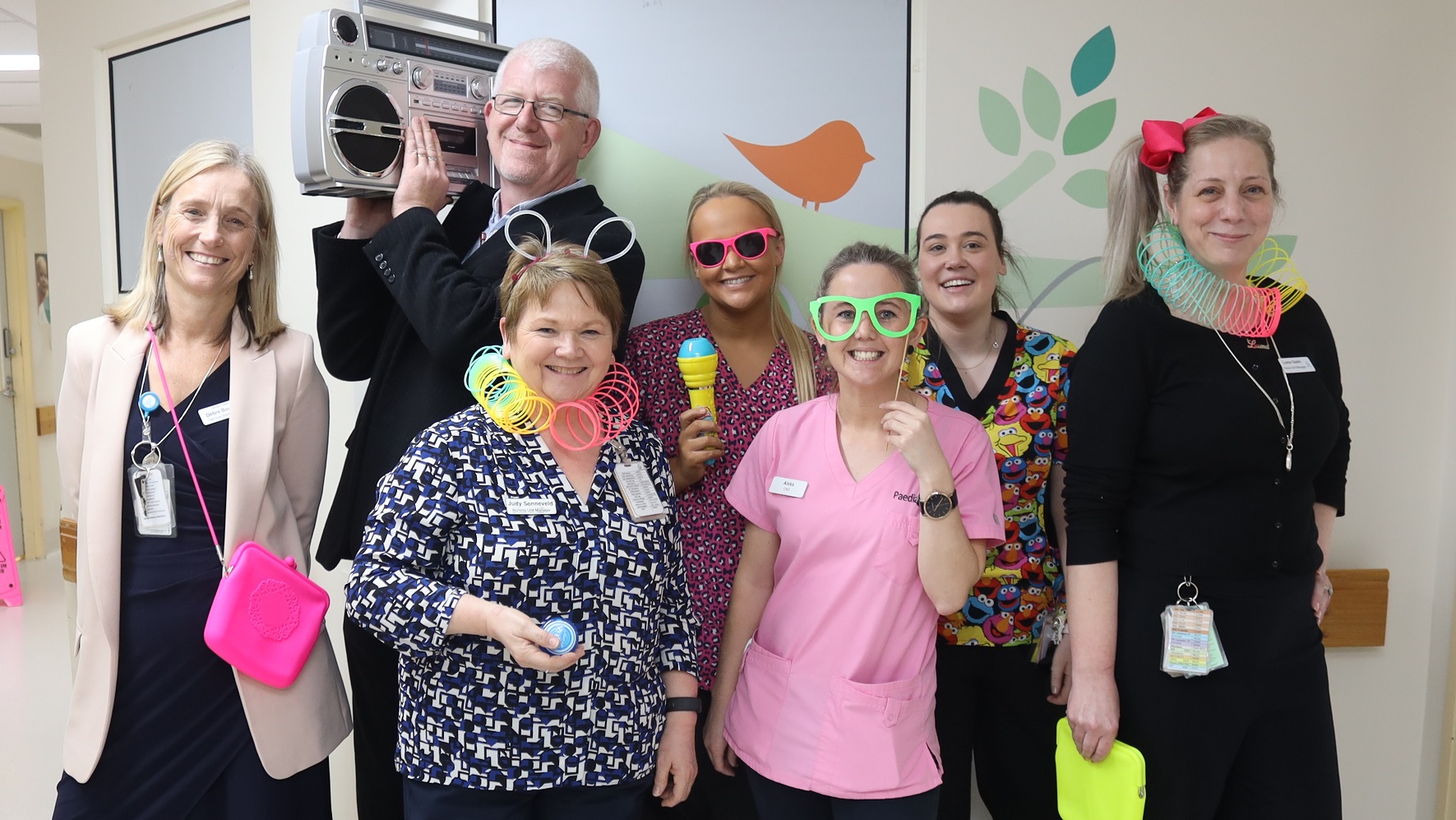
    Debra Bourne, Chief Nursing and Midwifery Officer said she is already planning to check out the op-shops this weekend for some 80s outfits.

    “I would like to encourage everyone to get their best 80’s outfit out and join us all for a great night with your colleagues,” she said.

    Northern Health Foundation are fundraising for 60 new state of the art defibrillators across our four campuses, Northern Hospital Epping, Broadmeadows Hospital, Bundoora Centre and Craigieburn Centre. Your support will help us care for patients when their heart stops.

    Ticket prices (inc. GST) are:
    Early-bird (until 20.09.19) $105pp or $1,050 table of 10
    Standard (from 21.09.19) $120pp or $1,200 table of 10

    Inclusions: 3 course meal, beverages and entertainment
    Dress code: Cocktail / Business Attire (or 80’s style)

    Proudly supported by 1ALP Leasing.

    Purchase discounted early-bird tickets before 20 September! Click here to purchase your discounted early-bird tickets today!

  • Ward 3: Executive Patient Safety Walk Arounds

    Ward 3: Executive Patient Safety Walk Arounds

    Executive Patient Safety Walk Arounds (EPSWA) were re-introduced at Northern Health in 2016 to help identify at risk environments and since the re-introduction, the program has undergone a number of evaluations and subsequent improvements.

    “The objectives of the program are to improve patient safety at Northern Health through linking patient safety activities with the Northern Health Executive. This will create opportunities for staff to discuss patient safety issues with the highest level of management, and to escalate and action areas for increasing satisfaction and safety for our staff, patients and visitors,” Donna Christensen, Director Quality and Service Improvement, explained.

    The current walk arounds take a Division approach, where a whole Division is reviewed by a minimum of six executives. There are EPSWAs scheduled monthly between February and November.

    “There were a number of highlights from the August EPSWAs, including feedback from staff stating how much they enjoy working in their areas, effective utilisation of space and positive patient/family experience stories,” Donna said.

    Ward 3 is the EPSWA area of the month where excellence in patient and staff safety were observed by the Executive.

    “Some of the highlights include 70 per cent of staff chemotherapy trained, 96 per cent hand hygiene compliant and 97 per cent flu vaccinated. The patient and family feedback board initiative was implemented and the safety round initiative completed at the end of each shift,” Donna said.

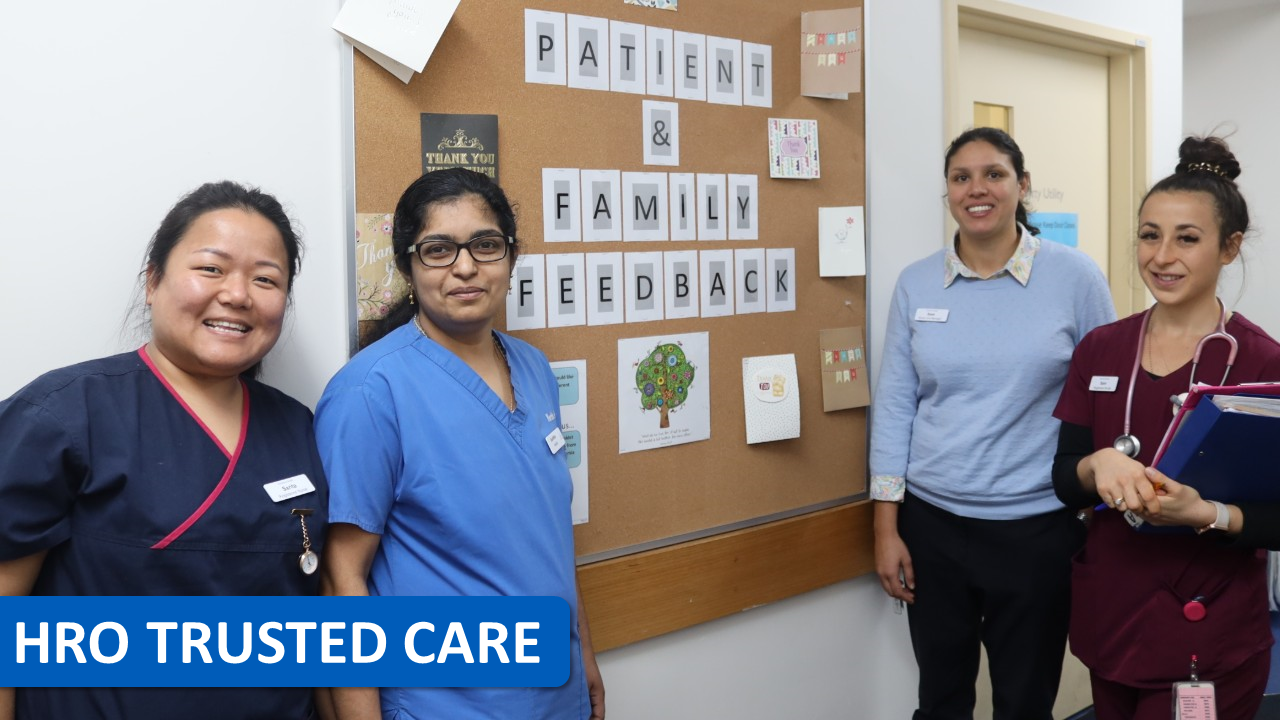
    Samantha Soggee, Ward 3 Nurse Unit Manager, said the patient and family feedback board was created to highlight positive feedback that ward staff receive from patients and families.

    “It promotes what we are doing as a team, as well as other types of feedback we get. We created a template in case we have issues raised. For example, someone said they would like more information on different types of cancer, so in the template we explained what we are going to do and how. We’ve provided a booklet and met that need,” she said.

    Another example of improvements include adding replacement of carpet to maintenance schedule to improve patient flow, new agreed ward rounds were developed to prevent ad-hoc medical rounding, and ISS were involved to help increase access to soft food.

    Samantha said EPSWAs do make a difference, as it was identified that there is a need for these kinds of boards during one of the rounds.

    “We had a board before, but it didn’t look like this. After the EPSWA, we’ve developed it. All our staff participated and helped develop the board,” Samantha said.

    Tracey Webster, Quality Coordinator Cancer Services, said the team wanted the patients to feel really valued and see their feedback is taken seriously.

    “The new management of Ward 3 and me are focused on the culture which promotes the importance of feedback and communicating what we do with that feedback. For example, once we got the feedback on outdated cancer brochures, and after we developed new ones, we identified that we need a way to say thank you to patients who took their time to give that feedback and display it publicly,” she said.

    Board at the Ward 3 entrance
  • Environmental sustainability: Our hybrid cars

    Environmental sustainability: Our hybrid cars

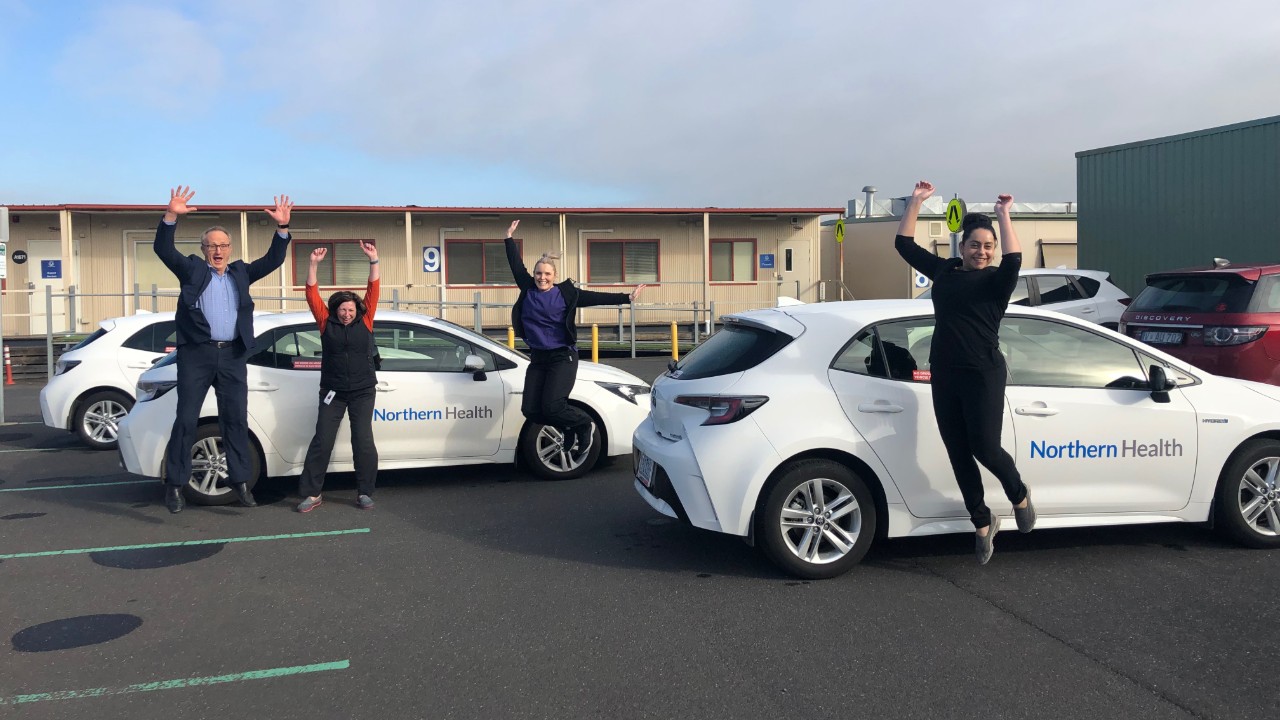
    As part of our contribution to environmental sustainability, Northern Health has purchased three Toyota Corolla Hatch Hybrids for the domiciliary home visit midwife (DOM) team.

    The DOM team have to conduct an increasing amount of home visits in the northern growth corridor and actively use Northern Health fleet vehicles.

    “As part of our contribution to our sustainability, we wanted to purchase some vehicles that had a positive environmental effect. The Corolla Hybrids burn less fuel and emit lower levels of carbon and are great cars for our staff to use,” said Basil Ireland, Chief Financial Officer.

    “The cars are extremely economical, with a factory rated 4.2/litres per 100 km,” explained Dominic LaCaze, Supply Manager.

    “Our current fleet has about 75 cars and Northern Health plans to buy hybrid when replacing cars. The only exception might be if the car is required to have additional boot capacity, as the hybrids don’t have large boots,” he added.

    Some of the safety features of our hybrid cars include auto high beam, radar cruise control, eight-inch colour touchscreens and bi-LED headlights.

    Dominic said our DOM staff are enjoying the cars, with some of the feedback so far including; “It’s a beautiful car to drive,” “The keyless entry and push button ignition start is really cool,” and “Knowing there are extra safety features like auto high beam, automatic emergency braking and lane departure alert makes us feel safer in doing our job.”

    Northern Health wants to achieve the Victorian Government’s target of being net zero carbon emissions by 2050.

    “It will be difficult to achieve, but we are making positive steps including increased recycling of waste, installation of solar panels to reduce energy consumption from the grid and fine tuning our building automation systems to ensure efficient use of energy,” Basil Ireland said.

  • Mentoring for Success launches today

    Mentoring for Success launches today

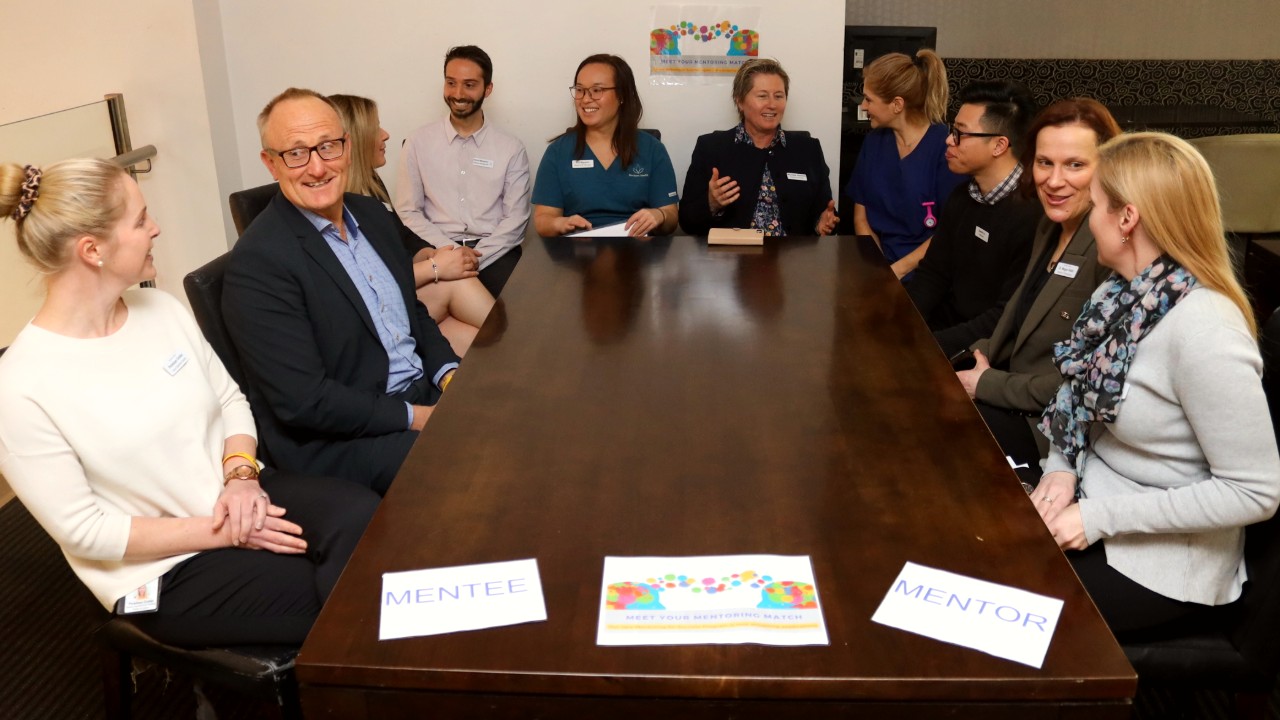
    If you have ever considered being a mentor to a colleague, or being a mentee yourself, Northern Health’s new ‘Mentoring for Success’ program is your chance to meet your match.

    The new program launching today is open to all employees. Regardless of your role, you can apply to be a mentor, a mentee or both.

    Natalie Sposaro, Manager Organisational Capability, explains this is far from a traditional mentoring program, as it offers three different types of mentoring relationships: Traditional, peer to peer and reverse.

    “Unlike traditional mentoring programs, Northern Health’s program gives the opportunity for all employees to participate. For instance, an ANUM could mentor a Director or vice-versa. A peer to peer mentoring relationship can also be highly beneficial for both parties and another option individuals can apply for. Research suggests that employees who have a mentoring relationship tend to more successful in their roles,” she explained.

    The colourful image representing the program showcases the diversity of thought that goes beyond equality and inclusion.

    “It rather focuses on realising the full potential of people, by acknowledging and appreciating each person’s unique perspective and different way of thinking. Diversity of thought promotes innovation, harnesses different viewpoints and allows for more options,” said Penelope Grellet, Director Organisational Capability.

    Penelope explained the team will undertake a detailed matching process of all applications and ensure the most relevant pairing is achieved for both the mentor and mentee depending on their preferences and objectives.

    “Once a match has been found, the Organisational Capability team will email the mentor and mentee directly. We will endeavour to find a suitable match for everybody, however, if this cannot be accommodated, we will contact you directly to advise,” she explained.

    Michelle Fenwick, Executive Director People and Culture, said the program is there for staff to see where their career could go and what pathways are possible to get themselves to the next level.

    “We often don’t know what we don’t know. Sometimes, by talking to others, we find out what else is actually there. We don’t need to make every bad decision to learn from it. We can also learn through discussion and finding out other people’s stories,” she said.

    Basil Ireland, Chief Financial Officer, said he could apply to be either a mentor or a mentee. “Within my team, there are people I can provide some guidance too. I would also enjoy getting a mentee that is not from the finance sector. It would be good for both of us,” he said.

    Dr Megan Robb, Director of Emergency said our ED had mentorship programs she enjoyed being involved in since she was a registrar.

    “It is really important for both career and personal development, and to improve the relationships between trainees and consultants. It’s great to see now a mentoring program across the whole organisation. I would apply for the program, as I always had mentors and mentees through my career,” she said.

    Applications for the program are open from Monday, 16 September 2019 and all employees are welcome to apply as either a mentor or mentee. All applications will be reviewed by the Organisational Capability team within People and Culture. Applications close on Monday, 7 October 2019.

    To find out more and apply, head to the Mentoring Program Intranet page.


  • Exceptional result for Northern physician trainees

    Exceptional result for Northern physician trainees

    In the recent Royal Australasian College of Physicians (RACP) Basic Physician Training (BPT) clinical examinations, our Northern Health physician trainees (current med reg group) performed exceptionally well, with an overall pass rate of 88 per cent (37 out of 42 candidates) and a 91 percent pass rate for first time sitters.

    This compares with the overall pass rate of 69 per cent Australia wide, and 76 per cent for Victoria.

    Dr Edwina Holbeach, Northern Health Geriatrician and Co-Network Director, Central North West BPT Consortium, would like to congratulate the trainees on this wonderful achievement.

    “We are exceptionally proud of all our trainees who have worked extremely hard, both in their exam preparation but also on the wards during the hospital’s busiest time of year.”

    “I would also like to say a big thank you to our senior med reg – Madeline Cosgrave, consultants and advanced trainees, who volunteered hours of time to tutorials, coming in on weekends for practice exams and so much more. It has all paid off!” she added.

    To become a specialist physician, trainees must complete six years of training – with the first three years considered ‘basic physician training’. There is a written and clinical examination that must be passed prior to commencing three years of advanced training.

    “Our medical registrars have spent the last 18 months in gruelling preparation, firstly for the written examination and then the clinical. During this period, there is generally upwards of 15-20 hours per week in study on top of full time work!” Dr Holbeach said.

    “Hospital staff would have seen the trainees walking around the wards with ‘briefcases’ full of equipment needed to examine patients.”

    In July this year, Northern Hospital hosted the examinations, with interstate candidates and interstate examiners participating alongside local consultant examiners. Patients from the Northern Health community volunteered their time on examination day to ‘test’ cases for the candidates.

    “Thank you to our patients for volunteering their time – we couldn’t have hosted the exam without them,” Dr Holbeach said.

    This year, the Central North West BPT Consortium (Austin, Northern, Bendigo, Horsham) had 42 candidates sitting the clinical exam. The clinical exam takes months of preparation and many bedside tutorials, practice mock exams and specialty training days. The candidates had to travel interstate to have their clinical acumen tested over a whole day.

    The future is bright for our trainees with Dr Holbeach finishing by saying, “We look forward to seeing our trainees proceed through to the next stage of their careers as advanced trainees here at Northern Health.”

  • R U OK? Day

    R U OK? Day

    Today marks R U OK? Day, coinciding with Northern Health’s week of ‘Conversations on Mental Wellness’.

    R U OK? Day is a national day of action dedicated to reminding everyone to ask, “Are you OK?” and to remember that every day of the year we need to support people who may be struggling with life’s ups and downs.

    This year, the theme revolves around encouraging everyone to Trust the Signs, Trust your Gut & Ask R U OK?

    It’s important our staff feel confident they know the signs someone might need support. Whenever you notice a change, no matter how small, we encourage staff to trust their gut and start an R U OK? conversation.

    As employers or staff, we can all create a culture where people feel confident asking and answering this simple yet important question. We all play a role in providing a safe and healthy workplace for staff, and these conversations can make a real difference to anyone going through a tough time.

    Northern Health Director OHS & Wellbeing, Will Halpin, said, “We have been privileged this week to hear inspirational stories and research around mental wellness. The poignant message for me is that we all have our vulnerabilities and bad days.”

    “It takes courage to ask for help, and to ask if someone is ok, but it is incredibly important. That simple question can have a profound impact,” he added.

    Watch the below video to find out how to ask R U OK? at work. For further information on R U OK? Day, click here.

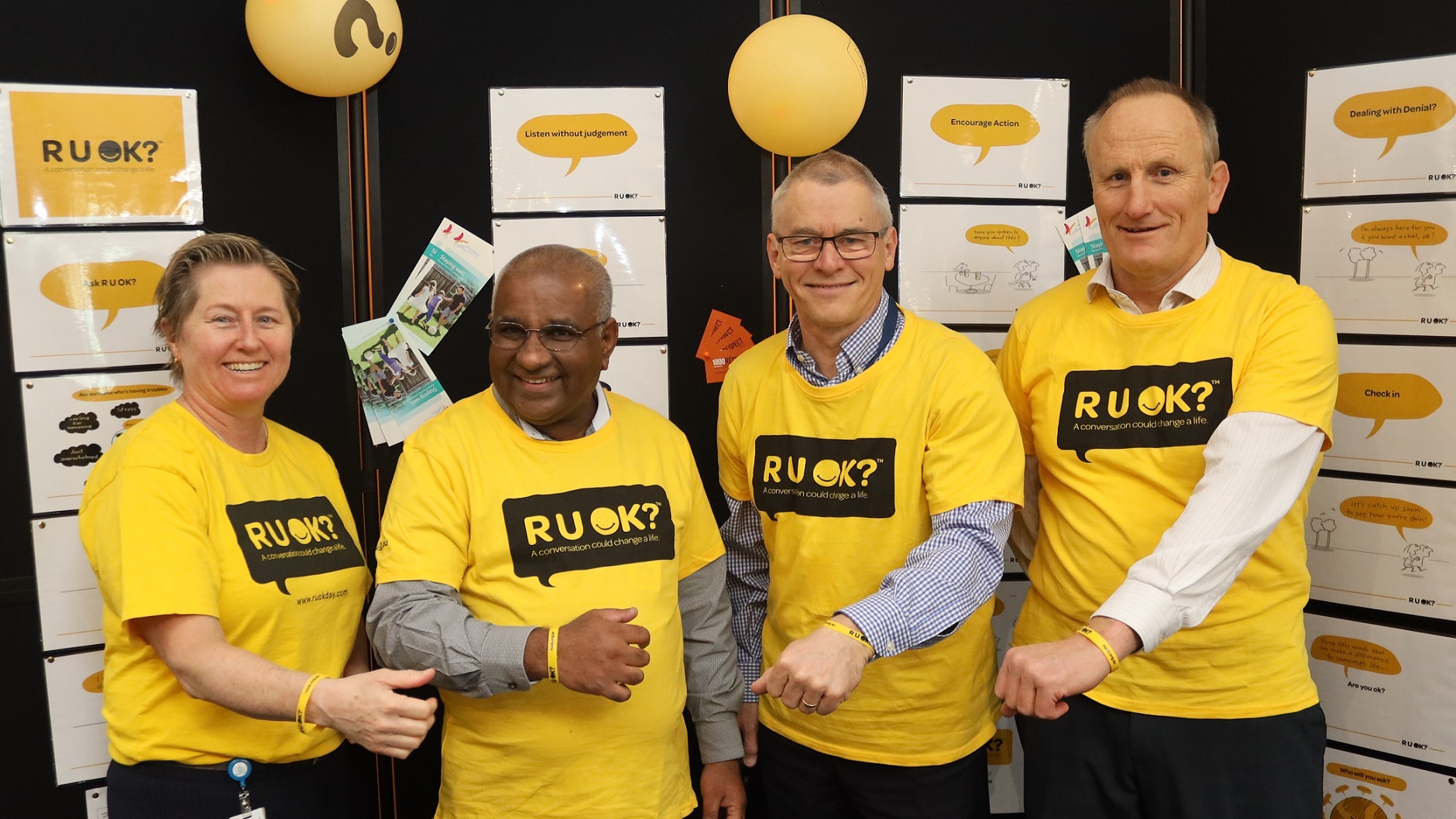
    Featured Image (left to right): Michelle Fenwick (Executive Director, People and Culture), Siva Sivarajah (Chief Executive), Andrew Williamson (Executive Director, Public Affairs and Foundation), Basil Ireland (Chief Financial Officer)

  • Shelley Sinclair: 43 years of dedicated service

    Shelley Sinclair: 43 years of dedicated service

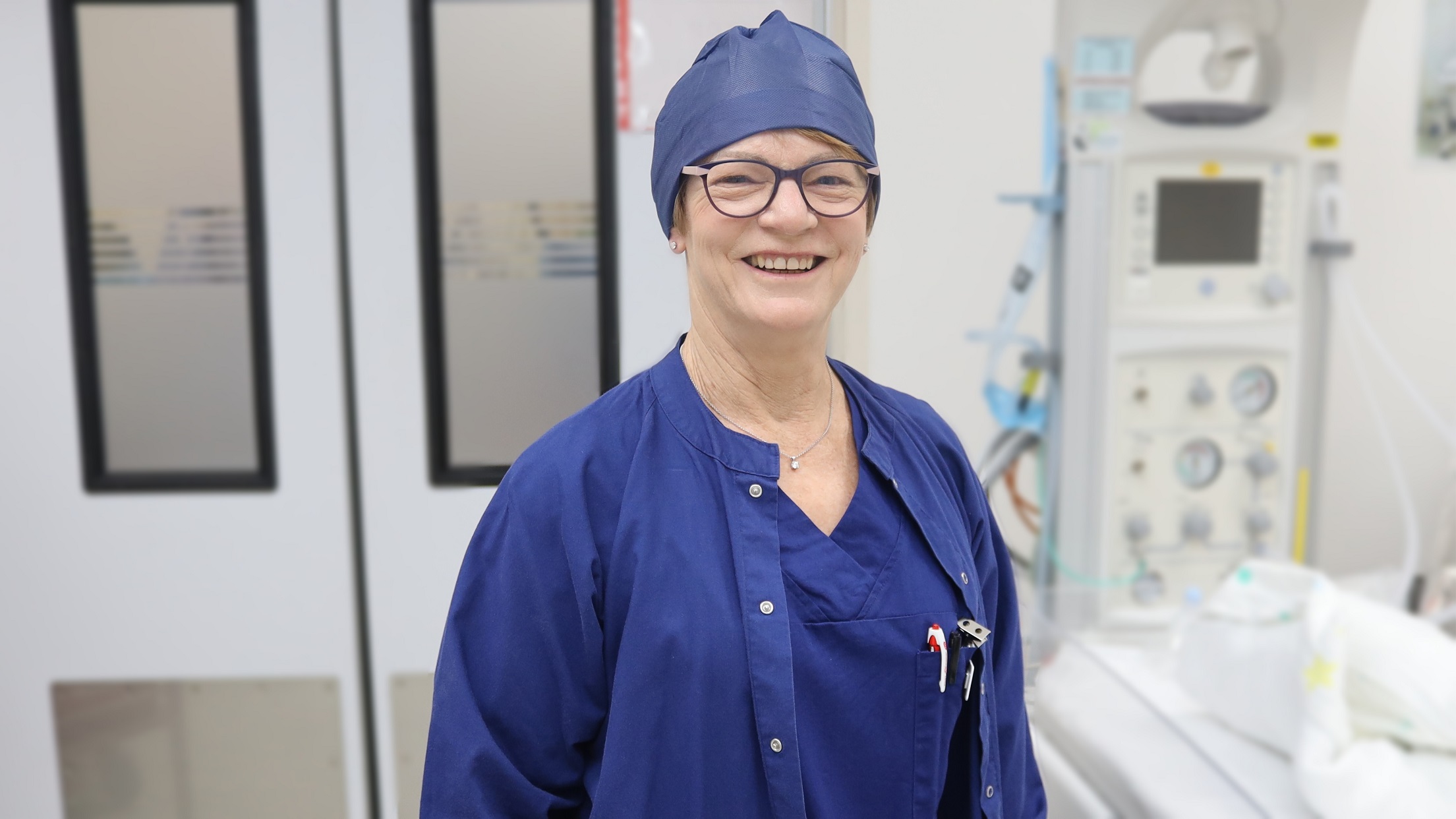
    Operating Theatre Floor Coordinator, Shelley Sinclair, has worked at Northern Health for 43 years.

    She recently made the decision to retire from what she describes as an “exciting career where every day is different.” 

    Prior to her current role as floor coordinator where she manages the emergency theatre booking system, Shelley spent most of her career working as a theatre nurse as either scrub scout, anaesthetics or in recovery. 

    Shelley’s nursing career began at PANCH back in August 1976. 

    “There were two intakes of nursing schools at PANCH in those days. I finished my training in 1979 and worked on the wards for a while and then did midwifery from 1980 – 1981.” 

    “Friends of mine convinced me to come and work in theatre, it was the last place I actually ever wanted to work, but they talked me into coming and I said I’ll give it three months. They’ve all left now and 43 years down the road I’m still here,” she says. 

    Shelley tells us her favourite part about nursing has been helping people at their most vulnerable time -“to be able to facilitate a patient’s journey so that it’s easier for them and more comfortable, in what ever role you do, and minimise their anxiety.” 

    “Nursing is a privilege – to be in the room when someone’s life begins and when it ends, to have been present in those moments in people’s lives is just a great privilege. It’s an extraordinary thing to be able to do and there are very few professions where you get to do that in life,” she says. 

    When asked what she will miss most about working at Northern Health, she says, “the people – you just work alongside the most amazing people.”

    “Some of the memories I’ve been dredging up since making this decision to retire, I mean some were challenging events, but you think about how people have handled those events – they are incredible colleagues and it’s really just like a big family.” 

    Shelley has seen Northern Health change dramatically over her 43 years.

    When I first started, we had three operating theatres. Now, we’ve got seven and it’s more than doubled in size and the complexity of the work you do is far greater,” she says. 

    “The acuity of patients is much higher, definitely the number of cases, and the number of languages spoken by patients. It’s incredibly diverse,” she adds. 

    Divisional Director for Surgical Services, Linda Romano, said, “Shelley’s knowledge and management skills have been an extremely valuable asset to the Northern Health perioperative team. Her strong leadership has not only been important to me but to all that have worked alongside her.”

    “Thank you Shelley for all your hard work and dedication. I will certainly miss our morning huddles and theatre demand discussions, but most of all your welcoming smile. Best wishes on a well-deserved retirement,” Linda added.

    “Truly, I feel like I’m the luckiest person to be able to work for 43 years in nursing – most of it in the operating suite,” Shelley says. 

    “It’s not just about me – that longevity has also been facilitated by the very people that you work with because everyone is highly skilled, cooperative, caring and look after each other – it’s all of that.” 

    Looking back, Shelley attributes a number of reasons for her extensive career in nursing – “looking after my health, loving what I do, and working with the most incredible people – you don’t think that every day but when you reflect back after 43 years, those are the things I’m thinking about.” 

    “You have amazing experiences so I hope that these new young nurses will find longevity in nursing.” 

  • Education sessions for first time parents

    Education sessions for first time parents

    Taking care of a newborn can be difficult, especially for first time parents.

    Our neonatal team has developed education sessions focusing on educating and empowering parents to look after their newborns in hospital and to help them have a smooth transition to home. In these sessions, parents, carers and family members can learn the standard practice of newborn care, before the baby leaves hospital.

    Helen Opasinis and Elizabeth Psilos (Liz) are Pre-School Mothercraft Nurses and they run these sessions on Tuesdays and Fridays. They have been looking after newborns for more than 30 years and have a wealth of knowledge on newborn care.

    “Liz and I started this program a couple of years ago and now we have decided to reintroduce it. Educating parents about basic newborn care would potentially minimise parental anxiety and help them provide adequate care to their precious babies at home,” Helen said.

    Helen tries to cover as many areas as possible for the newborn baby care, and parents are encouraged to ask questions.

    “Parents often get different advice from different people, but my main advice would be to trust your own judgement. Mums who give birth at Northern Health are encouraged to attend these sessions and bring their partners, parents and a friend if they wish to do so,” she said.

    Marama Taunoa is a first time mum and none of her friends have a baby.

    “I’ve found these sessions very informative. For example, I didn’t know anything about thrush with babies before. I am a new mum and don’t have any friends that have children. It’s very good to have these types of sessions, so when you get home with your baby, you know what type of care to give. My son is just a week old today,” she said.

    Mini Varughese, Associate Nurse Unit Manager of Neonatal Unit (NNU), said the main idea behind these sessions is to help the parents to get to know their baby and get them involved in newborn care in the hospital, so that they are well equipped and confident to look after them at home.

    “First time parents might need to develop parenting skills and these sessions cover basic care for baby’s eyes, ears, mouth and care of cord. They also learn about sleeping patterns, breast feeding routines, care of skin and fontanelles and when and how to get help if needed,” she explained.

    Caitlin Francis, third year student of Nursing and Midwifery at La Trobe University also participated in the session.

    “I like these sessions a lot. I came in to get the education and I feel now I know what to tell mothers. This is definitely something I would like to do some day,” she said.

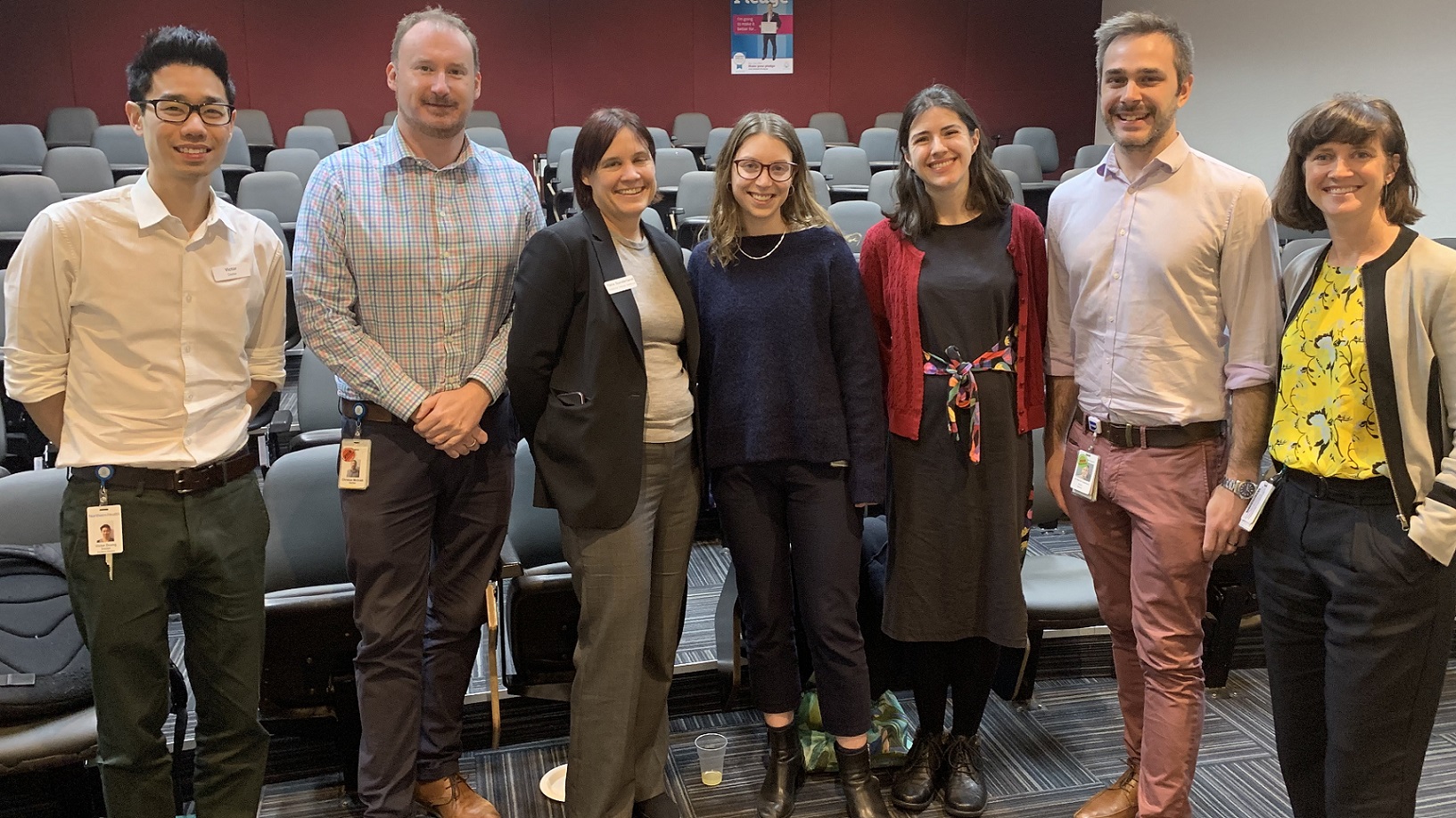
    Elizabeth Psilos with Shveta Kanwar and Chautiece Beasley who attended the session

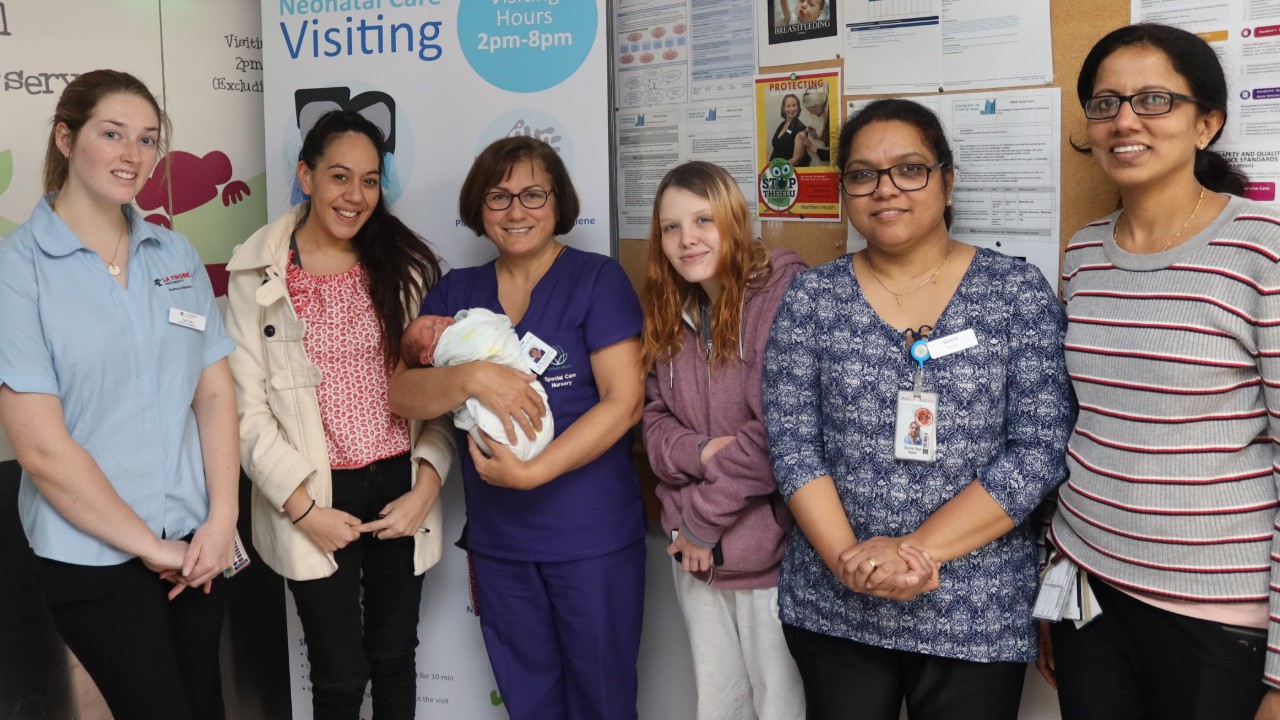
    Featured Image (left to right): Caitlin Francis, Student; Marama Taunoa, new mum; Helen Opasinis, Educator; Brooke Farrell, new mum; Sonia Paul, Registered Nurse NNU; Mini Varughese, ANUM NNU.