• Volunteer Services Team wins 2020 COVID-19 Support and Connection Award

    Volunteer Services Team wins 2020 COVID-19 Support and Connection Award

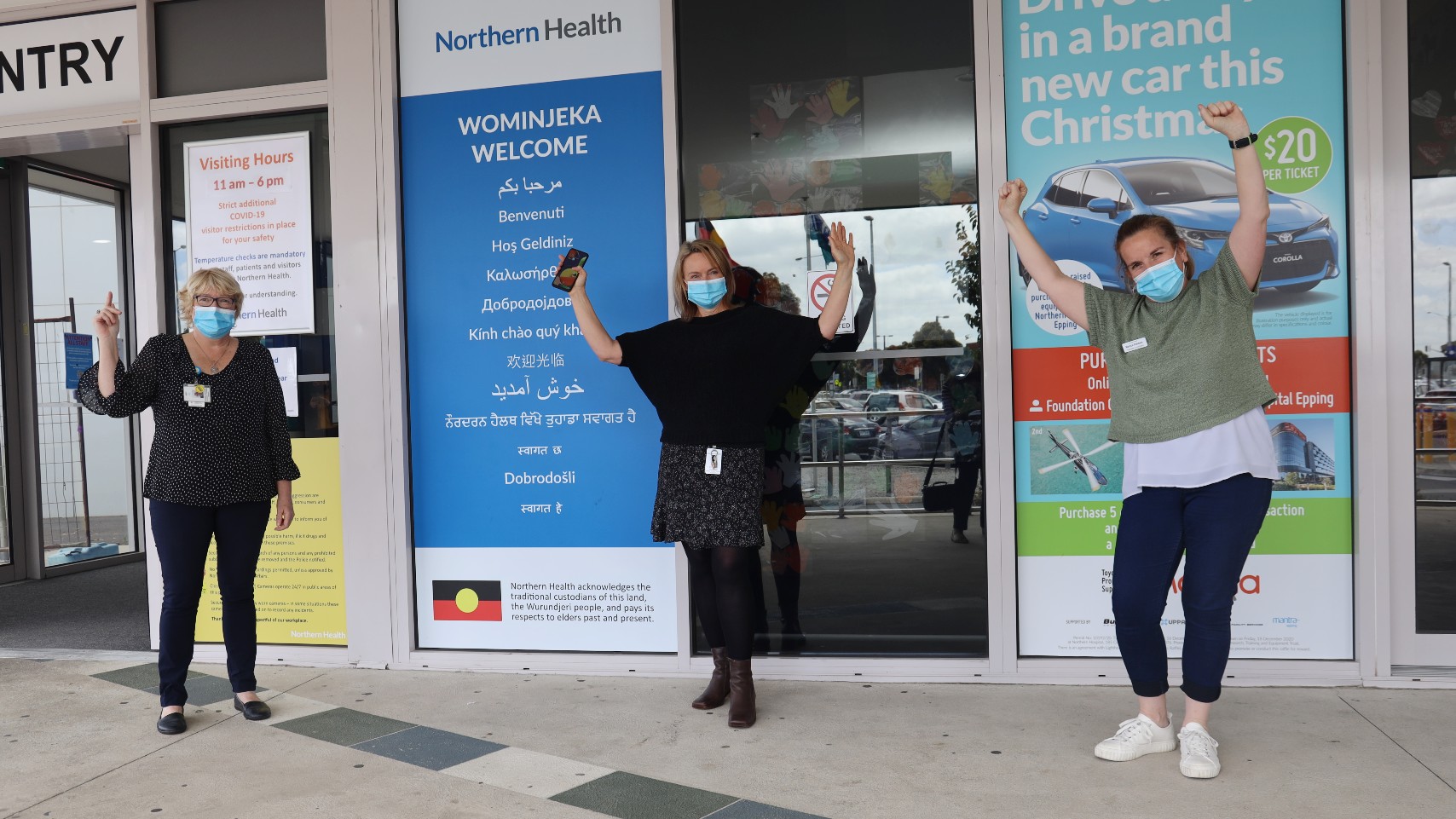
    Congratulations to our Northern Health Volunteer Services Team, declared the winner of the Volunteering Victoria‘s 2020 COVID-19 Support and Connection Award!

    The state award was given to the organisation that achieved strong ongoing support and connection for their volunteers during the pandemic. This award showcases the hard work, creativity and genuine kindness the team has demonstrated towards our volunteers, and our volunteers towards each other.

    “I am very proud of our Volunteer Services Team,” said Andrew Williamson Executive Director Public Affairs and Foundation.  “The team  has been  absolutely committed to keep our volunteers engaged and connected during this challenging  year.  The Award from Volunteers Victoria is well deserved.”

    Northern Health has over 300 dedicated volunteers, who work across our sites to help us provide support and care to our patients. As a result of the pandemic, they are not on-site for their safety and wellbeing.

    However, the Volunteer Services Team was quick to recognise that, “Many of our volunteers told us that the physical distancing and isolation made them feel really anxious and stressed,” says Henni Wade, Manager, Volunteer Services. The team quickly got to work to reach out to the volunteers.

    One way of keeping in regular contact was the daily newsletter. The volunteer team has sent out their 180th newsletter that has provided information, humour, and inspiration that keeps the volunteers connected with each other.

    “Volunteers sent in photographs of their ‘iso’ activities and we had some volunteers being guest editors, adding their own personal touches to the daily update,” says Henni.

    Carol, a volunteer from Northern Hospital, says “Having a daily, rather than a weekly newsletter better represents real life as many of us volunteer on more than one day and catch up with other volunteers. The combination of silly jokes and uplifting quotes is a nice balance and lifts the day for many, especially for those who are isolated. Receiving the newsletter throughout the COVID 19 restrictions keeps us informed, but more importantly, it lets us know that the co-ordinators care enough to do this so regularly.”

    “Our program evolved from one where the main focus was the volunteers providing  support to the health service to one where the health service was supporting our volunteers, helping to keep them well at home,” says Monica Polimeni, Volunteer Coordinator.

    “Volunteer Week was another such opportunity, ‘to make a fuss of our volunteers’,” says Monica.

    A TikTok dance video, a volunteer song, thank you videos from Peter Hitchener from Channel 9 and the Clown Doctors, thank you messages from staff collated and put together in a colourful booklet were some of the ways the volunteers were made to feel special in that week.

    Literally going that extra distance, Henni, Christine and Monica also spent three days on the road, dropping in unannounced and surprising their long standing volunteers with Length of Service Awards.

    “The effort you put in to make sure Volunteer Week was special, going from door to door to deliver the awards to people who were celebrating significant milestones… while not forgetting the other ones who are in between these dates,” says Julia Arlow, a volunteer from Broadmeadows Hospital.

    “From setting up virtual chats, to filming funny TikTok videos and developing daily newsletters, our Volunteer Services Team has worked hard to not only keep in touch with our volunteers, but to genuinely provide support in the challenging times. For many of our volunteers, we are their second family, and that is how we feel about them too,” says Christine McGowan, Volunteer Coordinator.

  • Only two weeks left to win a stunning new Toyota Corolla Hybrid!

    Only two weeks left to win a stunning new Toyota Corolla Hybrid!

    Christmas is fast approaching, and what better present is there than a brand new car!

    There is only two weeks left to purchase tickets to the Northern Health Foundation Major Raffle and be in the running to win a stunning new Toyota Corolla Hybrid valued at over $30,000.

    Proudly supported by major sponsor, Maxxia, the raffle aims to raise $150,000 to fund cutting-edge diagnostic equipment for our Gastroenterology Department, which will make a real difference to our patients.

    In addition to the Toyota Corolla Hybrid, the raffle offers up a chance to win a number of amazing prizes including a Helicopter Joy Flight over Melbourne valued at $4,500, an UPPAbaby Vista Pram and Bassinet valued at over $2,000, and a stay in the Mantra Epping Penthouse Suite including breakfast and dinner for two, valued at $750.

    By purchasing a ticket, you can feel proud of supporting the important work of Northern Health and know that you are not only helping us as a health service, but helping patients in our community too. Click here to purchase your tickets today!

    There are a number of other ways you can support Northern Health and our patients this Christmas.

    Our resident teddy bears, ‘Scrubs the Bear’ (pictured above being COVID Safe with their face masks) are available for purchase here, and would make for a wonderful children’s Christmas present. Scrubs the Bear is just $20, so perfect for a KK gift!

    Even though our dedicated volunteers haven’t been on site due to COVID-19, they have still been working hard behind the scenes to support Northern Health.

    Our annual Volunteer Christmas Raffle offers a chance to win a variety of fabulous hampers. Purchase tickets here – only $5 for three tickets!

    Funds raised from the Volunteer Christmas Raffle will go towards the purchase of a sleeper chair for Northern Hospital Epping. Sleeper chairs enable parents and carers to remain close to their loved ones whilst they are receiving care in hospital.

    After what has been a challenging year for Northern Health and indeed the entire community, we are grateful for your unwavering support. Our northern community has shown that, even in tough times, we come together and continue to support each other.

  • Take a look inside the new CSSD!

    Take a look inside the new CSSD!

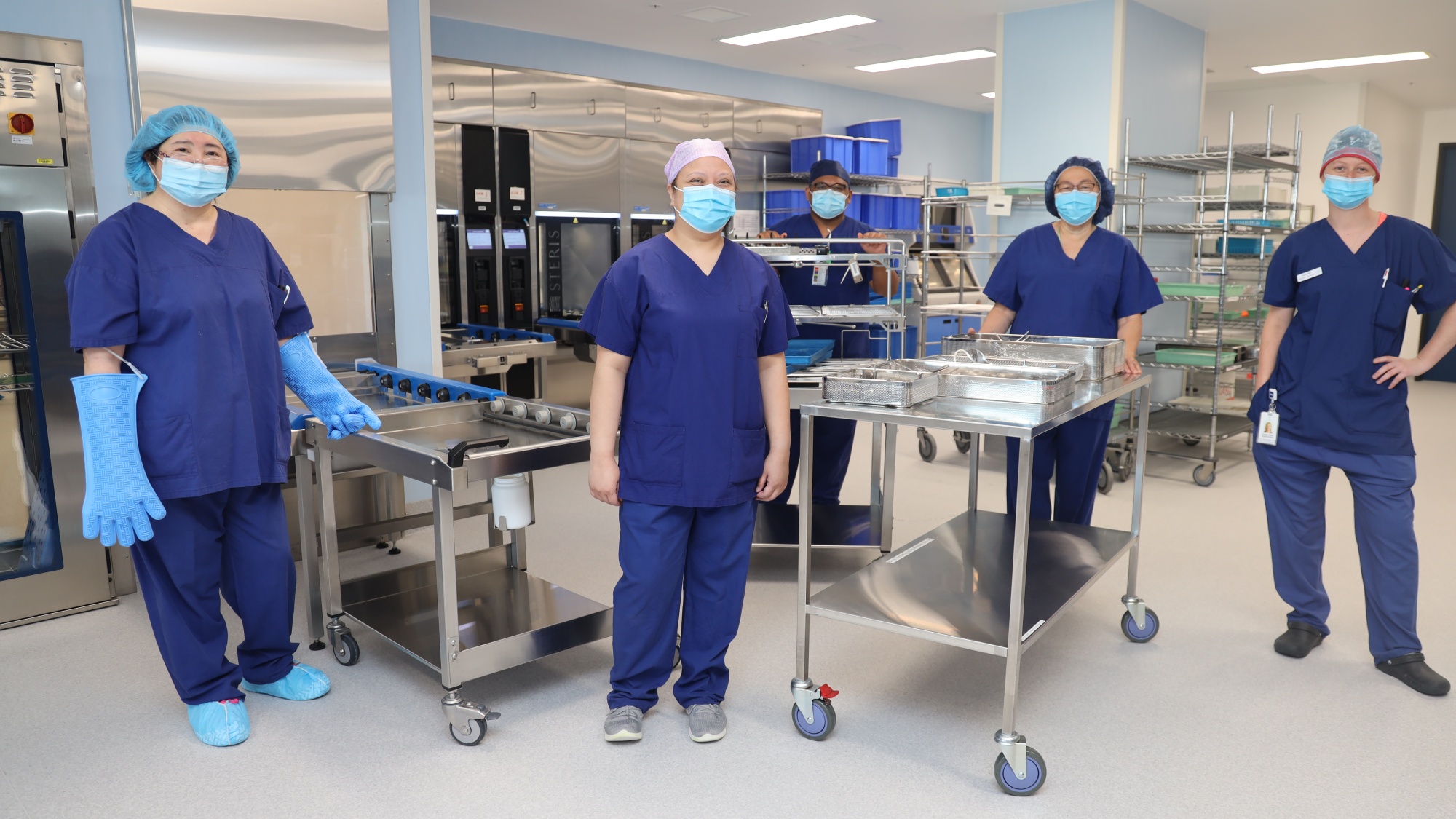
    Our new state of the art Central Sterilising Services Department (CSSD) is now open!

    The Northern Hospital Expansion Project hit a key milestone last month with the successful move of our CSSD from Level 1 to their new space on Level 2 (opposite Ward 18).

    Over five days, the dedicated team completed the move safely and efficiently – with no interruption to services or patient care.

    The new CSSD officially went live on 23 October after months of hard work and an enormous effort from staff to bring the move to fruition.

    “I am incredibly proud of the collaborative work done by staff from CSSD and the General Operating Theatres, to operationalise this state of the art department,” said Tracey Wyllie, Peri Operative Services Manager.

    “Without their hard work and effort, none of what has been achieved would be possible,” Tracey said.

    Tracey explained the move was a “mammoth effort” by everyone involved, led by herself and supported by Divisional Director, Linda Romano, and Operational Readiness Director, Carolyn Downing.

    “Even staff from Broadmeadows Surgical Centre participated, providing a second level of expertise from previous moves,” Tracey said.

    “The entire project has epitomised the Northern Health value of ‘together’, and demonstrated true camaraderie within the Surgical Division,” she added.

    Evient Koh, CSSD Nurse Unit Manager, and her team have been working collaboratively with theatre staff, who are also playing an important role in the new CSSD.

    Celeste Taylor, CSSD Acting Associate Nurse Unit Manager, normally works in theatre but has been working alongside CSSD staff to assist with theatre set-up – a new role that CSSD has taken on from the move.

    “The new CSSD is a very large, modern department with state of the art facilities and a structured workflow,” Celeste said.

    CSSD Acting Nurse Unit Manager, Melanie Almazan, said “It’s a new challenge for everyone, aside from having a bigger department which everyone enjoys, most of the equipment is new, thus staff need further training to be able to operate the equipment.”

    “In saying that, our staff have done their very best to be able to adjust and adopt to the new changes. The management team has been supportive to the staff every step of the way, up until they gain their confidence with the different role that they play in CSSD,” Melanie explained.

    Staff are pleased with the new space, with one of their instrument technicians describing working in CSSD as “exciting and also rewarding.”

    The new CSSD space is spacious, bright and provides unidirectional flow of instrumentation to ensure compliance with infection prevention standards. Take a look inside!

    The new CSSD Sterile Store – triple the size of the previous Sterile Store.
    The new cooling area, which is a separate room from the sterilising area, big enough to be able to safely manoeuvre the steriliser cart trolley when taking instruments out of the steriliser.
    The new decontamination room. Staff always wear full PPE when working in this area.
  • Craigieburn Testing Clinic: Ongoing hard work and dedication

    Craigieburn Testing Clinic: Ongoing hard work and dedication

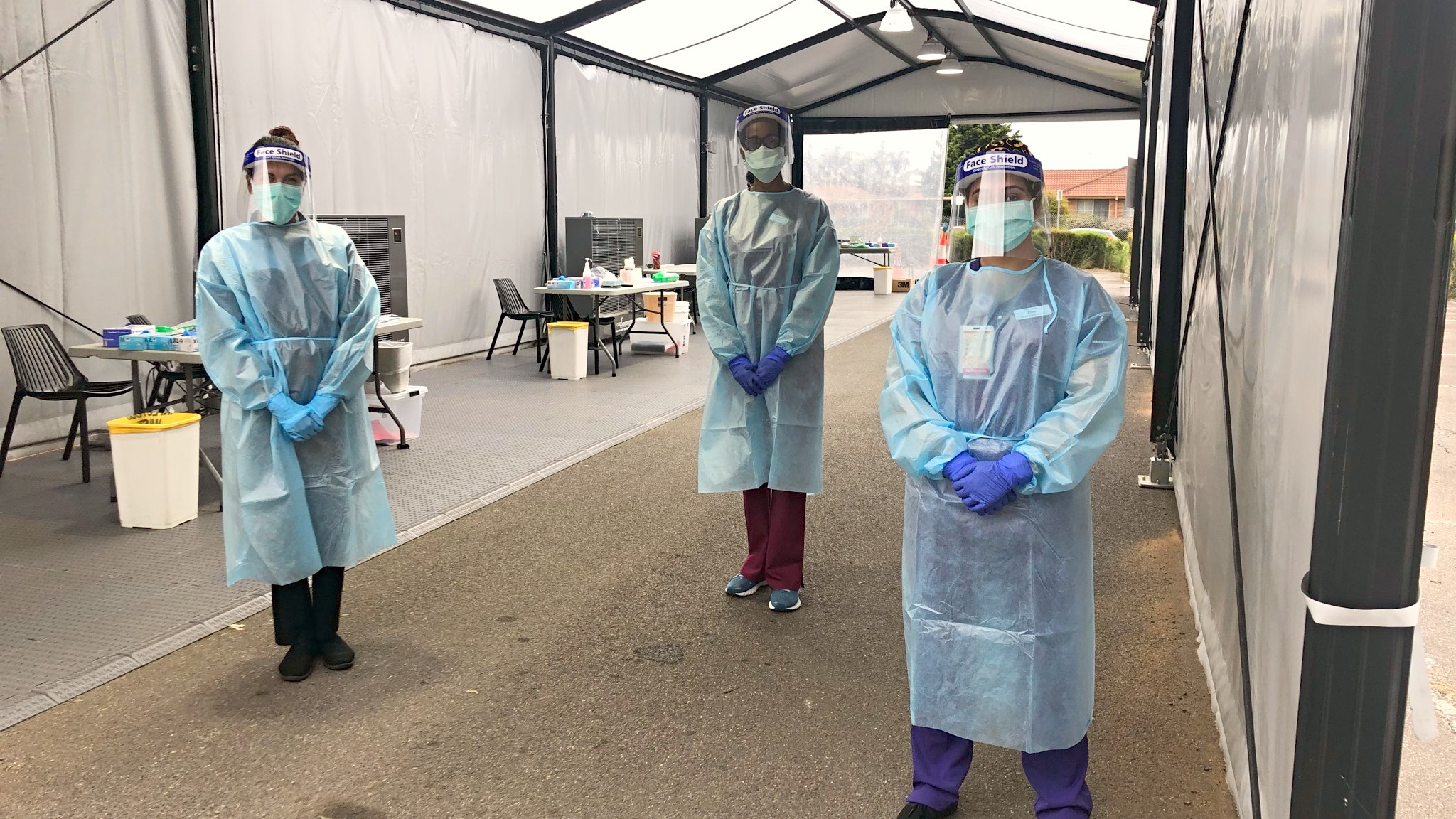
    Craigieburn Centre has seen a lot of change since the beginning of the pandemic.

    Back in June, a drive-through COVID-19 testing clinic was erected in the Craigieburn Centre car park, in collaboration with the Department of Health and Human Services.

    Since then, the clinic has seen over 30,000 people.

    Running seven days a week, including public holidays, the clinic has been an important part of our pandemic response by helping to test a large proportion of the community, in the safety of their cars.

    Since its inception, staff have demonstrated terrific team work and adaptability during uncertain and challenging times.

    With the rapidly evolving situation, staff have had to be flexible as they learnt to quickly adapt to many changes as the pandemic unfolded.

    During their busiest time in July, the clinic swabbed an impressive 619 patients in one day.

    Natasha Knapic, Project Manager COVID-19 Testing Clinics, said the environment staff are working in can sometimes be a challenging one, however the team have shown just how dedicated they are through their exceptional care to our patients and to each other.

    “We are very grateful for their ongoing hard work and dedication,” she said.

    “The smooth running of the clinic can be attributed to a collaboration of many staff members from different departments including PSA’s, ward clerks, pathology staff and nurses.”

    Northern Pathology Victoria runs a fast and efficient service and has an average turnaround time of 8 hours for results, with all test results available within 24 hours.

  • Gender-Based Violence: Call it out!

    Gender-Based Violence: Call it out!

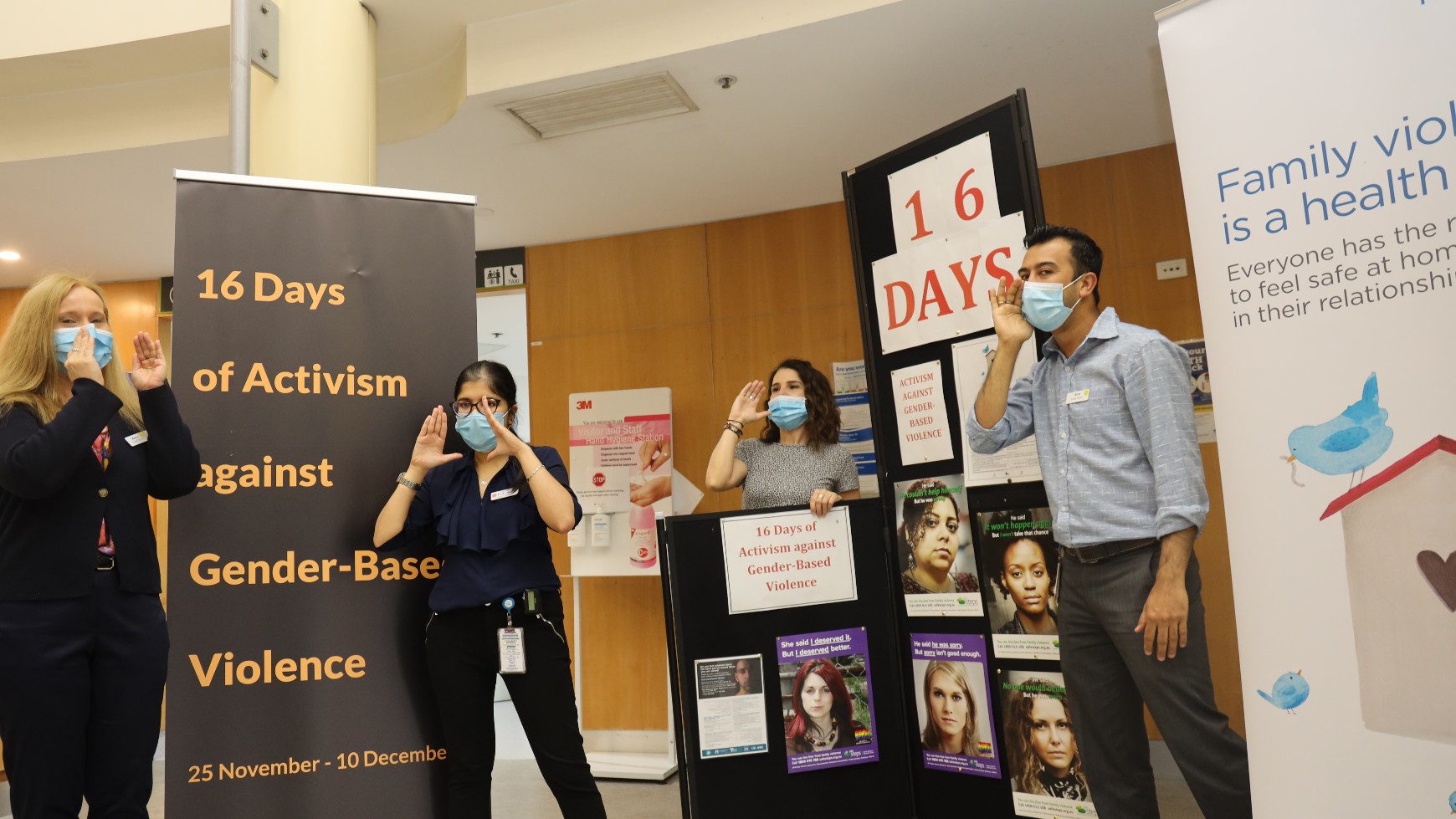
    16 Days of Activism against Gender-Based Violence is a global campaign to end gender-based violence. The campaign began yesterday with the International Day for the elimination of violence against women and concludes with International Human Rights Day on 10 December.

    Says Snezana Filiposki, Project Support Officer, Strengthening Hospital Response to Family Violence, “This is a time for us all to reflect on the social norms which exacerbate and excuse gender-based violence, and as a collective society, bring an end to discrimination, inequity and abuse.”

    Findings released by The Crime Statistics Agency show the impact COVID-19 has had on family violence:

    • The number of family violence incidents increased 11.7 per cent between April – June 2020 compared to the same period in 2019
    • Women aged 30 – 34 were most often recorded as victim-survivors in the April – June 2020 time period
    • Males aged 35 – 39 made up the biggest demographic group of family violence perpetrators
    • June 2020 saw the biggest monthly increase in family violence from 2019.

    She points to the following ways we can show our support and learn more on this subject:

    • Attend a Family Violence Education Session via MS Teams online:
      Tuesday 1 December or Tuesday 8 December at 2.15 – 3 pm.
      Email the SHRFV team for an invite on: NH-FamilyViolenceProjectteamStaff@mh.org.au
    • Visit the information display table at the front foyer at any Northern Health site for family violence resources
    • “How far can you go” wear something orange a little or a lot during the 16 days and share a photo with us
    • Attend a Family Violence webinar during the 16 days. More details here.
    • Share the message of this campaign via social media:
    • #BuildingaRespectfulCommunity #RespectIs #CallitOut #16DaysCampaign #WeAreNorthern

    Respect Victoria is also conducting a Respect Women: ‘Call It Out’ campaign, to coincide with 16 Days of Activism against Gender-Based Violence.

    Respect is the building block of all healthy relationships and is offered, exchanged and received in the places we spend our time: homes, schools, workplaces, sporting clubs and more. Violence against women and girls is a devastating act of disrespect and a pervasive breach of human rights worldwide.

    On Thursday, 10 December at 2.15 pm, Women’s Health In the North (WHIN) will provide the evidence base for the prevention of violence against women and an introduction to active bystander approaches, in line with Respect Victoria’s ‘Respect Women: Call it Out’ campaign. Click here to join the meeting.

    Bystander action refers to how a bystander calls out, or engages others, in responding to incidences of violence, sexism, harassment or discrimination. Importantly, there is no ‘right way’ to be an active bystander.

    As we mark 16 Days of Activism against Gender-Based Violence, Northern Health invites you to “call it out” and share a brief story of how you have called out disrespectful behaviour and language by email to NH-FamilyViolenceProjectteamStaff@mh.org.au that we can share.

    As Snez points out, “It all starts with respect.”

  • ‘Dialysis at Home’ patients thriving through lockdown

    ‘Dialysis at Home’ patients thriving through lockdown

    Lockdown was a difficult time for many of our patients, but for some Dialysis at Home patients, these last seven months brought significant changes and improvement to their life and care.

    Paula Kuder, Nurse Unit Manager Dialysis at Home, explained most of their patients had home treatments set up prior to the pandemic, and the team had set up remote monitoring for these patients.

    “We have continuous contact with our patients and, through our programs, we can see everything that is happening with their dialysis at home. All our patients were safely looked after during the pandemic and were able to safely isolate at home,” she explained.

    A number of renal patients hadn’t considered Dialysis at Home before the pandemic, but were now more open to switching to a home setting.

    One of these patients is Asiasiga Esekia, who is only 29 years old, and has been coming to hospital three times a week for the last two years. She was struggling to balance family life with two kids, a full time job and dialysis at hospital. Before the pandemic, she was anxious to have dialysis at home, but the pandemic was a chance for her to change her mind.

    “During the lockdown, she completed her home dialysis training and was able to transition to full home dialysis. She really thrived through the lockdown and was able to put a positive spin on her situation,” Paula said.

    “I started the home option two weeks ago and I already feel that I have the control of my life back. I am now there for my two kids, especially for my daughter who goes to school. Before, I had to come to hospital and spend hours here, now I hook up the machine in the evening and sleep through my dialysis. That allows me to have the family time that we need. I would recommend home dialysis to all patients, especially young ones – you will have your whole day back,” Asiasiga added.

    Another patient is Jaspreet Greewal, who had been on home dialysis for the last three and a half years, and was looking forward to potentially getting a kidney transplant this year. During the lockdown, she was worried that her transplant might get delayed.

    Then, her phone rang in the middle of the night.

    “I didn’t even answer, thinking it was my family from overseas. Then they called my husband, and told us about the transplant. It was amazing! I had my transplant in August and everything is going well now. I didn’t expect the call, as I thought all transplants are cancelled due to COVID-19,” Jaspreet said.

    Paula explained Northern Health patients are affiliated with other hospitals like Royal Melbourne and Monash Health and participate in the shared care model.

    “Jaspreet was our patient through the whole journey and had her transplant at Monash Health. Once the procedure was done, our doctors took over the care post surgery. She is now on immunosuppressants which makes her even more vulnerable, not just to COVID-19, but to things like flu and similar. It was very brave of her to undergo this procedure in these times,” she said.

    “One of our nephrologists volunteered his time to come to our offices every Tuesday and Thursday to enable patients to have a face to face review, outside the main campus. As well, the rest of the medical and extended renal team has rallied together to support us. That was great support for all our patients. We started with 25 patients having home dialysis to now 37 patients,” Paula added.

    Paula is hoping to see this model of care implemented in other specialities, not just in the renal space. The team considers themselves lucky just to have a unit dedicated to training patients, especially away from the main hospital building.

    “The Home Dialysis Awareness Program is much more sustainable for patients, and it links with our Staying Well Program, which is focused on looking after patients in the community. This models allows us to really get to know our patients, and that is what patient-centred care is all about,” she added.

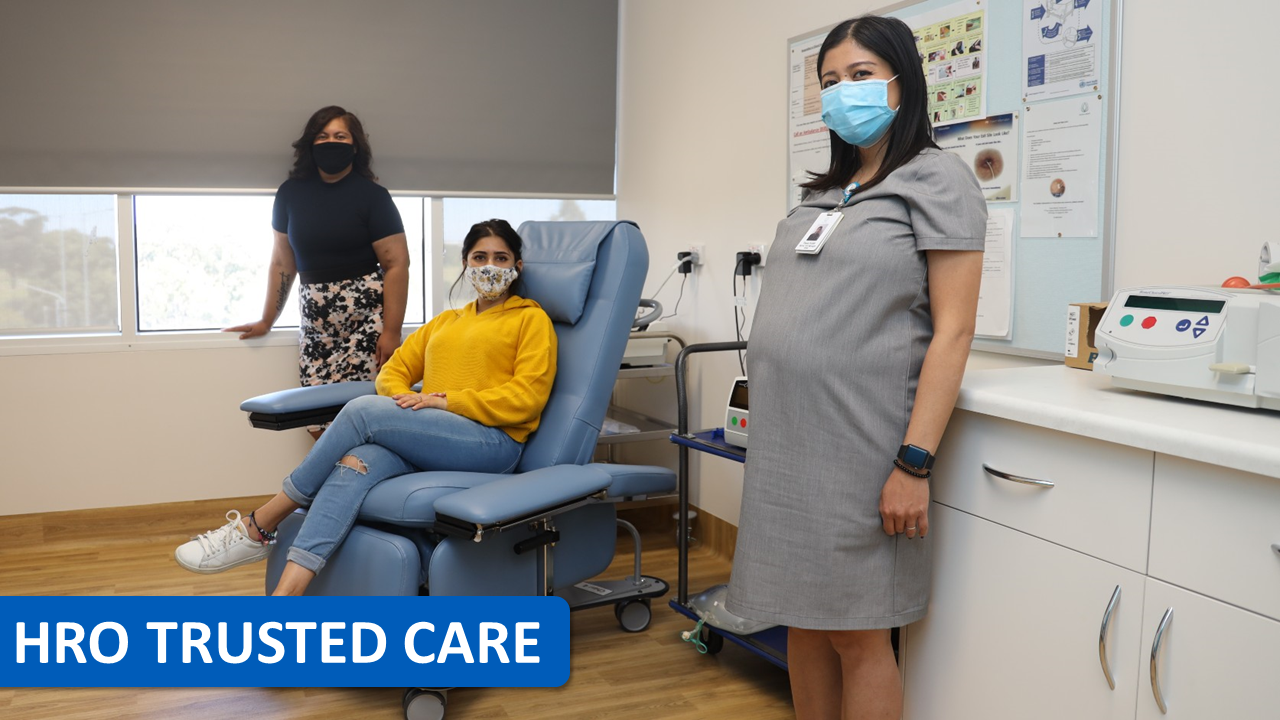
    Featured Image: Asiasiga Esekia (back), Jaspreet Greewal (middle), Paula Kuder (front)

  • Rino Minniti’s Walk for Cancer

    Rino Minniti’s Walk for Cancer

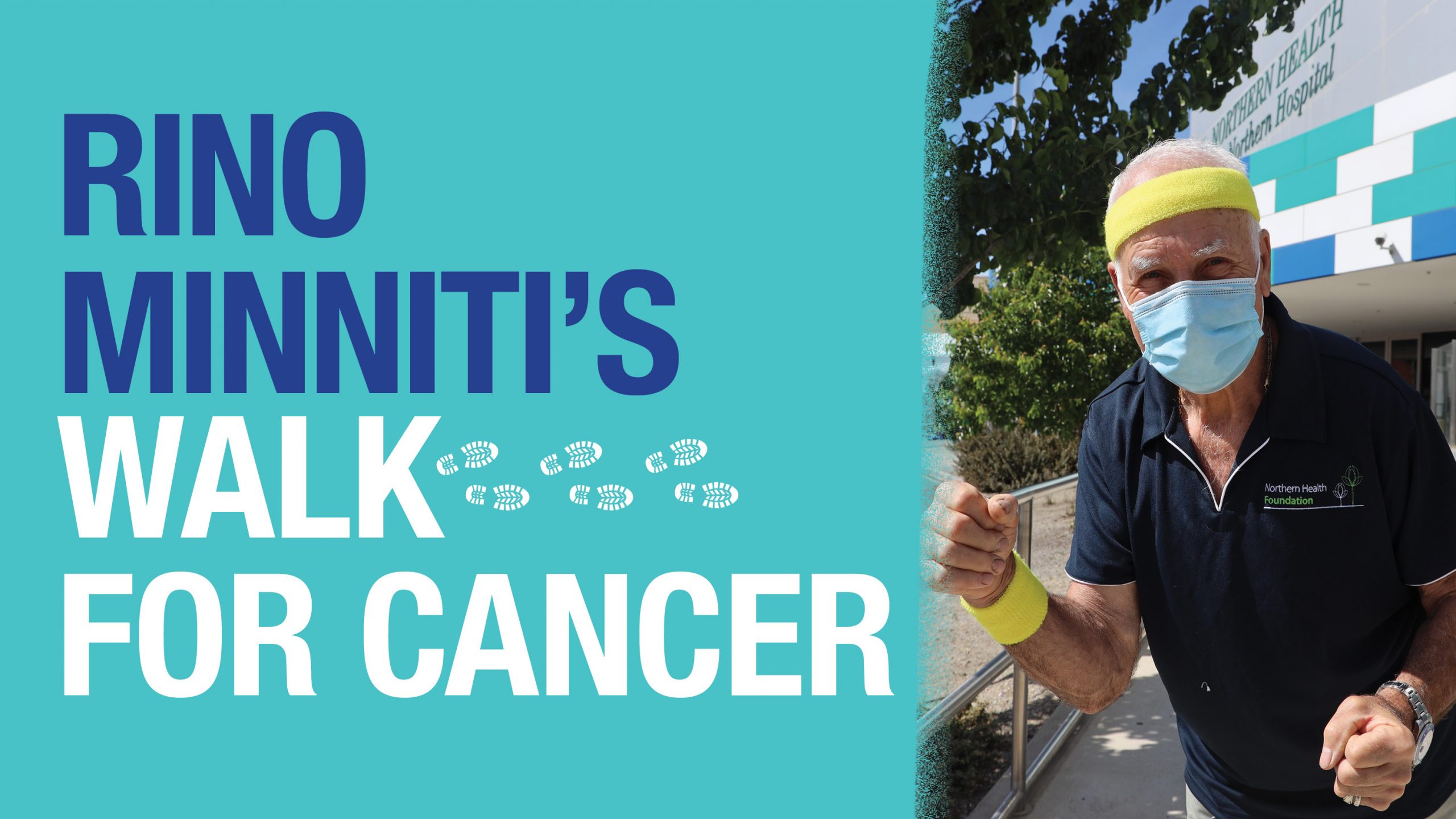
    Long standing Northern Health Foundation supporter, Rino Minniti, is walking over 11km to fundraise for cancer services at Northern Health.

    On Sunday 6 December, Epping local Rino will walk from Northern Hospital in Epping all the way to PANCH in Preston – an impressive distance of 11.3km.

    Cancer is a cause very dear to Rino who is walking in memory of his brothers who battled the disease. He is especially motivated to raise funds for cancer patients as Rino himself also fought cancer and has experienced firsthand its challenges. He is grateful for the exceptional care he received at Northern Health, as well as the care provided to his brother.

    “I was motivated to do this because I had cancer myself. I’d like to give back and raise awareness of bowel cancer and try to raise money for people to have a better life,” Rino said.

    Rino anticipates the walk will take him approximately two hours and 45 minutes and is looking forward to raising funds for this important cause. He and his wife Josie have been dedicated fundraisers for over 20 years, passionate about improving the lives of cancer patients in our community.

    Melissa Gwynne, Day Oncology Nurse Unit Manager, expressed her appreciation for Rino and Josie for their wonderful support over the years.

    “Rino and Josie are an inspiration and I am extremely thankful for all the fundraising they do for our cancer patients at Northern Health,” she said.

    “I wish Rino all the best in his Walk for Cancer and I’m very confident he will achieve his goal. I’ll be cheering from the side lines!” Melissa added.

    To support Rino and Northern Health cancer patients, please click here to donate.​

  • New SPECTRE project for individualised, safer care

    New SPECTRE project for individualised, safer care

    A new collaborative project in the Short Stay Unit (SSU) is improving the pathway for patients to get the right care, at the right time.

    The Toxicology HDU (High Dependency Unit)/SPECTRE Cubicle Project is aimed at reducing the length of time in the main Emergency Departments for patients presenting with sedation, whether it be from an overdose or recreational substance use, whilst ensuring safer care.

    This project has been developed in conjunction with the SPECTRE Unit. SPECTRE is Northern Health’s new specialty unit that focuses on the care of patients with a problem pertaining to one or more of the following: Substance Dependence, Psychiatry/Mental Health, Envenomation, Clinical Toxicology, Recreational Substances.

    The Cubicle Project commenced on 10 November and is based within the Clinical Decisions Unit (CDU) in SSU – with two fully monitored beds dedicated to caring for this cohort of patients, with a goal to elevate patient experience and contribute to better health outcomes.

    Dr Joe Rotella, Northern Health’s first clinical toxicologist, explains the new service will help to provide more individualised, safer patient care. Joe is an emergency physician and one of only 10 toxicologists in Victoria.

    “At Northern Health, we see a large proportion of patients for whom drugs, alcohol and mental health are the reason for their presentation. We’ve had a multidisciplinary Toxicology Special Interest Group for over a year now, and the evolution of that has been to create a formal unit called SPECTRE,” Joe said.

    Previously, if patients were to present to the Emergency Department (ED) intoxicated or having overdosed, they were required to stay in ED before they could go anywhere else – whether that be home, onto a ward or to ICU.

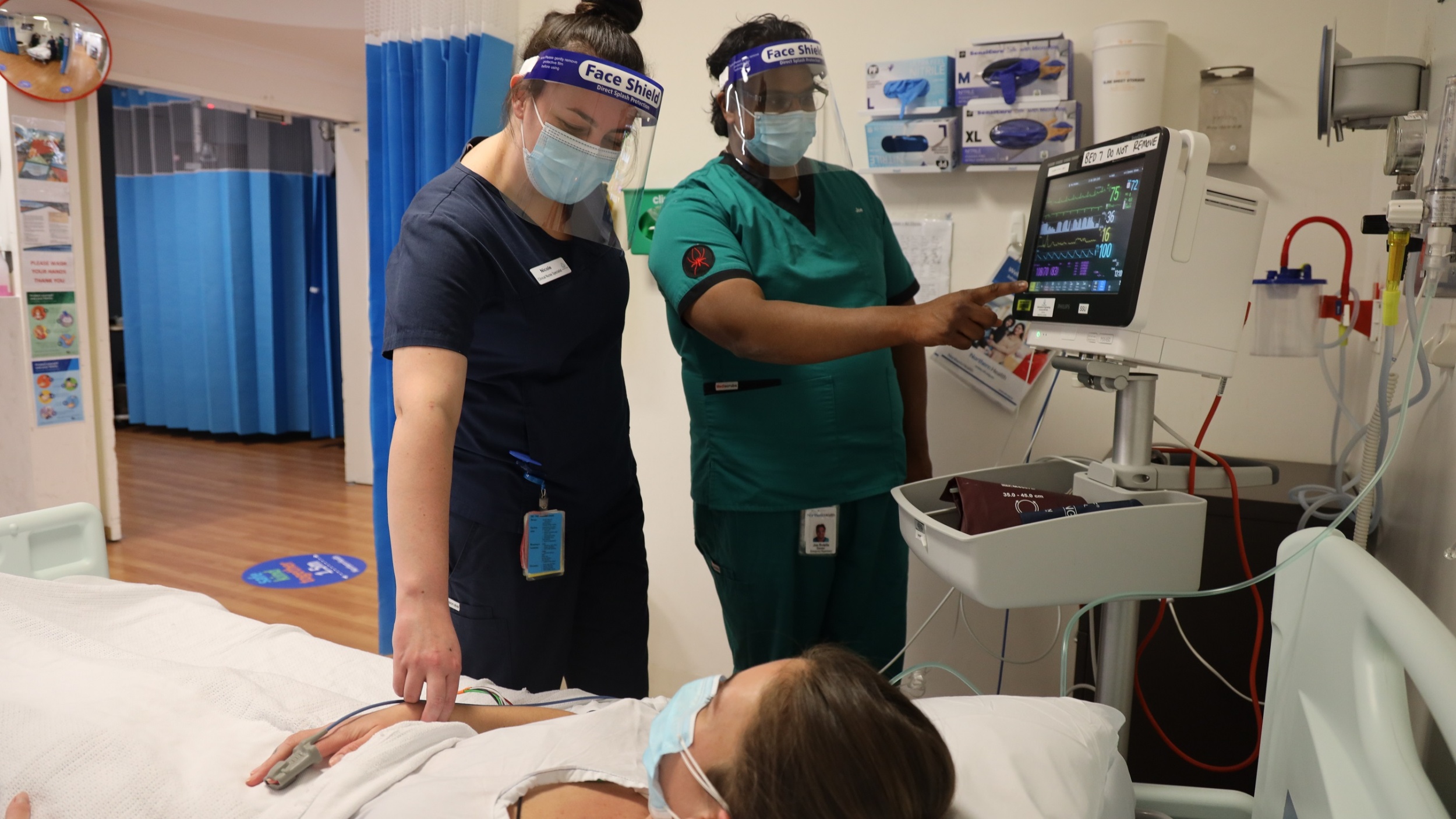
    That’s where Nicole Higginson, Clinical Nurse Specialist, stepped in with the Toxicology HDU/SPECTRE Cubicle Project.

    “The Toxicology High Dependency Cubicles created within CDU is a unique project allowing for a safe and suitable environment for this cohort of patients. They will assist the flow from the Emergency Department whilst also decreasing the pressure on ward beds, as these patients no longer have to wait in ED for a bed,” Nicole said.

    This is the first project of its kind in any Australian hospital and the team are excited for the new education opportunities and increase of skills, to ensure the best care for these patients.

    Patients will benefit from quicker access to services such as social work, mental health and alcohol and other drugs (AOD) services, which will present opportunities to reduce length of stay. Patients will also have access to one to one nursing, rather than two to one in the ED.

    “Being in hospital can be an anxiety-provoking experience for patients, so we have an opportunity to reduce the time they actually have to be in hospital, and also an opportunity to link them in with the right services they need,” Joe said.

    Luma Gashi, Nurse Unit Manager for SSU/CDU, said, “This project has created a change to our nursing care, as our nurses have been specially trained to care for this cohort of patients. From education and support from Nicole, Joe and the education team, we are now able to take better care of these patients.”

    “Our nurses have learnt new skills and have more experience, so I’m excited about the project as it will be an overall better experience for patients.”

    The project is already growing as the team have recently received confirmation for funding of a new registrar to come on board next year. They will add to the utility of these cubicles by providing direct care alongside the SSU team to any patient who presents in need of care.

    Featured Image: Nicole Higginson and Dr Joe Rotella