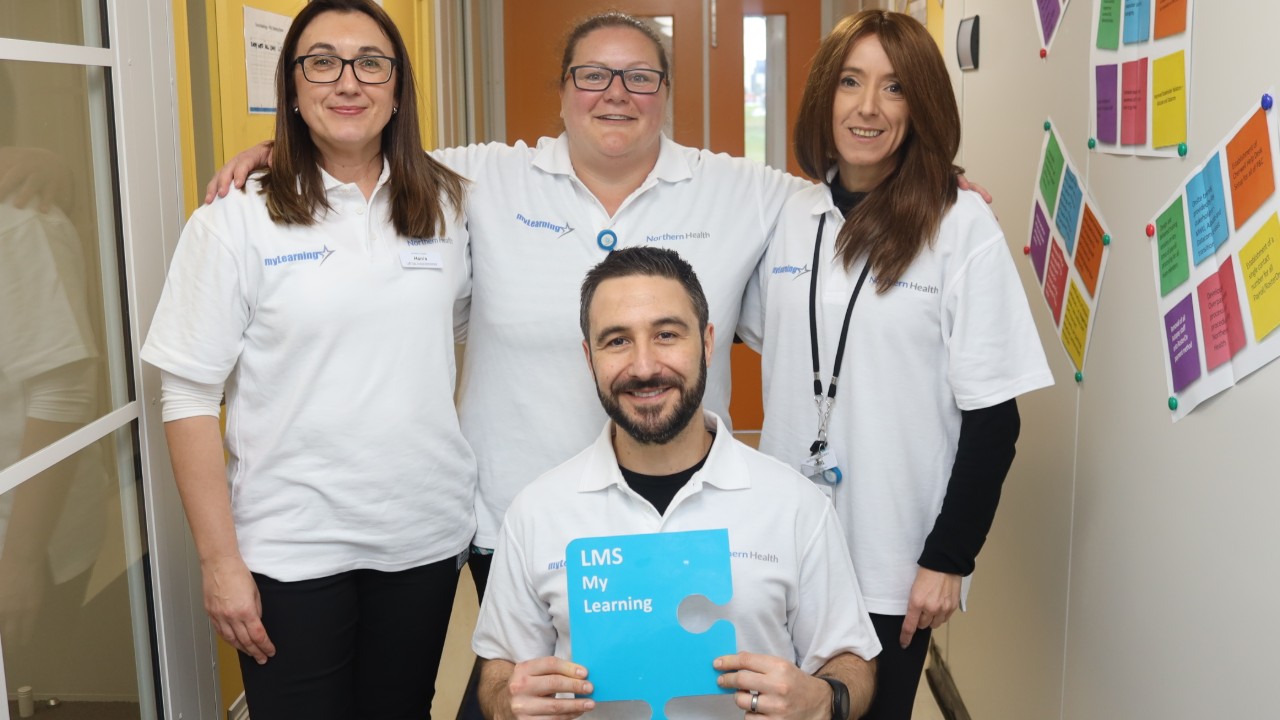
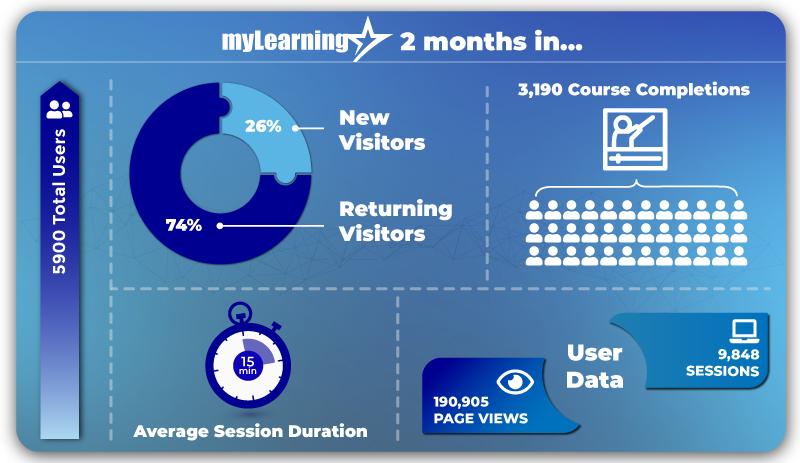
Since the July launch of the new Learning Management System (LMS), Northern Health staff have completed 3,190 courses and spent around 15 minutes within the system during each visit.
Bec Gilbert, Project Manager, said she is proud of the team’s achievements and the work that has been put into the new LMS.
“Since the launch, we have had a hive of activity as we continue to design and deliver new courses for our employees and streamline processes to support the system now, and into the future,” she said.
“Having training modules in one central location makes it easier for Northern Health staff to access and complete their training requirements in a flexible and dynamic time frame of the working day,” said Michelle Fenwick, Executive Director People and Culture.
The myLearning project team isn’t slowing down any time soon and will continue to provide support, while developing six new courses.
“Now, we are expecting improved access, performance and completion of mandatory training and the continued expansion of our present education and training within myLearning for us all to enjoy in the coming months,” Bec said.
New courses will continue to be added to myLearning over the following six months, leading up to accreditation in May 2020.
Some of the courses currently available on myLearning include Fire and Emergency, Hand Hygiene and many more. New courses will include topics like Children at Risk, Blood Safe Learning, Open Disclosure and more.
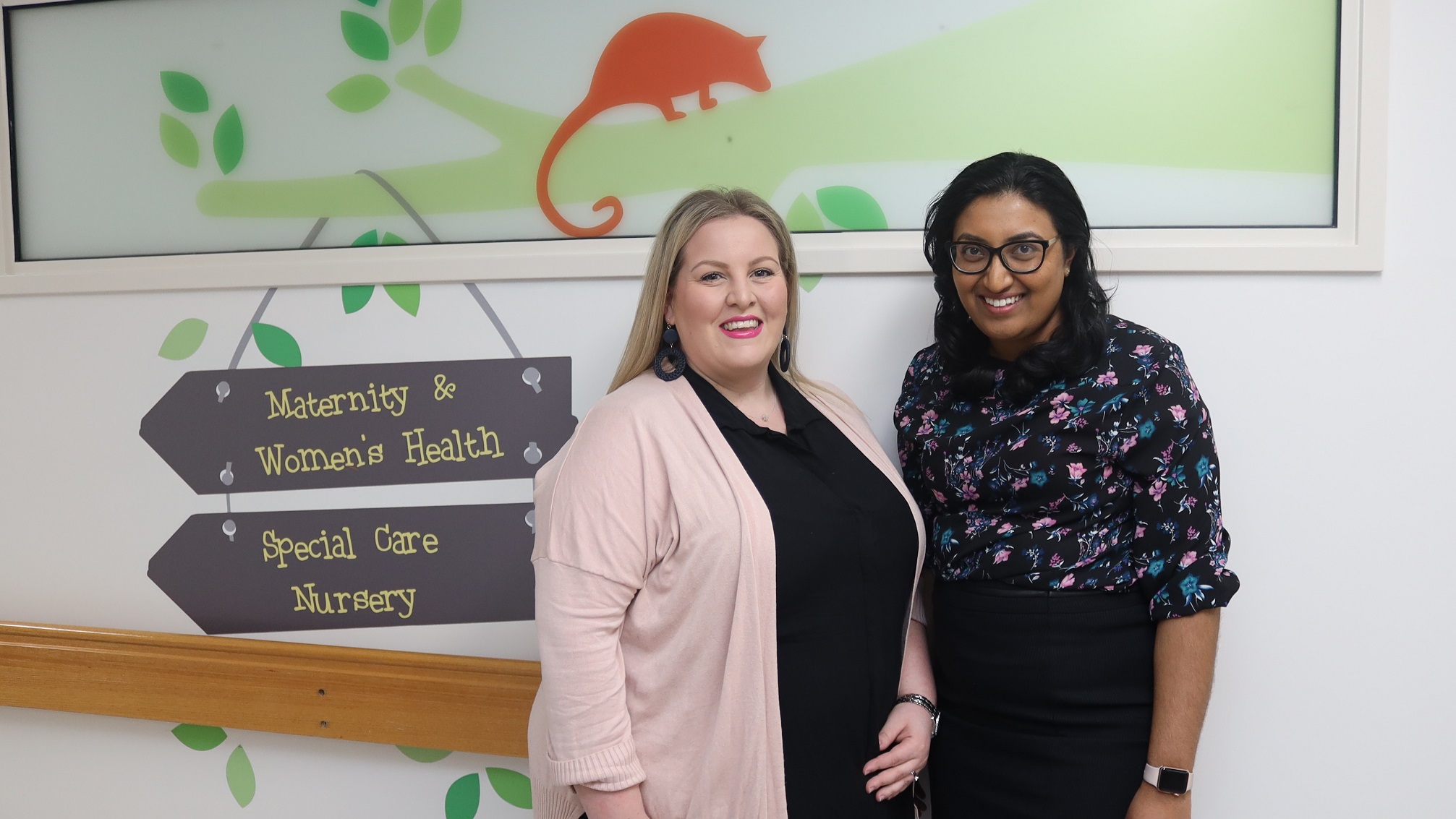
Sita Murugappan and Amanda Quattrocelli are both Northern Health Hospital Medical Officers (HMOs) who were recently accepted into the highly competitive Royal Australian New Zealand College of Obstetricians and Gynaecologists (RANZCOG) Training Program.
RANZCOG trains and accredits doctors throughout Australia and New Zealand in the specialties of obstetrics and gynaecology so that they are capable – professionally and psychologically – of providing the highest standards of health care.
The Training Program is a six-year specialist program where only 24 trainees per year in Victoria are accepted. Trainees spend the first four years based at Northern Hospital but also get rotated to Mercy Health for experience in areas that aren’t available here, as well as six months at a rural centre.
Many of our trainees return in their fifth or sixth year as senior registrars and some also settle in the north to develop their careers here.
Northern Health Divisional Director of Women’s and Children’s Services, Dr Paul Howat, said, “I’m very excited that two of our HMOs were successful in getting into the training program, continuing our success from last year. The program is highly competitive.”
“It’s good to see that RANZCOG is selecting trainees from diverse backgrounds, which reflects the composition of our northern community,” he said.
“We are proud of these two young women who have promising careers. They have come through Northern and are loyal to Northern and see their careers playing out here. We’re just very excited to have them on board,” he added.
Amanda and Sita both expressed their enthusiasm for the opportunity.
“We are very excited to be accepted into the training program and are hopeful to be Northern Health trainees in 2020.”
“Both of us are very grateful and thank all those who have supported us along the way. We look forward to continuing to provide quality care to women coming through our health service at some of their most pivotal moments,” they said.
Featured Image (left to right): Amanda Quattrocelli and Sita Murugappan
Our reputation and brand identity are linked to our value in the community – who rely on us to provide the health care and services they need. Northern Health’s growing reputation is a credit to our staff and their professionalism and commitment to their work.
Over the last two years, Public Affairs has consulted with staff, consumers and volunteers to seek feedback and develop a whole of organisation approach to branding to create greater consistency and brand awareness.
Our website was updated six months ago following the upgrade of the intranet and the establishment of iNews. We now have a strong and regular presence in local newspapers and our patient care is profiled in metropolitan and national media.
In recent years we have been well known and regarded for the way we manage growth in demand for services – now we are being recognised for our innovation in health care in our approach to dealing with this demand.
Our logo and Style Guide
Twelve months ago our logo was simplified to provide a more modern style, reflecting our organisation as a modern and progressive health service.
Updating our logo will be a gradual process. Most of our logo applications are electronic or printed on-demand and major signage will only be changed in line with maintenance requirements.
Our new brand is visible through logos on our modern vehicle fleet being seen through the northern suburbs seven days a week and on our intranet, website and iNews.
Our new Style Guide includes a range of templates including letterheads, email signature blocks and PowerPoint presentations. The Style Guide and templates are now available on the intranet and our logo procedure is available on Prompt.
Consistent application of our logo and style guidelines not only enhances the professionalism of our brand, it also acts as legal protection for our registered trademarks.
Names of our sites
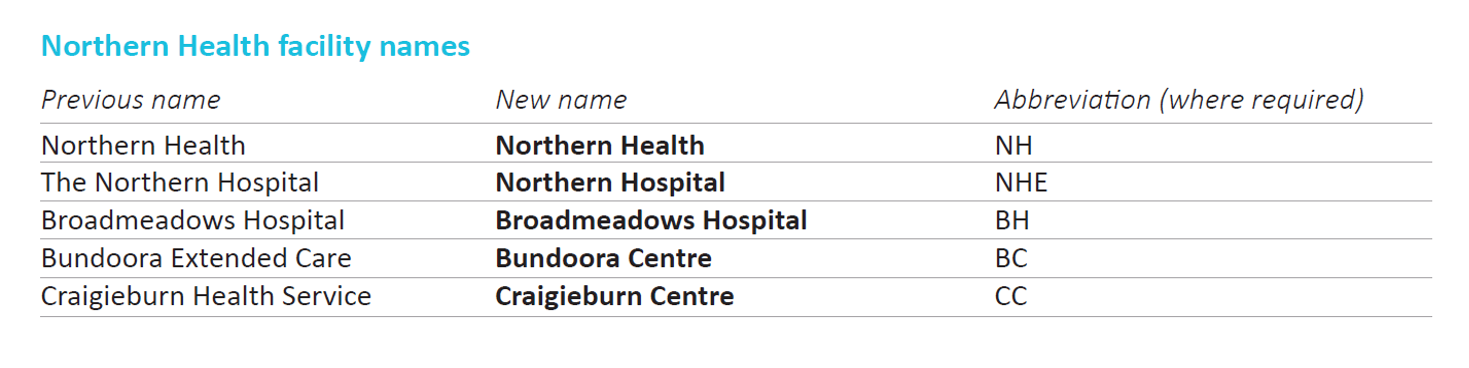
As part of our brand review, the names of our key health care facilities have been updated.
Our Broadmeadows campus was renamed Broadmeadows Hospital over two years ago when the new expanded elective surgery centre was opened. More recently, the names of our other three facilities have been simplified. ‘The Northern Hospital’ has been simplified to ‘Northern Hospital’. Bundoora is now known as ‘Bundoora Centre’ and Craigieburn will be known as ‘Craigieburn Centre’. We’ve also simplified the abbreviations for Northern Health and the sites, which have been included in the Style Guide.
These names and abbreviations are to be used now – and will be formally in place by 31 December this year.
We can all be very proud to be part of an organisation that is adapting to a changing health care landscape within one of the one of the fastest growing communities in Australia. Our commitment to Trusted Care for our patients, the new ways we are developing for people Staying Well at home and our growing translational research initiatives are continually strengthening our brand and reputation.
Andrew Williamson
Executive Director Public Affairs and Foundation
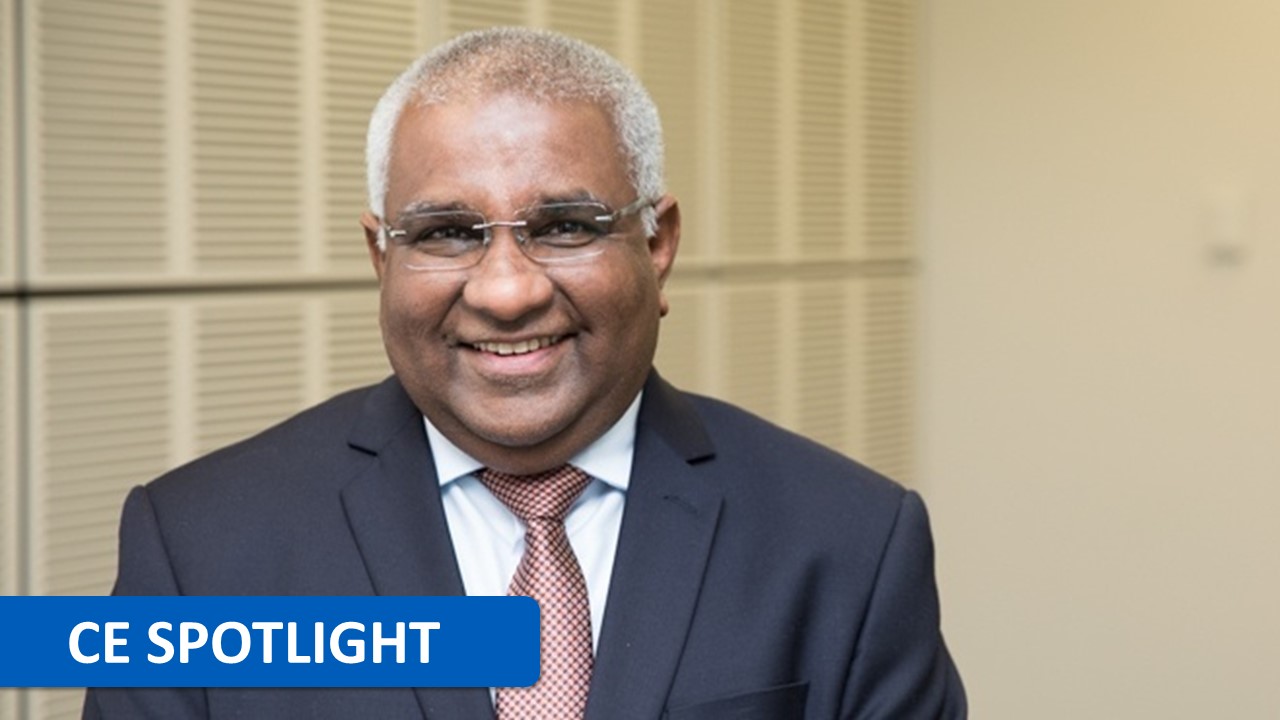
This week, the Victorian Government’s Healthcare Association Infection Surveillance Coordinating Centre congratulated Northern Heath on exceeding the DHHS target for health care workers influenza program. We have achieved a Healthcare Worker Influenza rate of 87.1 per cent.
This recognises the excellent vaccination results and acknowledges the exceptional efforts our organisation has put into providing free flu vaccinations for our staff.
We have not only achieved outstanding results in the number of staff vaccinated, but also in the number of community members that have come through our flu clinic.
The 20,000 free vaccinations provided to our community helped our northern neighbours stay well this winter. In our flu clinic, we have seen families drive for hours to get their flu shot, as well as numerous overseas visitors. It’s pleasing that we are able to provide this protection to both our staff and our community.
People Matter Survey
We have recently received our 2019 People Matter Survey results and Michelle Fenwick and I have been presenting them to staff at forums over the past two weeks.
Over 1,600 staff completed the survey and provided feedback on what is working well at Northern Health, and also highlighted the areas that we need to focus and act on. The gap between us and similar major and tertiary health services is closing, particularly in the areas of engagement, diversity, psychological safety and role clarity.
Of particular note, this year has seen a significant decrease in respondents reporting they have experienced or are currently experiencing bullying. This has decreased by 48 per cent since 2016 when we first participated in the survey. We recognise there is still work to do in this space but are buoyed by these results.
We will be focusing on some core areas over the coming months, namely change management and recognition which you have told us we could do better. We will also continue to maintain and celebrate those areas we are doing well in, like learning and development, where we have recently launched our new initiative – Mentoring for Success. With 75 per cent of respondents indicating that intend to stay at Northern Health for the next two years, we are really pleased with Northern Health’s direction.
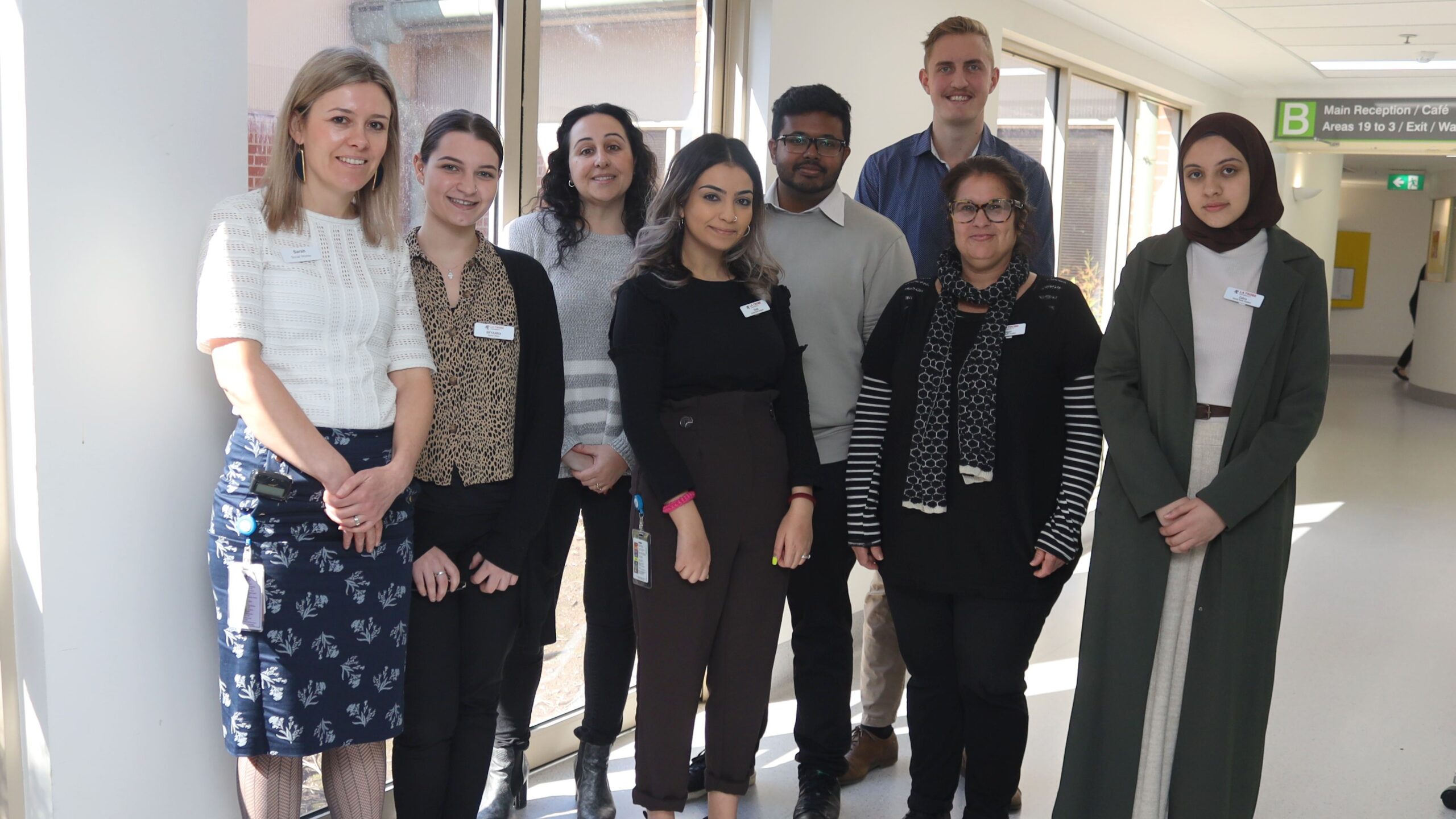
Following on from completion of four 70 day Social Work Fieldwork Placements for Melbourne University, the social work team has recently warmly welcomed eight La Trobe University social work students to Northern Health.
Northern Health is a proud teaching hospital, contributing to the future of health care and shaping the next generation of health professionals. While wandering our corridors, you may come across these eager friendly faces.
Social work students have two placements during their studies both consisting of 70 days each (14 full-time weeks). Placements are lengthy to enable consolidation of core skills across learning areas such as values and ethics, organisational and community context, interpersonal skills, research and culturally sensitive practice.
Sarah Wotherspoon is the Social Work Clinical Educator who has one day per week dedicated to clinical education. Her role includes interviewing prospective students, allocating supervisors, developing group learning student timetables and supporting students and staff during placement. Sarah also acts as a conduit between the universities and the health service.
“Student group learning sessions are interactive and cover various topics such as psycho-social assessments, self-care, working with Aboriginal and Torres Strait Islander patients, ethical dilemmas, loss and grief,” Sarah said.
“They are a great way to bring students together and facilitate group discussion and learning,” she added.
Students also have access to self-directed learning opportunities across core areas of clinical social work practice including family violence, children at risk, elder abuse and family meetings.
Feedback from previous social work students highlight the dedication of our social work department to provide a high quality placement experience.
“My supervisor suited me so well and really took the time to understand me. I felt we could discuss anything without judgement which is so important,” one student said.
“Even from my first interview coming into Broadmeadows Hospital, my supervisor was so welcoming and we came to agreements together about expectations and learning styles early on in placement. The whole team has been really lovely and open,” another student added.
In their final week of placement, students complete a case study presentation to the social work team. These presentations are a celebration of the completion of placement, and a positive way of highlighting the student’s growth and skill development, as well as integrating theories into the health context.
Featured Image: Sarah Wotherspoon (far left) with La Trobe social work students
It was standing room only last Wednesday in the main lecture theatre for our Safe Practice Forum. This month, the theme was ‘Standard 5: Comprehensive Care’ – focusing on minimising our patients’ harm.
Liz McKeown, Accreditation Officer, said the National Safety and Quality Health Service (NSQHS) Standards now require us to apply targeted strategies to prevent and minimise the risk of any specific harms.
“Our patients, for example, might exhibit unpredictable behaviours such as aggression, self-harm or violence, that have the potential to lead to greater harm, to themselves, patients and others. We need to have in place systems that can help us identify these situations and apply strategies to mitigate their risk,” she said.
The latest Safe Practice Forum explored the theme of ‘Predicting, preventing and managing self-harm and suicide’ and coincided with Northern Health’s Conversations on Mental Wellness Week.
Dean Pritchard, Deputy Director, Emergency Department, opened the session with some confronting suicide data and contextualised how we ‘need to know a little about everything…’ and are expected to know enough to reliably keep our patients safe.
“The session highlighted the importance of having a structure in place to detect and prevent self-harm and suicide for our patients,” he said.
The two patient cases Dean shared emphasised our need to remove the means, closely monitor, reduce abscond opportunities and optimise the environment.
Liz drew on these two patient cases to provide a thorough background to the recent development of our Comprehensive Assessment and Risk Evaluation (CARE) Record.
The escalation points in the CARE Record for different members of the care team were stressed and real-life examples of current escalations provided.
“Recent situations have highlighted the need to comprehensively assess patients at risk of suicide and self harm and provide individualised plans of care to keep them safe,” she said.
Clare McCarthy, Project Manager, said our Safe Practice Forum has a crucial role in patient safety.
“The forum allows us to reframe errors in the system — it helps us move beyond the myth that individual culpability is the single source of harm and allows us to see other contributing factors, that are usually systemic. It fosters a learning environment and gives clinicians a system perspective. This is fundamental to our high reliability organising endeavour,” she said.
“A special thanks goes to our NorthWestern Mental Health colleagues who shared their experience and expertise at the session. We look forward to further collaborative work with them,” Clare added.
Even the stairs were occupied. And the fruit boxes were a hit!
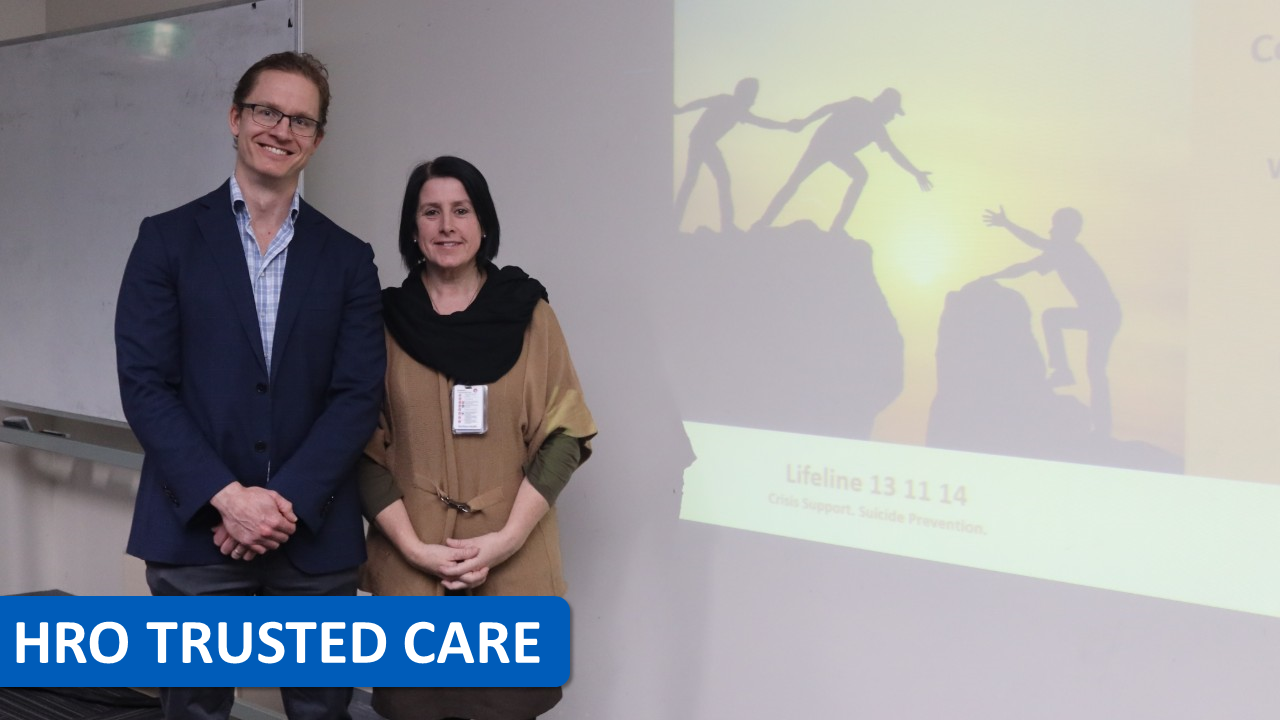
Featured Image: Dean Pritchard, Deputy Director, Emergency Department and Liz McKeown, Accreditation Officer
It is that time of year again for our annual Northern Health Foundation Dinner, held on Saturday 16 November at Casa D’Abruzzo Club Epping.
We are excited to announce this year’s theme is The 80’s and to fit the theme, the event will be hosted by the iconic Australian pop group, The Chantoozies!
Stand and Deliver 80’s Tribute band will also be joining us on the night to perform and entertain guests with their favourite 80’s hits, with stunning costumes and incredible singers!
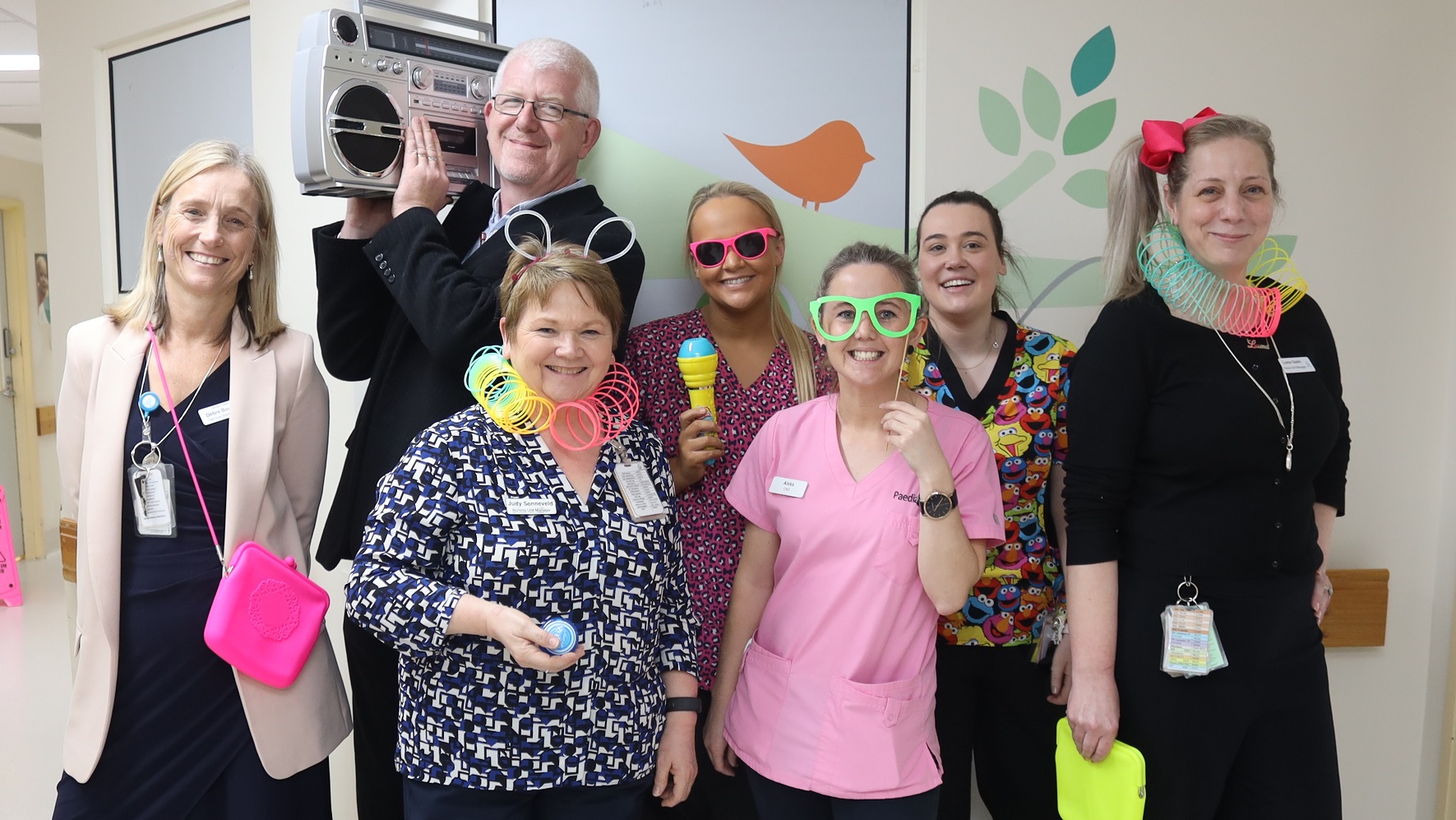
Debra Bourne, Chief Nursing and Midwifery Officer said she is already planning to check out the op-shops this weekend for some 80s outfits.
“I would like to encourage everyone to get their best 80’s outfit out and join us all for a great night with your colleagues,” she said.
Northern Health Foundation are fundraising for 60 new state of the art defibrillators across our four campuses, Northern Hospital Epping, Broadmeadows Hospital, Bundoora Centre and Craigieburn Centre. Your support will help us care for patients when their heart stops.
Ticket prices (inc. GST) are:
Early-bird (until 20.09.19) $105pp or $1,050 table of 10
Standard (from 21.09.19) $120pp or $1,200 table of 10
Inclusions: 3 course meal, beverages and entertainment
Dress code: Cocktail / Business Attire (or 80’s style)
Executive Patient Safety Walk Arounds (EPSWA) were re-introduced at Northern Health in 2016 to help identify at risk environments and since the re-introduction, the program has undergone a number of evaluations and subsequent improvements.
“The objectives of the program are to improve patient safety at Northern Health through linking patient safety activities with the Northern Health Executive. This will create opportunities for staff to discuss patient safety issues with the highest level of management, and to escalate and action areas for increasing satisfaction and safety for our staff, patients and visitors,” Donna Christensen, Director Quality and Service Improvement, explained.
The current walk arounds take a Division approach, where a whole Division is reviewed by a minimum of six executives. There are EPSWAs scheduled monthly between February and November.
“There were a number of highlights from the August EPSWAs, including feedback from staff stating how much they enjoy working in their areas, effective utilisation of space and positive patient/family experience stories,” Donna said.
Ward 3 is the EPSWA area of the month where excellence in patient and staff safety were observed by the Executive.
“Some of the highlights include 70 per cent of staff chemotherapy trained, 96 per cent hand hygiene compliant and 97 per cent flu vaccinated. The patient and family feedback board initiative was implemented and the safety round initiative completed at the end of each shift,” Donna said.
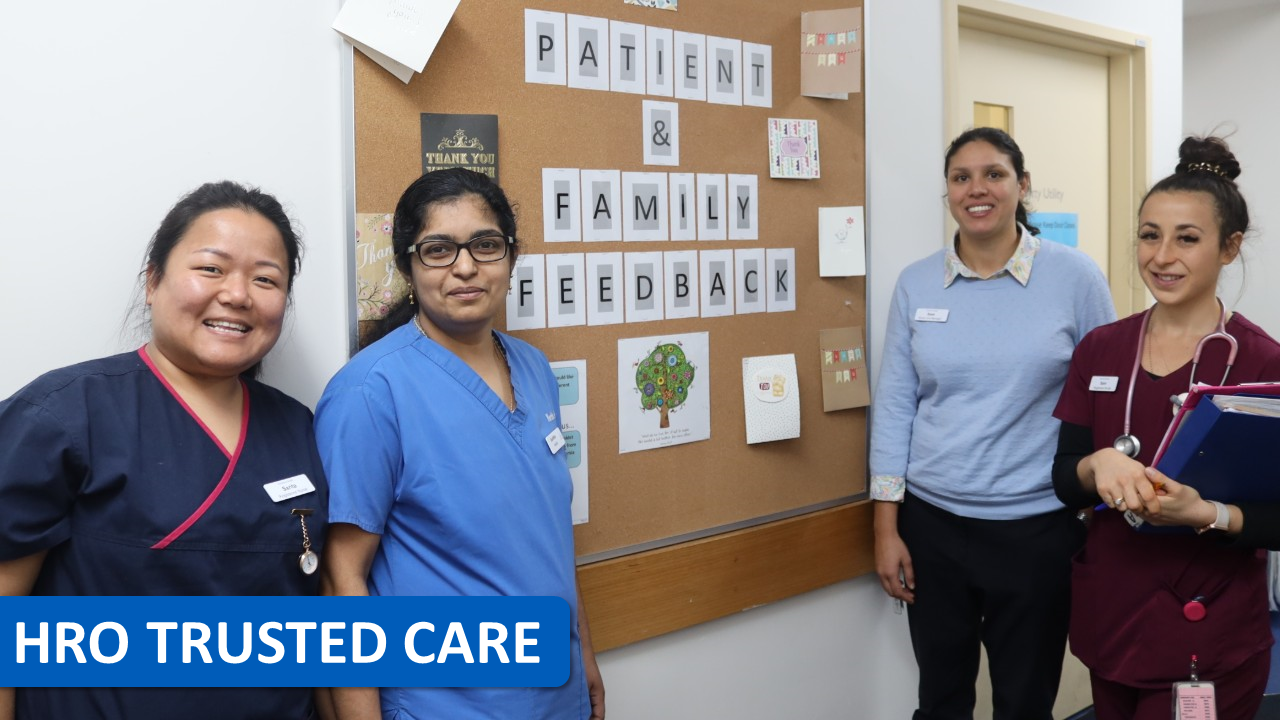
Samantha Soggee, Ward 3 Nurse Unit Manager, said the patient and family feedback board was created to highlight positive feedback that ward staff receive from patients and families.
“It promotes what we are doing as a team, as well as other types of feedback we get. We created a template in case we have issues raised. For example, someone said they would like more information on different types of cancer, so in the template we explained what we are going to do and how. We’ve provided a booklet and met that need,” she said.
Another example of improvements include adding replacement of carpet to maintenance schedule to improve patient flow, new agreed ward rounds were developed to prevent ad-hoc medical rounding, and ISS were involved to help increase access to soft food.
Samantha said EPSWAs do make a difference, as it was identified that there is a need for these kinds of boards during one of the rounds.
“We had a board before, but it didn’t look like this. After the EPSWA, we’ve developed it. All our staff participated and helped develop the board,” Samantha said.
Tracey Webster, Quality Coordinator Cancer Services, said the team wanted the patients to feel really valued and see their feedback is taken seriously.
“The new management of Ward 3 and me are focused on the culture which promotes the importance of feedback and communicating what we do with that feedback. For example, once we got the feedback on outdated cancer brochures, and after we developed new ones, we identified that we need a way to say thank you to patients who took their time to give that feedback and display it publicly,” she said.