• Craigieburn Centre Rapid Access Iron Infusion Clinic

    Craigieburn Centre Rapid Access Iron Infusion Clinic

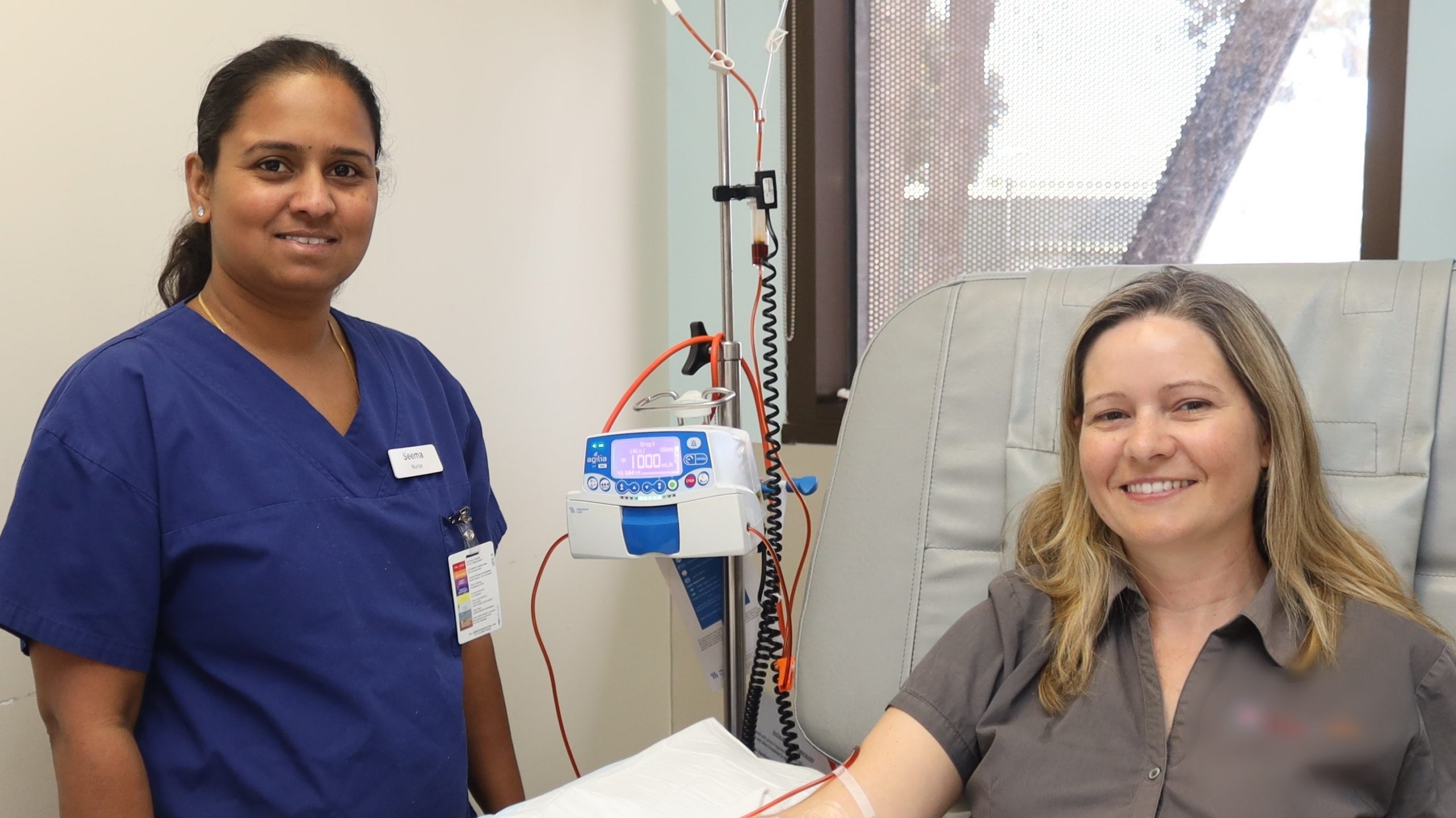
    Over the last year, Craigieburn Centre has ramped up their Rapid Access Iron Infusion Clinic.

    The pilot project, which started in late 2018, is targeted at reducing waiting times for patients in need of an iron infusion.

    The clinic keeps four chairs in the Craigieburn Day Medical Unit available – two of those chairs are used for referrals from Northern Hospital’s Emergency Department (ED).

    “One of the key benefits is that it helps free up the Short Stay Unit in ED. Our aim is to get the patient in as quickly as possible, so we book an appointment and it’s all done in a very quick time frame. Then they come in, have their haematology appointment and then go straight around and have their infusion,” said Carol Northmore, Craigieburn Centre Site Operations Manager.

    Dr Teresa Leung, Consultant Haematologist, has been leading the project. Dr Leung reviews the two patients referred from ED, and fills the other two chairs with patients who are referred from the community to the haematology service with iron deficiency anaemia.

    She says the motivation behind the rapid-access clinic was to improve patient experience and assist community members to receive their iron infusions quicker. Previously, GP’s would send a referral and it would be triaged as per clinical urgency so that would mean certain patients could wait up to three months to see a doctor and afterwards would go on another waiting list to receive their infusion. Sometimes patients would be upset as they would come in for their appointment expecting to receive their infusion on the same day, and some of these patients would end up presenting to ED in distress.

    “Part of the aim of this service is to re-direct patients who end up in the ED to Craigieburn quickly to have their infusion,” Dr Leung said.

    “Secondly, we aim to shorten that period of waiting time between getting seen and getting the iron infusion. So far the feedback we have has been excellent in that it helps to improve patient experience and relieve some of the bed pressure in ED,” Dr Leung said.

    “I think the project has been quite successful – it meets patient’s needs and is very patient-focused which is great. A research poster was developed on the project and displayed at Research Week,” Carol said.

    The project success has been a collaborative effort of many different teams coming together to help ensure the smooth running of the clinic, from medical staff to nursing, pharmacy and administrative staff across both Craigieburn Centre and Northern Hospital. Although the clinic only runs one day per week, there is a lot of planning and work done in preparation so the flow is seamless on the day, and Enrolled Nurse, Lindy Weir, plays a key role in patient coordination and liaison.

    Furthermore, as an initiative to promote patient education, the team have also developed information packs for patients containing written materials on oral iron supplements to assist them once they go home.

    “People become iron deficient from a number of causes but there is often a dietary component to it. So we’ve developed an information pack which our day medical staff use to educate patients on iron rich foods, as well as how to take their iron tablets properly. We try to make their journey more fruitful than just coming in for their infusion and then walking away,” Dr Leung said.

    “It’s been a good piece of work and we’d loved to see it expand. The staff got on board really quickly and have been very helpful and really engaged,” Carol said.

    “Thank you to all the staff who have embraced this new challenge!” Dr Leung added.
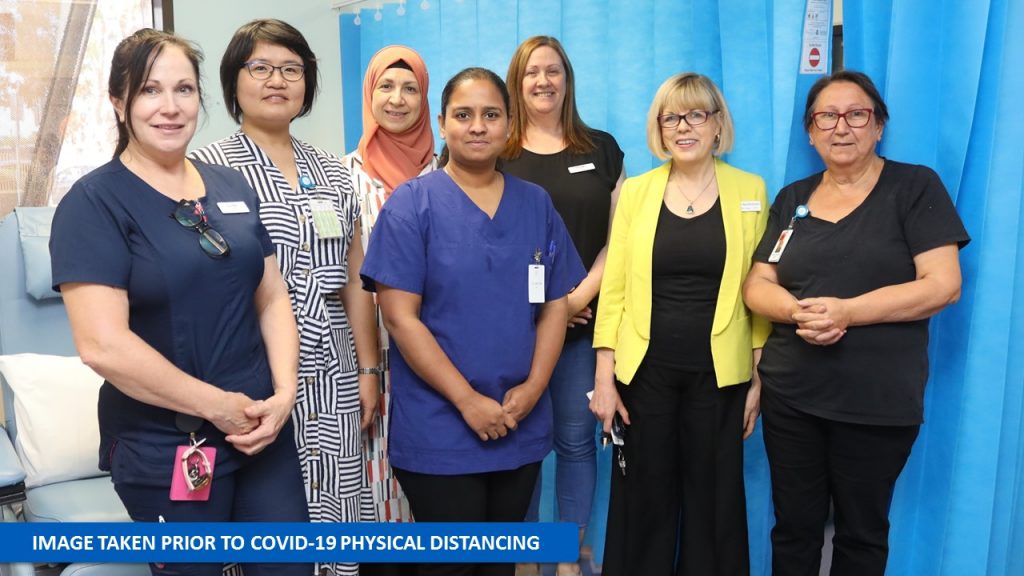
    Dr Teresa Leung (second from left) and Carol Northmore (second from right) with the team
  • Strengthening Healthcare in the North

    Strengthening Healthcare in the North

    Northern Health and DPV Health are thrilled to announce they have signed a collaborative Memorandum of Understanding (MOU) to support initiatives for innovation, shared service planning and delivery to benefit our growing communities.

    The MOU will establish a framework to strategically explore opportunities for both parties to collaborate and address priority health and wellbeing issues across outer Northern Melbourne.

    Working closely together, DPV Health and Northern Health have already commenced collaboration on a range of projects including:

    • The establishment of a COVID-19 Screening Centre, operated by Northern Health at DPV Health’s Epping site in March 2020.
    • Northern Health’s “Staying Well with Diabetes in the North” project, to establish an integrated, multidisciplinary health care model targeting diabetes.
    • DPV Health’s “Community Watch” project which aims to develop a whole of region coordinated approach for a wellbeing check and referral guide for local community organisations to support their clients to stay well during the COVID-19 isolation period and beyond.

    Don Tidbury, DPV Health CEO, said, “The MOU builds on the already great alliance between DPV Health and Northern Health. Successful partnerships between the acute and primary health systems will ultimately benefit the growing communities we serve.”

    Siva Sivarajah, Northern Health Chief Executive, said, “We are pleased to further develop this longstanding partnership with DPV Health. Healthcare in the future needs collaboration like this to better connect all aspects of people’s health care needs.”

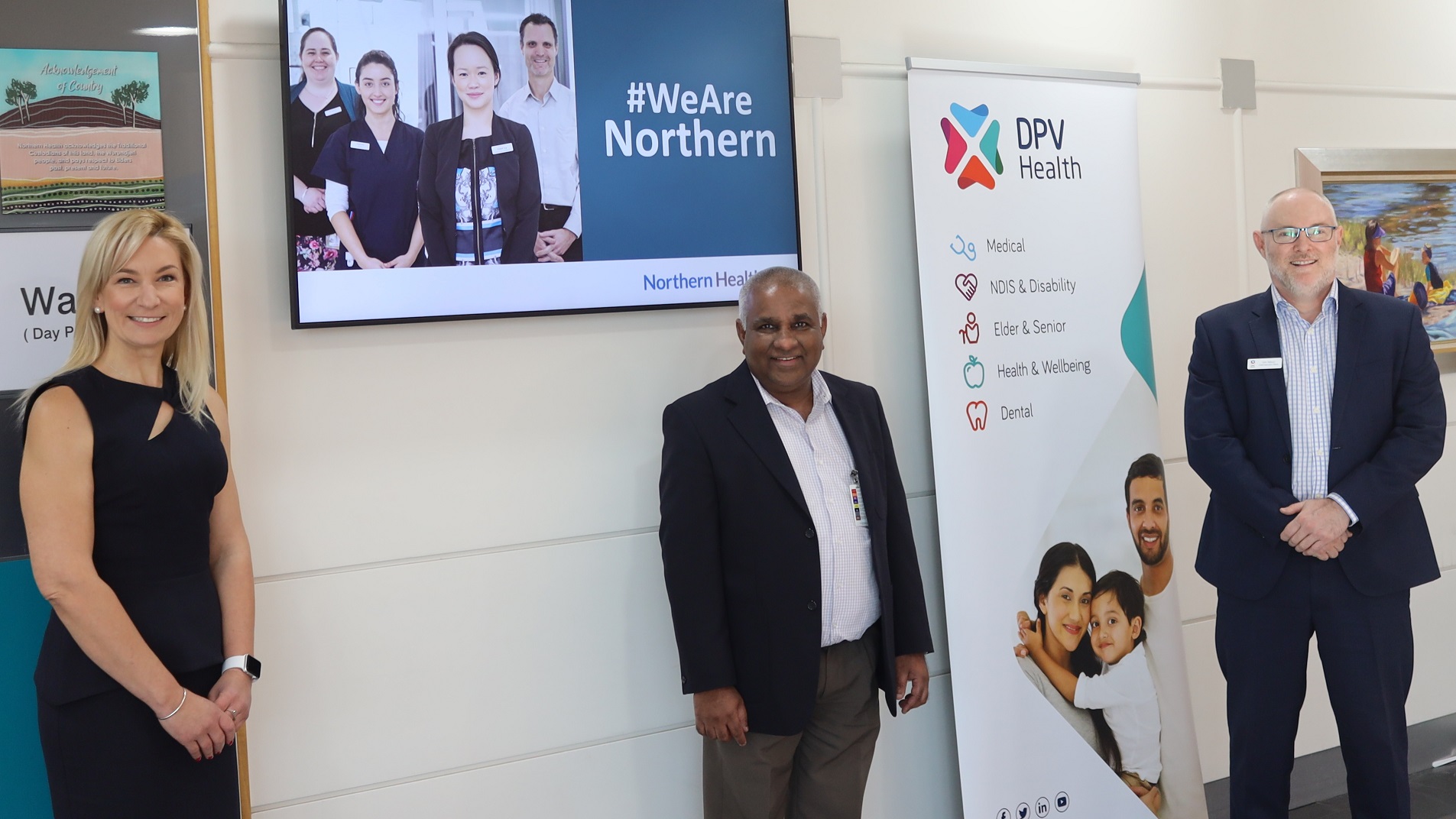
    Feature Image (left to right): Briana Baass, Executive Director – Northern Health Chief Allied Health Officer & Partnership; Siva Sivarajah – Northern Health Chief Executive and Don Tidbury, DPV Health Chief Executive Officer

  • A guard of honour for Jamie

    A guard of honour for Jamie

    Staff at Broadmeadows Hospital celebrated a wonderful achievement earlier this month, with a patient going home from Unit 2 – Rehabilitation after spending 288 days in hospital.

    Jamie was admitted to Northern Hospital Epping on 22 July 2019 after being found unconscious by his mother and fighting for life. The subsequent months saw Jamie struggling to walk, talk and be able to process his thoughts and emotions clearly, due to an acquired brain injury.

    “Since coming to hospital, Jamie moved through Emergency Department, ICU, Ward 5 and finally arrived to Rehabilitation at Broadmeadows Hospital in August 2019. During this time, he successfully regained his ability to walk, communicate effectively and was able to regain his independence,” said Belinda Nash, Nurse Unit Manager, Unit 2.

    With the help of the Unit 2 Rehab Team and his mother Wendy, he is now able to access NDIS housing and support.

    “Jamie is a symbol of the team’s drive and dedication to help patients regain their independence. Well done to both Jamie and the Unit 2 team,” said Grant Taylor, Site Director, Broadmeadows Hospital.

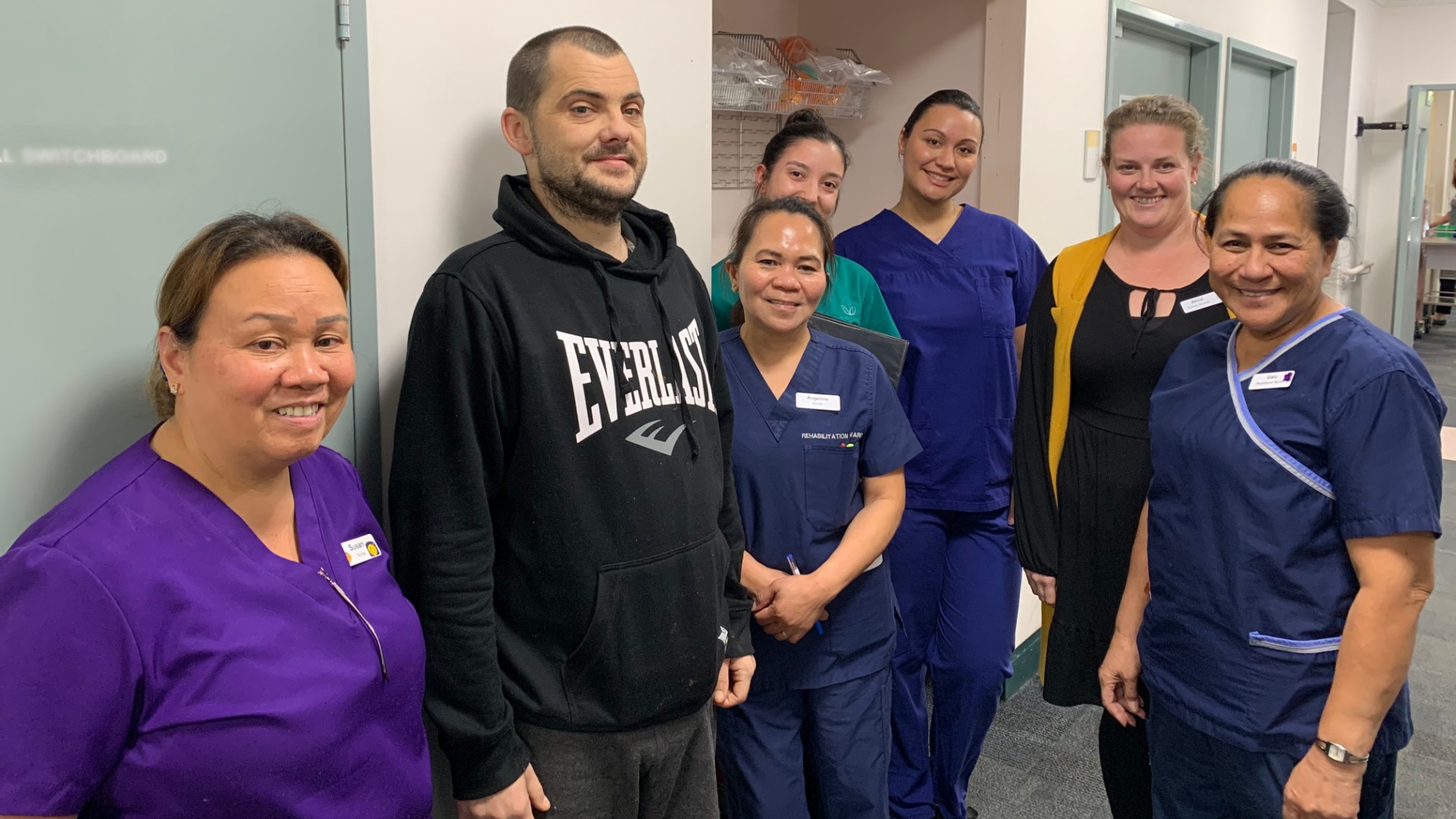
    Proudly walking by himself with his mother by his side, thanking the nurses, doctors and allied health that cared for him, Jamie rightfully received a ‘guard of honour’ as he was discharged.

    Please see the video below:

  • Palliative Care: It’s more than you think

    Palliative Care: It’s more than you think

    The theme for Palliative Care Week 2020 is “Palliative Care… It’s more than you think”.

    Palliative care can help people with life-limiting illnesses to live as well as possible, for as long as possible – supporting their physical, emotional, spiritual and social needs.

    Alwyn Kennedy, currently a patient at our Palliative Care Unit (PCU) located at Heritage Epping Gardens, is a case in point.

    Alwyn came to the PCU after an increasingly difficult time at home and has been with us for just over a week. He was diagnosed with Motor Neurone Disease over six months ago and says he was pleasantly surprised by the care he received.

    Says Alwyn, “I always thought that people only went to Palliative care when they have nowhere else to go.”

    However, when Alwyn came to Epping Gardens, it was explained to him that Palliative care is not just about end of life care. Alwyn says, “You can receive help, care, attention and advice on how to keep going as long as you can, in a better state.”

    He values the advice he has been given, ranging from strategies on how to manage his breathing, painful pressure points, how to keep his throat clear and even advice on how to position himself in his bed.

    He says, “Here, they really care about patients and they want you to feel comfortable and ask questions and spend their time with you – they are in no rush!”

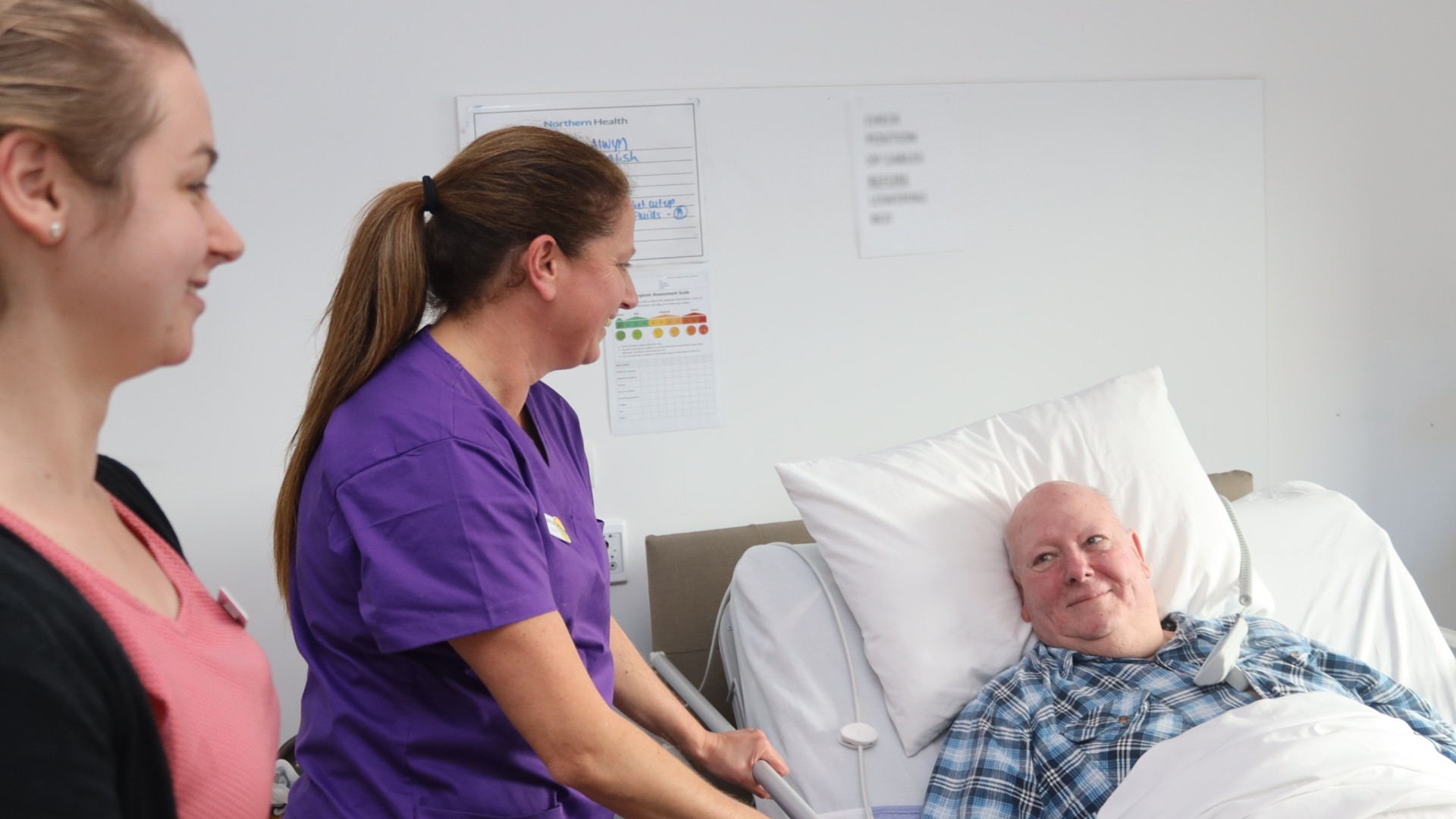
    Alwyn sharing a joke with Amelia Hayes and Sonia Santone

    He says the nursing staff have been fantastic. “I got on well with them, and the ones I joke with – they know who they are!!”

    He adds, “From a medical point of view, I think they are all excellent!” said Alwyn.

    The Palliative care team at Epping Gardens celebrating National Palliative Care Week

    Barbara Watson, a Registered Nurse in the Palliative Care Unit, says, “Despite not consciously being driven to work in this particular area of nursing, I have found myself working with a group of colleagues who have dedicated many years of their professional life in palliative care.”

    “Our Palliative Care Unit is quite unique in my opinion. After two years, it’s very clear that despite all the emotions one feels in this specialty, it’s the very supportive team that allows nurses to shine.”

    Barbara Watson, Registered Nurse at Palliative Care Epping Gardens

    She recalls recently entering a patient’s room to find a music therapist singing – which she describes as ‘exquisite!’ She says she went back to the nurses station with tears in her eyes, where her colleagues were there to comfort her.

    Says Barbara, “Although the clinical tasks of this unit are of primary importance, such as pain management, equally, it is meeting their other emotional needs by being creative.”

    Alison Giles, Medical Director of Palliative Care, says, “We provide care to any patients suffering from life limiting illnesses, and also offer support to their families.”

    “The Palliative Care Consult Team sees patients whilst in the hospital or in clinic, and our colleagues in the community teams such as Melbourne City Mission and Banksia Community Palliative Care will support patients at home.”

    The Palliative Care Consult Team

    Although they are not currently able to volunteer due to COVID-19, our Volunteers are also an integral part of the unit and are required to undergo specialised palliative care training under the guidelines of Palliative Care Victoria.

    Monica Polimeni, Engagement Advisor, says, ” Volunteers have walked the journey with many palliative care patients over the years, offering a smiling face, a gentle conversation, a listening ear at the times when telling family of the feelings and fears may be too difficult…or even sitting in silence at the bedside to have someone present.”

    The Palliative Care Consult Team at Northern Health sees over 1,000 patients every year across Northern Hospital, Bundoora Centre and Broadmeadows Hospital. Our PCU has about 350 admissions every year, with approximately 900 patients cared for at the end of their life at Northern Health last year.

  • Kiddy Car arrives to theatre

    Kiddy Car arrives to theatre

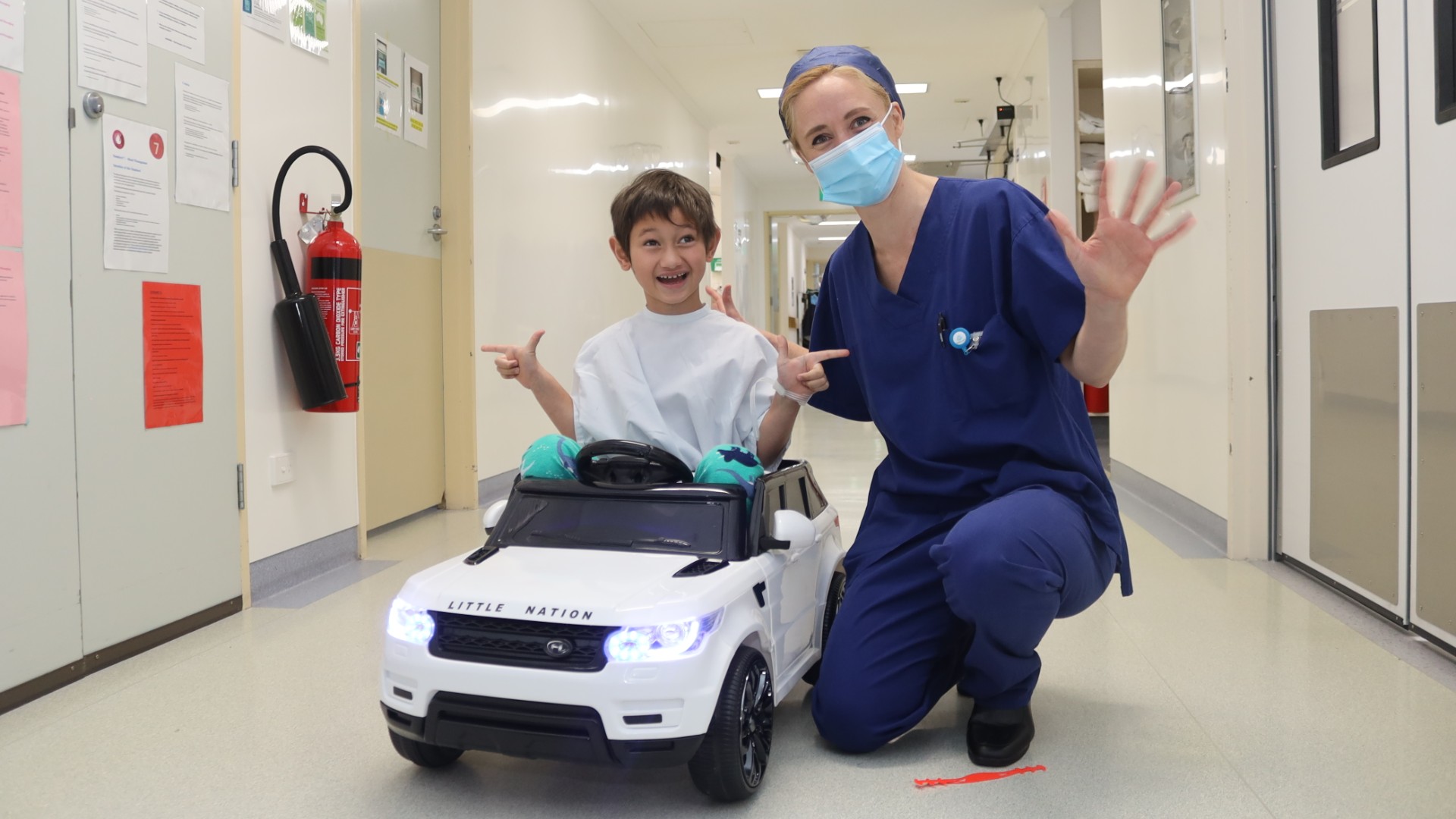
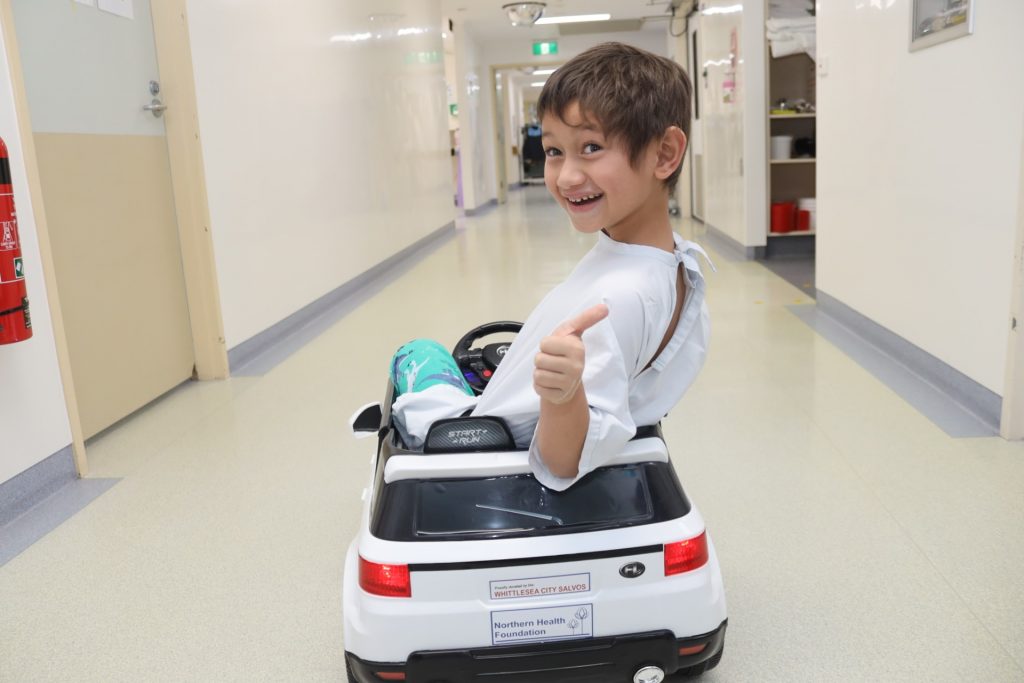
    Children coming for surgery at Northern Hospital Epping can now drive into the operating theatre, thanks to the new Range Rover kiddy car, kindly donated in collaboration between Northern Health Foundation and Whittlesea Salvation Army.

    The idea for the kiddy car came from Dr Jenny Coulson, Anaesthetist at Northern Hospital.

    “As a group, we wanted to avoid kids getting stressed when they come into theatre and we thought the use of the car would make the kids happier when coming here,” she explained.

    Dr Coulson explained the car is a good idea as it provides transport around theatre area. By using the car, the children don’t get put in the trolley, with the idea already proven successful in Asia.

    “I reached out and spoke to Josie Verga, Northern Health Foundation Fundraising Manager and she was excited about the story and knew exactly the community group who would consider this opportunity.  One call to the Whittlesea Salvation Army, and the deal was done. Hopefully we will have a fleet one day,” she said.

    The car also has a personalised number plate, with the Whittlesea Salvation Army name. The feedback from the children and families has been great, with our young patients happily engaged with a new way of arriving into theatre.

    Our patient Kalel in the car
    Our patient Kalel in the car

    Featured image: Kalel and Dr Jenny Coulson

  • Northern Health launches specialist ambulatory pleural service

    Northern Health launches specialist ambulatory pleural service

    The Northern Health Respiratory Department has launched a specialist ambulatory pleural service as part of its Pleural Medicine Unit – the only formalised service of its kind in Victoria.

    Pleural diseases occur when there is a problem in the chest cavity, the space between the lung and the chest wall. This often results in the production of fluid in the chest cavity (called pleural effusion) which can lead to breathlessness, chest pain and other symptoms. Fluid in the chest cavity may become infected (called empyema/pleural infection) and air from the lung may sometimes escape in to the chest cavity (called pneumothorax). Pleural diseases are common and the burden is increasing.

    Dr Sanjeevan Muruganandan is a lung specialist and pleural lead, who has done his PhD with Professor Gary Lee in Western Australia – a world leading pleural researcher. The purpose of the Pleural Medicine Unit is to optimise care in patients with pleural diseases by reducing procedures, hospitalisation and standardising care pathways.

    “There are over 50 recognised causes of pleural effusion, and our approach is to provide a service that accurately and quickly diagnoses the cause of the pleural problem so that the appropriate treatment can be given.”

    “The aim of this innovative service is to reduce further procedures and pleural related hospitalisation, work collaboratively with our thoracic surgical colleagues and ultimately standardise care in all aspects of pleural diseases. In some patients who aren’t fit for surgery, the service offers a less invasive option, which is evidence based,” Dr Muruganandan said.

    For example, an indwelling pleural catheter (IPC) can be inserted by the team to assist in the management of chronic recurrent pleural effusion, allowing patients to drain away the fluid whenever they have symptoms, such as shortness of breath. This prevents them from having multiple procedures, prolonged and further hospitalisation.

    Noel Smith was one of their patients who had an IPC inserted.

    “It meant a lot to me because I was able to be awake while they were doing it and it wasn’t painful. They explained to me what they were doing and it gives you hope if you know what’s going on – especially when you’re awake – I just thought that was tremendous,” Noel said.

    “My quality of life definitely improved once I had the catheter in – it helped to take the fluid off, so I was breathing much better. Confidence-wise too, I thought the way they treated me and explained things to me – it built my confidence up so much,” Noel added.

    The service is especially unique as it has the first Pleural Clinical Nurse Consultant in Victoria – Kirstin Tirant. Kirstin acts as a direct contact for patients as well as nursing staff when they need assistance, helping them over the phone and reducing the need for patients to have to present to hospital. With the addition of Dr David Feng earlier this year as the Pleural Fellow, the service is growing rapidly and contributing to research in this field.

    “For patients with cancer, it’s often more about treating the pleural effusion. Some patients have a very short life-span, so we try to improve their symptoms and quality of life by helping them stay at home for as long as they can by offering that support system,” Dr Muruganandan said.

    The team is able to fast-track patients to the pleural clinic, avoiding presenting to the emergency department.

    “We have a consult service for the hospital which helps expedite their management plan,” Kirstin said.

    “Our team is often involved at the beginning, helping to provide a diagnosis, and we support them throughout their journey. As a team being present throughout their whole journey, we can link these patients with the correct service at the right time,” Kirstin added.

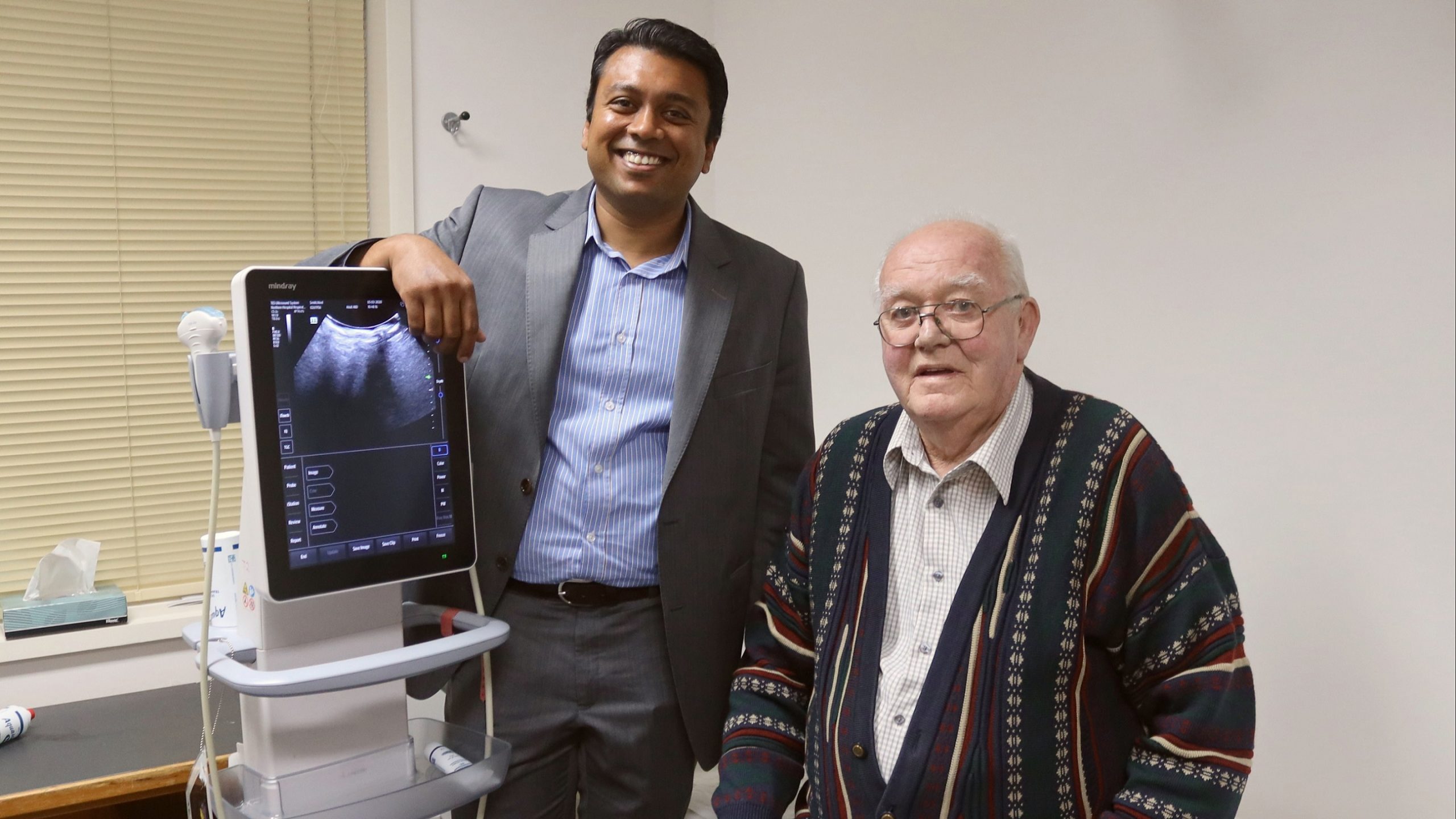
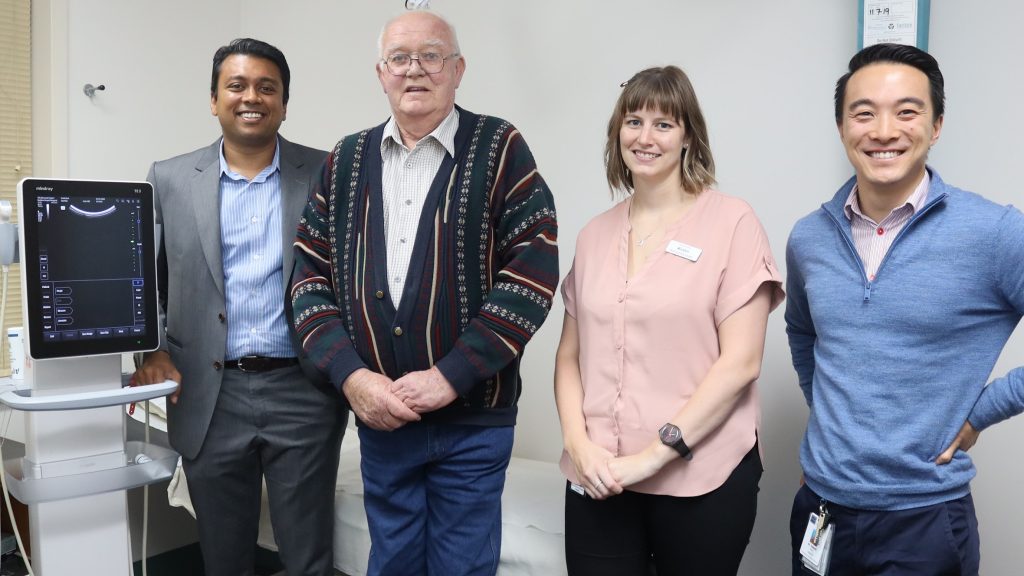
    Left to right: Dr Sanjeevan Muruganandan, Noel Smith, Kirstin Tirant and Dr David Feng

    Featured Image: Dr Sanjeevan Muruganandan and patient Noel Smith 

  • Koala Kids supporting Northern Hospital Children’s Ward

    Koala Kids supporting Northern Hospital Children’s Ward

    The Children’s Ward at Northern Hospital are grateful for the support they have received recently from Koala Kids Foundation – a volunteer-driven organisation that provides “small things that make a difference to the lives of children and young people.”

    “Koala Kids contacted us about a month ago – they are a foundation that traditionally supports children with cancer and their families and the health care team who support them, and they had started reaching out to general paediatric units,” said Courtney Lowry, Children’s Ward Nurse Unit Manager.

    Since linking in with Koala Kids, the Children’s Ward has received an abundance of therapeutic and other resources for children, their families and staff.

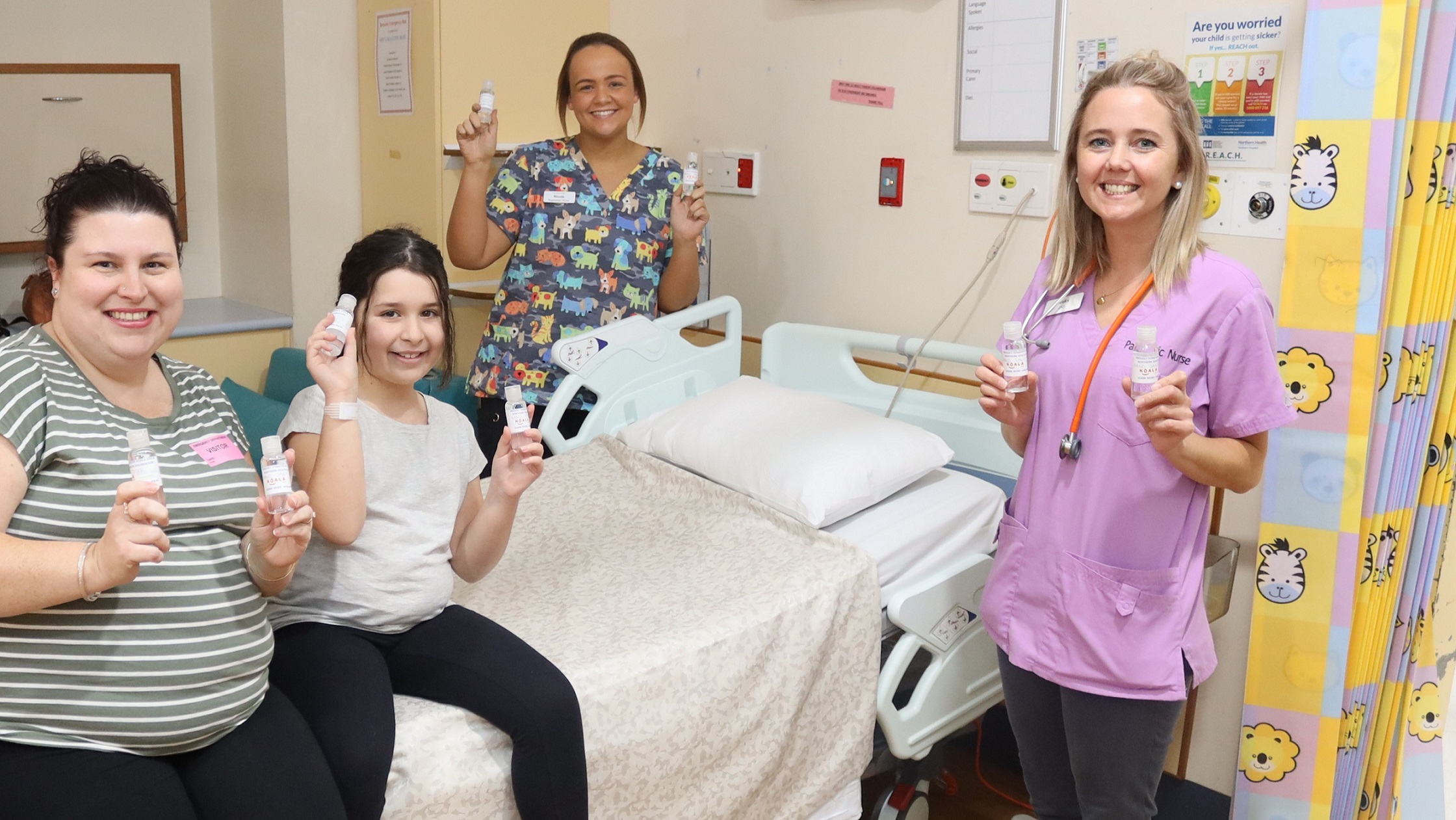
    One of the most significant donations to the ward from Koala Kids was 12L of hand sanitiser.  Courtney contacted Northern Health Foundation to figure out the best way to distribute the sanitiser to patients and families.

    “Northern Health Foundation funded the bottles for us and made labels for them, so we are able to give them out to families when they are discharged home – all up we made about 240 bottles. It’s a hard resource at the moment for anyone to get their hands on, so being able to give these to our families, is just an extra little thing we can do for them in these challenging times,” Courtney said.

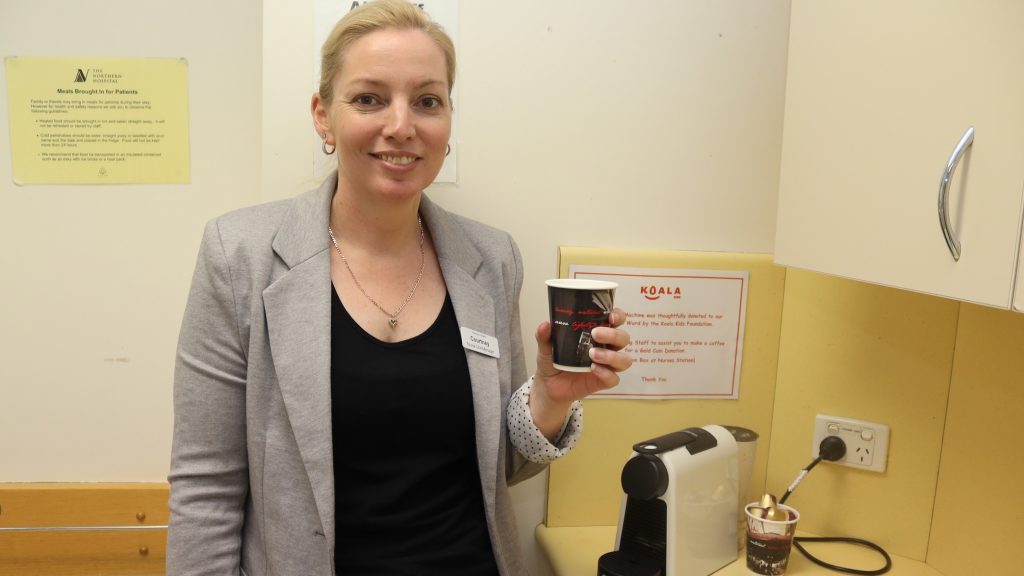
    “Koala Kids also donated a coffee machine to the ward for staff and the families to use, lots of different pantry snacks for the families to enjoy – two minute noodles, spaghetti, tiny teddies and Shapes – snacks that kids particularly like to eat,” Courtney said.

    “We had a teenager in overnight recently and she said she was finally hungry after having no appetite due to feeling unwell.  The nurse had so many options from which she could choose, so at midnight she was able to eat noodles, spaghetti and popcorn! Normally the only thing we have to offer in the middle of the night is some toast. So it’s been amazing – overwhelming really!” Courtney added.

    Besides the many generous items donated to the ward, Koala Kids also surprise staff with gifts on many occasions.

    “We received a box of ANZAC cookies recently with a sign saying – ‘For all the families, doctors and nurses for ANZAC Day’. They also sent two big boxes of chocolate bunnies for Easter, specially for the nursing team,” Courtney said.

    “Out of the blue, another package will turn up – like boxes of LEGO, colour in back packs and pencil cases specially drawn by Koala Kids volunteers, an abundance of bubbles……recently it was pizza boxes filled with activities for the kids to make a present for their mums for Mother’s Day!” Courtney added.

    “Last week, we had a patient who had her birthday while she was in hospital with us – we were able to grab a bunch of things from the donations from Koala Kids to give to her so we could celebrate her birthday in a small way.”

    “It’s the smallest things that can sometimes make the biggest difference. Thank you Koala Kids Foundation and Northern Health Foundation for all of your support of our patients, their families, and our hardworking staff!”

    Children’s Ward Nurse Unit Manager, Courtney Lowry enjoying a cup of coffee from the new coffee machine

    Featured Image: Katrina and daughter Isabella with nurses, Nicole and Aleks with the hand sanitisers 

  • HITH expands services to include home iron infusions

    HITH expands services to include home iron infusions

    The Northern Health Hospital in the Home (HITH) team have expanded their services to include offering iron infusions to eligible patients in the comfort of their own home.

    HITH began offering infusions to patients who were already receiving treatment in their home for other reasons but also required an infusion, so the service helps patients stay at home longer and avoid extra travel including potentially having to come into hospital for one day.

    “Some of the people who are frail were finding it difficult to travel to get their iron infusion done so it is more convenient to see those patients in their own homes with our nurses going out there,” said Lynne Santamaria, HITH Acting Nurse Unit Manager.

    The home iron infusion service has ramped up over the last 6-12 months, offering the service to more patients where possible.

    HITH are now able to provide iron infusions through the Residential Care Intervention in the Elderly (RECIPE) Program, so people living in aged care facilities can receive their infusion at home, rather than having to present to hospital.

    For patients in hospital, the home service means they are able to be discharged sooner and saves them additional travel.

    “If there’s a patient on the ward who may be ready to go home today but they require an iron infusion, their discharge might be delayed. So now, they could go home earlier and we would go to their house and do the infusion the next day. The service also helps prevent readmissions – if a patient is very frail and the infusion isn’t done within the next few days, they could end up being readmitted,” said Michelle McDonald, HITH Clinical Liaison Nurse.

    “Patients are just much more comfortable in their own homes,” Lynne added.

    In the current pandemic, COVID-19 has impacted all areas of Northern Health and HITH is no exception. HITH receives referrals from community home-based care programs and nursing homes asking for swabs on symptomatic patients that are unable to get to a fever clinic for a swab.

    “Our staff have done this willingly and use full PPE when attending these visits. HITH also provided swabbing of asymptomatic patients during the government’s testing blitz,” Lynne said.

    “Our staff have accepted and embraced all the challenges that come and will continue to come with nursing during this COVID-19 period. As their manager, I am very proud of the way our unit epitomizes the Northern Health values – safe, kind and together.”

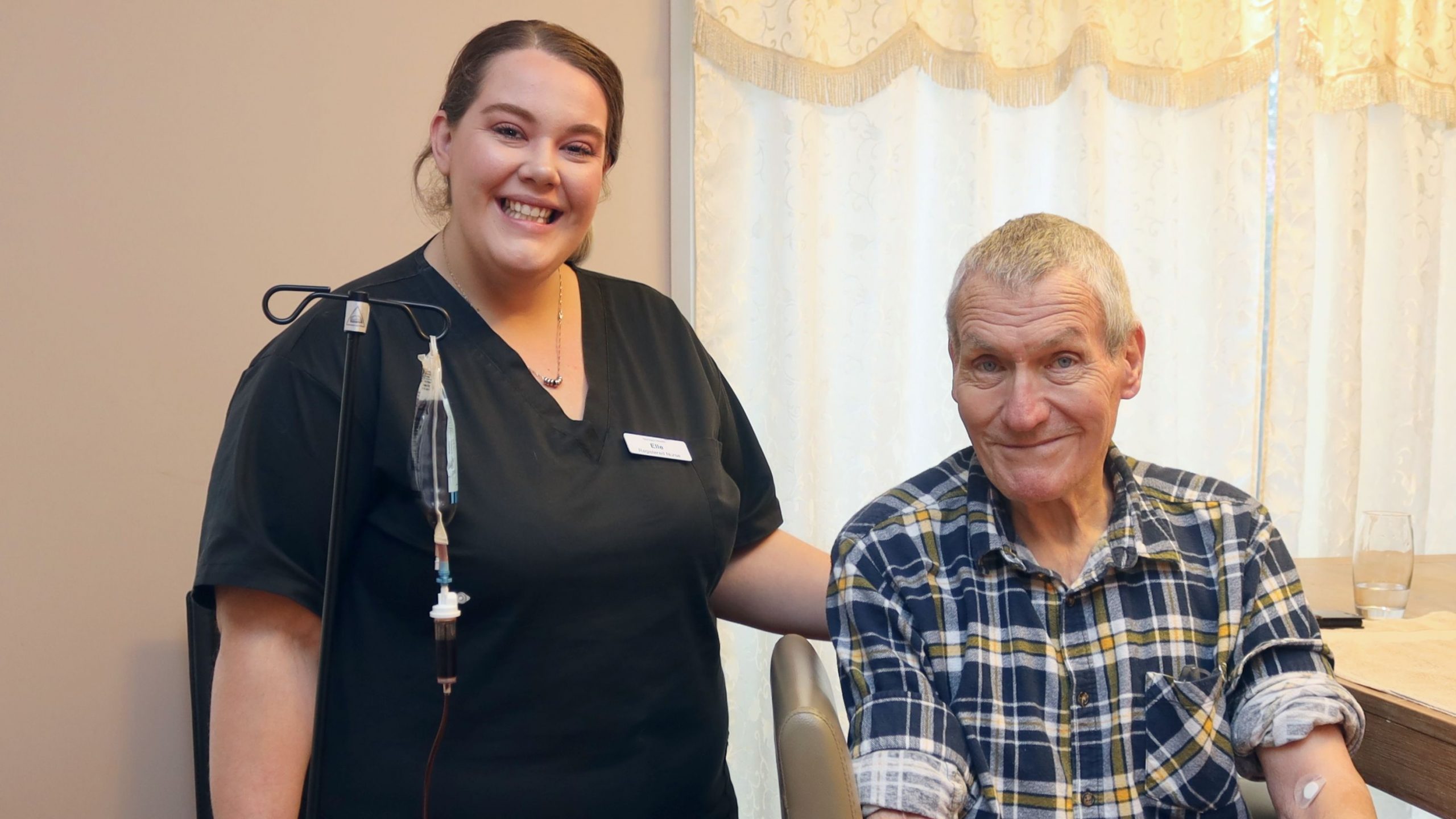
    Featured Image: HITH Nurse, Elle, with patient, Keith Carney