• 100,000 COVID-19 vaccine milestone!

    100,000 COVID-19 vaccine milestone!

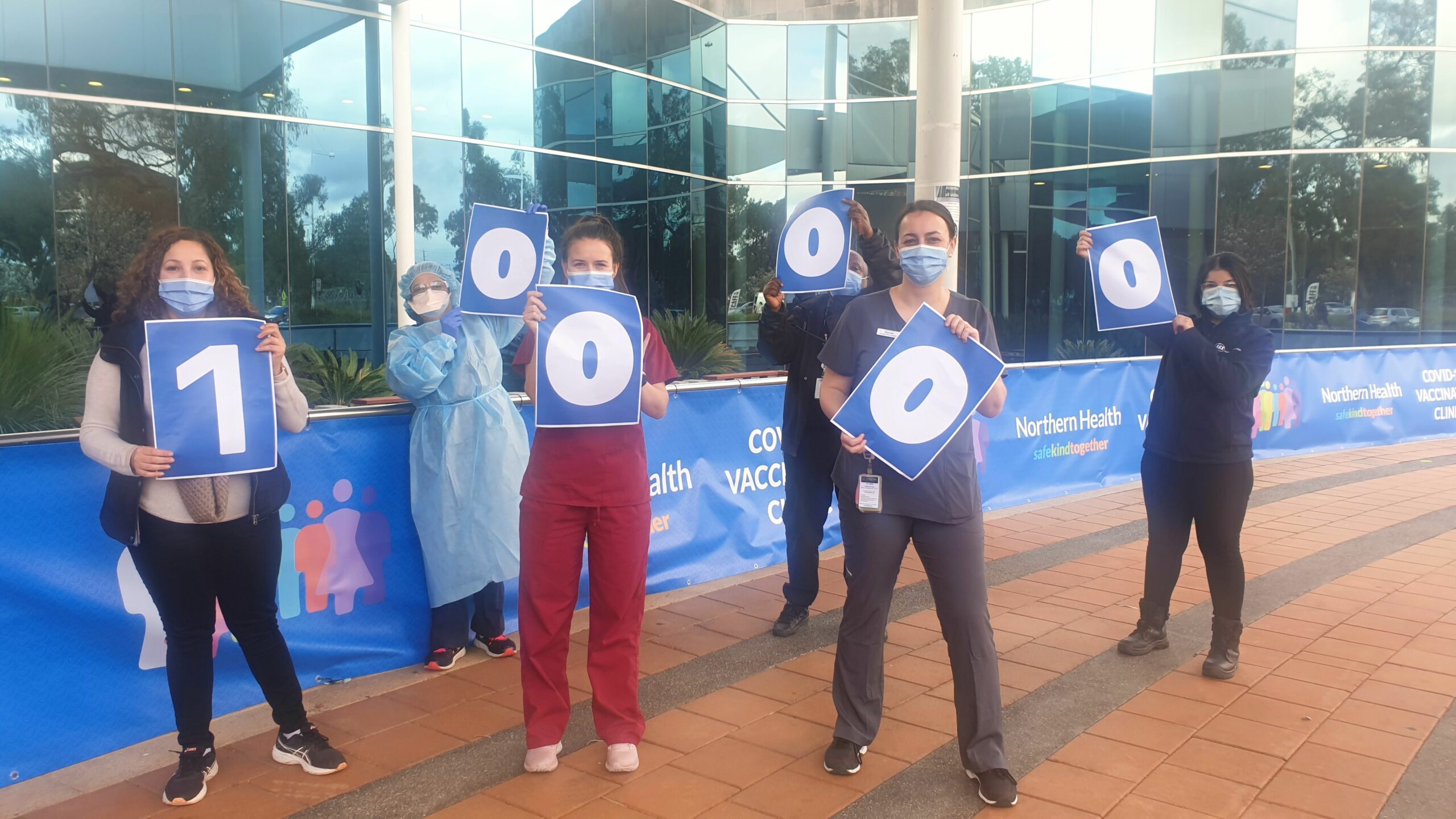
    This week, Northern Health has reached an incredible milestone in the delivery of COVID-19 vaccinations.

    Since the rollout began in March, Northern Health has provided over 100,000 vaccinations to our community – a major milestone we should all be proud of.

    Northern Health commenced COVID-19 vaccinations on 9 March 2021 at Northern Hospital Epping, where the very first staff members were excited to receive their vaccine.

    Since then, the vaccination clinic has moved to a mass vaccination hub located at Plenty Ranges Arts & Convention Centre in South Morang, to help provide vaccinations to the community on a larger scale.

    Hayley Gray, COVID-19 Vaccination Clinic Acting Nurse Unit Manager, explained the clinic is currently vaccinating approximately 1,500 people per day.

    When asked how it feels to have been involved in providing 100,000 vaccines to our community, Hayley said, “it’s very satisfying to be helping our community. We are achieving significant goals and it’s extremely rewarding to be a part of this important work!”

    Many staff from different areas work in collaboration to run the clinic every day, including 35 nursing staff each shift, ward clerks, security guards, PSAs, concierge staff, doctors and educators.

    “The general response from the community after they have been vaccinated is really positive. They are thankful for the service and very impressed with the smooth process,” Hayley added.

    Madelaine Flynn, Director of Operations – Infection Prevention/Nursing Projects, acknowledged the wonderful work of the vaccination team.

    “It’s an incredibly exciting time for the Northern Health COVID-19 vaccination hub, reaching 100,000 vaccines. The community has shown tremendous support of the vaccination program to keep themselves, their family and their community safe. The vaccination team has truly lived Northern Health’s values, working together to achieve this amazing feat, keeping everyone safe and, in every interaction, acting with kindness,” Madelaine explained.

    Northern Health thanks our incredible staff and community for helping us reach this major milestone – and giving us all a reason to celebrate in what is a challenging time for all of us in Melbourne. The COVID-19 vaccine is extremely important to keep our community safe. To book your vaccine, head to vaccination.nh.org.au.

    One of the 100,000 – Yousif receiving his COVID-19 vaccination at Northern Health’s vaccination clinic

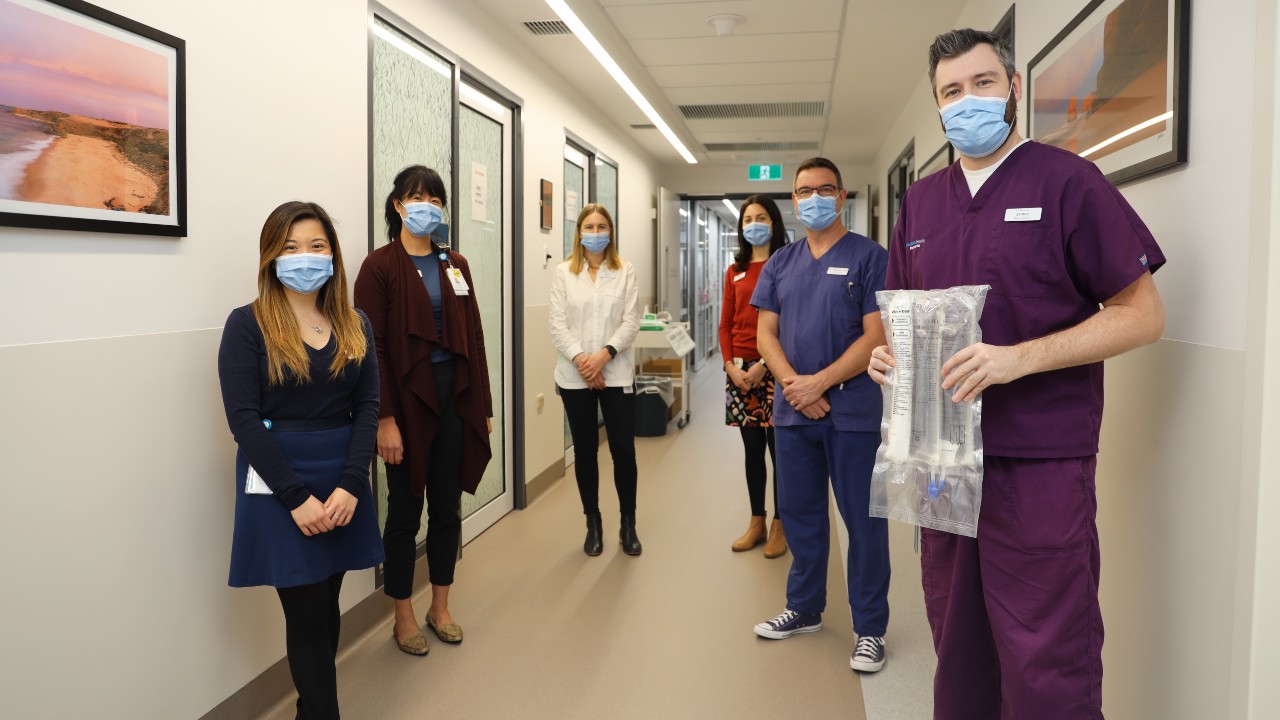
    Featured Image (left to right): Soha Henry, Pharmacist; Jasleen Sandhu, Pharmacy Technician; Hayley Gray, Acting NUM; Johannes Mezemer, Security Officer; Nicole Higginson, ANUM; Gizem Uysal, Concierge
  • Virtual walk arounds

    Virtual walk arounds

    Northern Health is constantly adapting to the challenges of working in a COVID-19 environment and expanding our virtual approach to the way we provide care. We have been conducting virtual Executive Patient Safety walk arounds for some time and recently have been conducting virtual accreditation assessment practices in readiness for continuing our accreditation assessment which commenced in May.

    Laura Hughes, Project Manager, explained these sessions have been set up by the HRO and Accreditation teams to prepare our wards and departments for both on site and virtual assessments and ensure that the technology supports a successful assessment for our remote assessors. These sessions include a mix of senior staff from Nursing, Medical and Allied Health and patient interviews.

    “We ran some trials this month across Northern Hospital for a virtual ward round. Dr Gautam Vaddadi, Consultant of the Heart Failure team conducted his ward rounds from home. The ward round included seeing patients on Ward 5, as well as patents in ICU and on Ward 21. The consultant was able to interact with the medical team and talk directly to the patient. Dr Vaddadi was also able to collaborate directly with the ICU team to develop plans for a patient with complex needs,” Laura explained.

    “The feedback from the patients was really positive, with many happy to see Dr Vaddadi’s face and talk to him, while also receiving the face to face care from the onsite team. It gives patients comfort to have the expertise and senior decision making of a consultant,” she added.

    Laura and the Project Management team are excited for the opportunities the virtual walk arounds bring and the scope of their implementation across the health service.

    “There is so much scope to expand this capability across Northern. The HRO team is working with the Quality and Accreditation team on implementing models for Accreditation and Executive Patient Safety Walk Arounds, plus future models for virtual ward rounds, or as the Heart Failure team affectionately called it, ‘Doctor on a stick’, she said.

    Richard Ram, Ward 5 Nurse Unit Manager, trialled the virtual walk around before Accreditation.

    “This is the first time I have prepared for an Accreditation using virtual technology. It helps us prepare for the day and gives our staff a great opportunity to show and tell about their ward,” he said.

    For Coleen Scully, Acting Director of Operations for Emergency Services, this was also a completely new experience.

    “With the pandemic, we actually had to learn new ways of doing things, so I actually think this is an evolution of that. We are utilising the technology we have in order to be able to participate in a really important process, such as accreditation. This is very similar in content, but just different in format,” she explained.

    “This is a good opportunity for staff to showcase the really good work they are doing. You can see in the way Richard is presenting his area that he is really proud of his staff and care they provide to patients,” Coleen said.

    Coleen emphasised that conducting virtual walk arounds just shows how resilient Northern Health’s staff is and how quickly we adapt to change, which has already been proven in the way they have responded during the whole pandemic.

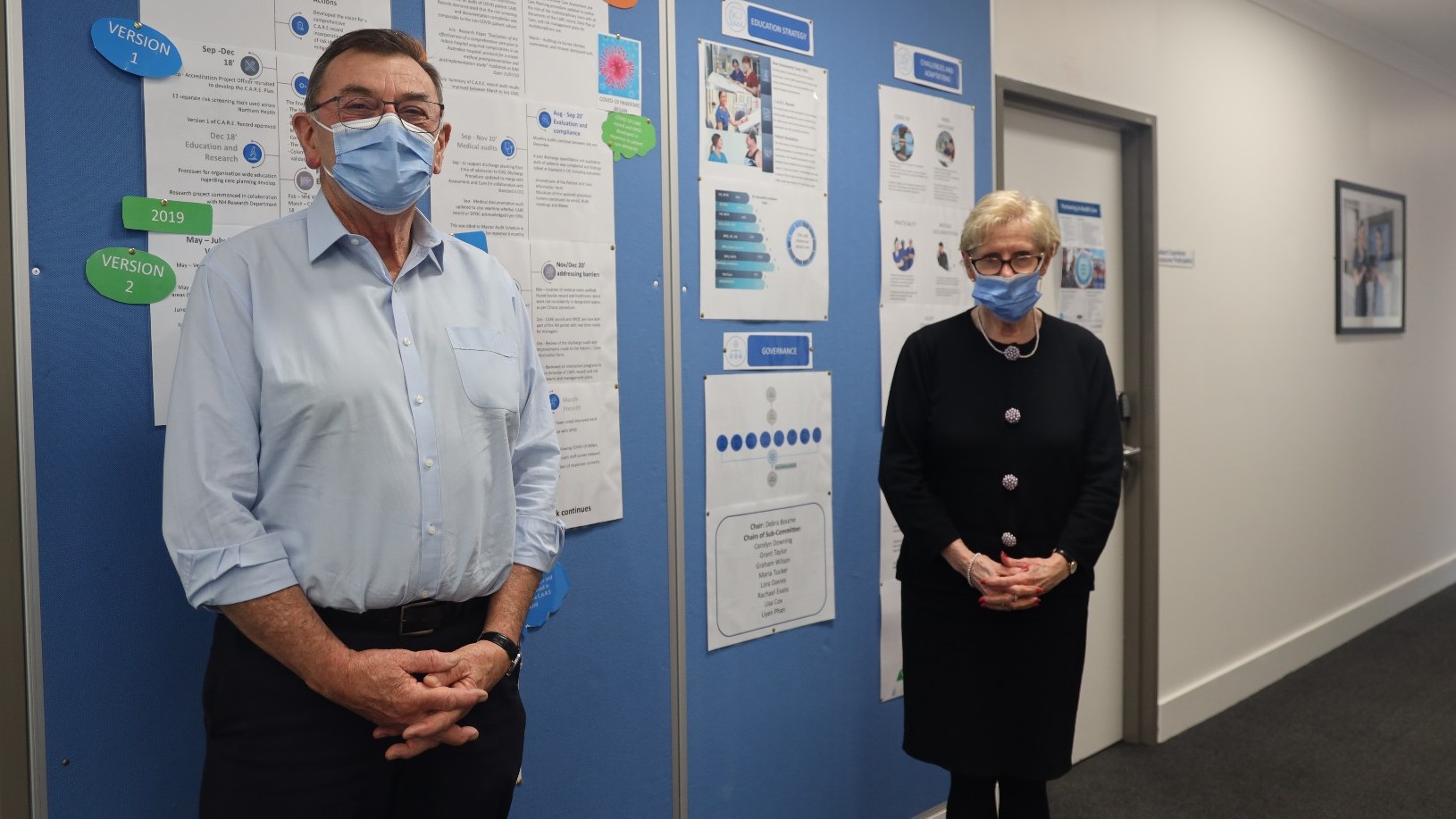
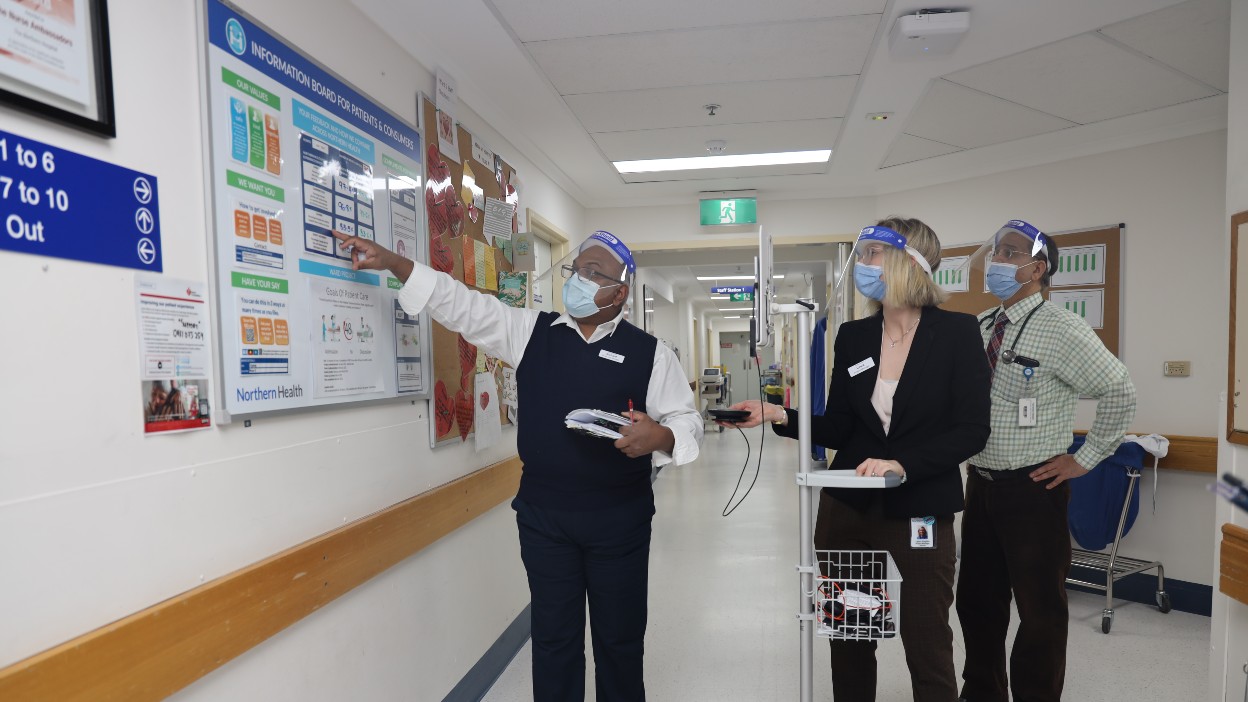
    Featured image: Richard, accompanied by Laura and Dr Naveen Sharma, showing the Information board and answering questions from Maree Glynn and Jason Cirone virtually, ahead of Accreditation.

  • One happy family: PSAs at Broadmeadows Hospital

    One happy family: PSAs at Broadmeadows Hospital

    The tight-knit family of 20 Patient Services Assistants (PSAs) at Broadmeadows Hospital and Craigieburn Centre have been keeping their sites spotlessly clean, while never losing banter and a genuine connection with each other.

    Wendy Nicol, Operations Manager, PSA & Cleaning Services, said the team has a really high standard of cleaning, highlighting the way their PSA Supervisor, Snezana Velevski, works with her team, and the health service as a whole.

    “She keeps on top of everything. COVID-19 has presented challenges to some of our staff. We have staff who had to homeschool their children, staff who have been unwell, so it has been a challenging time to keep on top of it. The team here have managed everything perfectly, and there has been no change to our patient care. We had fantastic feedback from all of the NUMs on wards about how smoothly everything has continued to go thoughout the COVID-19 period. The PSAs, led by Snezana, need to be commended for the role they have done,” Wendy said.

    “There has been an increase in the amount of high touch cleaning they had to do, like door handles and toilets. It was a seamless process on the surface, but a lot going on in the background to keep everything running,” she said.

    Snezana looks after her 20 PSAs like her family – they would often get coffees together, sometimes donuts, share a few laughs and any other news they may have.

    She has been working at Northern Health for the last seven years, starting as a PSA in Emergency, before coming to Broadmeadows. She has been enjoying her role and the ability to talk to everyone on site.

    “I work with everyone in the hospital – from cleaners, nurses, managers and this role really keeps me busy. I love it because it’s not just a role where you sit in the office, it’s a people-facing role,” she explained.

    “Snez is our problem solver – she knows what to do, how to get it and where to find it. We would be lost without her here,” Wendy added.

    In her free time, Snezana is a passionate cook, gardener and has recently welcomed her second grandchild. “Staff already know this about me, we share everything here,” she added.

    Snezana is very happy at her role – “I don’t want to go anywhere from this hospital, it’s like a home. I had opportunity to move on, but I really like it here,” she said.

  • Clinical Documentation Integrity Program

    Clinical Documentation Integrity Program

    Clinical documentation in the healthcare record is vital in planning, resource consumption and improving patient outcomes. It is where our clinical coders abstract the information they need to classify diagnoses and interventions.

    Often, the language used for clinical purposes and that required by our clinical coders is different. Clinicians frequently use generalised clinical terms, signs, symbols, and abbreviations. While this is meaningful for communicating between treating healthcare professionals, these terms are not always able to be translated into codes required for reporting and funding or coded to the required specificity that reflects the complexity of the patient. This disconnect can significantly affect the quality of hospital casemix data. If the clinical coding does not fully capture the activity and level of service that was provided, it can result in an under-representation of patient complexity leading to sub-optimal hospital reimbursement and incomplete reporting to external agencies.

    Clinical Documentation Improvement (CDI) is the process of reducing the ‘disconnect’ between what clinicians write in the healthcare record and what clinical coders need to produce quality casemix data. It achieves this by placing a Clinical Documentation Specialist (CDS) on the ward to review clinical documentation in a timely manner while the patient is still admitted. CDSs help clinicians to document using a format that is clear, complete, and accurate, to aid with patient management and also to be readily acceptable for clinical coding.

    Northern Health implemented a Clinical Documentation Integrity Program in 2018 to facilitate the accurate representation of a patient’s clinical status.

    Mary Kouvas,  CDI Coordinator says, “When I graduated back in 1993, Victorian hospitals were transitioning from block funding to an activity-based funding model. My first job was to ensure the clinical documentation was complete and accurate to ensure correct reimbursement. Most of this was done retrospectively, that is, about two weeks post discharge,” says Mary.

    At Northern Hospital, Mary and the coding team played an important role in ensuring all patients receiving HiFlow Therapy (HFT) via nasal cannula or prongs were captured in our data to ensure  correct reporting. “By educating clinicians and improving forms, we were able to capture this information better which meant that our data was more reliable. This improvement was also the catalyst in establishing the Respiratory Care Unit at Northern Hospital where our patients are better managed whilst receiving HFT.”

    The CDI Team has grown in the past year and now consists of Saja Sammour, Health Information Manager and Diana Villalta, a newly appointed CDS with a background in dietetics and midwifery. “We are excited to welcome Diana to our CDI team as her clinical knowledge and ward experience will complement our knowledge in coding and casemix,” says Mary.

    Terri Fiorenza, Director Health Information Services, says Mary and the CDI team are to be congratulated in establishing a successful Clinical Documentation Integrity Program at Northern Health, which continues to grow and improve.

    Says Terri, “The team’s presence in clinical areas continues to strengthen the clinicians knowledge and importance of accurate clinical documentation in the healthcare record, not only from a funding reimbursement perspective, but from a qualitative perspective as well.”

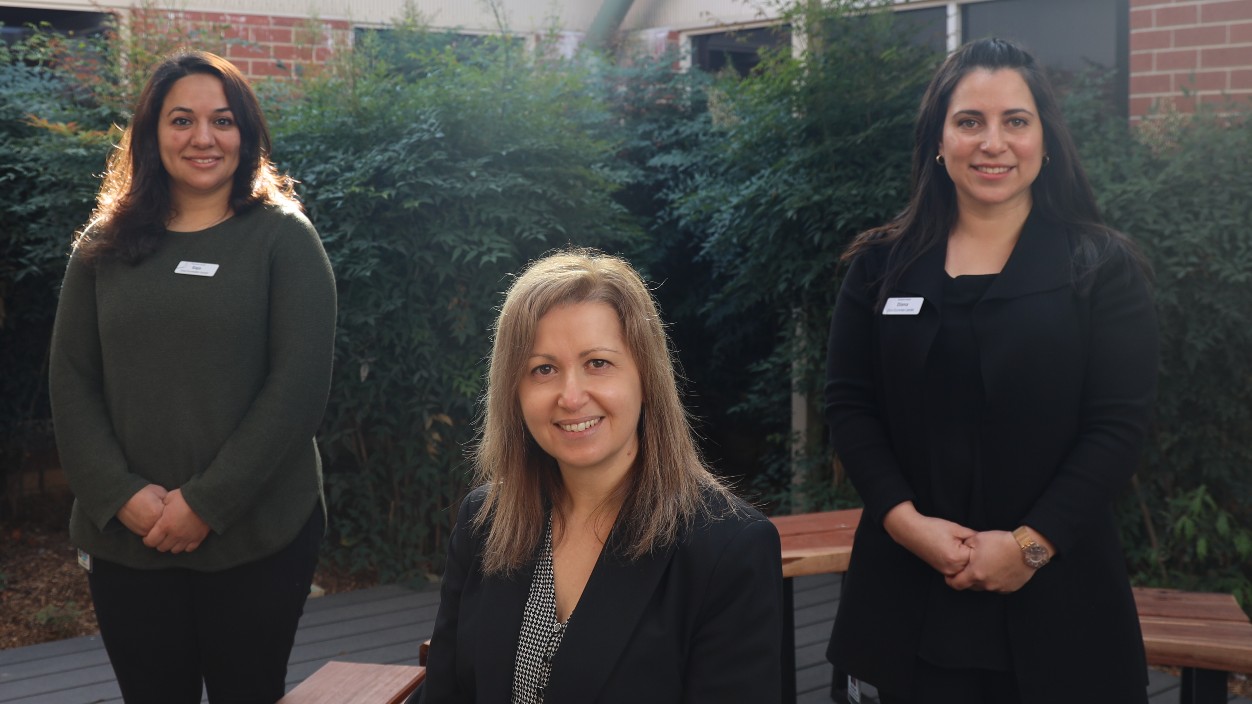
    Featured image shows from left to right:
    Saja Sammour, Health Information Manager; Mary Kouvas, Clinical Documentation Improvement Coordinator and Diana Villalta, Clinical Documentation Specialist.

  • Accreditation resumes from Tuesday

    Accreditation resumes from Tuesday

    Northern Health’s Accreditation resumes next week on Tuesday, 17 August, and will last until Thursday afternoon, 19 August 2021.

    Maree Glynn, Director of Clinical Practice Improvement, explained that, this time, we will have three Victorian surveyors onsite who were not part of the original survey team and two surveyors will conduct the assessment virtually, including our lead surveyor, Wendy Wood.

    “The campuses that will be visited in this round are Northern Hospital Epping, Broadmeadows Hospital and Craigieburn Centre. All of our clinical areas that were not visited in May will be visited and areas completed in May will not be re-visited. For example, they won’t be going to Bundoora Centre during this visit. The surveyors who were part of the original team in May have written up their report and they will share this information, so that the new surveyors can take over and complete the work,” she explained.

    A timetable has been distributed to the Senior Leadership and Nurse Unit Mangers, highlighting the areas the surveyors will visit in these three days. People who need to be present at the meetings and rounds will also receive a calendar invite for their area.

    “If a surveyor is visiting your area, it is important that you look at the Standard that the surveyor is surveying against. For example, one of the surveyors has Standard 2 and Standard 6, so those two Standards will be a strong focus of that visit. That is why it is essential to check the timetable,” she explained.

    Given the positive feedback received so far, Maree is optimistic about the upcoming assessment outcomes.

    “The feedback in May, after two days of surveying, was very positive, as we had meetings with the Executive at the end of each Accreditation day. The surveyors hadn’t found anything they had any concerns about or risks to raise with the Chief Executive,” Maree explained.

    “As long as we present as well as we can, engage and talk with the surveyors about the work we do every day, everything will go well. An assessment is really about our everyday work, what we do and how well we do it. This is an opportunity to showcase the really good things we are doing. If there is something you feel that should be highlighted, maybe make some notes on a piece of paper so you don’t forget to talk about that,” Maree advised.

    Dr Bill Shearer, Executive Director Quality, Safety and Transformation added: “We have all done the work necessary for a survey visit. Furthermore, we have ensured that the work is part of how we do business every day. This is our opportunity to show that we are really Accreditation ready any time.”

    After the visit is completed on Thursday afternoon, there will be a briefing to the Executive and then a Summation will be provided by the Survey team and will be communicated to all staff, before the surveyors leave Northern Health.

  • Family Planning Clinic team receives University of Melbourne Grant

    Family Planning Clinic team receives University of Melbourne Grant

    The Northern Health Family Planning Clinic team at Broadmeadows Hospital has received the University of Melbourne Department of Obstetrics and Gynaecology Innovation Grant to co-design women’s reproductive health services.

    The grant supports novel research ideas for early and mid-career researchers, and will allow the team to partner with women to improve reproductive health services in Melbourne’s northern suburbs.

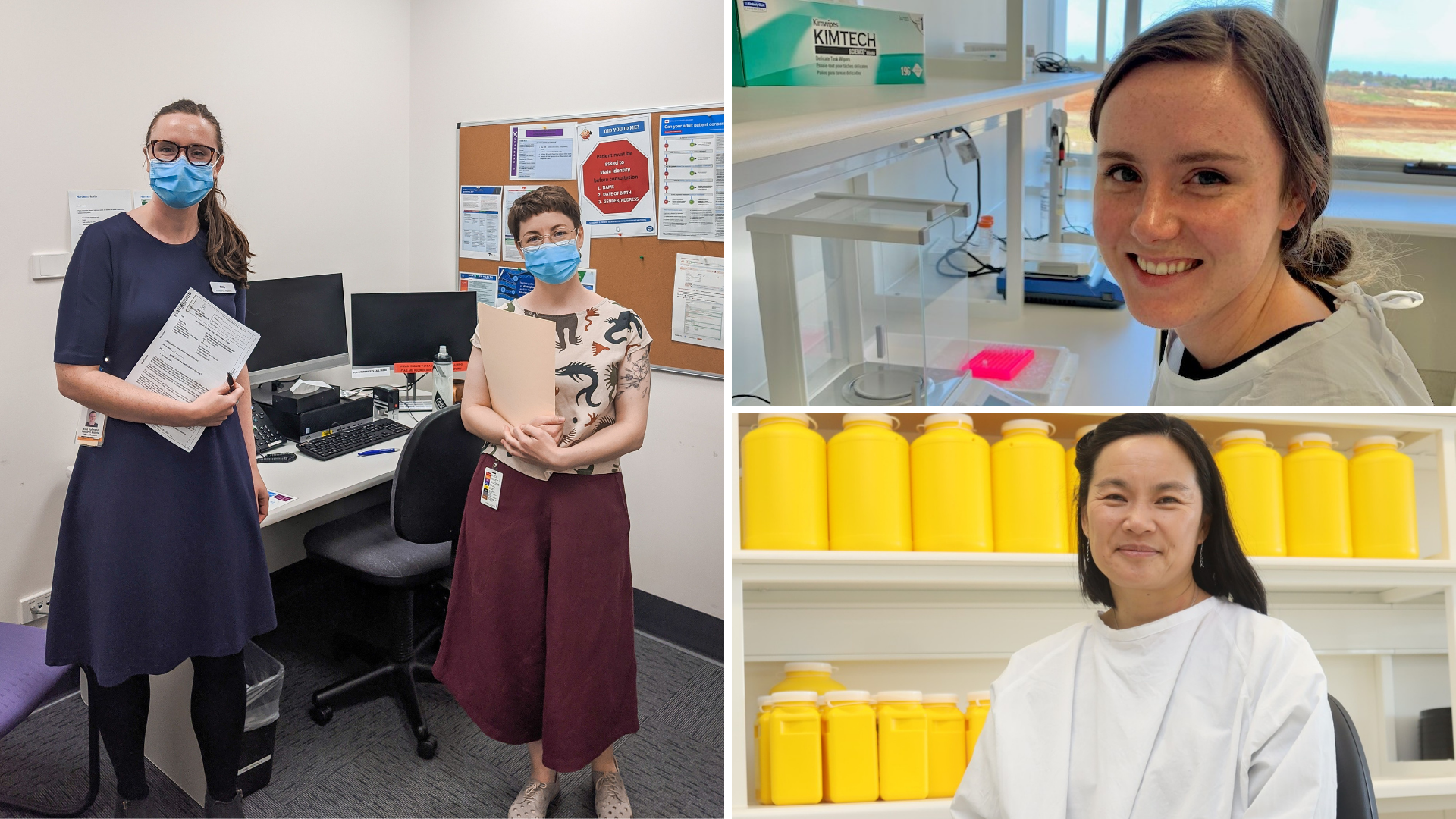
    The research team consists of Associate Professor Lisa Hui, Women’s and Children’s Research Lead and MFM Specialist; Dr Jeanie Henderson, Gynaecologist and Family Planning Clinic Medical Lead; Kate Chaouki, Family Planning Clinic Coordinator and Midwife; and Eleanor Johnson, Research Midwife. They are delighted to have been awarded $25,000 for their research proposal, ‘Partnering with the community to co-design a comprehensive sexual and reproductive health care service in Melbourne’s north (Phase 1)’.

    “There is very little research on women’s experiences of accessing abortion and contraception care in Australia, so we developed the idea to co-design a reproductive health service tailored to the needs of our consumers,” said Kate Chaouki.

    The Family Planning Clinic provides medical and surgical termination of pregnancy, contraception and sexual health services to more than 200 women per year. It is the only fully publicly-funded service of its kind in the northern metropolitan region, with some women travelling over two hours to access the clinic. These women come from a diverse range of social and cultural backgrounds, underscoring the need for an inclusive and accessible service that caters for all.

    Eleanor Johnson said Northern Health played an important role in meeting the reproductive health needs of the community.

    “Equitable access to contraception and abortion are fundamental components of sexual and reproductive health,” Eleanor said.

    “Until now, abortion care has been designed around the operational demands of the hospital, not the needs and preferences of the women themselves. This grant acknowledges the importance of addressing stigma, understanding women’s experiences and working towards offering sensitive, comprehensive and equitable abortion and sexual health care.”

    The team is currently in the process of auditing the Family Planning Clinic service, developing research surveys and materials, and planning the first phases of the research. A public call for consumer partners in the project will be forthcoming.

    Feedback is welcome – contact eleanor.johnson@nh.org.au.

  • The Big Idea: The chosen seven

    The Big Idea: The chosen seven

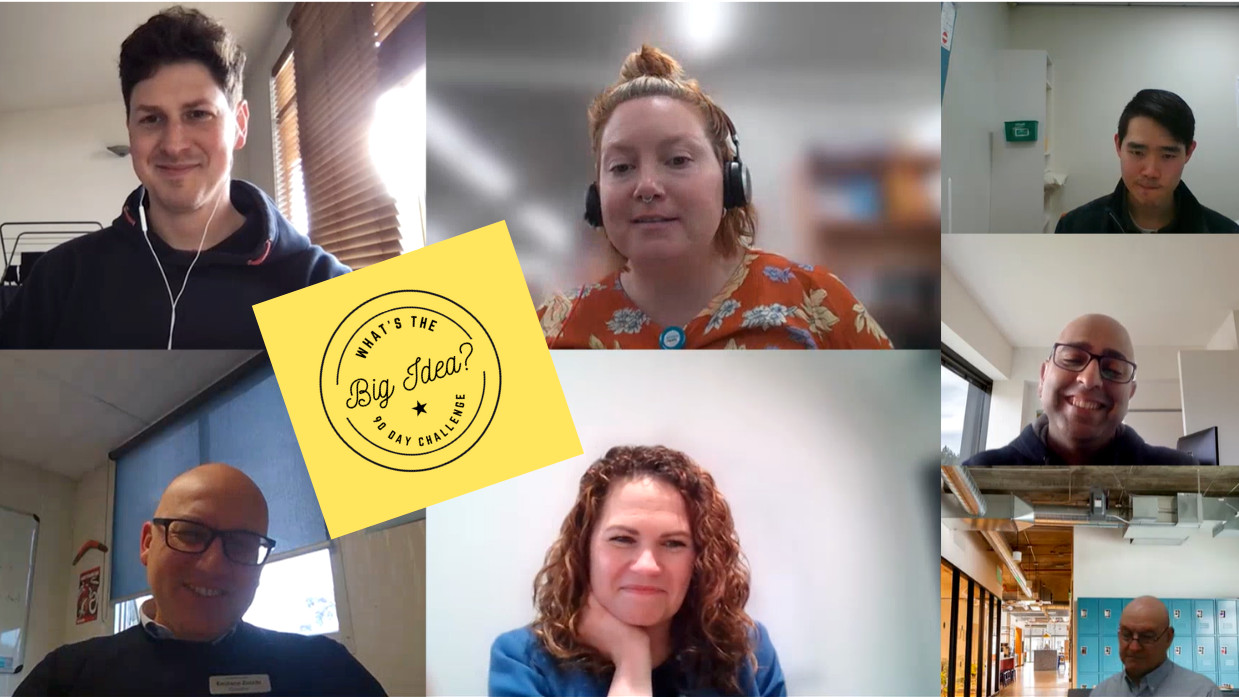
    The Big Idea Campaign drew to a close on 22 July, with 66 ideas submitted from across the organisation. Ideas were received from a mix of clinical and non-clinical staff, across all Northern Health sites, and ranged in size from small clinical changes to large, organisation-wide initiatives.

    “The Innovation Assembly reviewed all submissions and 12 ideas progressed to the refinement stage. Seven applicants progressed to the final stage to present their ideas to Siva Sivarajah, Chief Executive,” explained Ariana Carrodus, Project Manager.

    At the presentation to the Chief Executive and Dr Bill Shearer, Executive Sponsor of the project, each presenter was given ten minutes for their pitch, including questions.

    “All the ideas were scored against different criteria, and these were the stand-outs in terms that they were not only innovative, but also have potential to be scaled up. These ideas have big impact on patients, but also on staff. Project leads for these ideas also share a high level of enthusiasm for their projects,” Ariana added.

    Cassie Bramston, Project Officer, explained the innovation team was looking for ideas that are a good mix of clinical and non-clinical, front facing and back of house, as transformation within a health service isn’t always patient facing.

    “It is important to highlight that transformation happens in every aspect of the organisation and you don’t need to be a clinician to do transformational work. The next step for the chosen seven ideas is going through an eight-week intensive program, which will help the applicants develop their ideas and fully scope what is required to turn the idea into the reality. They will understand what they need to go ahead and implement their idea. Congratulations to the seven chosen ones and thank you to all staff who submitted their ideas,” she said.

    The successful seven ideas are:

    1. Emiliano Zucchi, TALS Director – Video interpreting on demand – Improving access to interpreters through video interpreting and interpreter access on demand
    2. Elise Sutton, Resuscitation & Clinical Deterioration Coordinator – Simulating together for safety – developing an inter-professional resuscitation study day at Northern Health
    3. Dominic LaCaze, Senior Supply Manager – Northern Interactive Clinical Product Database – An interactive multifunctional database with clinical and product ordering information and location
    4. Paul Anis, Pharmacist – Post discharge pharmacy led telehealth – development of a pharmacist led telehealth program post discharge
    5. Ryan Hon, Physiotherapist – Improving Men’s Health Services at Northern Health – identification and referral process for men’s sexual health issues
    6. Jamie Mackay, Anaesthetist – Perioperative Patient Journey Postal/App – an electronic patient portal to improve communication between NH and our community leading up to admission/surgery
    7. Clara Walker, Clinical Nurse Consultant – Chronic Wound Service – Northern Health Leg Club – a compression bandaging clinic to reduce rate of venous leg ulceration and complications
  • Peripheral Parenteral Nutrition (PPN) rolled out at Northern Hospital

    Peripheral Parenteral Nutrition (PPN) rolled out at Northern Hospital

    Last week, Peripheral Parenteral Nutrition (PPN) was rolled out at Northern Hospital Epping, on Ward 16 and the Intensive Care Unit (ICU).

    Stella Mexias, Dietitian, explained the new service aims to reduce malnutrition in patients, and complications associated with it, such as increased length of stay.

    “We have rolled out Peripheral Parenteral Nutrition (PPN), which is different than Total Parenteral Nutrition (TPN). PPN is used for patients who may not be tolerating oral diet or enteral nutrition (e.g. NG feeds) or when there is a delay in TPN commencing. Patients can receive nutrition without delay or a top-up while their gut improves” she explained.

    “This is something to be used short-term only, five to seven days, because it is not nutritionally complete. After that period, patients would commence either TPN or their gut may improve so they can eat and drink,” she added.

    The new service also means patients will have a reduced risk of refeeding syndrome since they will receive some nutrition rather than remaining nil by mouth.

    “The new service has taken 18 months of planning and liaising with ICU, Dietetics and Pharmacy to get it up and running, and it’s not something every health service has. Tina Aboltins, ICU Dietitian, has been involved in coordinating different projects to bring it together and roll it out. The product comes from Pharmacy, as they will store and provide the PPN. ICU has updated our parenteral nutrition guidelines now include TPN and PPN,” she added.

    Stella and the team have provided education sessions for nursing staff around the administration and storage of the PPN. Surgeons were educated on this roll out at their Grand Round earlier this year and ICU doctors more recently. Posters about PPN including FAQs are on Ward 16 and ICU for staff to refer to.

    To use PPN, medical or surgical teams need to refer to ICU on 88228 to request PPN and refer to a dietitian for an assessment.

    Featured image (left to right): Vivian Tsang, Tina Aboltins, Hayley Collins, Stella Mexias, Dr Anthony Cross, James Ash