• Harmonising Hearts for RedFeb’s Cardiac Cause

    Harmonising Hearts for RedFeb’s Cardiac Cause

    RedFeb is an annual event acknowledged by Heart Research Australia, that invites individuals to don the colour red in solidarity with loved ones impacted by heart disease. It serves as a beacon of hope, rallying communities to raise awareness for the prevention, diagnosis, and treatment of various heart conditions, from coronary heart disease (CHD) to heart failure, valve issues and arrhythmias.

    Northern Health Heart Failure Nurse Practitioner, Vikki Hannah, says many people may not be aware of their risk factors for heart disease, as some risk-factors, such as high blood pressure and high cholesterol, have no symptoms.

    “It’s never too late to manage your risk of heart disease and improve your heart health. Some risk factors for heart disease are beyond your control, such as age, gender, ethnicity and family history, but there is no one cause for heart disease. Most heart attacks and strokes can be prevented with healthy choices,” Ms Hannah says.

    Heart disease stands as Australia’s primary cause of death, with 18,590 fatalities attributed to it in 2017, claiming an Australian life every 28 minutes. An alarming 90 per cent of Australians possess at least one heart disease risk factor, highlighting the urgency of proactive health management. The more risk factors for coronary heart disease you have, the greater your chance of developing it.

    The good news is that for most risk factors, you can do something about them.

    Risks you can control:

    • Smoking
    • Cholesterol
    • High blood pressure
    • Being inactive
    • Diabetes
    • Being overweight
    • Unhealthy diet

    Risks you can’t control:

    • Age: As you get older, your risk of heart disease increases
    • Gender: Men are at higher risk of heart disease. Women’s risk grows and may be equal to men after menopause
    • Ethnic background: People of some origins (e.g. from the Indian sub-continent) have higher risk
    • Family history: If someone in your family has cardiovascular disease, speak to your doctor about your risk.

    Unfortunately, there are an increasing number of people presenting to the emergency department of hospitals experiencing a heart attack, with none of the traditional modifiable risk factors such as genetics, smoking, and hypertension.

    Ms Hannah also highlighted that research shows women are much less likely to undergo treatment for a heart attack or angina in hospital compared to men. Even though chest pain is a common heart attack symptom for both genders, women may experience different symptoms like back pain, vomiting or indigestion.

    “Despite the rising number of people having heart attacks without traditional risk factors, there is hope in prevention. By making healthy choices and staying informed, we can protect our hearts and the hearts of those we care about,” she said.

    For more information on RedFeb, please visit www.heartresearch.com.au/redfeb

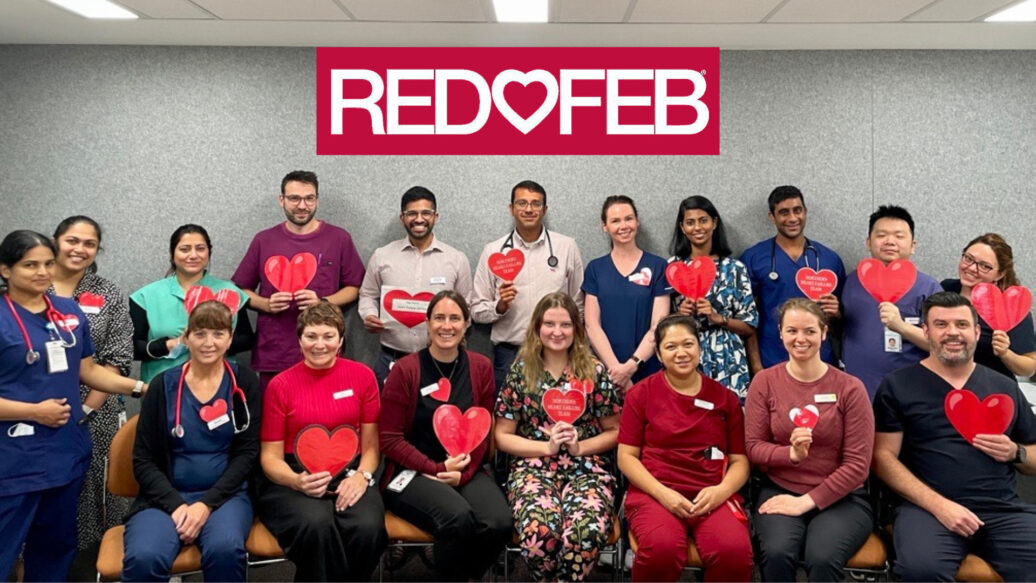
    Featured image: Cardiology team, Northern Health 
  • Setting the standard for the way we do things at Northern Health

    Setting the standard for the way we do things at Northern Health

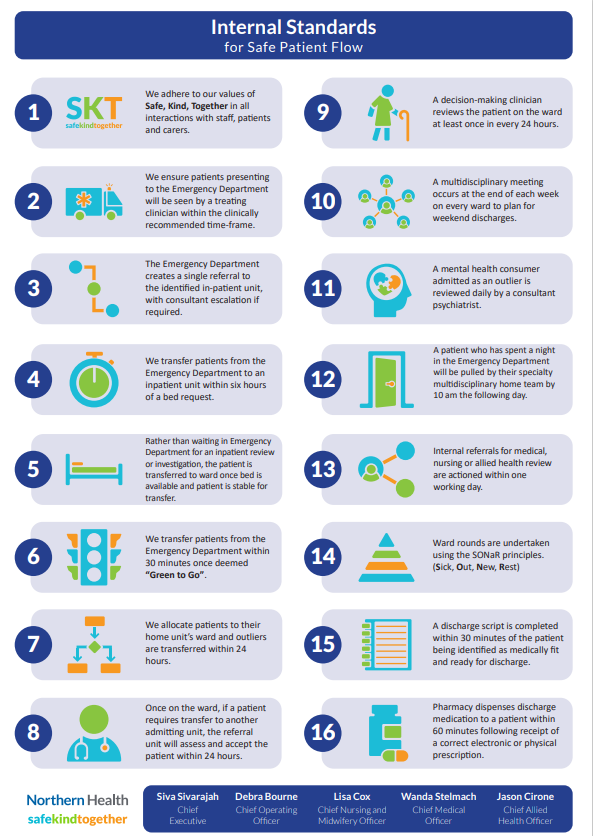
    This week, Northern Health launched the ‘Internal Standards for Safe Patient Flow.’

    These standards establish clear and unambiguous description of values and behaviours and support flow of patients, from arrival in the Emergency Department, to leaving hospital. They centre around the patient journey and process of care and help to confirm expectations and roles of staff across their journey.   

    Debra Bourne, Chief Operating Officer, officially launched these standards on Monday, 27 February 2024.

    “The Internal Standards for Safe Patient Flow set the tone for how we do things at Northern Health and will help guide our staff on how to support our patients, and each other, across the journey of inpatient care,” said Ms Bourne.

    “Through widespread consultation and extensive benchmarking, we have developed 16 standards, which align with our three values of safe, kind and together. They have been created, and agreed to, by our clinical leaders and endorsed by the Northern Health Access Committee.”

    Staff will begin to see and hear about these standards at regular staff meetings, huddles and events across the health service.

    “The power of these standards to influence safe patient flow will come from clinicians translating these into professional behaviours, and by individual staff members demonstrating these in their daily interactions with fellow staff and patients,” said Ms Bourne.

    “These standards help to confirm expectations and roles of staff across the patient journey, and I am looking forward to seeing their impact on our operations and our community.”

    Please see the below document or click here for further information.

    If you have questions about the standards, please discuss these with your direct line manager.

  • Standard 5 – What you need to know

    Standard 5 – What you need to know

    Each week in the lead up to Accreditation, Northern Health will focus on a different Standard. You will hear from the Chairs of each Standard Committee on what you need to know.

    This week we spoke to Lisa Cox, Chief Nursing and Midwifery Officer, about Standard 5: Comprehensive Care.

    What is this standard about?

    Standard 5 is aimed at ensuring patients receive care that is based on their individual care needs and considers the whole person in that care. It also aims to ensure that each patient is assessed at the beginning and during their care for any risks of harm. These risks are then mitigated though interventions developed with the patient and family.

    At Northern Health, this standard covers nine key areas:

    • Assessment and developing a comprehensive care plan
    • Providing comprehensive care at end of life
    • Preventing falls and harm from falls
    • Preventing and managing pressure injuries
    • Nutrition and hydration
    • Preventing delirium and managing cognitive impairment
    • Predicting, preventing and managing self-harm and suicide
    • Predicting preventing and managing aggression and violence
    • Minimising restrictive practices – restraint and seclusion

    What are the top 5 ways staff can be prepared for Accreditation against this Standard?

    All patients on admission need to be assessed using the admission form and risk assessments.  A care plan is then developed based on this initial assessment. It is important that all staff providing clinical care review the plan of care each day to understand each patient’s individual care requirements, identified risk(s) and ensure strategies are in place to minimise patient harm. There are specific harms that are identified in this standard and they are:

    • Pressure injuries
    • Falls
    • Poor nutrition
    • Cognitive impairment
    • Self-harm and suicide risk
    • Unpredictable behaviour

    The plan of care developed for each patient must consider these potential risks and ensure that they are protected from harm. More importantly the care plan needs to be developed with the patient ensuring decisions made about their care is shared.

    What are the top 5 questions staff needs to be able to answer about this Standard?

    • What is your patient’s/consumer’s specific goal for the day, what matters to them?
    • What does your patient/consumer want to achieve by, being in hospital or using the community (Hospital without Walls) service?
    • What is your patient’s/consumer’s risk(s)?
    • What interventions and plans do you have in place to minimise harm from these identified risks?
    • Does the patient/consumer and/or their family/carer/nominated support person understand their risks?

    To learn more about Standard 5, please see the Intranet.

  • Get to know: Dr Eric Daniel

    Get to know: Dr Eric Daniel

    #WeAreNorthern

    Meet Dr Eric Daniel, Colorectal Surgeon, Northern Health

    Q: What is your coffee order?

    A: Long macchiato.

    Q: Tell us about your role at Northern Health?

    A: I’m a Colorectal Surgeon which is a sub-speciality dealing with bowel cancer, inflammatory bowel disease, pelvic floor dysfunction and proctology. I finished medical school in 2006 and my post graduate training in 2017 and started as a consultant in 2018 at Northern Health.

    The Colorectal Unit is a part of the Division of General Surgery, and we work closely with the Gastroenterology Unit, stomal therapy, nursing staff and Allied Health.  It is a busy unit for our junior medical staff, but I think our unit culture makes it a favourable rotation. Well, I hope it does!


    Q: If you weren’t a surgeon, what would you have been instead?

    A: Either a failed writer or a terrible lawyer. In both cases, still living with my parents.


    Q: What is your biggest achievement till date (both professionally and personally)?

    A: Professionally, I feel my biggest achievement was getting through training. It’s a terrible toll your family has to pay. Personally, being lucky enough to have two children.


    Q: What is on your bucket list for 2024?

    A: Ah…. Probably getting away for the weekend for my 10-year wedding anniversary. Actually, this is quite a good reminder to book something!

  • Shaping patient-centred care: The journey of Carol Burnett

    Shaping patient-centred care: The journey of Carol Burnett

    Northern Health is committed to delivering patient-centred care. Partnering with consumers is central to ensuring that our patients and their carers are at the core of all the work we do.

    Standard 2, known as the Partnering with Consumers Standard, is about fostering a collaborative relationship between healthcare providers and those we serve. This means involving consumers in the planning, design, delivery, and evaluation of our services. It’s also about empowering patients to be active participants in their own care, giving them a say in decisions that affect them.

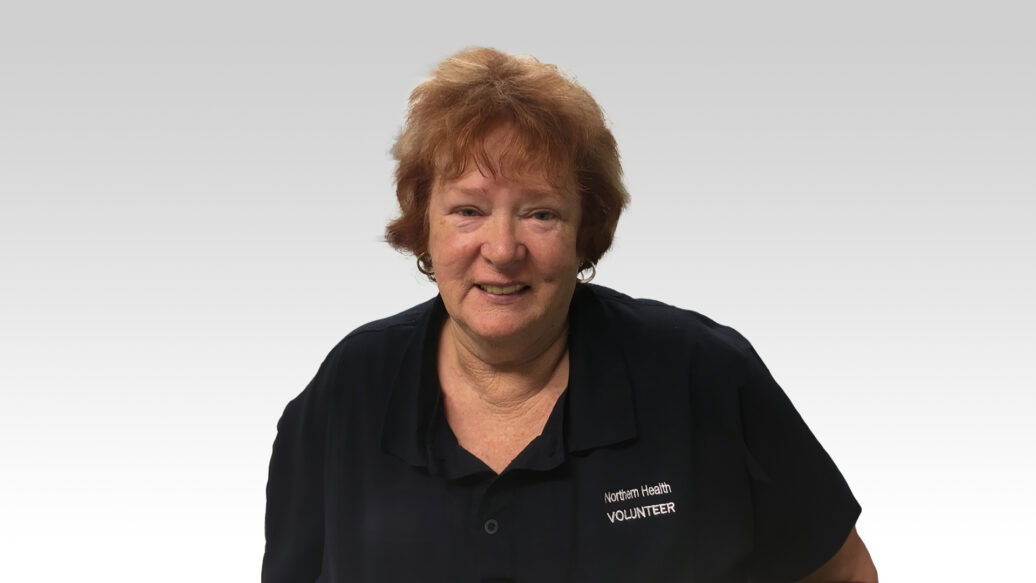
    Today, we’re excited to share the story of Carol Burnett. Carol is not only a retired nurse, teacher, educator and manager, but also a dedicated volunteer at Northern Health since 2019. She’s currently a valuable member of our Consumer Participation team, where she continues to make a difference in shaping our approach to patient-centred care.

    Q: Tell us about your professional background and some of the roles you’ve had throughout your career?

    A: I have had a range of careers, starting as a nurse in 1965. I gave up nursing to raise my two children and during that time studied to become a teacher/librarian. I taught for a while and then moved into adult education, and finally management. One of my roles was CEO of Volunteering Victoria – the peak body for volunteers – and I was a manager at The University of Melbourne for 10 years and La Trobe University for 15 years.

    Q: What is your relationship to Northern Health and how did this begin?

    A: I started as a Volunteer in 2019 and was a guide for a while, before moving to various admin tasks. I then commenced driving patients to their outpatient appointments. COVID struck and the driving program had to cease. When we were allowed to resume, I started driving at the Bundoora Centre and I do this two days a week.  I also participate in the Standard 2 Committee.

    Q: Why do you think it’s important to be involved in Consumer Participation and in what capacity do you contribute to the team?

    A: Volunteering has been a big part of my life for over 40 years, and I have been on numerous committees. As for taking part in Consumer Participation, I felt that I had the skills and the willingness to volunteer my time. I have always believed that it is more important to be part of the solution, than be the person that complains about issues within the health service. Consumer Participation allows people to do exactly that – be part of the solution and give feedback from a different perspective.

    Q: You provide valuable insights to Northern Health because of your lived experience. What does it mean to have ‘lived experience’ and how do the insights you share make a difference to the health service?

    A: There is a definition that lived experience refers to the first-hand involvement or direct experiences and choices of a given person, and the knowledge that they gain from it, as opposed to the knowledge gained from second-hand or mediated source. This fits with what I believe, and decisions made by Northern Health about consumers should always include the consumer’s viewpoint, which can often be different than those making the decisions. The National Safety and Quality Health Service (NSQHS) has set standards which Northern Health has adopted, and I believe that if you have a standard, you need to be proactive in addressing the issues. Being part of the Standard 2 Committee enables me as a consumer to be proactive.

    Q: Tell us something not many people know about you?

    A: When I was sixteen – a very long time ago – I lied about my age so that I could be a dancer at a St Kilda nightclub. My “career” only lasted for three weeks, as my brother saw me and told the manager my real age.

    Q: Is there anything else you would like to add?

    A: What I find interesting is that the past can have an influence on what we do today. My great aunt was a nurse at the Launceston General Hospital in 1908 and was involved in an incident that impacted on the patient’s wellbeing. My book on the subject has just been published, and the hierarchy of the day shows the huge gap between the way hospitals are run today and the respect and rights given to consumers.

  • RAT style test could save the lives of thousands of newborn babies

    RAT style test could save the lives of thousands of newborn babies

    A new test, similar to COVID-19 rapid antigen tests, could detect a common infection in expecting mothers within minutes, potentially saving the lives of 150,000 newborns around the world every year.

    Group B Streptococcus (GBS) bacteria is carried by one in five pregnant women, and GBS infection can cause serious complications, leading to preterm births, stillbirths and neonatal deaths. The good news is the infection, once detected, is easily treatable with standard antibiotics.

    RMIT University is part of a consortium that has just won $3 million in funding in the latest Cooperative Research Centres Projects (CRC-P) round for StrepSure®, a sensor technology that’s anticipated to be able to identify GBS bacteria within minutes.

    Northern Health is delighted to partner with RMIT, EXSEN Biotech and Atomo Diagnostics for this important trial.

    RMIT has already filed a provisional patent application to protect the key intellectual property underpinning the GBS sensor technology. Within the next three years, the RAT-like technology will undergo large-scale clinical trials and be taken to regulators in Australia, the United States and the United Kingdom.

    Associate Professor Prahlad Ho, Chair of Northern Health Research Executive Committee and Divisional Director of Diagnostic Services, said Northern Health was proud and excited to be the clinical partner in the project, which will help improve clinical outcomes for babies.

    “As one of the busiest healthcare providers in the region, Northern Health is committed to providing the best care for its large volume of clinically and ethnically diverse populations through its research collaborations and partnerships,” he said.

    “Northern Health’s clinical partnership, led by Professor Lisa Hui and the Northern Pathology team, will enable the clinical testing of the diagnostic sensor being developed, thereby making it available for wider and equitable use in the community.”

    Pictured left to right: Professor Shekhar Kumta, Professor of Surgery, Northern Health, Mr Thomas Hanly, CEO, NexSen, Mr Mark Muzzin,Chairman, NexSen, Associate Professor Prahalad Ho, Chair of Northern Health Research Executive Committee and Divisional Director of Diagnostic Services) and Professor Vipul Bansal, Founding Director, Sir Ian Potter NanoBioSensing Facility, RMIT University.

  • Shining light on February: Ovarian Cancer Awareness month

    Shining light on February: Ovarian Cancer Awareness month

    February marks Ovarian Cancer Awareness month and is dedicated to raising awareness and providing support for those affected by ovarian cancer.

    Ovarian cancer is a malignant tumour that grows in one or both ovaries and is the ninth most common cancer in Australia. According to Cancer Council Australia, it is estimated that each year, about 1,720 Australians are diagnosed with ovarian cancer.

    While over 80 per cent of people diagnosed are over the age of 50, ovarian cancer can occur at any age and it can be difficult to diagnose in its early stages, as symptoms can often be non-specific or similar to those of other diseases.

    “Unfortunately, at present, it is difficult to detect ovarian cancer early as symptoms tend not to develop until the cancer is more advanced. Symptoms can be vague and include persistent abdominal pain and bloating. If you experience any persistent new concerns, you should see your doctor in a timely manner,” said Dr Frances Barnett, Medical Oncologist, Northern Health.

    Although further research is needed to fully comprehend the origins of ovarian cancer, currently, there are no targeted tests, screening procedures, or preventative measures available to mitigate the risk of ovarian cancer in women.

    “Ovarian cancer is not as common as many other cancers including breast and bowel cancer. Some people with hereditary cancer syndromes such as BRCA (BReast CAncer gene), are at higher risk of ovarian cancer when compared to the average person, and these women are frequently advised to have their ovaries removed after completing their family to reduce their risk,’ said Dr Barnett.

    Even though the only way to really prevent ovarian cancer is to remove your ovaries, this is not necessary for most women. According to Dr Barnett, “More important is general cancer prevention which can be done by eating well, exercising regularly, maintaining a healthy weight, not smoking, moderating alcohol consumption, and having recommended screening tests for certain cancers (cervical cancer, breast cancer, bowel cancer, and lung cancer, for those who smoke).”

    Ovarian cancer is usually diagnosed by a combination of preliminary tests performed by a doctor, including a pelvic exam, radiological tests, blood tests and ultimately, a surgical biopsy.

    For more information on ovarian cancer, visit the Cancer Council website.

    Featured in the image: Dr Frances Barnett, Medical Oncologist.

  • Standard 4 – What you need to know

    Standard 4 – What you need to know

    In the lead up to organisation wide Short Notice Accreditation, each week Northern Health will be focusing on a different Standard. You will hear from the Chairs of each Standard Committee on what you need to know.

    This week we spoke to Vinod Chellaram, Director of Pharmacy, about Standard 4: Medication Safety

    “Everyone has a role to play in medication safety at Northern Health,” Vinod said.

    “The patient is the central focus in medication management and all clinicians are responsible for working collaboratively to ensure the patient receives safe and effective care. The patient/carer is always involved in shared decision making throughout the process of medication management including prescribing and administration of medications and medication counselling,” he added.

    What is this standard about?

    The Medication Safety Standard aims to ensure that clinicians safely prescribe, dispense and administer appropriate medicines. It also aims to ensure that consumers are informed about medicines, and understand their own medicine needs and risks.

    At Northern Health, this standard looks like….

    We work together collaboratively when prescribing, administering and dispensing medications and provide information to patients to ensure the patient is kept safe and medication errors are minimised during their inpatient stay. We also ensure patients are discharged safely and continue to stay well in the community.

    When administering medications, we follow the 7 rights of medication administration (RIGHT patient, RIGHT drug, RIGHT dose, RIGHT route, RIGHT time, RIGHT documentation, RIGHT reason). We have a strong reporting culture, reporting medication incidents and we learn about the trends in medication errors and work together to improve medication safety across the organisation. The patient is the central focus of care and they are a key component of shared decision making and are involved in the decisions around medication treatment throughout their stay.

    What are the top 6 ways staff can be prepared for Accreditation against this Standard?

    1. Ensure the patient is involved in all aspects of medication management and ensure they are provided with information in a way they understand
    2. Perform a Best Possible Medication History and Medication Reconciliation at admission to reduce the risk of medication related errors including comprehensive allergy/adverse drug reaction documentation
    3. Know the Medication Safety Improvement projects in your area, reflect on what you are most proud of
    4. Keep medication rooms tidy, and ensure all medications are stored appropriately (e.g. locked in the medication room, schedule 8 safe, WOW medicine drawers)
    5. Be involved in education sessions on medication safety including in services and presentations and learning packages on the LMS portal (e.g. Medication Safety Training, Safe Medication Administration – Get It Right!)
    6. Familiarise yourself with workflows to support safe prescribing, administration and dispensing practices.

    What are the top 5 questions staff needs to be able to answer about this Standard?

    1. What types of medication related incidents keep you up at night and what has your area done to reduce the risk of these?
    2. How do you involve the patient/carer in decisions about their medications?
    3. How do you store medications safely and in accordance with legislative requirements in your area?
    4. How do you report a medication incident or new allergy/Adverse Drug Reaction? How do you know what types of medication incidents are reported in your area?
    5. What are the high risk medicines at Northern Health and what are some strategies used to reduce the risk of medication errors with these medicine classes?

    Is there anything else you would like staff to know about this Standard?

    Medication Safety is something you practice every day, we should all be proud of the work we do to improve medication safety and remember to highlight this and be proud when speaking to the assessors.

    To learn more about Standard 4, please click here.