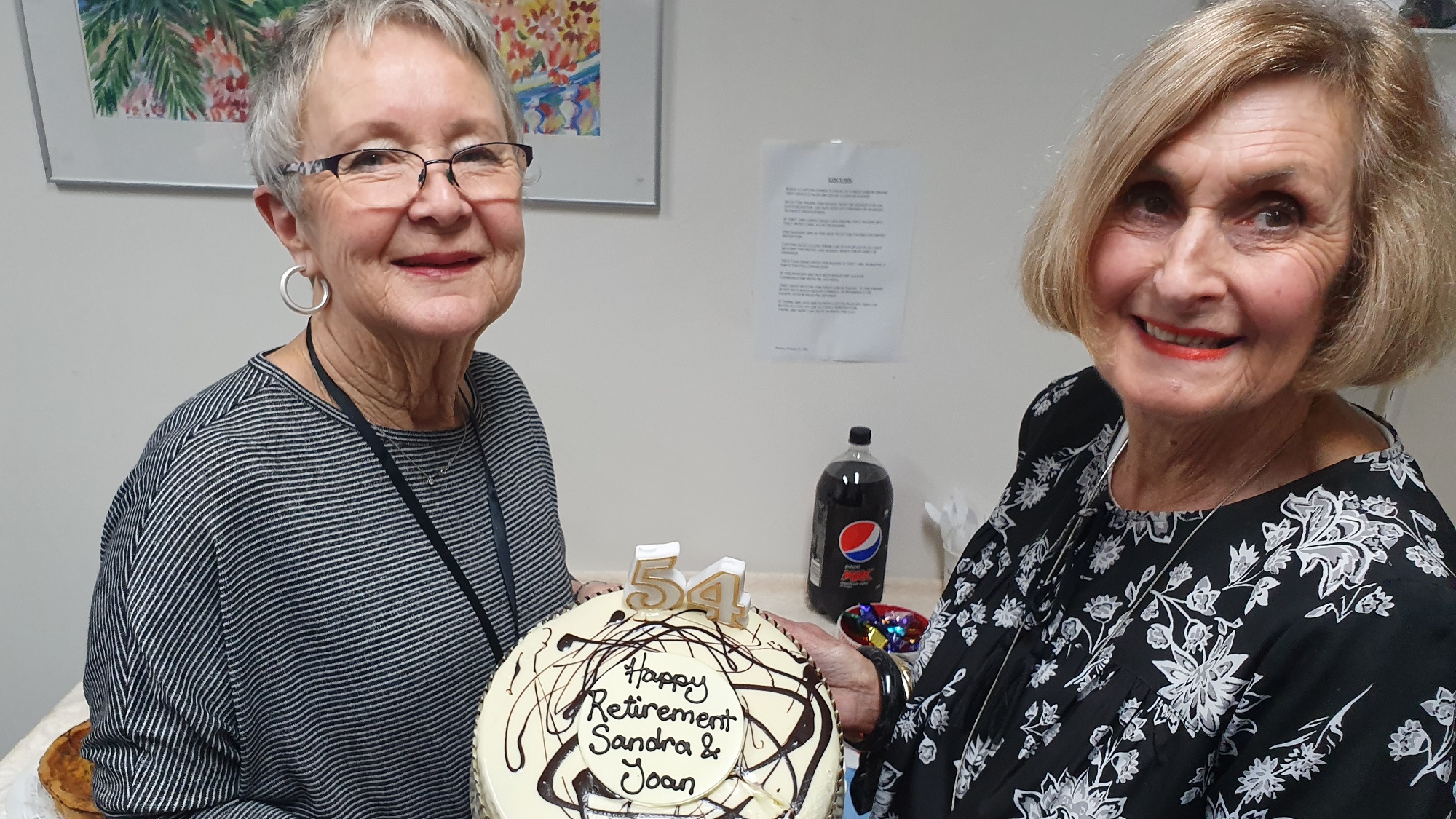
Sandra Gillatt started at PANCH on 5 November 1986, and was part of the team that moved over to Northern Hospital Epping in 1998. That same year, Joan Sinclair started at Northern Hospital.
After collectively and faithfully serving Northern Health for 54 years, they retired this month and were given a touching farewell today by their colleagues and workmates. They were joined by senior executives, Michell Fenwick, Basil Ireland, Greg Warman and Chief Operating Officer, Jane Poxon.
Reminiscing over her time here, Sandra says:
“In 1998 when we moved from PANCH to here, the train station was a long way from the hospital – public transport was nothing like it is today. The same patients we knew at PANCH would walk to the hospital – elderly people would walk 10, 15 minutes from the train station to get to their new hospital.”
“I’ve seen patients who came to PANCH to have their babies, now in their old age at Northern, coming in for the birth of their grandchildren. We’ve seen happy and sad times.”
Joan adds, “So much has changed. Even with the hospital – it is unbelievable. So many changes, so many memories.”
“There was this gentleman who would ring us at all hours of the night and day. He wanted someone to talk to. He was in a nursing home with his wife who was sick and couldn’t communicate with him. He felt completely isolated.”
“He would call and say, Hello, I don’t want to bother you, I just want to speak to someone.”
“All the staff knew him and would talk to him. We rang him back often. Somebody took chocolates for him to his nursing home,” she adds.
Sue Lisle, Communications Supervisor (who joined the same year as Sandra did), says:
“Both Joan and Sandra have been fantastic team members and have so much knowledge of Northern Health. They both have great customer service skills, are reliable and knowledgeable.”
“They have been an asset to Northern Health and they will be missed by staff and visitors alike.”
Jane Poxon conveyed the best wishes from the Chief Executive and the executive team and said, “Joan and Sandra have served Northern Hospital in a very vital and challenging role – the front office of our hospital. They have been the face and voice of Northern Health. We will dearly miss them in this role and wish them the very best in their retirement.”
Left to right: Sue Lisle, Sandra Gillatt, Joan Sinclair, Jane Poxon, Michelle Fenwick & Basil Ireland
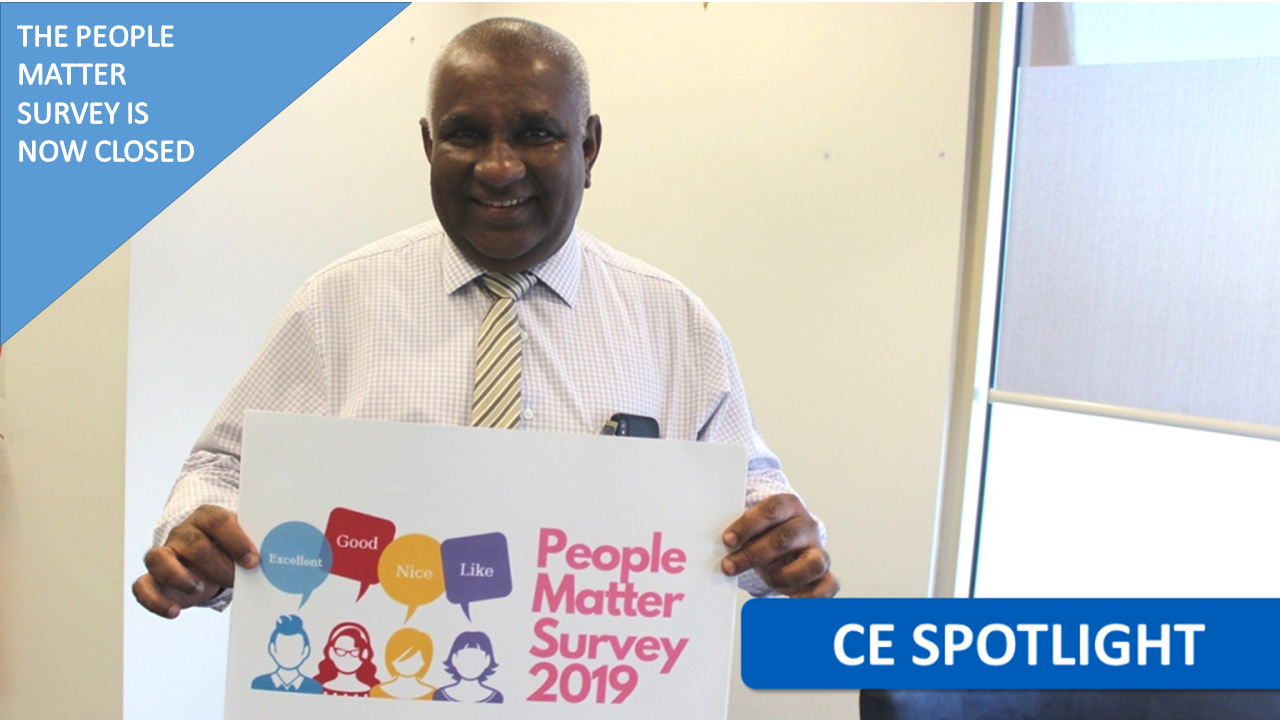
There’s a lot happening at Northern Health during May, as we are prepare for winter, launching the annual People Matter Survey, and planning for the new financial year.
People Matter Survey
The survey is your once-a-year opportunity to tell us about your experience working at Northern Health. It’s an opportunity to tell us what makes you excited to come to work every day, what can be improved in your working environment and how we, as an organisation, can support you.
And we promise not just to listen to what you say, but also act upon it to make real changes. Your answers will show us the opportunities for growth, improvement and ways to make Northern Health a safe and welcoming place to work for everyone.
The flu has come early this year and this flu season is developing as a serious one. There’s been an unprecedented rise in flu cases across the country, with Victoria seeing 26 deaths and 10,683 diagnosed cases of influenza, compared with 2,197 at the same time last year.
After launching the flu campaign in the beginning of the month, we have been dedicated to vaccinating both our staff and our community. Our diligent staff have been working extended hours to provide vaccinations from 8 am to 8 pm every day in the Northern Hospital foyer. Thank you for all the hard work you do.
In addition, we’ve arranged for appointments at Craigieburn Centre during May and June, to accommodate the needs of our community.
So far, we have vaccinated around 57.5% of staff, and we need 1,215 more to reach our target of 85%! I would strongly recommend all of our staff get their vaccinations, to keep themselves, their families and their Northern family protected.
Our community has responded to our message to vaccinate on time and stay well. Up to this date, we have vaccinated between 6,000-7,000 community members and our flu clinic will continue to support our community in staying well and protected.
This week, I have two important messages for all: Don’t forget your flu shot and don’t forget to complete the People Matter Survey.
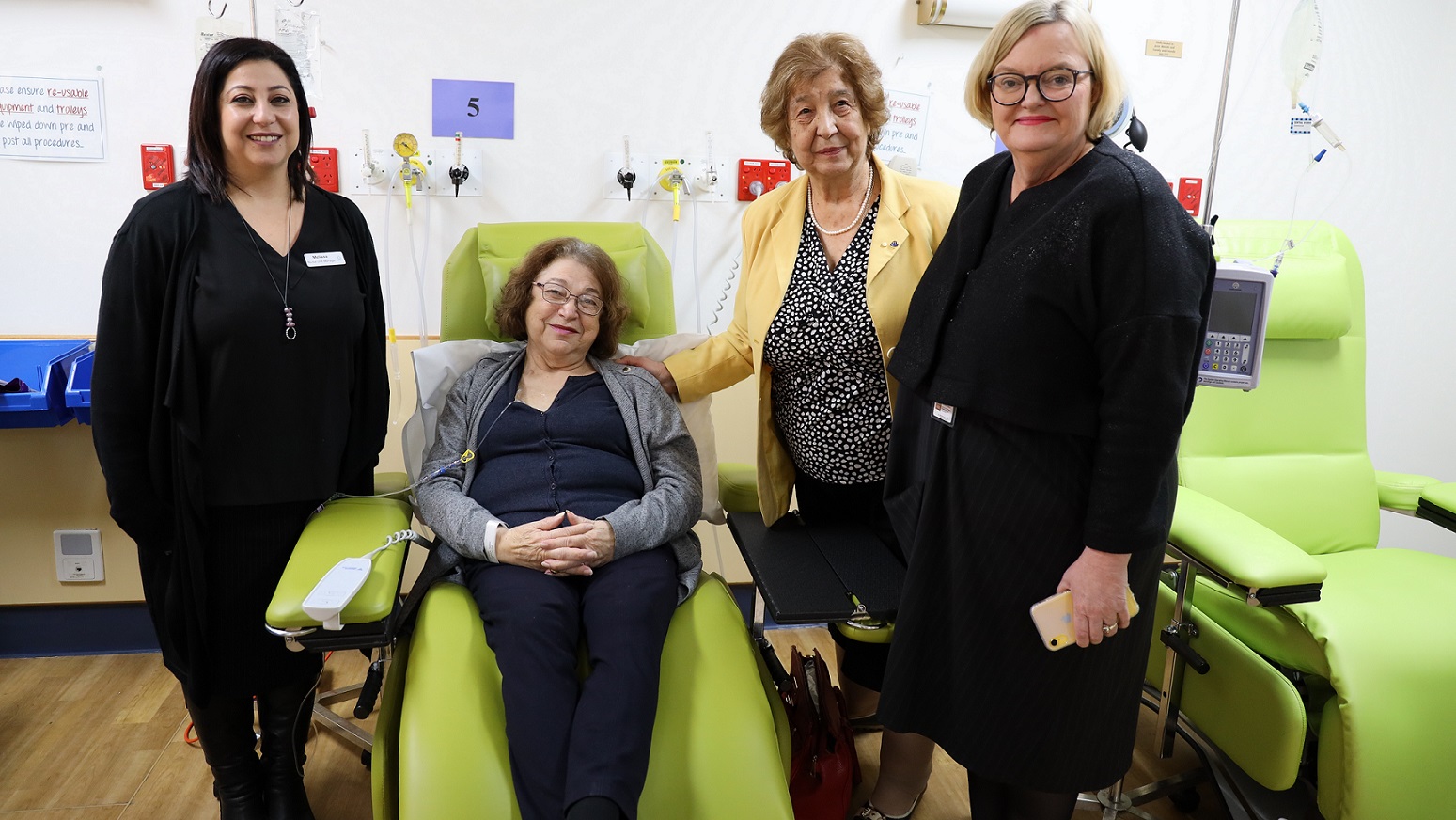
Longtime Northern Health Foundation supporter, Josie Minniti OAM, has been fundraising for hospital equipment for 23 years.
Last week, Josie and her charity group, the Josie Minniti Fun Group, were thanked for their generous contributions with a morning tea in the Day Oncology Unit.
Day Oncology Nurse Unit Manager, Melissa Gwynne, said, “we wanted to acknowledge our longstanding and dedicated supporters.”
She said over the years, Josie and her friends have contributed treatment chairs, waiting room chairs, a prostate cancer scanner, refurbished an entire room in the Children’s Ward, and much more.
This time, Josie and her Fun Group were thanked for their contribution of two new treatment chairs and a blanket warmer.
“Raising money for cancer is always very important – I started because we had a lot of cancer in our family. It is a worthy cause and you can make a difference,” Josie said.
“All the equipment that is donated is used by patients, of which may also be family and friends, so I think it’s important that everyone gets on board. The equipment provides comfort to cancer patients while they’re undergoing their treatment, and you see the look on their face and the tranquillity now the equipment has come.”
Melissa expressed her sincere gratitude to Josie and her Fun Group for their continued commitment to Northern Health.
“Your tireless fundraising efforts ensure our oncology patients receive a high standard of care and feel comfortable and less anxious during their stay,” she said.
“From the bottom of my heart, thank you.”
This year, the Josie Minniti Fun Group will host its 15th Dinner Dance on Saturday, 29 June at Ferraro Reception Centre in Campbellfield, once again raising money for our cancer services.
Josie says, “if you can donate a little bit of time or organise any sort of fundraising, you are helping to make a real difference.”
“I’m passionate about fundraising for equipment, but you can get involved with whatever you want to do.”
Josie encourages the northern community to band together and ‘dance in defiance of cancer’ by purchasing tickets.
For more information, contact Josie & Rino Minniti on 9401 4199.
Featured image (left to right): Melissa Gwynne (Oncology Nurse Unit Manager), Agatina (Patient), Josie Minniti, Yvonne Amos (Northern Health Foundation Director)
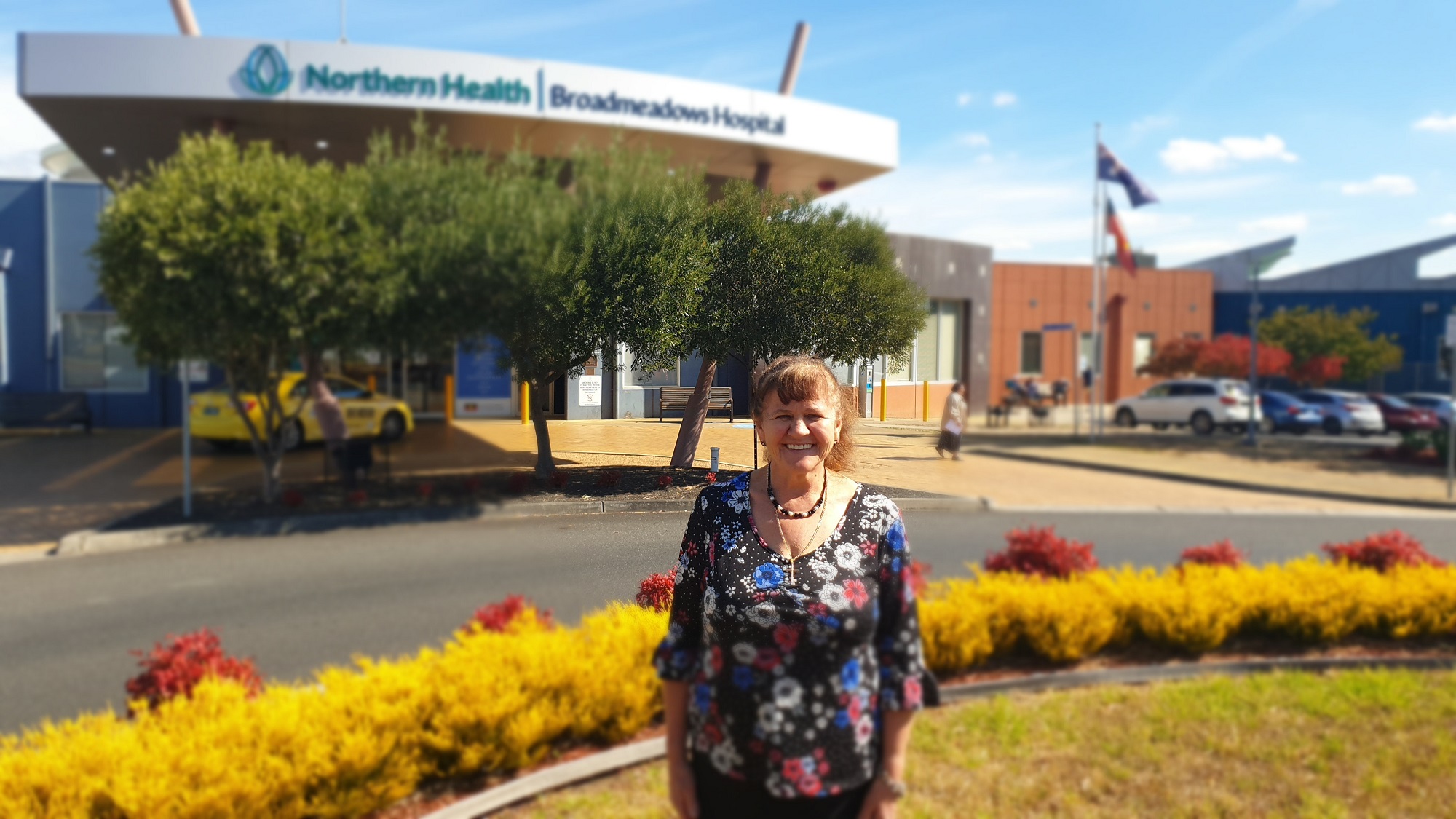
Liuba still remembers the day she started working at Greenvale Geriatric Centre – March 21, 1973. Once Greenvale closed, she got relocated to Broadmeadows Hospital and has been there ever since.
Liuba has always enjoyed her role as a Personal Services Assistant, and never misses an opportunity to help patients feel better, whether it be through a kind word, a warm smile or lending a helping hand.
Looking after patients and families in palliative care was the favourite part of her career.
“I used to see families in distress, anticipating to part from their dearest. I’ve always looked for ways to help them and make those emotional moments a bit less painful, and to find ways to give comfort,” she said.
During the years, palliative care moved from Broadmeadows Hospital to Bundoora Centre, and Liuba found herself sad to see them leave after 20 years. Some of those families used to recognise her on the street and thank her for taking care of them. She then realised how much those small, everyday things and simple acts of kindness mean to patients.
“I always think – how would I feel if someone I love is in hospital now, and what would I need to feel better in that situation. That is how I treated the patients and their families,” she said.
Even though she doesn’t see palliative care patients any longer, she looks after current Broadmeadows Hospital patients with the same empathy.
“I get into wards early and wish everyone a good morning. I give patients a glass of fresh water and tell them breakfast is coming soon. If it’s dark, I let the light in and air the room,” she said.
“I never come into the room without greeting patients.”
Her efforts don’t go unrecognised. Patients enjoy chats with Liuba and her warm, bubbly personality, sharing their life stories and dreams.
Even thought it might seem difficult to stay motivated and do the same job for 46 years, Liuba says she loves what she does and feels thankful to be healthy and able to perform in her role.
“I love working with people, both staff and patients. We are like a big family here and always have a chat. After losing my husband two years ago, my work family supported me. My manager Snezana Velevski, as well as my team were there for me in those difficult days. It’s like a second home to me,” she said.
Liuba has had her share of challenging days at work, but feels they never last long.
“It’s just like life – if today is a difficult day full of challenges or obstacles, you need to believe that tomorrow will be better. And it usually is. Bad days will go away,” she said.
Language was one of Liuba’s biggest challenges, as she didn’t speak much English when she started, and was 21 years old when she arrived in Australia. She used to carry notes in her pockets to help her learn new words and express herself better.
“I’m a bit shy to talk and not knowing the language made it even more challenging. Over the years, my English got better and I was able to better connect with my colleagues and patients,” she added.
Liuba’s Manager, Snezana Velevski, says she has been working with Liuba for the past three years and she’s seen her dedication, passion and hard work.
“From the moment I walked in on my first day, Liuba was there for me. She is a true team player and has never had a negative thing to say about her colleagues. No matter how tired she might be, she always takes on more tasks. She is just amazing inside and out,” Snezana said.
Liuba is now 70 and goes to church every Sunday. She also likes to visit her friends who are in nursing homes, and spend time with her two children and six grandchildren, but doesn’t plan to retire soon.
“My friends who don’t work always seem to be sick. I think it’s good for me to work. I don’t have time to think about negative things and I have something to keep my mind occupied,” she added.
All these years, Liuba never thought to change jobs and do something else.
“Before working here, I used to work in a clothing company and sat behind the sewing machine all day. When I came to the hospital to work, I felt free as a bird. I could move around and talk to people and that is something I love.”
She feels most proud when she can help others and contribute to her environment, either at work or at home.
“We don’t live this life only to look after ourselves, we live it to look after others too,” Liuba said.
Liuba’s career and the impact she has had on patient’s lives proves that over the last 46 years, she has been doing exactly that.
Liuba receiving her Long Service Award last year from our Chief Executive, Siva SivarajahLiuba with her Broadmeadows PSA teamLiuba with her Manager, Snezana Velevski
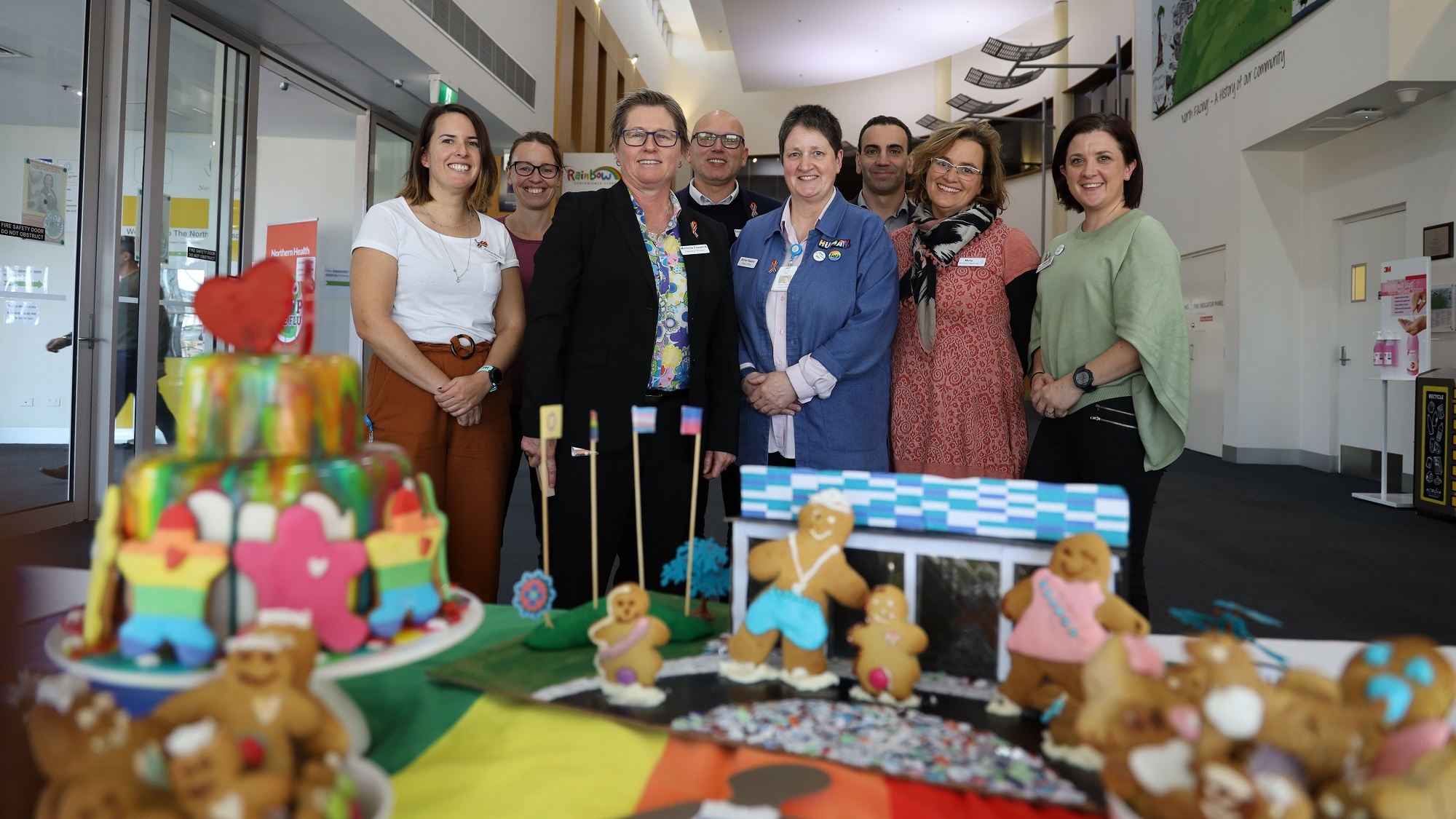
On Friday, Northern Health celebrated IDAHOBIT – International Day Against Homophobia, Biphobia, Interphobia & Transphobia – a day where we stand with the LGBTIQ community.
Homophobia, Biphobia, Interphobia, and Transphobia can occur online, face to face and affect everyone by creating spaces where people feel unsafe and like they can’t be themselves. Sexuality and gender identity or intersex status aren’t always visible, so creating a culture where everyone feels safe is so important.
At Northern Health, we encourage our staff to celebrate diversity and are committed to creating a safe space for staff, patients and members of the community.
As part of the IDAHOBIT celebrations this year, we hosted the Inaugural Genderbread Bake-Off. The joint winners were Karen Overall, Primary Care Liaison, and Sophie Rodier, Patient Experience & Consumer Participation Manager. Karen participated in this event as she feels, “it is important to support our diverse community to ensure equality for all regardless of gender, religious and cultural differences”.
Some of our ‘Gender Bake-Off’ entries
We also held two information sessions, delivered by a prominent GP/LGBTI Health Expert, Dr Ruth McNair.
Dr McNair specialises in lesbian and bisexual women’s health, transgender health, mental health and wellbeing, and is an Honorary Associate Professor at the University of Melbourne, teaching LGBTI community research. Dr McNair talked to staff about being inclusive and strategies for improved health care in this space. She said, overall, creating a safe space for the LGBTIQ community will improve patient experience and help to further support staff.
Anne Hastie, Project Officer People and Culture, said the lecture gave us practical hints to make people feel safe and included, and encouraged us to ask patients how best to engage with them around issues of gender, identity and sexuality:
“LGBTIQ is such a complicated acronym! The diversity of people, life situations and health impacts associated with it are complicated too. It can all feel a bit overwhelming. Dr Ruth McNair’s presentation at Northern Hospital helped us understand the terminology and engage more sensitively with LGBTIQ patients and their families. Her reassuring approach gave us greater confidence for working with the LGBTIQ community,” she said.
On this day, 29 years ago, the World Health Assembly of the World Health Organization approved the International Statistical Classification of Diseases and Related Health Problems (ICD 10), which no longer listed homosexuality as a diagnosis.
IDAHOBIT launched in 2004 to celebrate LGBTIQ people globally, and have continued to use the day ever since to champion inclusion and build a better world for the LGBTIQ community.
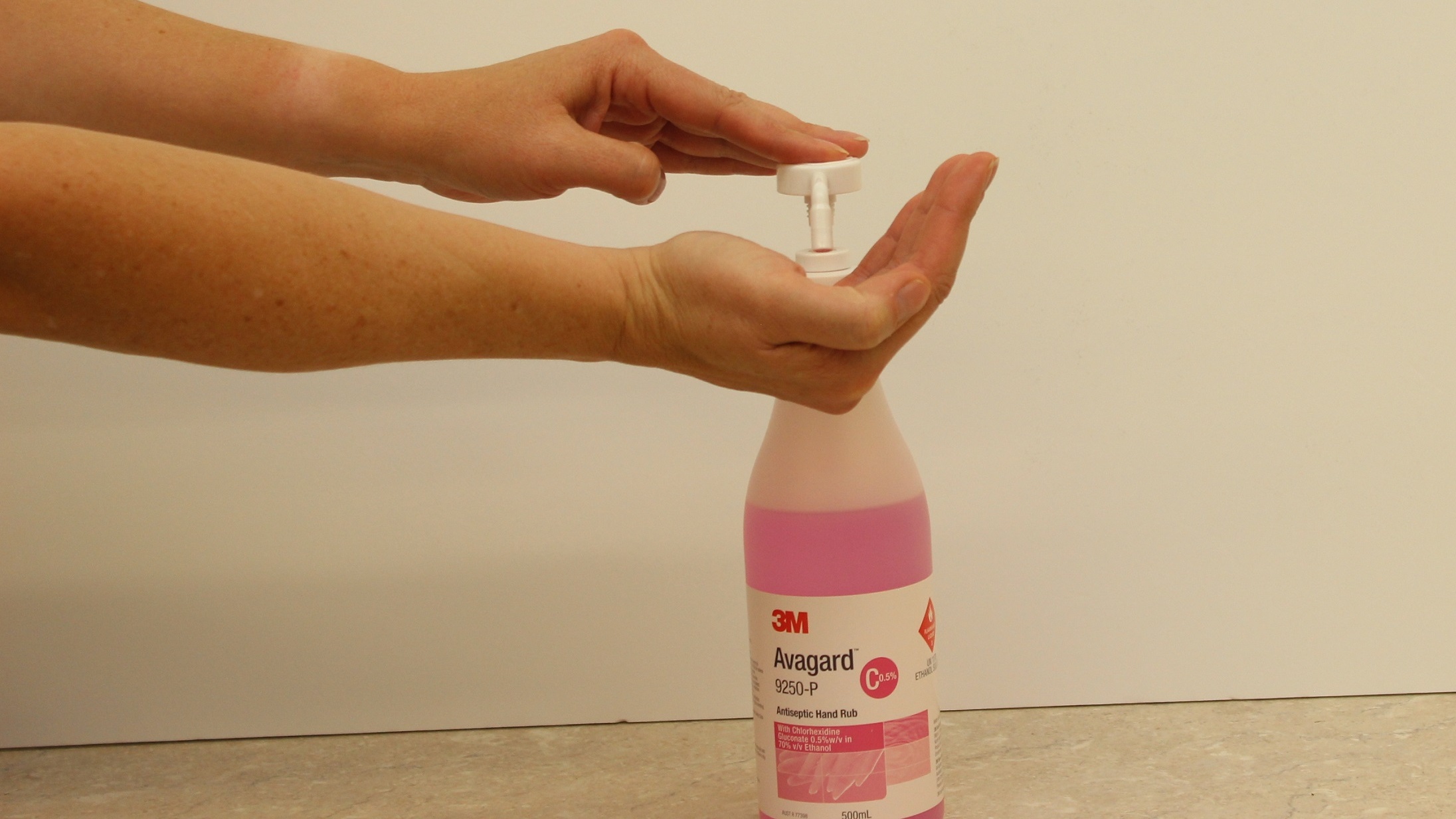
Hand hygiene is a general term that refers to any action that results in hand cleansing. The World Health Organisation (WHO) states that hand hygiene is the single most effective strategy to prevent hospital acquired infections.
Hands may appear clean, but many germs are invisible to the eye. Some microorganisms can live in the environment for extended periods of time, making hand hygiene vital in stopping infection. Vancomycin-resistant Enterococci (VRE) is an example of a microorganism that can be transferred from one patient to another on healthcare workers hands or via inanimate objects such as observation machines, shower chairs, etc.
Tania Rowe, Infection Prevention & Surveillance – Clinical Nurse Consultant, says, “many staff don’t realise the most important thing they can do for their patients to prevent transmission of disease is to perform effective hand hygiene.”
Hand hygiene is audited throughout the organisation, and the 2019 Audit Period 1 saw Northern Health above the national average when it came to hand hygiene compliance.
“Northern Health overall achieved hand hygiene compliance of 86.9 percent, which was above the national result of 85.3 percent. Several areas showed significant improvements in their compliance,” says Nicole Campbell, Infection Prevention & Surveillance – Clinical Nurse Consultant.
Nicole also says that gloves are not a replacement for effective hand hygiene and can be a problem when it comes to patient care, especially when it comes to accessing IV cannula.
“We ask staff to think about why they’re wearing gloves, are they necessary and has hand hygiene been performed prior to applying gloves and following removal?”
Hand hygiene must always be performed according to the ‘5 Moments’ – Moment 1: Before touching a patient; Moment 2: Before a procedure; Moment 3: After a procedure or potential blood or body fluid exposure; Moment 4: After touching a patient and Moment 5: After touching a patient’s surrounds.
“Alcohol Based Hand Rub (ABHR) is the gold standard of care for hand hygiene practices and results in a greater reduction of bacteria than soap and water. It dries quickly and causes less skin irritation than soap and water, although soap and water should still be used when hands are visibly soiled,” Nicole says.
“It’s also important to remember to moisturise throughout your day to help maintain good skin integrity!”
The message Nicole would like everyone to remember is, ‘clean care for all, it’s in your hands!’
For more information about hand hygiene and Northern Health policies, please click here.
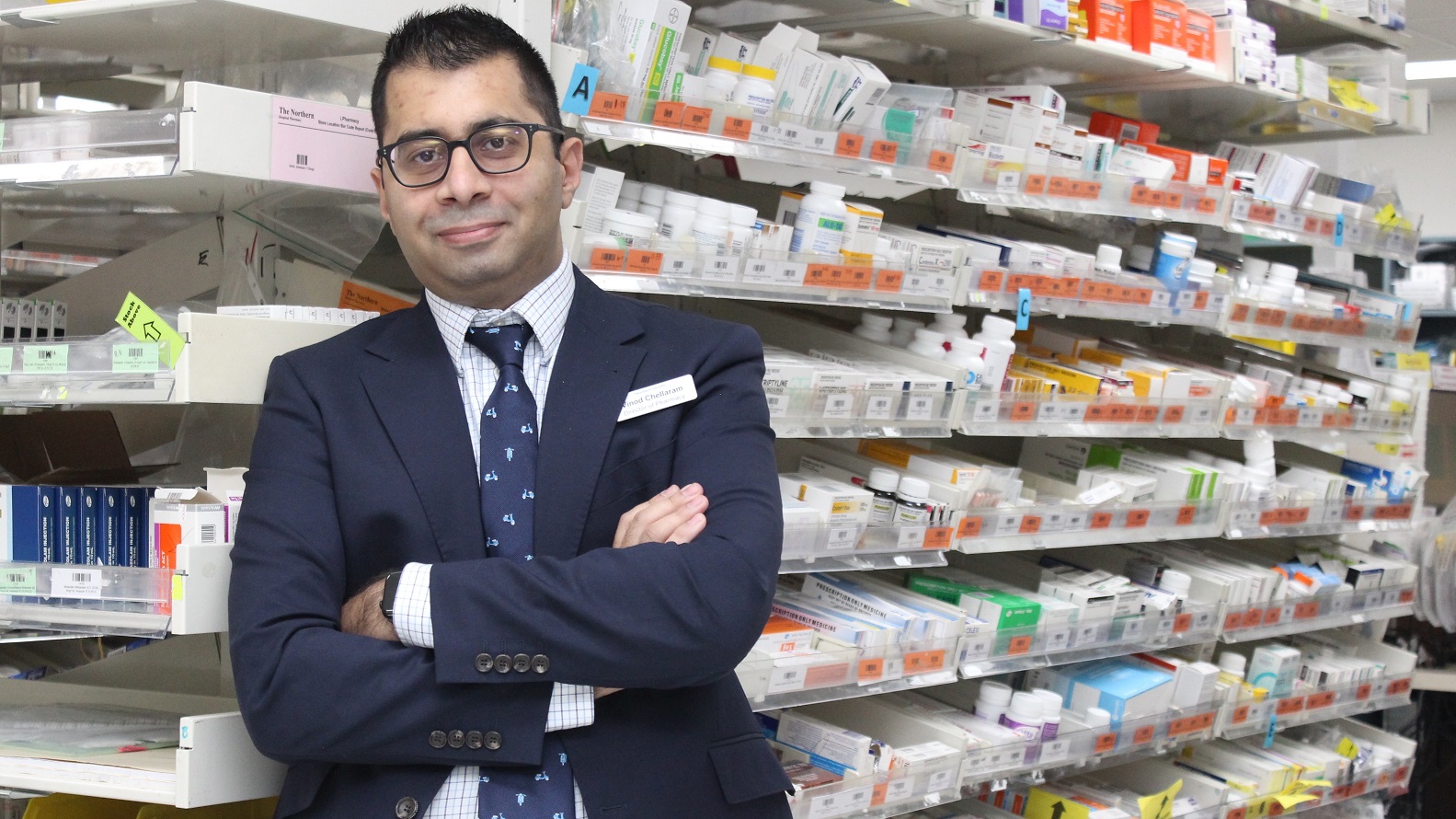
Vinod Chellaram still has his cheque from his first time working at Northern Health. It was summer holidays in 2004, in between his studies for his second pharmacy degree.
The cheque was for the princely sum of $293.80, but the experience he gained at the Northern was priceless.
“I kept getting challenged more and growing more as the organisation was growing,” Vinod says.
Two years before that, Vinod had migrated from Egypt, only to discover his degree wasn’t recognised here and he had to start again.
When an internship came up at Northern Hospital shortly thereafter, he jumped at the opportunity, and was able to work and gain experience in different roles. Vinod quickly moved up and continued working his way through the organisation.
“At one point, I was responsible for the education of the pharmacy department, so for seven years I was educating all the new interns coming into the pharmacy,” he says.
“After that I became the Senior Oncology and Haematology Pharmacist, responsible for all chemotherapy across the four sites.”
Another four years went by and Vinod moved up to Deputy Director of Pharmacy and in July 2018, became Acting Director.
15 years after Vinod first stepped through Northern Health’s doors, he was appointed Director of Pharmacy.
Vinod says the culture and environment are what has kept him here for all these years.
“All of us are in a challenging situation and trying to make the best of it. For a lot of us, this is not just a job, this is the hospital where we come to when we’re sick – or when our family and friends are sick, so it doesn’t just impact on our work, but beyond,” he says.
Looking to the future, Vinod sees pharmacy as a key area for growth.
“At the moment, we’re probably more of a supply and clinical function, but I think pharmacists and their training would make for good project managers,” he says.
“We need to focus on keeping more patients at home, rather than coming into hospital.”
So how does keeping patients staying well at home impact on pharmacy?
Vinod explains a lot of the medication provided to our patients are not available to them at their community pharmacies. They can only be obtained from the hospital because of the special nature of prescribing them.
He would like to see programs for our patients to get their medication from their community pharmacy or advice from their GP.
“The pharmacy in the hospital could start running education programs for the community pharmacy about how to manage those patients better. We can look at how we address those patients at home rather than coming to hospital every time,” he adds.
“Community pharmacies could play a big role in the education but also the awareness of the side effects and how to manage it at home, which minimises patients being readmitted.”
Vinod says in his time at Northern Health, he’s seen dramatic growth and development.
“When I started, there were only about five wards – A, B, C, D and E!”
“We’ve also had an increase in people from surrounding suburbs wanting to work here – we’ve become more popular and word has gotten out about the care we’re giving, as well as the support we’re providing,” he says.
“I think the culture is similar to before – it’s just become more diverse – but it’s a family type culture.”
As a Bundoora local, Vinod sees firsthand how the work of Northern Health impacts the northern suburbs community.
“Our work is not just for eight hours, and it affects the quality of care directly. We’re not just doing this for the sake of it and then going home, we’re actually making an impact.”
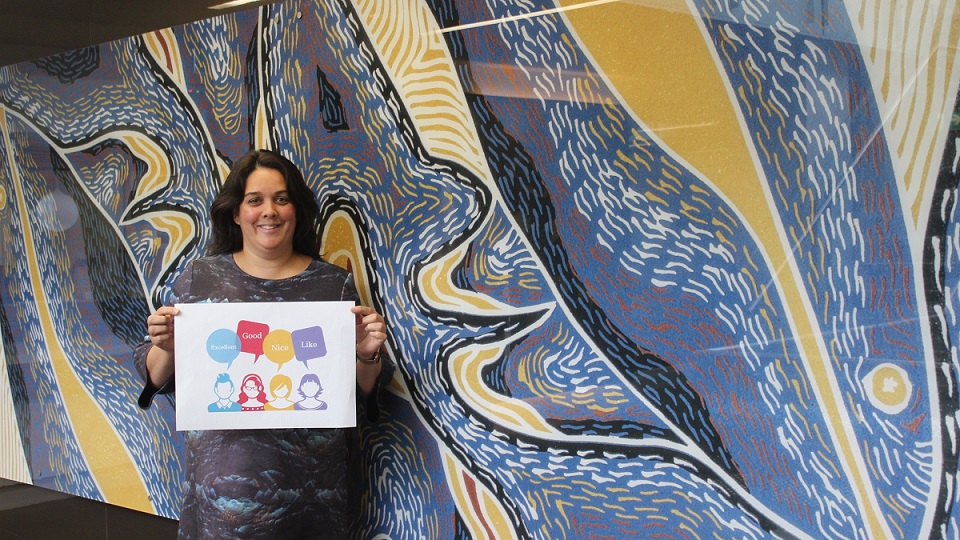
The 2019 People Matter Survey will run until Friday, 31 May. This survey is your opportunity to provide Northern Health with feedback on what is working well and what we need to be doing differently. Your feedback is important because it helps drive a number of key initiatives.
Dr Rachael Coutts, Associate Director of Medical Education and Emergency Physician, is a firm believer in the importance of hearing from staff.
Rachael played a pivotal role in the ‘Conversations on Mental Wellness’ initiative coinciding with R U OK Day in September; a week of speaking events, education sessions and wellbeing initiatives for the whole Northern Health workforce.
“By opening up these conversations, we provided the opportunity for each of us to examine our own workplace environment, our unit, or department and question the culture and practice and begin to advocate for and create change,” says Rachael.
For her work in developing a strategic wellbeing framework and an initiative to facilitate conversations on mental wellness, she won the Inaugural Australasian College of Emergency Medicine (ACEM) Wellbeing Award.
Over recent years, some of the key initiatives driven from staff feedback includes increasing communication through iNews and Chief Executive Updates, reviving our Annual Staff Awards and introducing a new Quarterly Staff Reward and Recognition Program. Other initiatives include staff safety programs such as Mental Health Week, Fatigue Management and Pilates, Mindfulness and Financial Wellbeing Programs.
“The feedback we get from staff is what helps us grow as an organisation – and also identify what needs to change,” says Rachael.
“We are truly committed to making Northern Health a great place to work. I would urge our staff to use this opportunity to make a difference through The People Matter Survey.”
Click here to complete the survey. You can complete the survey anywhere, any time of the day and on any device that has Internet access. The survey takes approximately 15 minutes to complete.