• Dr Juliette Gentle visits Brunei and Malaysia

    Dr Juliette Gentle visits Brunei and Malaysia

    In November, Dr Juliette Gentle, Orthopaedic Surgeon at Northern Hospital, completed two exceptional weeks travelling to Brunei, Malaysia, Myanmar and Jakarta for the ASEAN (Association of Southeast Asian Nations) Orthopaedic Travelling Fellowship. This event is held every two years between the ASEAN Orthopaedic Association and Australian Orthopaedic Associations.

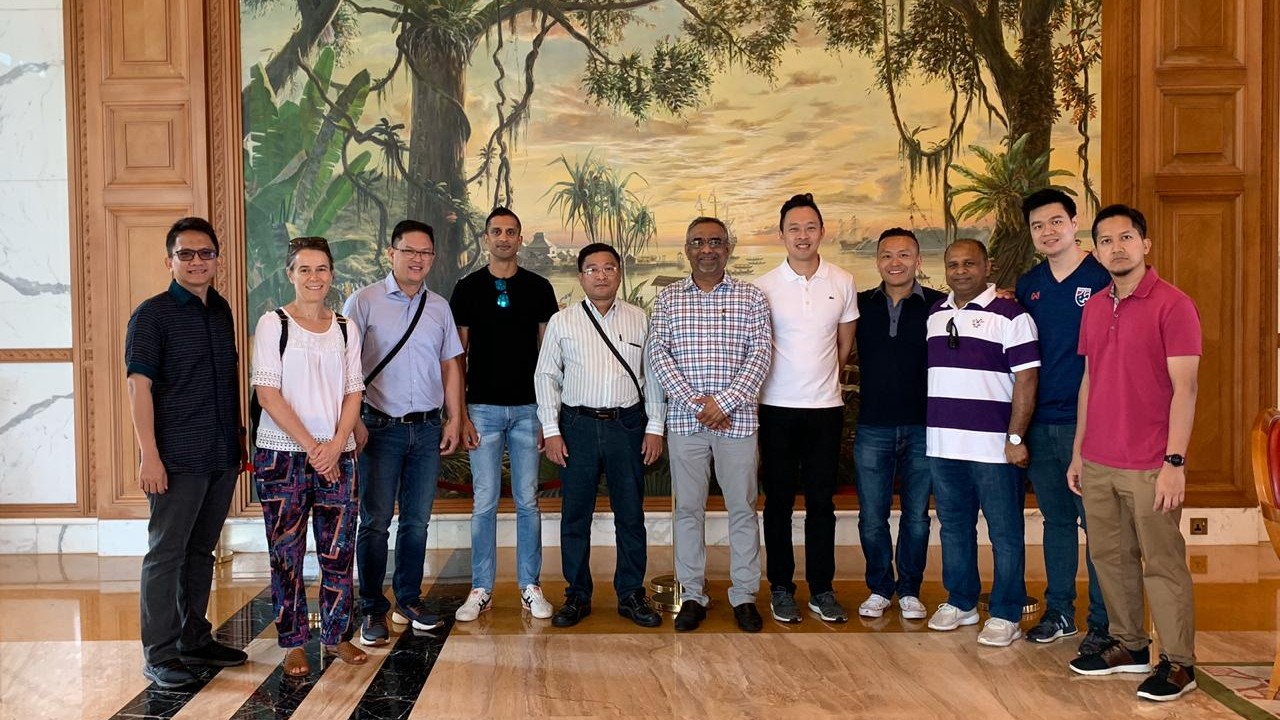
    Juliette and two other travelling fellows from Melbourne and Auckland visited hospitals, met local surgeons, did some sight-seeing and ate some exceptional food.

    “Each of us was required to give a talk in each location. My presentation topic was, ‘Diversity in Orthopaedics,’ and the talk evolved along the way, as I met and talked to many people,” Juliette said.

    In Brunei, she met both of the female orthopaedic surgeons – there are 15 orthopaedic surgeons in total in the country, for a population of 430,000.

    “It was worth the visit to Brunei alone to find the positive effect that talking about the difficulties and solutions for women in orthopaedics can have. Inspiringly, there is a high proportion of female junior surgical trainees from the public hospital, RIPAS, due to a positive and supportive culture in the department. I hope that those junior doctors can navigate a career in surgery and find mentors and role models to inspire them,” she said.

    In Malaysia, she had the pleasure of meeting and dining with Dr Roohi Ahmad, President-Elect of MOA (Malaysian Orthopaedic Association), who was the first female hand and microsurgeon in Malaysia, and Dr Azlina Abbas, Head of Orthopaedics at University of Malaya Medical Centre. Juliette and her colleagues toured two of the University Hospitals and were amazed by the extensive research facilities. She then moved on to Myanmar.

    “In Myanmar, the biggest take-home message was how fortunate we are to have the medical system we have. Patients routinely wait 1-2 weeks for long bone or neck of femur fractures, through a combination of theatre availability, and having to source funds to buy their own implants. The challenges are great, but the orthopaedic surgeons are making great inroads into achieving improvements in patient care, and doing some exceptional surgery,” she said.

    The Travelling Fellowship ended at the combined Indonesian Orthopaedic Association / ASEAN Orthopaedic Association meeting, and we presented our experiences to the AOA (Australian Orthopaedic Association) Board.

    “The Fellowship involved equal portions of Hospital and Educational visits, and social and sight-seeing activities. The generosity and collegiality and knowledge sharing of our hosts was exceptional. We met so many interesting people and had discussions on a broad range of issues,” Juliette said.

    Next October, the Australian Orthopaedic Association will be hosting Fellows from Brunei, Myanmar and Malaysia.

    “I look forward to welcoming them to Melbourne and returning some of the warm hospitality I myself received. The experience of being a travelling fellow was one I will not forget,” she added.


    Juliette in theatre in Myanmar
  • Last week to get your Foundation Raffle tickets!

    Last week to get your Foundation Raffle tickets!

    This week is the final week to purchase your tickets for the Northern Health Foundation Raffle! Tickets are selling fast, click here to get yours today!

    Four prizes are up for grabs this year – the major prize being a brand new Hyundai Kona valued at almost $30,000. The stylish Kona has been on display in the Northern Hospital foyer, with visitors and staff stopping to check it out!

    Other raffle prizes include:

    • 2nd prize – Trip for two to Cairns including five nights accommodation, breakfast and airfares (RRP $3,000.00)
    • 3rd prize – Samsung 50″ Smart LED Television (RRP: $1,095.00)
    • 4th prize – Mantra Epping Voucher including one night accommodation, two course dinner and full buffet breakfast for two people (RRP: $500.00)

    Last year’s raffle winner, Northern Health staff member Anne Gravette, bought her ticket with the intention of supporting her health service, not even considering she may be the lucky winner.

    “I didn’t buy a ticket thinking I would win, as I never win anything! I bought the ticket because I wanted to support the work of the Foundation in improving services for my community,” she said.

    Each year, the Foundation Raffle funds a very important cause that supports patient care at Northern Health. This year, proceeds will go towards the purchase of an emergency accommodation property for patient families who travel long distances to be with their loved ones receiving care at Northern Hospital Epping.

    The accommodation will lessen the burden on families who travel from rural or regional Victoria and provide relief during what can be a stressful time.

    Tickets can be purchased up until midnight on Friday 13 December, with the raffle being drawn Monday 16 December at 2 pm in the foyer of Northern Hospital. Be sure to head down there and you might see your name drawn!

  • Toni Gabelish: Aboriginal Liaison Officer and Rising Star

    Toni Gabelish: Aboriginal Liaison Officer and Rising Star

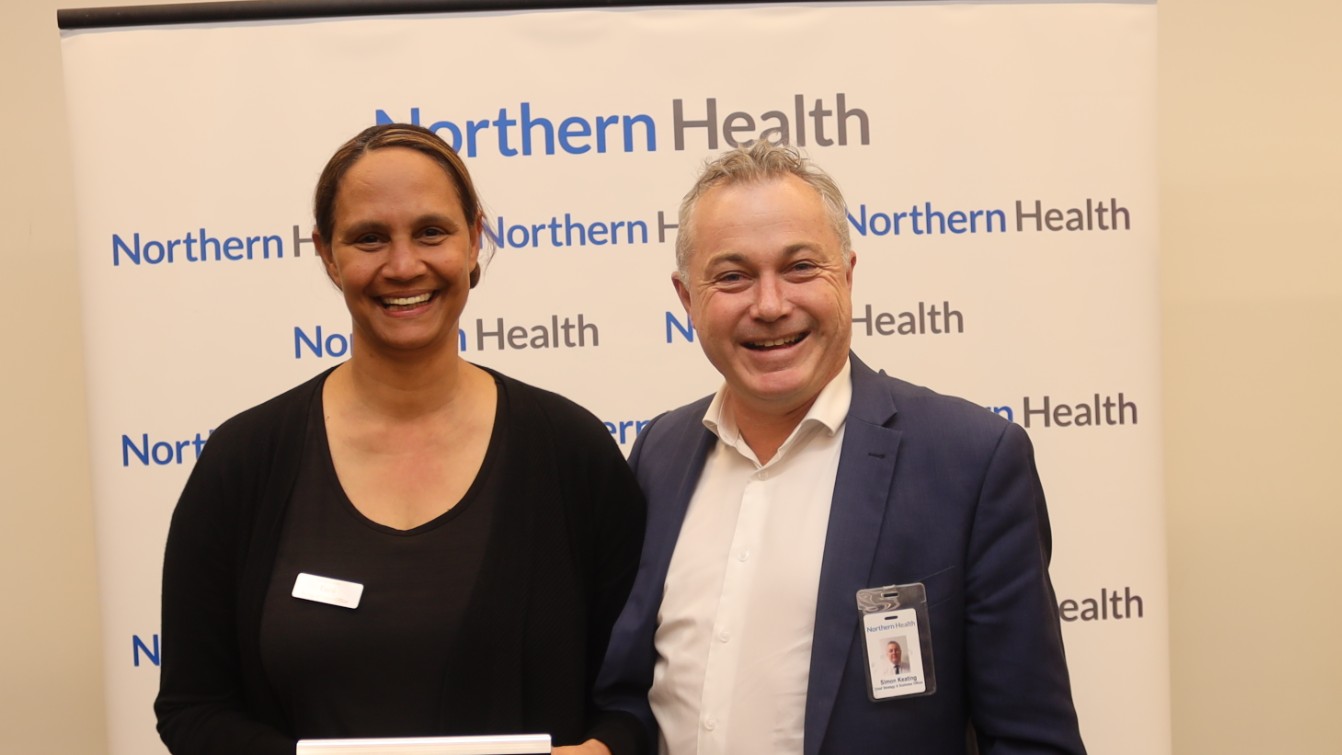
    At the fourth and final Staff Recognition Awards Ceremony for 2019, Toni Gabelish, Aboriginal Liaison Officer, was recognised as a Rising Star for her potential to grow and develop her career at Northern Health.

    Karen Bryant, Senior Aboriginal Liaison Officer, who nominated her, said, “Toni is a new addition to our team. She has great people’s skills and relates well to Aboriginal and Torres Strait Islander patients. Toni is originally an Aboriginal Health Worker, working in many health positions up north of Australia in local Aboriginal community health services, this has been a great advantage to the knowledge of our people and the health status of Aboriginal community.”

    Toni describes this award as special, and goes on to say, “The recognition is really lovely but that’s not the reason we do what we do. There are a lot of people at Northern Health who work tirelessly to accommodate our patients and make them feel welcomed, safe and cared for. I like to think I’m one of those people and know that the rest of my team go over and beyond daily to ensure we give our patients the best chance to complete treatment so they can get out of here and go home.”

    In her role as Aboriginal Liaison Officer, Toni visits Aboriginal & Torres Strait Islander patients Monday to Friday in the Emergency Department, Intensive Care Unit and across all inpatient wards and visit across all of Northern Health’s sites.

    “We provide social, emotional and cultural care to keep our patients in the hospital. We are the ‘Welcoming Aboriginal face’ so our patients know we understand their history and struggles and this makes them feel culturally safe knowing they have us to walk with them on their hospital journey. Sometimes, all our patients need are a smile and a yarn,” says Toni.

    Karen also had this to say about Toni, “She is kind, caring and empathetic to the health journey of the Aboriginal community. The patients love to receive visits from her and she comforts them in times of need. Toni has picked up the hospital system quickly and is a great asset to Northern Health for her Aboriginal lens on health.”

    Simon Keating, Chief Strategy, Business and Development Officer, had this to add, “Toni has been a welcome addition to the Northern Health team and an amazing asset to the Aboriginal Support Unit of which I have been incredibly proud of since commencing here.”

    Featured image (left to right): Toni Gabelish with Simon Keating.

  • Six months of Broadmeadows Unit 1 CUSP

    Six months of Broadmeadows Unit 1 CUSP

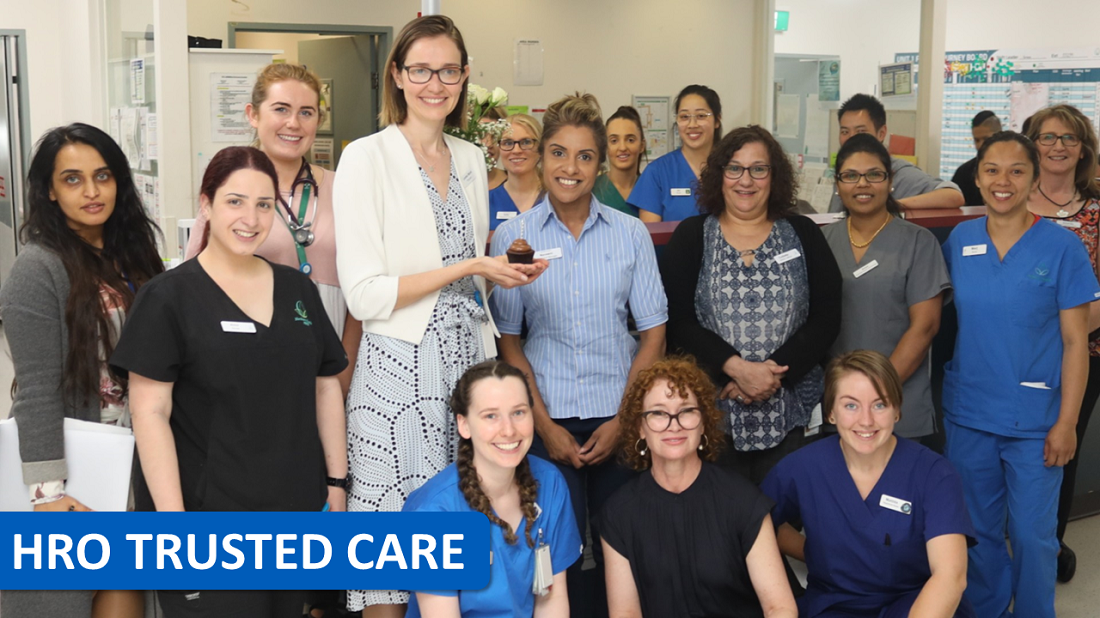
    Broadmeadows Hospital Unit 1 Comprehensive Unit-Based Safety Program (CUSP), a key component of our HRO Trusted Care transformation, celebrated six months since it started in June 2019.

    CUSP is a safety culture program designed to improve awareness about patient safety and build clinical practice. The program aims to build clinical teams as centres of local knowledge, sharing expertise from all quarters of the local clinical community. The regular CUSP meetings reflect on ward-based safety issues, with a multidisciplinary approach to reducing rates of harm and improving the delivery of patient care.

    Dr Louise Monk, Geriatrician and Clinical Lead at Broadmeadows Hospital, said the CUSP first started at Northern Hospital and soon after it was identified that Broadmeadows Hospital would benefit from a meeting of this nature.

    “Unit 1 is a very busy ward, with many patients being admitted every day. As such, we felt it would be the perfect unit to start a CUSP at this site,” said Louise.

    “This is the first CUSP at Broadmeadows Hospital, and we would like to extend it to other units in the future. Since we started six months ago, I have noticed how these meetings have opened lines of communication and introduced a place where people can bring up any issues and an action plan can be formulated straight away,” she said.

    All members of the multidisciplinary team are invited to attend the meetings, providing a collaborative approach to problem solving. All experiences and perspectives are heard, and the CUSP begins to identify defects in the system and how these might be remedied. Importantly, clinical leaders get to observe unit-based activity for themselves — they listen to local points of view and tend to apply their observations.

    Grant Taylor, Site Director of Nursing and Operations, said the centrepiece of the CUSP model is communication and the way the multidisciplinary team setting reinforces engagement at all levels of the clinical setting.

    “The CUSP has engaged staff in a critical way. It’s made us look more closely at technical and behavioural aspects of our work,” said Grant.

    “I think the CUSP meetings have enhanced the team atmosphere on the ward and empowered all team members to be involved in improving the quality of care we deliver,” added Louise. “The meetings also provide a solid forum for the Unit 1 team to work towards longer term goals for some of the bigger challenges we face.”

    Clare McCarthy, Project Manager, explained how the CUSP framework is being embedded at Northern Health as part of the dynamic activity of our wider HRO endeavour.  “After just six months, the Unit 1 team at Broadmeadows Hospital is already proving the value of the CUSP model to embrace issues of safety and culture that affect the whole organisation. This is something really worth celebrating,” said Clare.

    The Broadmeadows Hospital CUSP is now one of eight multidisciplinary CUSPs across Northern Health.

  • Get to know…Dr Kim Jeffs

    Get to know…Dr Kim Jeffs

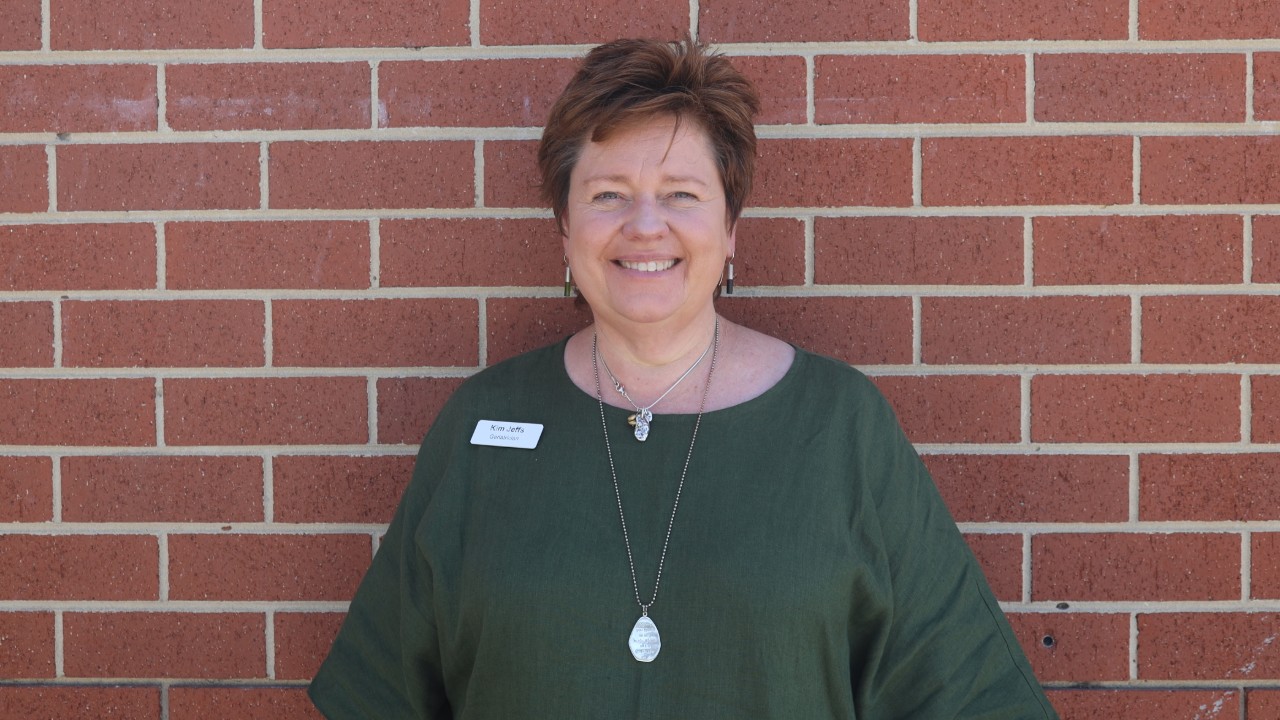
    In this week’s Get to know: Q&A with… we catch up with Dr Kim Jeffs, Geriatrician.

    Get to know Kim:

    What is your coffee order?

    Double shot latte. Never take-away. If I don’t have five minutes to sit, sip and reflect then it isn’t time for coffee.

    What does a typical work day look for you?

    I’m a geriatrician, so my clinical work involves assessing and treating older people for their often complex health care needs. My work in Residential In-Reach takes me to Residential Aged Care Facilities, where I often see people with behavioural and psychological symptoms related to dementia. I try to make a holistic assessment and offer advice to staff and spend time with families to provide education and discuss future health care options. In CDAMS (Cognitive Dementia and Memory Service), I review people’s cognition, often making the heartbreaking diagnosis of dementia. I also trundle around the hospital on the ARC round, assessing inpatients for their suitability for subacute care and offering assistance with the geriatric syndromes – dementia, delirium, falls, incontinence. I am also working on Northern Health’s strategy for delirium, which involves writing procedures, attending meetings, doing audits and giving presentations.

    Tell us about your Northern Health journey?

    My first shift at Northern was in 1998 as a Medical Registrar. I started on nights, which was pretty terrifying since I didn’t know where any of the wards were. Back then, there were three medical units with each unit having a Registrar and an Intern. We did all the inpatient care, admissions, surgical referrals and attended outpatients. We routinely had 25 patients and I think the most I ever had under my unit was 55. I’m so glad things are generally better for the junior staff now, though obviously health care is a stressful environment. I rotated to Northern Health several times as an Advanced Trainee in Aged Care, and eventually enrolled in a PhD via the Northern Clinical Research Centre. My PhD, ‘Delirium in a culturally diverse medical inpatient population‘ investigated prevention of delirium. I became a consultant in 2003 and initially worked as a physician in the Short Stay Unit, prior to being the Respecting Patient Choices Clinical Leader for a while. I’ve worked as a Geriatrician at Northern Health ever since.

    Can you tell us a bit about your career before starting at Northern?

    Most of my working career has been at Northern. My junior medical years were at the Austin, where I’d done the clinical years of my degree with The University of Melbourne. While I was studying, I worked over the summers at Myer in the city and did a vacation studentship at the Walter and Eliza Hall Institute (growing DNA in enormous E-coli cultures!)

    What is your greatest achievement or favourite memory since working here?

    My favourite memories involve patients and their families. Like the man on KAW ward at Bundoora Centre who gave the medical team a soccer coaching session in Greek and the wife of a CDAMS patient who gave me bunch of pepper seedlings raised from the seed her family had passed down through generations. I think my greatest achievement is being a part of the training of so many of our junior doctors, many of whom have returned to Northern Health as consultants.

    What are some things people don’t know about you?

    I write and perform poetry. After my house burned down in the Black Saturday fires, writing became a way of exploring all the complex emotions and grief. I discovered I enjoy the creativity of writing, of being able to conjure an image or a feeling using only words. Last year I was interviewed on 3CR about poetry and a whole range of other topics. Interview can be found here.

    What do you like to do after work?

    Most evenings are filled with cooking, cleaning, laundry, and taking the kids to their various sporting activities. What I really like to do is to wander about the garden, checking on how things are growing, smelling the flowers, watching the birds and picking something to add to dinner.

    Do you have a bucket list item? Something you would love to do?

    I look longingly at photos and videos of the Aurora Borealis and Aurora Australis. I once caught a glimpse of the Aurora Australis from northern Tasmania and I cried. One day I would love to be able to see at least one of them in all of their magnificence. I’d be pretty stoked if I could grow a decent crop of apples too.

    How would you describe Northern Health in one sentence?

    Continuously evolving.

    Who would you nominate next for a staff profile and why?

    I’d like to nominate Jenny Christof. I’ve worked with Jenny on and off since 1998, when she was a nurse on the medical wards. Her nursing career has taken some twists and turns, through care coordination, dialysis and now community case management in HARP. I reckon she has some good stories to tell.

  • Simulation expert Dr Brazil visits Northern

    Simulation expert Dr Brazil visits Northern

    Dr Victoria Brazil visited Northern Hospital Epping to present on how simulation can help us improve the work that we do in health care, and most importantly, how to improve that work together.

    “It’s about team work, dealing with systems and with complexity in health care. That practically means that during the lecture and the workshop, we will go through different examples of where we can use the simulation modality to really examine what the issues are in hospitals,” she said.

    Dr Brazil says the issues in hospitals can be related to team performance, relationships between different departments or processes of care and patient journeys.

    “We use simulation to examine those and once we get a sense of what we can do to improve, we use simulation again to embed and train teams in order to deliver the care better,” she explained.

    During the lecture, Dr Brazil shared some of the experiences she had at the Gold Coast University Hospital and experiences from around the world and, at the workshop, participants had a chance to spend time to think how to use modalities appropriately for a particular problem in hospital.

    “The power of getting people in the group was what attracted me to simulation in the first place, and also having a chance to reflect on experiential learning. I saw that as being a very effective way of helping people both to look at their behaviours and actions, and to think about other ways of improving those,” she explained.

    Some of the outcomes of simulations Dr Brazil facilitated with her Cath Lab team led to the time it took from patients arriving in ED to having their cardiac catheterisation, with patients with myocardial infarction, being cut in half.

    “On the other hand, whilst working with trauma departments, we had some outcomes in cultural change and shift, so there are some tangible, measurable results of simulations, but there are also those ones harder to measure, but easy to see, like improvements in relationships and culture,” Dr Brazil said.

    Dr Nancy Sadka, Emergency Physician, said she was inspired by Dr Brazil and is following the work she is doing at Gold Coast University Hospital.

    “When I came to Northern Health, one of the things I wanted to do was to improve our care in all aspects. We are also using simulation both for education and for quality improvement. Northern Hospital program is now in its early days and we are using multi disciplinary in-situ simulation where we address culture issues, teamwork and we translate recommendations into practice,” she said.

    Multiple other health services were represented at the lecture. Northern Health hosted guests from Austin Hospital, Peter Mac, Ballarat Hospital and Box Hill Hospital.

    “I think we should be very proud of the work we are doing. Northern Hospital could be a leader across Victoria of this initiative to integrate the use of simulation into our hospital quality processes,” Dr Sadka added.

    Dr Victoria Brazil is an emergency physician and medical educator. She is Professor of Emergency Medicine and Director of Simulation at the Gold Coast Health Service, and at Bond University medical program. Dr Brazil is an enthusiast in social media and #FOAMed world (@SocraticEM), and she is co-producer of Simulcast (Simulationpodcast.com).

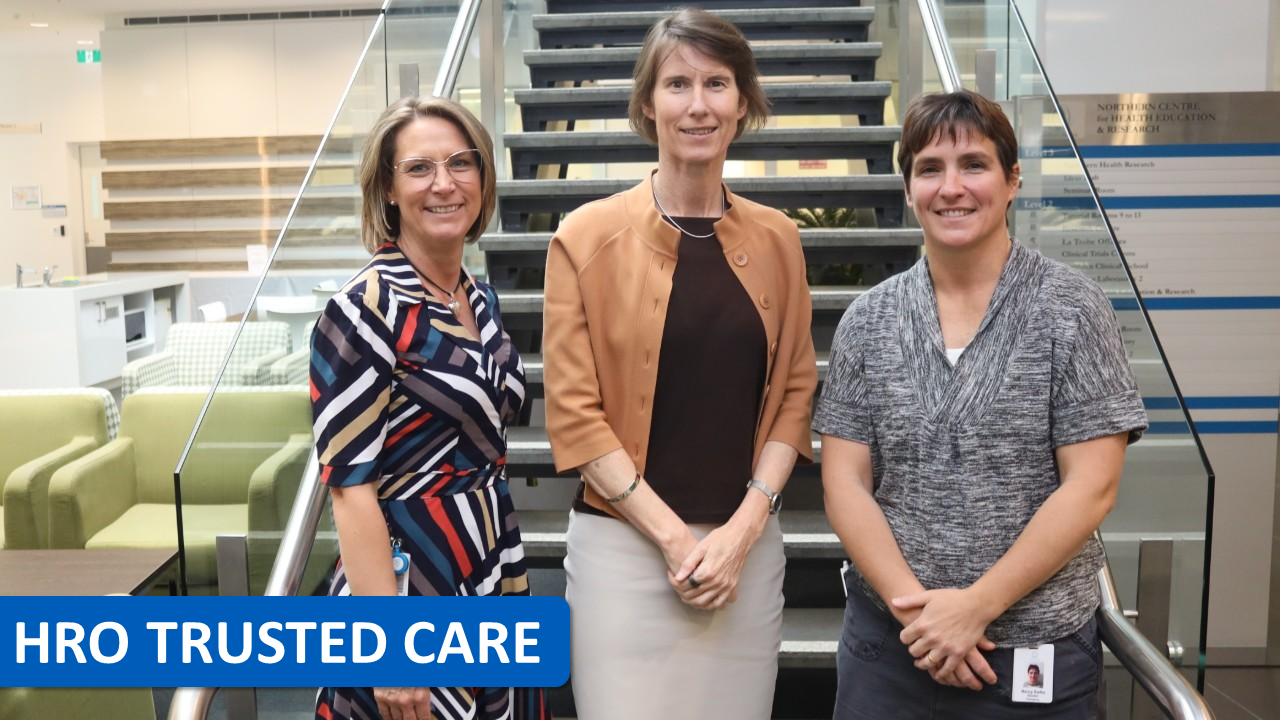
    Featured image (left to right): Brooke Williams, Project Support Officer; Dr Victoria Brazil and Dr Nancy Sadka.

  • Welcome new NUMS at Broadmeadows

    Welcome new NUMS at Broadmeadows

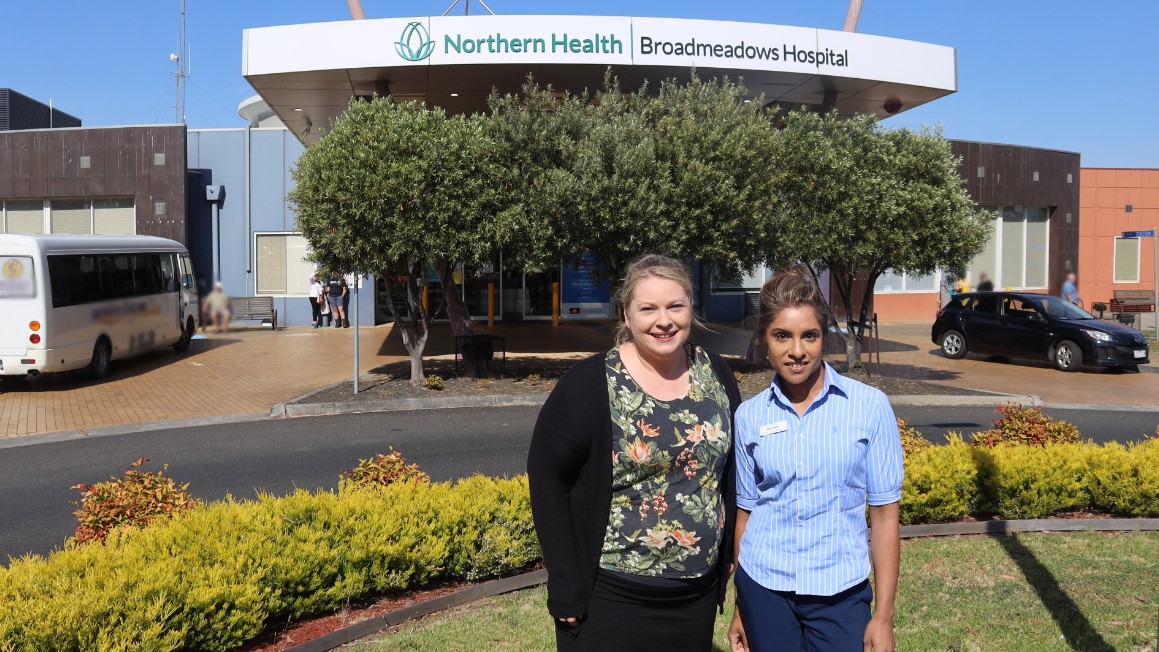
    Broadmeadows Hospital has recently welcomed two new Nurse Unit Managers. Naveeni Natkunarajah is the new NUM of Unit 1 and Belinda Nash is now the NUM of Unit 2.

    Naveeni started in early November and says this has been an ultimate career goal since she started her nursing career about 16 years ago.

    “I just couldn’t say no when the opportunity came up. Before taking this role, I was working in various nursing roles; as an aged care and rehab nurse coordinator, an ANUM and discharge support,” she said.

    She came across to Northern Health in 2017 and is a passionate resident of the northern suburbs.

    “Northern Health has got a lot of potential – it has a large catchment area and it’s a beautiful facility for our multicultural community. Broadmeadows Hospital is an amazing facility and we are working at ways to increase its utilisation and better inform Northern teams of the services we offer here,” she said.

    Naveeni added she is looking forward to growing with the community and seeing what the next months will bring.

    Belinda Nash, the new Nurse Unit Manager of Unit 2, is new to Northern Health, and is very excited to be here.

    “I have a lot to learn, but I am looking forward to the new challenge. Previously, I’ve spent 20 years at Austin Health and, during that time, I was the unit manager for a couple of wards and also a site manager,” she said.

    It was ultimately the idea of change itself that made her come to Northern.

    “After being in an organisation for so long, it was time for a change. As Naveeni pointed out, this is a growth corridor and I feel I can bring a lot to the table in regards to my background and my experience. I am looking forward to building the team and working with others at Northern Health. I’m definitely getting a family feel here at Northern,” she said.

    Grant Taylor, Director of Nursing and Site Operations for Broadmeadows Hospital, welcomes both Naveeni and Belinda to their new roles.

    “Naveeni and Belinda bring a wealth of experience, enthusiasm and dedication to their roles and I very much look forward to working with them both in further developing their respective units and teams,” he said.

    Featured image (left to right): Belinda Nash and Naveeni Natkunarajah

  • Fiona Moate: Clinical Excellence in Hand Therapy

    Fiona Moate: Clinical Excellence in Hand Therapy

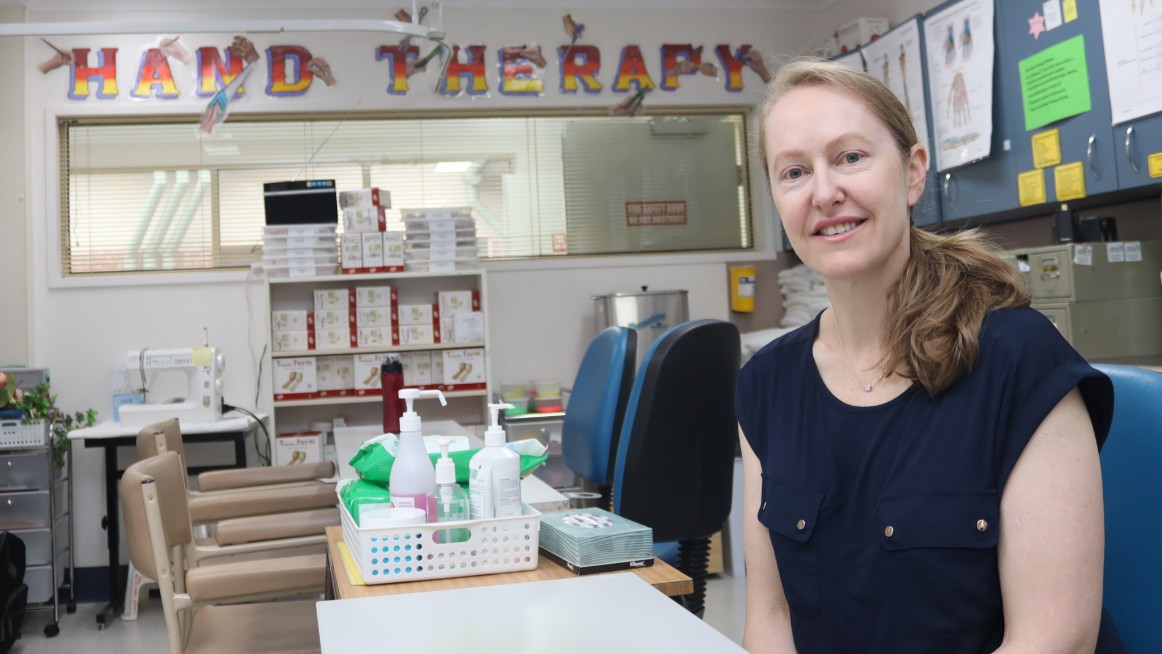
    Fiona Moate, Hand Therapist who has been working at Northern Health for 17 years, won the Clinical Excellence Award at the last quarterly Staff Recognition Awards. She was recognised for her dedicated and outstanding clinical skills in assessment, splint fabrication and treatment provision for patients following complex hand trauma.

    Laurelle Bland, who nominated her, said Fiona keeps up to date with current research by attending courses and reading literature, and implements this into her practice.

    “She brings new treatment ideas to the team and encourages others to do the same,” said Laurelle.

    Laurelle also nominated her as she feels Fiona instils confidence in patients and colleagues by being informative, respectful and fair. Additionally, she has been involved in an Advanced Practice Role and Multidisciplinary Clinic where she works closely with the Plastic Surgery Unit and Wound Service to triage and treat hand therapy patients. In an ever busy clinical environment, Fiona keeps a pulse on the running of the team and checks in with each individual to see how everyone is managing.

    “She has high emotional intelligence and is continuously supportive of her team. Fiona is approachable and always finds time to mentor, teach or advise her team when they need support. She fosters a learning environment and edifies her staff by recognising achievement. She is always positive and her high energy helps to maintain team morale. She works quietly and unstintingly behind the scenes to keep the Hand Therapy Department running efficiently,” Laurelle added.

    Fiona adds she enjoys teaching and service development aspects of her role.

    “I enjoy the creative aspect of the role, for example, making different splints or creatively problem solving with patients or staff and a team approach with the Plastic Surgery Unit and Wound Service as to whether conservative management is the best treatment option,” she said.

    To her, winning this award “acknowledges the professional development, research, conference presentations etc. that we pursue as hand therapists to provide the highest quality care for our patients.”

    In the future, Fiona sees herself always travelling, dancing tango and working at Northern Health where she would like to see continued service development.

    “In five years from now, I see Northern Health as a diverse, ever expanding organisation that provides an opportunity for development of services and implementing new efficient ways of working,” she said.

    “She is always optimistic and has been a role model and mentor for me since I started in the Hand Therapy Department in 2009. She is what I would like to call ‘The Yoda of Hand Therapy’,” says Laurelle.