• Funding Innovation: Small Research Grants

    Funding Innovation: Small Research Grants

    “I believe in innovation and that the way you get innovation is you fund research and you learn the basic facts
    – Bill Gates

    This year, sixteen applications for funding were received for Round 21 of the Small Research Grants Program. With support from the Northern Health Foundation, five projects were chosen, receiving a total funding of $22,161.62.

    Peter Brooks, Head of Research at Northern Health, explains the significance of the funding program.

    “The Small Grants Scheme at Northern Health is very important as it can allow someone to take that idea they have had, get some preliminary data and then develop the project into a submission for larger amounts of funding,” he says.

    The recipients are:

    Name: Mr Russell Hodgson

    Role: Specialist HPB & General Surgeon

    Title: Laparoscopic Intra-Abdominal Pressure Study: A double blinded randomised controlled trial

    Award: $5,000.00

    Russell Hodgson and Darren Lowen

    Name: Penny Ramsden

    Role: Clinical School Coordinator – Nursing

    Title: Evaluation of RUSON model of assisted patient care

    Award: $3,000.00

    Name: Marinda Brooks

    Role: Senior Speech Pathologist

    Title: Improving patient swallowing outcomes by credentialing of staff in Fibreoptic Endoscopic Evaluation of Swallowing (FEES)

    Award: $4,862.62

    Marinda Brooks

    Name: Edmund Leahy

    Role: Senior Clinician Physiotherapist

    Title: Effect of metabolic syndrome on clinical and health service outcomes for people with osteoarthritis

    Award: $4,999.00
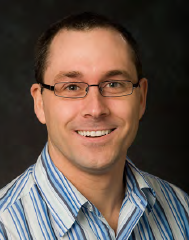
    Edmund Leahy

    Name: Mr Neil Strugnell

    Role: Associate Director of General Surgery; Consultant General Surgeon

    Title: Negative Pressure Wound Therapy for Emergency Laparotomy – A Randomised Controlled Trial

    Award: $4,300.00

    Neil Strugnell

    The applications were assessed on the scientific merit of the proposal, as well as the potential to increase the contribution of Northern Health’s research to the wider community. They were also assessed on their ability to build research capacity and expertise, provide new and emerging researchers with opportunities to initiate their research, and the appropriateness of the proposed expenditure.

    “As always, it is difficult to decide who will be successful, particularly with the highly competitive field we had this year, so congratulations to the projects that were funded – and those who were not successful – keep developing your project and hopefully we can fund it next time,” Peter says.

    To learn more about each of the awarded research projects, click here.

  • The heat is on

    The heat is on

    With the temperature expected to rise to 36 degrees today , here’s a reminder on how to stay well in extreme heat.

    Stay hydrated:

    • Keep those fluids up! Even if you don’t feel thirsty, have a drink bottle with you at all times to ensure you’re drinking plenty of water.

    Stay cool:

    • Seek out air-conditioned buildings, keep blinds closed, take cool showers, and wear loose clothing made from natural, breathable fibres like cotton.

    Stay out of hot cars:

    • Hot cars can kill! Never leave children, older people and pets in cars. Within minutes, the temperature inside a parked car can double.

    Stay smart:

    • Avoid being outside during the hottest part of the day. If you do have to go outside, remember to slip, slop, slap on the sunscreen and seek shade.
    • Avoid exercising in the heat and activities like renovating and gardening.
    • Make sure food that needs refrigeration is properly stored.
    • Eat smaller meals more often and cold meals such as salads.
    • Watch or listen to news reports to find out more information during extreme heat.

    Stay connected:

    • Look out for each other – patients, staff, volunteers and community members.
    • Check in on those most at risk in the heat – older people, pets and our patients.

    Northern Health Acting Director of Emergency Department, Dr Dean Pritchard, says “Conditions as simple as sunburn, and as serious as heat stroke, can be prevented by avoiding exposure and exertion during the hottest times of day.”

    “Care must be taken by staff and patients to avoid prolonged exposure to heat during summer, particularly when combined with strenuous activity. We must also be mindful of our elderly family and neighbours, who may not have access to air-conditioning,” he adds.


    For more information on why heatwaves are ‘nature’s silent killer’, please click here 

  • Giving new hope to the heart

    Giving new hope to the heart

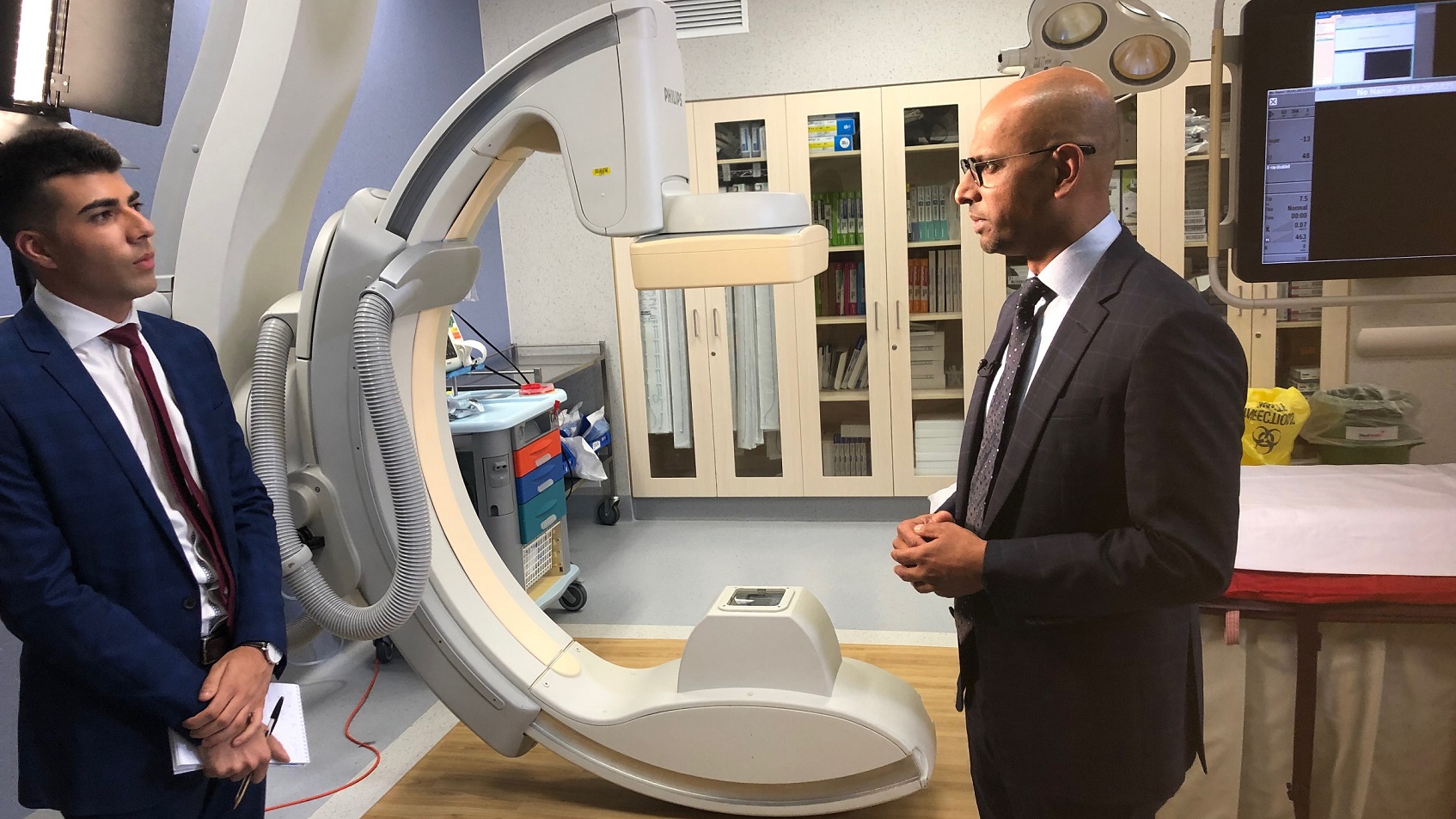
    Yesterday, we welcomed Nine News to Northern Hospital Epping to interview Associate Professor Uwais Mohamed, about a new heart procedure helping patients who experience problems with their pacemakers.

    Pacemakers can improve life for many people with heart problems, but in some cases, can trigger adverse effects and heart failure symptoms.

    77-year old Northern Health patient, Colin Berryman, could barely manage to take the rubbish out.

    After having a pacemaker for several years and still experiencing heart problems, Colin was losing hope.

    “It was like the end of the world,” he says.

    “You get crushing chest pain – it’s as if you’ve just come in from a marathon,” he adds.

    The new technique, known as ‘His Bundle Pacing’, has only been performed on a handful of patients across Australia – earlier this year, Colin was one of them.

    Traditionally, pacemaker wires are inserted into the bottom right side of the heart.

    The new technique performed by Dr Mohamed involves attaching the pacemaker wire to a more central area of the heart than traditional pacing, which stimulates both sides at the same time, enabling a more natural and synchronised heartbeat.

    Dr Mohamed says the new procedure can be performed on patients requiring a pacemaker for the first time, or those who have developed complications from an existing device.

    Since undergoing the revolutionary procedure at Northern Hospital, Colin has seen significant, immediate improvement.

    “I could hardly walk from the house to the end of the driveway with the wheelie bin, now I can mix bags of concrete and lay bricks,” he says.

    “It’s just incredible.”

    Click here to watch the exclusive story with Nine News 

    Northern Health patient, Colin Berryman, with his wife, Angela
  • Christmas Appeal: A hand to hold

    Christmas Appeal: A hand to hold

    In September this year, 3-year old Loyal quickly turned from a carefree kid at home in the morning, to a child fighting for life in the afternoon.

    Seeing him rushed through our Emergency Department unresponsive and blue, his parents thought they might lose him.

    After receiving the best possible care at Northern Hospital, he pulled through the night. However, the life-threatening asthma is still there, and the walls of our Children’s Ward have become very familiar to him.

    Loyal is one of 22,000 children who present to our Paediatric Emergency Department every year, many of them sharing a similar, life-threatening story.

    That is why we know how traumatic it is for parents to see the lives of their little ones on the line. We also know how scared and confused children like Loyal feel when they are rushed through our doors, as our staff in the Paediatric Emergency Department see more than 60 children every day.

    This Christmas, we encourage you to give generously to the Northern Health Foundation and help the growing number of children in Melbourne’s north receive the best possible care close to home.

    By giving just $25 today, we call all help provide equipment and resources needed to support families and continue holding their hand, bringing comfort in deep distress.

  • Chief Executive Message

    Chief Executive Message

    2018 Northern Health Quality Account

    This week we’ve published the 2018 Northern Health Quality Account on our website.

    In the report, you can read about our absolute commitment to patient safety and improving the patient experience, and our quality and safety achievements over the last 12 months. We know this would not be possible without dedication from our staff, cooperation from our patients and their families, as well as involvement with our community members.

    Providing Trusted Care to all of our patients is our commitment, and with the ongoing High Reliability transformation, we are making significant improvements in clinical practice and the way we provide care over the next two years.

    In the report, we share the many successful staff and patient stories, showing what we do every day and how we engage with our community, encouraging deeper mutual understanding and support.

    I encourage you to read the Quality Account on our website.

    Jodie Ashworth leaving Northern Health

    Jodie Ashworth, our Chief Nursing and Midwifery Officer, leaves Northern Health at the end of next week. She and her family will be moving to the warmth of the Sunshine Coast, Queensland.

    On your behalf, I would like to thank Jodie for her drive and commitment since she joined Northern Health in January 2014. She is a passionate advocate for patient care and excellent patient outcomes, and takes pride in leading our nursing and midwifery staff.

    Jodie, we wish you well in the next stage of your life and career in Queensland. You will be missed.

    Jodie is a guest columnist this week discussing the Patient Experience – the Trusted Care element she has been leading.

    Staff Christmas BBQ Lunches

    As the year draws to a close, I am pleased to invite you to Staff Christmas BBQ Lunches across our sites: Broadmeadows Hospital at 1pm Monday, 17 December, Northern Hospital Epping at 1pm Tuesday, 18 December, Bundoora at 1pm Wednesday, 19 December, and Craigieburn at 12.30pm Wednesday, 19 December.

    I hope you can attend.

    Christmas and New Year Celebrations

    I hope that you and your families have an enjoyable festive season.

    Those participating in workplace Christmas functions need to remember that these are an extension of our workplace – so all Code of Conduct and social media policies apply.  Further information can be found within the Prompt OHS – Employee Health & Wellbeing procedure. 

    Keep safe and enjoy this time of the year – refreshed and ready for a great year ahead in 2019.


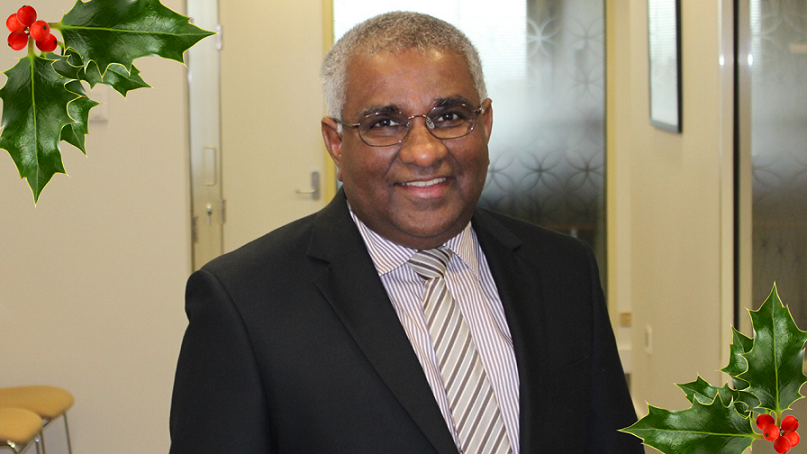
    Chief Executive

    Siva Sivarajah               

  • Movember: Time for the mo to go?

    Movember: Time for the mo to go?

    It’s been a very successful Movember here at Northern Health.

    Social Work Clinical Leader and Movember group organiser, Juan Alhucema, said the team at Northern Health pledged to either cut, grow, shave or dye their hair – should the group receive over $1,000 in donations.

    “I am happy to say that we have raised $2,632.85 in donations and we would like to thank everyone who participated in the cause,” Juan said.

    “This has been a great bonding activity for all us men involved here at Northern Health. Even though I lost my ponytail in the process!” added Juan with a laugh.

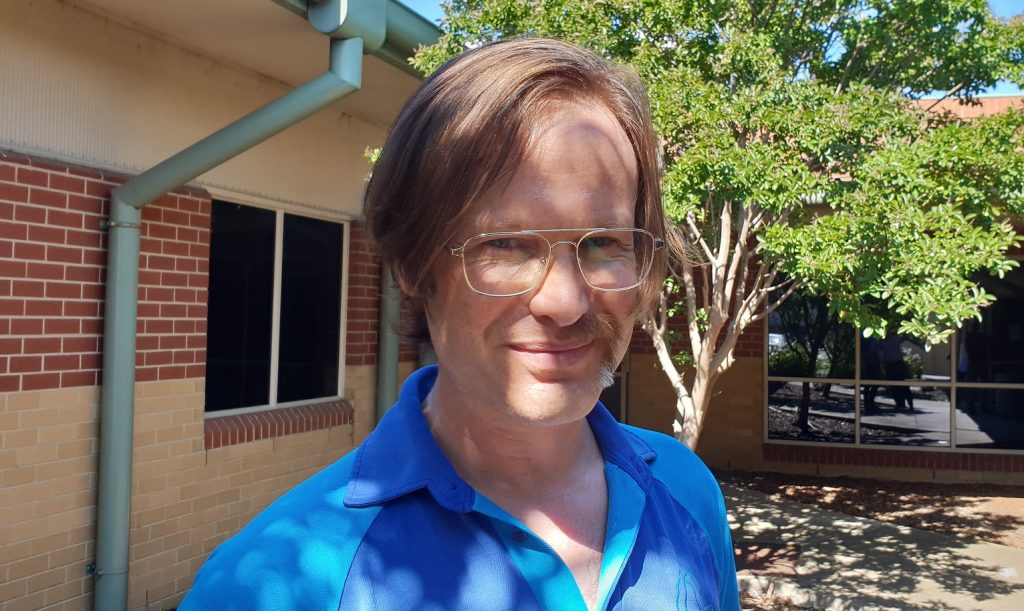
    The promise was kept…besides Juan, another team member also cut off his ponytail, whilst Florian (pictured below) was in two minds and decided to keep half of his moustache.

    The rest say they are considering keeping their new beards and moustaches.

    Florian Zimmerman’s unique contribution to Movember

    “With a great beard, comes great responsibility,” said Mike Masilamani, another member of the Northern Health team – NoH-vember.

    “In this instance, we have the satisfaction of knowing we are raising awareness and making a difference to men’s health, particularly addressing prostate cancer, testicular cancer, mental health and suicide prevention,” he added.


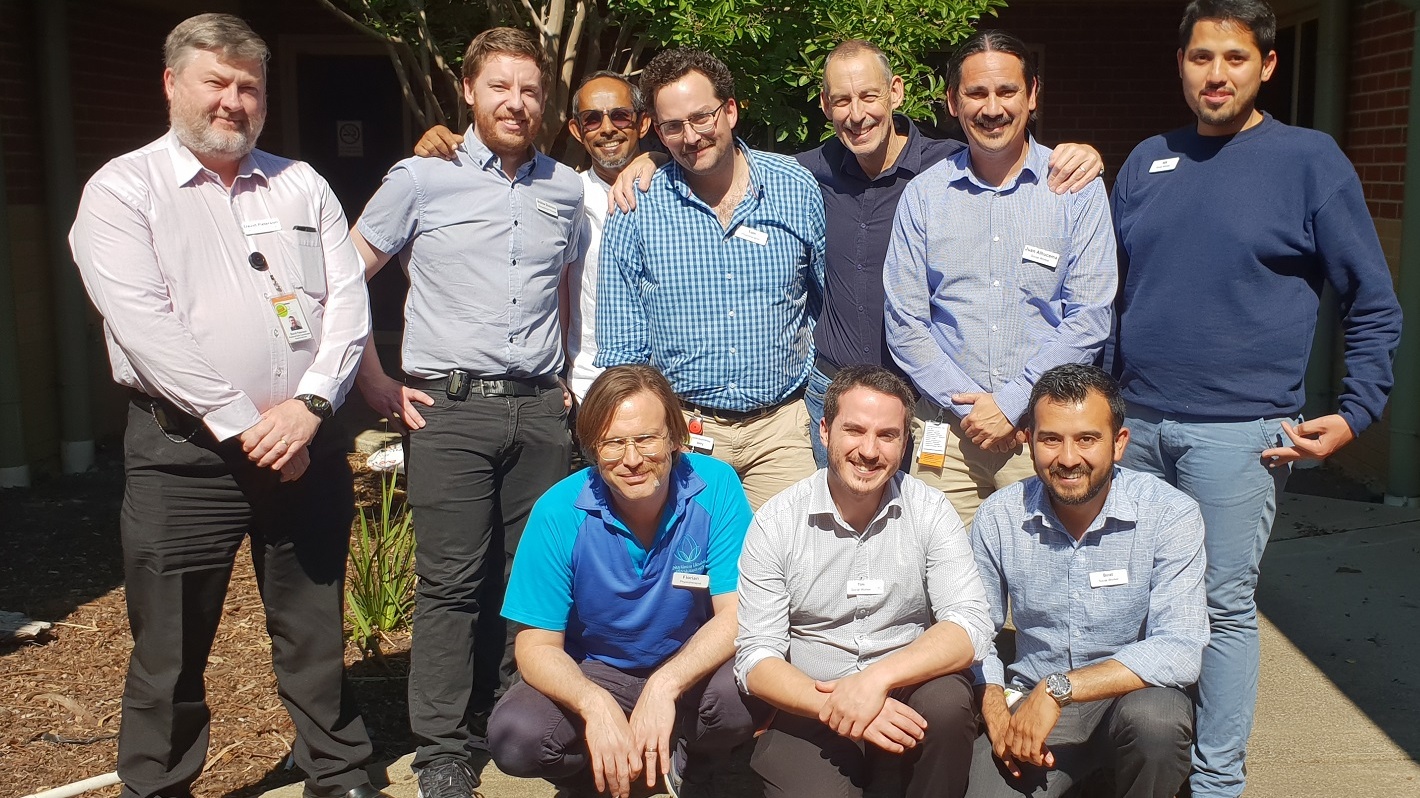
    Featured Image:

    Top left to right – David Paterson (Pastoral Care CL), Andrew Dickinson (OT), Mike Masilamani (Public Affairs), Thomas Cooper (PT), Hugh Burch (PT and Cancer Service Facilitator), Juan Alhucema (SW), Nik Rawat (SW).

    Bottom left to right – Florian Zimmerman (PT), Tim Gauci (SW), Birat Sharma (SW).

    Other participants not in the picture:

    Dhruv Govil (PT and Workforce Manager), James Watt (Pall Care Nurse), Jordan Casey (AOL), Paul Jackson (PT), Simon Keating (Chief Strategy, Business & Development Officer) and Richard Ram (Patient Flow Manager).

  • Patient Experience: Small things matter

    Patient Experience: Small things matter

    Northern Health has commenced on a journey to become a highly reliable organisation, and improving patient experience is one of the key components.

    We work in a fast paced, ever changing health environment and sometimes it’s easy to lose track of the small things that matter.

    But, what are those things?

    Back in 1992, I had an experience as a student midwife that changed the way I thought for the rest of my career. I was looking after a lady having her third baby and I’d delivered less than seven babies as a student midwife.

    Post birth, she had a massive haemorrhage and we couldn’t stop the bleeding. She had the first, second, third and the fourth line drugs and treatment, the massive transfusion policy was instigated. She also had emergency surgery and the team saved her life.

    Two years later, I was in a supermarket when a lady randomly approached me and hugged me.

    She said: “You may not remember me, but thank you”.

    She told me her name and the trauma flashed back. I just smiled and said that I was a student and that I was lucky to be part of a great team.

    She looked at me puzzled and said: “No, you were the one that mattered the most. You held my hand and you told me it would be okay”

    I remember I heard my baby cry and you made the doctor hold her up for me to see.

    You were the one that made a difference, you were the one I need to thank”.

    I’ve never forgotten that.

    Today, leading the Patient Experience work, I often wonder, how do we make it right for everyone?

    We are working with several key messages to support the work, with the first one already mentioned:

    Small things matter.

    The  second key message helps us focus on the things that matter not only to us, but our patients, families and carers.

    Ask what matters, hear what matters, do what matters.

    The third is probably the hardest of all. It’s a shift from asking our community and family members

    “What’s the matter?”  to asking

    “What matters to you?”

    As clinicians, we sometimes think we have all the answers. We have the technology, state of the art equipment, research and access to practice world class medicine.

    We can cure, save lives and alleviate pain.

    But is that all our community wants? 

    The Patient Experience component of the Trusted Care transformation focuses on moving the words of patient-centred care into translational practice.

    There are 13 pieces of work that make up the Trusted Care Patient Experience Strategy. As this work evolves, I encourage you to keep up to date with recent developments and register your interest for work you would like to be involved in.

  • Discussing Disability: Interview with Dr Harry Eeman

    Discussing Disability: Interview with Dr Harry Eeman

    Dr Harry Eeman, Rehabilitation Medicine Physician at Northern Health, was a young medical student when he was struck down by a severe form of Guillain-Barré syndrome whilst backpacking in Europe.

    Guillain-Barré syndrome is a rare but serious autoimmune disorder in which the immune system attacks healthy nerve cells in your peripheral nervous system. This leads to weakness, numbness, and tingling, and can eventually cause paralysis.

    Harry spent the next two and a half years in hospital, five months of which were spent on a ventilator paralysed in what seemed like a coma-like state, except for the fact that he could hear those around him.

    After years of rehabilitation, he recommenced his studies and completed medicine as a quadriplegic, which required overcoming a number of physical and attitudinal barriers.

    He eventually graduated with honours and subsequently completed two postgraduate specialist qualifications.

    As today is International Day of People with Disability (IDPwD), we interviewed Dr Harry Eeman on the subject of disability and the challenges he has faced.